Fagerlund – Morgonstjärnan
Jostein – Johan Reuter
Arne – Niklas Björling Rygert
Kathrine – Jenny Carlstedt
Solveig – Helena Juntunen
Tove – Minna-Leena Lahti
Turid – Mari Palo
Egil – Tommi Hakala
Gaute – Nicholas Söderlund
Ole – Jere Hölttä
Ramsvik – Janne Sihvo
Konstnären – Iris Candelaria
Busschauffören – Juha-Pekka Mitjonen
Läkare 1 – Tuomas Lehtinen
Läkare 2 – Anu Ontronen
Gamla Kvinnan i Drömmen – Maria Lenart
Skötare 1 – Juhana Suinen
Skötare 2 – Ann-Marie Heino
Ingvild – Martta Ainali
Viktor – Otava Merikanto
Suomen kansallisoopperan lapsikuoro, Finlands nationaloperas kör, Suomen kansallisoopperan orkesteri / Hannu Lintu.
Stage director – Thomas de Mallet Burgess.
Suomen kansallisooppera ja -baletti – Finlands nationalopera och -balett, Helsinki, Finland. Friday, January 30th, 2026.
Karl Ove Knausgård’s novel Morgenstjernen, translated into English as The Morning Star, was a critical success in Scandinavia following its publication in 2020. While the reception in the Anglophone world has been more mixed, it’s undoubtedly a work of great ambition, forming, as it does, the first part in a series of seven novels, the sixth of which was published last year. The novel focuses on a series of people in Bergen, Norway, on a hot summer’s day in 2023 when, from nowhere, a bright star appears in the heavens. Knausgård superimposes the very quotidian experiences of the characters, right down to how they pay for their shopping, upon much bigger questions of life and what happens beyond. There’s a supernatural edge to the almost 700 pages of the novel, with a mysterious figure that shows up, yet is never described in detail, and a ritual murder which, similarly, is also never fully described. Furthermore, Knausgård’s novel doesn’t so much conclude as fizzles out, not giving us any resolution to the characters we had spent those hours with. They simply become like people we might have shared a train journey with, or spoken to while waiting in line – we get a superficial impression, yet never fully know who they are. Indeed, I doubt even the characters do.
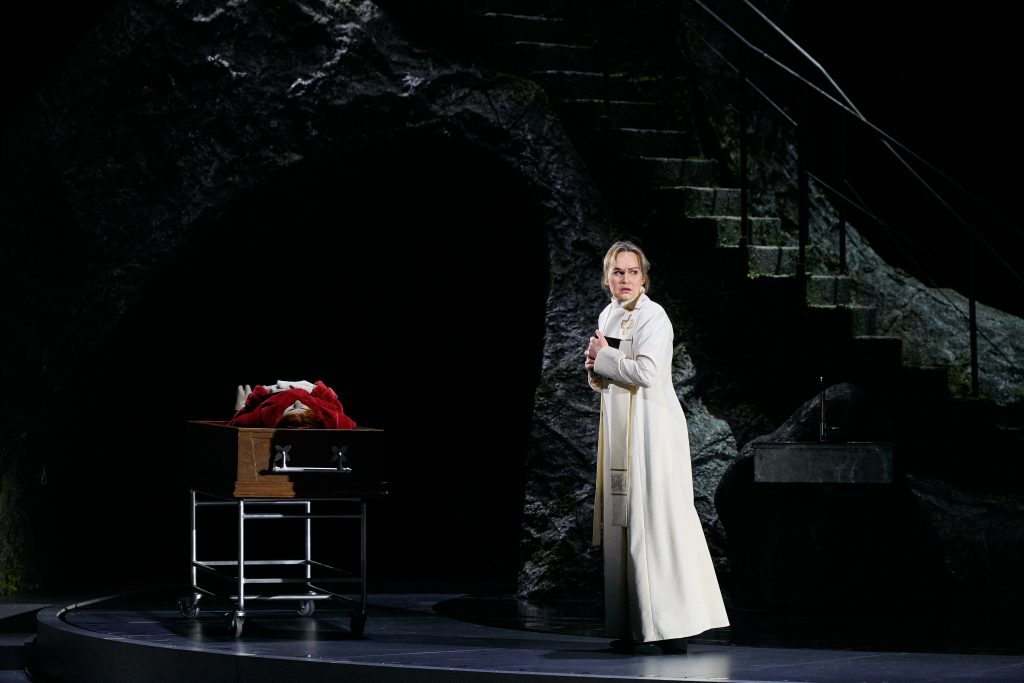
All this makes for quite a challenge for librettist Gunilla Hemming and composer Sebastian Fagerlund to set the work for the stage, which they do in a Swedish translation as Morgonstjärnan. Being able to narrow down the sprawling scope of Knausgård’s world into just over two hours of music is quite an achievement. Hemming treats Knausgård’s novel quite liberally. She gives a conclusion to the story, while also staying true to the way that Knausgård structured his novel, by focusing each scene on an individual character and their engagement with a significant person in their life, bringing out the domestic aspect of the work. There are some aspects that differ to the novel, some characters that are completely jettisoned, but she stays true to the overall structure. Indeed, what she and Fagerlund have given us is the framework to a total work of art that director Thomas de Mallet Burgess and his set designer, Leslie Travers, then pick up and bring into reality. There’s a sense here of the music and the words feeding into the sets, magnifying the sound and the impact of the words, in turn superimposing that supernatural layer that exists in the novel. So much so, that it’s hard to separate the music, words, and sets from each other to critique them.
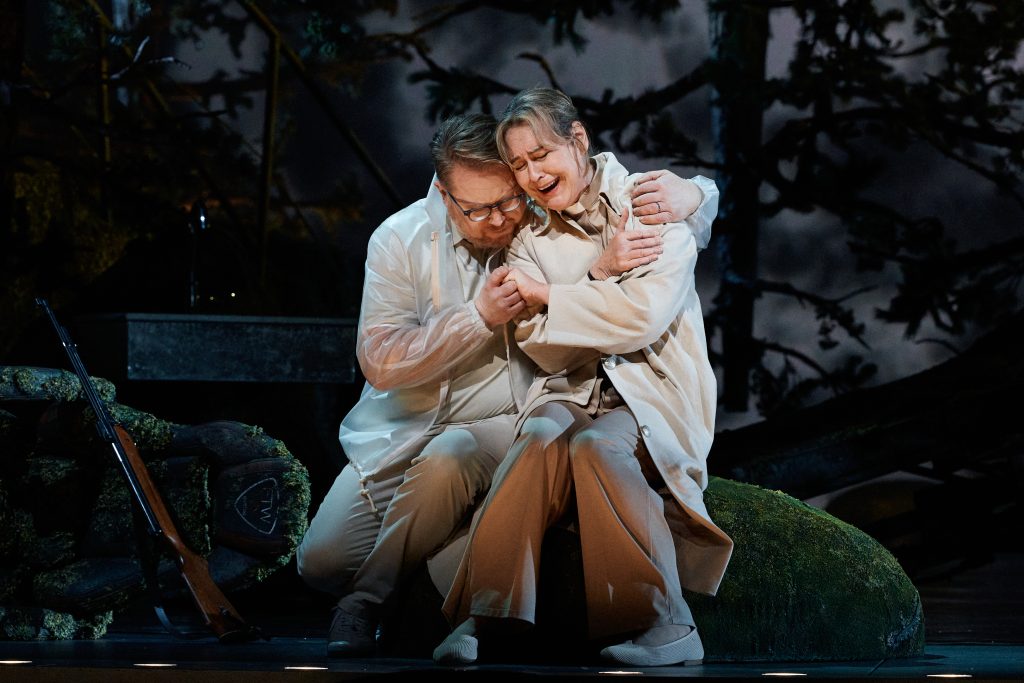
The evening is split into a prologue, first act, and second act, with the latter occurring after the intermission. While the first half of the evening deals with the daily lives of the protagonists, throughout there’s a sense of a slight shift happening within society that’s almost imperceptible. Trees hang down from the flies, and during the course of the first part, they descend further and further so that by the start of the second act, they block the stage. Similarly, the appearance of the star itself, as a video projection at the back of the stage, almost goes unnoticed until it eventually covers the entirety of the back of the stage. I found this exceptionally convincing, particularly as Fagerlund’s musical language also changes in the second act, coinciding with the stage being covered with nature and the star having a prominent position. Moreover, the revolving stage in the Prologue and Act 1, demonstrating a busy modern life that just takes us along with it, comes to a complete halt in Act 2 as if giving us the message that surrendering to nature will stop modernity.
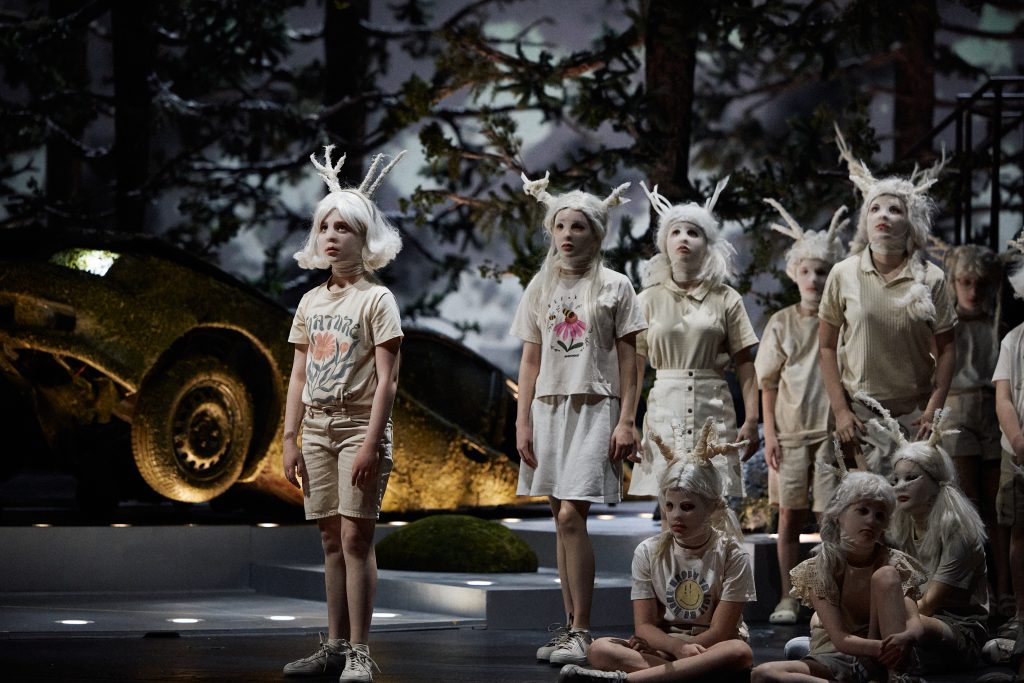
There were two aspects that didn’t quite convince in Burgess’ staging. The first is how a group of children were outfitted in strange costumes, such as 1960s sci-fi aliens, during Act 2. Is he saying that children are alien to us? That they belong to another world? The other aspect is how the evening opens up at Bergen airport, with screens showing news stories of environmental catastrophe, while in the closing tableau, a digital clock shows 11:59 as the time. Perhaps here Burgess is making a statement with regards to how modern life can lead to environmental decay. Certainly, nature is present in Knausgård’s novel, yet from my reading of it, I’m not convinced it’s a central theme. Instead, here it felt added on at the start and the end, to say ‘something’.
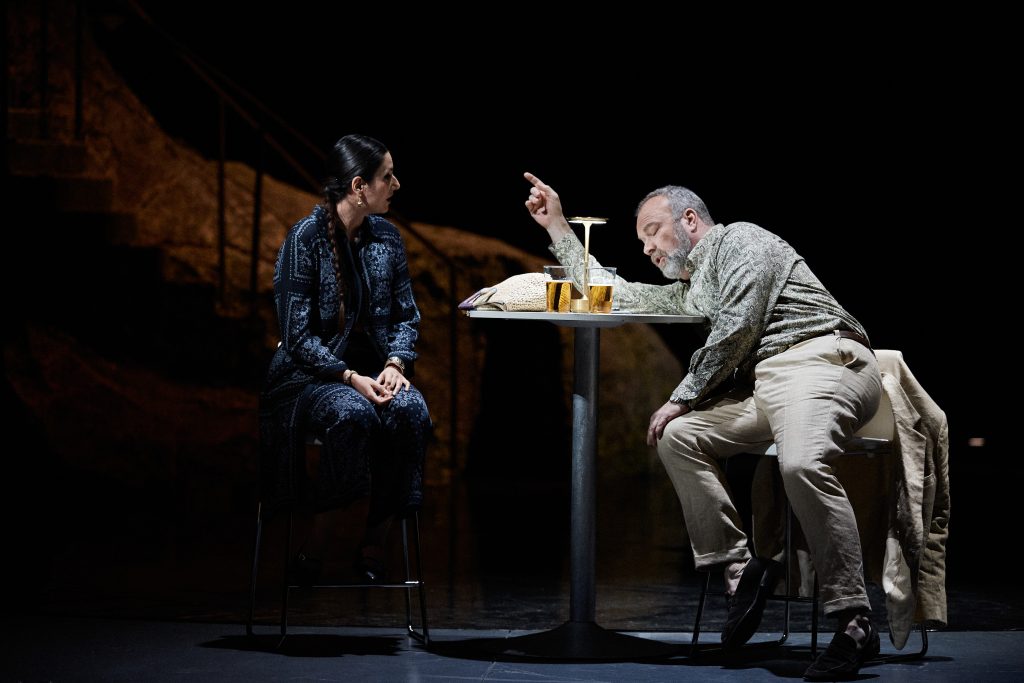
In the same way that the staging reflected so much of our everyday world, so did Fagerlund’s score. The music for the first part of the evening seemed to consist of so many references to composers of the past. I’m convinced I heard echoes of the Strauss of Rosenkavalier in the music for the priest Kathrine, while elsewhere there were echoes of Mahler and Shostakovich. His music felt conventionally post-romantic, yet Fagerlund always gave his characters individual melodic voices. The music for Tove, a woman undergoing a psychotic episode, was composed of intertwined lines for winds and harp, seemingly conjuring up her overwhelmed mental state. The computer-obsessed teen Ole’s declarations were accompanied by rapid-fire rhythms, that seemed redolent of someone typing on a keyboard. Fagerlund uses a large orchestra and I’m not always convinced that his scoring was helpful to the singers. Certainly, the music for Kathrine, with its big, orchestral outburst, made it difficult for Jenny Carlstedt to cut through the textures. In the second act, as the forest takes over, the music transforms into something more nebulous, with hazy high string harmonics, shimmering brass sequences, a slower music that adds a timelessness. His vocal writing is generally singable. While he does take the singers to the extremities of their registers, and does at time make the orchestral sound too heavy, by and large the singers coped well with the material they were given. One of the most frustrating parts of the novel, was the scene where Jostein seems to go into Purgatory, and this takes up much of Act 2 in this version. Yet, Fagerlund gives this episode the mystery it needs, thanks to the imagination of his orchestral writing.

He was well served by the musicians of the orchestra under Hannu Lintu’s direction. Lintu was a confident guide through this new score and his musicians responded to him with total unanimity. The quality of the orchestral playing was sensational: those aforementioned high string harmonics were dispatched flawlessly and with the utmost beauty. The brass playing was similarly unimpeachable and the precision of the percussion most impressive. Yes, Lintu could have let his singers through more at times, holding the orchestra down in order to let the voices through, but what he achieved from his musicians was excellent. The choruses, prepared by Marge Mehilane and Mauro Fabbri, sang with staggering precision in their music, the sopranos free of tone, while the tenors and basses sang with firmness and depth.
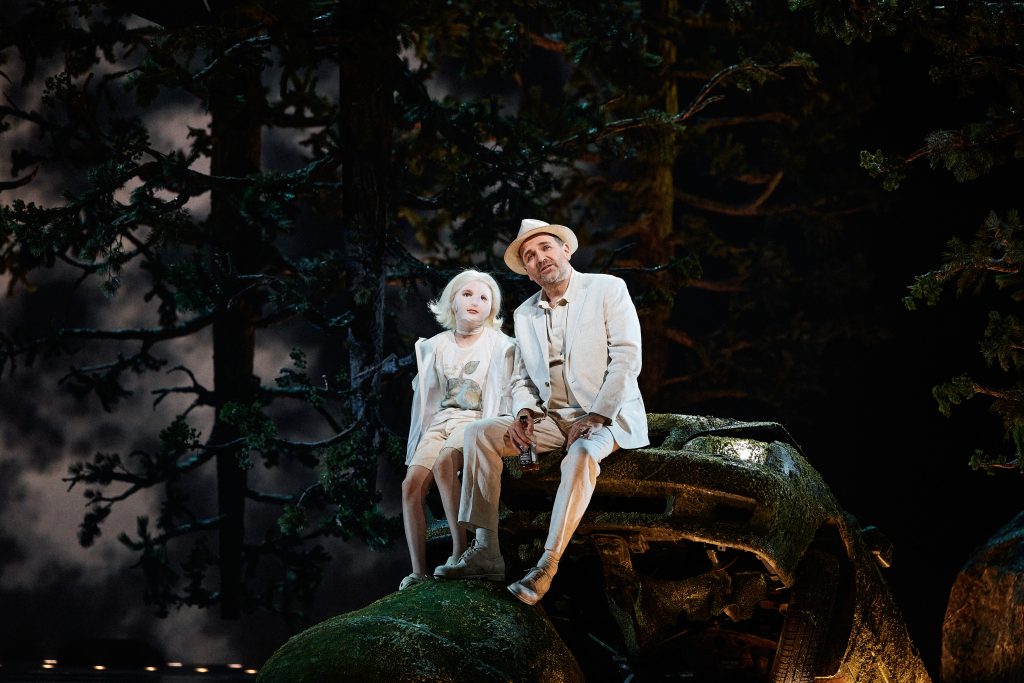
As Jostein, Johan Reuter brought his familiar vocal security to a role that took him to both ends of his bass-baritone range. The clarity of his diction and dramatic engagement gave much pleasure. Carlstedt brought a full lyric mezzo to the role of Kathrine, singing with unflinching generosity, pulling out a substantial chestiness and not afraid to sacrifice the beauty of the tone to illustrate Kathrine’s pain. Helena Juntunen gave Solveig’s music a remarkable beauty, thanks to her fabulously healthy soprano and the way that she used the text to bring out such a range of tone colours in the sound. The voice has a delectable fast vibrato and her instinctive musicality gave her total command over all that was asked of her. So much of Egil’s music was set at the top of Tommi Hakala’s range. Despite his demanding assignments over the past few years, including a Wotan here, the voice sounded in excellent shape tonight, utterly healthy on top. Arne was sung by Niklas Björling Rygert in a robust, confident tenor with easy amplitude, while Minna-Leena Lahti sang Tove in an easily-produced soprano that blended well with the winds and harp accompanying her.
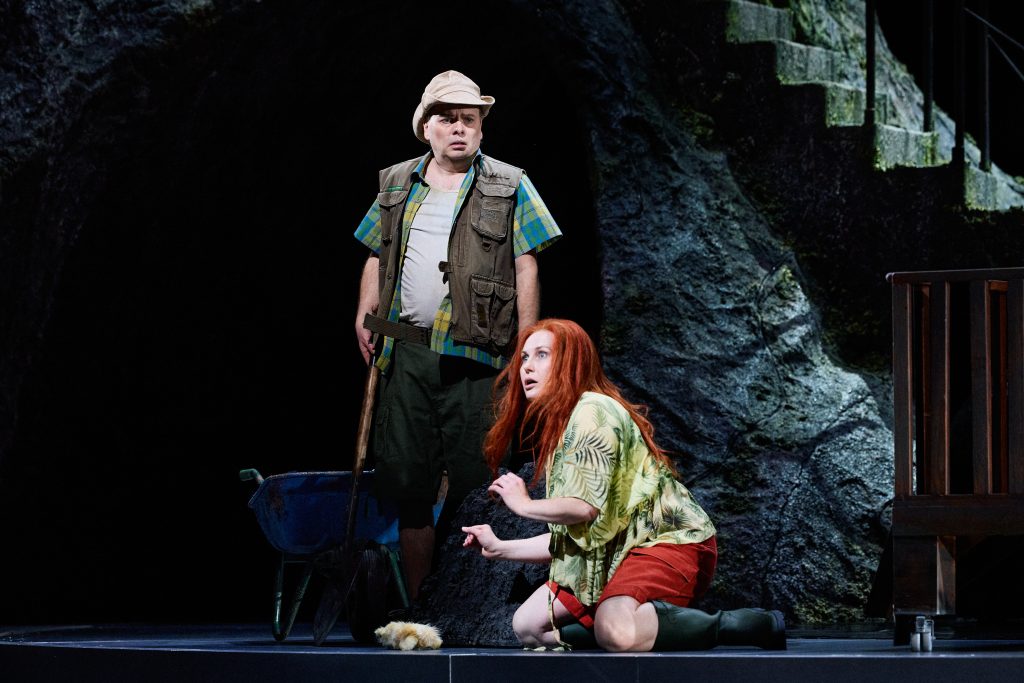
Just as Carlstedt was unflinching as Kathrine, so was Mari Palo as Turid. Palo sang much of her music in a creamy soprano, yet where required, she also wasn’t afraid to scream when confronted with the terror of losing a patient from the psychiatric hospital. Iris Candelaria sang the Konstnären’s music in an agreeably free high soprano, with an easy beauty to the tone, while Nicholas Söderlund sang Gaute in a strong baritone, without succumbing to the urge to hector. Jere Hölttä’s bright, forward tenor was a real asset to the cast as Ole, while at the opposite end, Janne Sivho’s exceptionally handsome and resonant bass was a welcome presence in Ramsvik’s music. Interestingly, Fagerlund has two the young children’s roles of Ingvild and Viktor taken by spoken child actors, and these were confidently taken by Martta Ainali and Otava Merikanto. The remaining roles in the extensive cast were all assured.
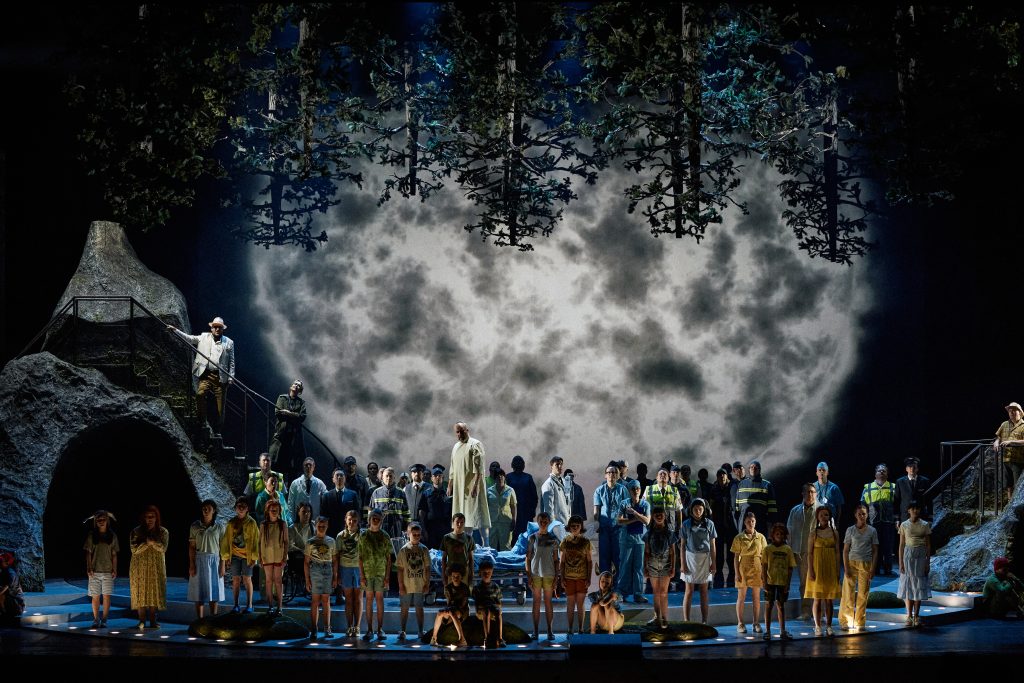
This was an engaging evening in the theatre, one which passed by extremely quickly, thanks to the fact that the libretto, music, and staging seemed to be in complete union with each other. Musically, it really did reflect the excellent standards of the house, with orchestral playing and choral singing of the highest quality, while the cast all rose to their assignments with confidence. I wouldn’t say that this is a life-changing evening in the theatre, but it has so much to offer and does exceptionally well to condense Knausgård’s novel into operatic form. The applause at the end was generous for the cast and particularly so for Lintu and his musicians. The production team was greeted enthusiastically by the audience, followed by a roar of applause as Knausgård and Hemming took a curtain call at the close.
 operatraveller.com