Mascagni – Rapsodia Satanica
Mascagni – Cavalleria rusticana
Santuzza – Saioa Hernández
Turiddu – Roberto Aronica
Lucia – Elena Zilio
Alfio – Roman Burdenko
Lola – Nino Chikovani
Coro del Teatro Comunale di Bologna, Orchestra del Teatro Comunale di Bologna / Daniel Oren.
Stage director – Emma Dante.
Teatro Comunale di Bologna – Comunale Nouveau, Bologna, Italy. Saturday, March 21st, 2026.
Tonight was my first visit to the Teatro Comunale di Bologna since they commenced their 2026 season. The Comunale announces their season as a calendar year and they most certainly gave us a spectacular 2025, with that magnificent Götterdämmerung in October and the glorious Bohème in November. This year is rather more modest in scope, with no staged opera after June, perhaps as a result of uncertainty due to when the theatre on Piazza Verdi will reopen, and the chorus is underused with only one performance with them, a Samson et Dalila, in November. This comes at a time when Bologna has lost its chorus master, Gea Garatti Ansini, to Turin. She transformed this chorus into the finest in Italy, giving it an outstanding discipline of sound and approach, combined with the finest Italian voices. Giovanni Farina has huge shoes to fill now as chorus master. I very much hope that the house can find a stable footing soon.
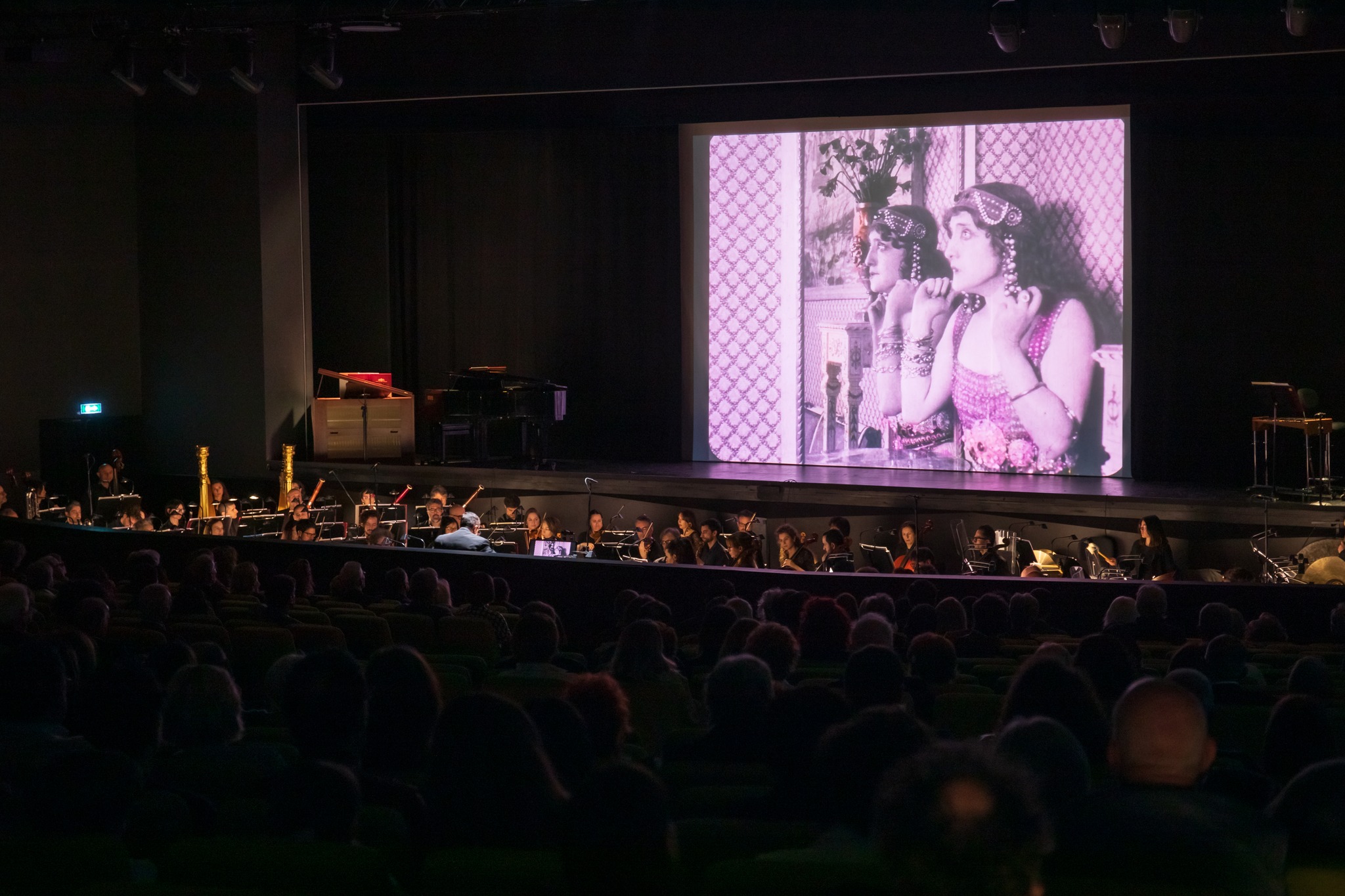
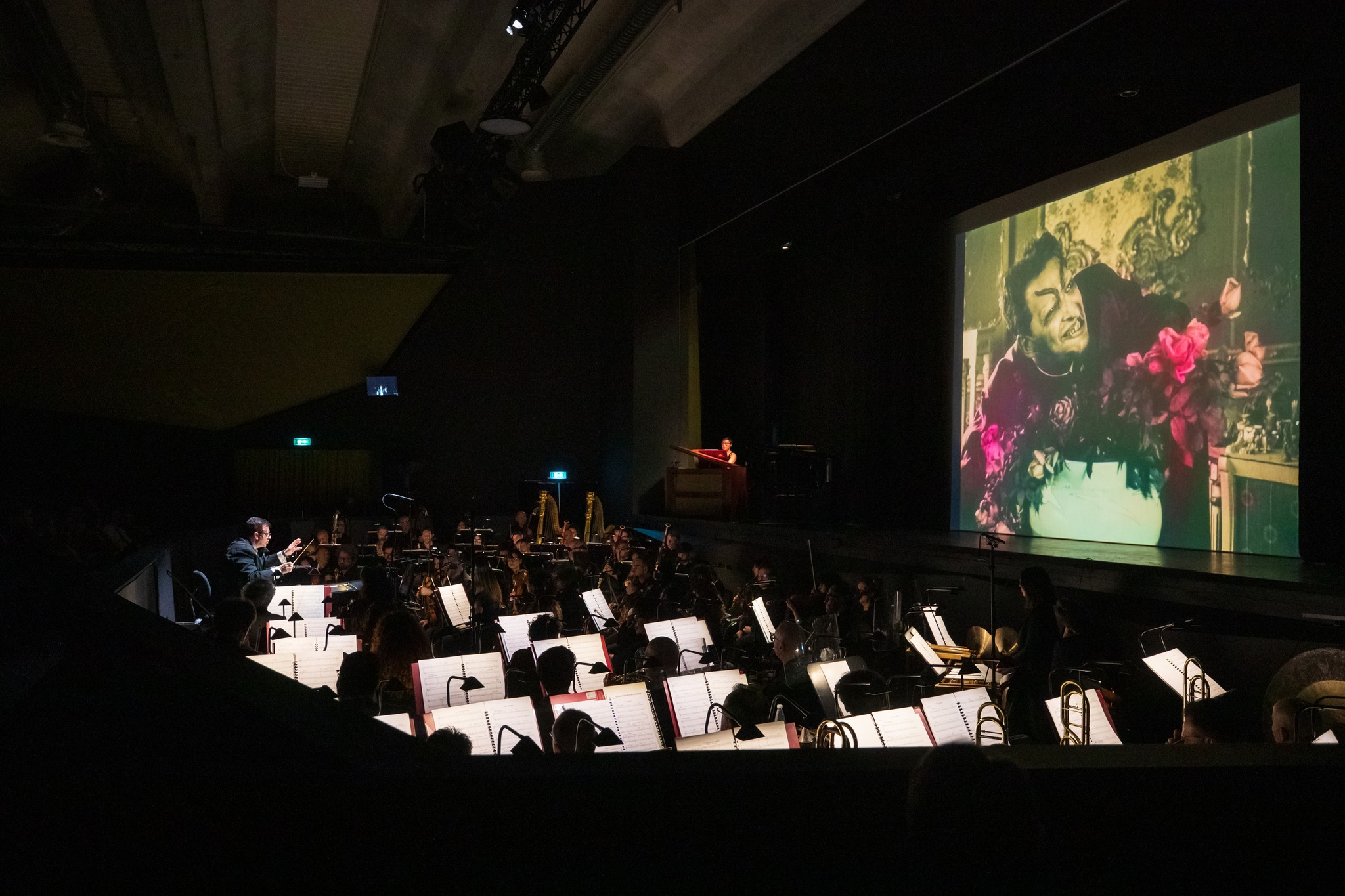
This was a somewhat different and intriguing evening. The first part consisted of a projection of the 1917 silent movie, Rapsodia Satanica, with the score by Mascagni played live, followed by a performance of Emma Dante’s staging of Cavalleria Rusticana, both conducted by Daniel Oren. Directed by Nino Oxilia, who was killed at the front in World War One aged just 28, and starring Lyda Borelli, the film follows the adventures of Alba d’Oltrevita, who makes a Faustian pact with Satan, to regain her youth. Coloured by hand, it’s a striking film, engaging with a side of dark humour, that was influential to future generations of Italian filmmakers. Mascagni’s score is charming, with a nine-note descending and rising motif that stays in the mind for hours afterwards. The sound world offers Italian lyricism, combined with some Debussy-esque tints in the prominence of the winds and harp. I was skeptical before seeing it on whether it would make for a satisfying companion piece to Cavalleria, but actually it worked since it gave us a chance to hear another work by a composer far too often considered a one-hit wonder, and gave us an introduction to a side of Italian art that one might not often see.
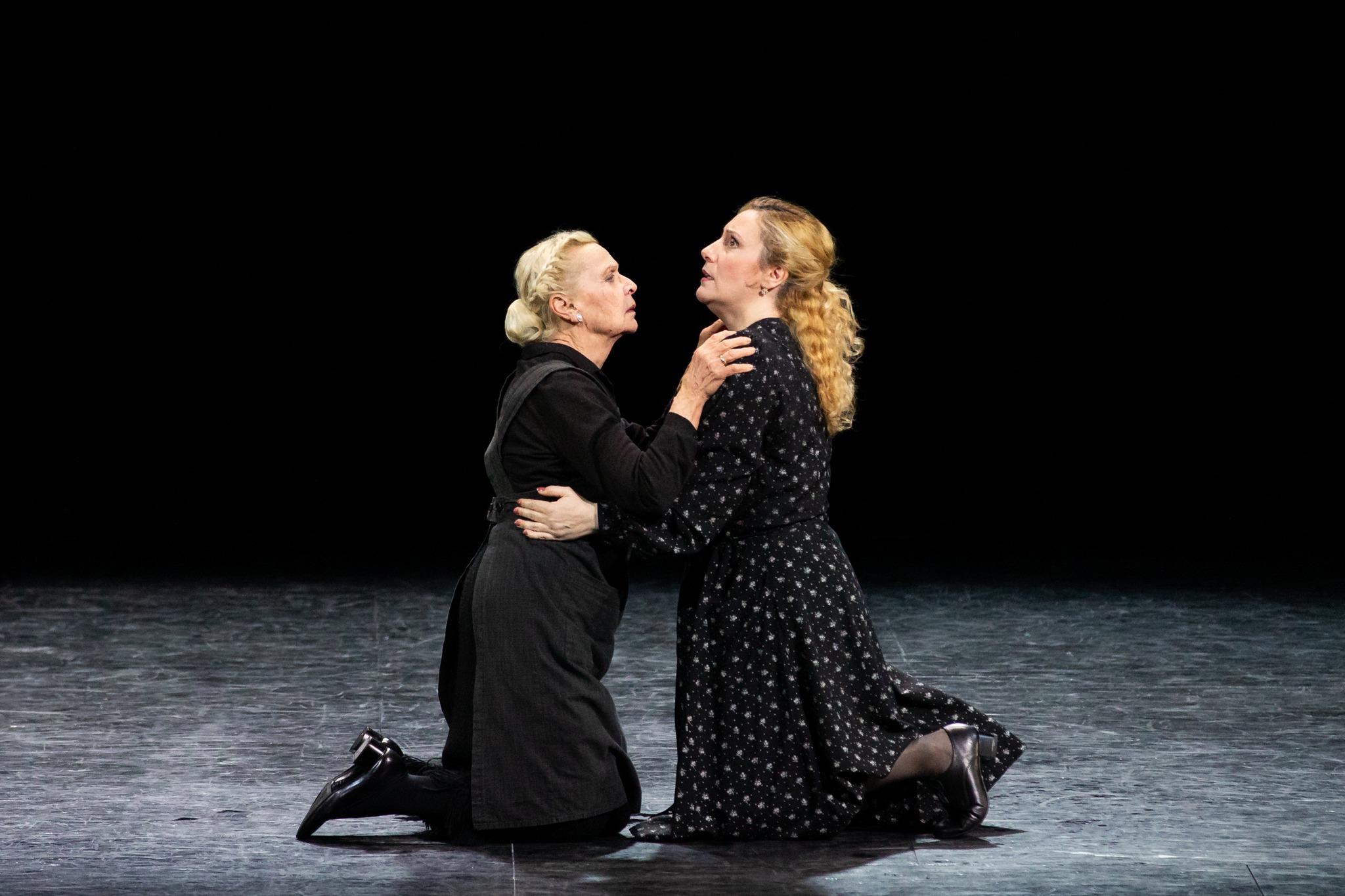
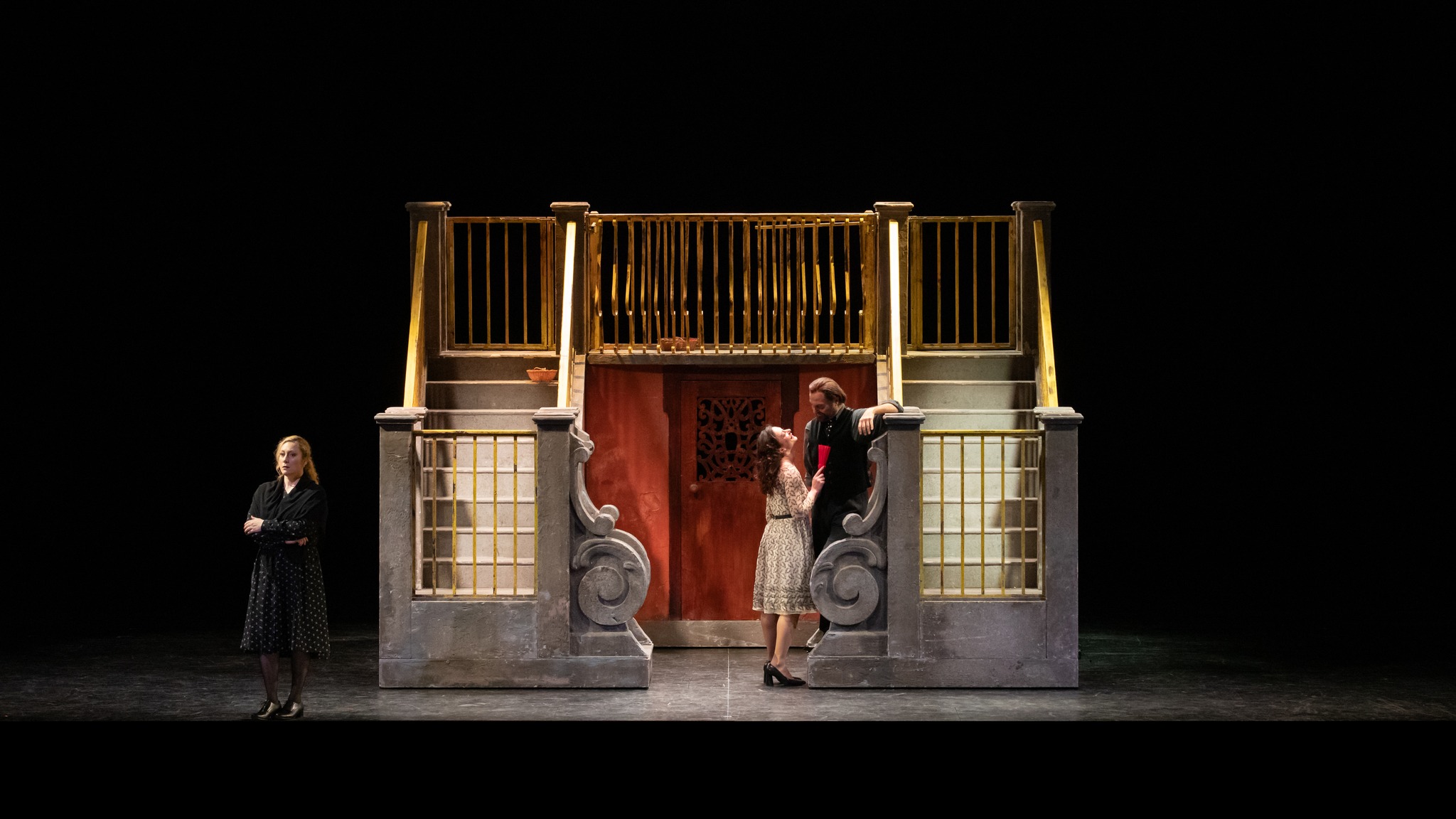
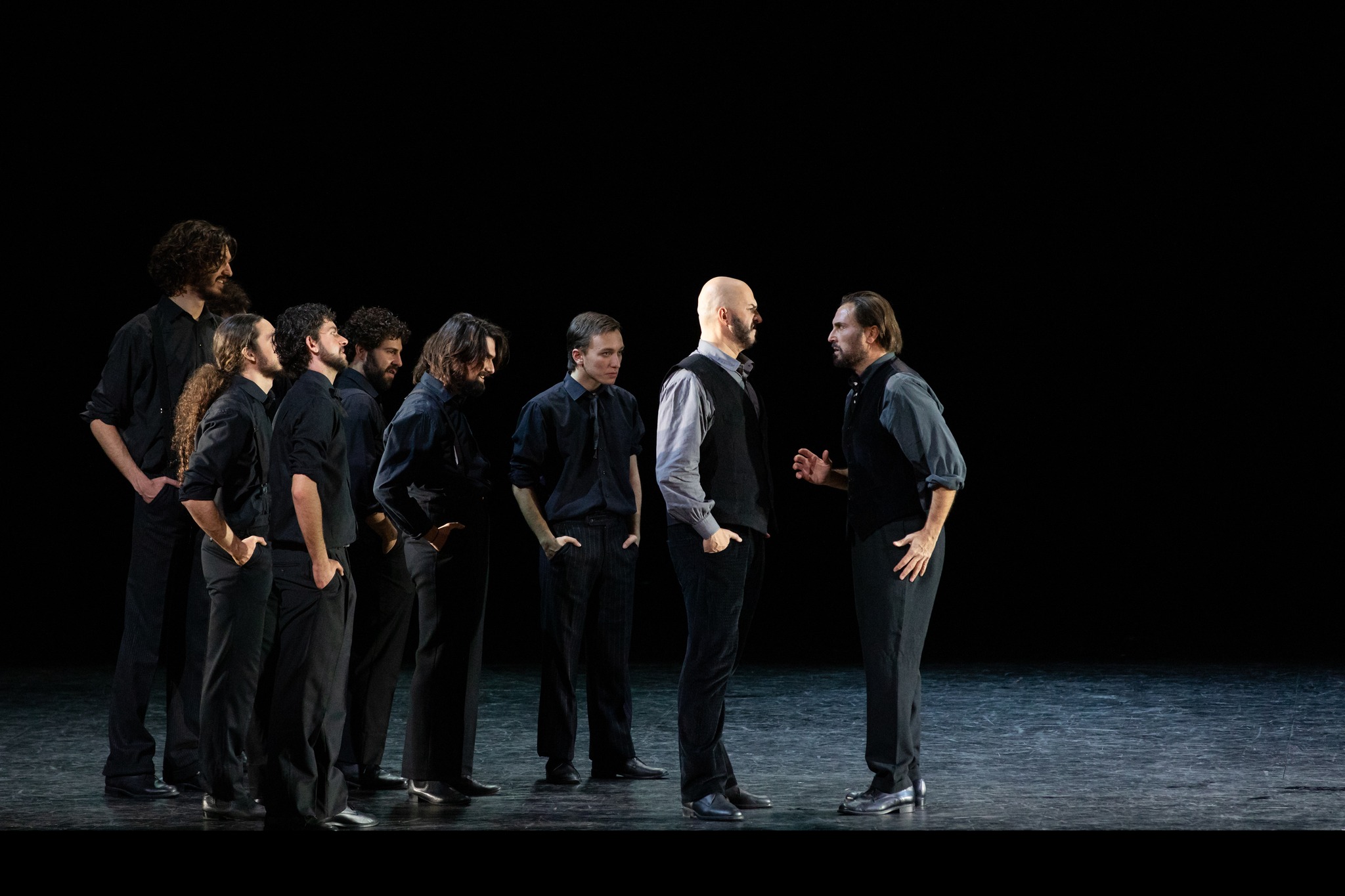
Dante’s staging of Cavalleria takes a different angle to that of Immo Karaman’s Il trovatore that I saw in Hamburg last night, in that she very much uses people to create her stage pictures. The set, by Carmine Maringola, is extremely simple; three blocks consisting of two staircases and a central platform, are moved around on stage to create varying images. These consist of Lola standing on the central platform to greet her multiple suitors, or Turiddu and Santuzza greeting each other from different staircases as if unable to bridge the gap between them. Dante makes use of a corps of actors to create more stage images. Some of these were a figure wearing only a diaper walking across the stage carrying a huge cross, or three women who stood around Mamma Lucia at the close to share her pain. I have no doubt that this imagery will have been more impactful to those with a deeper knowledge of Catholic iconography. Then there were the six danseuses who paraded around in formation as if incarnating horses to Alfio’s cart. The effect there was somewhat more risible. That said, the group of six men who rolled up their sleeves as Turiddu challenged Alfio gave a striking image of Sicilian masculinity.
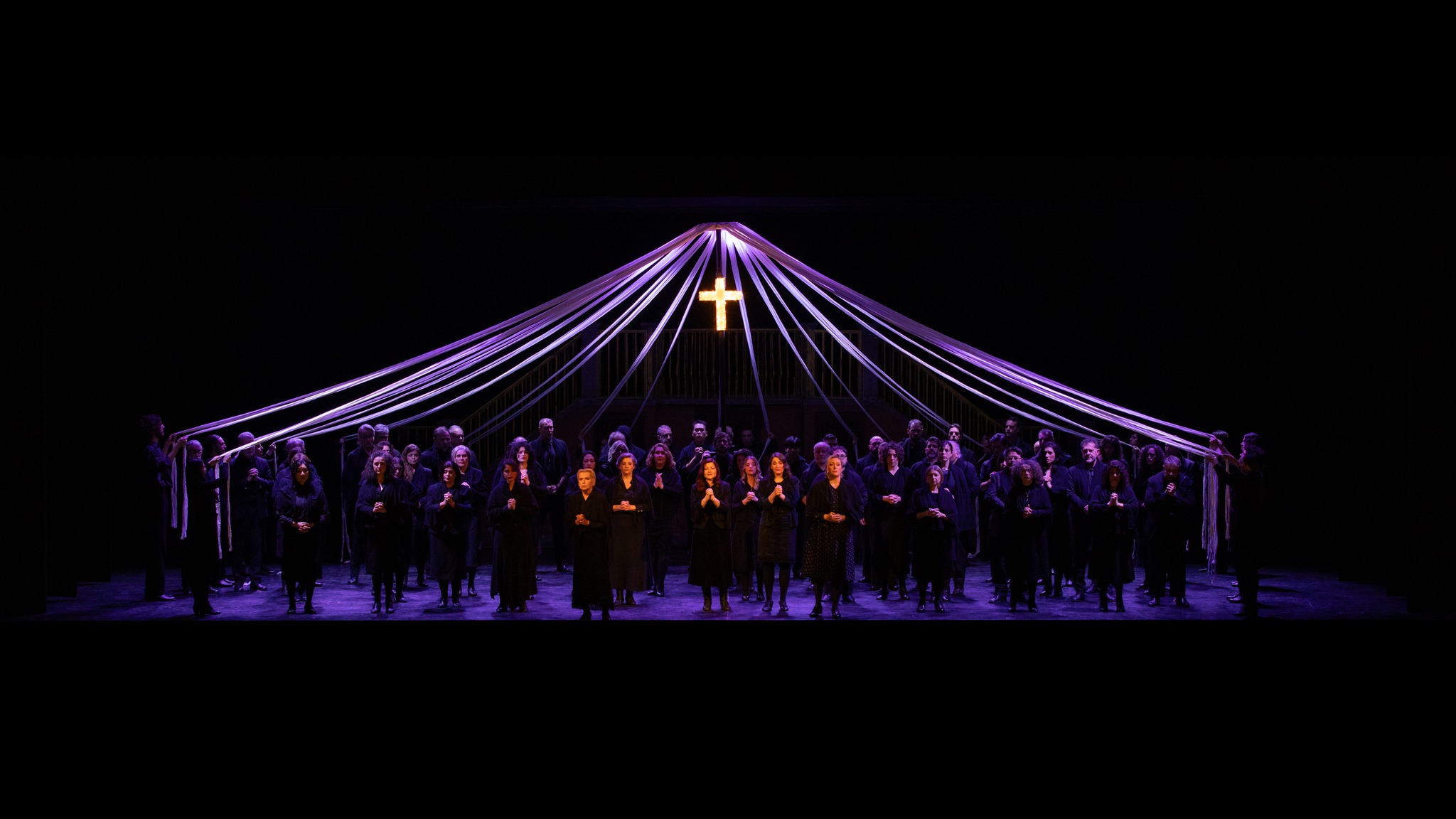
At its best, Dante’s staging gives the principals a chance to tell the story and she also knows when to just leave them alone. The Easter Hymn was staged with incredible simplicity, just the chorus and Santuzza and Lucia standing facing the audience covered with some simple stage decorations. And yet the impact was immense because she simply just let that fabulous chorus sing and let the music take precedence. In the opening chorus, and this could be as a result of the Comunale’s temporary theatre, the sopranos and mezzos were a bit recessed in the sound picture as they were placed further back on stage without a large set to resonate with. Otherwise, Dante’s staging did what it needed to do, even if it lacked the insight and emotional impact of Damiano Michieletto’s staging I saw in Brussels, probably the greatest I’ve yet seen of this work.
Oren’s interpretation was one that focused on beauty of sound – and what beauty of playing he obtained from this incomparable orchestra. From the opening phrases in the strings, emerging from nothingness with gossamer beauty, there was a cantabile exquisiteness to their playing that simply captivated. Oren built up the Easter Hymn slowly, moulding the climaxes with powerful dedication, so that it built up gradually into something completely overwhelming. Bologna has something truly special in its orchestra and chorus, something worth cherishing and ensuring its survival. Oren also clearly loves this work, but sometimes it’s possible to love something too much. The duets between Santuzza and Turiddu and Santuzza and Alfio were taken at incredibly slow tempi that robbed them of drama. I longed for him to put his foot on the gas and inject the dramatic vigour those moments required. The chorus was on stupendous form. The discipline of sound, no war of vibratos here, was seriously impressive. Even in this difficult acoustic, they made a magnificent noise in the Easter Hymn and the ensemble was tight throughout, even when they were required to move around the stage. I very much hope that Farina can continue the exceptional standards he’s been bequeathed.
Making her role debut tonight, Saioa Hernández sang Santuzza in her big, resonant soprano with a brassy edge. She more than has the measure of the role, negotiating the challenging tessitura, with its passaggio-crossing interviews, with aplomb, the voice always integrated. She capped the textures in the Easter Hymn with ease, the voice soaring over the massed sound magically. Perhaps understandably, given the fact it was a role debut, I did feel that Hernández was somewhat detached in her interpretation. Her diction was extremely clear, but I had a sense that she was singing over the words rather than with them. She most definitely sang the role, bringing power and generosity to her singing, and I’m sure with more engagement with the role she’ll bring even more insight.
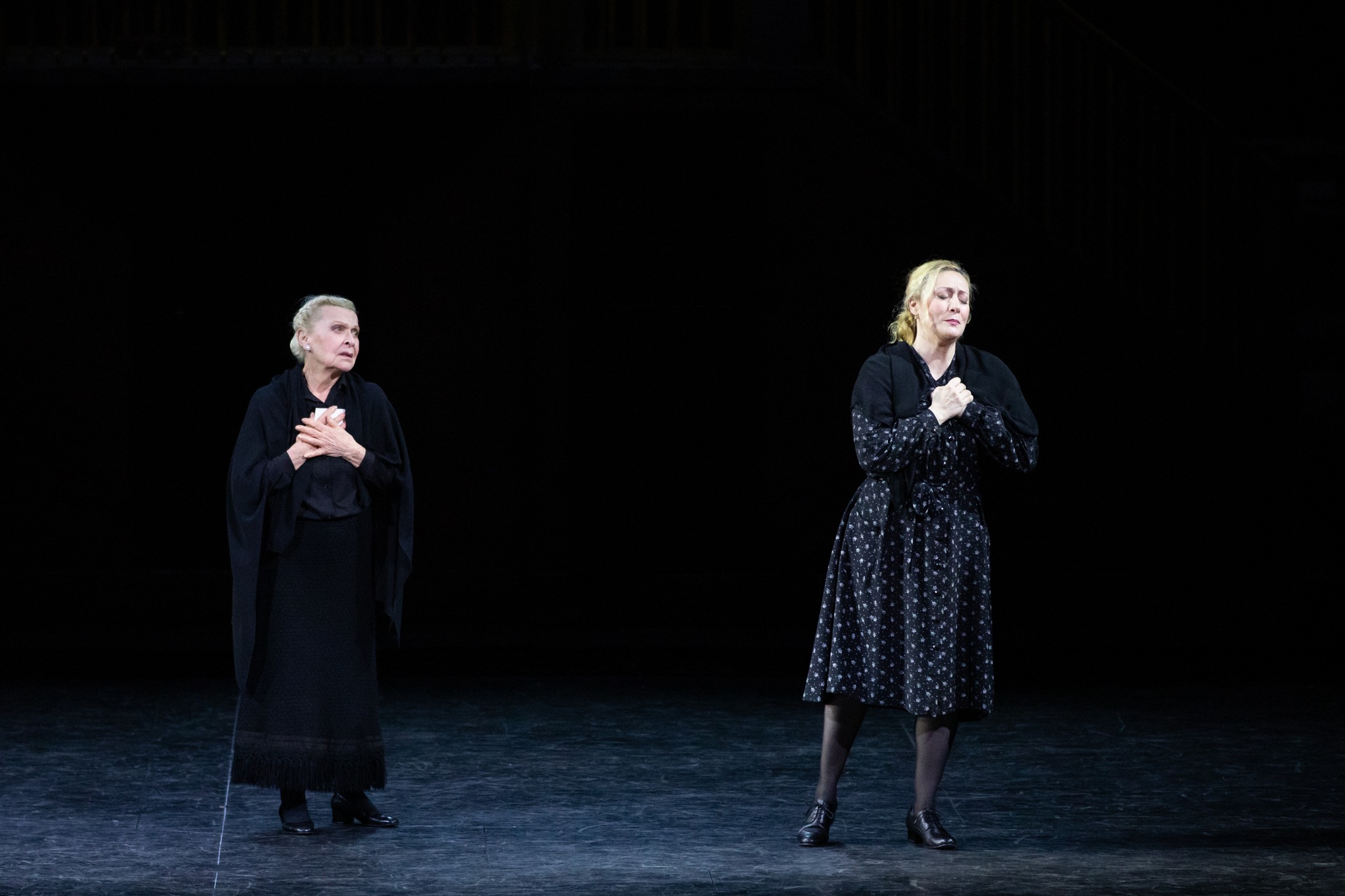
Roberto Aronica gave us a generously-sung Turiddu. A student of Carlo Bergonzi and now in his late fifties, his tenor is still in decent shape. Yes, there was a sense of needing some heavy lifting to get up to the heights in the brindisi, but there was an agreeable Italianate warmth to his sound that gave pleasure. Roman Burdenko sang Alfio in a huge, firm column of sound. It might be slightly grainy in tone, but he has amplitude to spare and he was extremely engaged with the text. Nino Chikovani sang Lola in a sunny-toned mezzo. She worked it flirtatiously around the stage, although the voice did have a tendency to sit around the note rather than directly on it. Then there was the legendary Elena Zilio as Mamma Lucia. Even in this difficult acoustic, and even with the passing of the years, with Zilio now half-way through her ninth decade, the voice still rings out with magnificent amplitude. Yes, the registers have separated, but the firmness of tone, the clarity of her diction, and sheer stage presence – all of these are undimmed. Zilio is a force of nature and a phenomenal artist and we’re so lucky that she still grants us her insight and dedication on stage.
This was a very satisfying evening in the theatre. It might have been somewhat different as an artistic propsal, but it gave us an opportunity to see two sides of Mascagni’s œuvre and allow us to appreciate his artistry on a deeper level. Hernández gave us a notable role debut as Santuzza, an assignment that she will no doubt grow even further into as an interpreter, while we benefitted from Zilio’s lifetime of understanding and musical dedication as Mamma Lucia. Oren’s focus on beauty of sound worked extremely well for the big moments, but also worked against the drama in the duets. Above all, this was an evening that placed the Comunale’s stupendous orchestra and chorus front and centre, where they belong. The audience responded generously at the close of the evening, with particularly loud cheers for Hernández.
 operatraveller.com