Poulenc – Dialogues des Carmélites
Mère Marie – Antoinette Dennefeld
Blanche de la Force – Ekaterina Bakanova
Mme Lidoine – Sally Matthews
Sœur Constance – Francesca Pia Vitale
Mme de Croissy – Sylvie Brunet-Grupposo
Le Chevalier de la Force – Valentin Thill
Le Marquis de la Force – Jean-François Lapointe
Mère Jeanne – Lorrie García
Sœur Mathilde – Martina Myskohlid
Le Père confesseur – Krystian Adam
Le premier commissaire – Matthieu Justine
Le geôlier/Le second commissaire – Isaac Galán
Thierry/Le médecin – Roberto Accurso
Monsieur Javelinot – Eduardo Martínez
Coro Teatro Regio Torino, Orchestra Teatro Regio Torino / Yves Abel.
Stage director – Robert Carsen.
Teatro Regio, Turin, Italy. Thursday, April 2nd, 2026.
This run of Robert Carsen’s 1997 staging of Dialogues des Carmélites, first seen at De Nationale Opera in Amsterdam, is actually the very first at the Teatro Regio Torino. It struck me during the course of the evening how relevant Poulenc’s opera is today. While he might have explored the themes within through the prism of his own sincere Catholicism, the notion of a religious community threatened by an all-present mob feels disturbingly contemporary and present, particularly given the horrific rise in Anti-Semitism all too obvious in Italy currently and especially in Turin, with some particularly horrifying graffiti seen on the way to the theatre this evening.
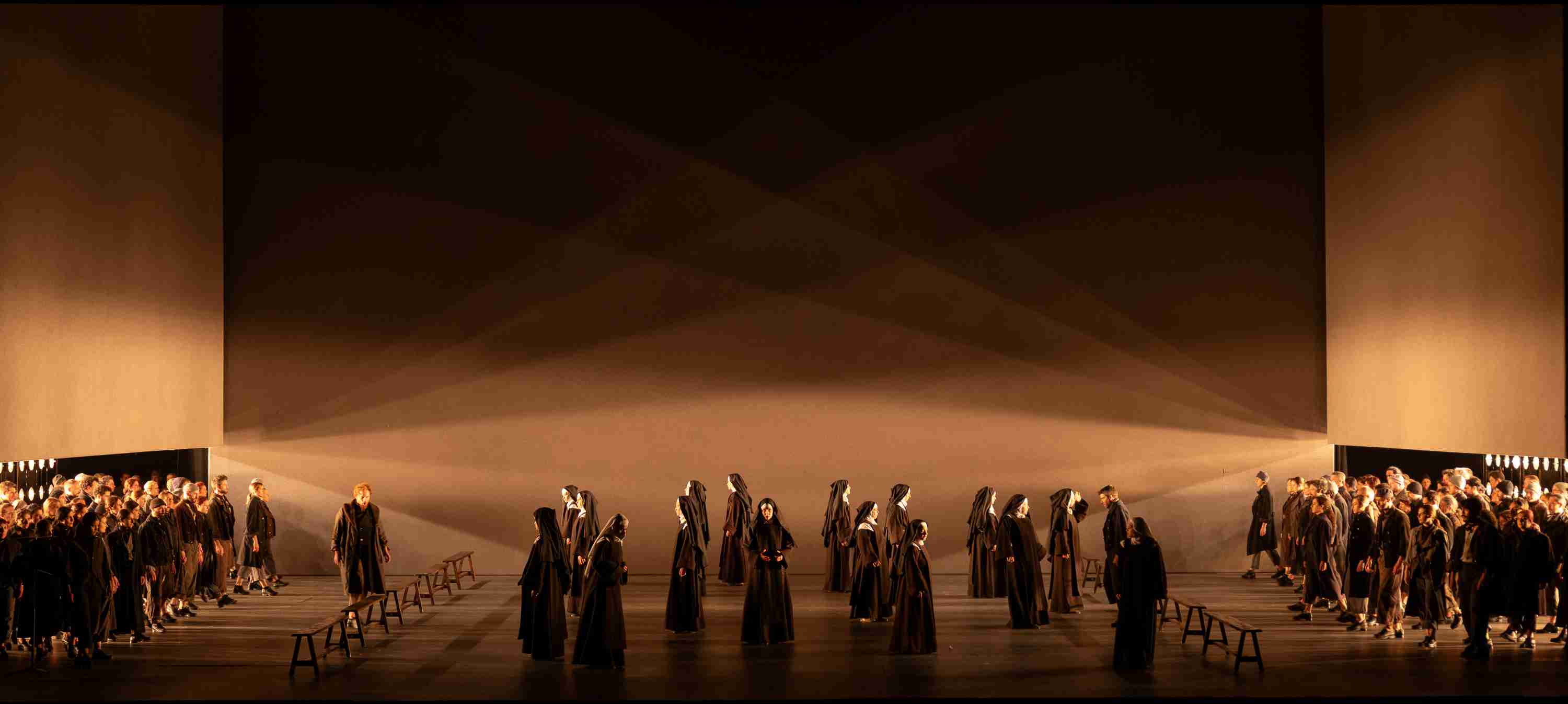
Carsen’s staging has travelled widely – I saw it around a decade ago at the London Royal Opera – and it’s clear why it has. It’s a staging of the utmost simplicity, yet in this simplicity it hides an incredible theatrical sophistication that uses the physical presences of those on stage to tell a story with immense clarity. Carsen sets the action within a minimal set, the action contained within three plain white walls, with the stage occasionally accessorized with some basic furniture. In so doing, he produces some striking stage pictures, not least the simple candles around the set while Blanche and Constance hold vigil for Mme de Croissy’s corpse at the start of Act 2. The mob is ever-present, especially in the opening scene of Act 1, circling the de la Force family, the claustrophobia of their imminent demise physically undeniable.
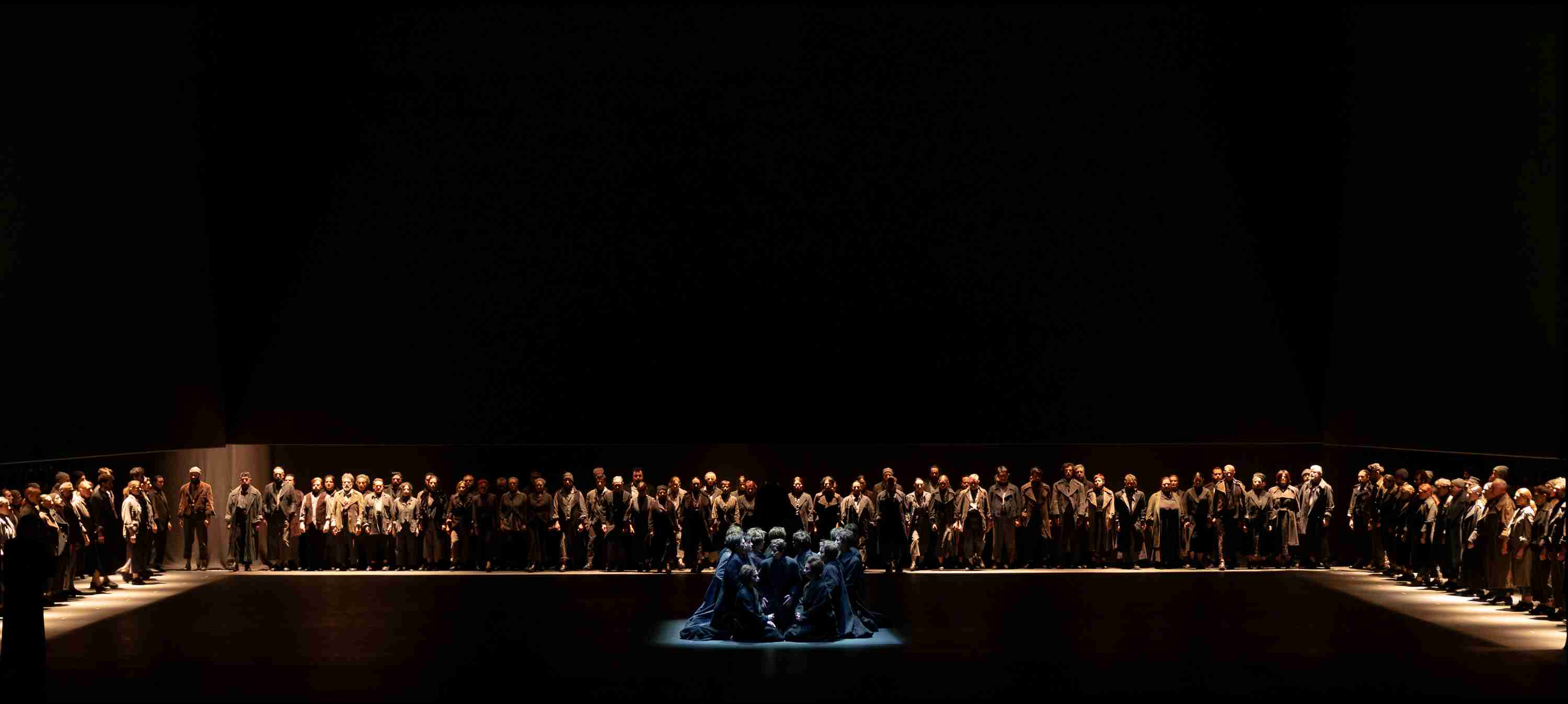
So much Carsen achieves is also manifested through the lighting design, by Carsen himself with Cor van den Brink. The shadows on the set, whether of the nuns’ habits or the mob itself were extremely haunting. Of course, the closing scene is extremely difficult to stage, with the nuns being guillotined one by one. Here, Carsen, together with choreographer Philippe Girardeau, stages it as a kind of elated dance, with the nuns finding a state of pure ecstasy in their imminent demise, as each slowly falls to the floor. Carsen’s staging is undoubtedly mightily impressive theatrically, yet it ultimately felt cerebral rather than emotional to me. Perhaps that’s simply the work. It’s not one that has that kind of visceral impact on me that I’ve witnessed others having in the theatre. And yet, I couldn’t help but reflect on the central message of the piece itself this evening after everything we’ve lived through over the past three years.
While Poulenc specified that he wished for the work to be performed in the vernacular of the audience, with the world premiere taking place at the Scala some 130 kilometres from here in the tongue of Dante, the Regio took the decision to perform the work in French with an international cast, one which did contain some Francophone singers. Fortunately, diction was generally clear on the whole, even if there were a few isolated mispronunciations from a very few cast members. Franco-Ontarian conductor, Yves Abel, led the Regio orchestra on excellent form. Given how new this work was for them, the quality of the playing and understanding of the idiom was proof of intense rehearsal and preparation. Indeed, the playing was unimpeachable throughout with the accuracy and clarity of their articulation utterly pristine. There was a luminosity to the orchestral sound that I found particularly striking, and they were responsive to how Poulenc’s harmonic language switches from austere religiosity to saccharine lyricism in constant motion. Abel’s tempi were nicely brisk and unsentimental, keeping the work moving to its inevitable conclusion. I was also struck by how the electronic sound of the guillotine became louder and louder as each nun expired. I did, however, find that Abel kept the orchestra occasionally too loud for some of the voices to register over the orchestra – at least from my seat towards the front of the auditorium.
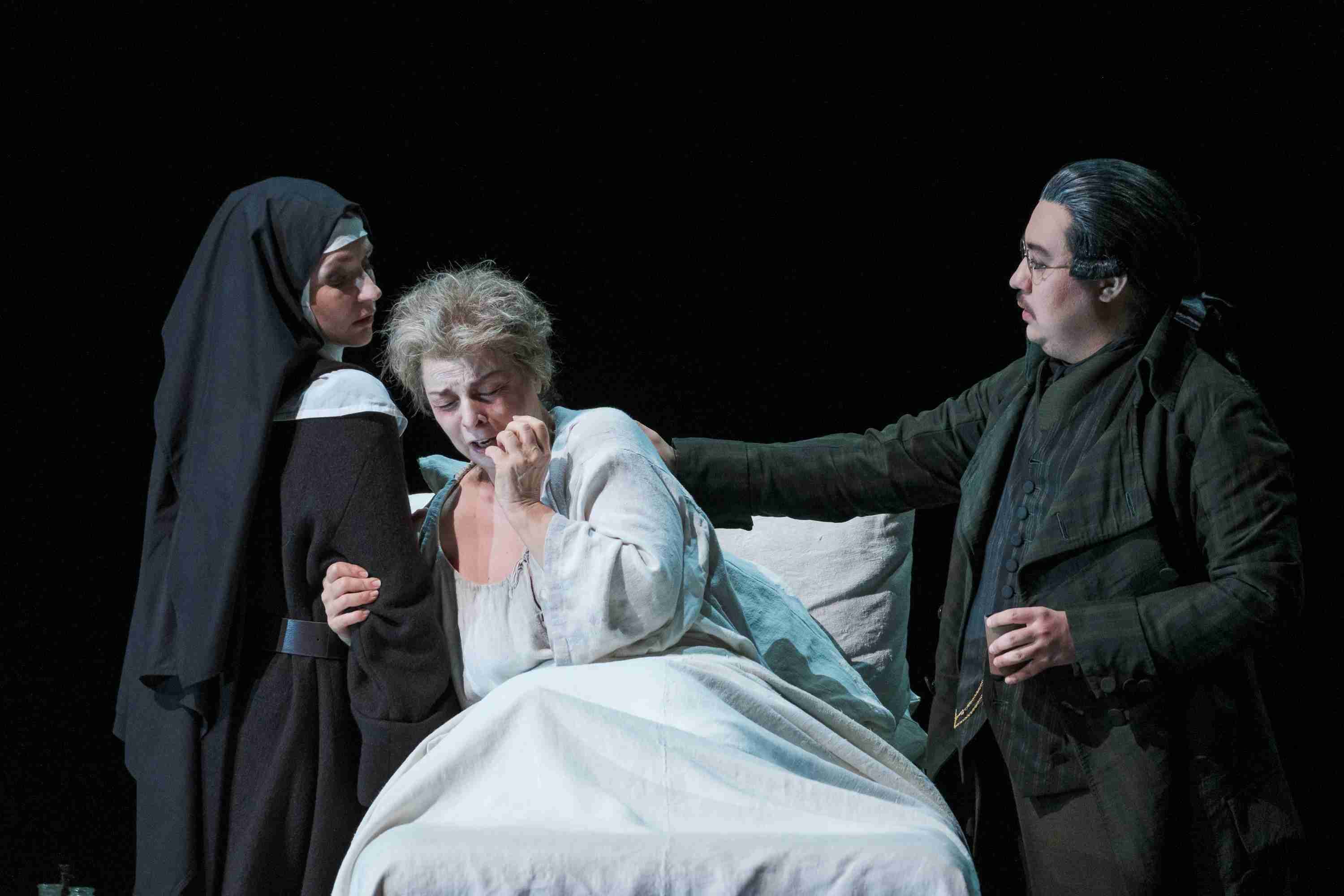
Ekaterina Bakanova sang Blanche in a peachy, lyric soprano. There was a brightness on top that I found most beguiling. She was unafraid to sacrifice the beauty of the tone in places to illustrate Blanche’s desperation as her world fell apart. Her diction was also good, allowing the text to register. So much of the role sits within a soprano’s passaggio and Bakanova kept the voice utterly integrated throughout. Sylvie Brunet-Grupposo sang Madame de Croissy with immense bravery and dedication. She’s a natural stage animal and she incarnated the tortured Prioress with shattering immediacy, throwing caution to the wind and letting the voice rip, crossing the registers, spitting out the text, not holding back to bring her character to life. Francesca Pia Vitale was a very welcome presence in the cast as Constance. Her soprano has a wonderful scintillating quality, with an attractive fast vibrato and easy reach on top.
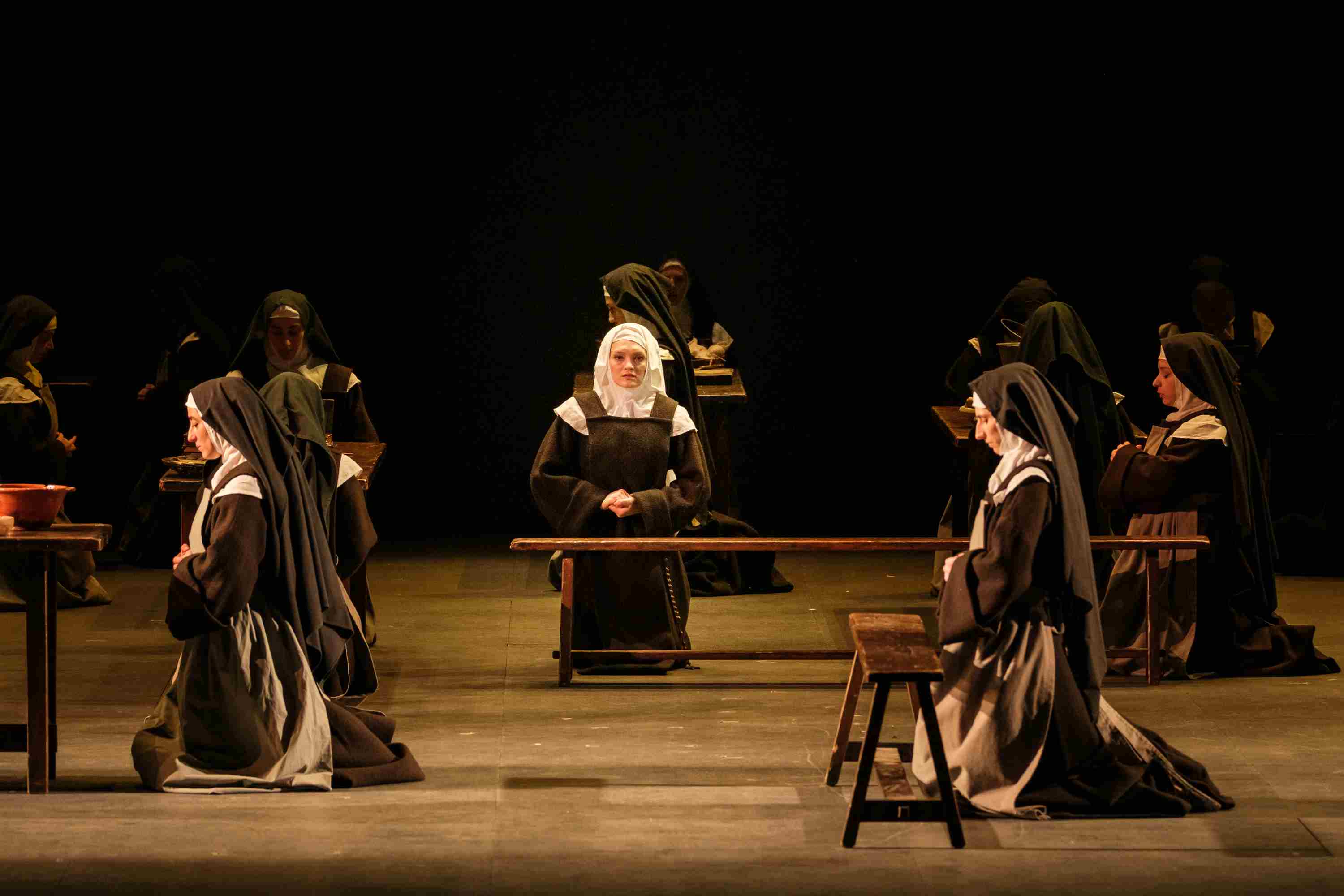
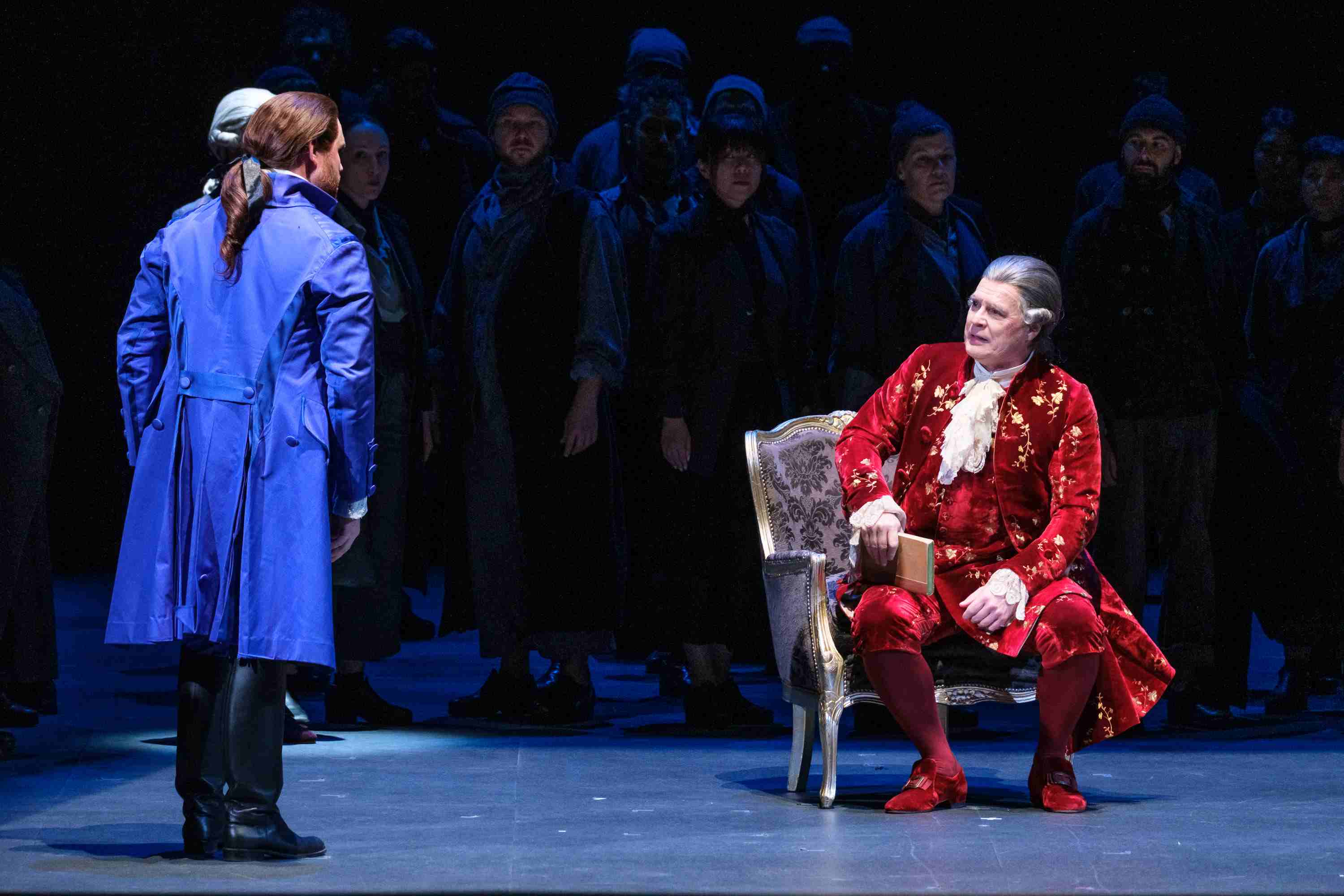
As Madame Lidoine, Sally Matthews sang her music with a clear dedication to producing an even legato. I did find her diction to lack the utmost in clarity and the tone has now hardened and lost some freedom on top. That said, her intonation was much more accurate than on some previous evenings I’ve had in her company. Antoniette Dennefeld sang Mère Marie in a silky mezzo, with easy reach on top. Valentin Thill brought a focused, attractive tenor to the role of the Chevalier de la Force. Unlike his castmates, he chose to sing his French with a guttural R of spoken, rather than the rolled R used for operatic French. This did make his vocal production sound more constricted and took away from some of the clarity of his diction. Jean-François Lapointe sang Le Marquis de la Force in a firm, healthy baritone.
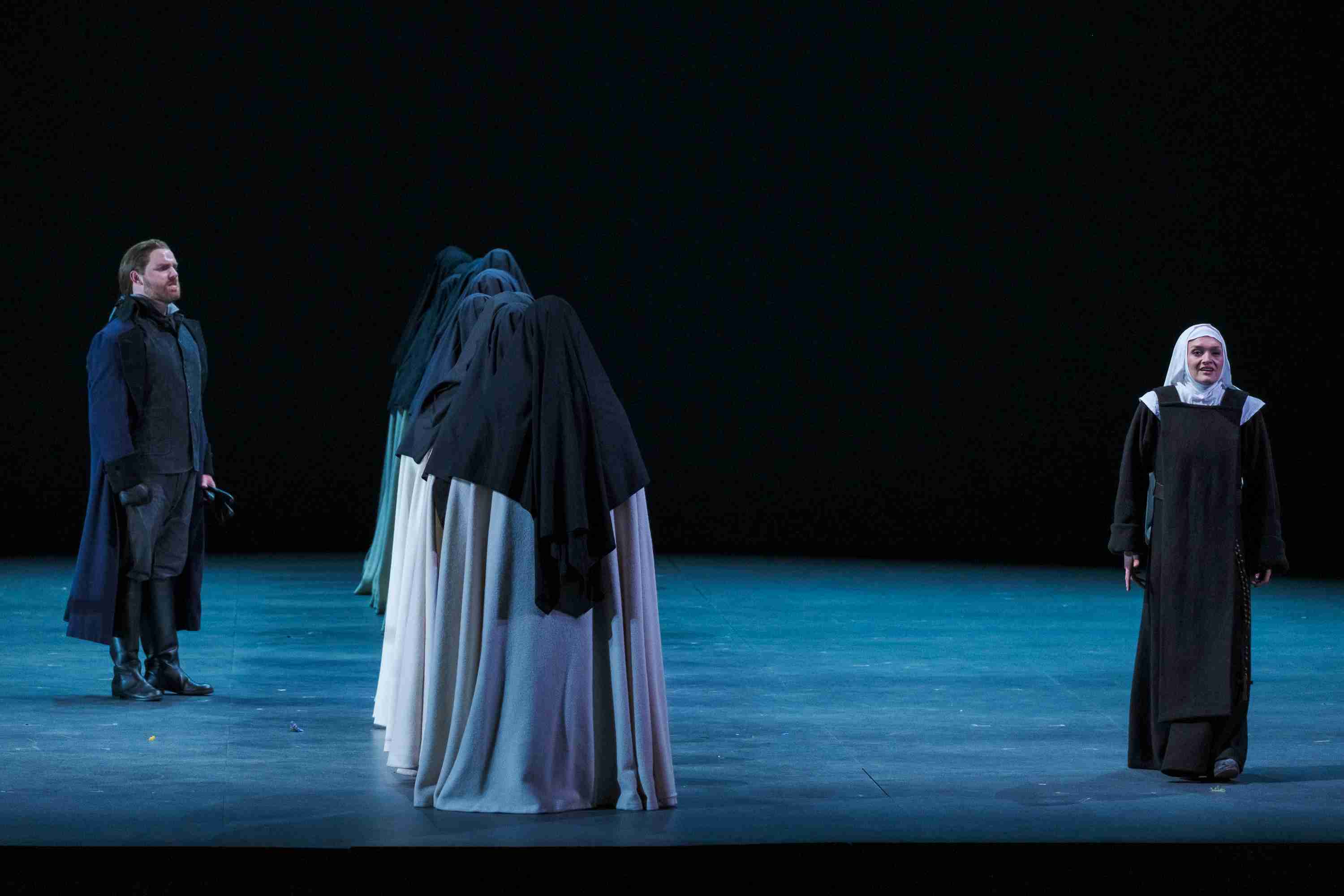
The remainder of the cast reflected the excellent quality one has come to expect here. I particularly enjoyed the contribution of Krystian Adam as Le Père confesseur, who sang in a generous tenor with an agreeable warmth of tone. Matthieu Justine and Isaac Galán were both assets to the cast as the Commissaires, the former in a focused tenor, the latter in a handsome baritone. The Regio has recently engaged Gea Garatti Ansini as chorus master, who had such a transformative effect in Bologna. The small group of chorus members who joined the nuns sang the Ave Maria with luminous tone and impeccable tuning, while the larger chorus added a shimmering halo of sound at the close. I look forward to seeing what she will achieve looking ahead with this already estimable chorus.
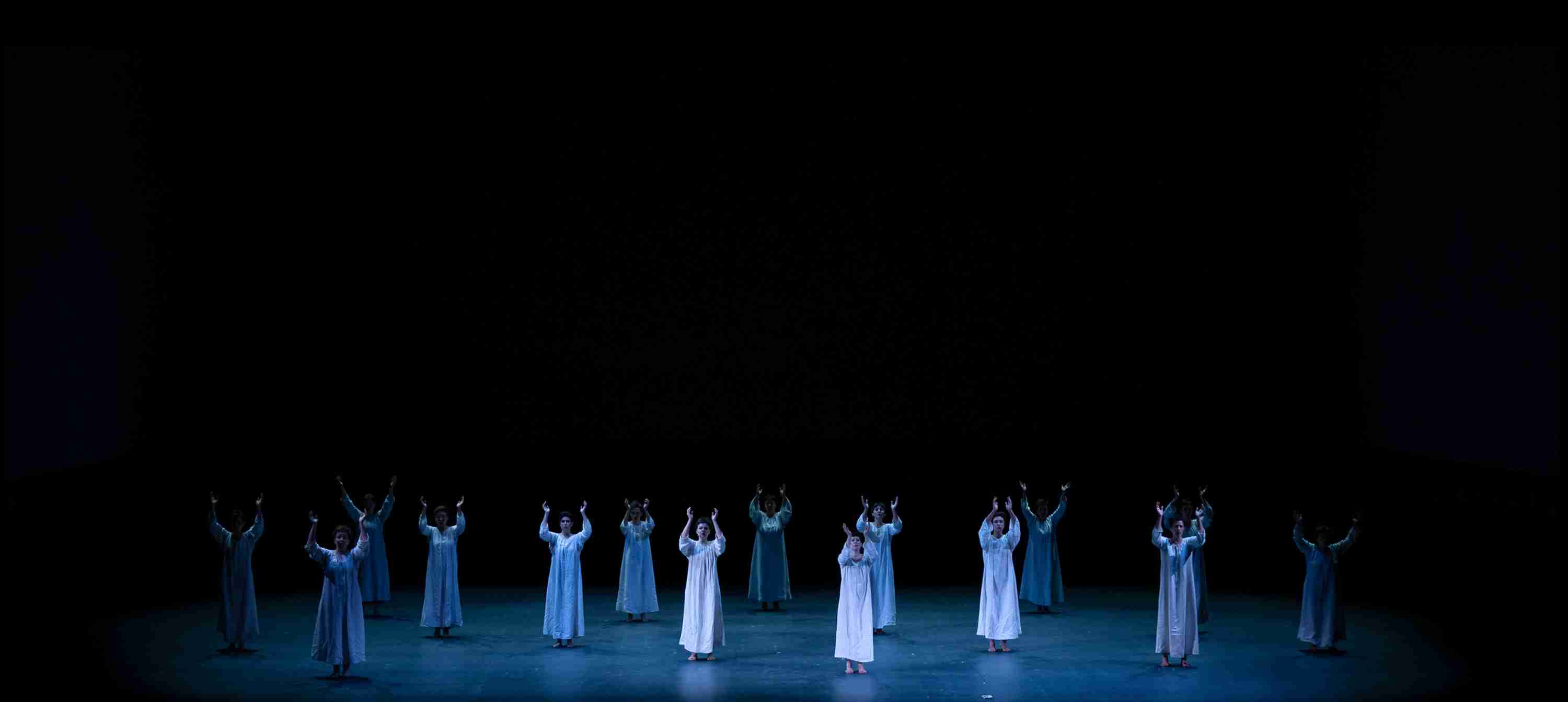
There was much to appreciate in tonight’s performance. It had clearly been prepared at the highest level, with excellent orchestral playing and satisfying singing throughout the cast. Carsen’s production has lost nothing of its theatrical impact and creativity, illustrating the story with the utmost clarity. I found it a convincing evening in the theatre. The audience response at the close was warm for the entire cast.
 operatraveller.com