Mozart – Le nozze di Figaro.
Il Conte – Kartal Karagedik
La Contessa – Lenneke Ruiten
Figaro – Božidar Smiljanić
Susanna – Maeve Höglund
Cherubino – Anna Pennisi
Marcellina – Eva Van der Gucht / Reisha Adams
Don Basilio – Daniel Arnaldos
Don Curzio – Daniel Arnaldos
Bartolo – Stefaan Degand / Hsieh Yu-Hsiang
Antonio – Stefaan Degand / Hsieh Yu-Hsiang
Barbarina – Elisa Soster
Koor Opera Ballet Vlaanderen, Symfonisch Orkest Opera Ballet Vlaanderen / Marie Jacquot.
Stage director – Tom Goosens.
Opera Ballet Vlaanderen, Ghent, Flanders, Belgium. Saturday, June 3rd, 2023.
How universal is a work of art and how much should a production team adapt it to local tastes? A quick glance at operabase shows that there are productions of Le nozze di Figaro taking place in theatres from Bogotá to Heraklion, from Victoria, BC to Muscat, in addition to this new one for Opera Ballet Vlaanderen. Indeed, I saw a fabulous one in Bologna only two weeks ago. Figaro is a work that makes one laugh, it induces nostalgia, takes one to the highest of highs and the lowest of lows. Above all, it distils what it means to be human into three hours of music: that innate desire to simply be happy. If there were only one opera in the world, I would want it to be this one.
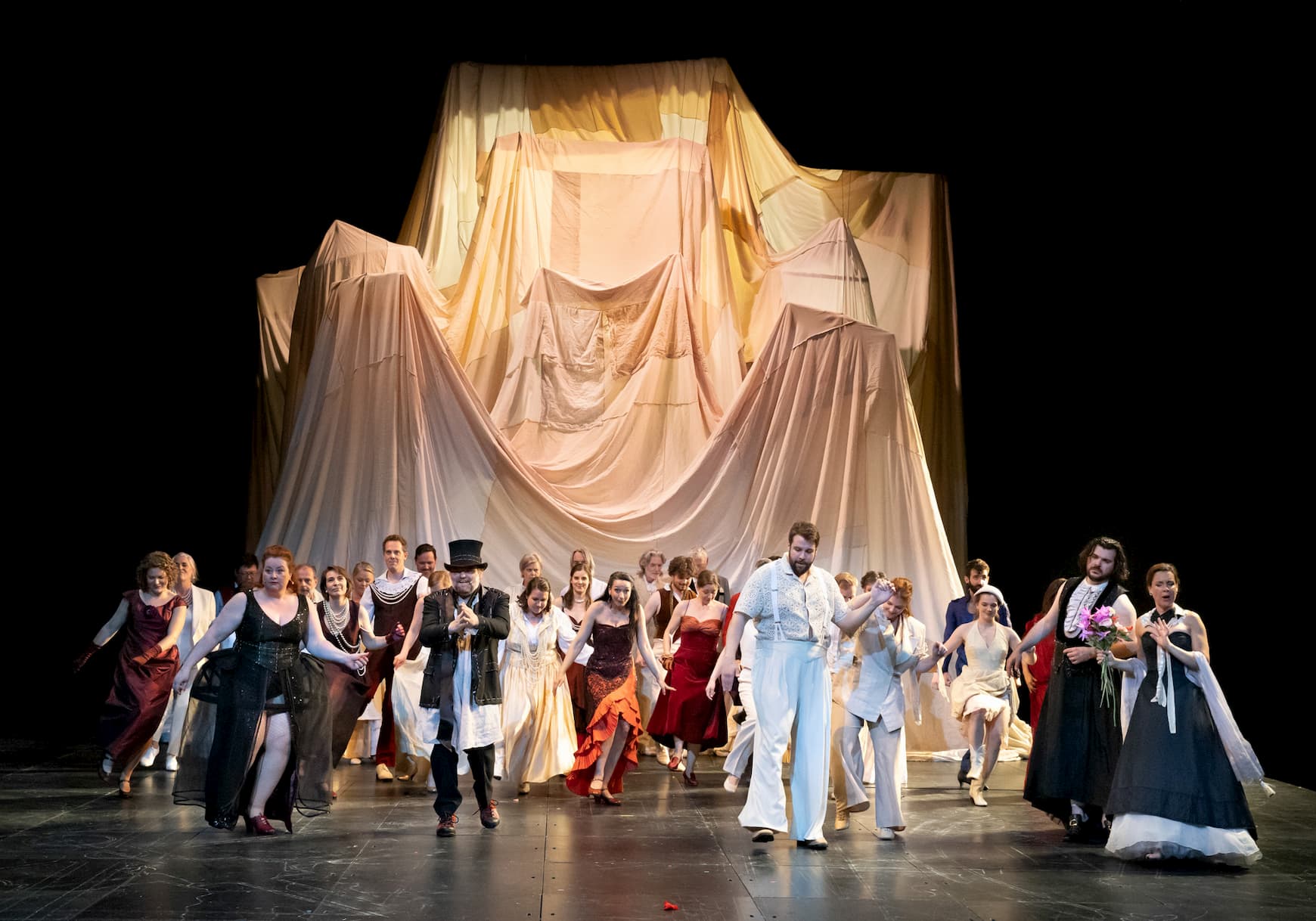
With this new staging, the house has confided the work to the young Flemish stage director, Tom Goosens, here making his main stage debut. Goosens has already directed the Da Ponte trilogy as spoken plays, so he’s certainly familiar with the content. He takes considerable liberties with the text – cutting recitatives, interrupting musical numbers precipitately, or indeed cutting some out completely – we lose the initial Susanna/Marcellina duet, for instance. Furthermore, he casts Bartolo/Antonio and Marcellina with actors, who intone their lines in the Netherlandic tongue, while Stefaan Degand makes a creditable stab at singing some of the music in Dutch. Degand is one of the leading Flemish actors and his presence on the stage will have been of great delight to the local audience. In turn, Goosens gets two chorus members, soprano Reisha Adams and bass Hsieh Yu-Hsiang, to sing the relevant parts in the ensembles. Both Degand and Eva Van der Gucht’s Marcellina are nothing if not game, and they went for it wholeheartedly. Goosens also makes reference to changes in performance practice, by translating the scene where Figaro and Marcellina discover their familial ties into German, along with heavy string accompaniment for the recitatives, and crediting the rewriting to Mahler in the surtitles. The sets are bits of furniture, used imaginatively, whether a door, a mattress or some drapes, the cast lifting and manoeuvring these around the set.
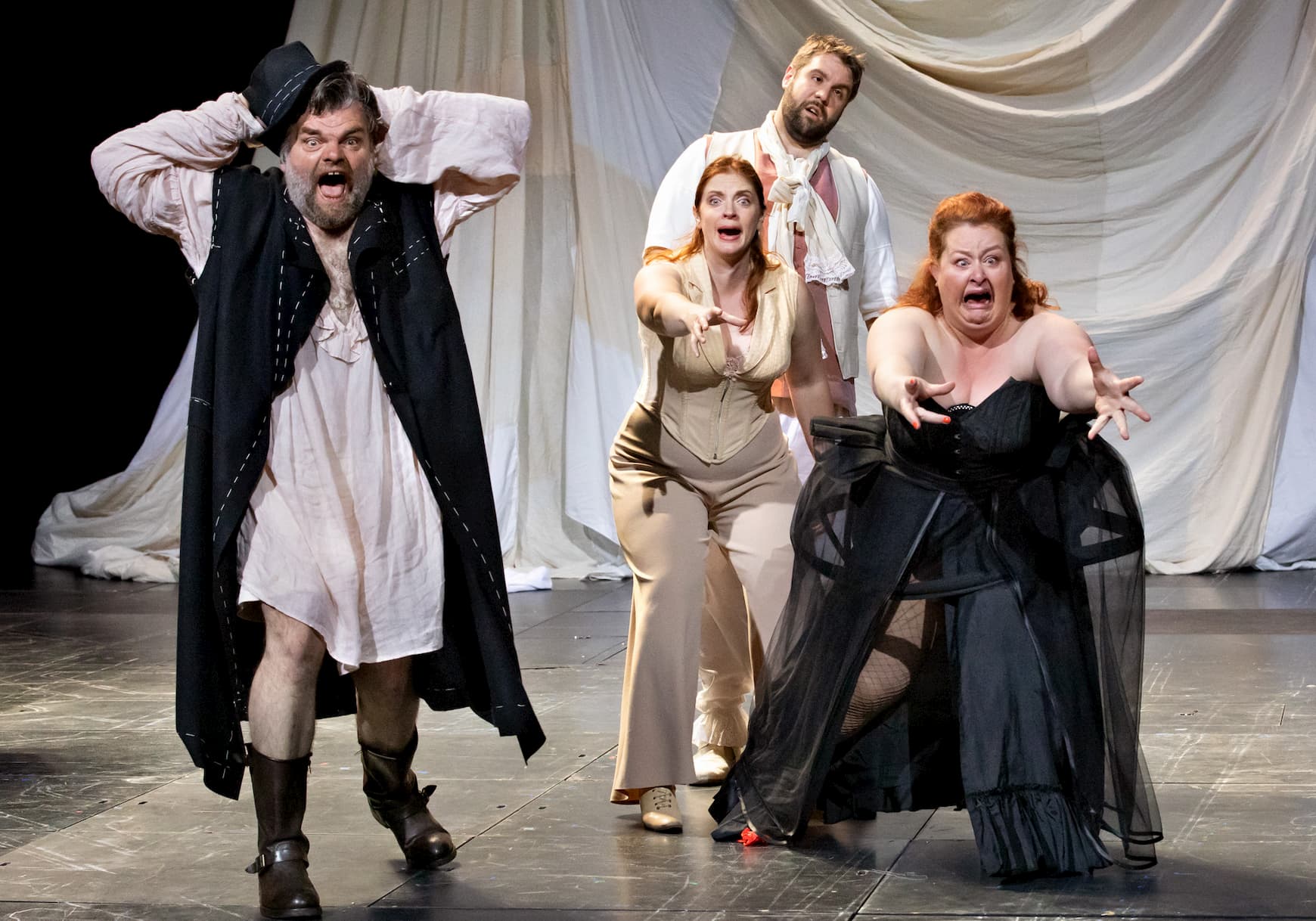
At its best, Goosens’ staging is zany and original. It has clearly been comprehensively rehearsed – the cast were all in the right place at the right time, despite the complexities of the physical action, and were clearly at one with Goosens’ vision. Yet, to my North American sensibility and despite my decent command of Dutch, the humour felt rather alien. Cherubino being loaded into a cannon and apparently launched into the air at the end of ‘Non più andrai’ sent the audience into fits of giggles. Moreover, the constant action, with something else on stage permanently going on, felt that Goosens never really took us deep into the nostalgia and longing that are as much part of this work as the comedy. I found there were two reasons for this. One is that not all the principals were able to exploit meaning in the text fully; the other is that the personenregie often consisted of characters gesticulating to the front, while action took place around them. Consequently, it felt that Goosens’ staging remained very much on the surface. The one moment where I did feel we got a sense of those deeper feelings, was in a spoken soliloquy by Van der Gucht’s Marcellina, where she reflected on selling her body for money. Still, the audience seemed to love what they saw.
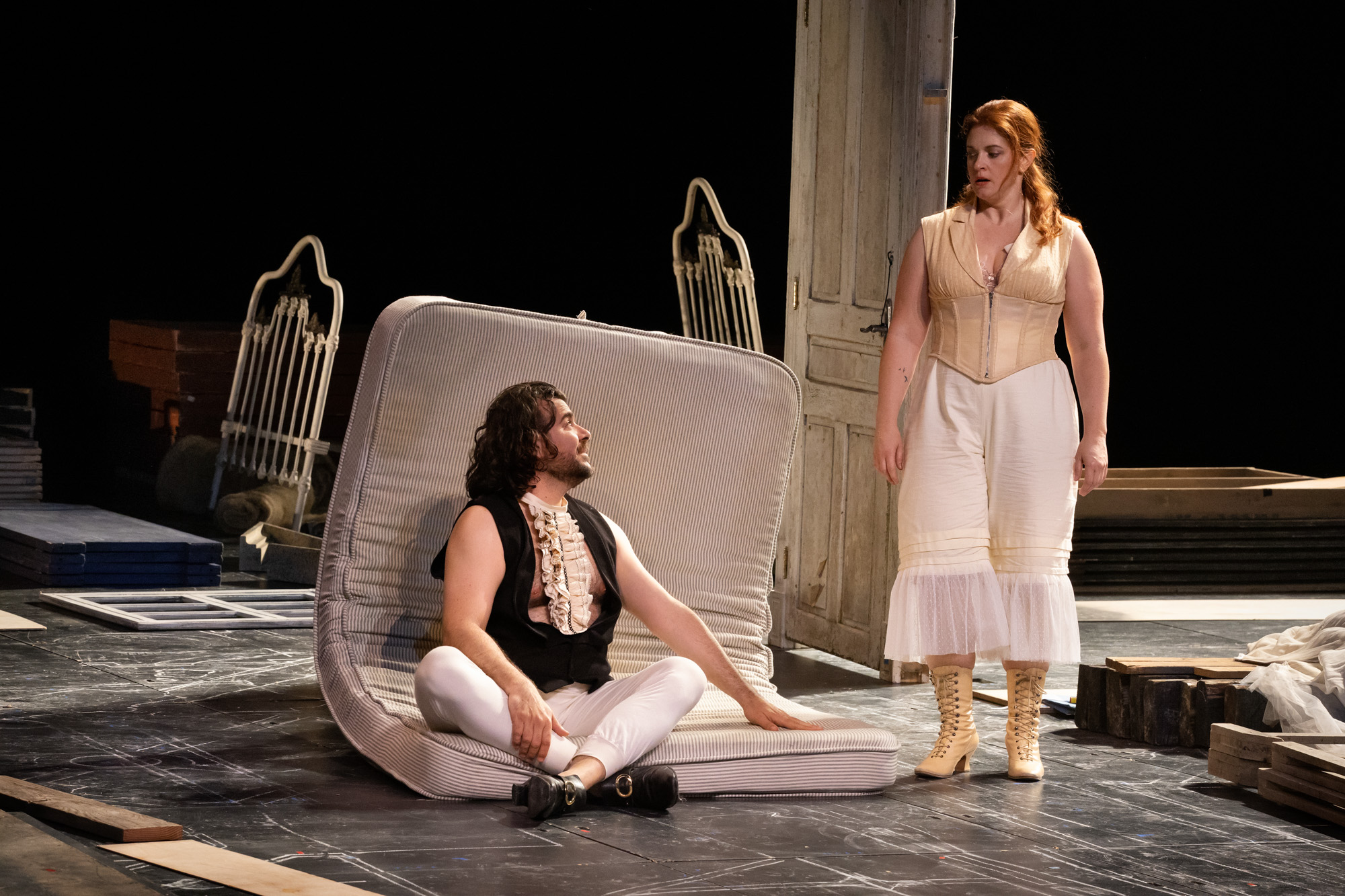
Musically, there was a lot that was enjoyable, starting with Marie Jacquot’s conducting. It was ideally swift, pulsating along and driving us through the evening with considerable momentum. It was, in part, let down with the pacing of the recitatives that were both a bit ponderous and held up by the stage action. From my seat at the rear of the Parkett, the winds sounded a bit recessed, but I very much appreciated Jacquot’s encouraging the strings to play with minimal vibrato, even if there were a few very fleeting passages of sour string intonation as a result. The recitatives were accompanied by Dieter Van Handenhoven on the fortepiano, who also added some charming embellishments to the arias. The horns were deliciously raspy and Jan Schweiger’s chorus was on lusty form, executing the complex choreography with aplomb. Due to the minimal set, there wasn’t much acoustic support for the singers and there were a few spots on the stage from where some of the voices were less than audible.
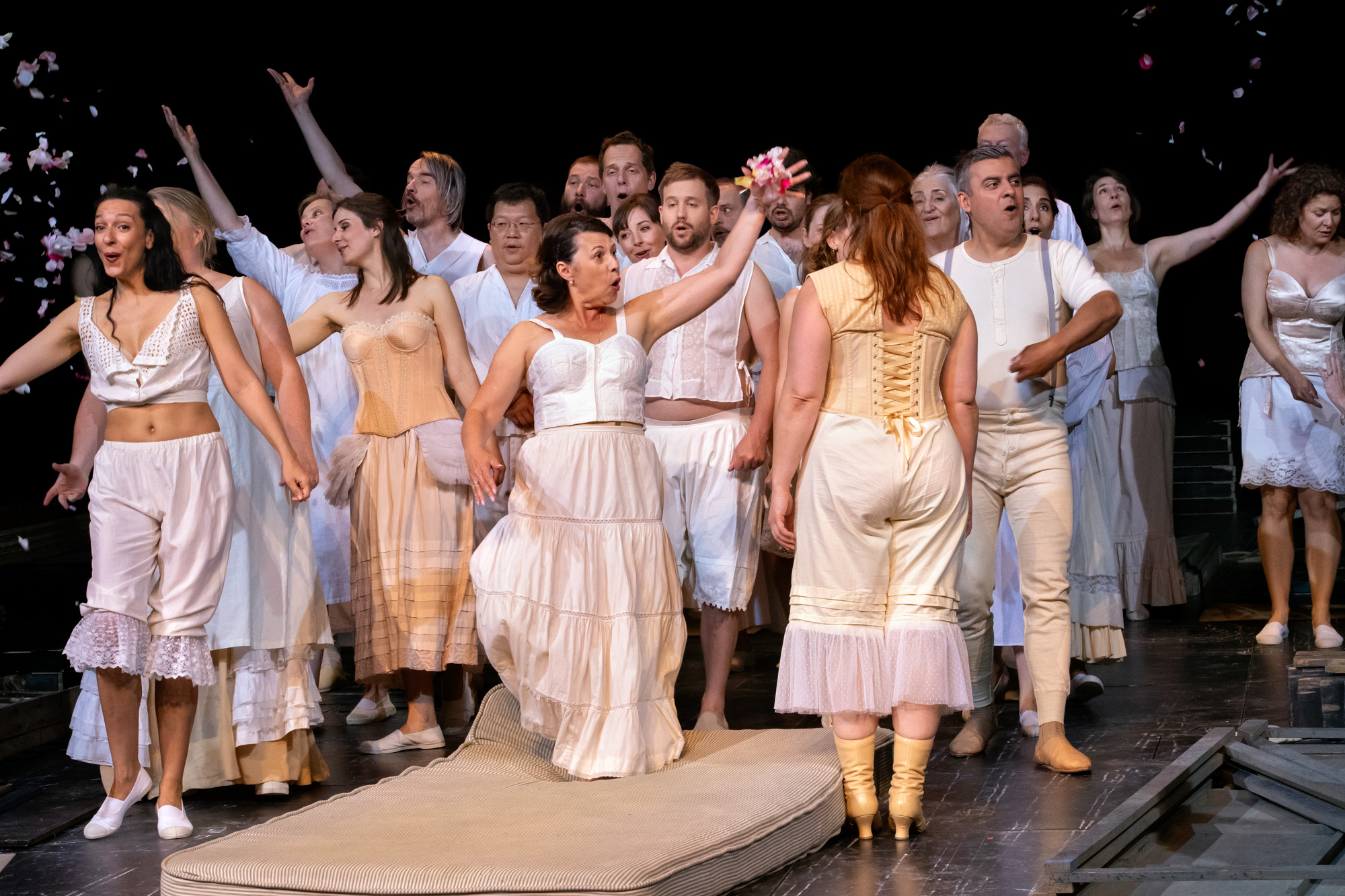
Božidar Smiljanić was an energetic presence in the title role. His robust bass-baritone is nicely even throughout the range and he added some delectable embellishments to the line in his numbers that gave us singing genuine originality. Maeve Höglund sang Susanna in an attractive, claret-toned soprano, that has a tendency to sit under the note. Her Italian is slightly Anglophone in nature and I found that she didn’t quite dig deep into the text to pull out meaning – that line in her opening recitative ‘Perch’io son la Susanna, e tu sei pazzo’ seemed to go for nothing. Höglund did find a pleasant beauty of line in her ‘deh vieni’, however.
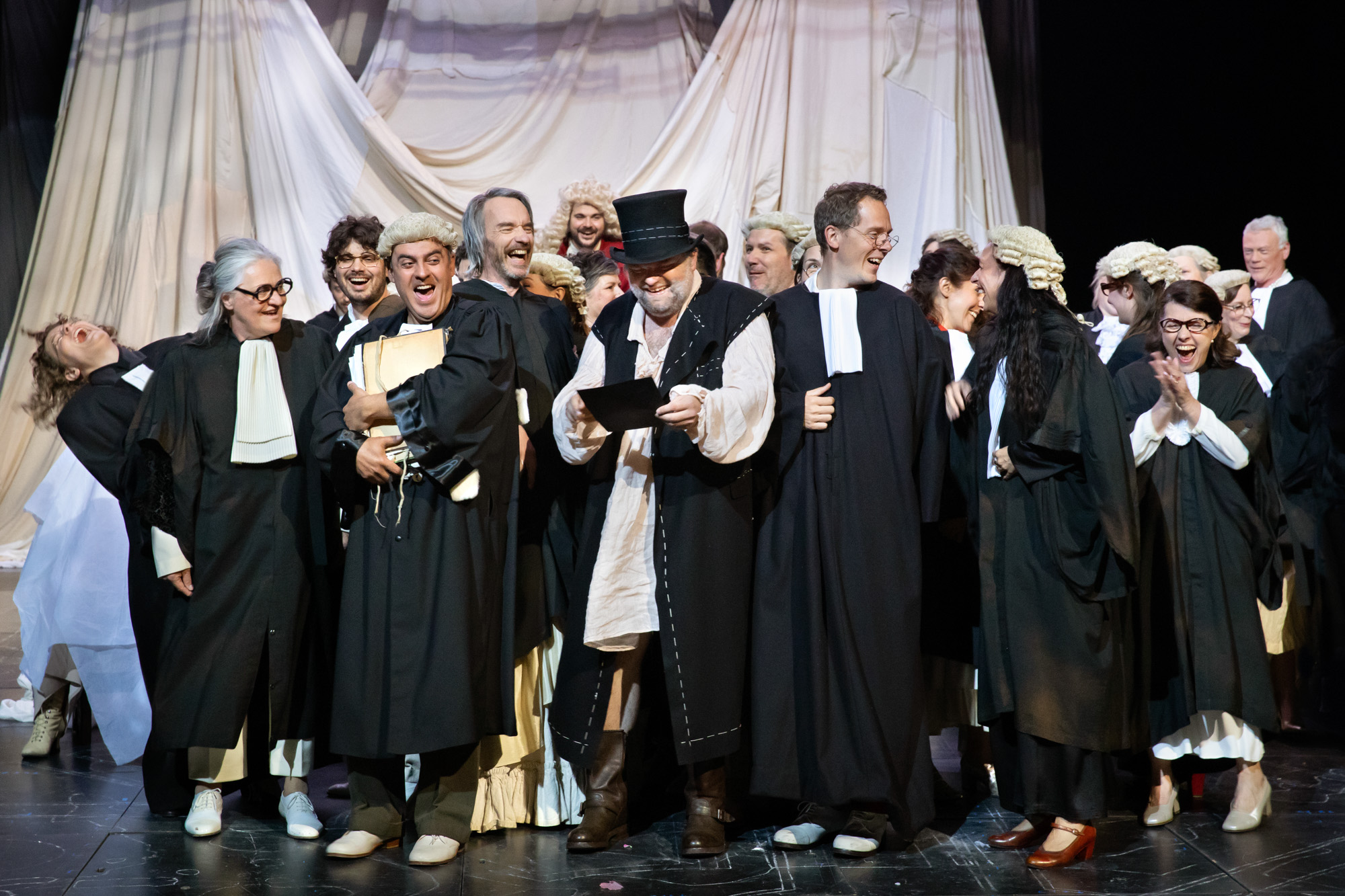
Lenneke Ruiten sang the Contessa in a narrow, pearly soprano. She phrased her ‘porgi amor’ lovingly, floating it on an easy thread of tone. Her ‘dove sono’ was impressive, Ruiten embellishing the line with beauty, pulling out meaning in ‘per me tutto si cangiò’, desperately trying to understand where things went wrong. Kartal Karagedik sang the Conte in an extremely handsome baritone. His Italian is impeccable and the voice is so firm and masculine throughout. I did wish that he had taken more risks with the line in his big Act 3 aria, ornamenting it to make it truly his own, but Karagedik does understand the emotional impact of an appoggiatura. His Conte was a very impressive piece of singing.
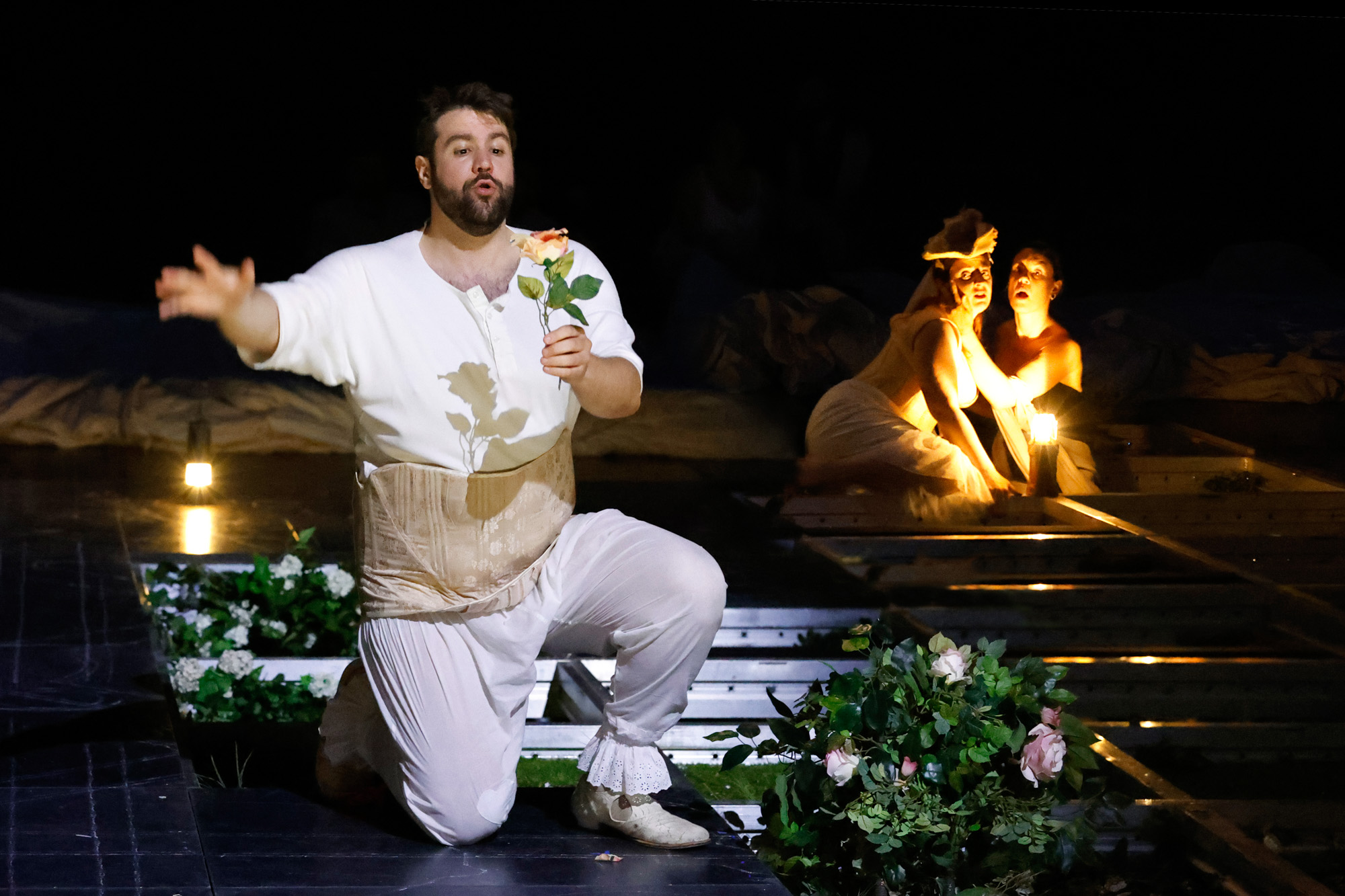
Anna Pennisi sang both of Cherubino’s arias prettily, with ‘voi che sapete’ demonstrating some impressive breath control. Here also, I wish that she’d taken more risks with the line, making it truly her own, but the evenness of line and elegant legato gave pleasure. Elisa Soster sang Barbarina in a fuller, more generously vibrating soprano than we often hear in the role. Her verbal acuity made me wish to hear her Susanna. Daniel Arnaldos was his usual reliable self in his music, his youthful tenor in excellent shape and the words nicely forward. Adams and Hsieh were positive presences in the ensembles.
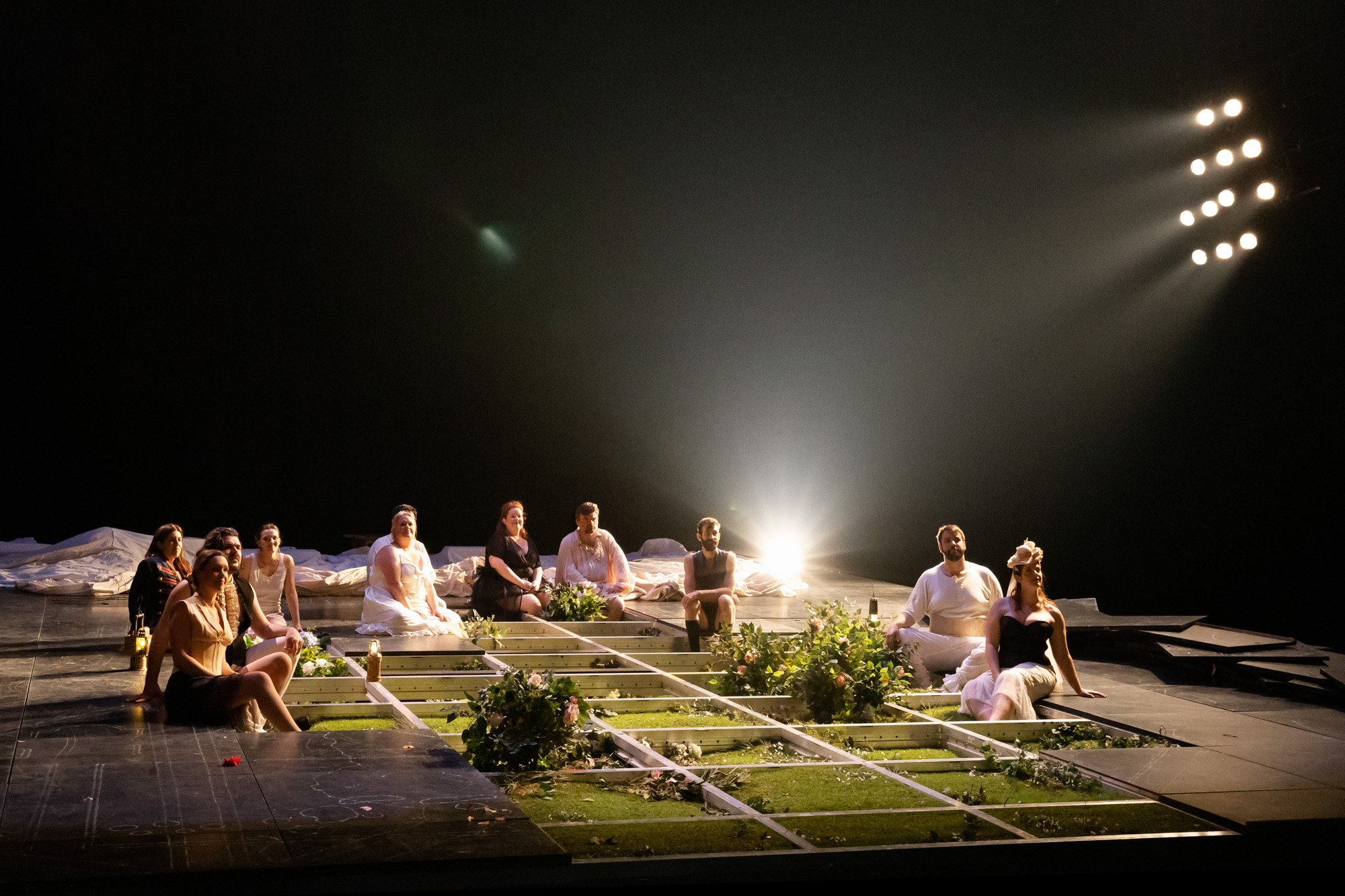
This was an interesting Figaro. Goosens gives us a staging full of action and life, one that had clearly been intensively rehearsed and where he had brought the entire team on the journey with him. The audience clearly loved it, laughing heartily and rewarding the cast with an extremely generous and instant standing ovation at the close. I must admit that it left me with a more equivocal impression. Musically, there was much to enjoy. Yet it felt that Goosens never really delved below the surface of the work, that it all felt self-consciously clever, and in doing so didn’t bring out the humanity, or even the complicated power interconnections that bring these characters to life. Indeed, I left the theatre reflecting on whether I actually knew who these characters were as a result of Goosens’ staging. Still, the reaction of the audience made it clear that they had had a fabulous evening.
 operatraveller.com
[…] ornamentation. Only the saggy delivery of the recitatives let the evening down. In Flanders, Marie Jacquot led an interpretation that was delightfully swift. It benefitted from the […]