Verdi – Aida
Aida – Elena Stikhina
Il Re – Alexandros Stavrakakis
Amneris – Judit Kutasi
Radamès – Riccardo Massi
Amonasro – George Petean
Ramfis – Alexander Köpeczi
Un Messaggero – James Ley
Sacerdotessa – Elmira Karakhanova
Extrachor der Bayerischen Staatsoper, Bayerischer Staatsopernchor, Bayerisches Staatsorchester / Daniele Rustioni.
Stage director – Damiano Michieletto.
Bayerische Staatsoper, Munich, Germany. Thursday, July 27th, 2023.
As is customary during the end of season festival, the Bayerische Staatsoper revives the new productions of the season just ending. This new staging of Aida, by Damiano Michieletto, premiered at the Nationaltheater back in May and now returns with a slightly different cast to the premiere. The performance last weekend was also streamed and is available to watch until mid-September this year.
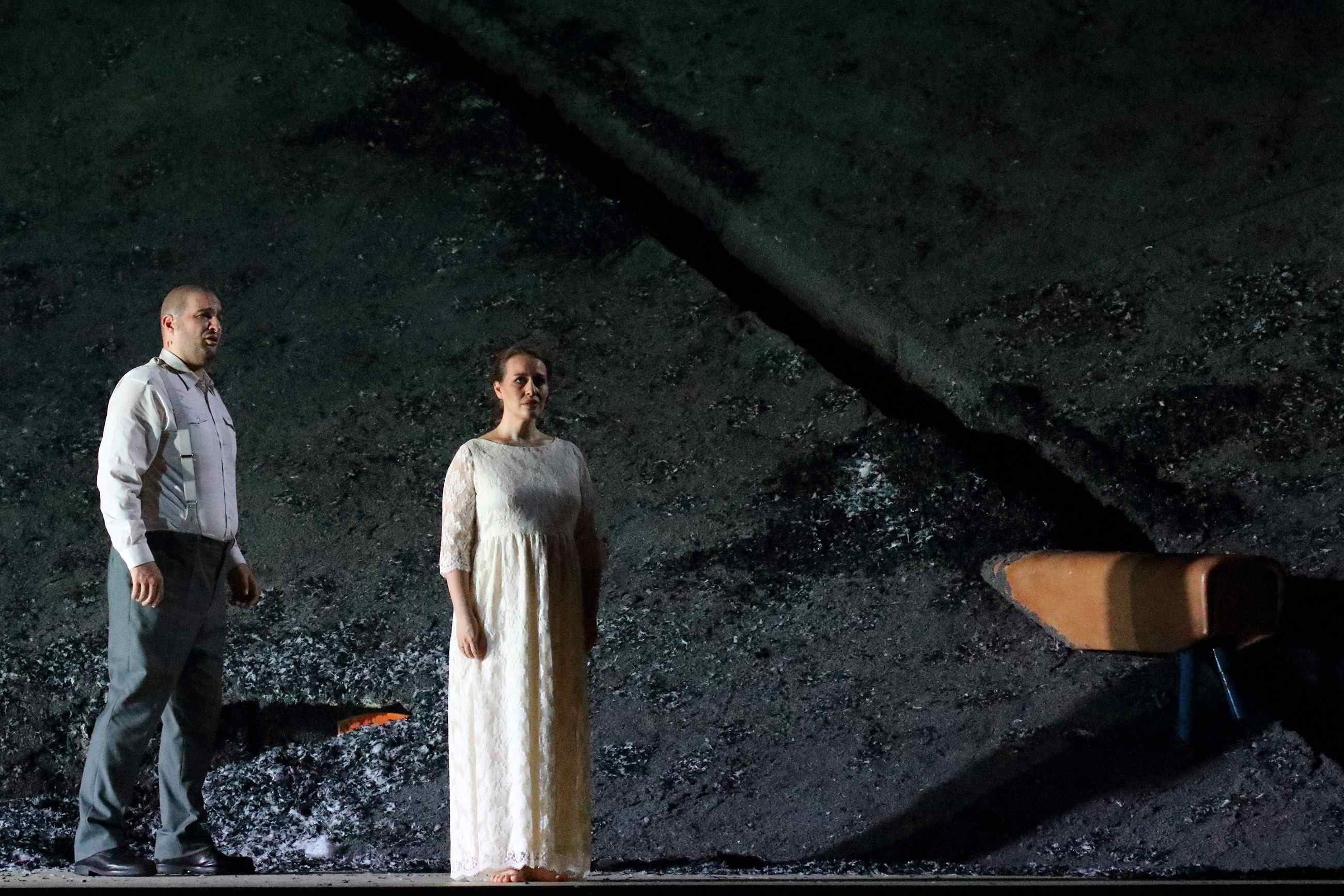
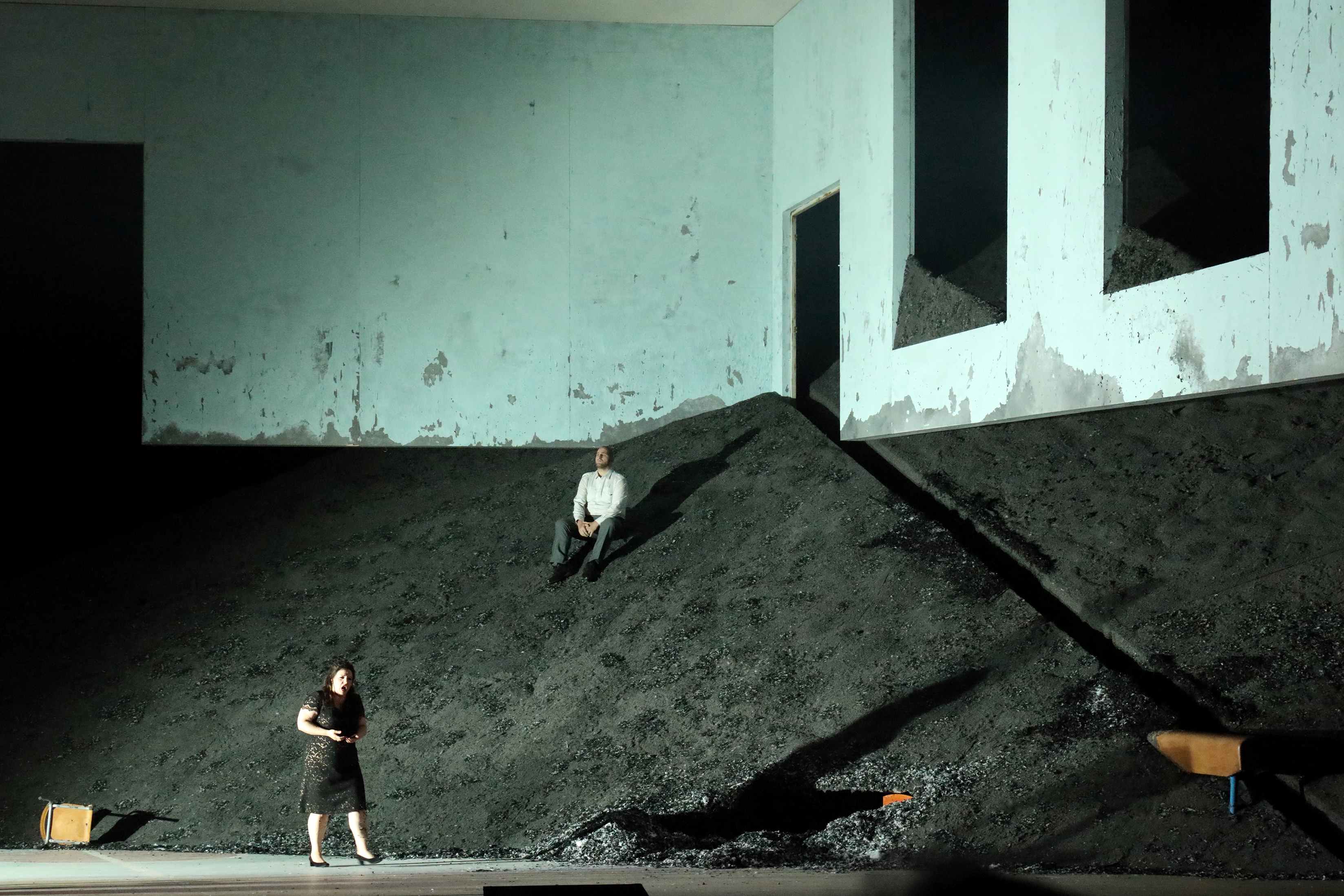
Michieletto transfers Aida into a claustrophobic, war-scarred environment. The sets, by Paolo Fantin, suggest a school gymnasium, the holes in the ceiling the traces of bombs. With war raging in Europe even as I write these words, Michieletto’s staging feels incredibly timely. The Egyptians are a people who indulge in rituals that may appear strange to an outsider, but help them make sense of their experiences of war – for instance the ritual shaving of Radamès’ head at the end of Act 1, or the strange shoe worshiping ceremony that takes place simultaneously. Indeed, there’s a psychological acuity to Michieletto’s reading that I found particularly cogent. Rather than the succession of ballets in Act 2, we see Radamès utterly broken, with video flashing up images of the injured and of people whose lives were changed forever by Radamès’ actions in wartime. The contrast with the triumphalism of the music could not be more acute and yet it felt completely convincing.
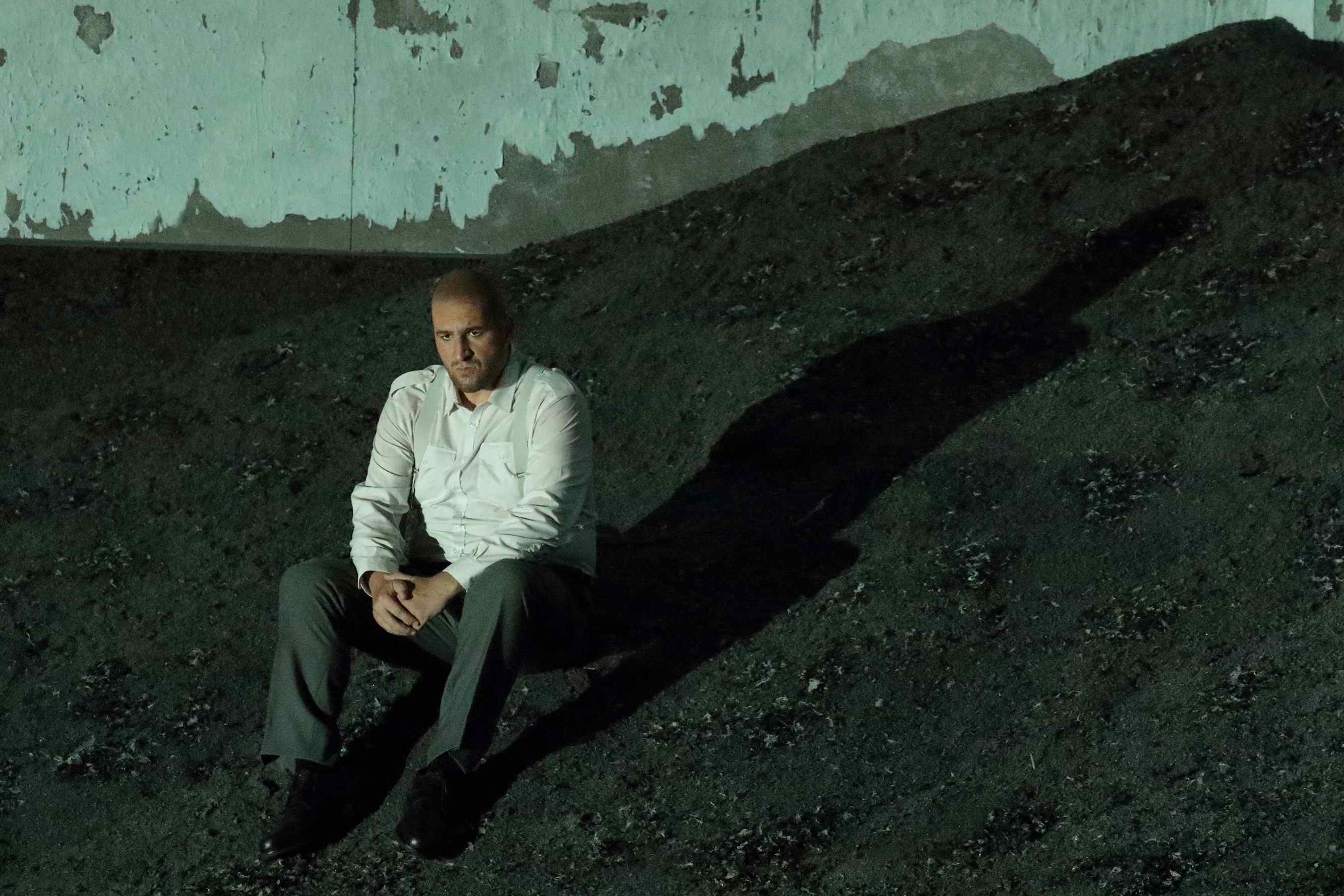
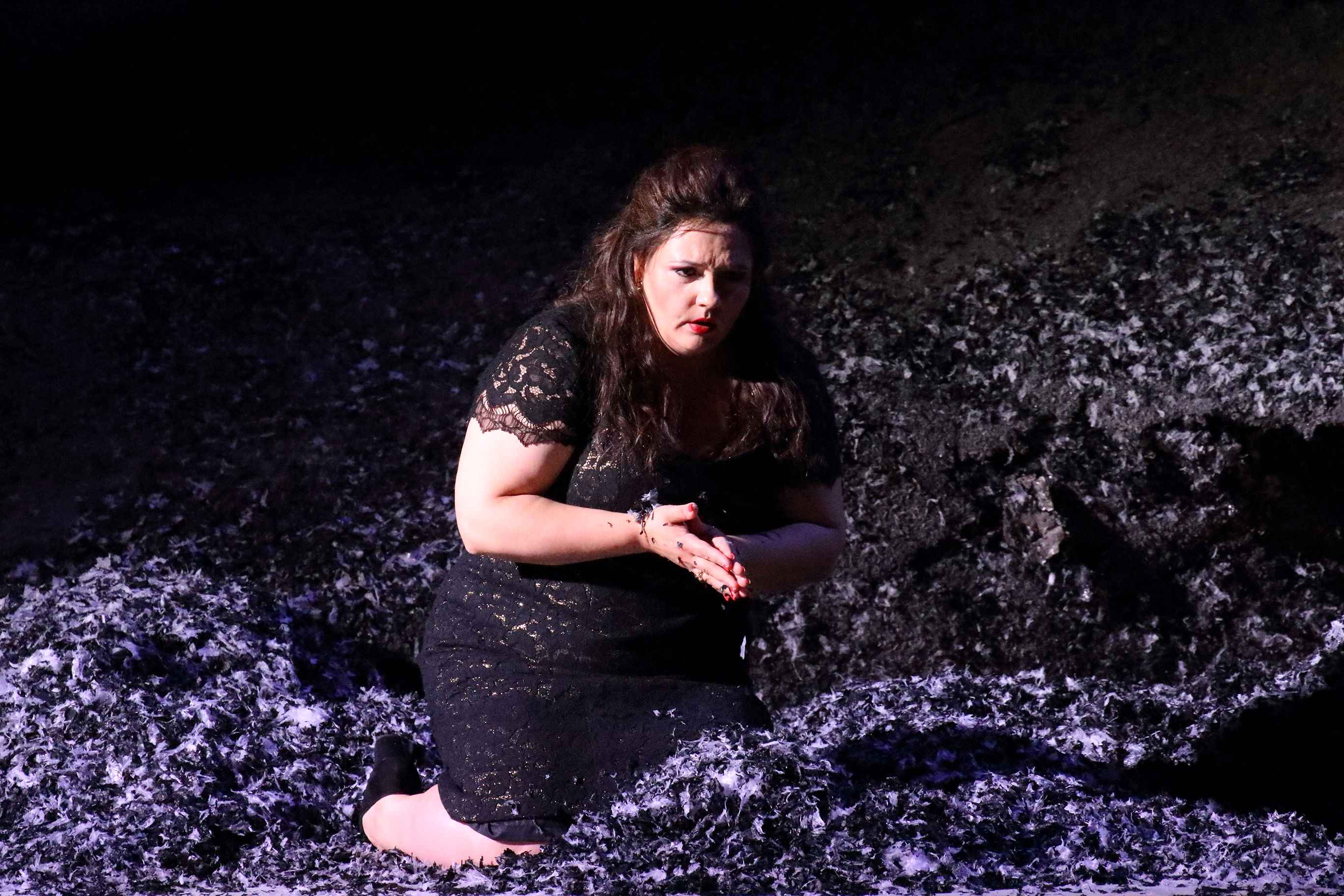
This is a society where men at the top of the political and religious tree have supreme power over others, but also one where the people are whipped into an irrational hate of the other. This was especially noticeable in the triumphal scene where the Ethiopians’ pleas for mercy were met with visceral hate from a chorus that spat out its words. Yet in contrast, Michieletto shows us how, despite the horrors of war, all those living through it want is to return to a normal life. He does this by using child extras playing with balls and toys, including one girl who pulls out a doll from the rubble. There’s a desire of normality, and indeed of innocence, that was especially affecting. He gives us a closing scene that I found unbearably moving, showing Radamès and Aida finding peace in the in a somewhat clichéd, paradisical view of the afterlife, while Amneris was left broken, stuck in her purgatory of war and as a pawn in a political game. Michieletto’s Aida is claustrophobic, focused on the depths of human relations, and shows the human implications of a society that has given itself over to war and hate. It’s an intelligent, potent staging and one that gave much to consider. As always, with Michieletto, that intelligence is put at the service of making us feel, of mining the depths of the music and libretto, and giving us the opportunity to reflect.
Musically, there was a lot to enjoy, but also some considerable reservations. I’ll get the biggest one out of the way first – Elena Stikhina’s Aida. I must admit, I had no idea what language Stikhina was singing in. There were places where words were perceptible, but for the most part it was just a long series of random sounds that may, or may not, have had any resemblance to what was in the text. Furthermore, the rigidness of her phrasing suggested that Stikhina barely understood what she was singing about, seemingly learned by rote. The voice is not unattractive at fuller volumes, which she is most capable of, offering a bright, penetrating steel blade through the textures. Yet, when she pulls back, the core of the tone gets lost and the sound becomes chalky. Stikhina also seems incapable or unwilling to float those high pianissimo lines that are a requirement of the role – the ascent to her high C in ‘o patria mia’ was done in full voice with no attempt to shade or pull back. Her intonation was also woozy, occasionally sharp, at other times flat. There was a sense of tightness in the tone around the passaggio, suggesting the support wasn’t quite lined up. I have no doubt that in Russian repertoire, Stikhina could be a useful artist – her Renata could be quite compelling I would imagine. But her Aida was far from the level one would expect to hear at a house like this. Compared to that highly idiomatic assumption by Mónica Conesa I heard in Verona last week, Stikhina was extremely disappointing. Stikhina was given an exceptionally generous ovation by the Munich audience, however.
The other more mitigated aspect was Daniele Rustioni’s conducting. He focused on beauty of phrasing, allowing the gossamer strings of the Staatsorchester to float on the air most agreeably. Yet, his tempi felt sluggish, the big Act 2 confrontation between Aida and Amneris dragged considerably – not helped by the wordless Aida. It was only in Act 3 in the Amonasro/Aida scene that Rustioni seemed to come to life, helped in no large part by George Petean’s electrifying assumption of the Ethiopian king. Rustioni’s pacing of the judgment scene also dragged. He was, however, rewarded by exceptional playing from the orchestra – the winds so full of character, bringing out the exoticism of Verdi’s fragrant score. The choruses, prepared by Johannes Knecht, were also on thrilling form – the tuning of the tenors and basses in the temple scene was staggering in its accuracy and clarity of voicing.
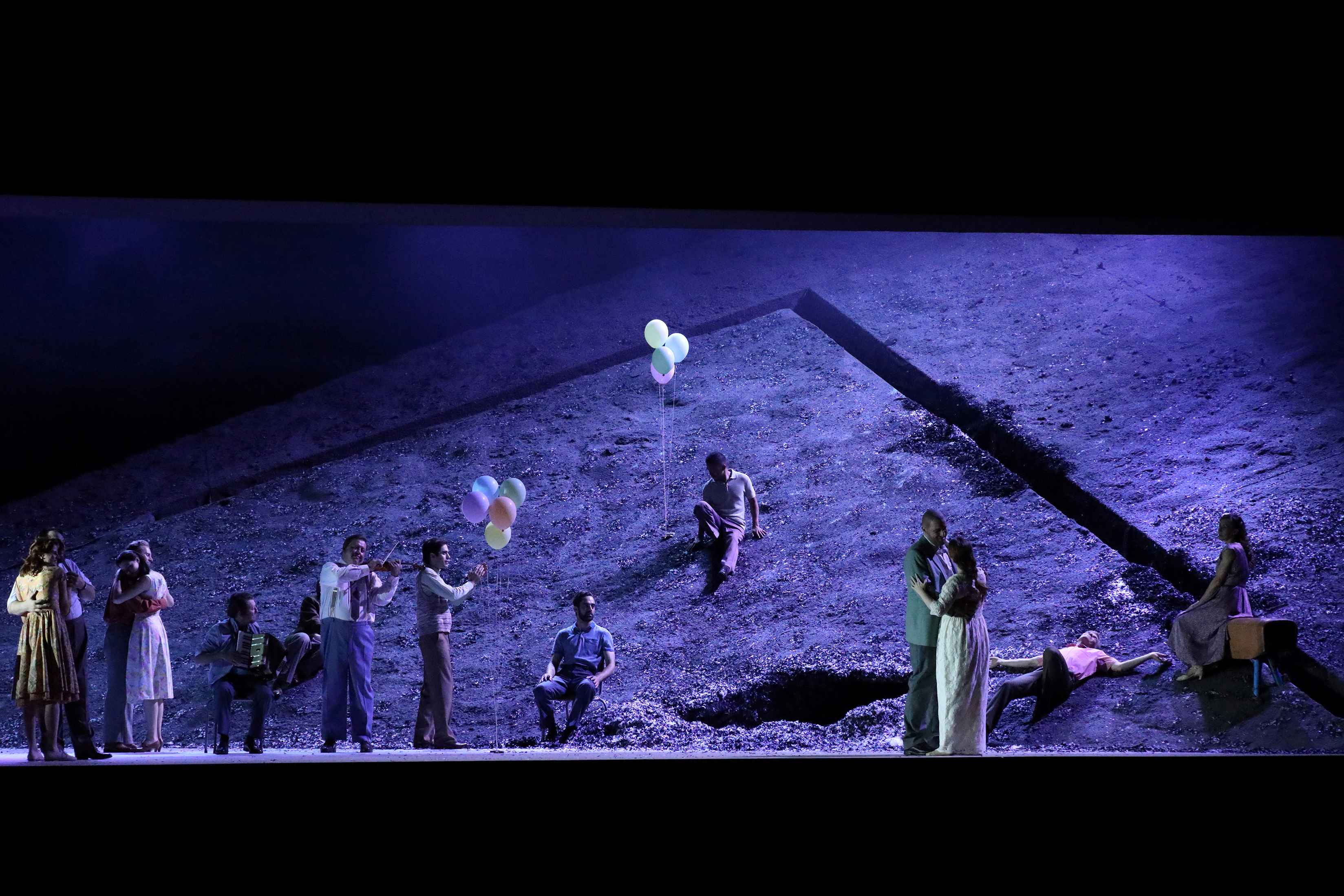
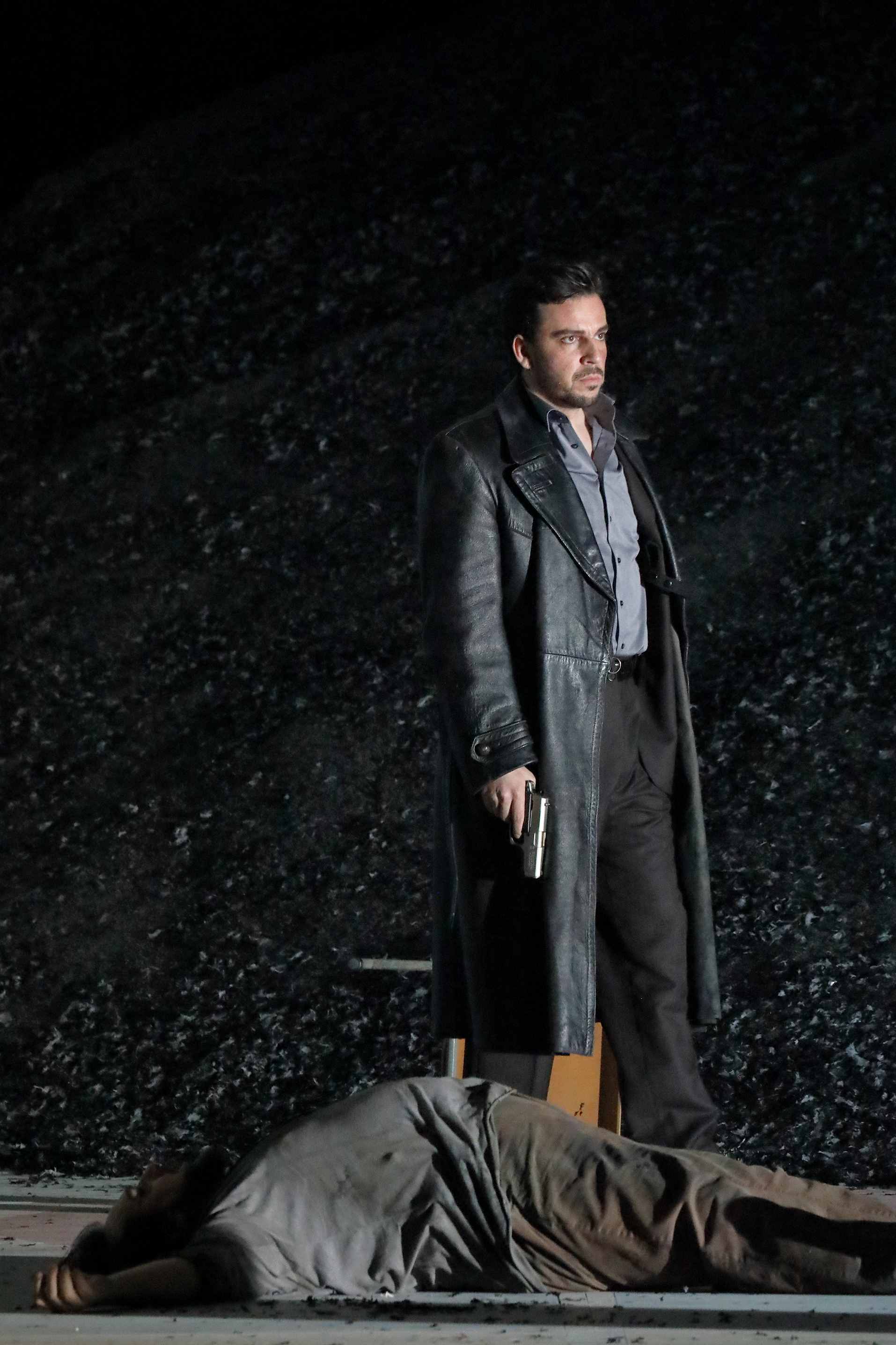
Riccardo Massi sang Radamès in a sunny tenor with impeccable textual acuity. He filled his ‘celeste Aida’ with loving lyricism and, even if he did sing out the high B-flat in full voice, he made it sound like a genuine romance rather than a trial. Massi was also a highly compelling stage presence, his harrowing acting in the triumphal scene was gripping, and he pulled back nicely on the tone in the closing Act, singing with honeyed warmth. Alexandros Stavrakakis was initially somewhat wiry in tone as Il Re, but warmed up nicely to give us singing of agreeable amplitude.
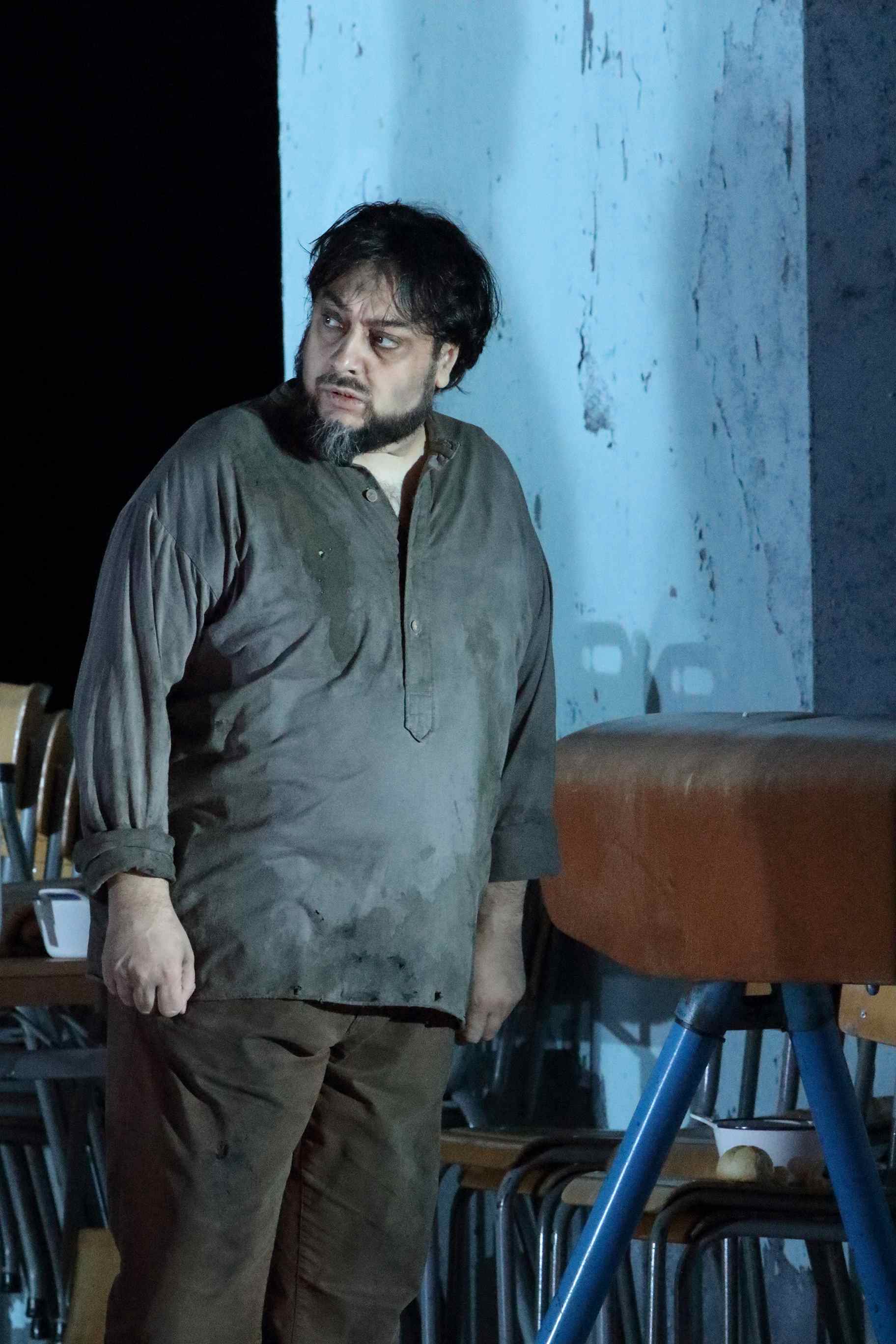
It was interesting to see that half the principals were Romanians, two in fact from the city of Cluj-Napoca. I don’t know what they put in the water there, but they really have given us some excellent singers. Petean raised the emotional temperature whenever he appeared, through his customary firmness of tone, impeccable legato, and sheer clarity of diction. Judit Kutasi sang Amneris in an impressively plush mezzo. Through the course of the evening, she sang the music as if it were bel canto, no battleship here, but instead a vulnerable woman who loved deeply. She rose to a judgment scene of great power, pouring out her soul for us with considerable, and exciting, volume. Alexander Köpeczi. Make a note of his name. This is a singer of immense promise. His bass is absolutely huge, able to be heard over the mass choruses with ease, the sound warm with a smoky, complex depth. I look forward to following his career. The remaining roles reflected the high quality one expects here – James Ley made his brief contribution with appropriately clear, if rather anglophone diction, while Elmira Karakhanova sang those long melismatic lines with an impressively smooth legato.
There was so much to enjoy and appreciate in tonight’s Aida. The choral singing, the orchestral playing, and the singing of the majority of the principals gave much satisfaction. Yes, there was a highly problematic assumption of the title role and I can only imagine the impact Michieletto’s staging would have with a more verbally clear singer in the role. What Michieletto has given us is a staging that makes us reflect on the horror of war, that shows us that beyond those horrendous images are people who yearn for a better life and a return to the days of before. Other than a few isolated boos from the more narrow-minded audience members after the Act 2 ballets, the reception at the close was overwhelmingly positive – indeed, Kutasi looked genuinely touched by the applause for her Amneris. Without doubt, a staging worth seeing.
 operatraveller.com
[…] her as a magnificent Amneris. In Munich, Damiano Michieletto gave us a similarly thoughtful Aida but one that had real emotional impact, looking at the effects of war on those involved in […]
[…] playing those tormented characters, that he might have been more at home in Michieletto’s Munich staging, for instance. Soghomonyan got through ‘celeste Aida’ with sheer determination, those […]