Offenbach – Les Contes d’Hoffmann
Hoffmann – Iván Ayón Rivas
La Muse – Paola Gardina
Nicklausse – Giuseppina Bridelli
Lindorf / Coppélius / Le docteur Miracle / Dapertutto – Alex Esposito
Andrès / Cochenille / Frantz / Pitichinaccio – Didier Pieri
Olympia – Rocío Pérez
Antonia – Carmela Remigio
Giulietta – Véronique Gens
La Voix – Federica Giansanti
Nathanaël – Christian Collia
Spalanzani – François Piolino
Hermann / Schlemill – Yoann Dubruque
Luther / Crespel – Francesco Milanese
Coro del Teatro La Fenice, Orchestra del Teatro La Fenice / Frédéric Chaslin.
Stage director – Damiano Michieletto.
Teatro La Fenice, Venice, Italy. Friday, November 24th, 2023.
Tonight marked the opening of the new season at the Teatro La Fenice. It was certainly a glitzy occasion, with a black-tie dress code and the presence of the President of the Italian Republic, Sergio Mattarella. This new production of Les Contes d’Hoffmann was confided to Damiano Michieletto, born in the lagoon city and educated at Ca Foscari university, and is coproduced with, among others, Lyon and Sydney, where it premiered earlier this year.
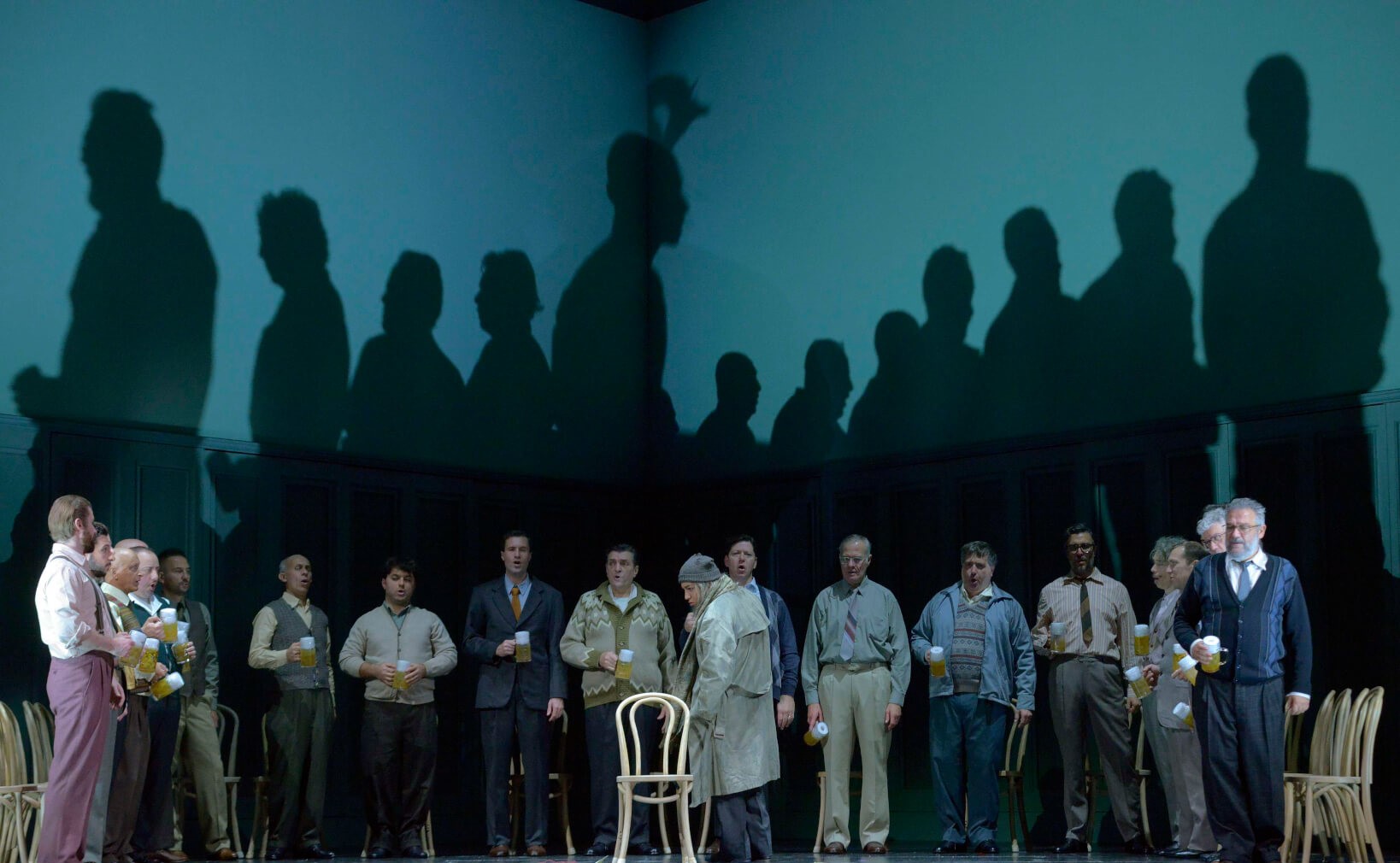
Michieletto takes as his inspiration both the world of fantasy and the idea of Hoffmann reflecting on a very adventurous life. In turn, he sets each of the acts as an evolution through Hoffmann’s lifetime – Olympia in his school days, Antonia as an early love, Giulietta a courtesan at an alcohol-fuelled party. In so doing, he illustrates a motivation for Hoffmann’s descent into alcoholism. Yet this descent into alcoholism seems pre-destined. Michieletto casts both Nicklausse and La Muse as separate singers, la Muse literally a fée verte who blows a fairy dust that sets each act into motion, while Nicklausse appears to be a fantastical winged figure who dances around the set, permanently guiding Hoffmann around the action. Michieletto gives us a colourful staging that always gives so much to look at, including the presence of a small group of danseurs and danseuses to incarnate devils to accompany Alex Esposito’s villains as they enter. Indeed, I found it to be extremely striking how Esposito was able to manipulate characters physically simply by waving his hands, reinforcing this idea of fantasy.
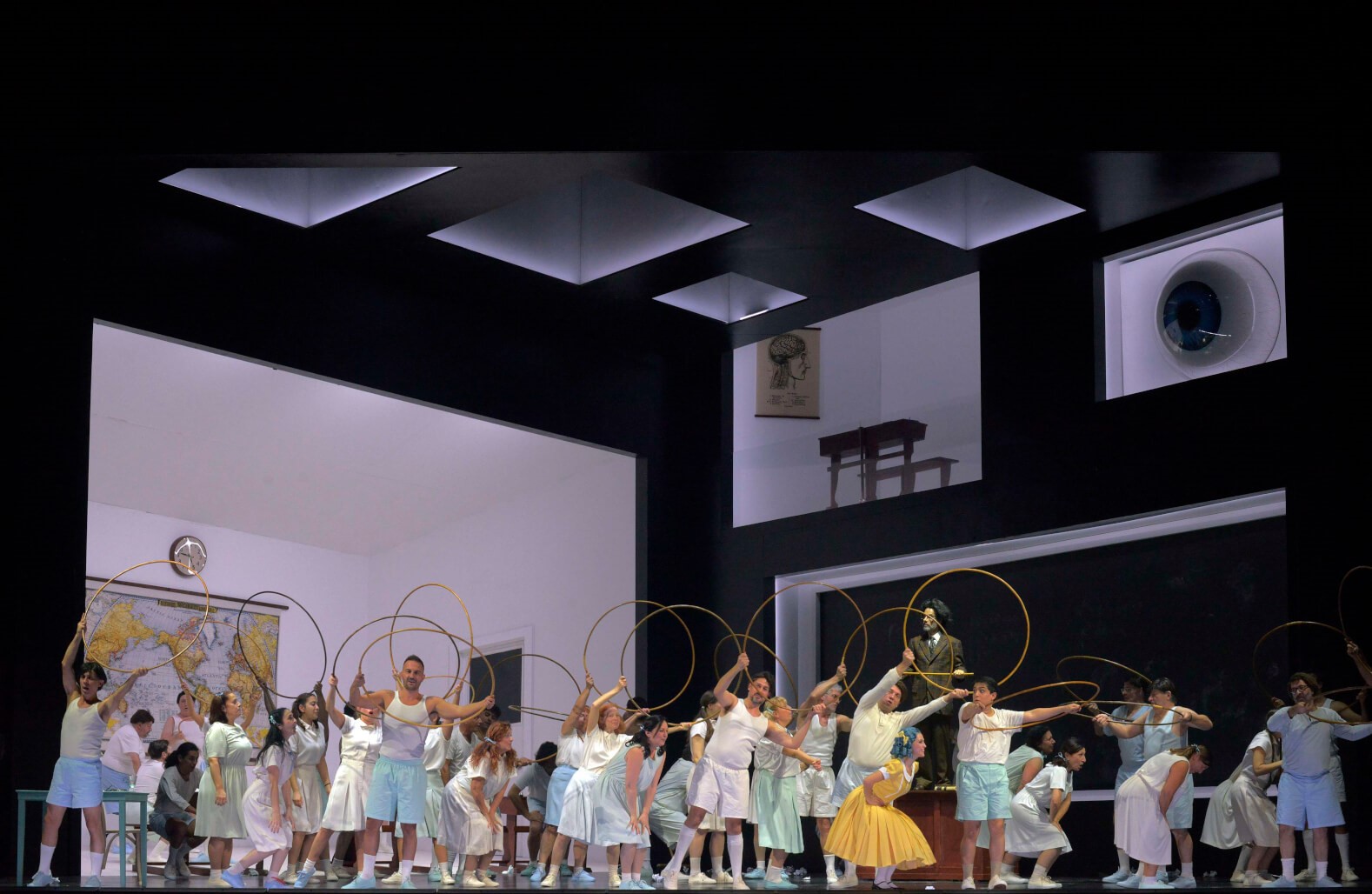
Michieletto’s staging is extremely busy, requiring his singers constantly to be moving around. His direction of them was always consistent, giving us a full impression of characters who genuinely engaged with each other. More than that, Michieletto gives us an understanding of what it means to be creative – in both the genius and the struggles that result from that genius. All of the characters on his stage have some element of creativity: Olympia the product of scientific creativity, impressively going up in smoke as she powered down; Antonia an injured dancer; Giulietta a courtesan at a masked ball. The sheer ability of Michieletto to conceive of fantastical stage pictures and bring them to life shows the work of a supreme theatrical technician: the set going up in fireworks at the end of the Olympia act, or a tall masked figure whose head is removed yet still manages to walk around, both were seriously impressive to look at. Yet, as always, with Michieletto, he knows how to make you feel. The final tableau, accompanied by that glorious music, was incredibly moving. ‘Des cendres de ton cœur, réchauffé ton génie … On est grand par l’amour et plus grand par les pleurs’, saw Hoffmann surrounded by the visions of his creativity as each of the ladies came back onto the stage, surrounded by the devilish figures and various extras, all products of Hoffmann’s vivid imagination. It felt that Michieletto wasn’t just giving us an ode to creativity, he was also celebrating all those eccentrics who dare to dream fantasy and the power of imagination. It felt that Hoffmann’s struggles with alcohol were not in vain, but the source of a creativity that continues to give pleasure to so many – as indeed was the case this evening.
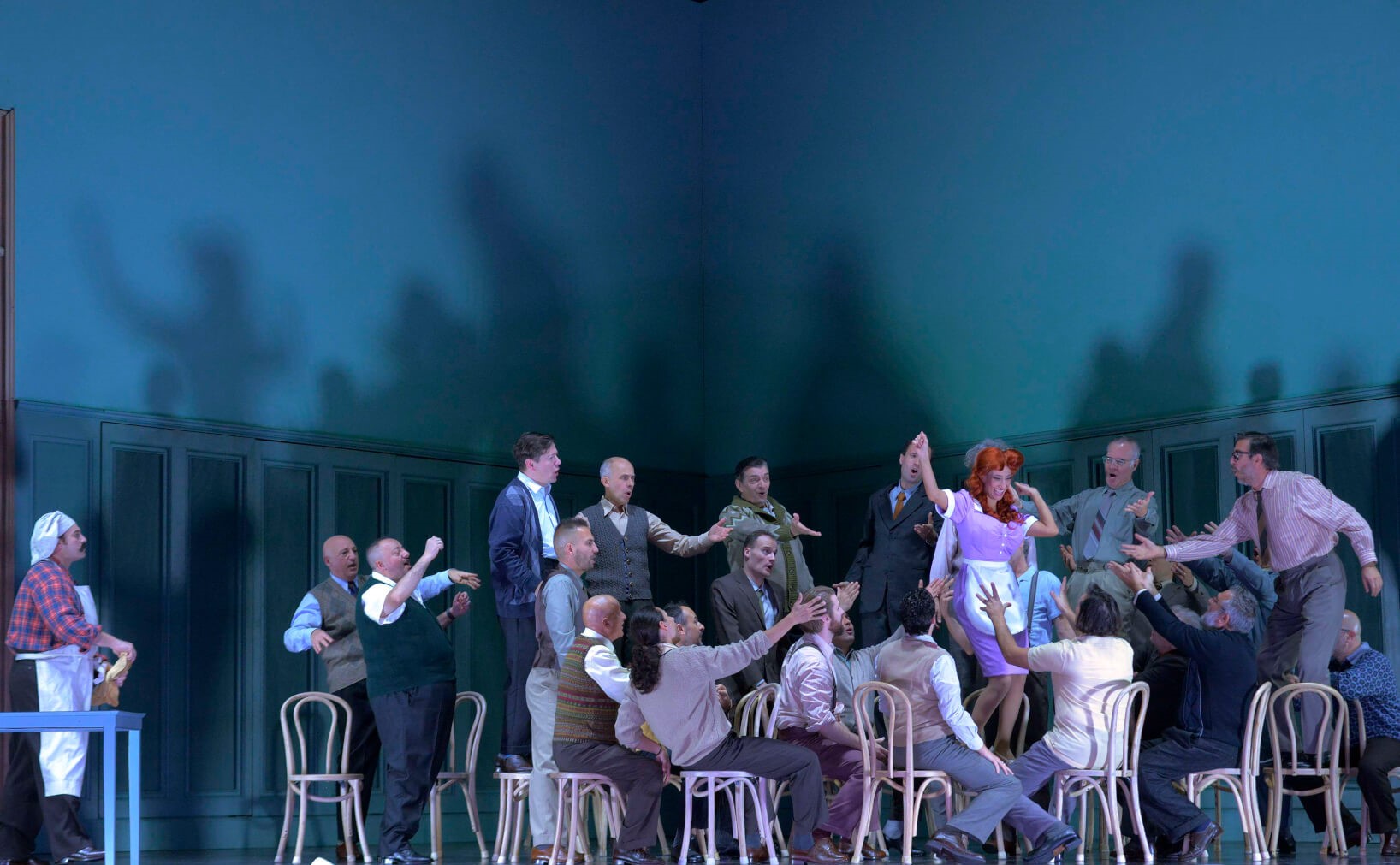
Musically, this was also an evening of multiple rewards. After a highly rousing account of ‘Fratelli d’Italia’ to accompany the arrival of President Mattarella, Frédéric Chaslin gave us a very vigorous account of the opening measures. What became immediately apparent was the sheer quality of the orchestra and the warmth and immediacy of the acoustic. By and large, Chaslin’s tempi were nicely fluid, there was no sense anywhere of the tension drooping. The Antonia act in particular was pushed forward with inexorable momentum. The orchestra was wonderfully responsive to him, the clarinets deliciously piquant, with the winds always nicely forward and the brass very well behaved. Moreover, the string sound was nice and full, based in an agreeably rich warmth from the cellos and basses. The violins gave also us some stunningly beautiful moonlight sounds as the barcarolle came into view. The chorus, prepared by Alfonso Caiani, was also extremely responsive, singing with impeccable ensemble, warm tone, and immaculate execution of the complex stage movements.
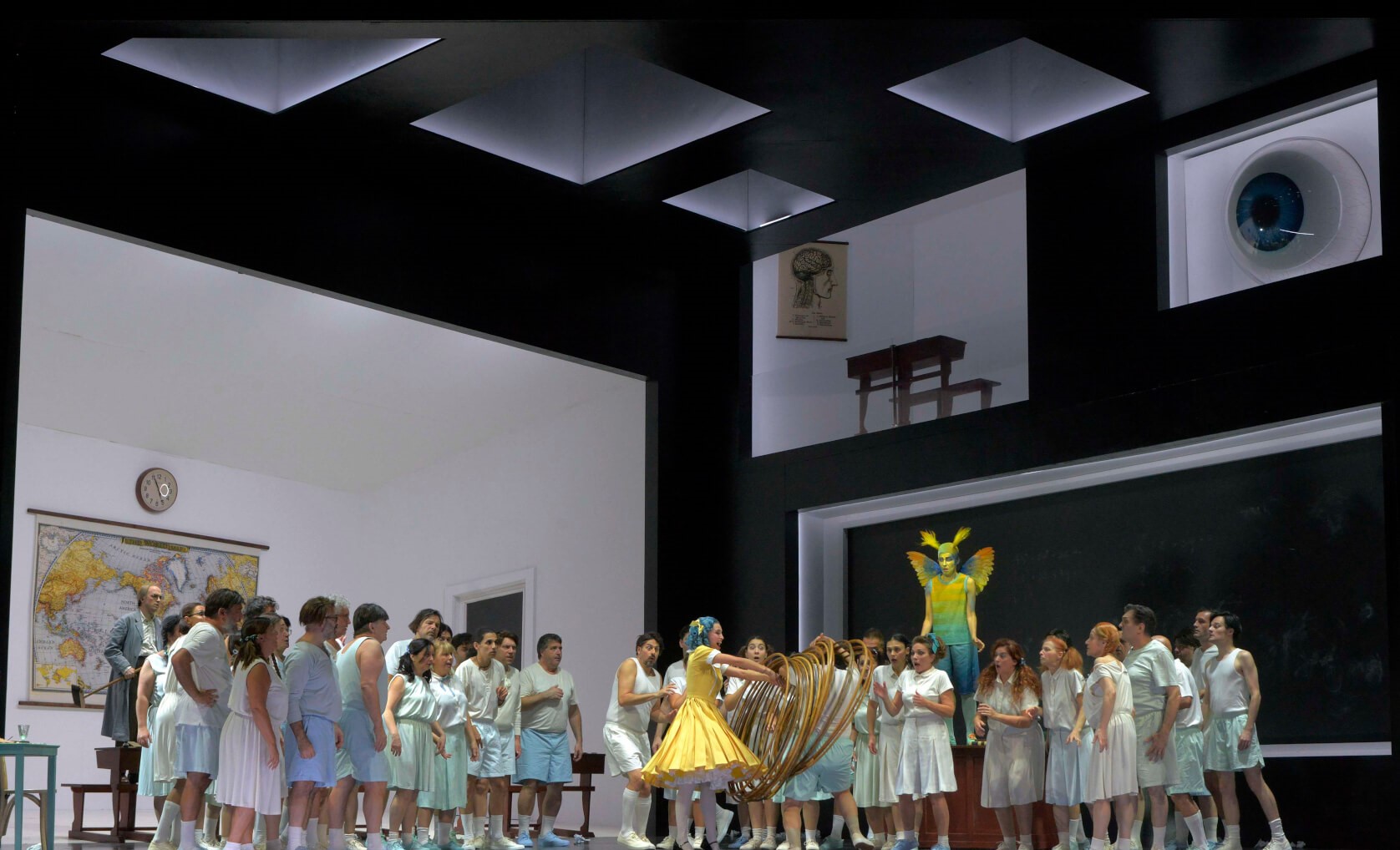
Diction across the cast was somewhat variable. At its best, the evening lived through the text, but it could certainly have been sharpened up, which would have rendered the musical side even more compelling. Iván Ayón Rivas was tireless in the title role. Only 30 years old, the Peruvian tenor is certainly an exciting talent. In a house this size, the top of the voice rang out with focused ping and he still had a lot of gas left in the tank for the obsessive ravings of the Giulietta act. His French is rather Hispanophone in flavour, he could certainly benefit from working on those nasal diphthongs, but he very much did give us the impression that he knew what he was singing about and communicated the text well. He’s an engaging, puppyish stage presence, ideal as the creative dreamer. The voice is nicely bright and well placed – without doubt a name to watch.
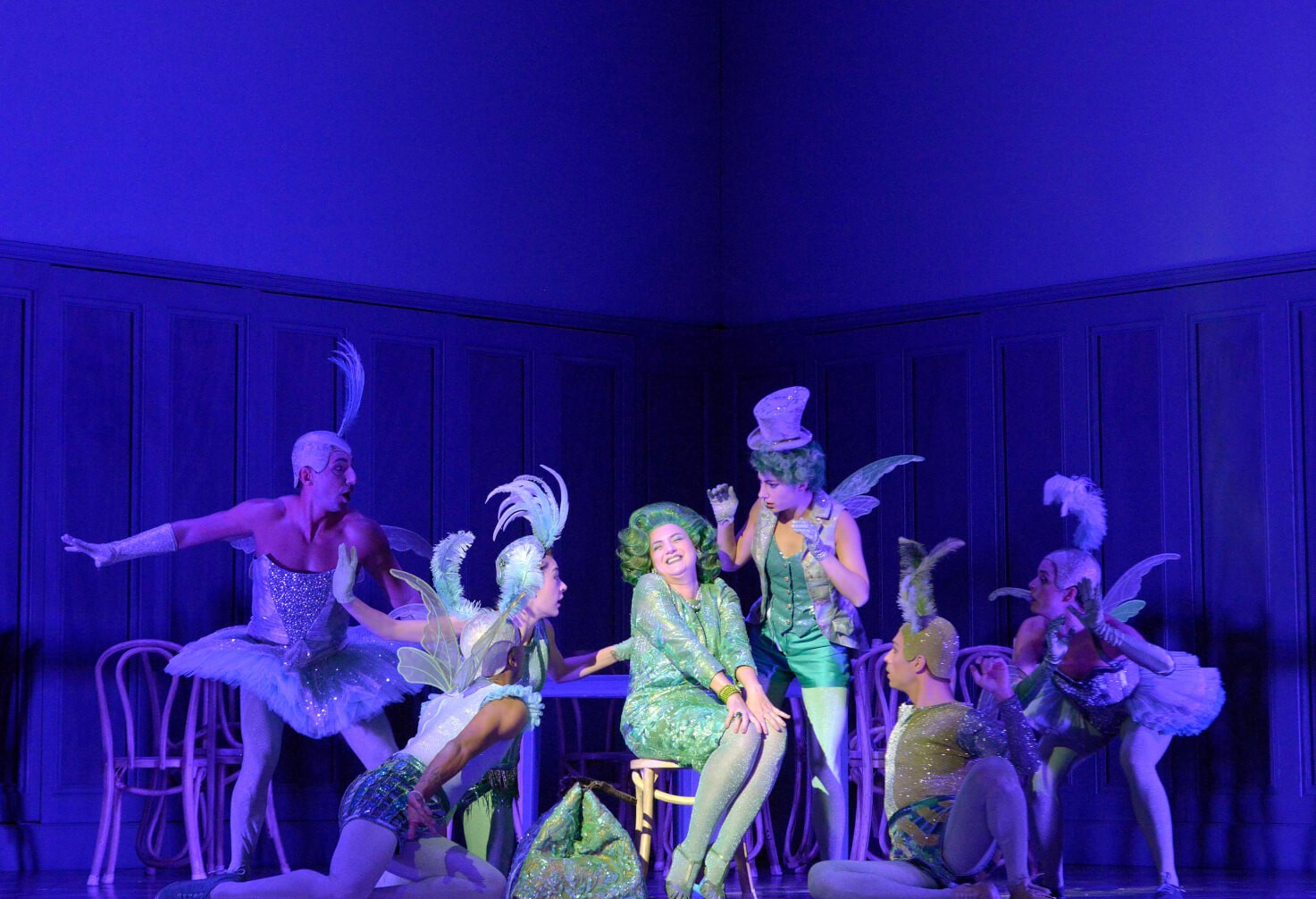
Esposito brought his customary, seemingly limitless, stage energy to the roles of the villains. He has clearly worked very hard at his sung French, which was considerably more comprehensible than the other occasions on which I’ve heard him sing the langue de Molière. His bass was also in excellent shape tonight, benefitting from the grateful acoustic of the house, giving us an agreeable warmth of tone from top to bottom, while also savouring the text, spitting out the text with delicious malice. Esposito also confidently negotiated the varied tessituras of each role, the voice absolutely even throughout.
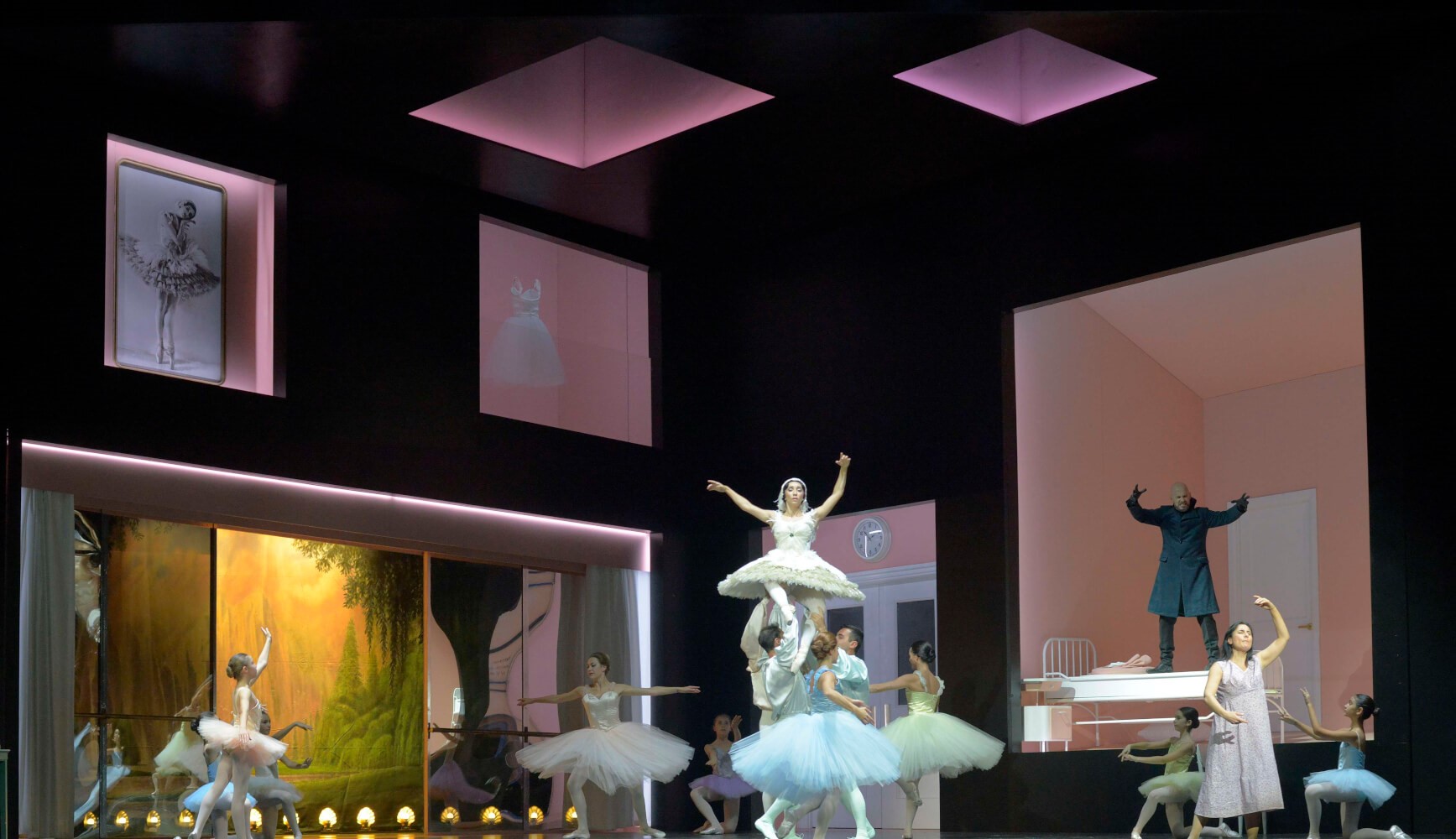
Rocío Pérez gave us a sensational Olympia. Her soprano has an attractive duskiness and she added some deliciously stratospheric embellishments to the line. Her Olympia was also sung off the text, the words always forward and clear. She was also terrifically game, throwing herself into the stage action with aplomb. Carmela Remigio gave us a deeply-felt Antonia. She sang her aria with generous force and filled her music with passion. The words were occasionally perceptible, particularly when not singing long legato lines. Remigio gave so fully of herself that one could not help be inspired – and she has a genuine trill. Of course, one expects optimal clarity of diction from Véronique Gens and she did not disappoint. Her soprano still has that glorious beauty of yore, combined with her elegant line. She blended pulchritudinously with Giuseppina Bridelli’s Nicklausse in the barcarolle.
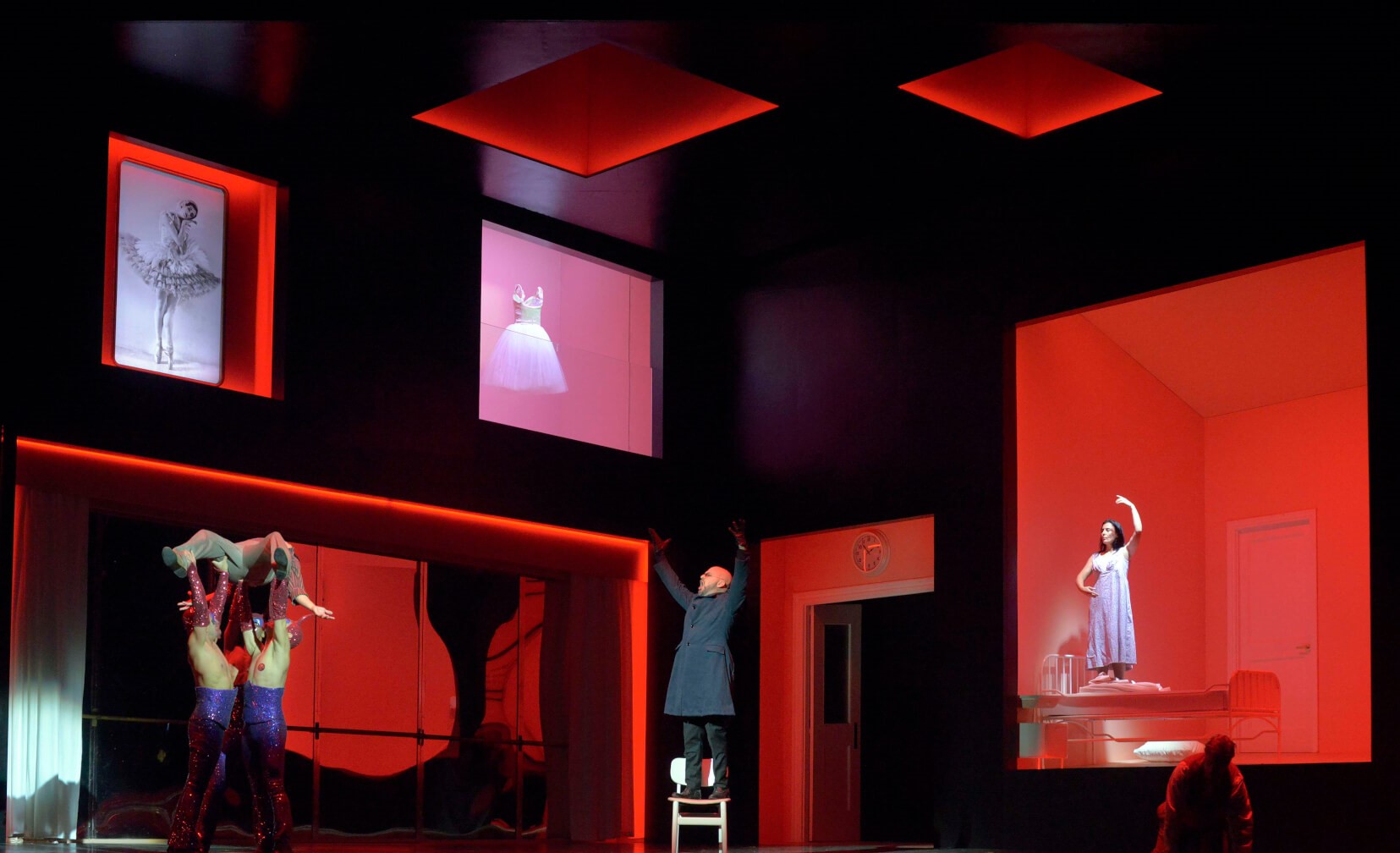
Bridelli has an attractive, soprano-ish mezzo with easy reach and an attractive line. Her diction, unfortunately, was rather foggy, robbing her singing of impact, although her stage presence was tireless. Paola Gardina sang La Muse in an attractive, orange-toned mezzo, with a beguiling fast vibrato. The words did disappear when she sang longer lines, but the text was generally clear. Didier Pieri gave us a keenly-sung account of Frantz’ aria, sung off the text. Dressed as a ballet master, ‘c’est la méthode’ referred to the dancing steps. Francesco Milanese sang Crespel in a very firm and handsome bass, but his French was rather exotically pronounced. The remainder of the cast reflected the standards one would expect at this venerable theatre.
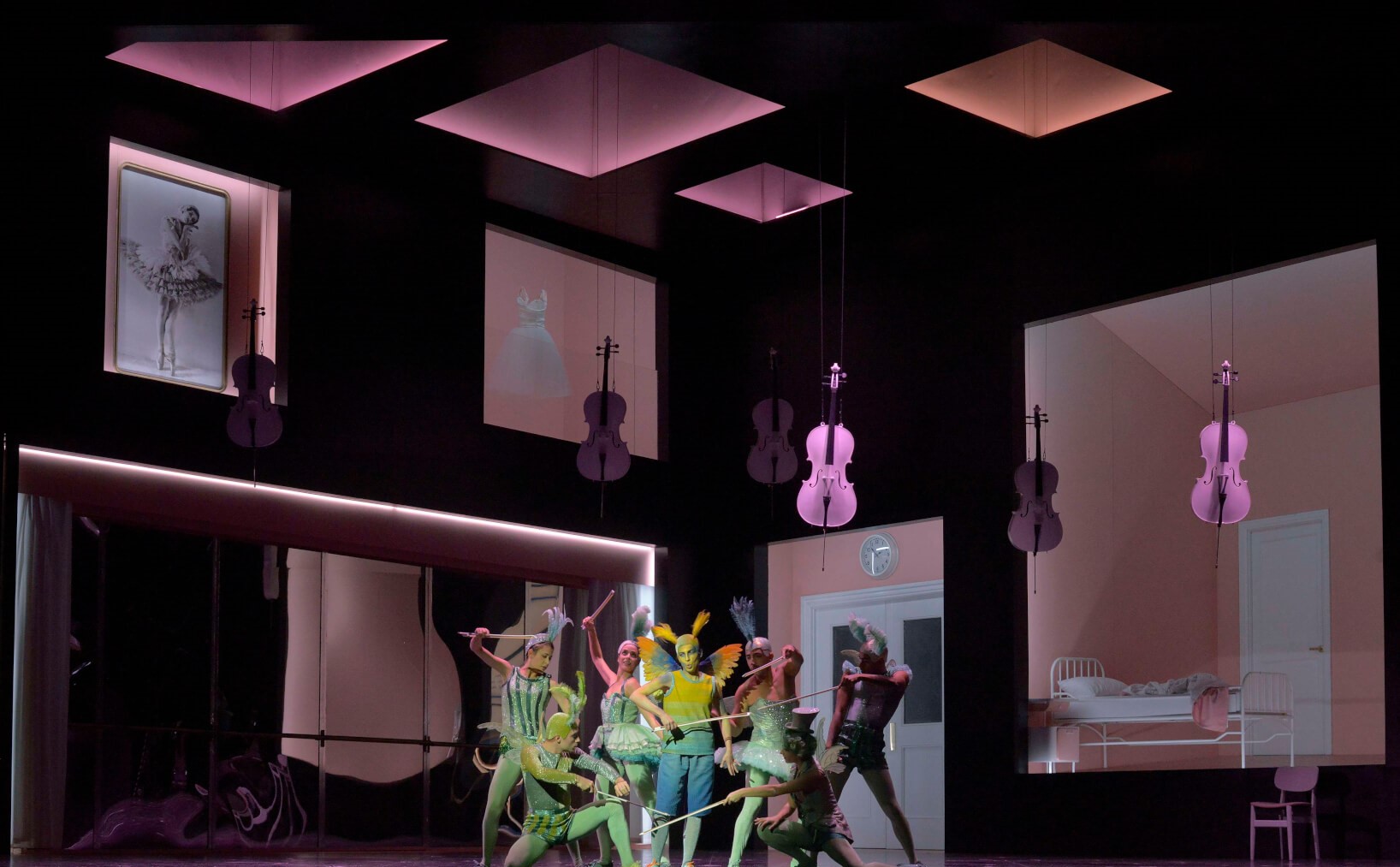
There was so much to enjoy in this evening’s performance of Hoffmann. There was undoubtedly a genuine sense of occasion in the house tonight and this was also perceptible in a performance that reminded us of the greatness of this art form. Michieletto gives us a real ‘show’ full of vibrant visuals, superbly brought to life by an energetic and committed cast, musically at a splendid level. Yet, he gives us something more than that. He gives us a reminder of what it really means to be creative. He celebrates the eccentrics whose imaginations entertain and nourish us and reminds us that, yes there may be struggles, but those struggles lead to creative outputs that will entertain generations to come. The audience responded at the final curtain with a generous and prolonged ovation.
 operatraveller.com
[…] indeed was les Contes d’Hoffmann at the Fenice. I had the privilege of attending the season opening, complete with the […]
[…] moves me immensely, particularly if I think back to Warlikowski in Brussels or Michieletto in Venice, both of whom gave us deep meditations on the power of creativity. Here, it felt that De Beer […]