Donzietti – Lucie de Lammermoor
Henri Ashton – Vito Priante
Edgard Ravenswood – Patrick Kabongo
Lord Arthur Bucklaw – Julien Henric
Gilbert – David Astorga
Raimond – Roberto Lorenzi
Lucie – Caterina Sala
Coro dell’Accademia Teatro alla Scala, Orchestra Gli Originali / Pierre Dumoussaud.
Stage director – Jacopo Spirei.
Festival Donizetti Opera, Teatro Sociale, Bergamo, Italy. Sunday, November 26th, 2023.
The month of November is never complete without a visit to the Festival Donizetti Opera, held annually in the master’s home town of Bergamo. Over the past decade it has become a must for lovers of his music and the atmosphere is always warm and cordial. This year, there was the opportunity to hear the French version of Lucie de Lammermoor, with the added bonus of the period instruments of Gli Originali, who gave so much pleasure in a glorious Elisir d’amore, two years ago.
This version of Lucie has many similarities with the Italian, but there are also considerable differences. The roles of Alisa and Normanno are merged into the conspiratorial character of Gilbert, who helps to set up an assignation between Lucie and Edgard with the intention of killing the latter. Another change, is the replacement of Lucie’s cavatina with that of Rosmonda d’Inghilterra, which is opened not with the harp but with an agreeable dialogue between the winds.
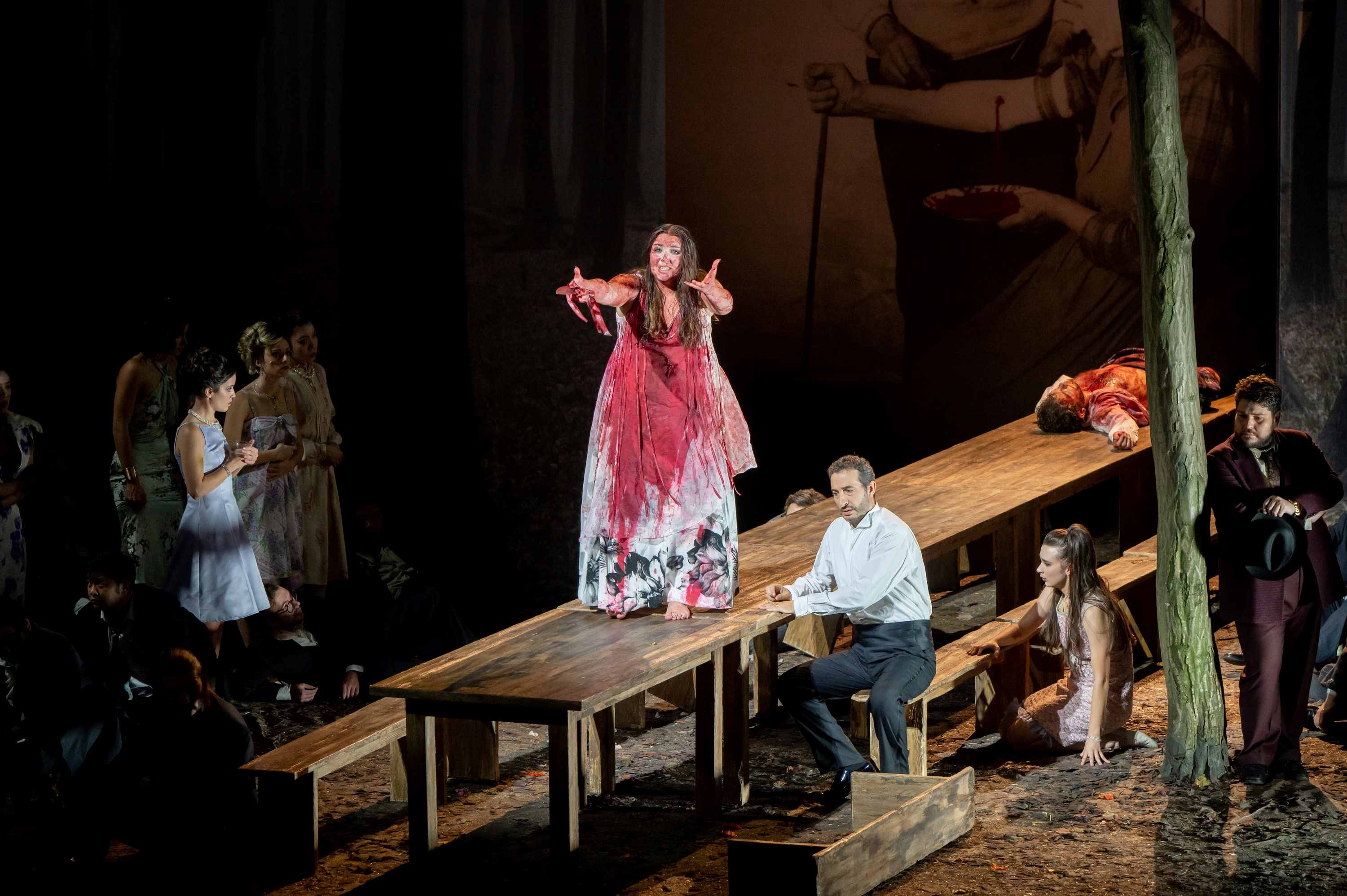
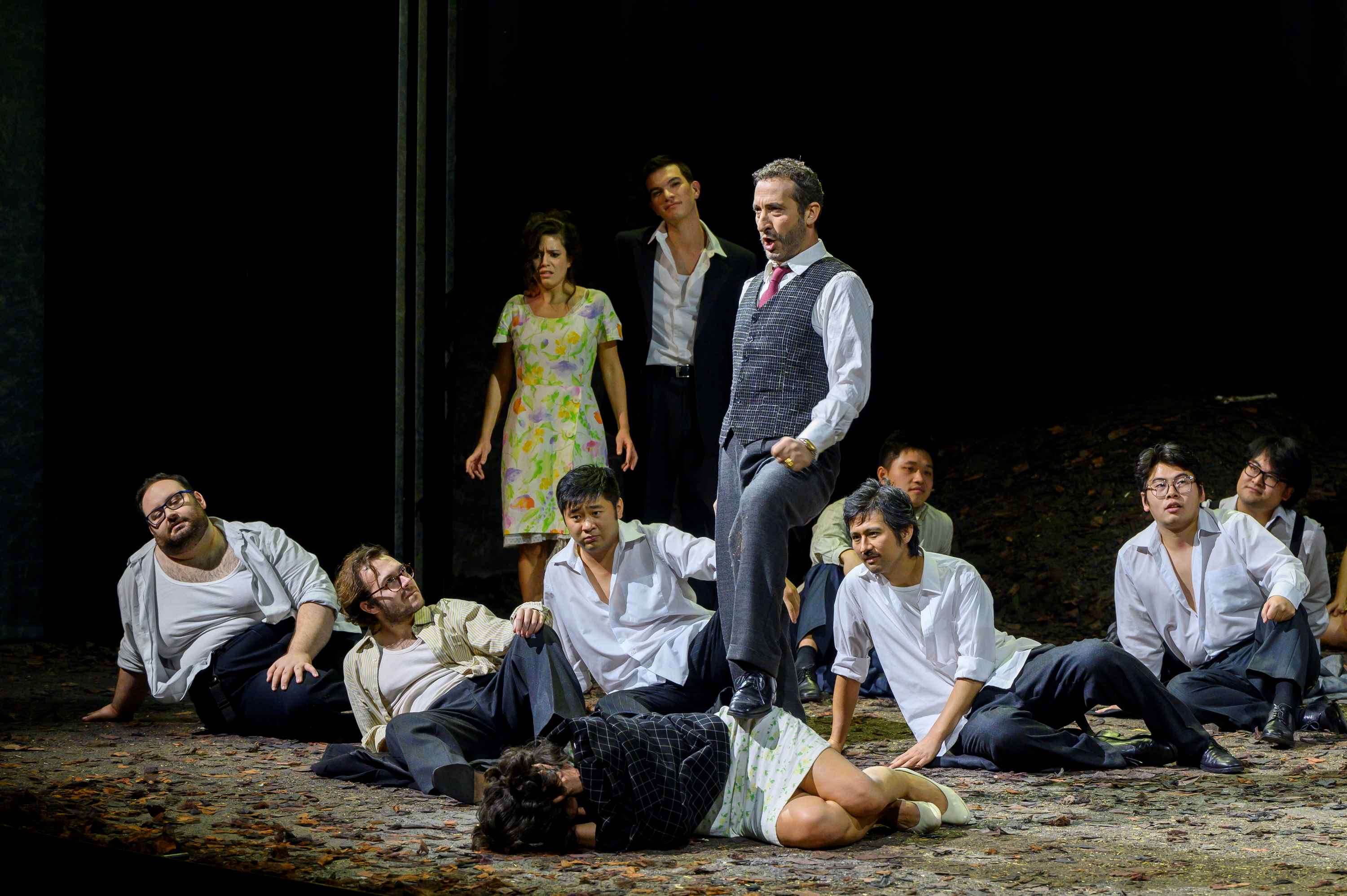
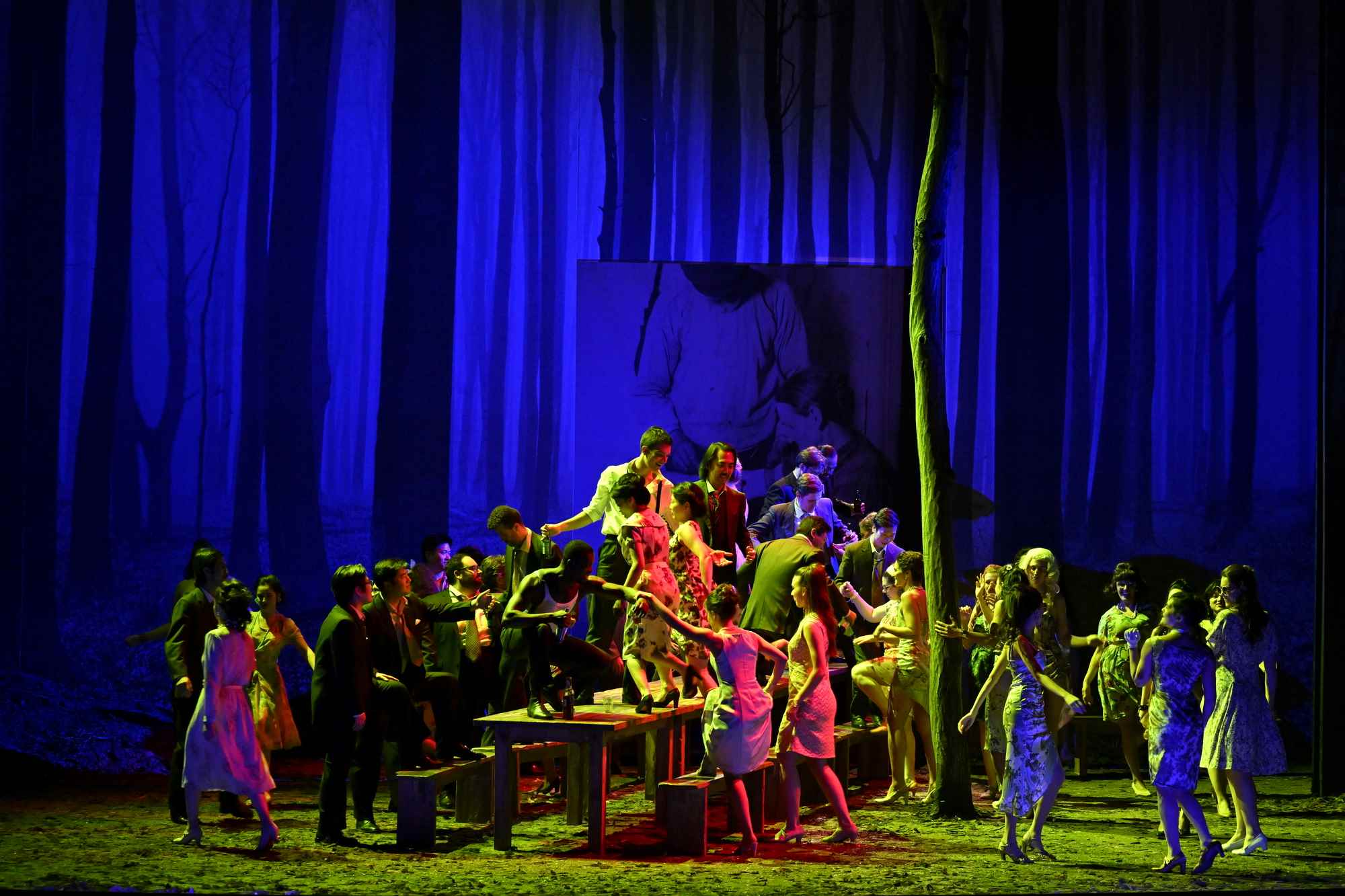
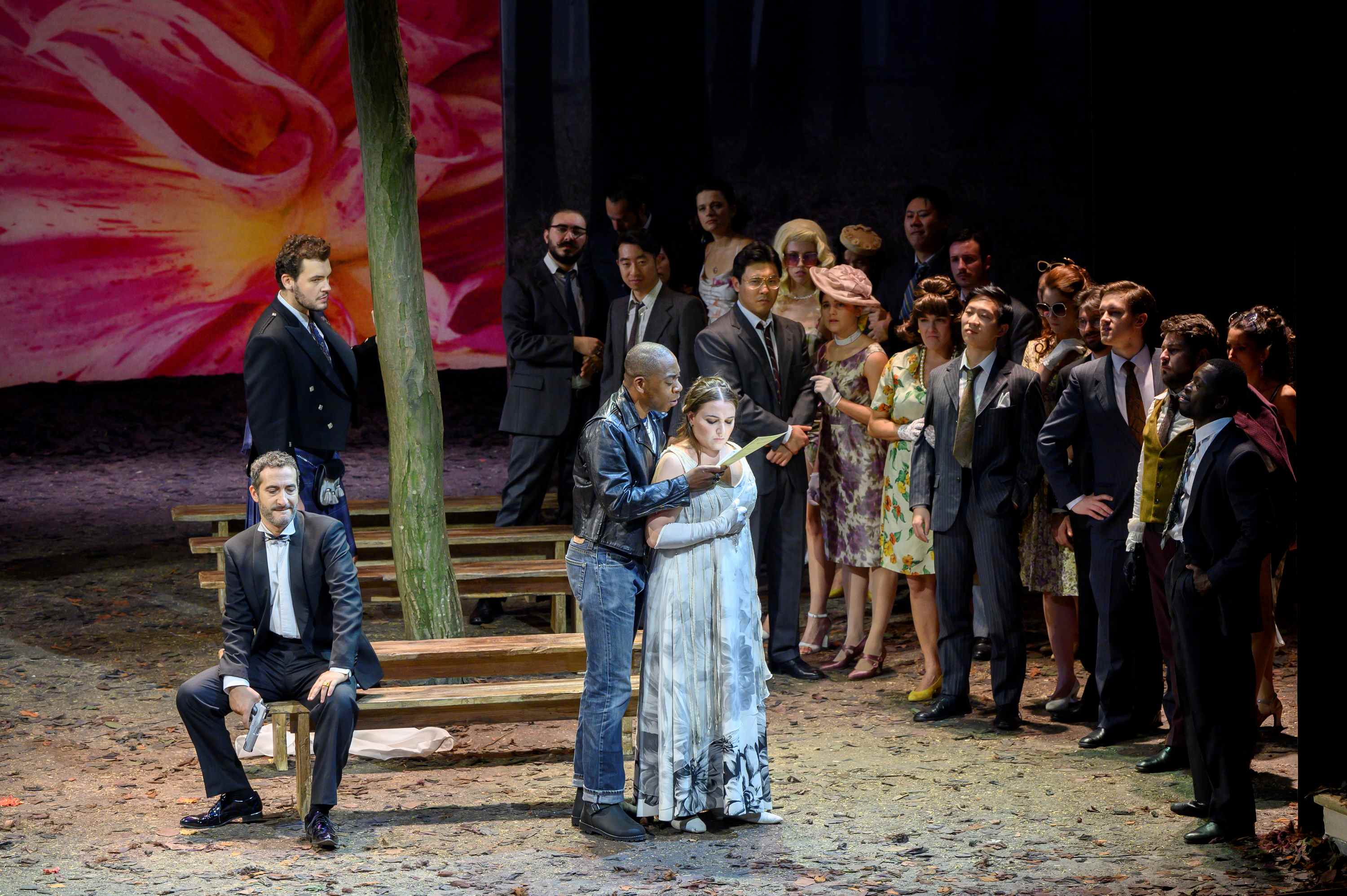
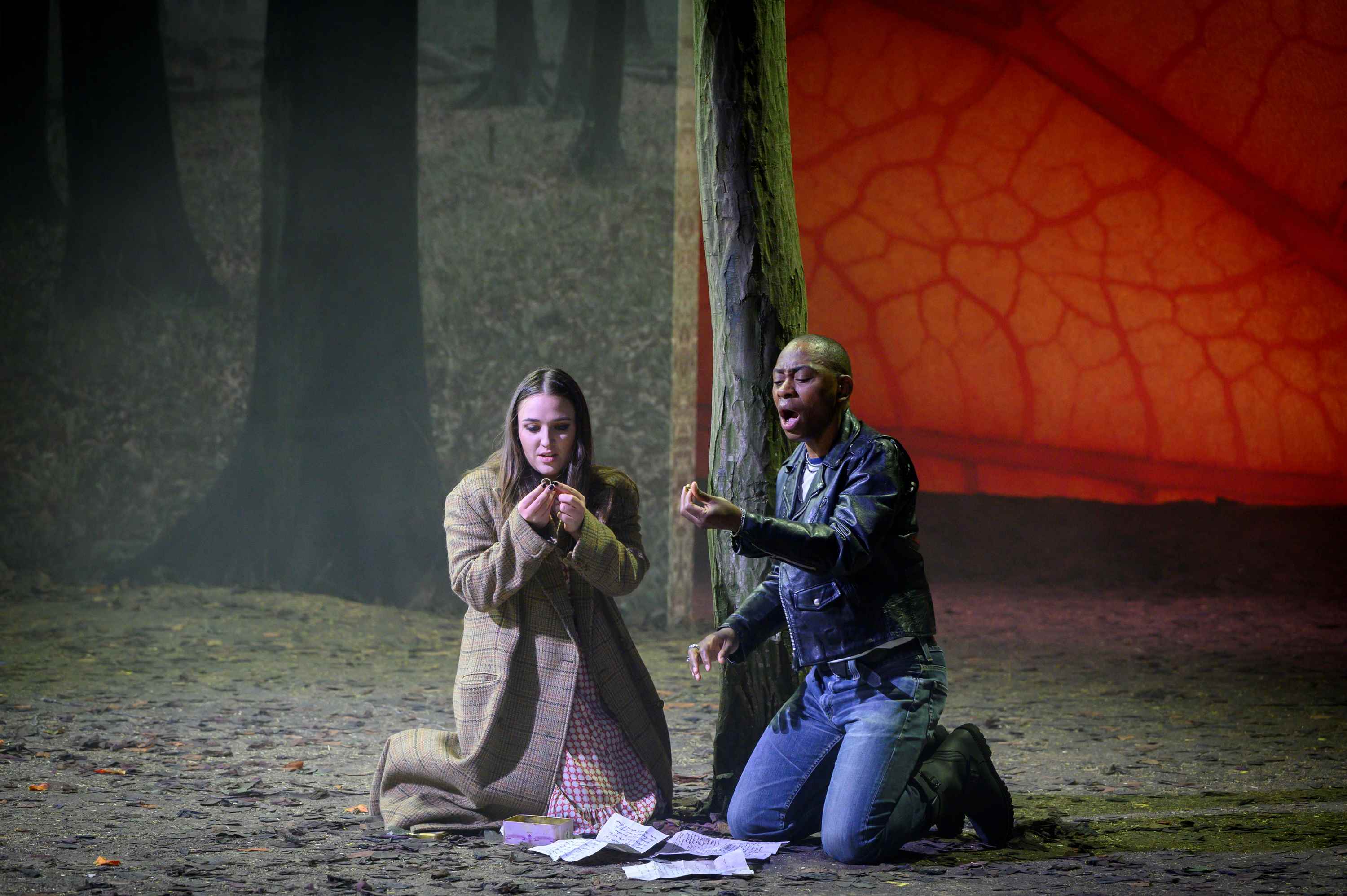
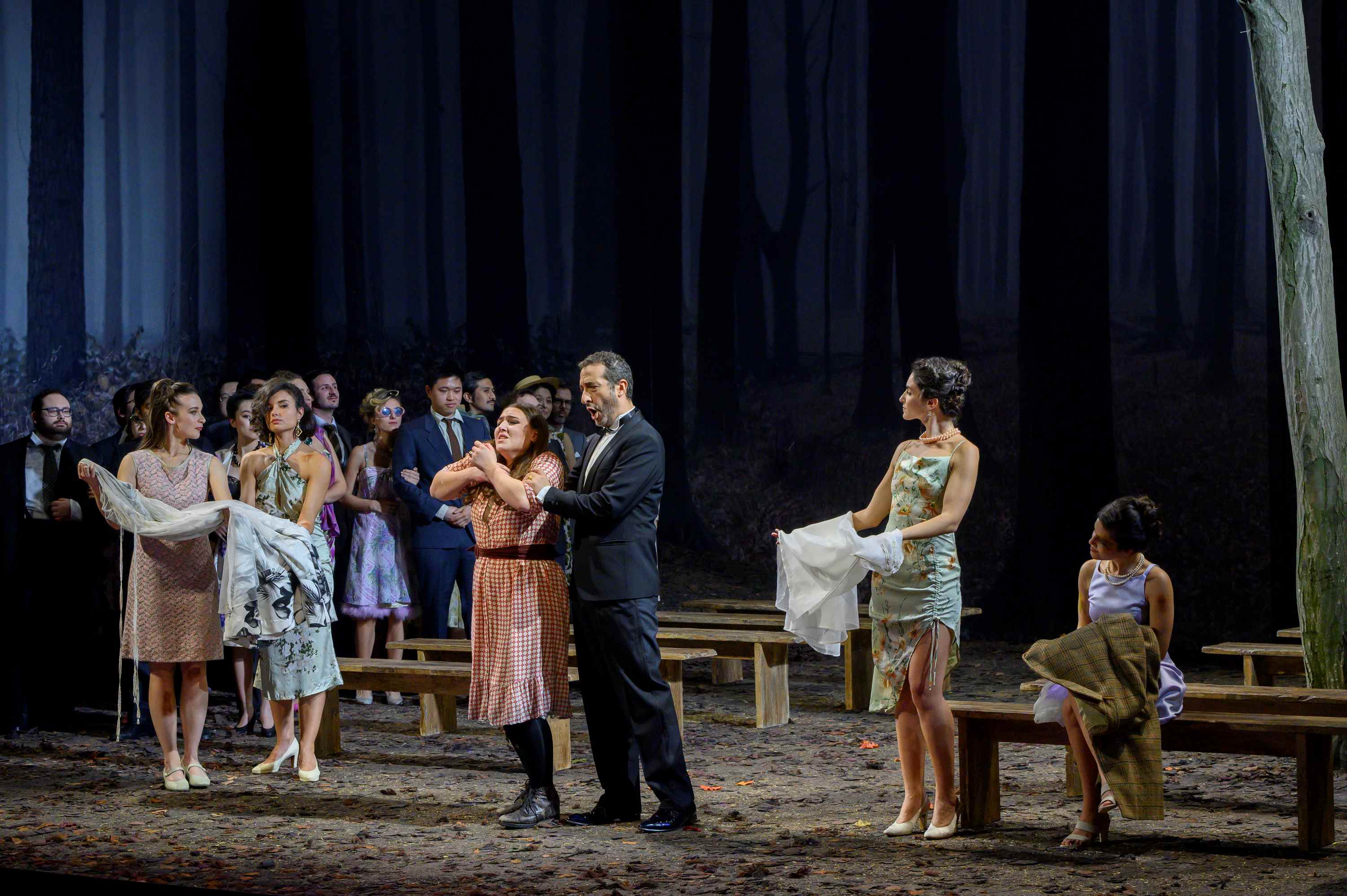
The stage direction was confided to Jacopo Spirei who gave us that devastating Madama Butterfly I saw in Lisbon last month. He sets the action in a very basic set, dominated by a large leafless tree, while the backdrops show an appropriately natural background of similarly denuded trees. The evening opens with the hunters chasing a group of women around the set. This set the scene of a brutal society, but the physical mistreatment of these women felt gratuitous and voyeuristic. It didn’t feel that it was inviting us to sympathize with these women – rather it served to shock, which led to some loud interjections and boos from the audience. Similarly, in the wedding party, some of the women of the chorus were covered in what seemed to be booze by some of the men, but here it just seemed to be quite risible, since these sopranos and mezzos were just instructed to walk across the stage, sit down and be poured on, climb a table, and then dismount it. I can see that Spirei was aiming on having us understand the brutality of the society in which Lucie lived. And yet, this violence felt disconnected from the rest of the staging. In the closing scene, Edgard expired next to a burnt-out car, with some lifeless ladies next to it. It did bring back some unfortunate memories of Alfonso Romero Mora’s staging at the São Carlos, which had a similar final tableau. Otherwise, I have to say that positive impression that I had of Spirei’s work in that Butterfly were here rather mitigated.
The positive news regarding the musical side of the performance is that diction, by and large, was very good. The exception was the chorus, which could certainly have benefitted from more French-language coaching. Otherwise, other than a few mispronunciations in some cast members, for example ‘père’ instead of ‘peur’ or ‘bion’ instead of ‘bien’, the clarity of the diction really helped bring the evening to life and was a huge improvement on that of last year’s Favorite. I was excited to see Caterina Sala again, who was a fabulous Adina in that Elisir two years ago. Sala has a glorious natural instrument – she was born with a Stradivarius in her throat. The voice has a wonderful fizz of a fast vibrato, a beguiling sheen to the tone, and easy agility. She’s barely in her mid-twenties and will hopefully have a great career ahead of her. And yet here, I must admit to some concern. The highest acuti lack in spin, seemingly achieved more through muscle than placement of the voice – which is easy when one is young, but perhaps not ideally sustainable longer term. Similarly, she can descend to a juicy chestiness, but her traversal of the lower passaggio is inconsistent. There were several moments when she came out of the runs and nearly came to grief. I write this not to take away from Sala’s performance, but instead because I strongly believe that she has a glorious natural gift that needs to be nurtured. She genuinely lived the role through the text, her musicality is instinctive, and she’s an engaging actress. But I do worry that this role is a stretch too far at this point in time, even in a theatre as intimate as this, because in this music there really is nowhere to hide.
Patrick Kabongo brought splendid verbal acuity to his assumption of Edgard. The fact that he’s Francophone was audible in the way that he not only coloured and lived the text, but also managed to communicate it to the audience. His tenor sits high, which allowed him to rise to the constantly soaring lines of his final scene with ease – although here too, there was a sense that it was muscle driving it as we came to the end, not helped by Spirei having him recline up against the automobile. The voice, however, lacks in ping, not always able to penetrate through the orchestral textures. He undoubtedly has a solid technique and is able to negotiate the high-lying tessitura, but the voice, as of now, is rather slender and lacking in volume. This may, of course, come with time. I very much look forward to him singing more of the Donizetti roles in French.
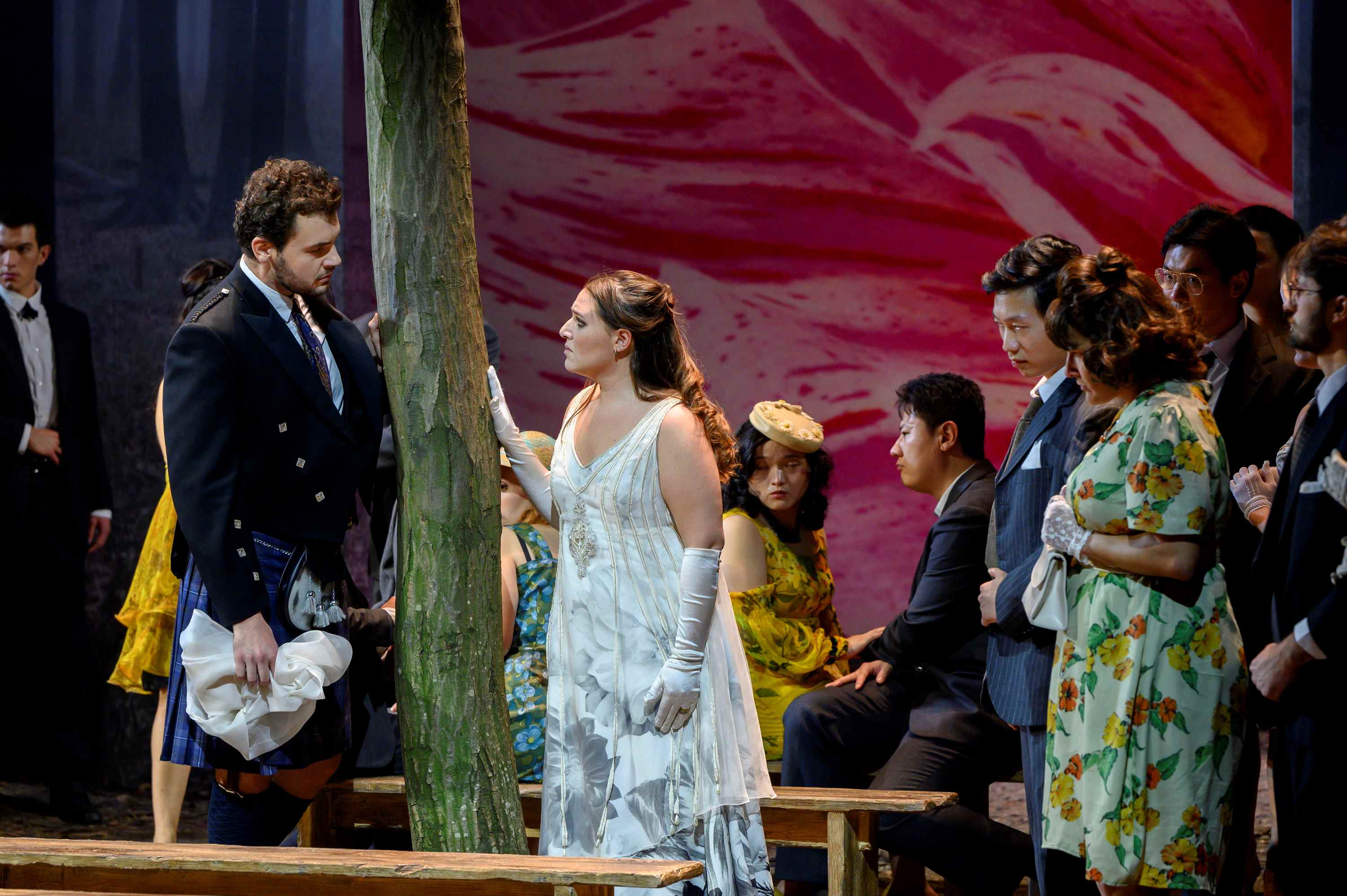
Vito Priante brought his familiar stage presence to the role of Henri, which he sang off the text, bringing his character to life. The voice is a little grainy, but the top is penetrating, shining through the textures with ease. Another high-lying tenor in the cast was Julien Henric as Arthur. This is another well-placed voice, bright and forward, coping with the high tessitura with admirable ease. David Astorga was an energetic and insinuating Gilbert. His oaky-toned tenor was even throughout the range and even in emission. Robert Lorenzi brought a very firm and handsome bass-baritone to the role of Raimond, a tower of strength descending to a warm bottom.
Pierre Dumoussaud conducted an orchestra on somewhat variable form. The strings brought a haunting beauty to the scène de la folie, as did the poetically-played flute combined with the bonus of a raucous carillon from a nearby church. The horns were rather accident-prone throughout the evening, unfortunately, although the timpani played with hard sticks made a notable impression. To be frank, the orchestral contribution did sound like it could have done with a little more rehearsal – the orchestra seemed to be running out of gas in the Act 2 finale, falling behind the beat. Dumoussaud’s tempi were a bit flaccid on occasion, with tension drooping in the Lucie/Henri duet– not ideal for a Sunday matinee in an extremely warm theatre. The chorus was enthusiastic and youthful in tone, but the impact of their singing would have definitely been greater had one been able to perceive the words.
I always enjoy visiting this festival and had great hopes for this cast. The good aspects were in the clarity of the diction of the principals, the dramatic engagement that they brought, and the haunting string tone and poetry of the winds. At the curtain call, there was mostly polite applause, with cheers for Priante, Kabongo and Sala in particular. Next year the festival will mount productions of Don Pasquale, Roberto Devereux and Zoraida di Granata. Lovers of Donizetti’s music will certainly wish to be present.
 operatraveller.com
[…] Edgardo’s final scene, beautiful phrased while singing lying down. Over in Bergamo, we got Lucie de Lammermoor sung in creditable French. Caterina Sala, who was a glorious Adina there a few years ago, was […]
[…] here last fall, probably the most convincing production I’ve seen of the work, although his Lucie de Lammermoor in Bergamo, also last fall, was much less […]