Verdi – Otello
Otello – Gregory Kunde
Jago – Luca Micheletti
Cassio – Antonio Mandrillo
Roderigo – Andrea Galli
Lodovico – Mattia Denti
Montano – Alberto Petricca
Un araldo – Eugenio Maria Degiacomi
Desdemona – Francesca Dotto
Emilia – Carlotta Vichi
Voci Bianche del Conservatorio Nicolini, Coro del Teatro Municipale di Piacenza, Orchestra dell’Emilia-Romagna Arturo Toscanini / Leonardo Sini.
Stage director – Italo Nunziata.
Teatro Municipale di Piacenza, Piacenza, Italy. Friday, December 15th, 2023.
This evening’s performance of Otello marked the opening of the 2023 – 24 opera season at the beautiful Teatro Municipale di Piacenza. Indeed, it also represented the opening of the theatre’s celebrations for its 220th birthday. The house is certainly worth a visit, with this season focusing heavily, perhaps unsurprisingly so, on the Italian repertoire and with always interesting casting. I was also particularly interested in getting to hear Verdi’s score in a house of this modest size – and it must be admitted that the experience was rather exhilarating.
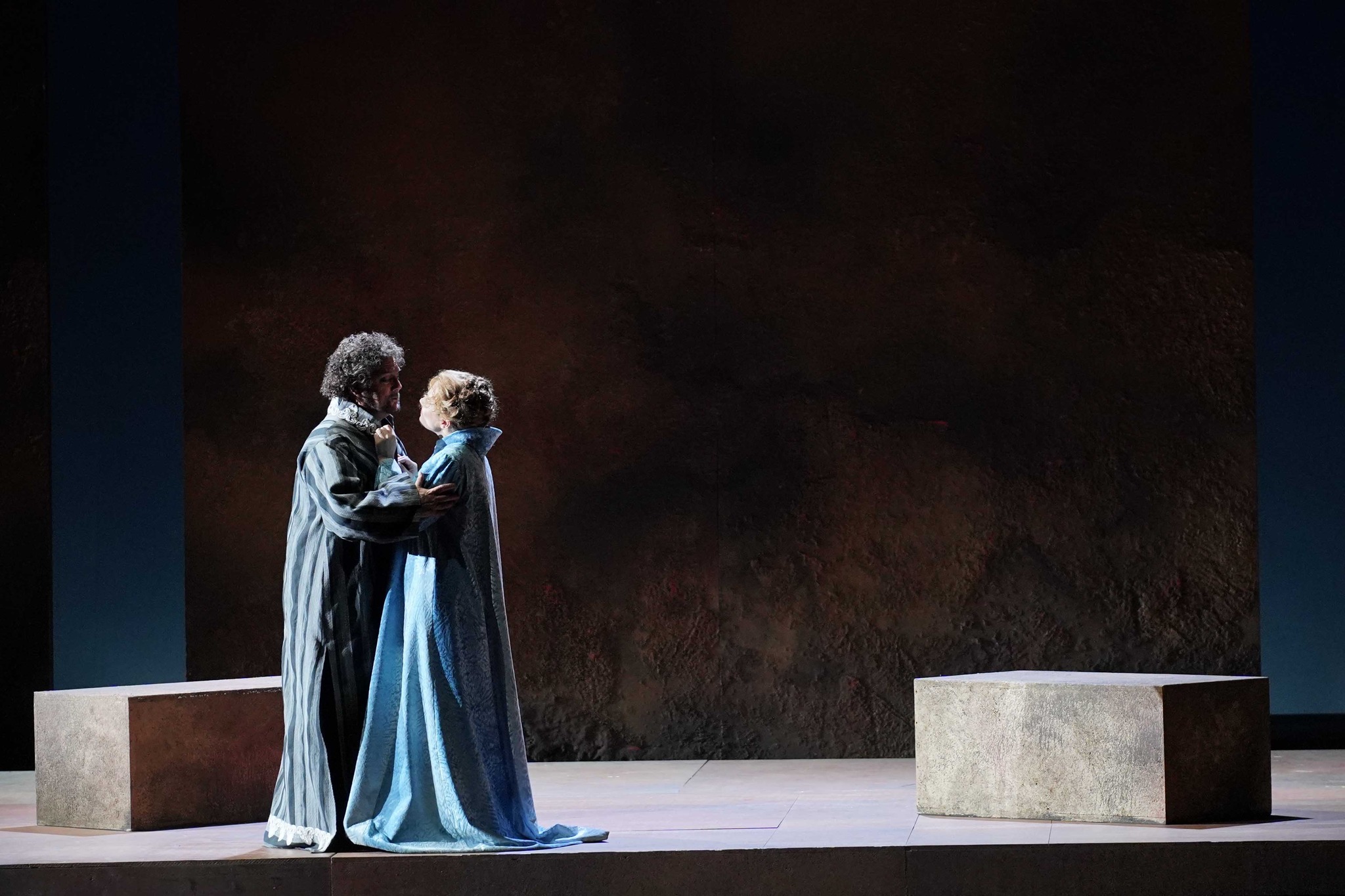
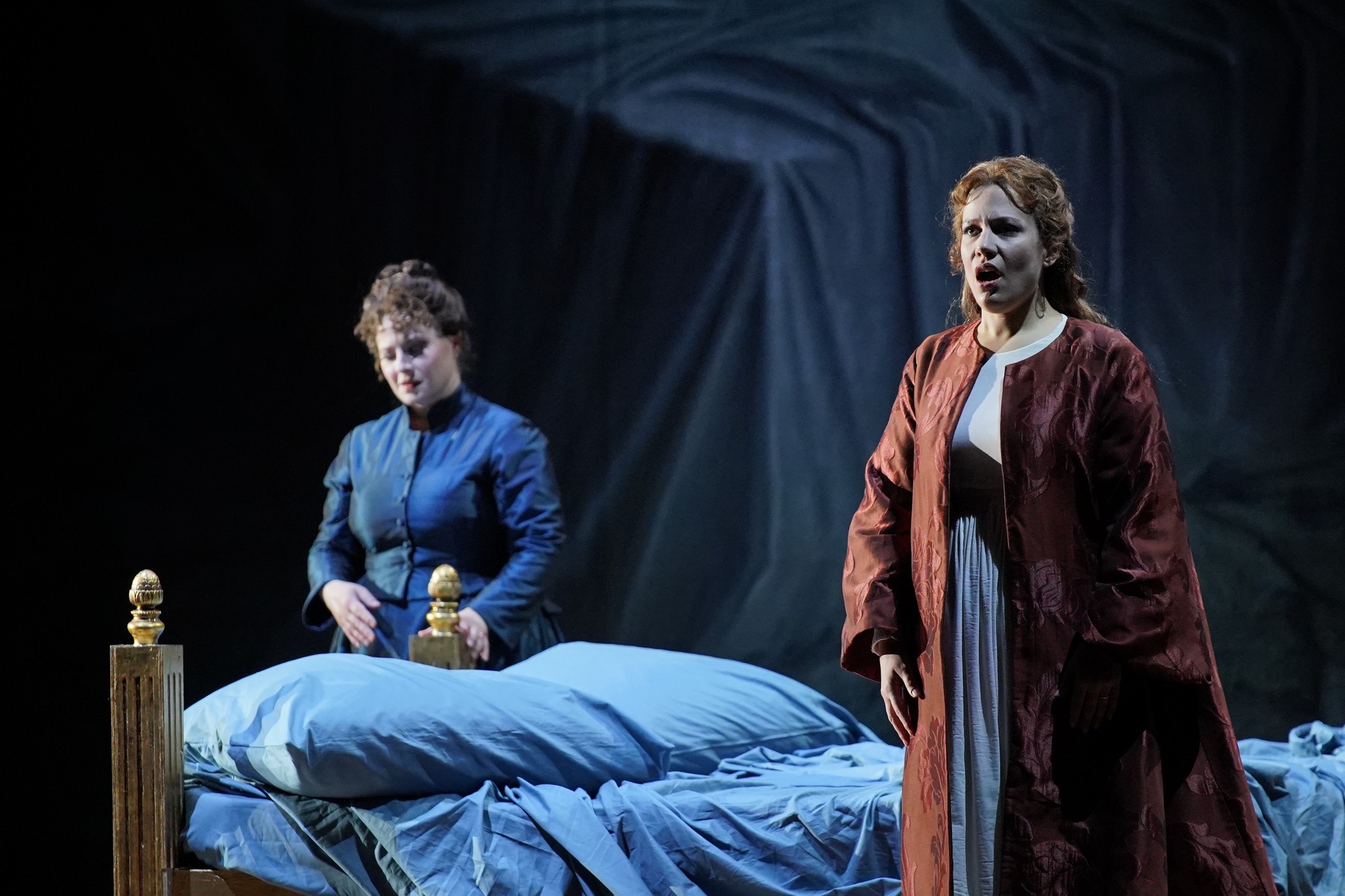
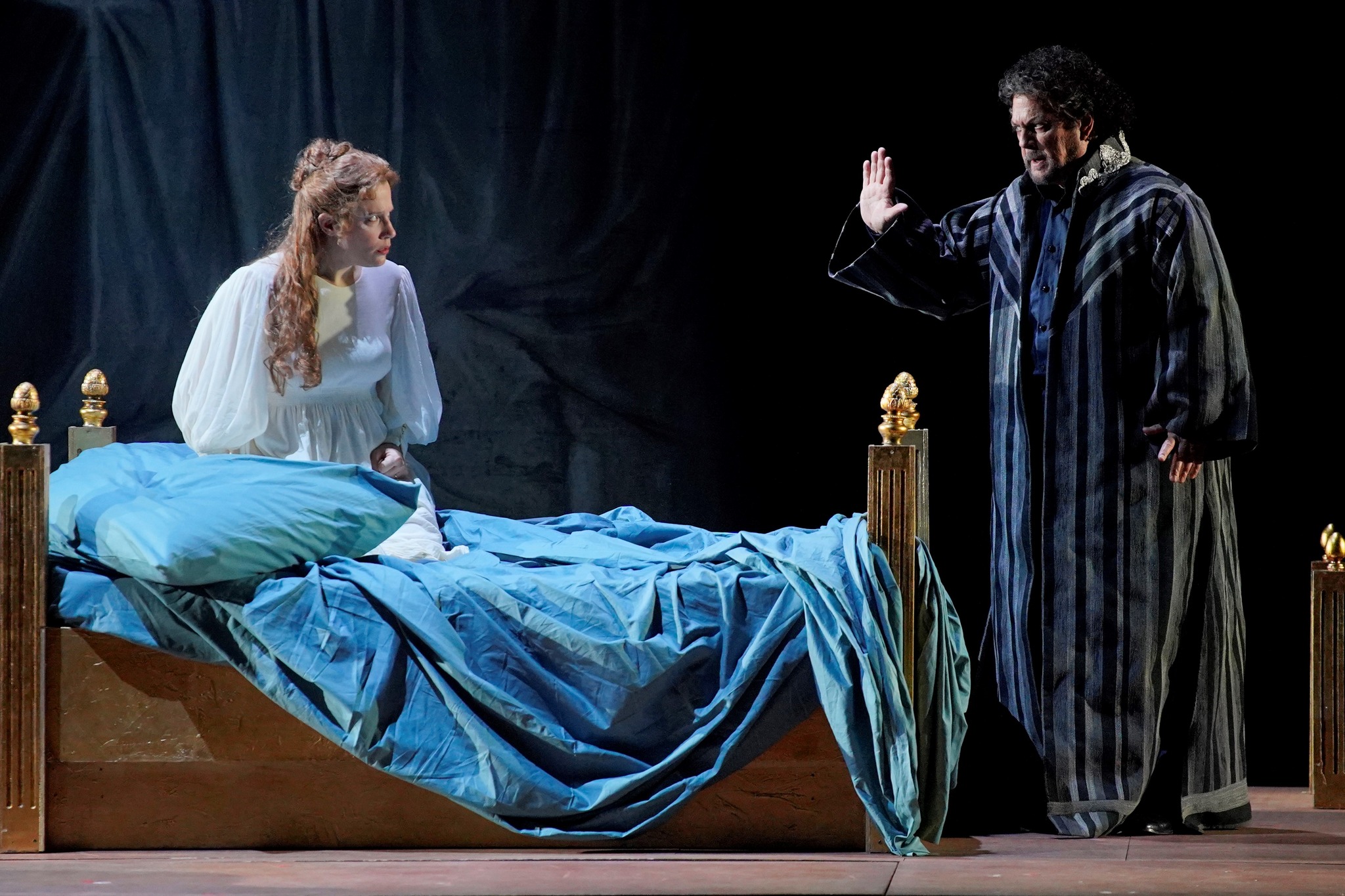
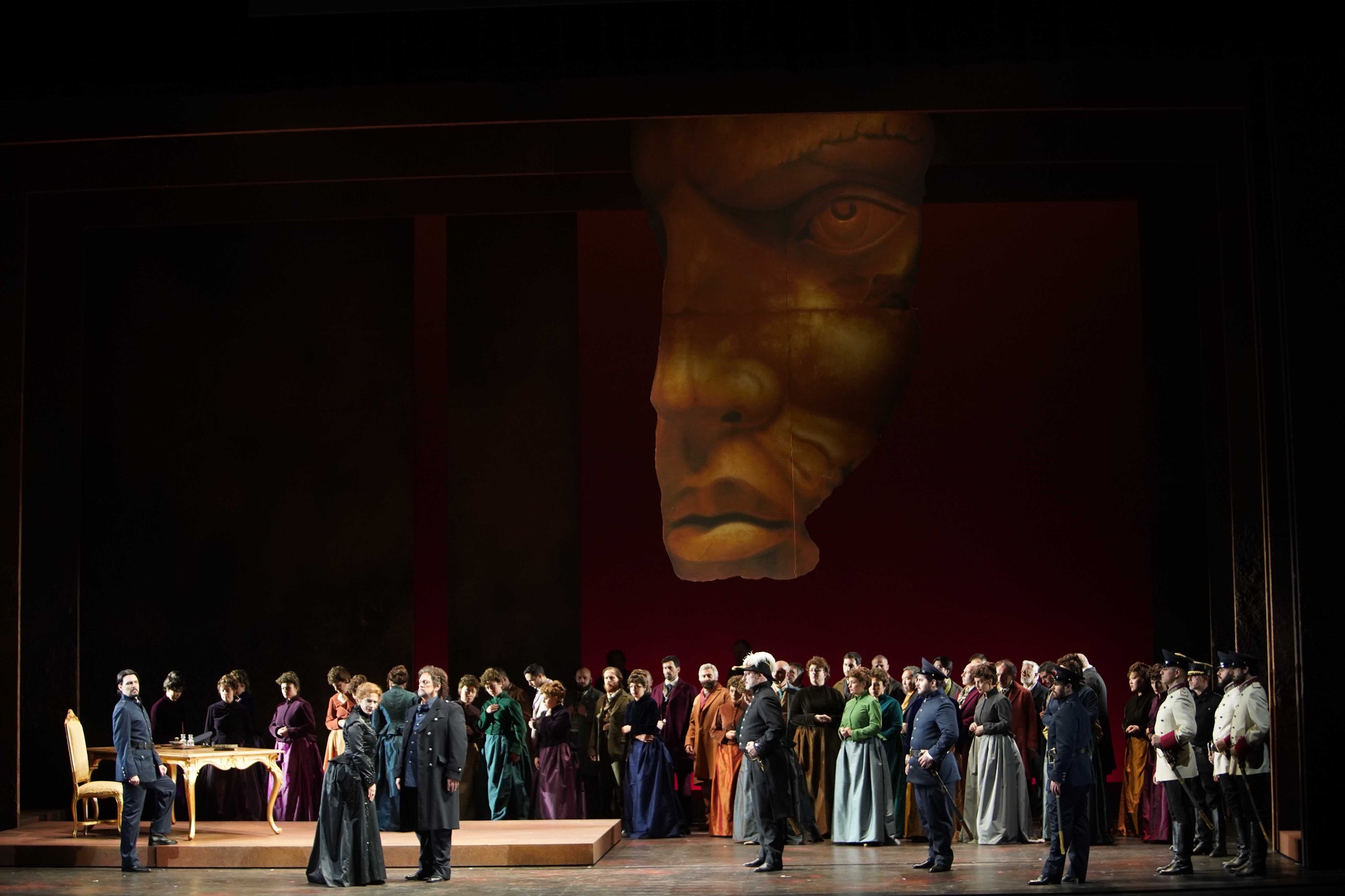
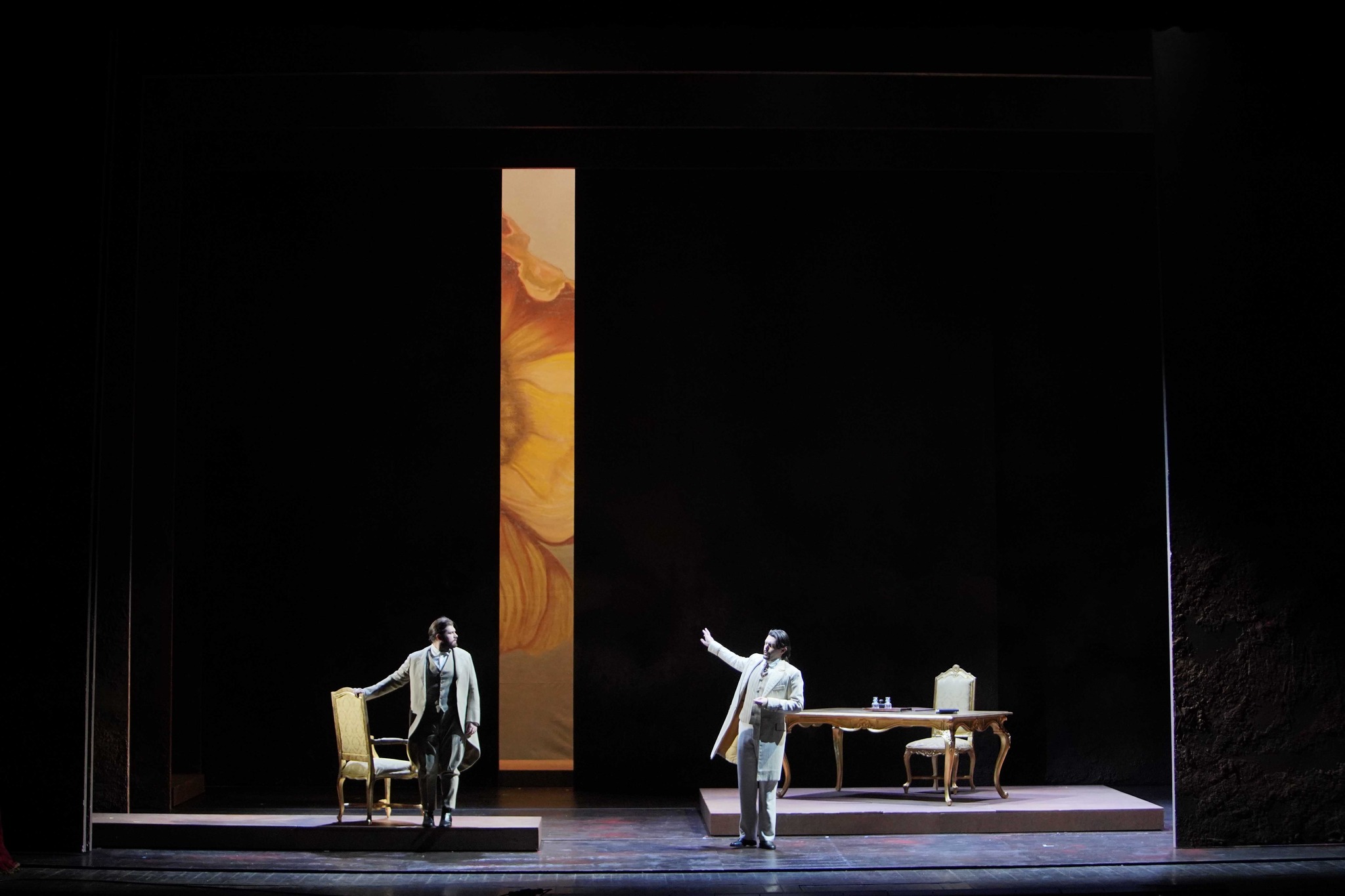
This new production of Otello, confided to Italo Nunziata, is a coproduction with the theatres of Modena, Reggio Emilia, Novara, and Rovigo. Nunziata gives us a staging that tells the story in a very straightforward way. The costumes, by Artemio Cabassi, represent the Victorian era, perhaps in an attempt to reflect the time of the work’s composition. The set, by Domenico Franchi, consists of some various bits of furniture – a few benches, a bed, a desk, and a staircase down which Otello descends to sing his ‘esultate!’ – while large panels frame the action in various formations, occasionally giving us a view of related imagery behind. These include a painting of a bed in Act 4, blowing drapes in Act 1, or flowers in Act 2. Direction of the chorus consists of a lot of boddice clutching for the ladies, while direction of the principals consists of a considerable amount of declaiming into the auditorium with arms outstretched.
Yet despite the rather perfunctory personenregie, Nunziata proves his ability to tell a story clearly, showing us a view of Otello seeing Desdemona engage with Cassio in Act 2, for instance, setting in train his obsessive jealousy. I also found it telling in how the crowd did nothing in Act 3, while Otello abused Desdemona, preferring to clutch the aforementioned boddices rather than intervene. The strength of Nunziata’s staging, then, is that he lays out the events clearly and logically for us. Yes, the direction of the chorus and principals was perfunctory, but his staging does produce an efficient framework for the action to take place in.
Musically, this was an evening that promised much and it certainly did deliver. It’s rather churlish to focus on someone’s age, but at a point in life when most tenors have long retired, Gregory Kunde is a miracle. In this seventieth year, he gave us the kind of Otello tenors half his age would dream of giving. Indeed, Kunde actually sounded even fresher at the end of the evening than he did at the start. His opening ‘esultate’ rang out thrillingly, pinging excitingly into the auditorium. That said, there was an initial dryness to the tone here that was passing. I also wished that he had perhaps pulled back on the volume a little in the closing measures of the love duet – in a theatre of this size he could certainly have afforded to do so. The way he raged so thrillingly, with never a hint of strain was absolutely remarkable, as was the way he grew the voice from a whisper in ‘Dio! Mi potevi’ to a ringing climax. I also found the way that he changed the colour of the tone, from loving to raging in ‘Anima mia, ti maledico’ absolutely gripping, fully bringing out the irrational insanity of his character. Kunde’s Otello was staggering in its power, both dramatic and vocal.
Having seen Luca Micheletti just a few weeks ago as a congenial and extremely stylish Figaro at the Scala, I wasn’t quite prepared for the sheer depth of the impact his characterization would have. The voice is undeniably handsome, rich in resonance around a healthy core. Micheletti truly sang the role, never barking and never pushing it further than it can naturally go. His ‘credo’ rose through the registers with ease by using the text to focus the tone, without a hint of strain. He also lightened the tone most impressively to sound like a genuine tenor when imitating Cassio. Similarly, the way that Micheletti coloured the text, searching for meaning, was most striking. He made Jago’s evil seem so banal and yet so vicious at the same time. A masterful portrayal.
Desdemona sounds to my ears like a much happier match for Francesca Dotto’s talents than the Trovatore Leonora I saw her as in Parma recently. Her soprano has a milky tone around a steely core, lacking perhaps in a large variety of tone colours, yet also able to rise above the ensemble in Act 3 with ease. She sang her willow song with great poise, especially as it was repeatedly interrupted by a ringing cellphone and audience members commenting loudly on said ringing phone. Her ’Ave Maria’ was similarly phrased in beautifully long lines, the top floated most notably. As with Kunde and Micheletti, Dotto made much of the text, using it as the starting point for her long lines, pulling back on the tone with magical effect in the love duet.
The remainder of the cast reflected the admirable qualities of the house. Carlotta Vichi sang Emilia’s interjection with confidence, navigating the awkward tessitura ably. Antonio Mandrillo sang Cassio in a bright, focused tenor with an elegant line, while Alberto Petircca was a rather world-weary Montano. The house chorus was on enthusiastic form, singing with agreeable blend and focused tone. The sopranos were particularly fearless in the way that they approached that big high C in Act 3, and the basses were nicely resonant in descending to the sepulchral depths in Act 1. They also approached the awkward syncopated rhythms of Act 1 with confidence.
Leonardo Sini made full use of the range of colour available to him from the orchestra, making Verdi’s score sound even more modern than one often hears it. He brought out the burbling winds through the textures, or the exoticism of Verdi’s harmonies as Jago’s verbal poison took root in Otello’s mind. Sini’s tempi were nicely swift, allowing the evening to sweep us away with dramatic impetus. I was most impressed by the quality of the playing of the orchestra – other than some sour intonation in the lower strings just before the murder – the intonation throughout was accurate. There were a few awkward tempo transitions – for example in the big duet closing Act 2, but Sini also negotiated some expert use of rubato in the big Act 3 ensemble, keeping the vast forces with him. A most impressive assumption of drama and imagination from the young Sardinian conductor. Certainly, a talent I would like to hear more from.
This was an extremely satisfying evening at the opera. We were given some outstanding singing from the principals with a highly idiomatic account from the chorus and orchestra under a conductor of serious promise. Nunziata’s staging did what it needed to do and told the story in a logical way. What I’ll take away with me from this evening, is the miraculous nature of Kunde’s instrument and Micheletti’s psychologically probing, and vocally assured, account of Jago. The audience received the cast with an extremely generous ovation.
 operatraveller.com
[…] Azucena and Alessandro Luongo a very musical Luna. Gregory Kunde gave us his deservedly acclaimed Otello in Piacenza, singing with genuine insight and remarkable vocal freshness for a man entering into […]