Beethoven – Fidelio
Leonore – Gabriela Scherer
Florestan – Maximilian Schmitt
Rocco – Joshua Bloom
Marzelline – Susana Gaspar
Jaquino – Leonel Pinheiro
Don Pizarro – Boaz Daniel
Don Fernando – Levente Páll
Zwei Gefangene – Sérgio Martins, Nuno Dias
Coro do Teatro Nacional de São Carlos, Orquestra Sinfónica Portuguesa / Graeme Jenkins.
Stage director – Georges Delnon.
Teatro Nacional de São Carlos, Centro Cultural de Belém, Lisbon, Portugal. Sunday, January 21st, 2024.
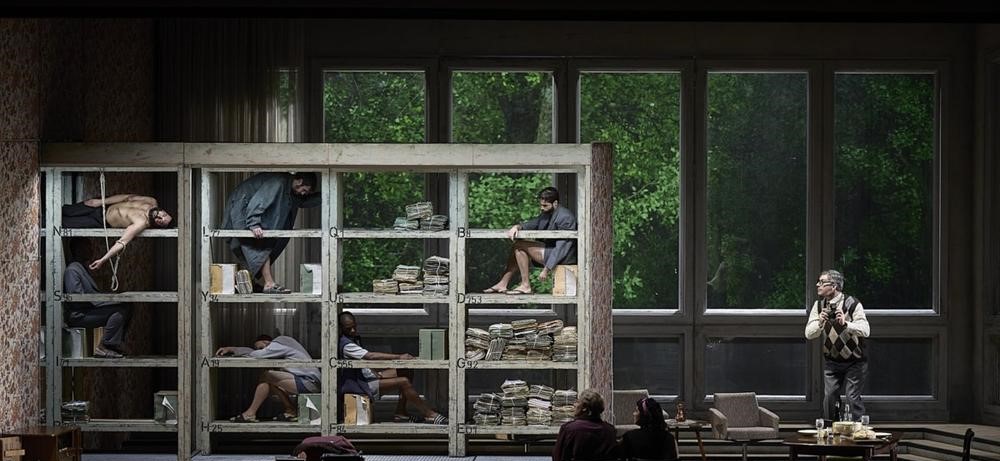
For this run of performances of Fidelio, the Teatro Nacional de São Carlos has decamped to the larger auditorium of the Centro Cultural de Belém, located in the Lisbon district of the same name, famous for its tarts, monastery and tower. The house imported Georges Delnon’s Hamburg staging, which I saw five years ago in Bologna. In addition to some local talent, the house engaged an international cast, with Maximilian Schmitt stepping into the role of Florestan at the last minute for Nikolai Schukoff (pictured), all under the direction of Graeme Jenkins.
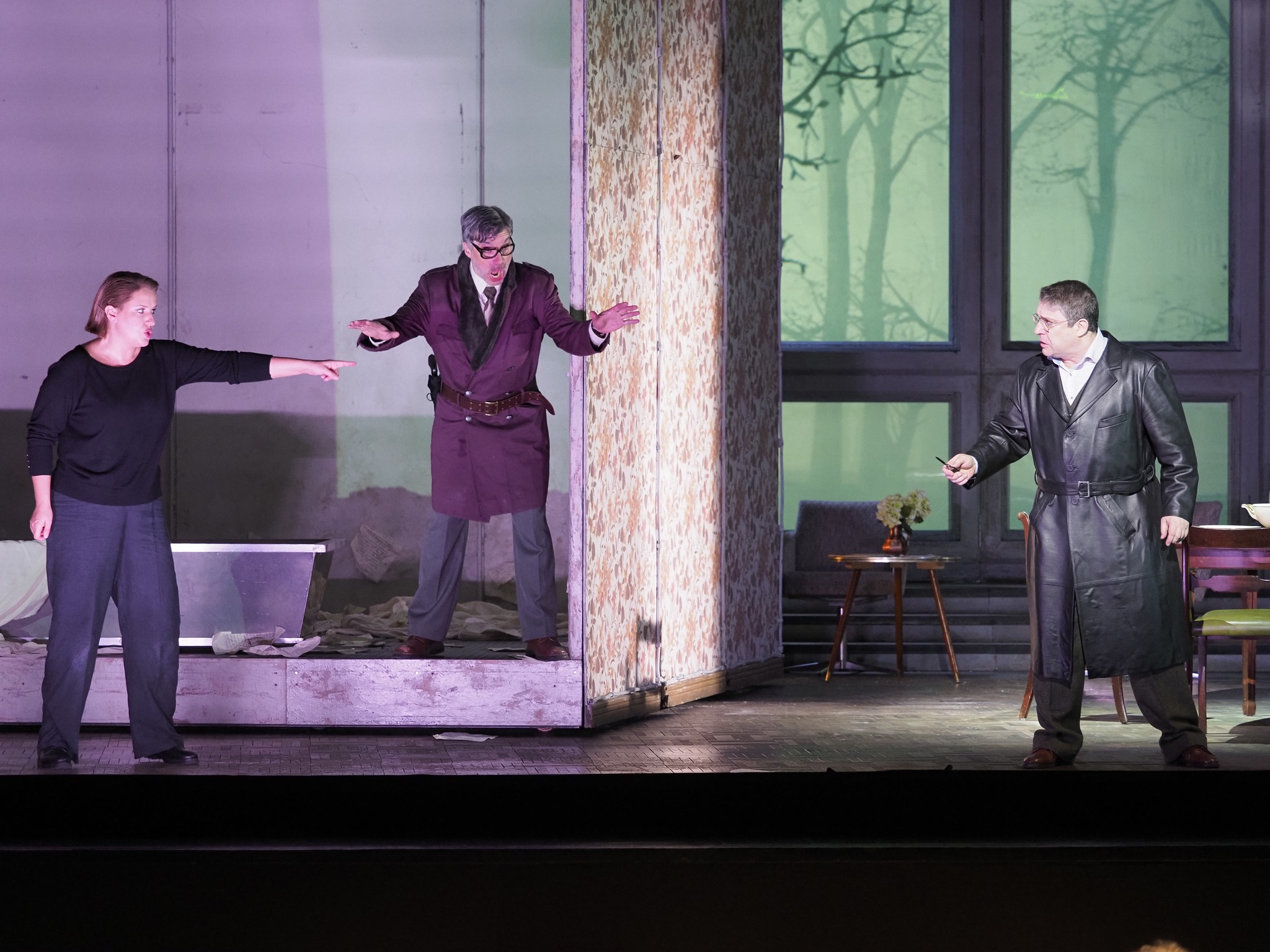
I discussed Delnon’s staging at length when I saw it in Bologna. I must admit that this time around, it convinced me more. I don’t know whether I was overthinking it last time, and that the depth of analysis was perhaps too much, but it struck me as being a lot more potent on this occasion. Delnon sets the action in what appears to be the 1960s or 70s, in a domestic idyll where Rocco and his family clearly have a privileged life, despite being in a prison. Indeed, the only initial indication that we are in a prison is the sound of hounds when a character opens a door. Video, by Momme Hinrichs, is used on the rear of the stage to show images of traversing a verdant glade, offering a taste of freedom beyond. It’s clear that not all is well in this image of domestic bliss, where Marzelline entertains the others by playing the piano. The walls open up, with what appears to be the kind of movable bookshelves one finds in academic libraries, containing bodies of people who had been tortured – the idea that the walls contain horrific secrets is one I found most pertinent.

And yet, there are elements that, if not unconvincing, at least feel like non sequiturs. The evening starts with text on the stage, here in the Lusophone tongue, stating ‘I had a dream, it was a nightmare, but then I woke up and all was well’ (my translation). Given that the first character we see is Leonore surveying the scene, this suggests that we’re watching her nightmare. And yet, this is an element that feels added on and underexplored. In the final scene, both Florestan and Leonore sing their closing paean submerged into the back of the crowd – suggesting that they are simply one of many. Indeed, I found it intriguing how Delnon seems to suggest that repression is something almost quotidian and we live alongside it, but again I didn’t feel that this was fully explored but simply left on the surface. In the opening to the finale, Delnon has the chorus sing their joyful outburst from the back of the stage. I understand why he did this, since it allows us to view the people taking over the Rocco family’s living space. Unfortunately, it robs that moment of its full musical glory. I wish he had given the chorus the opportunity to bathe us in a huge glow of sound, as they did in the final pages when they were brought to the front.

Musically, there was much to appreciate. Jenkins conducted a reading that was extremely swift. Given this was the first performance of a run of two, there were a few isolated moments where stage and pit parted company, specifically in the gold aria and in ‘Namenlose Freude’. Jenkins gave the Orquestra Sinfónica Portuguesa the opportunity to create a big, bold sound. Yet the downside was, at least from my seat toward the front of the Plateia, that the voices were frequently covered. He encouraged the strings to play with minimal vibrato, pulling back on it to allow the eerie harmonies of the opening to Act 2 to register fully. The quality of the orchestral playing was excellent, a few ragged entries also understandable on a first night, while the horns were very well behaved in ‘Komm Hoffnung’, and the winds, always nicely forward, full of character. The chorus, prepared by Giampaolo Vessella, sang with big, generous tone, absolutely ecstatic in the finale. There was an uninhibited enthusiasm to their singing that I found delightful. The sopranos were accurate in pitching and even in vibrations, while the mezzos were deliciously piquant. The tenors and basses sang with warm eloquence in the prisoners’ chorus, with Sérgio Martins and Nuno Dias stepping out with mellifluous ease.
Gabriele Scherer brought wonderful textual acuity to the title role. Her Fidelio/Leonore was clearly someone who felt deeply and she filled her big aria with meaning. Her soprano is generally solid in tone, with a golden core, and she paid full attention to Beethoven’s dynamic markings. I do find it rather short at the top, frequently flat in the higher reaches. Interesting to see her current repertoire also includes Senta and Chrysothemis. Still, the sound itself has agreeable amplitude and she was a genuine and warm stage presence. Maximilian Schmitt intoned his opening ‘Gott!’ from a thread of sound, opening up with extrovert, generous vibrations. His long experience in Mozart meant that he phrased the slower section of his aria with an aristocratic line. As the tempo picked up, however, he sang with fuller determination, the tone starting to dry out as he put pressure on it. The voice itself is focused and carries well, so I did wish that Schmitt had just taken his foot off the gas a bit and allowed the voice to ring out.
As Rocco, Joshua Bloom sang his music with a big, warm bass of impeccable evenness throughout the range. Boaz Daniel sang Pizarro with a focused, slightly acidic baritone, able to carry well over the tumult from the pit and the chorus. Susana Gaspar dispatched her spoken dialogue in impeccable German. Her soprano has a pleasant fruitiness in the middle although the top does sound rather frayed, the vibrations generous. Leonel Pinheiro was a very firm voiced Jaquino, in a well-placed tenor. A very satisfying discovery for me was Levente Páll’s Fernando. His bass is undeniably handsome in tone, even in emission, with an intelligent use of text.
This was a Fidelio that had much to offer. Delnon’s staging does has some insight into repression and invites reflection on the horror that lives alongside us. And yet, while much is intimated, I left again not entirely convinced that it all adds up. It does set up an interesting premise, yet I don’t find it quite has the visceral impact of stagings by Calixto Bieito or Tobias Kratzer, for example, ones that really do challenge us to engage with what freedom really means. Still, it provides an appropriate framework for the action to take place in. Musically, there was a lot that was good. Jenkins’ conducting was vigorous, even if there were times where it felt that he needed to rein the orchestra in, the quality of their playing was not in doubt and the chorus was terrifically enthusiastic. All of the principals brought agreeable elements to their interpretations. The audience greeted the cast at the close with a warm standing ovation, with polite applause for Delnon.
 operatraveller.com
[…] French repertoire. In Lisbon, I saw the São Carlos forces in a revival of Georges Delnon’s Fidelio, which convinced me so much more than it did when I had seen it in Bologna five years […]