Bellini – La sonnambula
Amina – Ruth Iniesta
Elvino – Marco Ciaponi
Il conte Rodolfo – Manuel Fuentes
Teresa – Monica Bacelli
Lisa – Francesca Benitez
Alessio – Mattia Rossi
Il notaro – Leonardo Trinciarelli
Coro del Teatro dell’Opera di Roma, Orchestra del Teatro dell’Opera di Roma / Francesco Lanzillotta.
Stage director – Jean-Philippe Clarac & Olivier Delœuil “LE LAB”.
Teatro dell’Opera di Roma, Rome, Italy. Saturday, April 13th, 2024.
As one will well know, Rome, Italy is a city of monuments and history, one of the cradles of western civilization, with the peninsula as a whole deeply entwined with opera as the birthplace of the art form. For its new production of La sonnambula, the Teatro dell’Opera di Roma, has confided the staging to the French directorial duo of LE LAB. What they’ve given us, could on one level be seen as placing this opera within the wider history of art that abounds in this ancient city. On the other, it could be seen as an incoherent muddle. As is customary at this house, the run was cast with two separate sets of principals, I saw a more youthful cast made up of singers from Italy and the Spanish State.
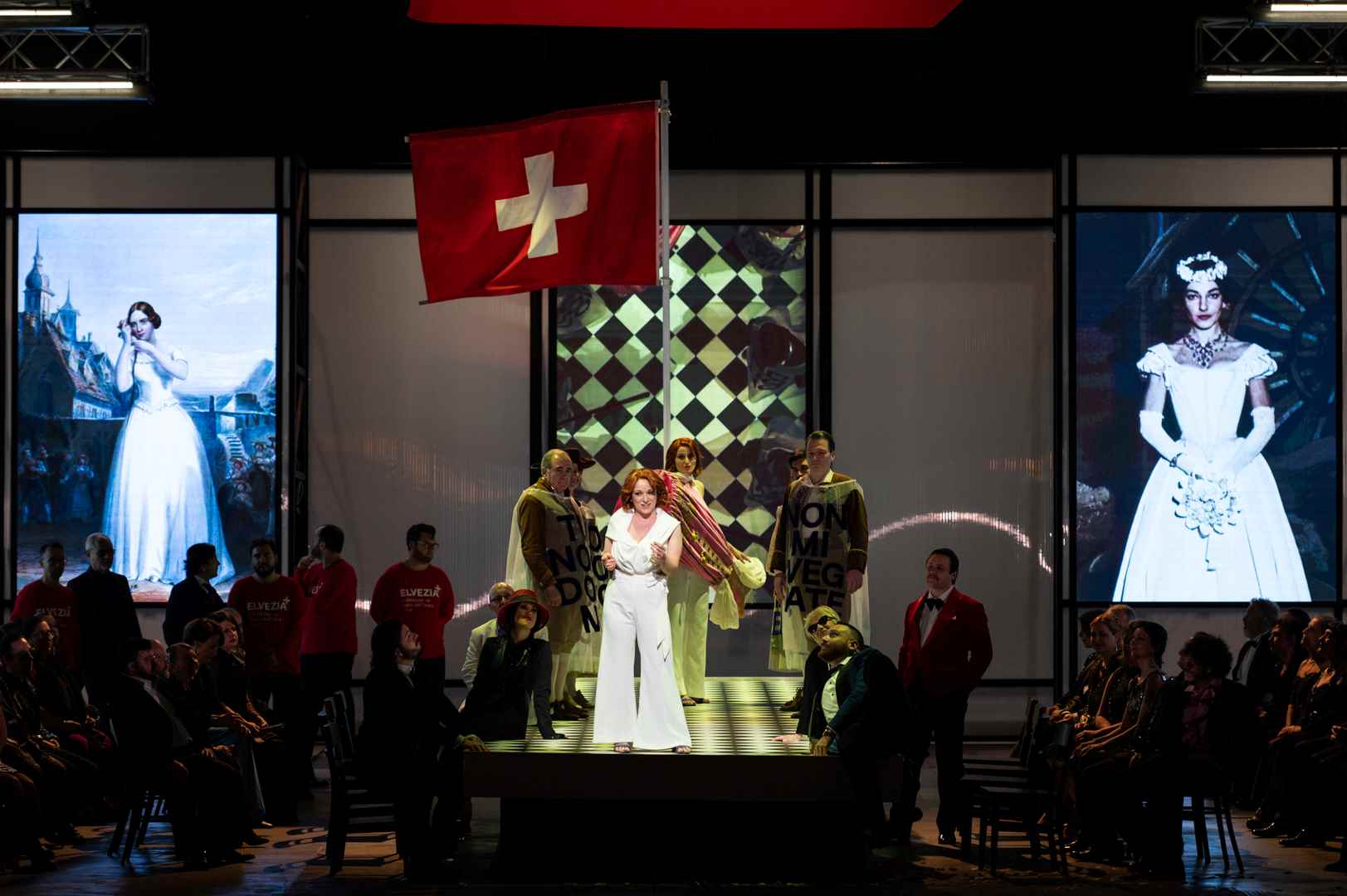
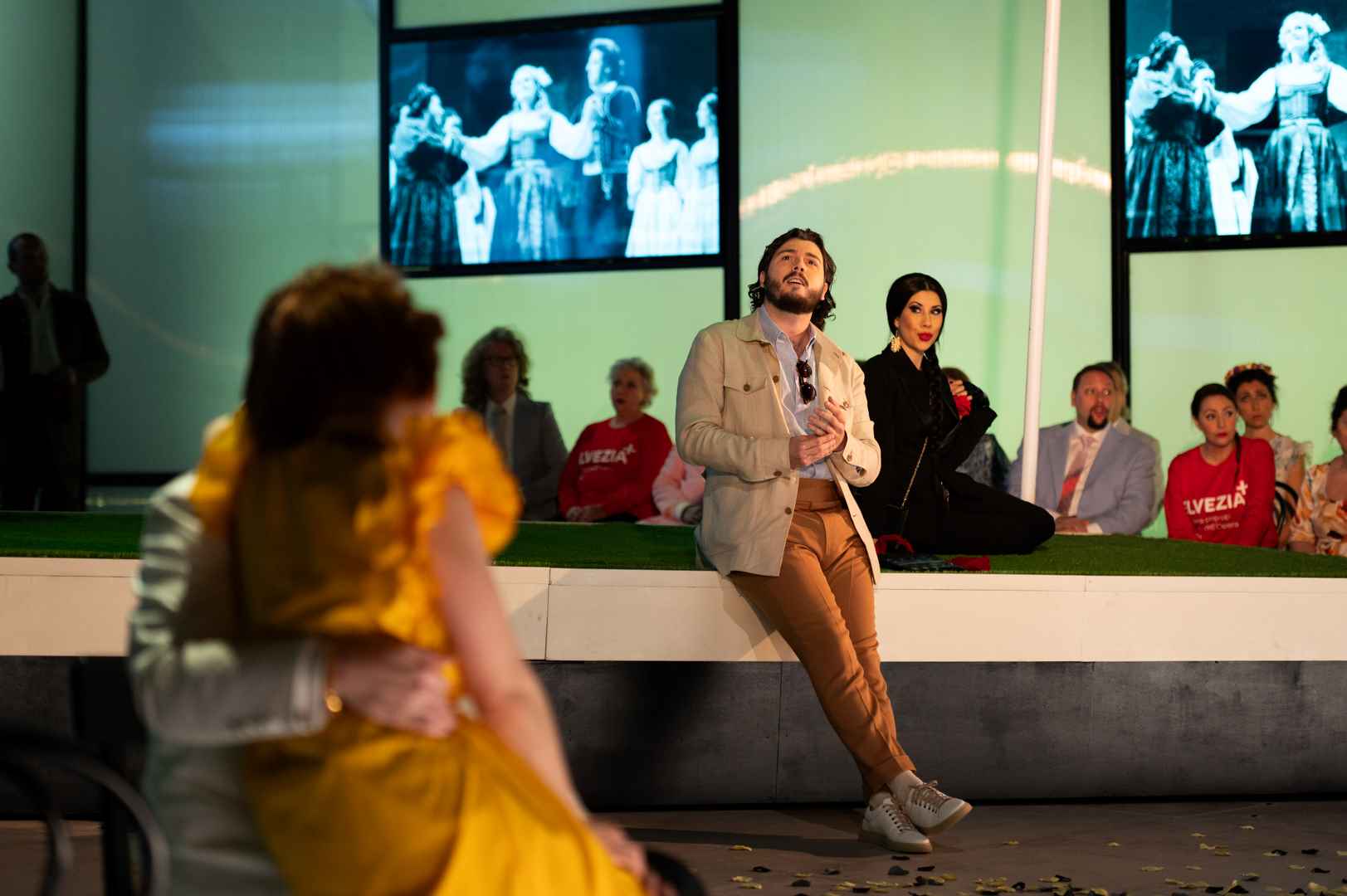
As spectators took their seats at the start of the evening, the front of the stage made reference to a temporary art gallery called ‘Elvezia’. This, it transpires was the setting for the entire evening. Or was it? The performance opened with a short movie, with a woman (who we soon learn is Amina), texting her mother regarding her fears that Elvino will be late for their upcoming nuptials. The short film includes views of the eternal city, complete with its legendary traffic noise, which made it difficult to adjust the ears as the music then began. This art gallery seems to be a place where they also hold fashion shows, with Amina singing her opening number while working it down the runway; while the gallery also seems to form a dormitory with characters sleeping in beds spaced across the stage. LE LAB populate the back of the stage with film showing various bits of imagery, whether images of previous productions of Sonnambula that have taken place here, or classic paintings, in which the modern-day Amina poses side by side with the original. To be frank, I tuned out from these after a while, since they added nothing to what we saw. Nor did, the actress walking down the aisle during ‘Ah! non credea mirarti’, who it transpires was the double who appeared in Amina’s filmed interpolations – including displaying her fried eggs in zoom on the back of the stage.

Personenregie seemed to exemplify the issues with the staging as a whole. On the one hand, the relationships between the principals were clearly sketched out and coherent. On the other, the chorus was moved around efficiently and everyone knew where they needed to be, yet far too often, once moved, they were simply parked there. This all reinforced that impression of the staging being an incoherent jumble of ideas – was it meant to be a reflection on the history of art? Was it telling the story relatively straight albeit in an art gallery that doubles as a fashion show and dormitory? Yes, the morality of Sonnambula can be difficult for modern audiences to take seriously. After all, the scandal of being discovered in a man’s room is a bit dated. I’m just not convinced that LE LAB brought a coherent narrative to their staging that added up.

The other disappointment in the evening was Francesco Lanzillotta’s conducting. There were some good elements here. He encouraged his cast to use some elegant and imaginative ornamentation in their numbers, indispensable in this repertoire but frequently omitted. He obtained some good playing from the orchestra and the choral singing showed considerable improvements on my previous visits here. And yet, it was hard not to feel that he was incarnating the title of the work perhaps too seriously. His tempi were generally sleepy, and even when they weren’t, as in the final number, the lack of incisive rhythmic articulation meant that even the swifter tempi felt saggy. I longed for him to use a tighter sense of rhythmic approach, to use the orchestra to drive forward those long bel canto lines through a forward momentum that wasn’t always apparent here. It was undoubtedly beautiful, and he kept the disparate forces together, it was just that it felt rather somnolent.
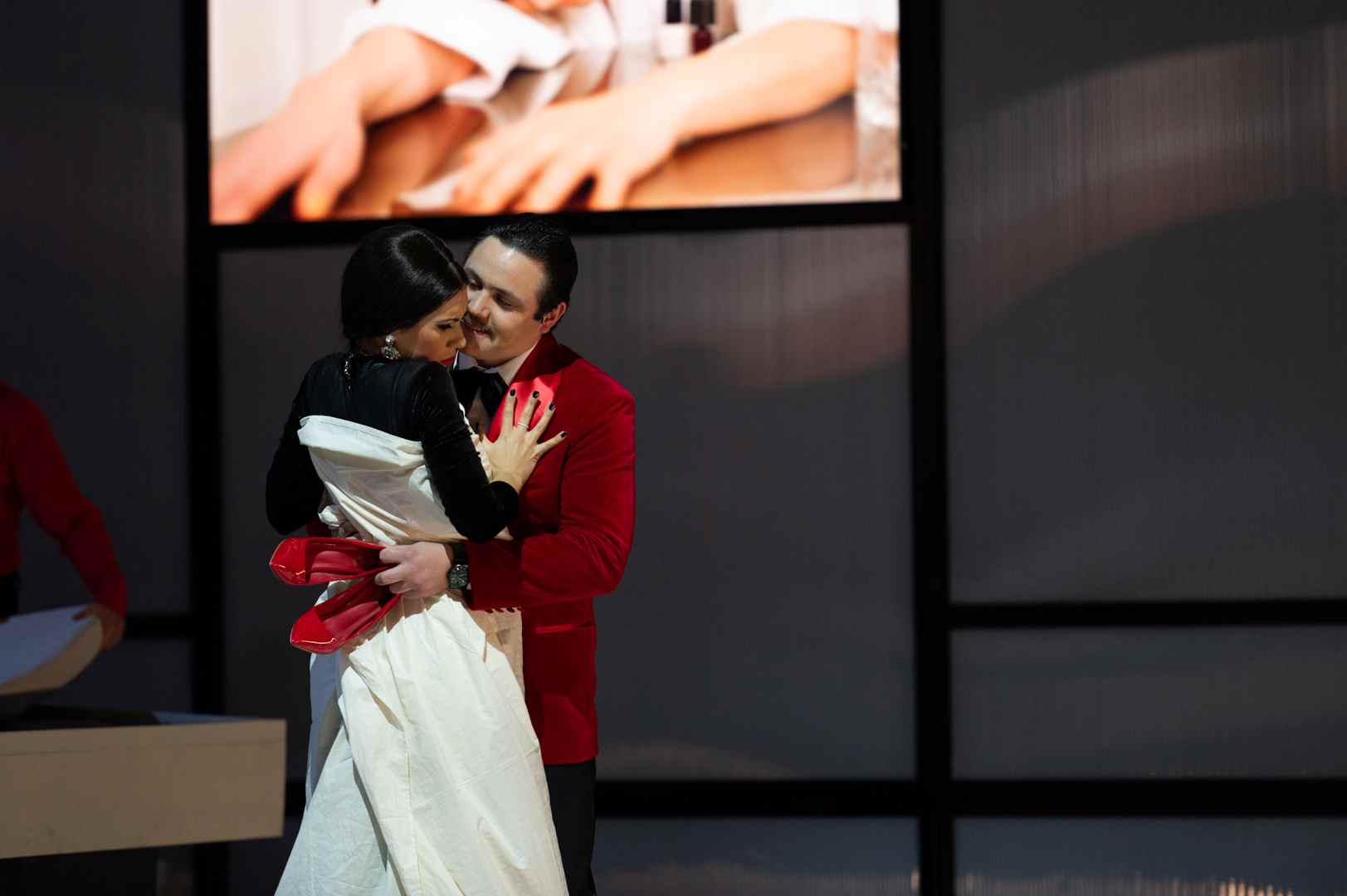
Fortunately, it was the singing that really raised the quality of the evening. There are so many reasons to feel pessimistic about the future. Yet based on tonight, and some of my recent visits to the Italian Republic, the future of bel canto is not one of them. Ruth Iniesta gave us a deeply felt Amina. Her soprano is perhaps not the most refulgent, the tone rather chalky, yet she’s an incredibly instinctive musician. She understands this idiom, she knows the importance of spinning those long bel canto lines and she also pulled out some spectacular acuti, including one in her final scene that sent the audience into delirium. Occasionally, she has a tendency to land on the underside of the notes in some longer phrases, suggesting that the technique is still a bit of a work in progress, but she’s also relatively young and this will come with time. What Iniesta brings to her role, is the ability to use the text to draw out emotion, even within the confines of a problematic staging such as this.
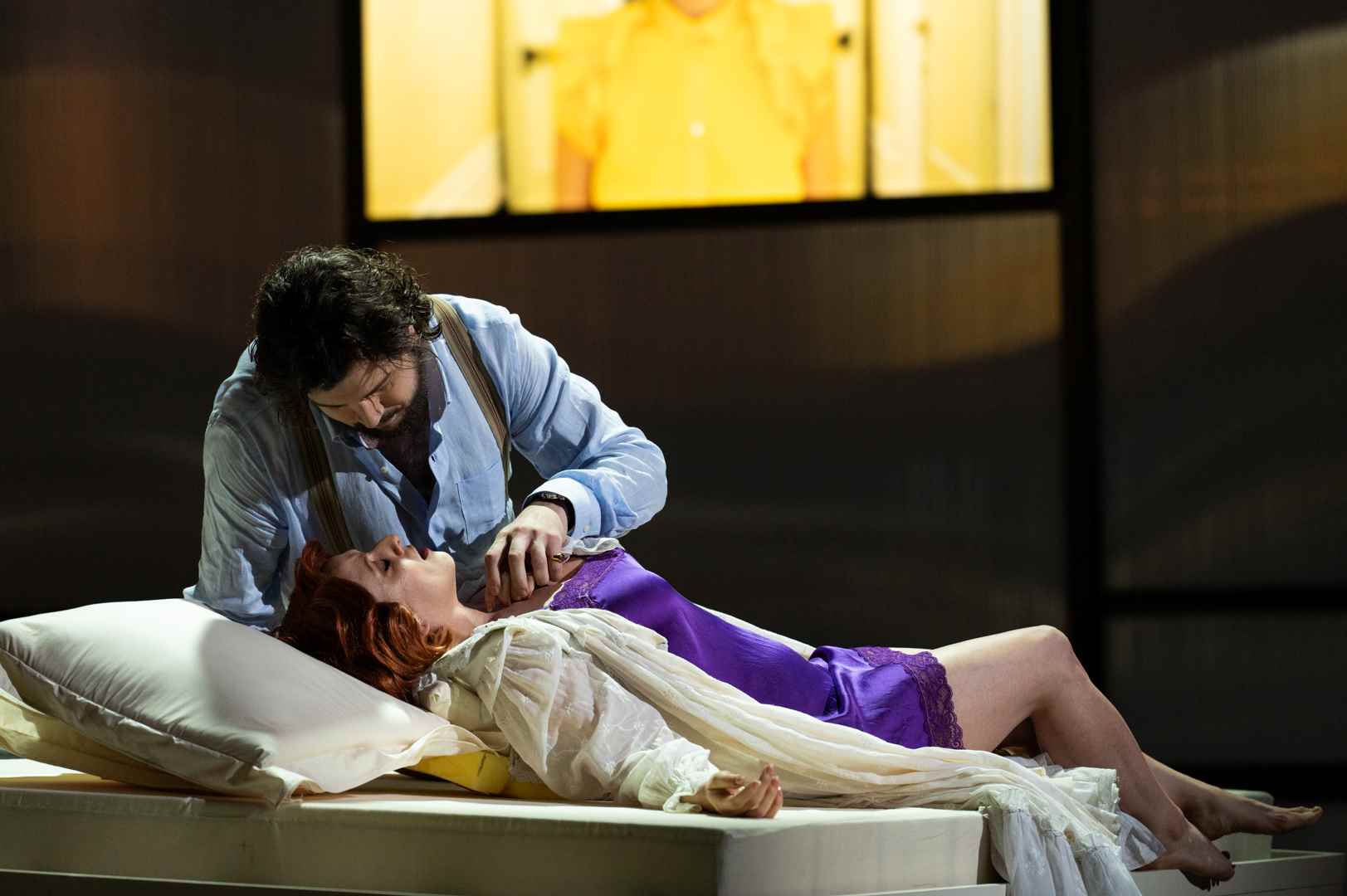
Marco Ciaponi. Make a note of his name, because this is a tenor with some serious promise. His command of the passaggio is absolutely staggering, the registers so even, crossing between them with virtuosic ease in his runs. He has an easy top, that he deployed with frequent generosity, and terrific agility. Very occasionally, there was a tendency for some intrusive aspirates to enter the line, but he drew out so much through the words. Really impressive. As indeed was Francesca Benitez as Lisa. She also demonstrated impeccable agility, an easy top and immaculate diction. I’m not quite convinced that she’s the owner of a genuine trill as yet, but she’s an energetic and vibrant stage presence.
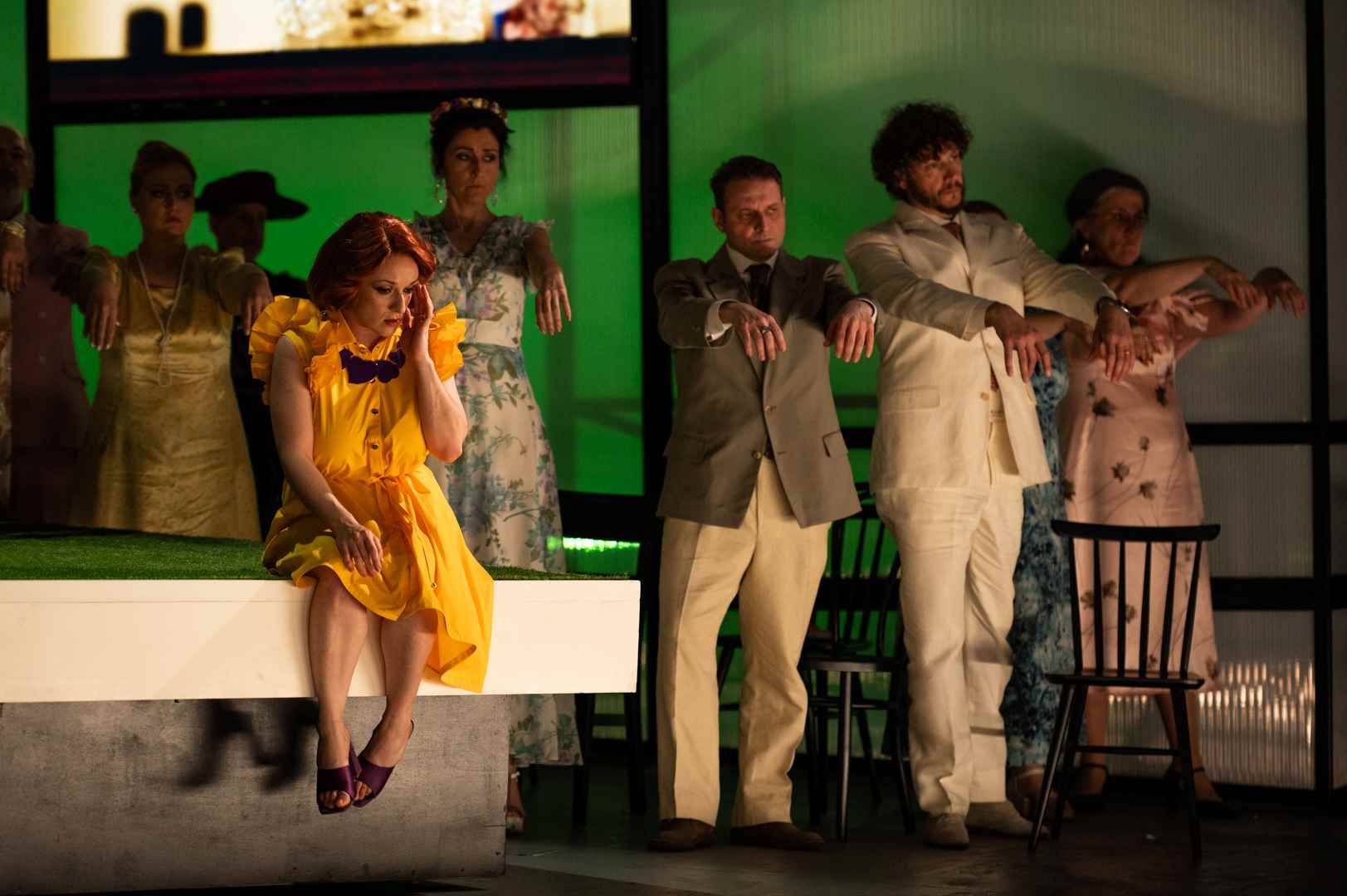
Manuel Fuentes once again demonstrated his enormous promise in his assumption of the role of Rodolfo. He sang his celebrated aria with a burnished legato, wonderfully warm and masculine tone, and the kind of implicit musicality that cannot be taught. The voice has such a glorious complex depth, combined with a milky-smooth legato, that Fuentes has a very bright future in this repertoire. Monica Bacelli brought decades of understanding to her role. The registers seem to have parted company in her copper-toned mezzo now, but what is undimmed is her sheer stage presence and ability to make the most of the text. The remaining roles reflected the admirable standards one would expect from the house, including Mattia Rossi’s handsome baritone as Alessio.
On one level, this was a bit of a mixed evening. The staging lacked a coherent narrative thread and the conducting was lacking in energy, although both had some positive elements. What really gave an enormous amount of pleasure this evening was the singing. We got to see the latest generation of bel canto singers, who demonstrated the kind of technical mastery, imaginative ornamentation, and ability to bring out meaning that this music requires. I left the theatre enthused and optimistic. The audience responded throughout the evening with warm applause and generous cheers at the close.
 operatraveller.com
[…] demonstrating a profound understanding of the Puccinian style. In Rome, I also saw a Sonnambula that was fabulously sung, with Ruth Iniesta bringing so much emotion to the role of Amina, Marco […]