Puccini – Tosca
Floria Tosca – Eleonora Buratto
Mario Cavaradossi – Charles Castronovo
Il barone Scarpia – Ludovic Tézier
Cesare Angelotti – Milan Siljanov
Il sagrestano – Martin Snell
Sciarrone – Christian Rieger
Spoletta – Tansel Akzeybek
Un carciere – Paweł Horodyski
Un pastore – Soloist from the Tölzer Knabenchor
Kinderchor der Bayerischen Staatsoper, Münchner Knabenchor, Bayerischer Staatsopernchor, Bayerisches Staatsorchester / Andrea Battistoni.
Stage director – Kornél Mundruczó.
Bayerische Staatsoper, Nationaltheater, Munich, Germany. Sunday, May 26th, 2024.
I’m often surprised by how many people go to the opera for a pleasant and relaxing evening and choose to see Tosca. A work that contains torture, sexual assault, and the oppressive power of a clerical dictatorship. For this new production at the Bayerische Staatsoper, stage director Kornél Mundruczó and conductor Andrea Battistoni certainly don’t shy away from the violence in this score and libretto. This run is also notable for two significant role debuts, Eleonora Buratto in the title role and Charles Castronovo as Cavaradossi.
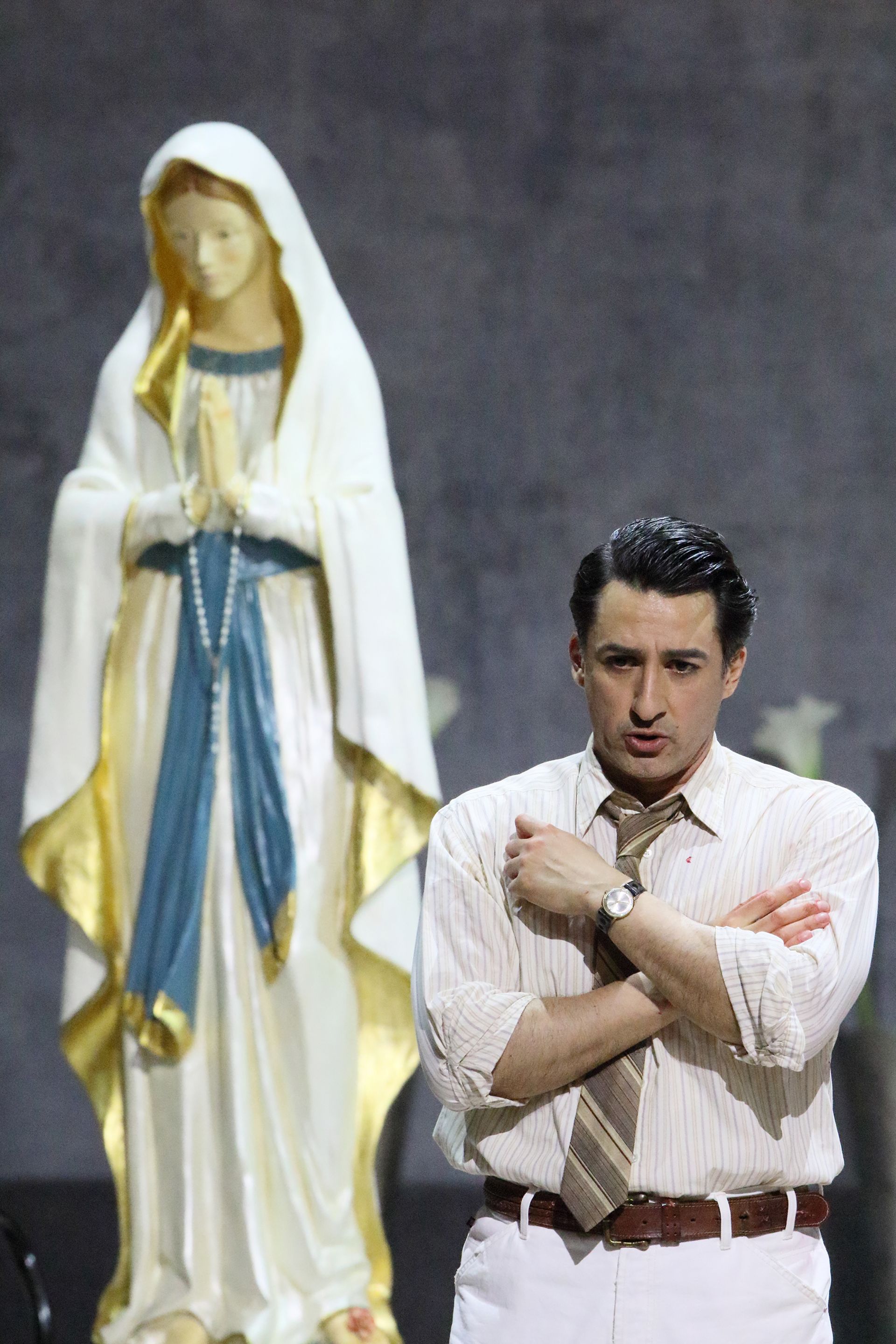
I have to admit to some, what the Germans call, ‘Vorfreude’ when I saw the trailer the house put up online prior to the opening. The 1970s setting, with costumes and sets by Monika Pormale, looked terrific and promised a cogent updating to an era when clerical dictatorships still existed in Europe. Sadly, that initial excitement was somewhat mitigated. Mundruczó’s Act 1 is a mess, frankly. Rather than giving us a logical updating, Mundruczó presents the action as Cavaradossi incarnating Pier Paolo Pasolini in his final days, filming his controversial movie Salò. We see Cavaradossi directing images from the film in front of us, with actors in various states of undress. Making Cavaradossi a filmmaker is quite an intelligent idea. Yet here, it’s rendered illogical since it made no sense that the Sagrestano would be an actor reading his lines, while later celebrating the upcoming concert by Floria Tosca. The act ends with a shocking image, a crowd of revolutionaries being beaten by Scarpia’s police. It was exceptionally powerful to see and in a different context would have been extremely potent. But it made no sense that this would take place under a huge statue of the Madonna that had been brought in by a group of monks showing up at the film set. Does Scarpia walk around with an entourage of Madonna-carrying monks?
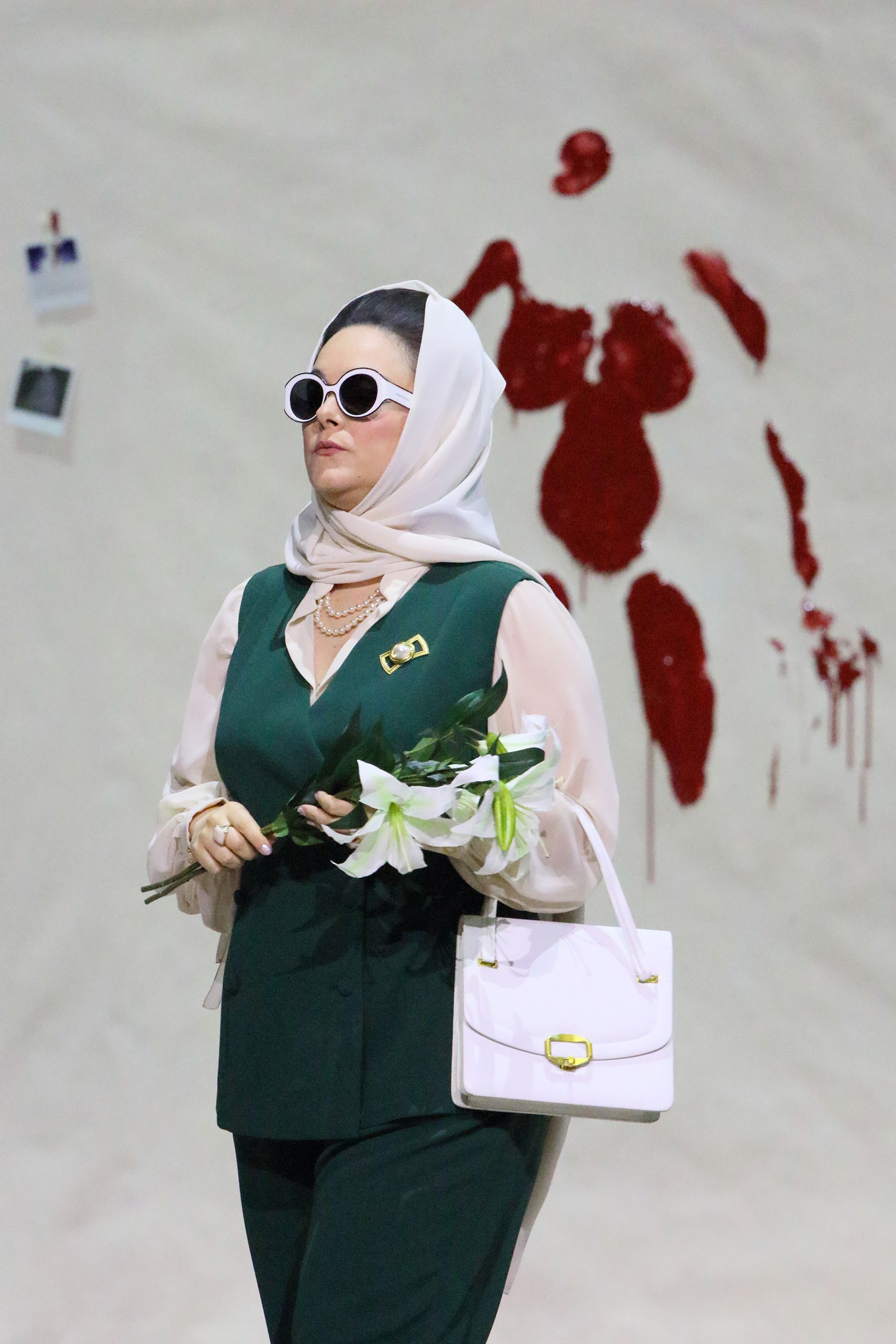
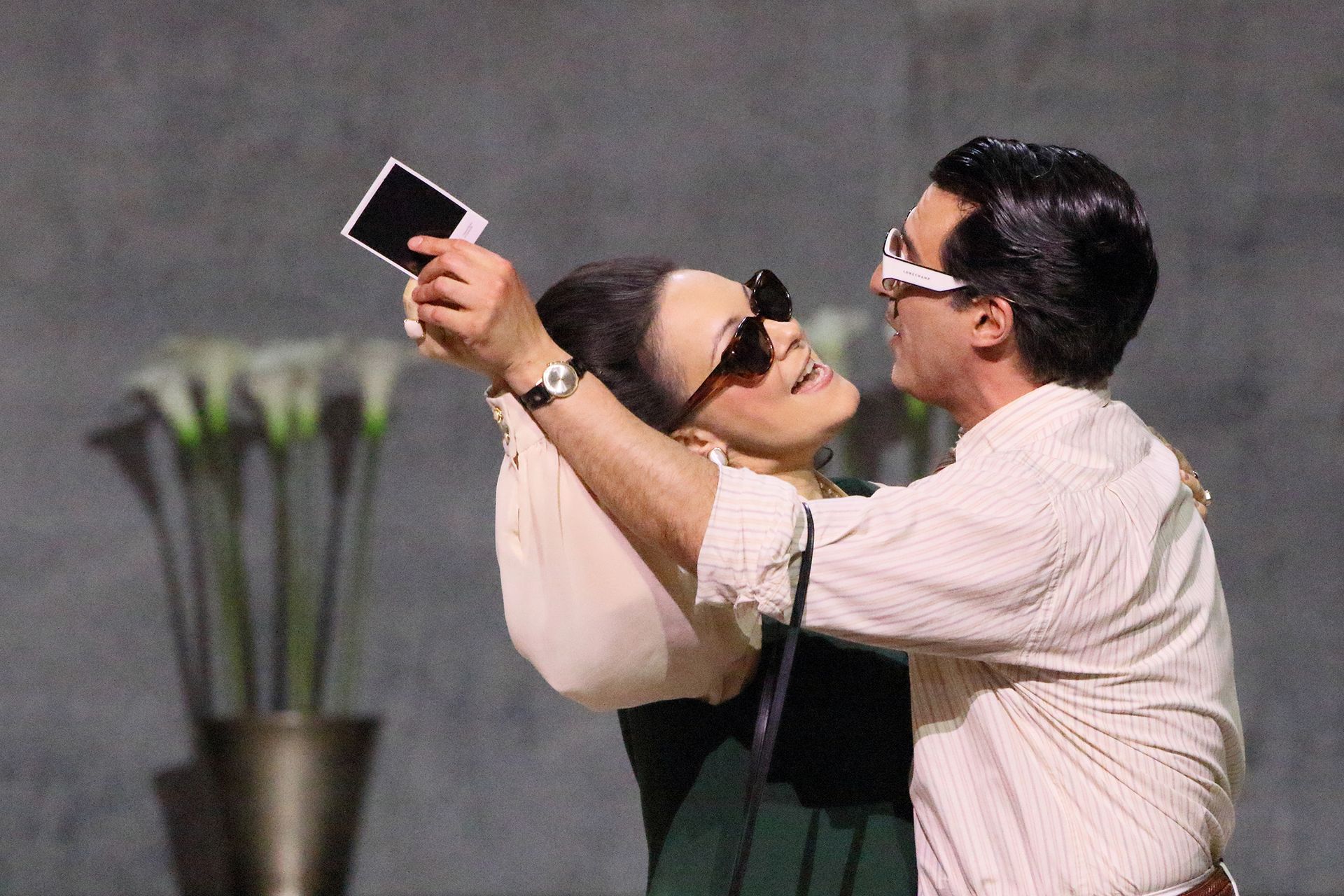
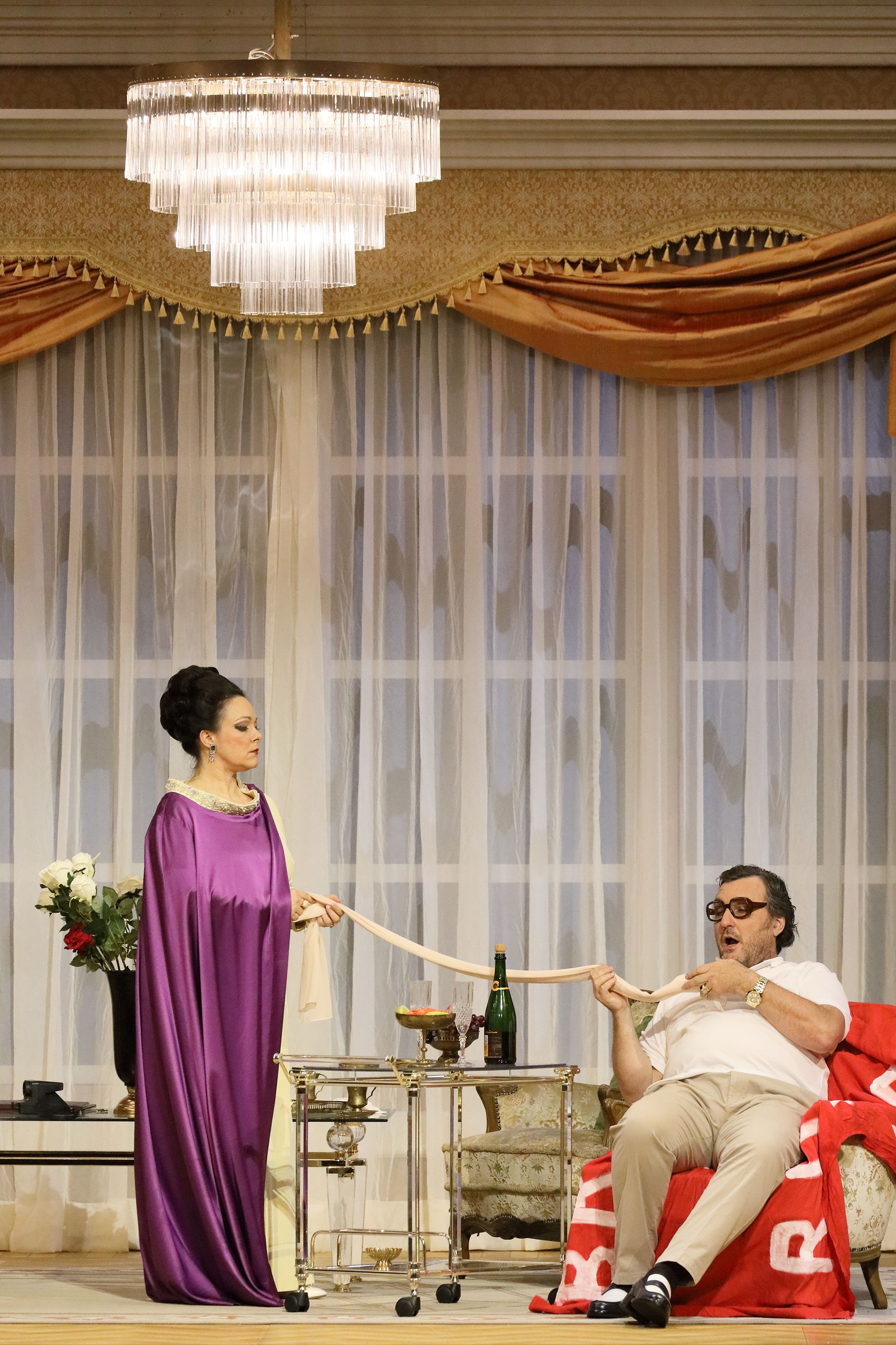
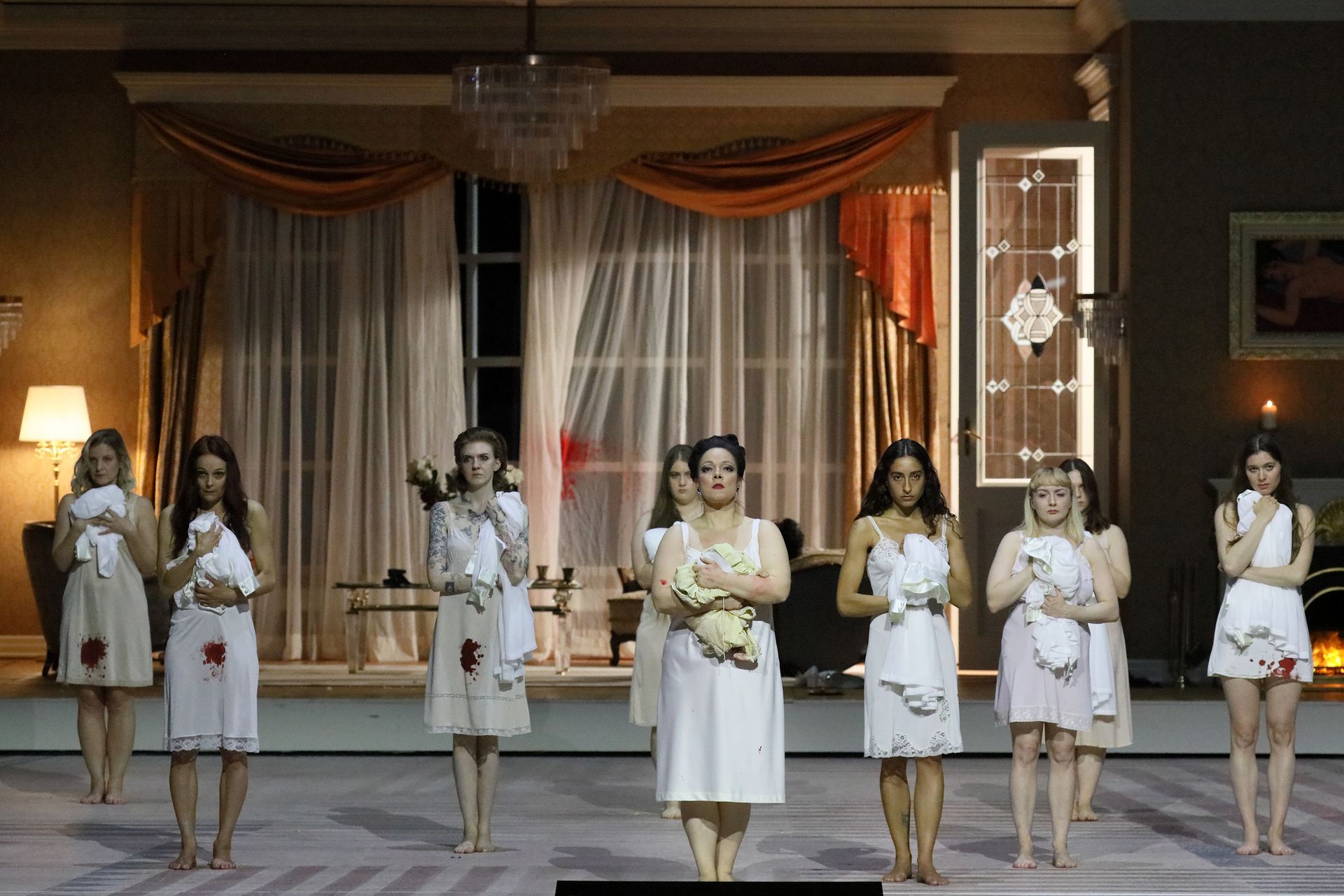
Fortunately, things improved enormously in Acts 2 and 3. The shepherd’s song was accompanied by images of Pasolini’s earlier movies, as was ‘E lucevan le stelle’ and it felt fitting with that introspective and wistful moment. More successful still was Act 2. Taking place in a lavish yet claustrophobic home, with a torture chamber in the basement that the stage rose to reveal, the concentrated claustrophobic violence of the drama was inescapable. The torture of Cavaradossi was horrifyingly brought to life in front of us, Castronovo was physically fearless here, while Tosca’s journey from bejewelled diva, to victim of sexual assault, to self-defence was also played out for us with unbearable intensity. Mundruczó has a group of women join Tosca after the murder. I’m not sure here if he’s saying that Tosca was just one of many, or drawing parallels with Pasolini’s treatment of his actors in Salò. Still, the final moments of Act 3 were appropriately gruesome. At its best, Mundruczó’s staging felt that it stripped away the years of tradition from this oft-performed work and presented us with the shock and horror within as new to us. Which makes it all the more frustrating that Act 1 was such an illogical mess.
Battistoni led a reading that was bold and extrovert. He was unafraid to let the Bayerisches Staatsorchester rip, who responded with significant volume. By and large he let the singers through, but Scarpia’s murder could have had some reduced decibels in the orchestra and been kinder to the singers. Battistoni built up the ‘Te deum’ masterfully and Scarpia’s entrance prior to that was utterly terrifying in its brassy percussiveness. Just as with Mundruczó’s staging, the way that Battistoni brought out the richness and modernity of the harmonies, it frequently felt that we were hearing this familiar score for the first time. His tempi felt utterly right throughout, with Act 2 growing in inexorable tension. The Staatsorchester gave us a more than decent simulation of an Italian band, the strings with long, cantabile lines, and the brass was excellent. The choruses were unanimous in approach in their brief interjections.
I must admit to a little skepticism when I saw that Buratto had replaced Anja Harteros in the title role for this new production. I feared it was too early for this fabulous singer to take the next step into this role. I needn’t have worried. Right from her opening phrases, it was clear that Buratto was born to sing this role. You could hear the hours of work in the studio that had gone into preparing this debut, as she negotiated the tessitura with fluent ease. Her diction and ability to colour the text gave so much pleasure. Perhaps with a more sensitive conductor, she could pull back a little more and find more introspection in the line ‘sempre con fé sincera’ in her ‘Vissi d’arte’. That celebrated aria was filled with so much meaning, however, and her ‘Questo è il bacio di Tosca’ was genuinely thrilling – and gloriously Italian. Yes, her final ‘Dio’ was a bit sharp, but the sheer strength she brought to it had me on the edge of my seat. Tonight, Buratto moved and thrilled me in equal measure.
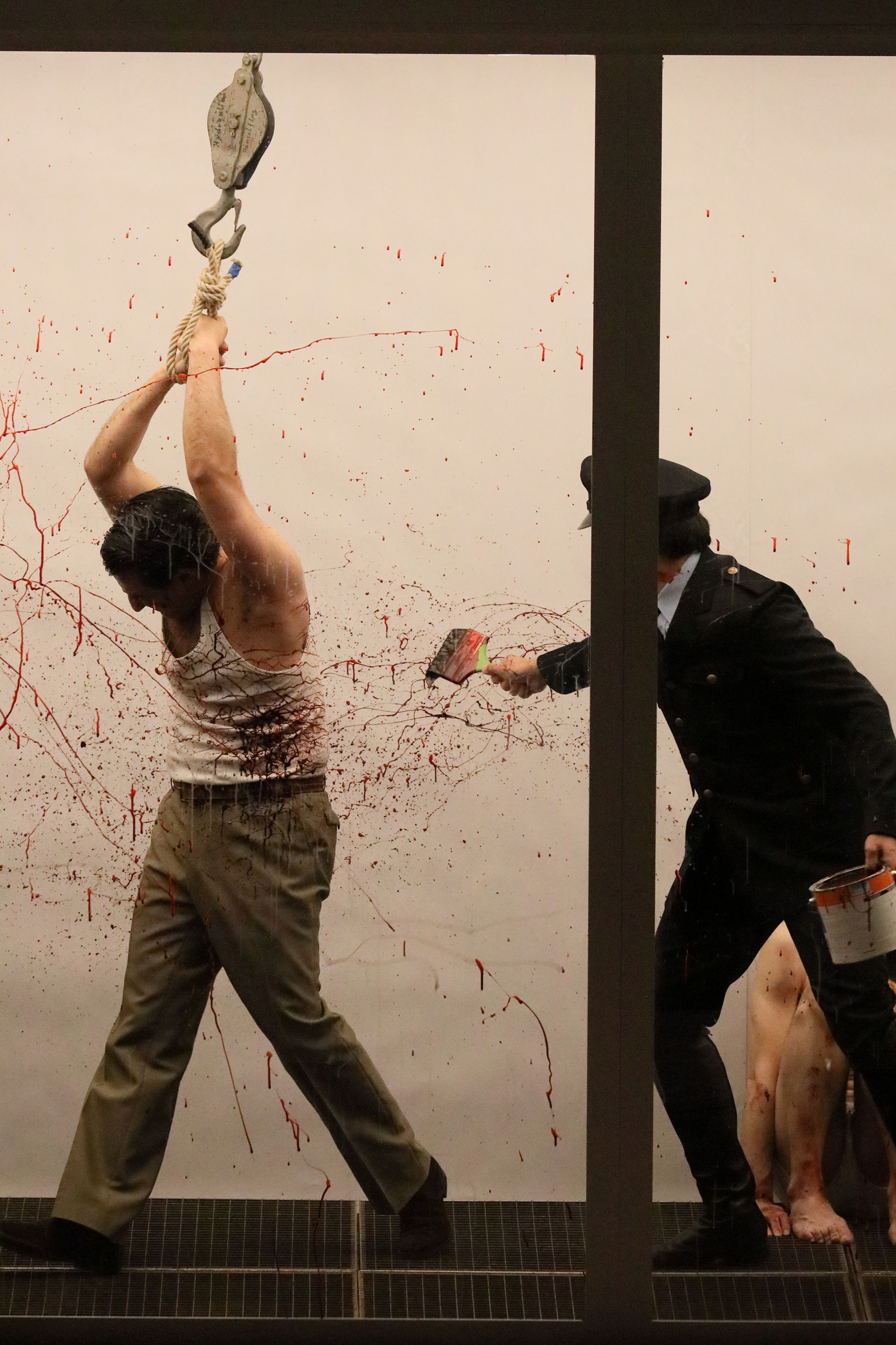
Castronvo is a singer who has judged and paced his career superbly, taking on the right roles at the right time. Having given us so many memorable Rodolfos and Ruggeros over the years, Cavaradossi is a natural next step for Castronovo to take in this, his forty-ninth year. He gave us a generously sung ‘Recondita armonia’, perhaps too generous as there was a little pressure on the tone and the vibrations started to widen. Then, Castronovo hit his stride and gave us a Cavaradossi of such romantic ardour in his characteristically warm and handsome tenor. His ode to Tosca’s brown eyes was sung with real poetry, and he allowed the voice to ring out thrillingly in his ‘vittoria’s, holding them for just the right length to be exciting rather than gratuitous. But it was his ‘E lucevan le stelle’ that will stay with me. He sang it with genuine introspection, endlessly long phrases showing masterful breath control, the support superb giving him the ability modulate the dynamics with great poetry.
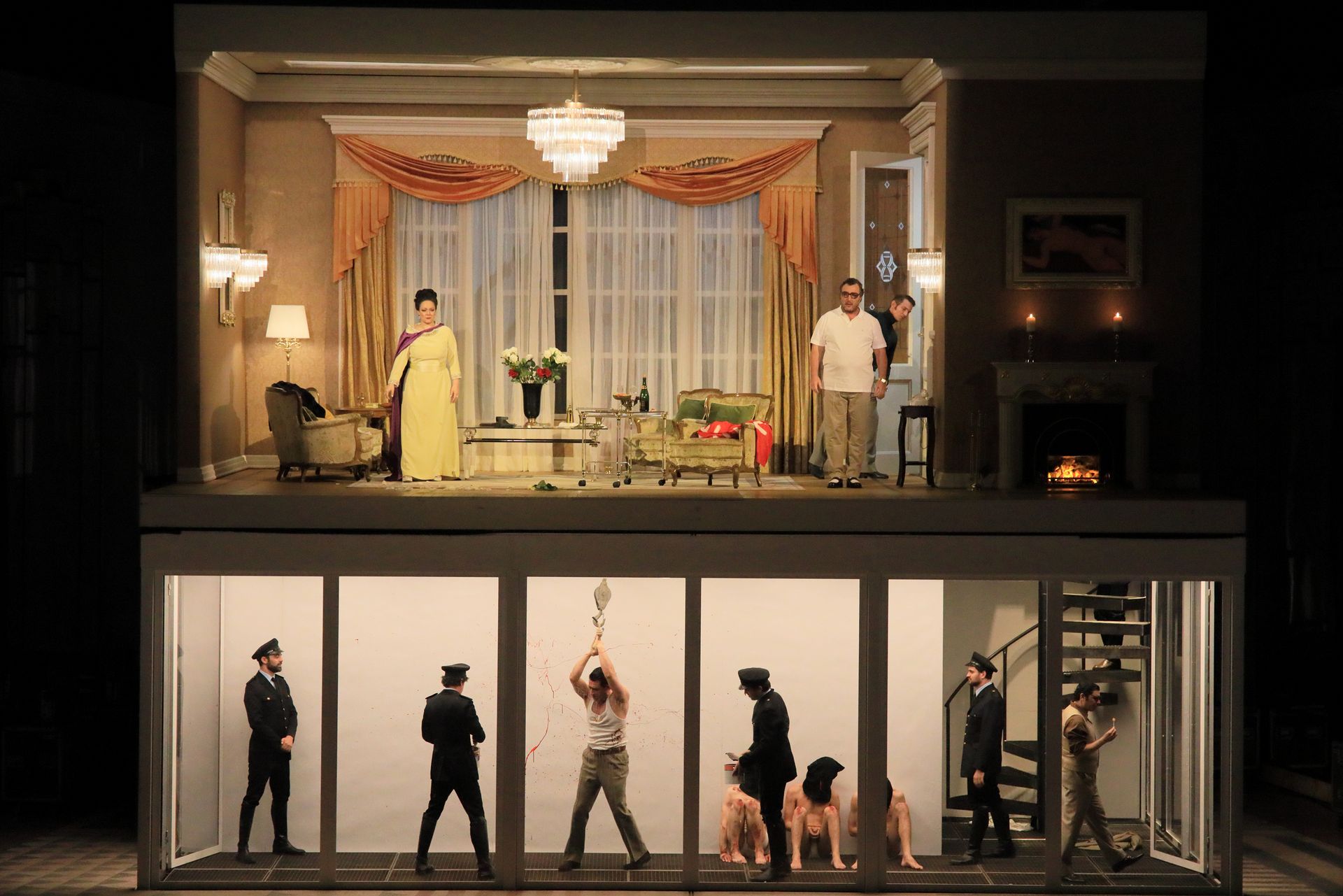
Ludovic Tézier’s Scarpia was sung in a massive column of sound. He was unphased by the tumult emerging from the pit in the ‘Te deum’, ringing out thrillingly over the noise below. Yet, as with the best Scarpias, Tézier was frighteningly quotidian in his evil. The way he seemed to show pride in his sadism, singing with such firmness of tone and clarity of text was horrifying. The voice sounded utterly healthy throughout.
The remaining cast reflected the excellent standards of the house. Martin Snell gave us an appropriately world-weary Sagrestano. Milan Siljanov was a big-voiced Angelotti, sung in a handsome bass. Tansel Akzeybek was an extrovert Spoletta, with a fetish for Tosca’s scarf, while Paweł Horodyski made much of little as the Carciere. The Pastore, a member of the Tölzer Knabenchor, sang confidently.
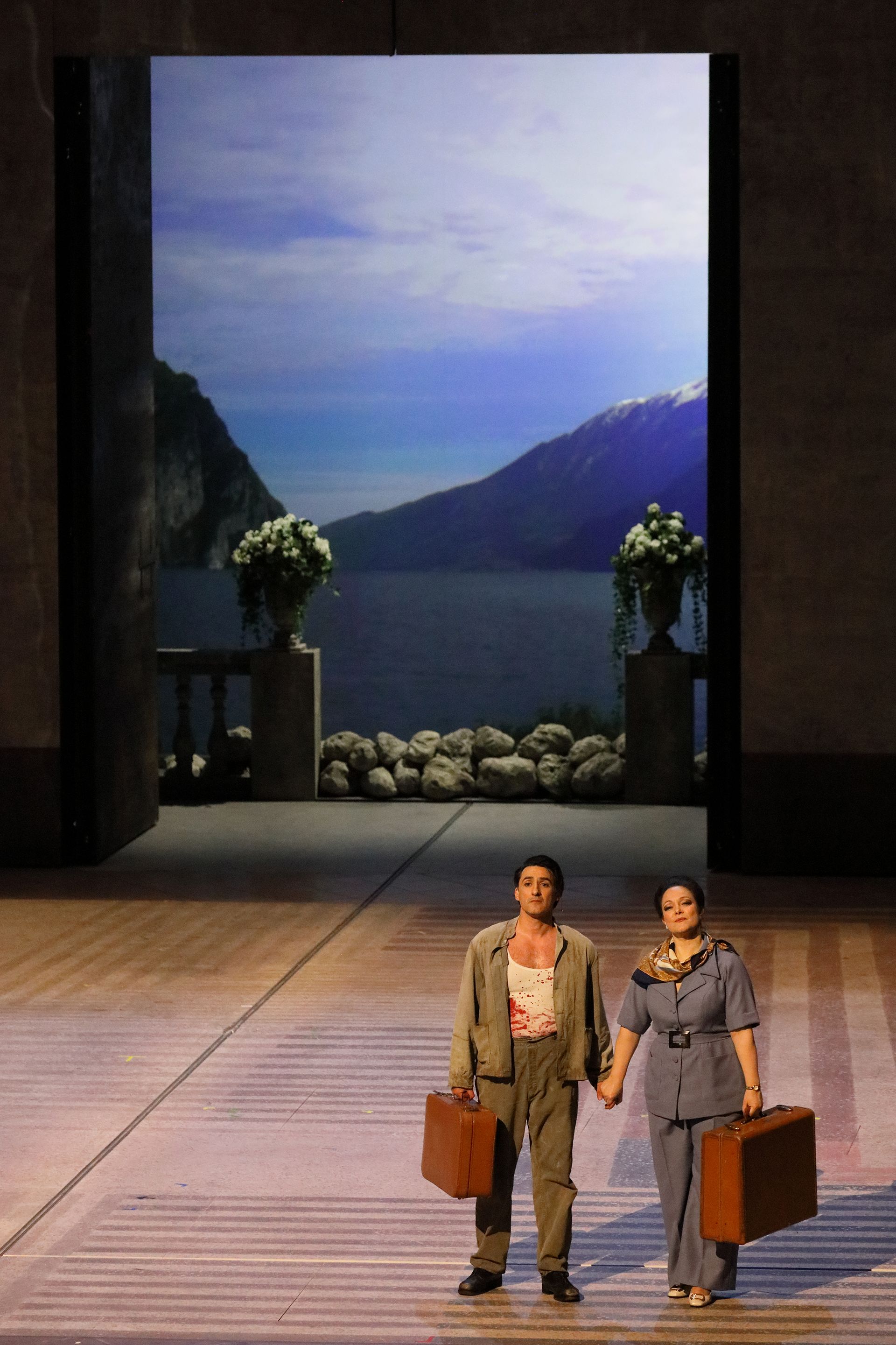
I left the theatre tonight thrilled after a terrific evening of opera. The overall impression of the evening was very positive. Mundruczó’s staging really hits the mark in Acts 2 and 3, while Act 1 is an incoherent mess. Battistoni’s conducting felt revolutionary, even if he could have pulled back on the decibels. But it was the performances of the principal trio that will stay with me. Each giving such convincing musical and dramatic performances. The end of Act 1 saw some boors booing. But I guess they then went home, since the final curtain was met with huge ovations for the cast from the Munich public. A flawed yet utterly exhilarating evening.
 operatraveller.com
[…] Eleonora Buratto in the title role, with Ludovic Tézier as Scarpia, following their triumph in Munich a few months ago. Having Deutsche Grammophon’s exclusive artist, Jonathan Tetelman, as […]
[…] Chailly and the Scala orchestra were predictably superb. Eleonora Buratto made her debut as Tosca in Munich. I was nervous that this glorious singer, surely the greatest Italian soprano before […]
[…] build up into an unbearable thrill. I can’t help but think back to Andrea Battistoni in Munich last year, who made Scarpia’s entry in Act 1 sound like the most terrifying thing I’ve ever […]