Bellini – Norma
Norma – Jacquelyn Wagner
Adalgisa – Valentina Farcas
Pollione – Airam Hernández
Oroveso – Goran Jurić
Clotilde – Sugiyama Saori
Flavio – Zachary McCulloch
Coro del Teatro Petruzzelli di Bari, Banda Musicale della Città di Martina Franca “Armonie d’Itria”, Orchestra del Teatro Petruzzelli di Bari / Fabio Luisi.
Stage director – Nicola Raab.
Festival della Valle d’Itria, Palazzo Ducale, Martina Franca, Italy. Sunday, July 21st, 2024.
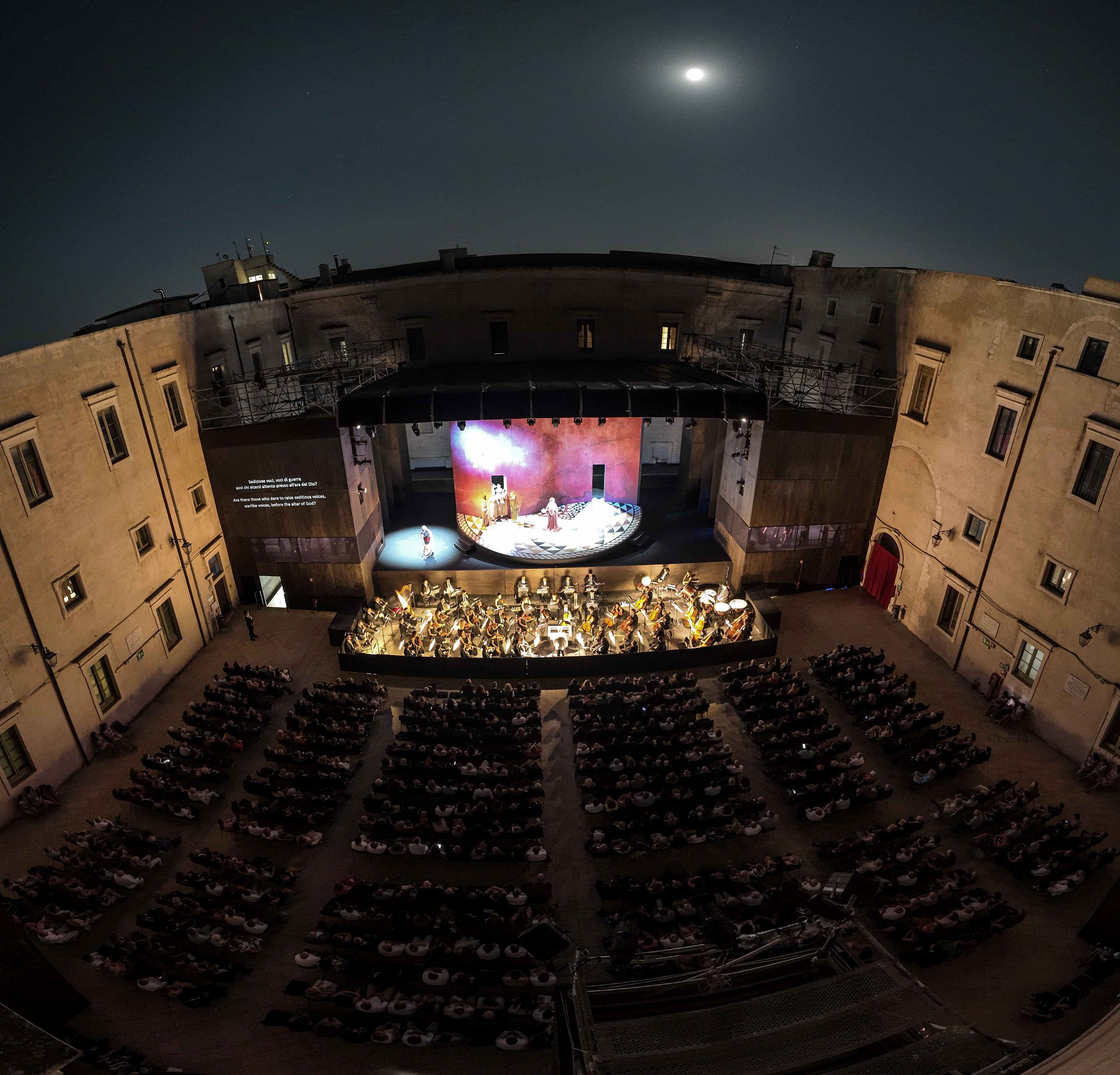
This visit to the beautiful hilltop town of Martina Franca marked my first to its Festival della Valle d’Itria, this year celebrating its fiftieth edition. It’s a charming place to spend a few days, with excellent food and wine and, at least it seemed, not as many Anglophone tourists as one found on the coast at Bari. This evening’s performance of Norma, the second in the run, took place in the courtyard of the Palazzo Ducale, with the orchestra and chorus brought over from Bari.
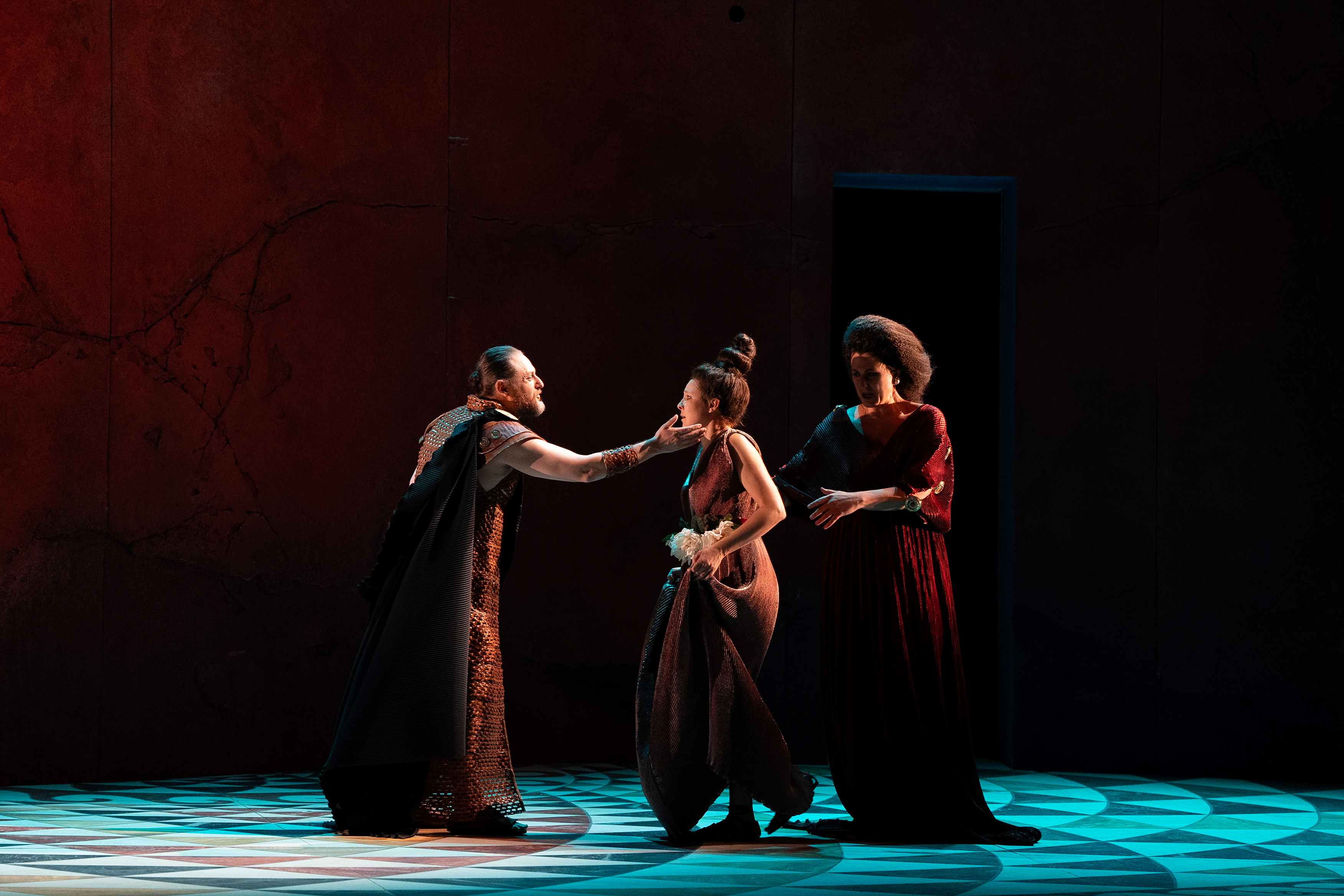
The staging was confided to Nicola Raab. My only other exposure to her work was a semi-staging of Elektra that she did at the São Carlos a few years ago. That was notable for doing much with little and so I was intrigued to see what she would do with Bellini’s masterpiece. Of course, working within the limitations of a temporary stage, such as that of the Palazzo Ducale, meant that this could not be a technically advanced staging with an elaborate moving set. Instead, it required Raab to work closely with her singers to produce a cogent and legible piece of theatre. I do wonder whether Raab might have actually benefitted from presenting her production concept in advance to a group of Italian nonne, to see if it was indeed intelligible. There was a group behind me and they were not shy in asking each other what was going on during the evening. Justifiably so, since there were several moments when I had to ask myself what precisely was going on.

It started during the overture, when a statuesque figure, later revealed to be Norma, came out and expired on the stage, only to be picked up and walked back off. No, I have no idea. The chorus, was parked on the side of the stage within the columns displaying the bilingual Italian/English surtitles, where they sang in evening dress. They were occasionally brought out and parked on stage, but the reason why they were brought on momentarily, rather than being left in their columns, was less than clear, and inspired an animated intermission discussion between the nonne. Norma was accompanied by a group of five handmaidens, who at one point carried Norma’s children onto the stage. They children looked lifeless – to which the nonne asked if she had already killed them – only for them to be resurrected as soon as they got to the stage. Clotilde was outfitted with a huge wig, that looked like the one Beyoncé wore as Foxxy Cleopatra again, for a reason that I still can’t fathom why. Personenregie consisted mainly of standing and delivering in traditional robes, with Jacquelyn Wagner’s Norma blindfolded by Foxxy for half of ‘casta diva’, only to remove it half-way through. The set was dominated by a large wall, which it later transpired was an enormous gong, as Norma struck it three times. In the respect that Raab needed to create a cogent theatrical narrative, I must admit that I’m not convinced that she did. And in that respect, I think the nonne would have been in accord. That said, for me the performance worked thanks to the clarity of the sung text – had that not been the case, it would have been a very different evening.
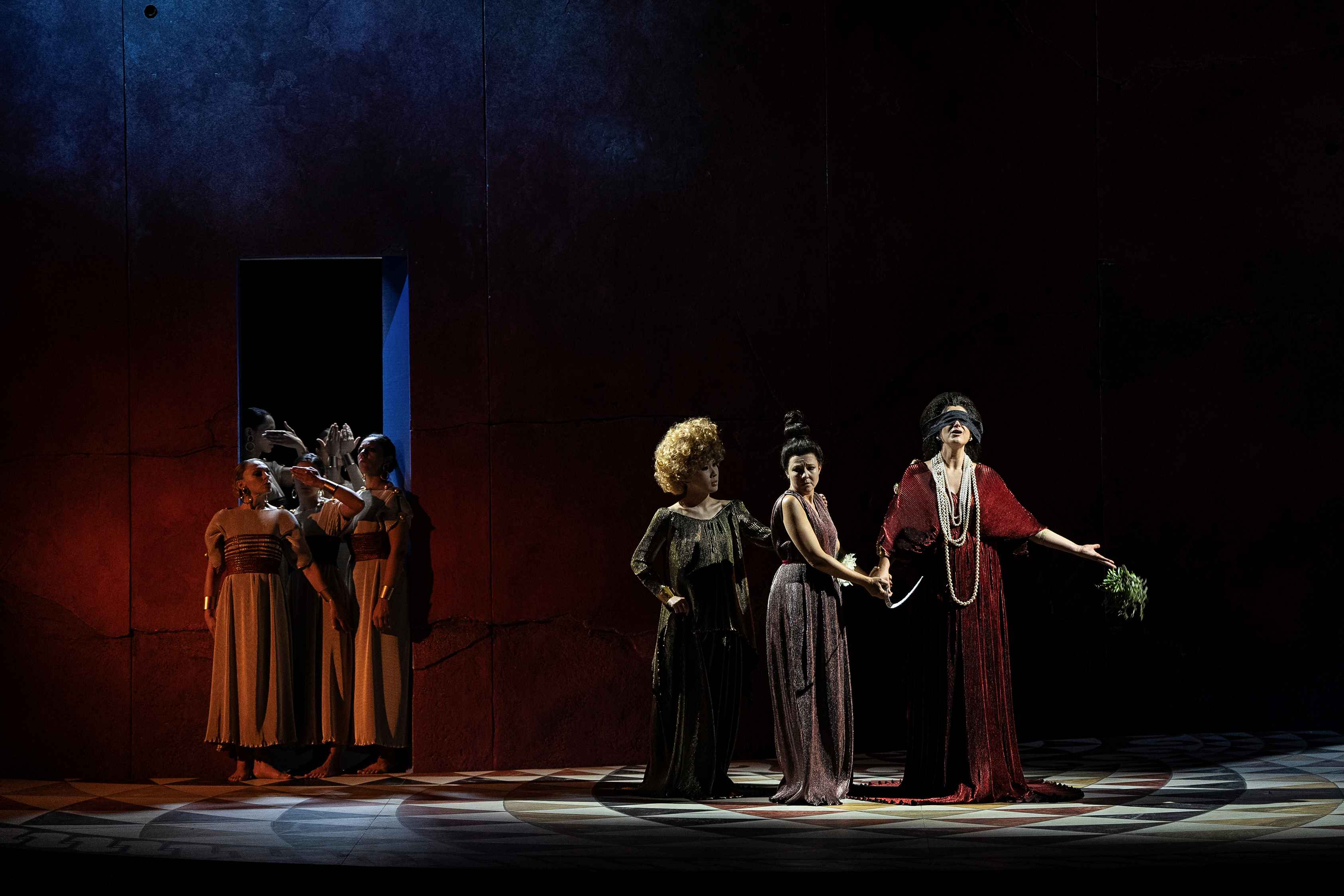
Fabio Luisi led a relaxed survey through the score. The overture set the tone for the remainder: long legato lines, a big, thick string sound and relaxed attack. Of course, I would have preferred the strings senza vibrato and sharper attack, but that is of course a matter of taste. I did find Luisi’s tempi rather on the slow side. He did pick up for ‘Guerra!’, only to slam on the brakes immediately afterwards. The off-stage band played with terrific precision and despite the warmth of the evening, string intonation was accurate throughout. The chorus, prepared by Marco Medved, sang with impressive ensemble given how far they were from the conductor, although their singing was robbed of its full impact given their off-stage position. I longed to be bathed in a wall of sound, which would have been the case had they been on stage. That said, in the Act 1 finale, they sang from the rear of the courtyard, which did create a tremendous effect.

Norma is a role that has been taken by so many different kinds of singers over the years. Wagner’s is very much that of a bright, lyric soprano. She gave us a lovely ‘casta diva’, one in which her silvery tone echoed the moonlight, showing supreme command of the breath, phrasing in long, aching paragraphs, caressing the lines with real pulchritude. Her soprano is, however, rather narrow and the top tends to shrillness, turning sharp as she put pressure on the tone. It felt that Wagner perhaps requires more metal to find the authority that the role requires. Her Italian was comprehensible, but it struck me that had she spat out the text and used the words more in the Act 1 finale, it would have compensated for her narrowness of tone. Still, she had clearly internalized the role fully and sang with unflinching commitment.
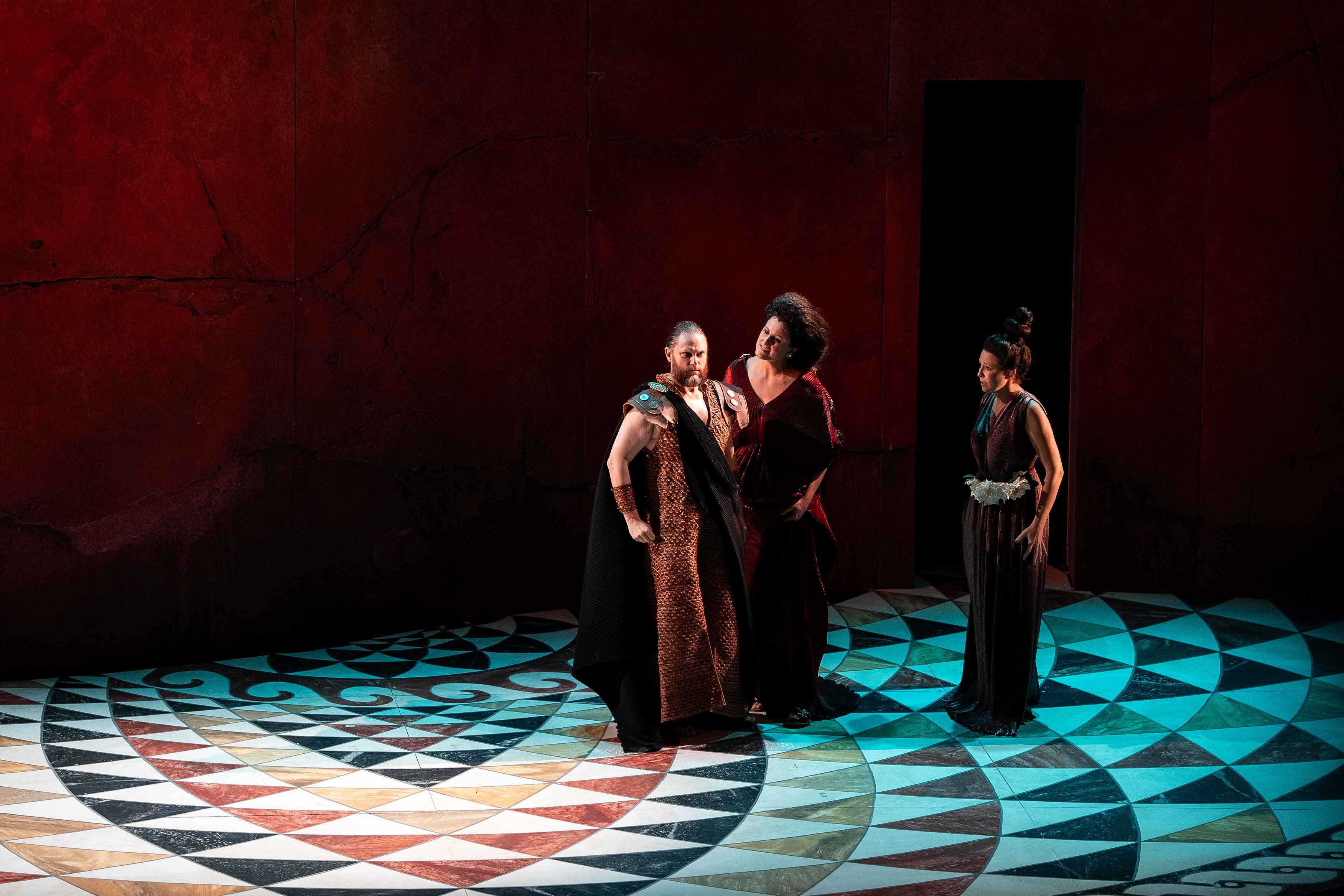
Valentina Farcas was very much a soprano Adalgisa, interpolating some impressive acuti through the evening. The voice is bright and sunny in tone, appropriately youthful, with an equally smooth legato. While the text was clear, it did feel that she suffered most from the relative lack of characterization, leaving me with a sense of not quite knowing who her character was. Airam Hernández is a new name to me and a very welcome one. The Canarian tenor sang with a princely legato and beauty of line that recalled another great islander colleague of his of the past. He made Pollione a much more rounded and sensitive character than we often see, filling his entreaties to Adalgisa to join him in Rome with real beauty, shading the text impressively. His Italian is superb, every word filled with meaning. Hernández also embellished the line in his opening aria with welcome and musical use of ornamentation. Undoubtedly a singer to watch.
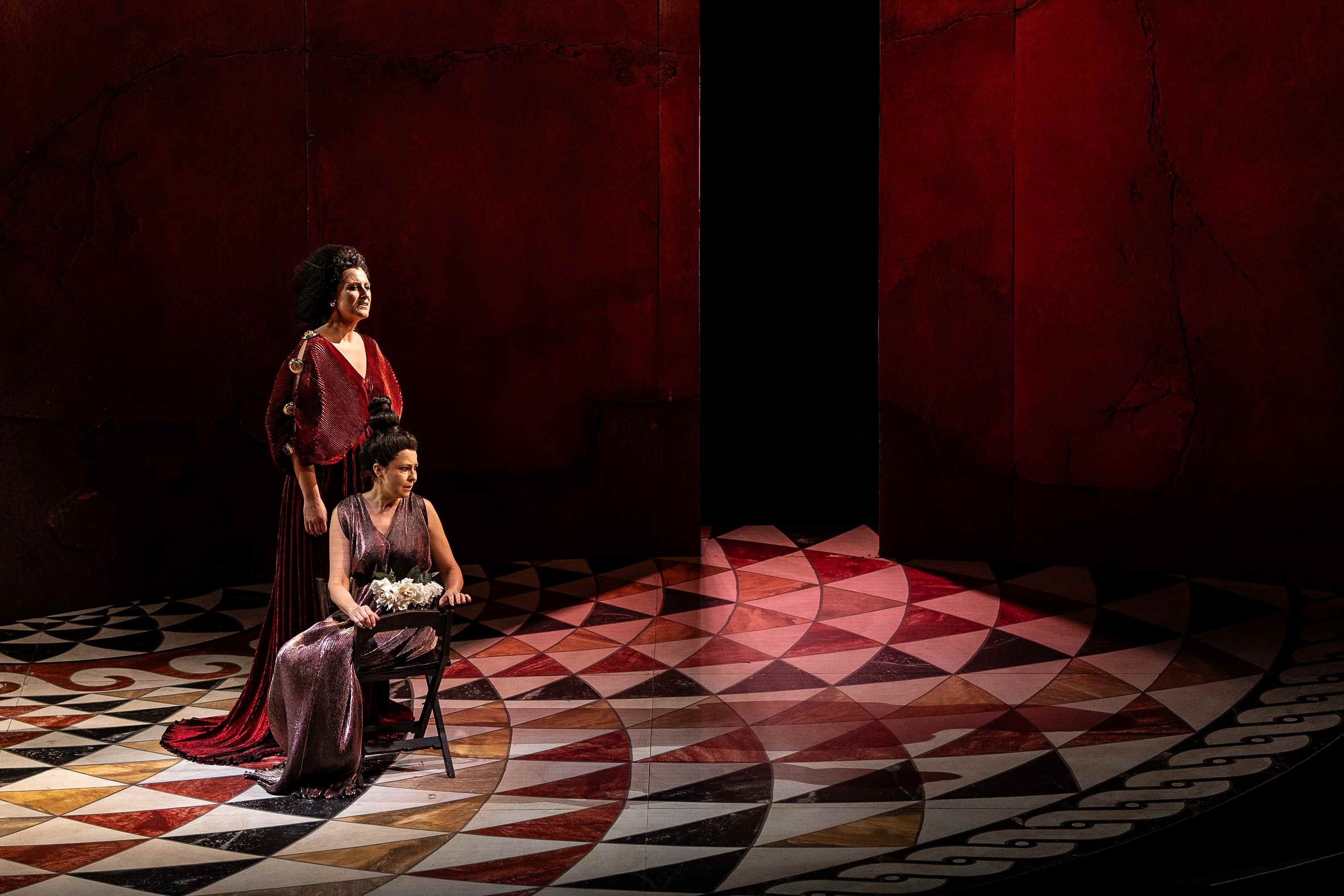
The remainder of the cast reflected positively on the standards of the festival. Goran Jurić sang Oroveso in his familiar robust and inky bass, singing his aria with impassioned force. Sugiyama Saori sang Clotilde in an attractive soprano, one I would certainly like to hear as Adalgisa, while Zachary McCulloch sang Flavio in a peppery tenor, although his Italian was rather Anglophone in nature.
Musically, there was much to enjoy in tonight’s Norma. The sheer sense of tradition in the way the orchestra phrased their music, Wagner’s lovely ‘casta diva’, and Hernández bringing bel canto stylishness and impeccable diction to Pollione. Yes, Raab’s staging was rather confusing and didn’t quite illuminate the narrative in the way that one would have hoped, while Luisi’s conducting was rather relaxed for my personal taste. Still, there were a number of elements that gave significant pleasure, and the audience responded at the close with a warm and generous ovation.
 operatraveller.com
[…] Fischer sets the action on a single, white stage. Unlike Nicola Raab in last night’s Norma, Fischer uses his cast to provide constantly-changing and engaging visuals that clearly illustrate […]
[…] pleasure of visiting the beautiful Puglian town of Martina Franca for its annual festival. A Norma was hampered by some laborious conducting by Fabio Luisi and an incoherent staging by Nicola Raab, […]