Mahler – Symphony No. 8
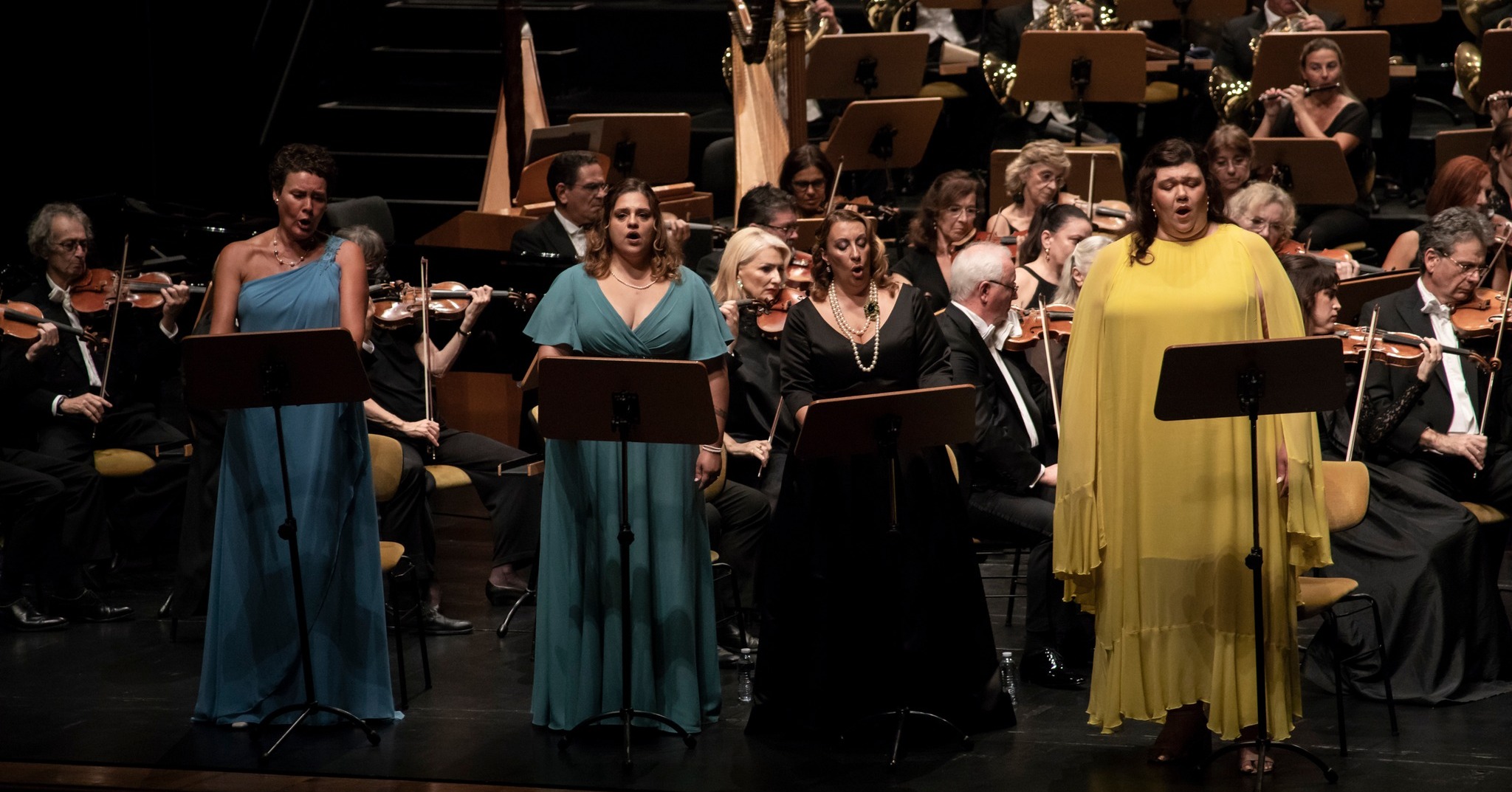
Soprano 1 / Magna Peccatrix – Ann Petersen
Soprano 2 / Una poenitentium – Silvia Sequeira
Soprano / Mater gloriosa – Rita Marques
Mezzo-Soprano 1 / Mulier Samaritana – Maria Luísa de Freitas
Mezzo-Soprano 2 / Maria Aegyptiaca – Lauren Decker
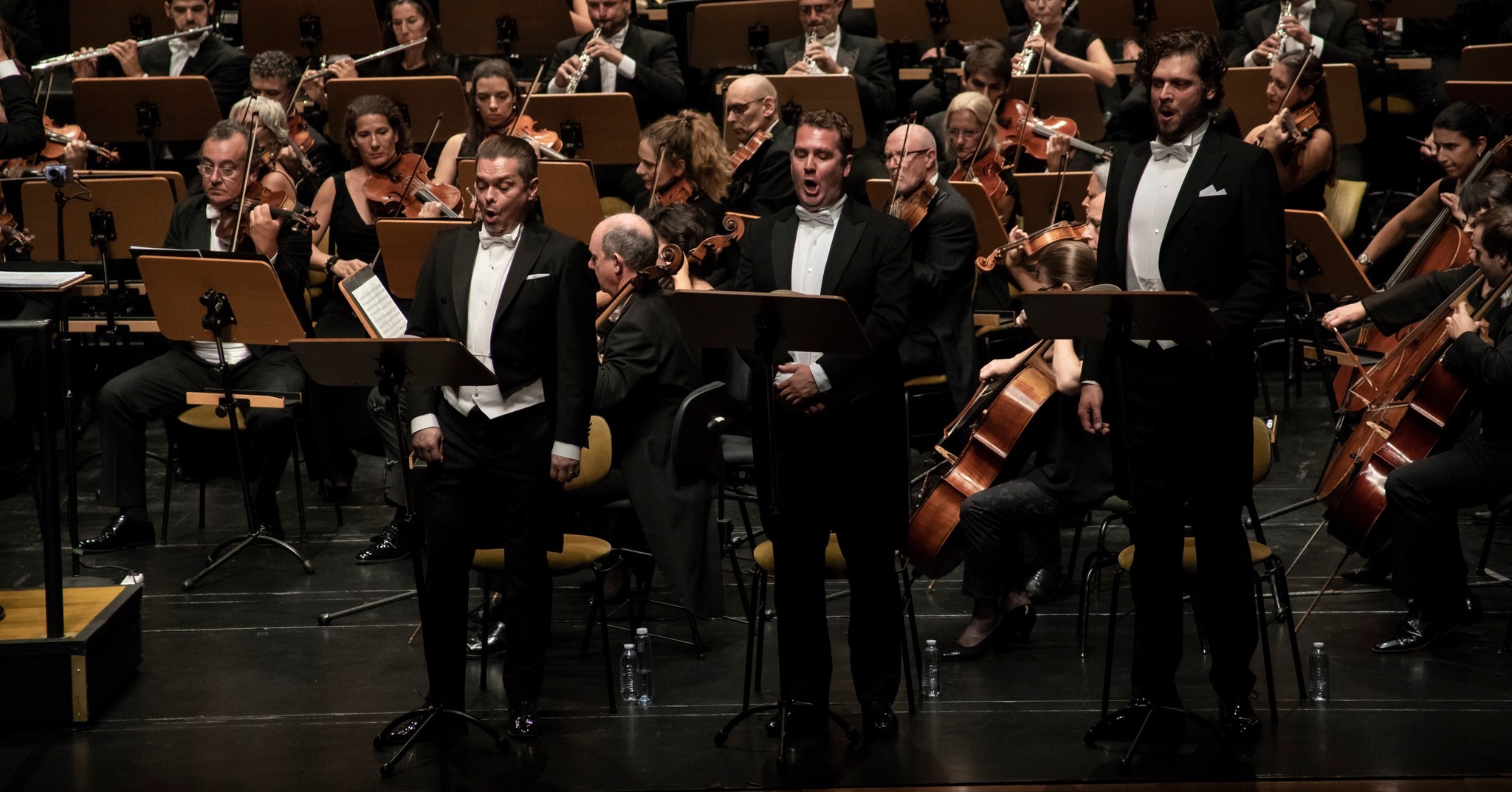
Tenor / Doctor Marianus – Tuomas Katajala
Baritone / Pater ecstaticus – Thomas Oliemans
Bass / Pater profundus – Nicolai Elsberg
Coro Infanto – Juvenil da Universidade de Lisboa, Coro Sinfónico Lisboa Cantat, Coro do Teatro Nacional de São Carlos, Orquestra Sinfónica Portuguesa / Antonio Pirolli.
Concert performance.
Teatro Nacional de São Carlos – Centro Cultural de Belém, Lisbon, Portugal. Sunday, September 15th, 2024.
This concert performance of Mahler’s Eighth Symphony, with one show this evening and a second on Tuesday, marks the opening of the 2024 – 25 season of the Teatro Nacional de São Carlos. For the next couple of years, the theatre will have something of a peripatetic existence, while its beautiful historic house is closed for a much-needed renovations – not least because the ground floor washrooms have been out of service for a while. Unfortunately, the house had a rather turbulent summer, with the abrupt departure of the newly-appointed Artistic Director, Ivan van Kalmthout. Perhaps as a consequence of this, the house has only published the first few months of the 2024 – 25 season, which contains no staged opera in Lisbon, although there will be a pair of performances in Porto, but instead a full season of concerts taking place in various auditoria around the Portuguese Republic. Hopefully, the house will resume staged opera performances in the new calendar year. That said, to be able to assemble performances of this massive work, with such an impressive cast on what was presumably very short notice, is a major achievement.

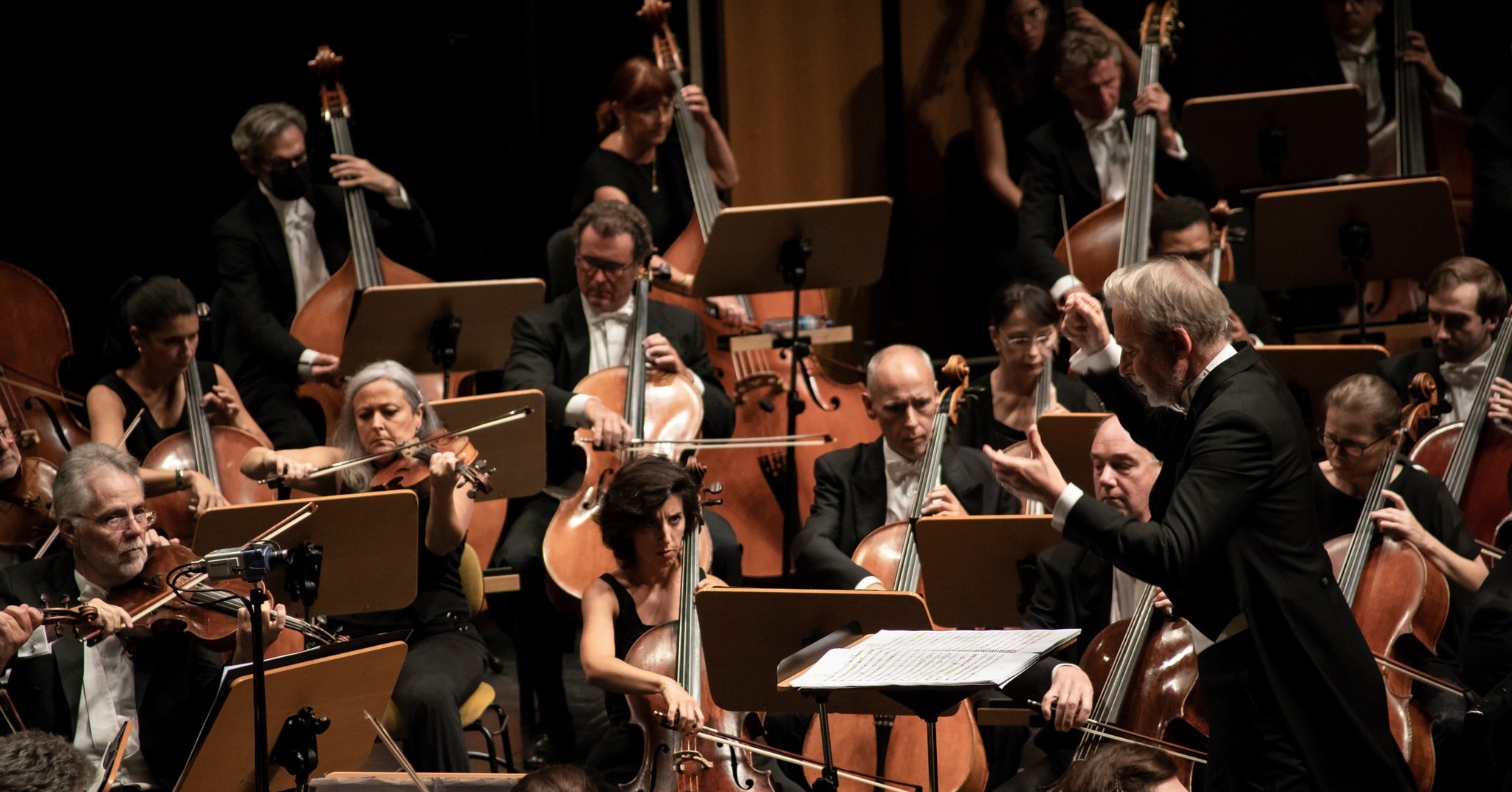
This Mahler 8 was very much a performance of opera house forces. The house Musical Director, Antonio Pirolli, led a reading that reminded us that Mahler was one of the preeminent opera conductors of his time. Right from the opening measures, it was clear that Pirolli would phrase the work with long, lyrical lines, bringing out a bel canto beauty in the way that the ‘imple superna gratia’ moved forward. Moreover, he made me more aware than ever of the debt the second part of the work pays to Parsifal, in its brassy half lights and desperation in the strings of the opening, the strings brining out a chilly Atlantic wind. Similarly, as the Mater gloriosa came into view, Pirolli didn’t shy away from the kitsch. Instead, he phrased it with a warmth and beauty that was redolent of Mascagni or Puccini.
I didn’t keep timings of the performance but it did feel that Part 1 was relatively swift. Interestingly, Pirolli didn’t slow down in the way that Bernstein, Tennstedt or Rattle did, for the big recapitulation of the ‘Veni, creator’; yet the way he pushed ahead gave it an absolute inevitability that was riveting. Similarly, there was no sense of a group of people screaming at each other from the start. Instead, Pirolli built up the progress of Part 1 with sure determination, knowing that the moment we were aiming for came in those closing pages, the choruses firing off rockets of high Cs against each other and the extra brass, placed in the stage-side boxes on the top floor, filling the auditorium in a deluge of sound – the effect heightened because he shaped how we got there, building up the volume as well as the tension throughout the opening part.
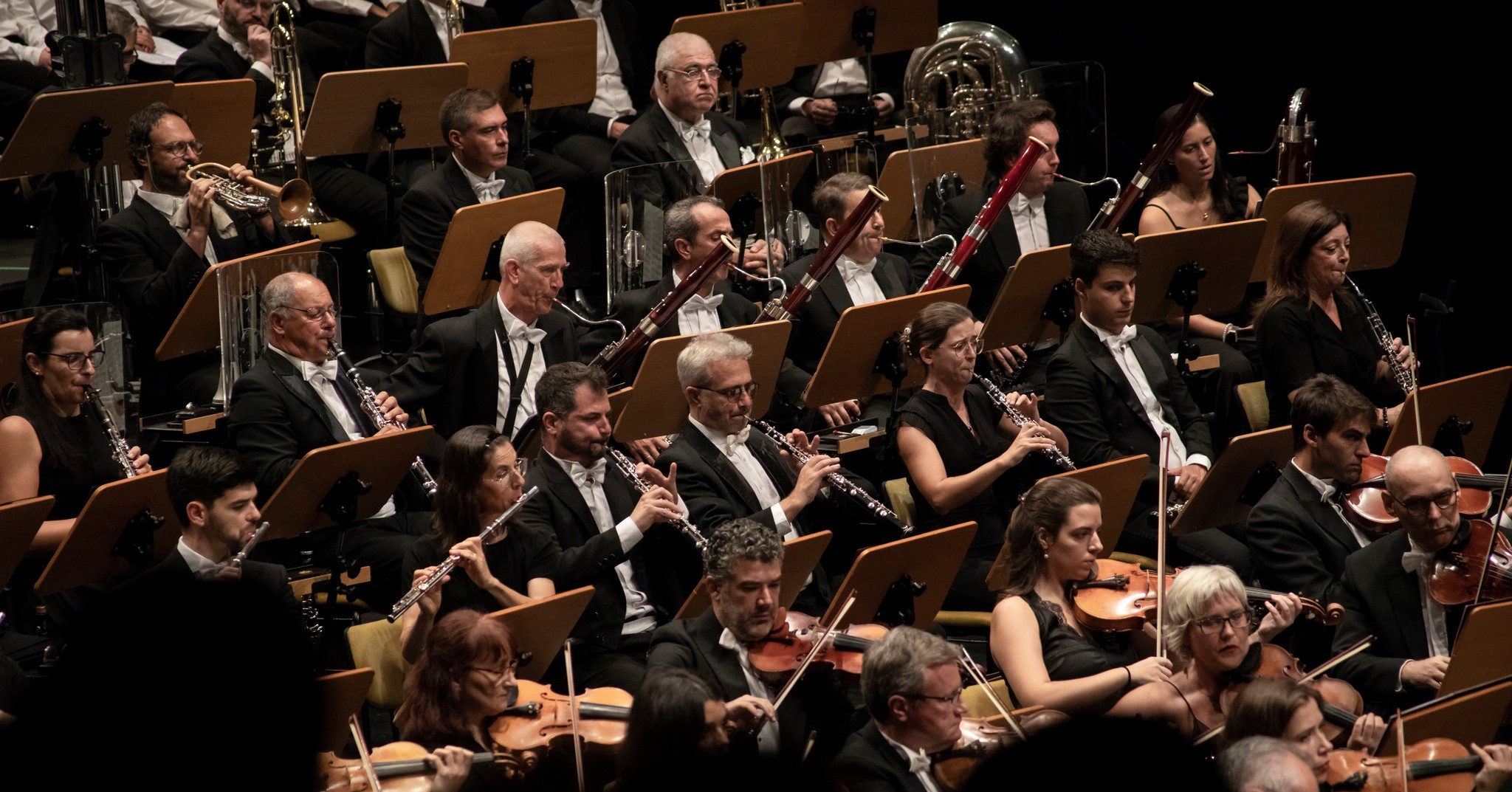
This may well be the best thing I have heard from the Orquestra Sinfónica Portuguesa. They played with sheer confidence for their chief, strings with loving portamenti and brass utterly solid throughout. What also struck me was how Pirolli brought out the character of the wind writing, there was a joviality to the trills that accompanied the recapitulation of the ‘Veni, creator’ that made it feel playful rather than bombastic. The speakers for the electronic organ were at the front of the stage and I did wish that these had been placed at the back, for the purposes of balance. Still, the fragrance of Mahler’s orchestration as the storm clouds passed, just before the Chorus mysticus, with mandolin, piano, harmonium adding brightness, was very much brought out.
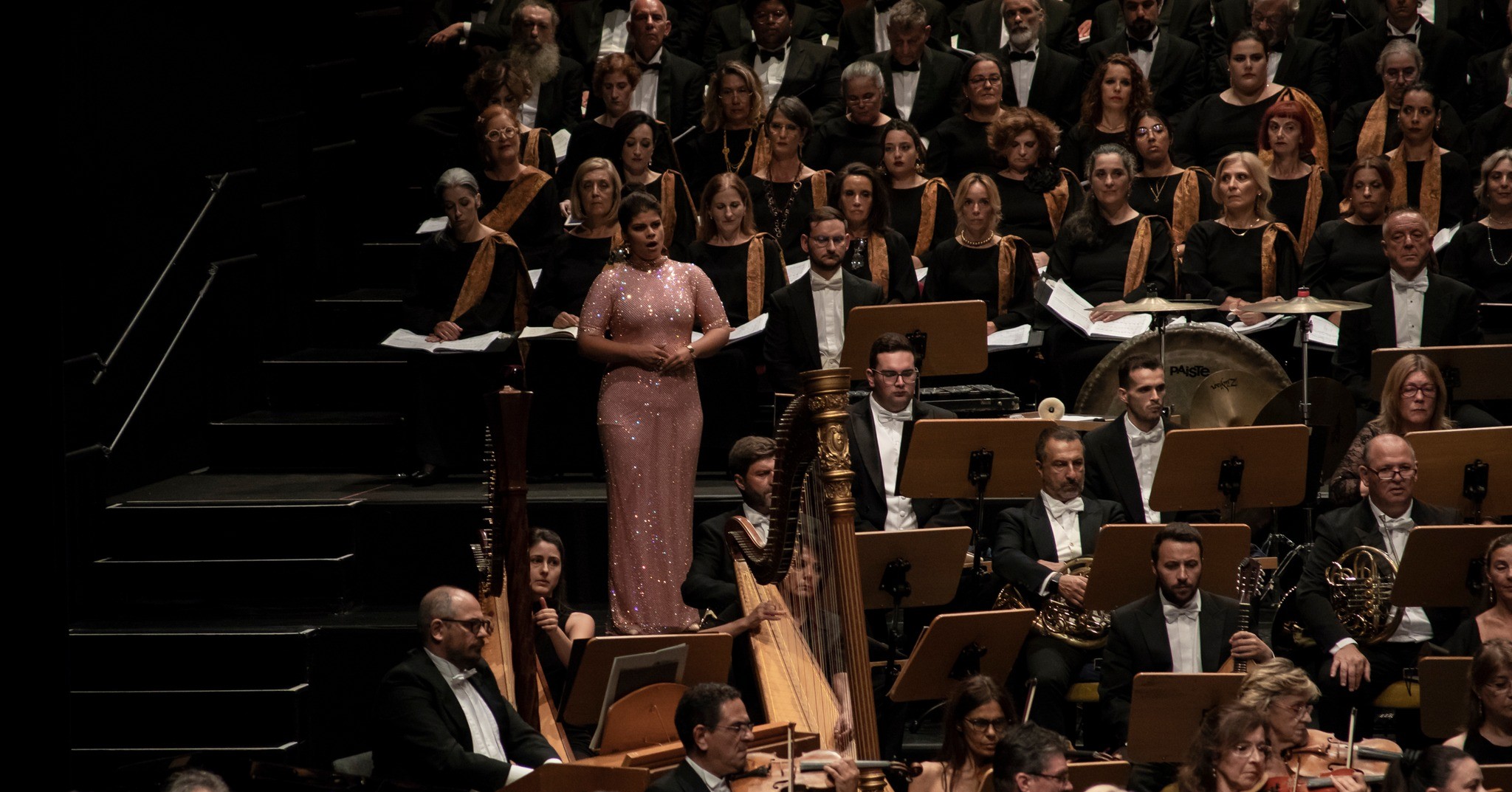
This work is a massive assignment for the assembled choruses. The TNSC chorus, prepared by Giampaolo Vessella, sang with undoubted enthusiasm. The determination of the sopranos to sustain their stratospheric tessitura was admirable, even if they were consistently rather south of the note. They did, however, sing with extrovert passion and negotiated the complex fugal writing with aplomb. The second chorus was provided by the Coro Sinfónico Lisboa Cantat, prepared by Jorge Alves. They sang with precision and similarly extrovert enthusiasm. The children of the Coro Infanto – Juvenil da Universidade de Lisboa, prepared by Erica Mandillo, sang with an unbounded sense of joy and in impeccable German. There was an irresistible sense of community in the choral singing, creating a feeling of uplifting excitement that just radiated from the stage.
The solo octet included both local and international singers. Ann Petersen, who I had the pleasure of seeing as an excellent Senta in Copenhagen a few years ago, took the top line. She did lose her way slightly in Part 1, momentarily losing contact with the remaining forces, but got back on track soon enough. She pinged out the high Cs with ease, soaring over the massive tumult and executed that treacherous pianissimo high C in the closing Chorus mysticus with beauty. Silvia Sequeira is an extremely promising talent. She has the kind of musicality that cannot be taught, bringing a genuine transformative energy to her big Part 2 aria. The voice has a wonderful depth of tone and beauty. And yet, the technique, to my ears, sounds unfinished. The support doesn’t sound lined up, with an overreliance on sheer muscle to get the sound out. I very much hope that she can iron out these issues because it’s a very special voice, but the technique, as of now, needs work. Rita Marques, in her two lines as the Mater gloriosa, demonstrated the difference a superb bel canto technique can make. She floated her lines on the breath, with focused beauty of tone, and immaculate attack. The great Krassimira Stoyanova once told me that bel canto technique is key to everything, and those singers who aspire to sing Wagner would benefit from looking at this in this way.
Maria Luísa de Freitas brought her familiar warm mezzo to her music, descending to the depths with determination. Lauren Decker was a striking stage presence. Her ruby red mezzo has an admirable evenness of emission. If she could make her sung German pronunciation somewhat less Anglophone, she could make an impressive Wagner and Mahler contralto. Tuomas Katajala brought a characterful tenor to his music, singing his Doctor Marianus with extroversion and no fear of the tessitura, even if he didn’t always land on the note he was aiming for. Thomas Oliemans sang his music with firm, masculine tone. Nicolai Elsberg is a real find in the bass part. He has a wonderfully resonant tone. As we know, basses take a bit longer to get into their stride and Elsberg’s technique is also somewhat unfinished, lacking in an ideal smoothness of line and integration of the registers. Still, he dispatched his assignment with dignity and the raw material is very impressive.
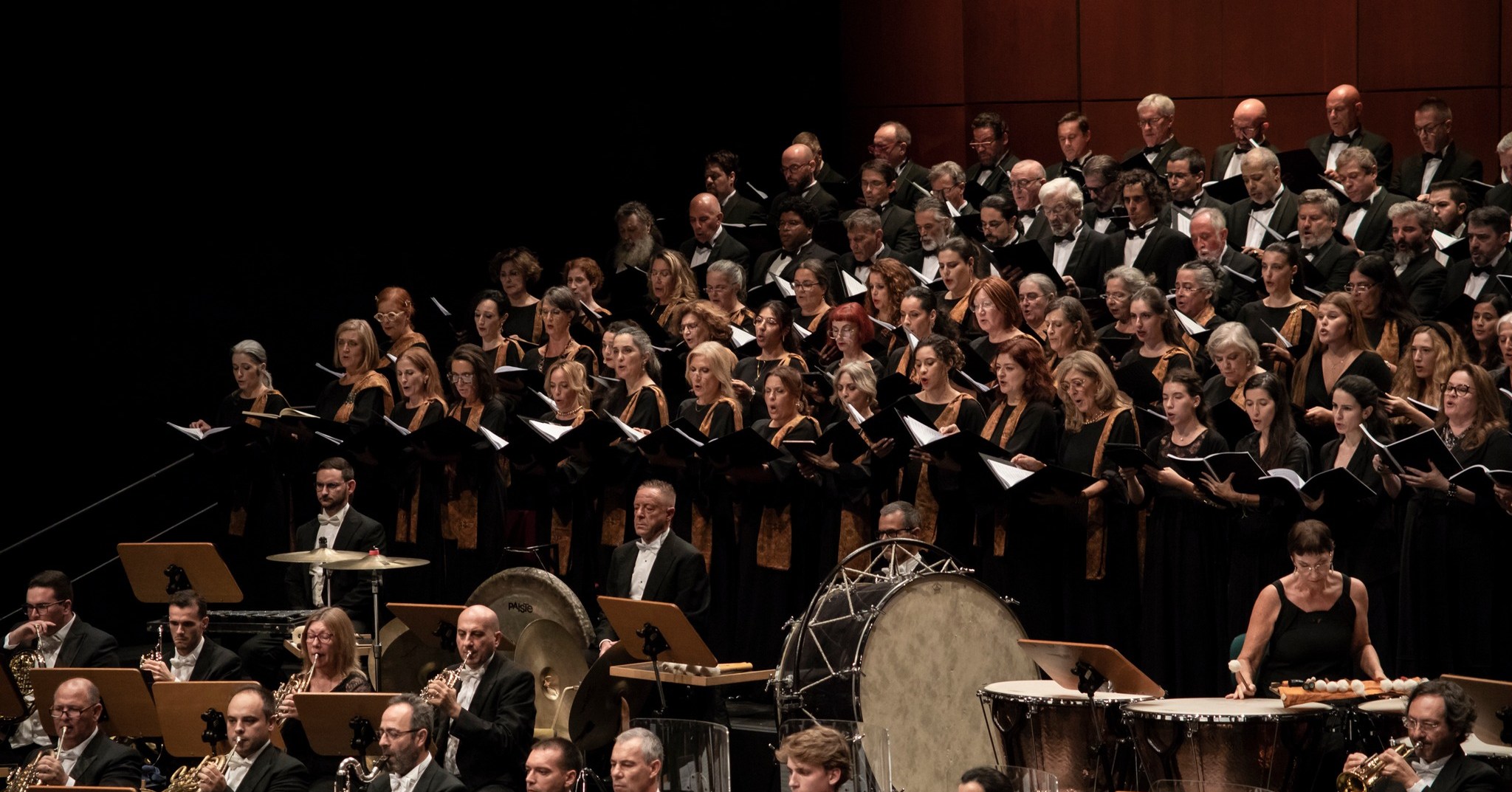
This was a performance that very much lived. Yes, the choral sopranos of Chorus 1 were consistently below where they needed to be in pitching, but there was an enthusiasm to the choral singing that just swept me along. It made the work feel like a communal ritual, that gave the sense of a group of people giving everything they had to surmount the extreme challenges Mahler takes them to, and in so doing gave the performance a real sense of occasion. The solo singing highlighted some very exciting talents. But what will stay with me is Pirolli’s conducting. He made what can be a problematic work into a cogent whole, filling it with logical drama, bringing out a lyricism that allowed it to soar. This was an utterly uplifting performance, the closing pages with the wall of sound filling the hall was magical. The audience responded with a massive ovation at the close. There are still a very small number of seats left for Tuesday’s performance, those who can go should run for them.
 operatraveller.com
This concert as all the coming concert season at the CCB plus the opera performance there have been planned by Ivan van Kalmthout