Strauss – Elektra
Klytämnestra – Lioba Braun
Elektra – Allison Oakes
Chrysothemis – Magdalena Hinterdobler
Aegisth – Martin Koch
Orest – Choi Insik
Der Pfleger des Orest – Lucas Singer
Die Aufseherin – Claudia Rohrbach
1. Magd – Adriana Bastidas-Gamboa
2. Magd – Regina Richter
3. Magd – Tina Drole
4. Magd – Maria Koroleva
5. Magd – Emily Hindrichs
Die Vertraute – Maike Raschke
Die Schleppträgerin – Tinka Pypker
Ein junger Diener – John Heuzenroeder
Ein alter Diener – Christoph Seidl
Chor der Oper Köln, Gürzenich-Orchester Köln / Felix Bender.
Stage director – Roland Schwab.
Oper Köln, Staatenhaus Saal 1, Cologne, Germany. Saturday, October 26th, 2024.
This new production of Elektra at the Oper Köln opened the day after the staging of Die Schöpfung I saw here at the start of the month. To premiere two very different productions, with very different orchestral demands, within the same weekend is something of a feat. While I can’t comment on how the premiere of this Elektra went, seeing it only now towards the end of the run with just a handful of performances remaining, should at least give a sense of a cast completely on top of their assignments. The staging was confided to Roland Schwab, with Felix Bender taking over the musical direction, following the departure of François-Xavier Roth. I had previously seen Allison Oakes, here making her debut run in the title role, and Lioba Braun sing Chryosthemis and Klytämnestra at the São Carlos a few years ago and I was certainly intrigued to hear them again.

As readers will well know by now, the Staatenhaus, the Oper Köln’s ‘temporary’ home, is an exposition centre rather than an opera house, with all the space and acoustical challenges that this entails. Given the size of the Straussian orchestra, here the band was placed stage left with the action taking place on the right. This mean that the cast was extremely close to the public, without a pit between them. While acoustically it worked much better than one might have suspected, at least from my seat, the dryness of the acoustic did not help the singers at all.

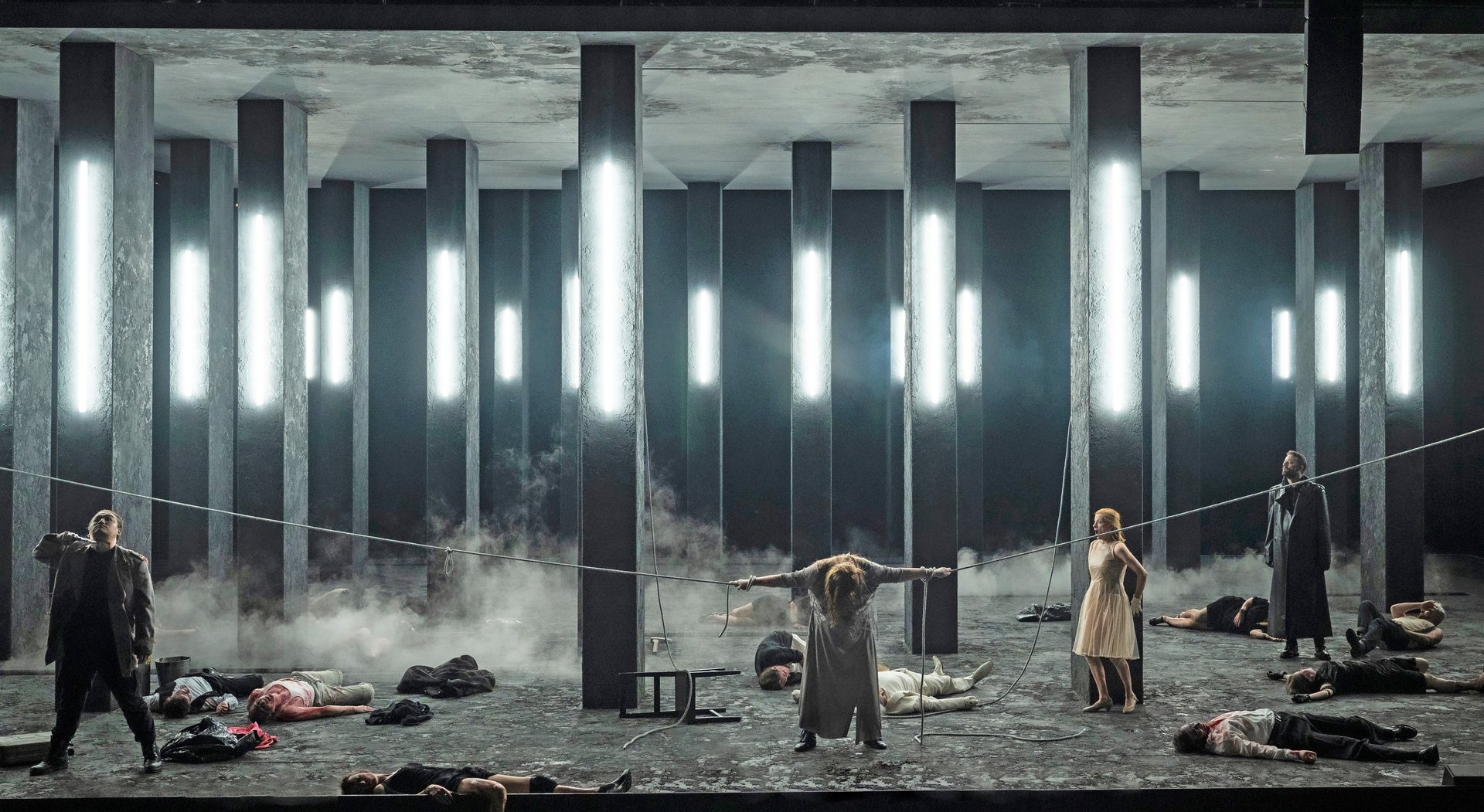
Schwab set the action in a space dominated by two dozen columns, each of which contains a long fluorescent lighting tube. Due to the risks of the columns obstructing the view of the audience, the action consequently took place on a narrow strip at the front of the stage, with the rear of the stage used to add additional visual detail. Schwab’s view of the palace is one of a violence that is constant and circular. The maids, seen wearing dresses that have been torn apart, initially bully and intimidate Elektra, while the closing pages saw the maids murdered on stage in that final act of revenge. In the Klytämnestra / Elektra confrontation, a group of men are seen chained up, watching the scene, as if to reinforce that constant presence of human sacrifice as a way to try to find mental respite and satisfy the gods.
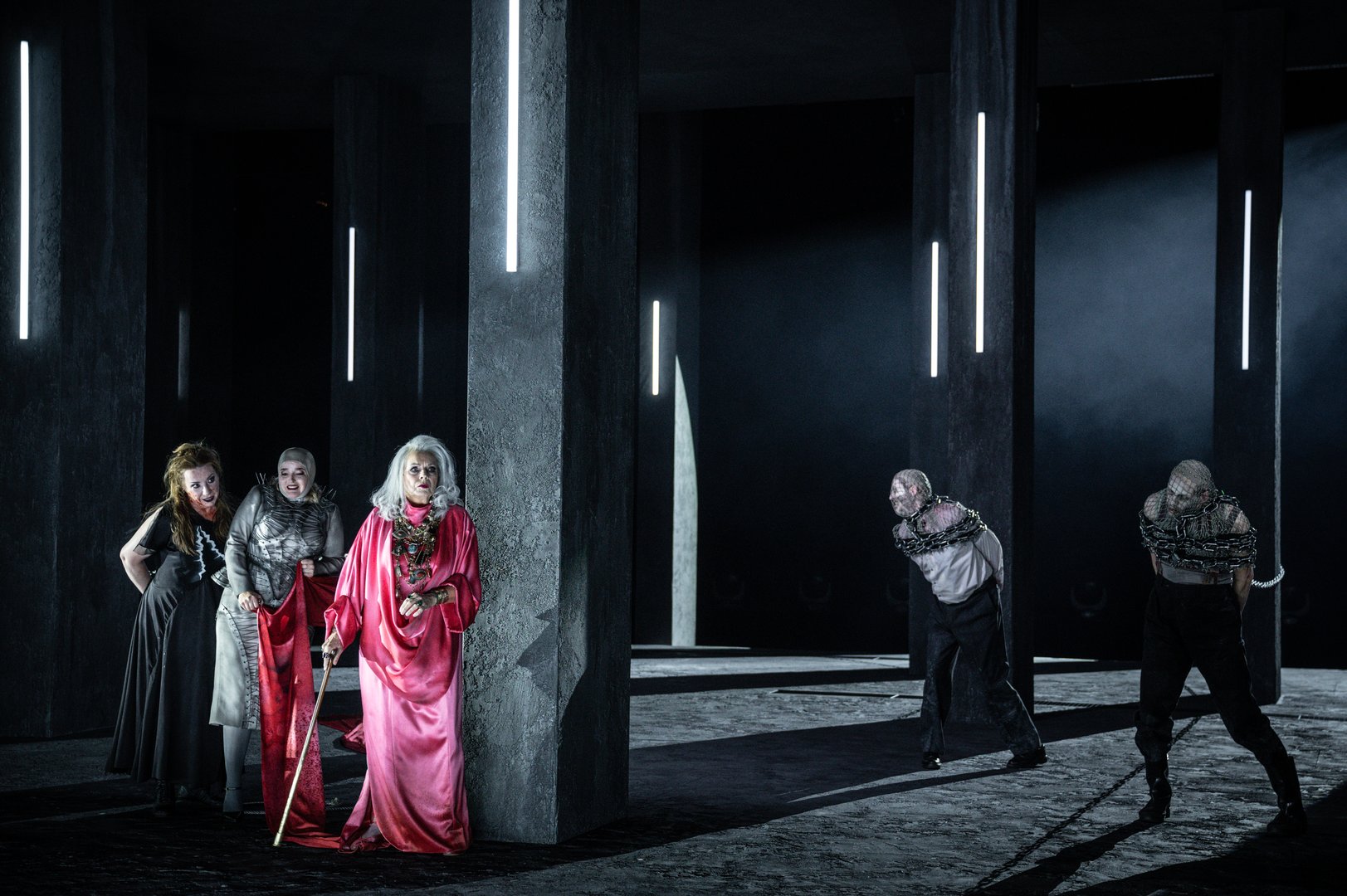
Schwab makes repeated use of the lighting, by Andreas Grüter, to establish and reinforce the atmosphere, whether in blinding us from the back of the set in the opening scene, to demonstrating a change in the direction of the lighting in the recognition scene, reflecting the change in direction of the story. This I found to be particularly effective in creating atmosphere. Similarly, the personenregie was naturalistic, creating believable, traumatized characters, desperate to find a way through and understand their need for revenge and resolution. Schwab doesn’t shy away from the gore in the story, with multiple bodies expired on stage, but this is of a piece with the work itself and amplified its effects. I found it a convincing and effective piece of theatre.
The effect of the staging was heightened also in Bender’s superb conducting, who gave us one of the best conducted Elektras I’ve heard. Yes, this is a score of extreme loudness and violence, but it’s also a score where dance rhythms constantly threaten to break out, and also one where the effect is heightened by the transparency of the textures. In all respects. Bender brought out the multifaceted wonder of this revolutionary score. He inspired his musicians to play with a genuine sense of beauty and lyricism, making this German orchestra sound almost Italian, the long, lyrical lines redolent of Rosenkavalier. Much of this was also achieved through a razor-sharp focus on rhythm, making the opening maids scene seem rather playful. The opening of the big Klytämnestra scene, was accompanied with a transparency of texture that allowed the strangeness of the harmonies to come to the fore, and the murders were given just that stabbing violence they needed, the orchestra not holding back in volume. Even more remarkable, Bender ensured that the stage-pit coordination remained absolutely tight throughout, despite the fact that he was not directly visible to the singers and must surely have been at an acoustical disadvantage given his location. The orchestral playing was excellent, the brass playing striking in its precision and the strings impeccable in tuning.
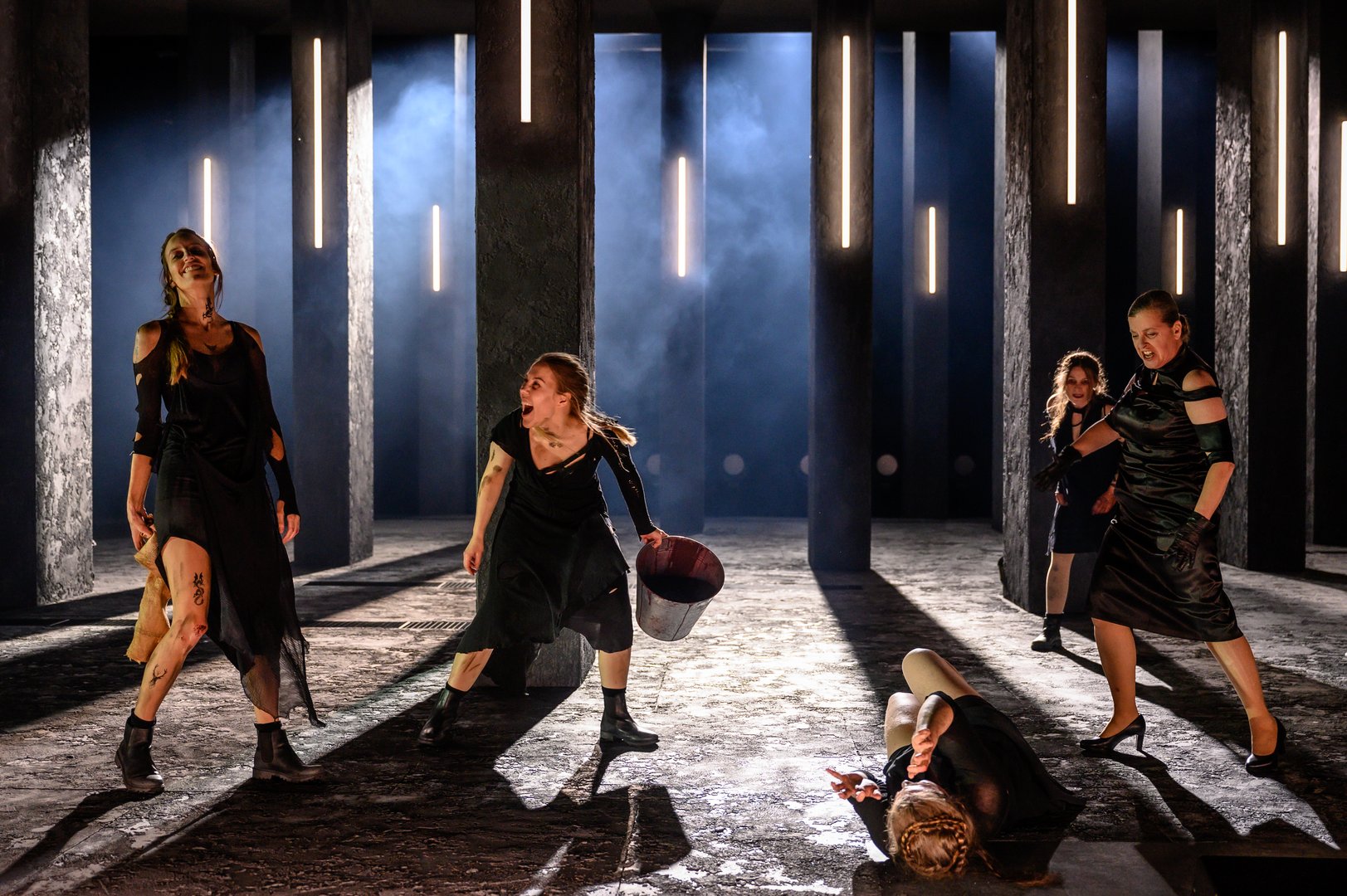
This was also a performance that very much lived in the clarity of the text. Oakes sang her music in excellent German, bringing out the full colours of Hofmansthal’s libretto, from determination to sarcasm, dark humour to desperation. Her soprano is in decent shape, perhaps not the most memorable instrument tonally, but certainly open to the extreme demands of the role. The vibrations on top do tend to widen when she puts pressure on it, and she doesn’t quite have the ability to float up there when she pulls back on the tone. Her initial high C in her opening monologue was some way south of its target, but the second, in the big confrontation, got much closer. She’s also a convincing actor. What I’ll take with me from this evening will be Oakes’ ability to use the text and her willingness to give generously of herself.
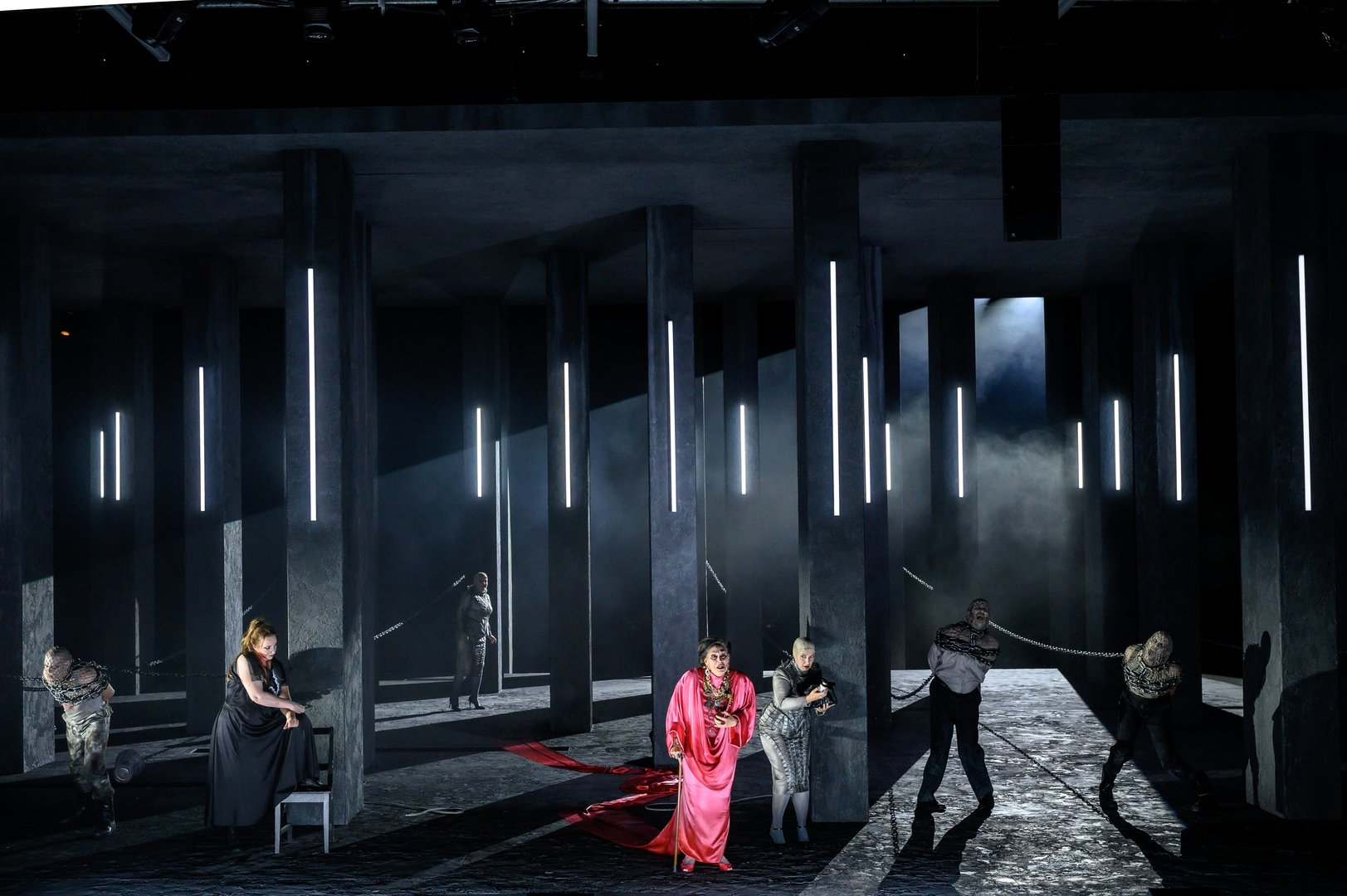
Braun dominated the stage as Klytämnestra, like her castmates singing with the text nicely forward. She wasn’t particularly helped by the difficult acoustic, the voice drying out somewhat at fuller volumes, but when she pulled back, that sumptuous silky tone of yore was more than present. This was a Klytämnestra of regal stature, the aristocratic line and nobility of tone utterly present. Magdalena Hinterdobler was a replacement for the originally-cast Astrid Kessler as Chrysothemis. She’s the owner of a bright, rather pale soprano with easy reach on top. She was also an energetic stage presence. It does sound, however, that the role is perhaps a step too far for Hinterdobler at this point in her career – the high-lying lines at full volume lacking in spin and sounding rather hard in tone. Still, she’s an agreeable stage presence and was undoubtedly enthusiastic.
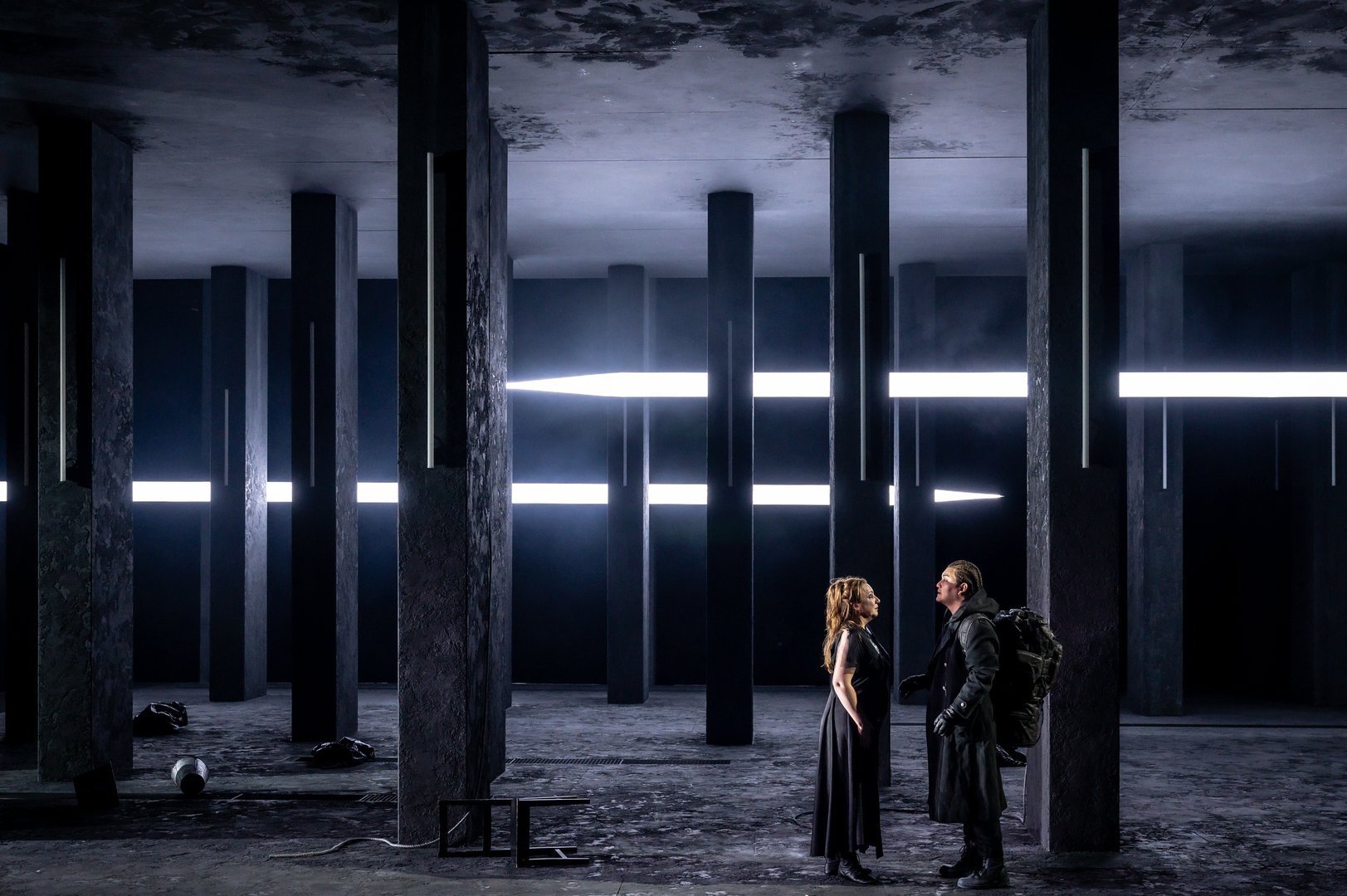
Choi Insik sang Orest in a firm, resonant baritone with admirable evenness throughout the range. Martin Koch’s Aegisth was sung in a characterful tenor, slightly soft-grained perhaps, but the words nicely forward. The remaining roles reflected the admirable qualities of the house. Lucas Singer made a real impression in the role of the Tutor, filling the brief interjection with drama. The maids were all taken with confidence, as indeed were the other remaining roles. The chorus was perhaps placed too far back in the sound picture to have the biggest impact in their short, yet crucial, contribution.

This was an Elektra that gave a considerable amount of satisfaction. It was more than decently sung by a cast who focused on bringing the drama out fully through the text. The staging was highly effective, making use of the ersatz space of the auditorium, yet always putting the singers first by ensuring they were visible and audible. Indeed, I wish Schwab and Bender had been responsible for the Elektra I saw in Naples last month, since Bender’s conducting was absolutely superb. Bender was so alive to the rhythm and lyricism in the score and here secured playing of the utmost quality from his orchestra. The audience responded at the close with warm ovations for the entire cast, with particularly generous ones for the central female trio.
 operatraveller.com
[…] the musically excellent but scenically risible Schöpfung in September, and the superbly-conducted Elektra in October, tonight marked the premiere of this new production of Nabucco, confided to the stage […]
[…] title role with the luxury of the Berliner Philharmoniker on remarkable form in the pit. In Cologne, Allison Oakes gave us an honest account of the title role, while Felix Bender’s conducting was […]