Gluck – Iphigénie en Tauride
Iphigénie – Michèle Losier
Oreste – Kartal Karagedik
Pylade – Reinoud Van Mechelen
Thoas – Wolfgang Stefan Schwaiger
Diane – Lucy Gibbs
1ère prêtresse / femme grecque – Dagmara Dobrowska
2nde prêtresse – Iryna Kyshliaruk
Un scythe – Hugo Kampscheur
Un ministre du sanctuaire – Thierry Vallier
Koor Opera Ballet Vlaanderen, Symfonisch Orkest Opera Ballet Vlaanderen / Benjamin Bayl.
Stage director – Rafael R Villalobos.
Opera Ballet Vlaanderen, Antwerp, Flanders, Belgium. Sunday, October 27th, 2024.
This new production of Iphigénie en Tauride at Opera Ballet Vlaanderen promised, at least from a musical standpoint, to be one of the highlights of the season. With Michèle Losier in the title role, Kartal Karagedik as Oreste, and Reinoud Van Mechelen as Pylade, with Benjamin Bayl leading from the pit, we were certainly promised an evening of high musical values. The stage direction was confided to Rafael R Villalobos. My only other exposure to his work was a rather rudimentarily directed Ballo in maschera in València earlier this year. Since this Iphigénie was also a coproduction with Montpellier, where it has already been seen, I was eager to have this opportunity to reassess Villalobos’ work.
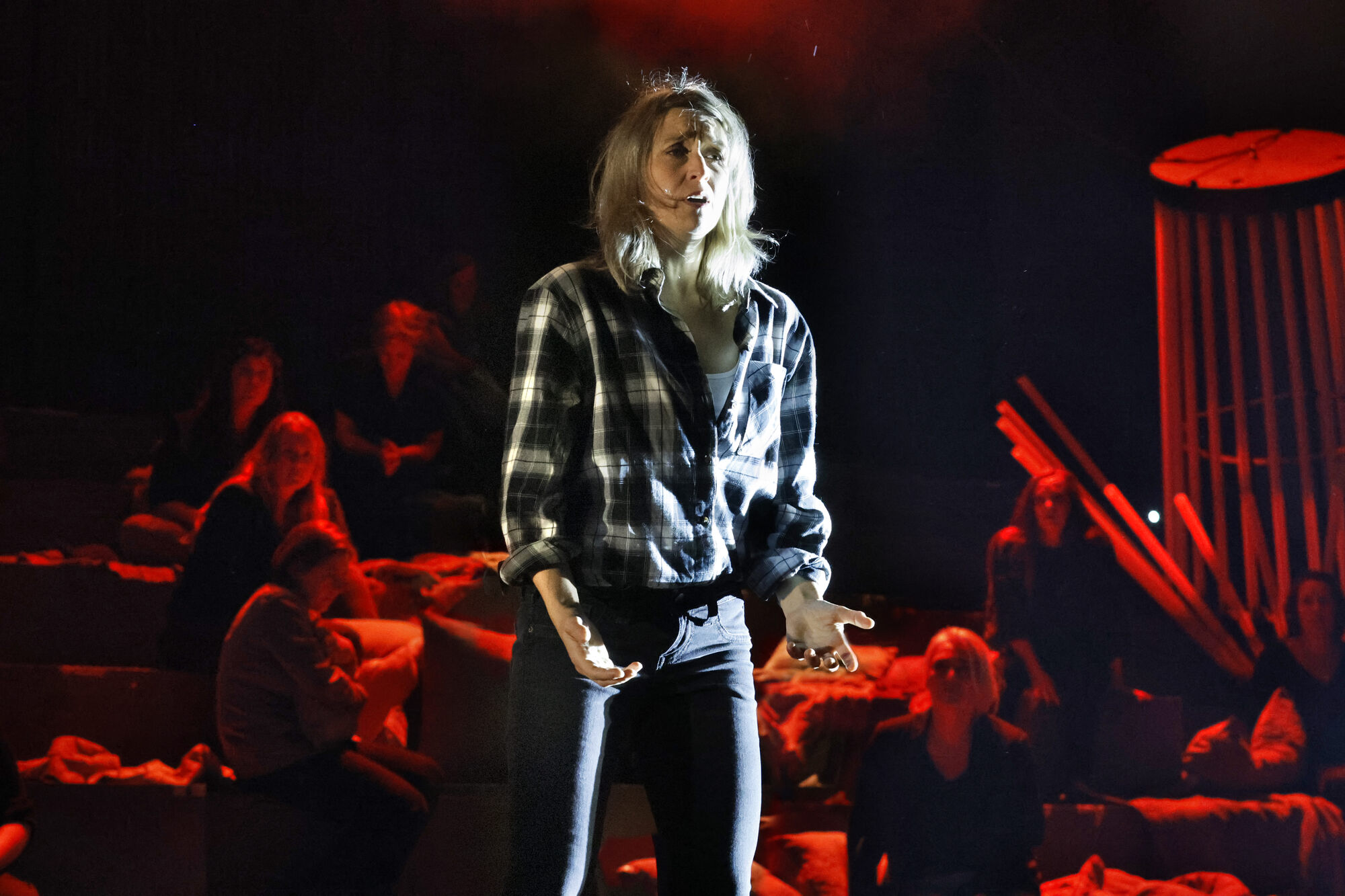
Villalobos sets the action mainly in a space that reflects a theatre. Two actors, Vincent van der Valk and Pleun Van Engelen, representing Agamemnon and Clytemnestre respectively, act out a scene from Euripides, giving something of the backstory that led to the events of the opera through the medium of the Netherlandic tongue. I don’t know if Van Engelen was deliberately overacting, but her bloodthirsty scream at the end of that scene was, at least to me, unintentionally hilarious. This led to the opera proper, which segued from that opening scene being staged as a play, to the audience in the theatre reacting to being bombed in the storm music. I regret to write that the impact of those visceral pages was blunted, due to the chorus randomly screaming while the simulated bombing was taking place, adding a layer of extraneous noise that compromised the impact of the music.
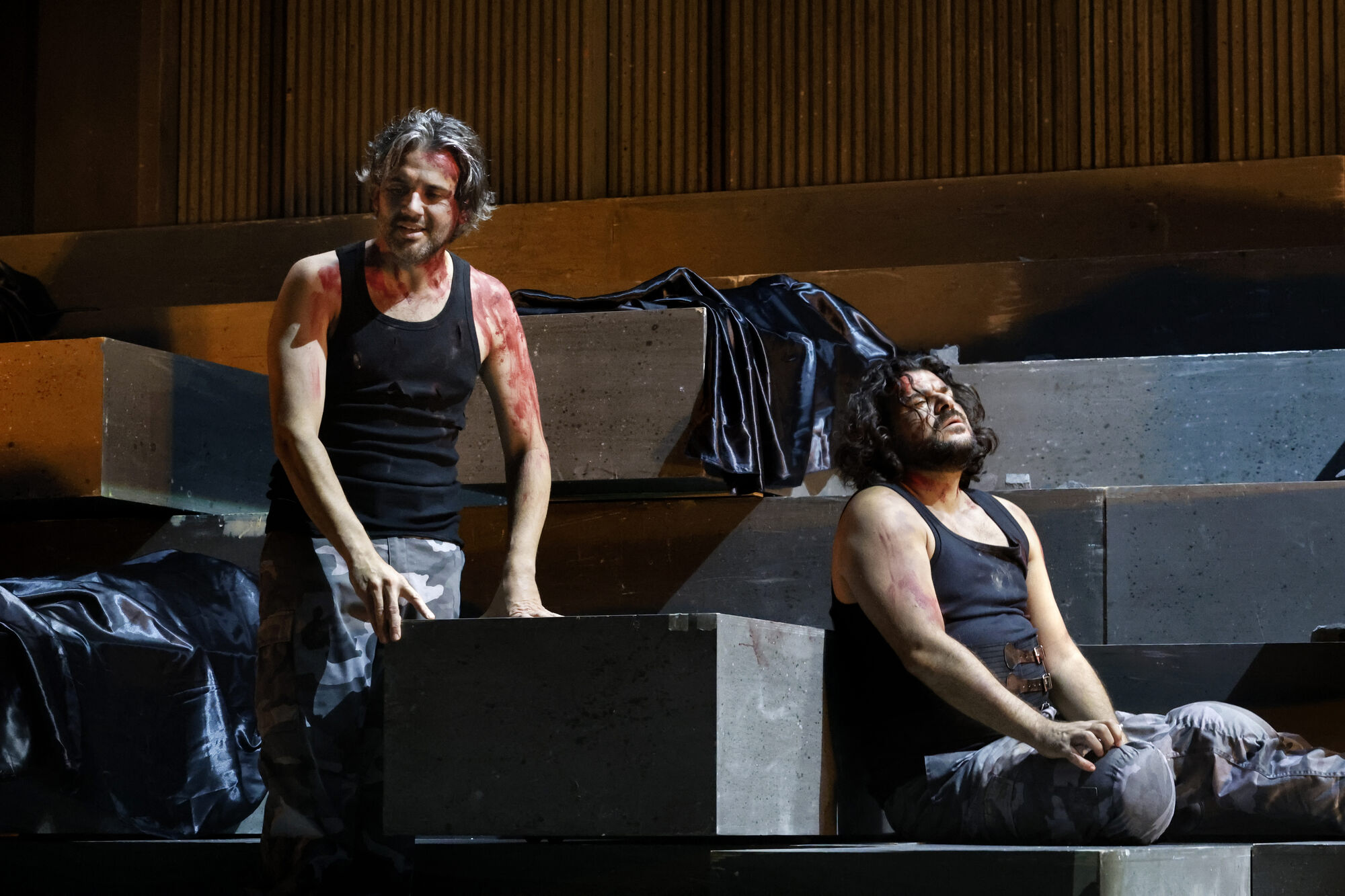
Villalobos gives us a world of violence, where Thoas abused a female chorister, mounting her and ripping off her panties, then subsequently sniffing them. It led me to ask myself whether this helped to enhance the narrative, or whether it was simply voyeuristic. Thoas is described in the libretto as a ‘tyrant’, so this would be in keeping with that character. And yet, it felt that Villalobos set out to give us some gratuitous sexual violence to shock, rather than making us identify with the characters or make us feel for them. It then led me to reflect, at intermission, on Calixto Bieito’s much-travelled Carmen, which I saw again at the Liceu back in January this year. There the violence against women was an integral part of the staging, making us reflect on our complicity and to empathize with the characters and their situations. It works simply because Bieito manages to get his entire cast to create such believable and rounded characters. Villalobos is not yet in that league, and for me this is down to the simple reason that his theatrical vocabulary of personenregie is so perfunctory. Simply moving people around the stage is not the same as using the whole cast to create flesh and blood characters. The principals were frequently left on stage to emote to the front, with arms outstretched, so that they had to work even harder through the text to create meaning.
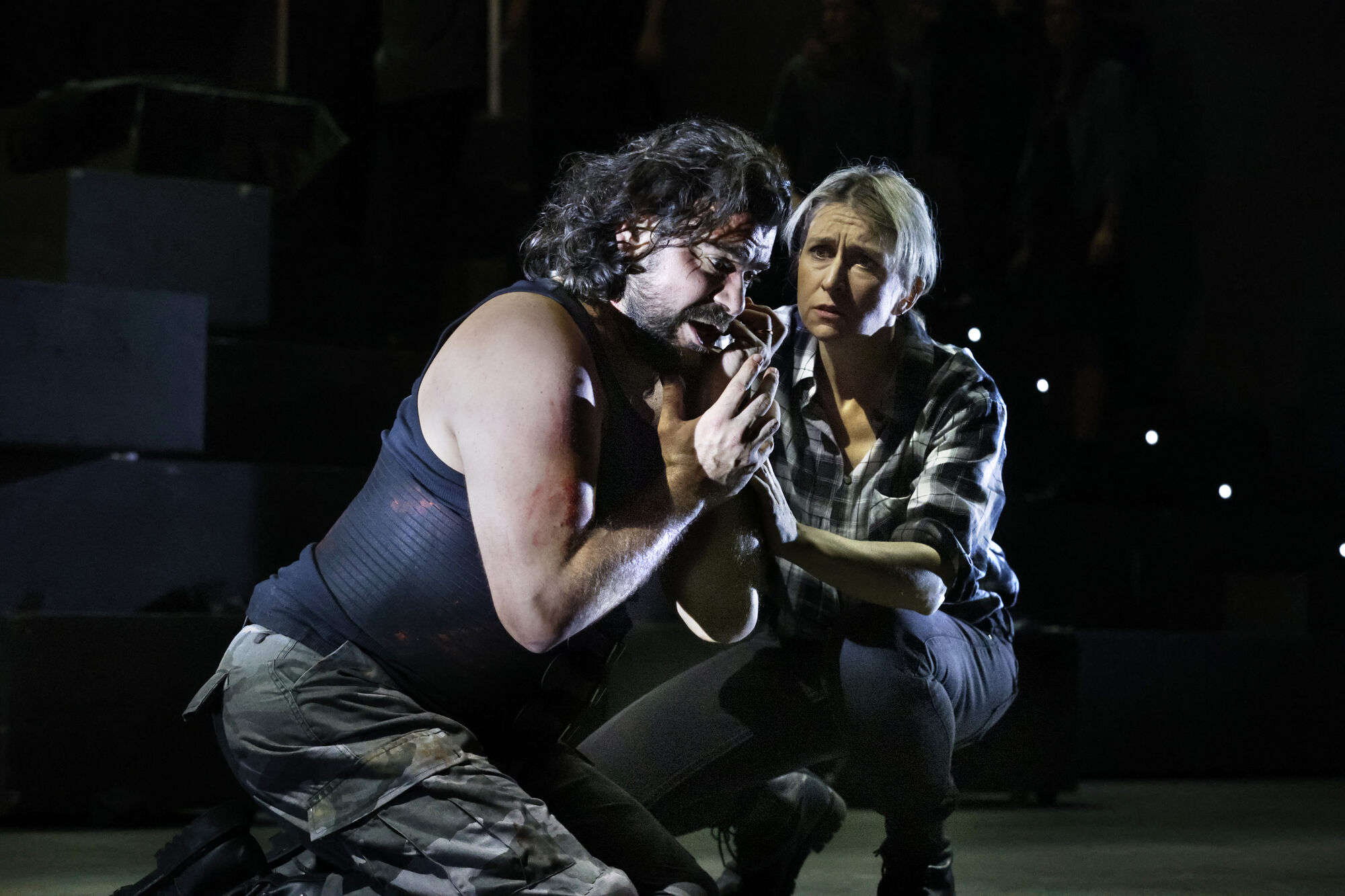
I frequently asked myself during the course of the evening, whether what we saw amplified the music and the narrative, or whether it undermined it. Villalobos does give us some intriguing visuals. Act 3 opens with a family dinner chez Agamemnon, while the adult characters in the form of the principals interpret around them. The downside is that the act also opened with a monologue from Van Engelen’s Clytemnestre, again in the Netherlandic tongue, where her overacting grated. This did lead me to reflect on how the past informed the present and its relationship with the characters. Yet what it didn’t lead me to do was to make me feel. To see Oreste being pursued by a group of furies in Act 2, dressed like Morticia Addams, was again rather than terrifying, rather risible.
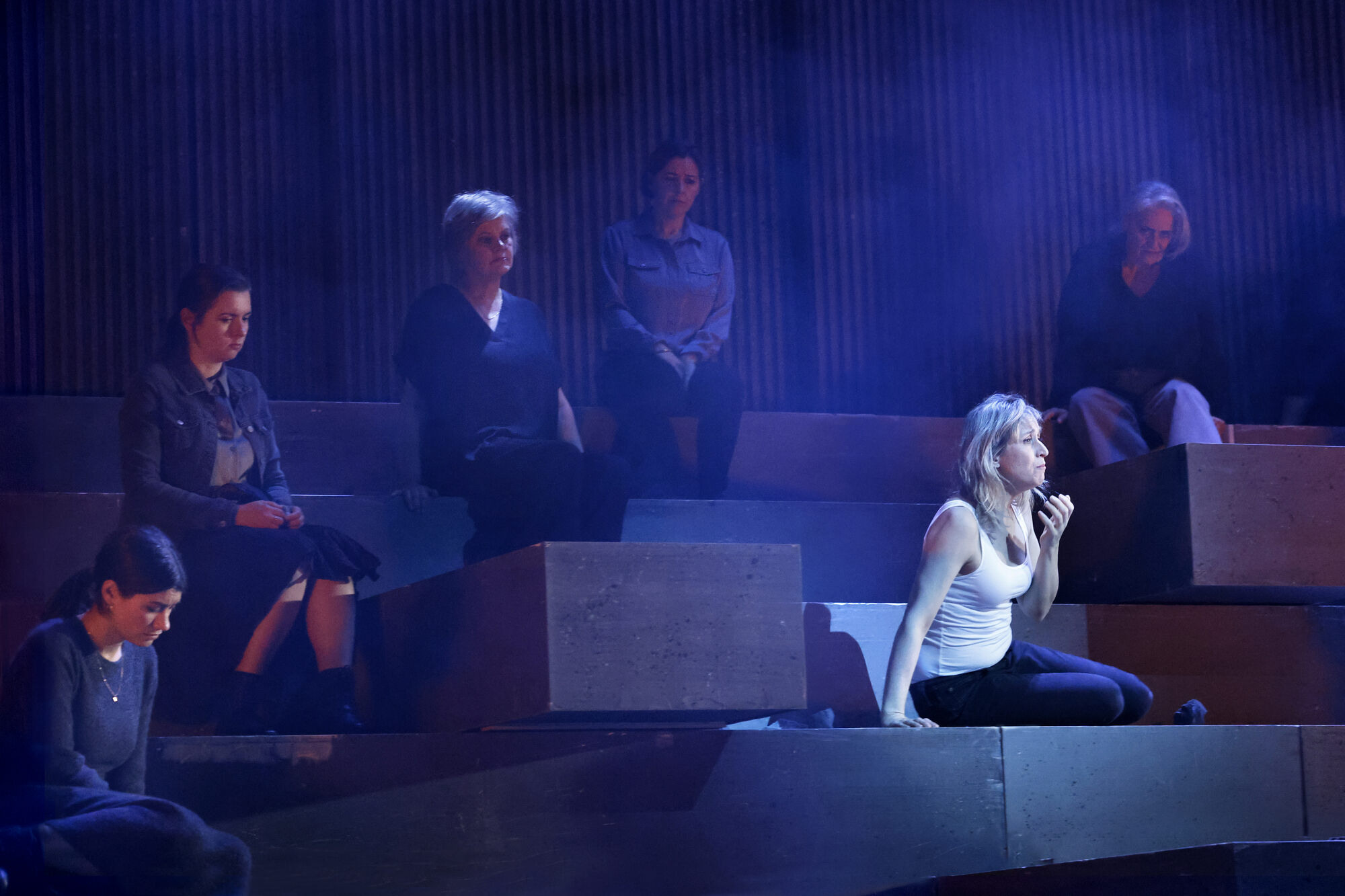
Fortunately, the musical side was much more positive. Bayl led a reading in which every single one of his tempi were ideal. He encouraged the strings to play without vibrato, trumpets and horns used natural instruments, and the winds were nicely forward in the orchestral texture. I was fortunate to be sitting in the second row and from there the orchestral contribution had real, visceral impact – which made the extraneous noise in the opening storm all the more frustrating. Bayl’s reading was swift for the most part, with nicely flowing tempi that were eloquently phrased throughout the cast. He also encouraged his singers to add some attractive embellishments to the line, as did some of the winds, making it even more individual and helping us to feel that for these moments, these were the only people in the world who could perform this music. The quality of the playing was superb throughout, not a note out of place, and string intonation was impeccable. The chorus, prepared by Jori Klomp, sang with firm tone and excellent blend.
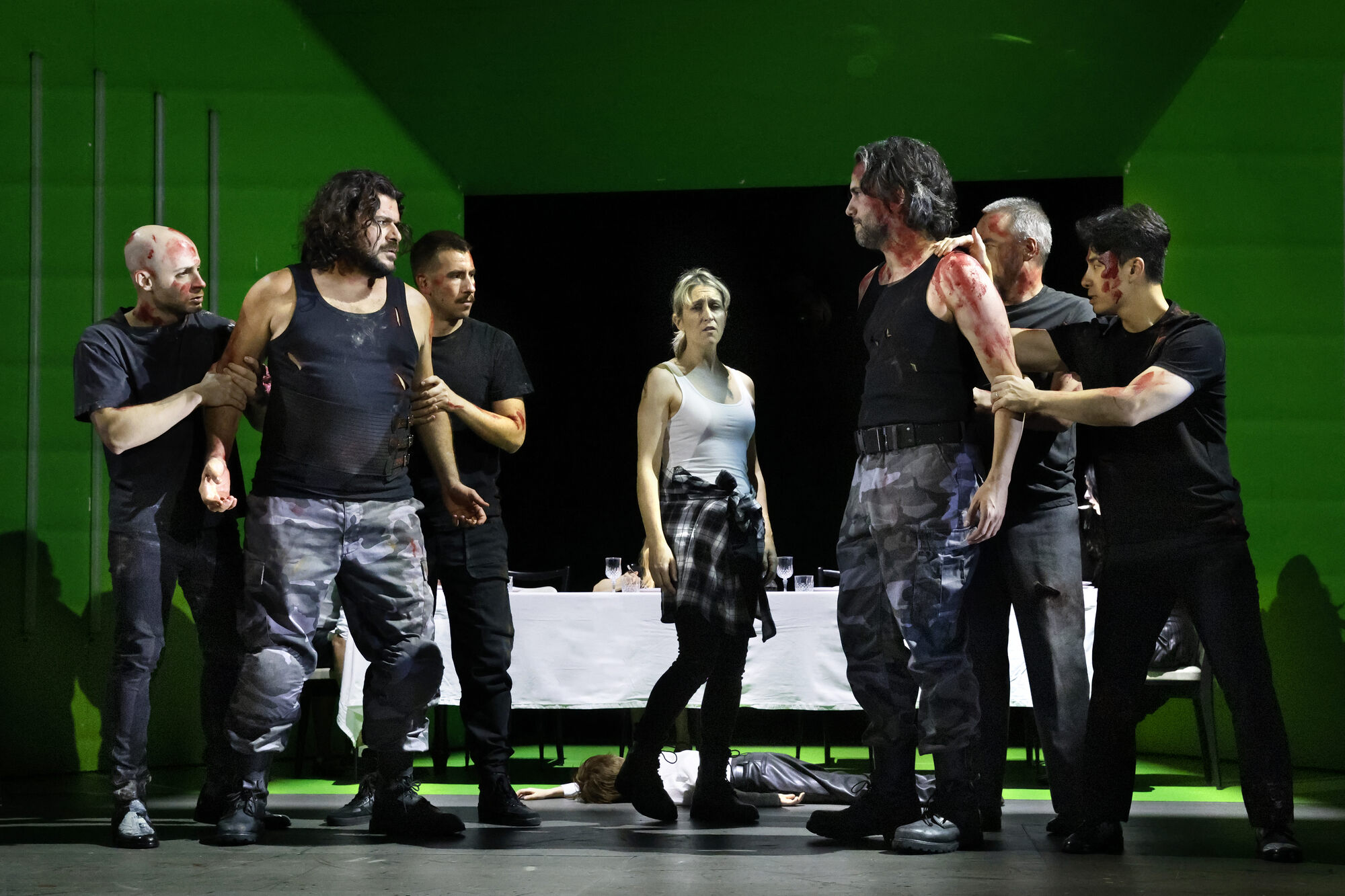
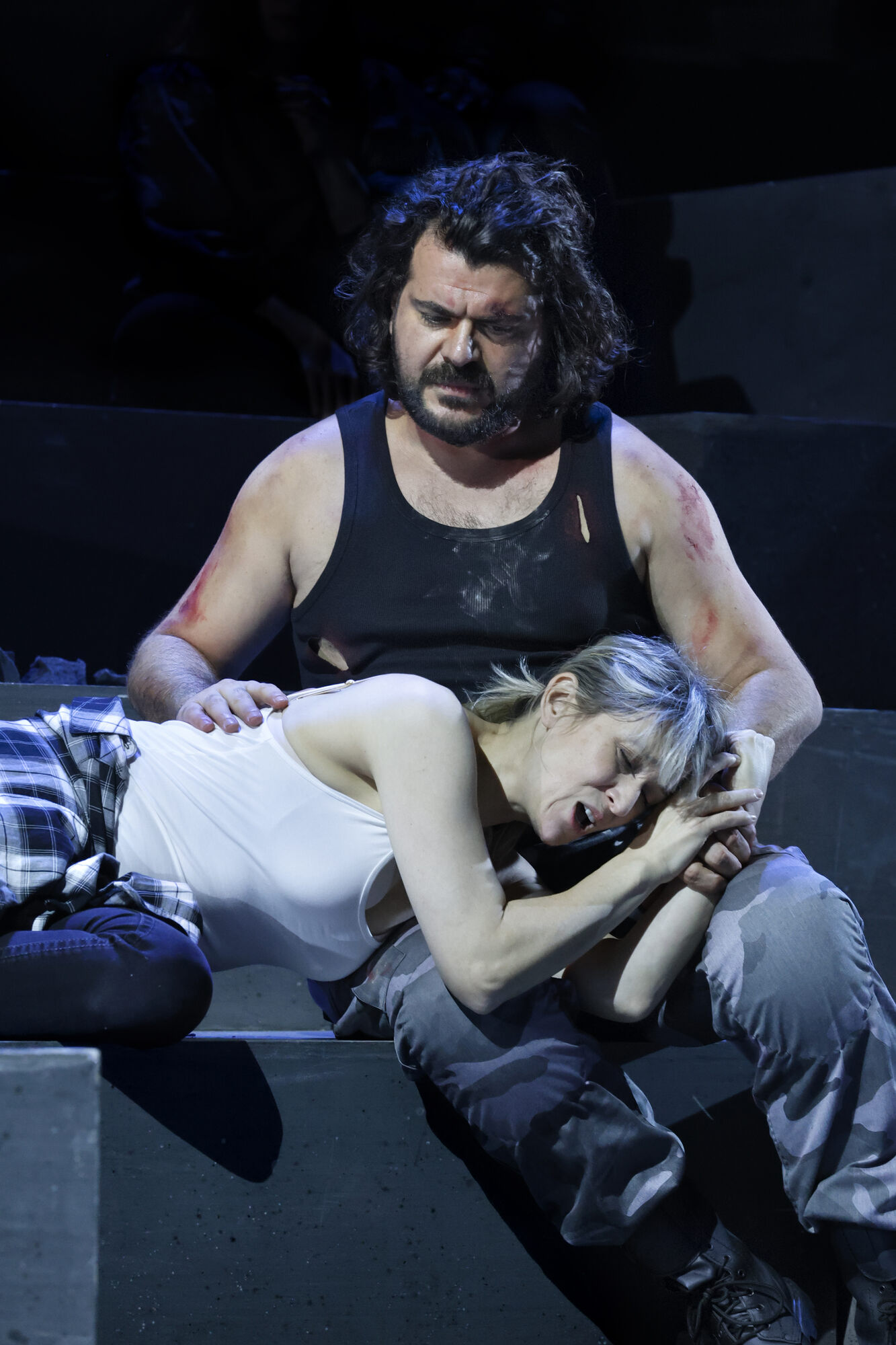
I have been following my compatriot Michèle Losier’s career for a number of years and I had very high expectations for her Iphigénie. Losier was utterly fearless in her vocalism, dispatching her declamatory opening lines, that sit high for a mezzo, with urgency and strength. And yet, here something became apparent that would be a thread throughout that evening. That was the clarity of Losier’s diction. I’ve enjoyed so many evenings in her company where she has brought out the beauty of the langue de Molière, here I have to admit that the words were not as clear as I would have expected from her. Instead, she focused on sustaining an impeccable legato and phrasing. She also used the tone to bring out the pain in Iphigénie’s situation, her ‘Ô malheureuse Iphigénie!’ was sung with such passion and desperation, yet combined with a noble line, that she brought out so much feeling through the notes and her phrasing. Similarly, she enhanced the line in ‘Ô toi qui prolongeas mes jours’ with such an eloquent line, embellishing it to bring out feeling. In the recitatives the diction was undoubtedly sharper, but I regret that she didn’t bring out the words more in those longer lines. Still, Losier’s musicianship and beauty of line gave much pleasure.
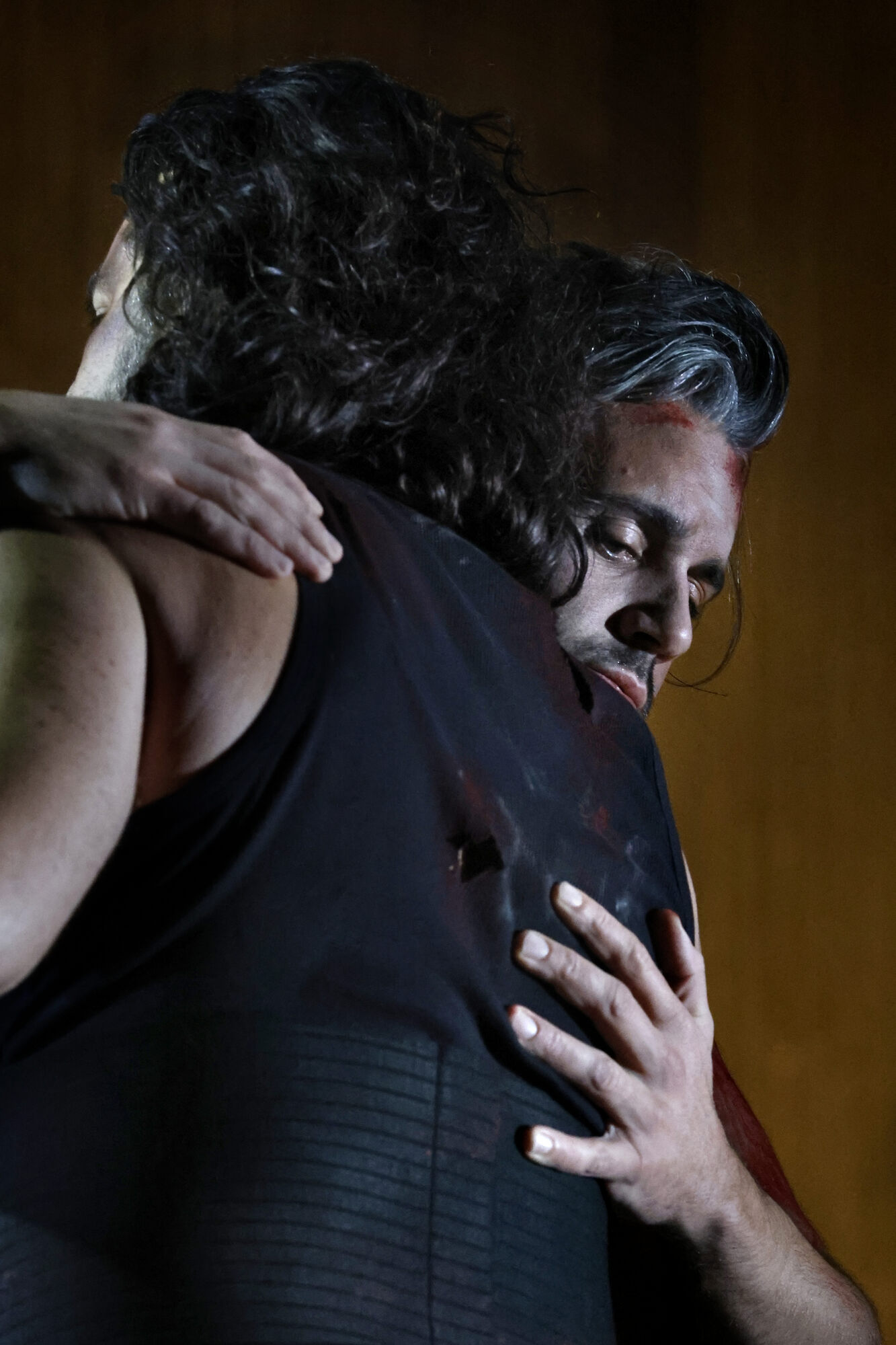
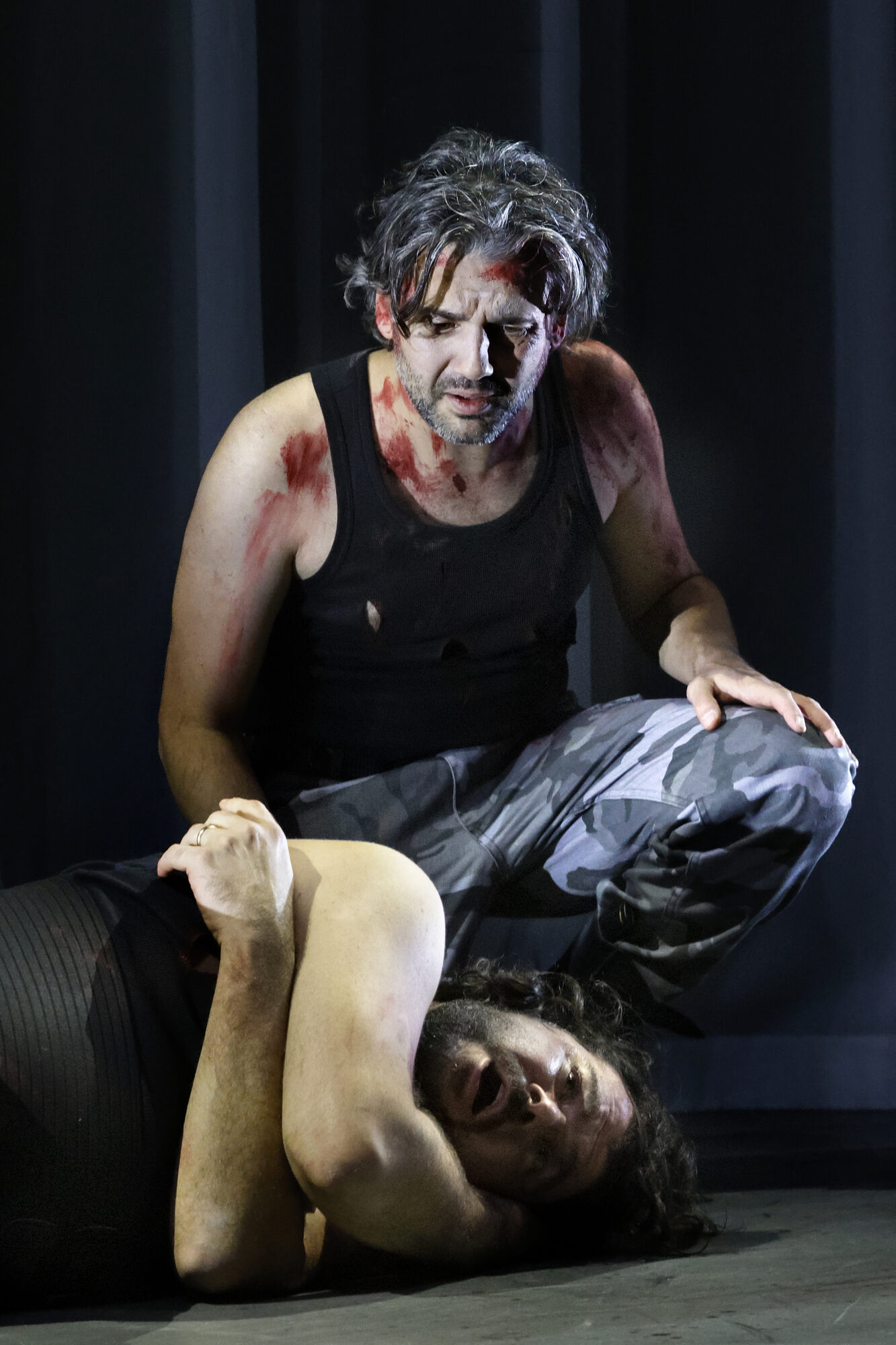
Karagedik sang Oreste with strong, masculine tone. His ‘Dieux qui me poursuivez’ was sung with real strength, the voice powering through, the text sung with so much feeling – those declamations of ‘Dieux, auteurs de mes crimes’ given such compelling force that one could not fail to be brought into Oreste’s world. The top was free and easy, capable of impressive amplitude. Karagedik was also fearless in his physicality, throwing himself around the stage with genuine abandon. The warmth between Karagedik and Van Mechelen’s Pylade was real and genuine, but I did wish that Villalobos had taken it a step further and explored the love between these two men more. That aspect felt underdeveloped in this staging. Van Mechelen sang Pylade’s music with the textual eloquence and beauty of line that one has come to expect of him. He soared with effortless ease and beauty in ‘Unis dès la plus tendre enfance’ displaying his supreme command of the passaggio, while his ‘Divinité des grandes âmes’ saw his tenor shooting out into the auditorium with forward placement and clarity of the text.
The remainder of the cast reflected the high standards we have come to expect here. Wolfgang Stefan Schwaiger threw himself into all that Villalobos asked of him, the firmness of his baritone, with words nicely forward, was admirable. Lucy Gibbs sang Diane’s brief contribution with a bright, vibrant mezzo. The remaining roles were all well taken.
Musically, this Iphigénie really has so much to offer. Bayl’s conducting and choice of tempi are pretty much ideal, while the orchestral playing throughout was superb. Losier brings so much feeling to her music that it pains me to wish she had made much more of the text, while Karagedik and Van Mechelen are two of the best singers for their roles today and both were absolutely thrilling. Villalobos’ staging, however, looks good, yet inhibits the individual performances through personenregie that relies on stock gestures and a concept that simply doesn’t make us feel. The audience response at the close was warm for the entire cast.
 operatraveller.com
[…] in my operagoing this year. Something I hope to rectify next year. I did get to see an Iphigénie en Tauride in Flanders. In Reinoud Van Mechelen and Kartal Karagedik we had a duo of Pylade and Oreste […]