Wagner – Das Rheingold
Wotan – Nicholas Brownlee
Donner – Milan Siljanov
Froh – Ian Koziara
Loge – Sean Panikkar
Alberich – Markus Brück
Mime – Matthias Klink
Fasolt – Matthew Rose
Fafner – Timo Riihonen
Fricka – Ekaterina Gubanova
Freia – Mirjam Mesak
Erda – Wiebke Lehmkuhl
Woglinde – Sarah Brady
Wellgunde – Verity Wingate
Floßhilde – Zhang Yajie
Bayerisches Staatsorchester / Vladimir Jurowski.
Stage director – Tobias Kratzer.
Bayerische Staatsoper, Nationaltheater, Munich, Germany. Sunday, November 3rd, 2024.
With the premiere last week of this Das Rheingold, a new Ring has begun in Munich. The staging has been confided to Tobias Kratzer and the musical direction to Vladimir Jurowski. Tonight, I joined for the third performance of a sold-out run in this venerable house, where Wagner’s score was first heard. To be in a house that has such a tradition with this work is a privilege, but what is an even greater privilege is that with this new Rheingold we seem to be witnessing what is a production for the third decade of the twenty-first century, both in its visuals and in the relative youthfulness of the casting.
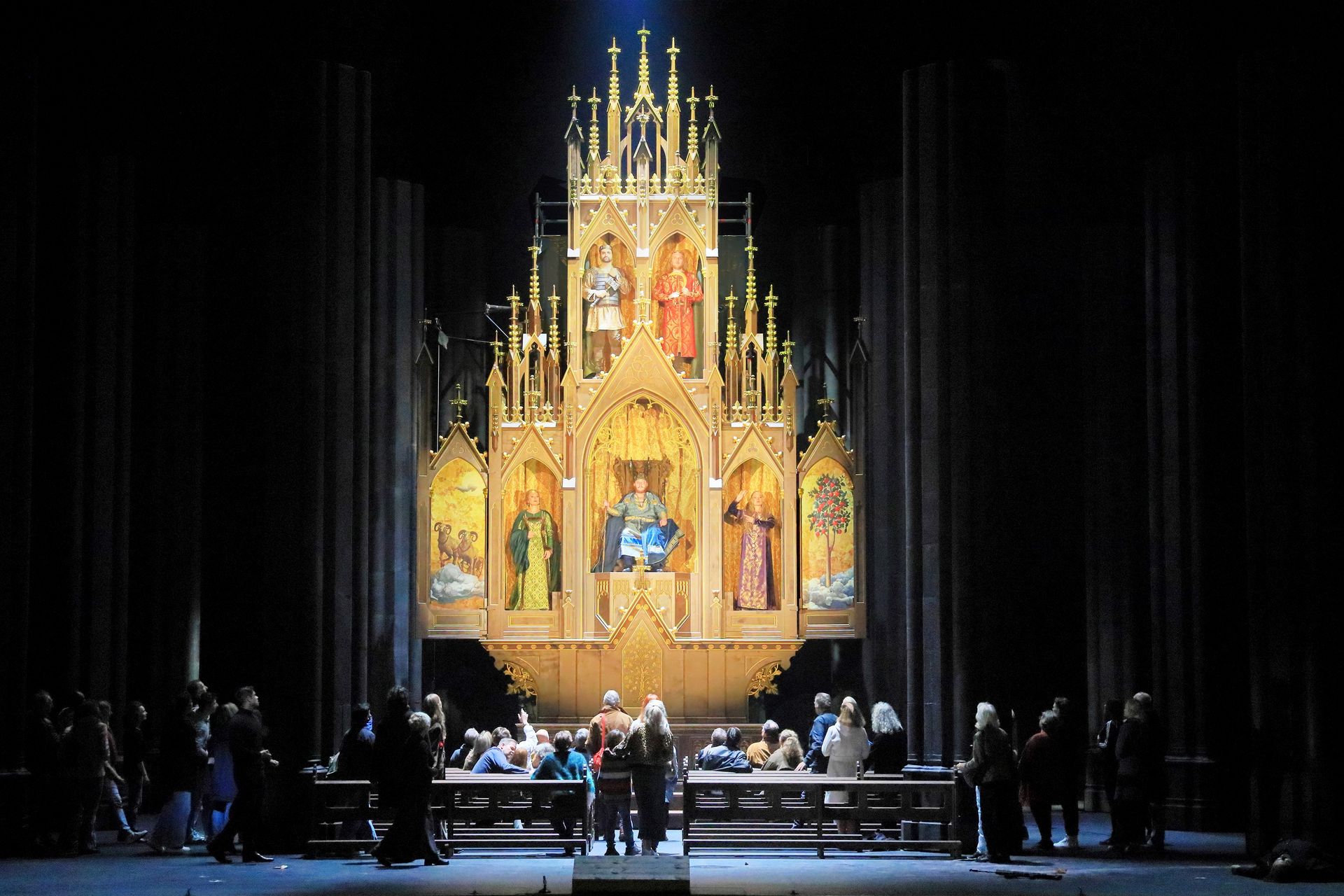
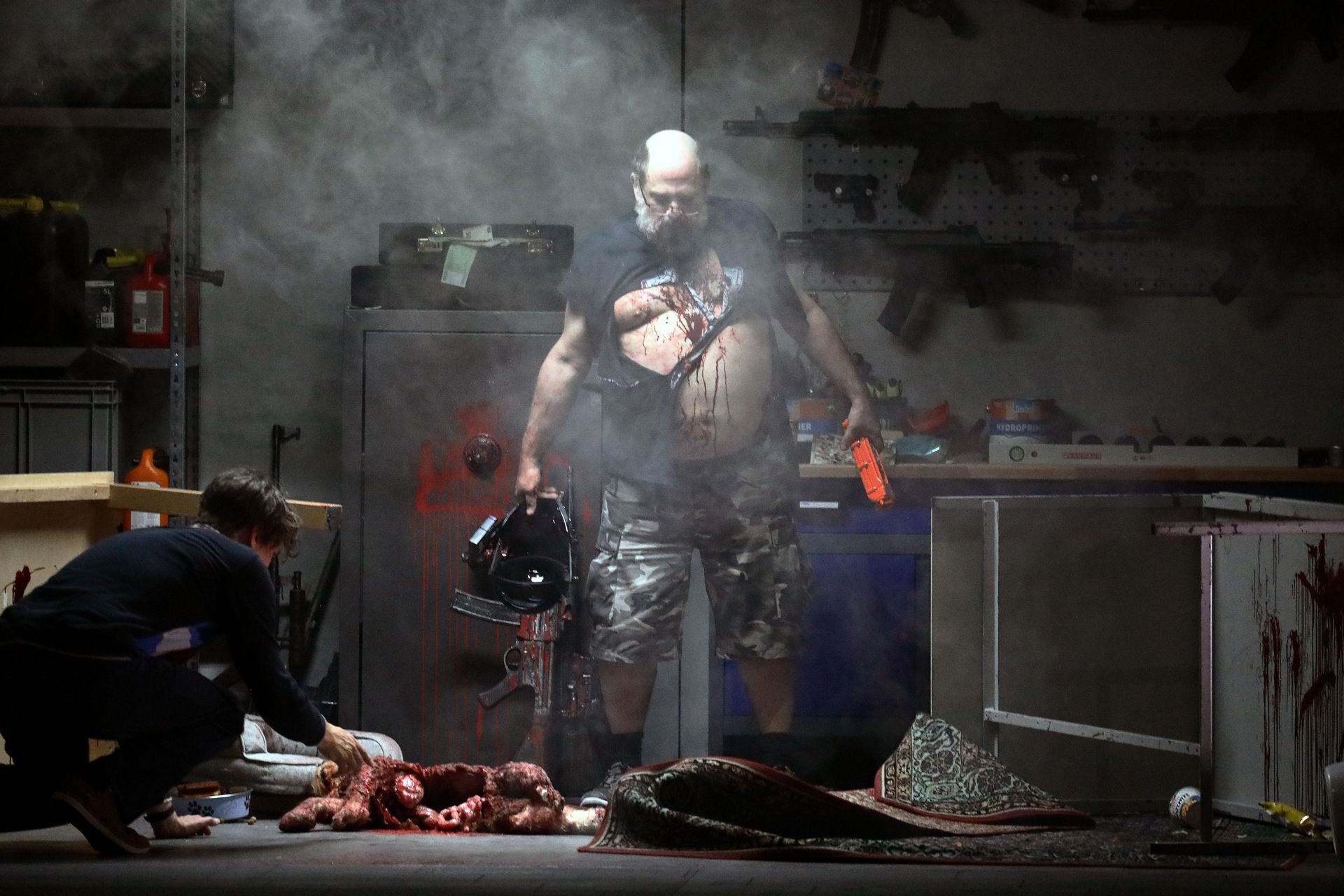
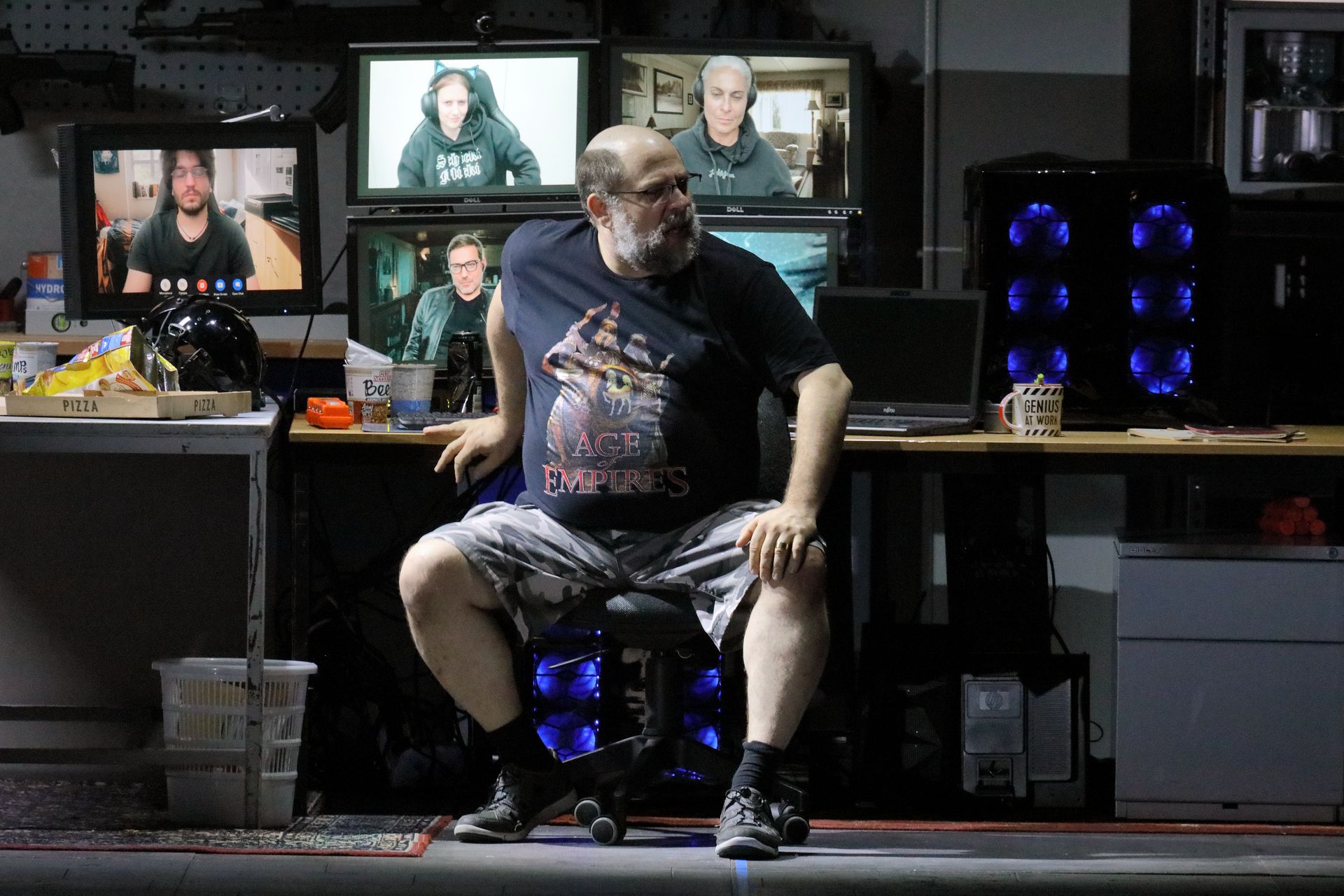
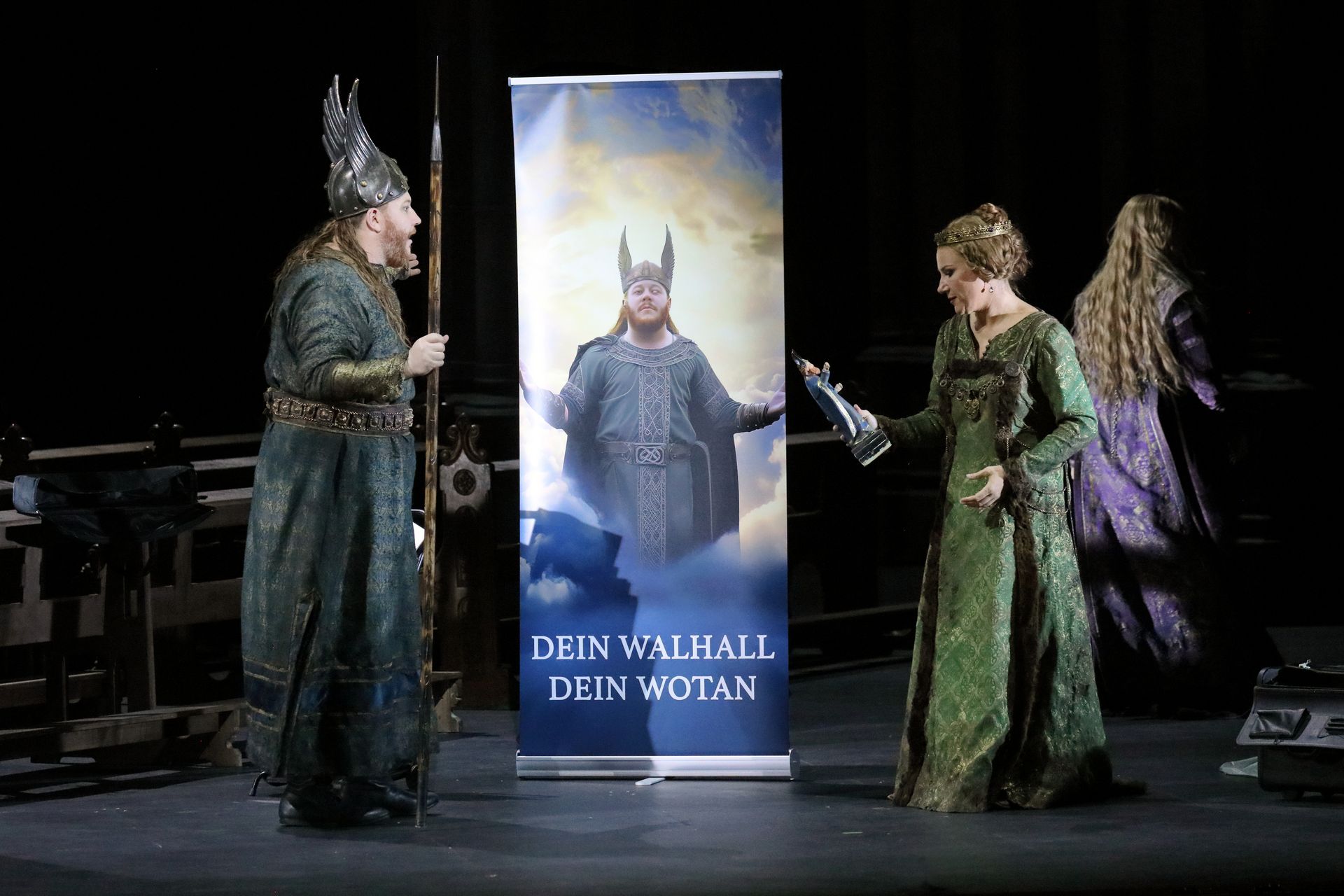
Kratzer has given us a Rheingold for our troubled times. The Rhinemaidens are seen wearing casual hoodies and taking selfies of their opening interactions with Alberich, and it’s clear that Kratzer sets the action very much in the present day. The descent into Niebelheim is accompanied with a video of Wotan taking a premium economy flight to New York, while Niebelheim itself is a garage where Alberich works from his computer selling arms. The return shows a video of Wotan arguing with a customs agent about bringing a frog back into Germany. Even though the twenty-first century setting might be seen as quotidian, for a work that deals in super-human traits, Kratzer doesn’t make it so. He brings out the fantasy inherent in the work: whether in the Rhinemaidens being able to make furniture move by waving their hands, or Alberich indeed turning into a serpent or a frog. The technical audacity of Kratzer’s staging is staggering – be it in the frequent use of pyrotechnics, the film, or the special effects he incorporates, this is very much the work of a creative team operating at the peak of its powers.
Yet, Kratzer’s staging is about so much more than special effects. His personenregie is simply outstanding, transforming every single individual on that stage into clear, believable and coherent characters. The drama is brought to life so fully, not only through the audacious visuals, but also because the characters he incorporates within are so believable. Kratzer mines deeply the relationship between godhood and power in his staging. Compared with the Rhinemaidens, Alberich and Mime in modern dress, Wotan and the gods are seen in more classic costumes, although Wotan did have to go buy a suit to descend to Niebelheim. Valhalla is a large altar piece, one that could be at home in the Sagrada Familia, upon which the gods take their seats at the end. And yet, Kratzer makes it clear that the order that the gods preside over is ultimately doomed – whether in the way that he brings out premonitions of the Götterdämmerung while Erda gave her warning, with the gods circulating around a space in flames, or the fact that Wotan’s walk to Niebelheim was accompanied by images of churches ablaze. I found this such a coherent and fascinating insight, the idea that the gods’ hold over the population was under threat through the rebelling against and questioning of the religion that gave them power. Kratzer’s staging abounds in so much insight, the sheer detail he brings out in the visuals and the acting through the course of the evening is simply staggering. He makes us consider the power relations inherent in the work, the abuse of that power, and what happens when a population rises against it. While the answer to the latter will be something that will undoubtedly become apparent later in the cycle, Kratzer has already given us so much to think about.
The evening opened with the theatre in complete darkness, the pedal E-flat that starts the journey ahead emerging out of nothingness. Jurowski led his orchestra on sensational form tonight. His tempo choices were mercurial, the gear changes imperceptible but present if one focused on them. The Rhine took form in a flowing tempo, which he pulled back with the entry of the Rhinemaidens. The range of colour Jurowski achieved from the band was seemingly limitless, bringing out the richness of the harmonies in the lower brass at the entry of the giants in a way I’d never heard before. The orchestra played the room as much as they played the score, the wealth of orchestral colour filling the space in a blaze of sound in those closing pages. The harps were divided into two groups in the stage-side boxes, and the way that the antiphonal interplay between the two groups enhanced the texture was simply magical. The evening came in at around two and a half hours, so a fairly standard running time, and yet nothing ever dragged or felt rushed. On the contrary, I could gladly have listened it immediately again. The quality of the playing tonight was exceptional.

Nicholas Brownlee is a new name to me, but he has a burgeoning career in Germany, having been an ensemble member in Karlsruhe and is now based in Frankfurt. His Wotan most definitely held the stage. He sang with scrupulous attention to the text, the words absolutely clear, in immaculate German. Perhaps with time, he will deepen his use of the text to colour the words more – there was a slight sense here of him having mastered the text but not yet completely living it. The voice is in fantastic shape, big and resonant, absolutely even from top to bottom. The top rang out powerfully, filling the house in a wave of sound, while the bottom was rich and full. Brownlee is still relatively young, singing a role that has ruined many voices over the years. He’s a major talent and I very much hope he will nurture it.
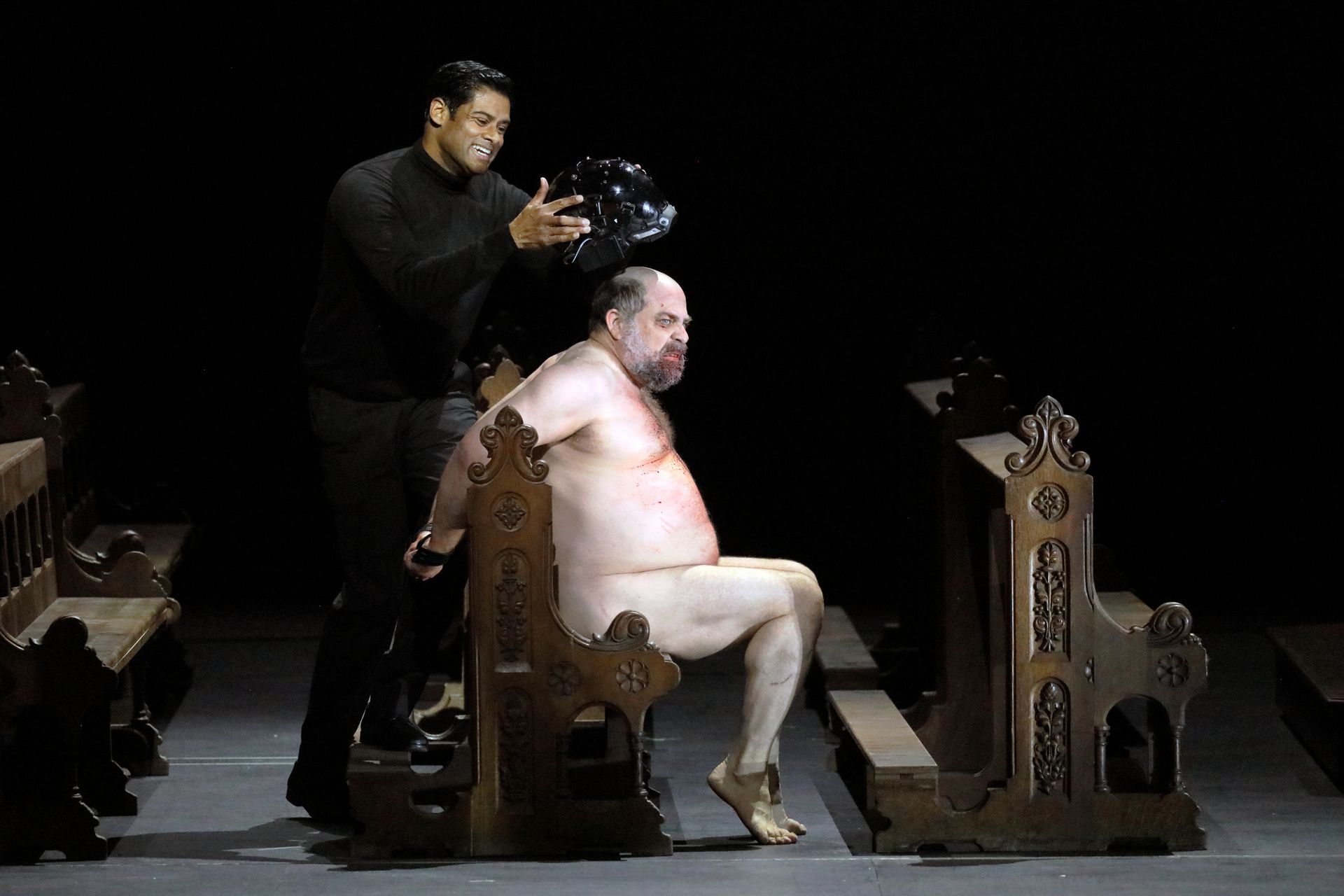
Sean Panikkar gave us a superb Loge. I haven’t always been convinced by Panikkar in the past but tonight he completely won me over. The role is ideal for his focused, bright, medium-weight tenor, with a plangent edge to the tone. He also sang his music in impeccable German, the words always forward and he coloured the tone with care and attention. He gave us a real sense that he was living his character, in all of his irony, and in his half-god status together with Kratzer, brought out in his final lines that he may be part of the downfall of the regime – ‘wer weiß was ich tu’. Ekaterina Gubanova brought her customary plush mezzo and verbal acuity to the role of Fricka. The middle of the voice is so rich and generous, although the bottom was somewhat less rounded and I longed for her to dip into a fuller chestiness. Mirjam Mesak sang Freia in a diamantine, bright soprano, and focused tone. Milan Siljanov sang Donner in a firm baritone, although he was occasionally casual with pitching, while Ian Koziara sang Froh with lyrical charm.
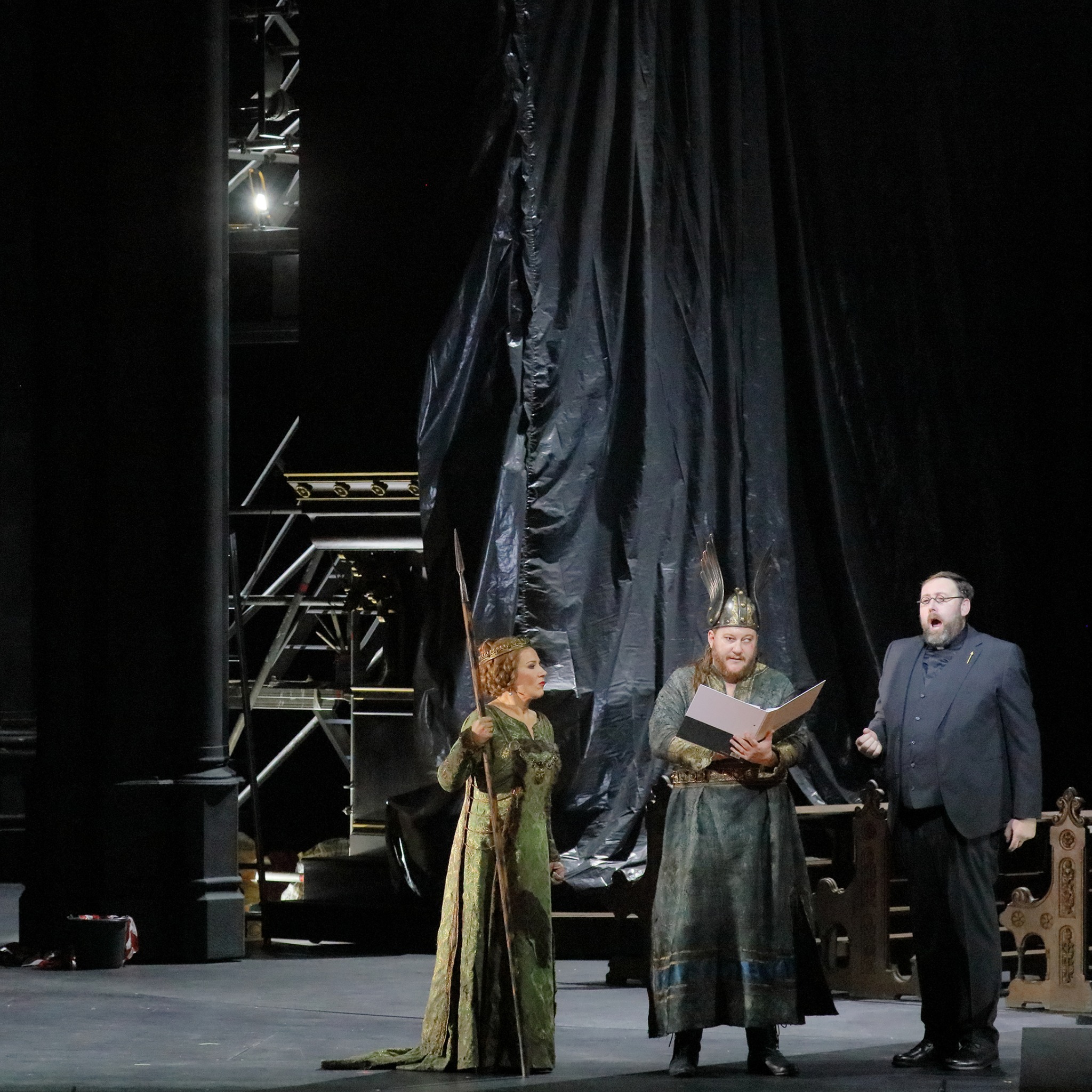
Markus Brück took a few moments to find his best form as Alberich, the voice initially rather grey and colourless. He then grew into a towering performance of great physical bravery, appearing naked having transformed back from the frog for his confrontation with Wotan and Loge. He dispatched his music with powerful intensity and generous force, the voice ringing out with ease, and so much communicated through that union of text and physicality. Similarly, Matthias Klink gave us a textually clear Mime, although he did have a tendency to sacrifice the integrity of the tone in the service of characterization. Wiebke Lehmkuhl gave us a striking Erda, her warnings intoned in a contralto of rare beauty and fullness of tone. We also had two imposing giants in the form of Matthew Rose as Fasolt and Timo Riihonen as Fafner, both dressed as priests and prostrating themselves in front of Wotan. Both Rose and Riihonen sang with big, booming tone and clarity of text. The Rhinemaidens, Sarah Brady, Verity Wingate and Zhang Yajie were energetic and charming in tone.
With this Rheingold, Kratzer and Jurowski have given us the start of a Ring that promises so much. Kratzer’s staging is a parable on the power of religion and corruption, and what happens to those within the power structure when the populace starts to question and rebel. Yet he also makes it not just about the quotidian, but also the fantasy inherent in the work. The sheer detail of his personenregie, the immense teamwork that was clear through the special effects (pyrotechnics and film) and the sheer imagination and ability to realize it, were absolutely staggering. Musically, it was an evening that had so many multiple rewards, the clarity of the text, the superlative orchestral playing, and Jurowski’s organic direction. If you can get to Munich and are lucky enough to be able to secure a ticket, run. This is a major evening in a production I predict will come to be seen as seminal in the performance history of this work.
 operatraveller.com
[…] undertook the start of his journey, which will resume in a couple of years’ time. His Rheingold was superb. It genuinely felt that one was witnessing a Ring for the second decade of the […]
[…] had the pleasure of seeing Nicholas Brownlee as Wotan in Das Rheingold in Munich last year and was keen to hear him again. His Holländer tonight brought many of the […]