Donizetti – Don Pasquale
Don Pasquale – Roberto de Candia
Norina – Giulia Mazzola
Ernesto – Javier Camarena
Dottor Malatesta – Dario Sogos
Un notaro – Fulvio Valenti
Coro dell’Accademia Teatro alla Scala, Orchestra Donizetti Opera / Iván López-Reynoso.
Stage director – Amélie Niermeyer.
Festival Donizetti Opera, Teatro Donizetti, Bergamo, Italy. Friday, November 22nd, 2024.
The end of November can only mean one thing for opera lovers: the Festival Donizetti Opera in the beautiful city of Bergamo, which this year celebrates its tenth edition. I’ll be attending two of the three mainstage productions in this year’s festival, starting with this evening’s Don Pasquale. What was distinctive in the casting tonight, was the fact that the festival cast two very experienced Donizettians, Roberto de Candia and Javier Camarena, in the title role and as Ernesto, with two exciting youthful talents, Giulia Mazzola as Norina and Dario Sogos as Malatesta.
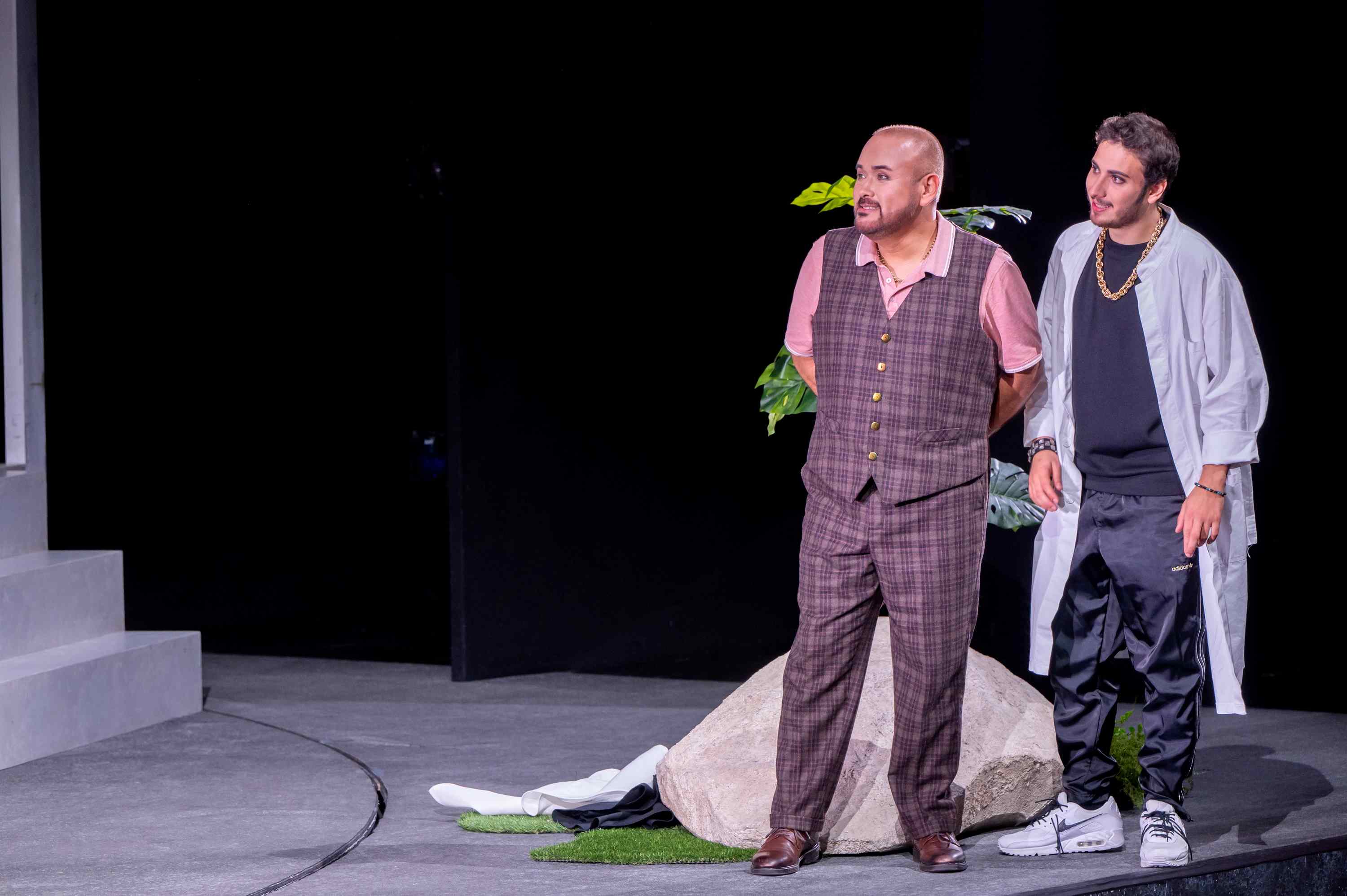
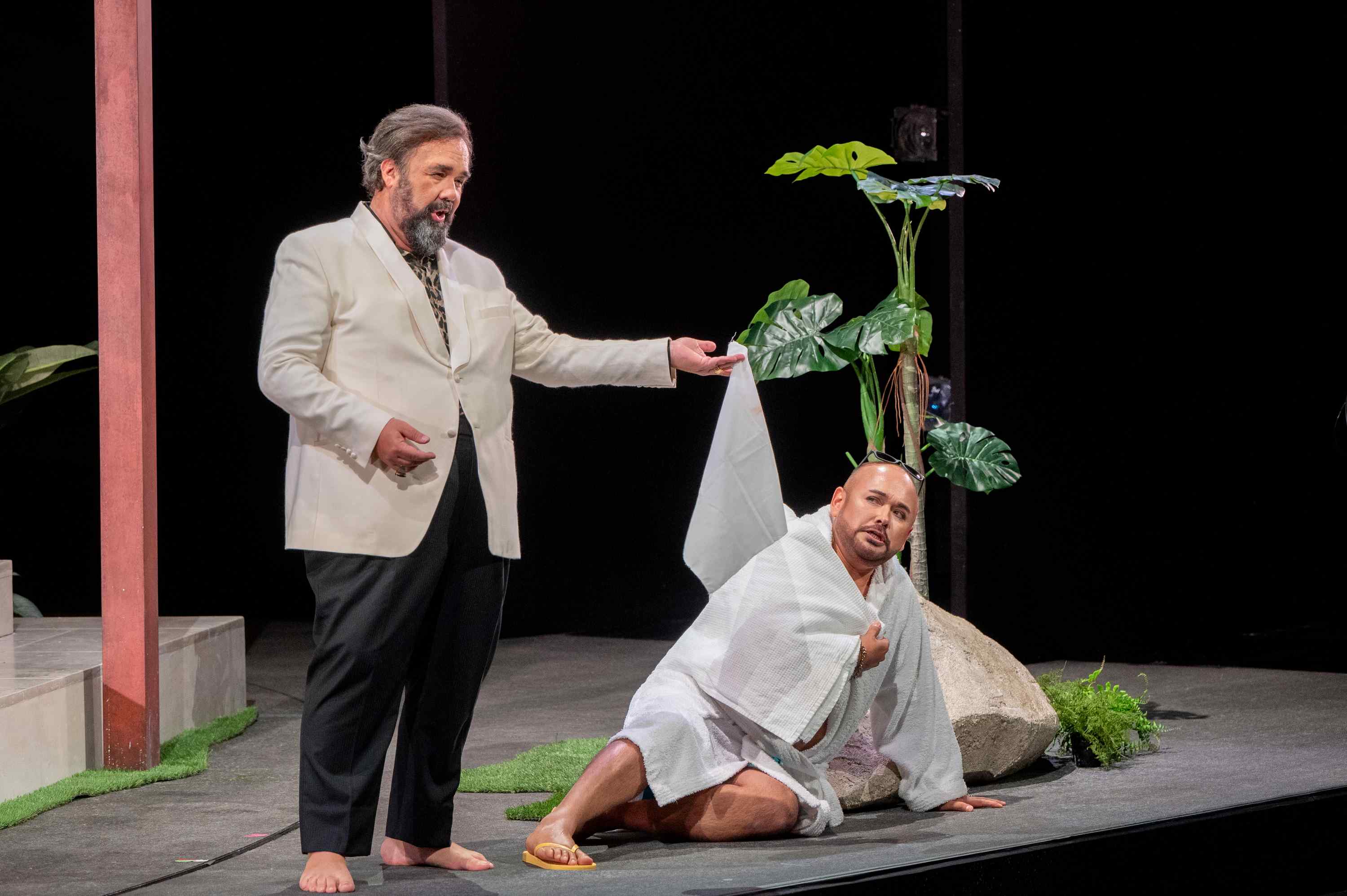
The stage direction was confided to Amélie Niermeyer, in a coproduction with the Opéra de Dijon. She sets the action in what seems to be a modern, palatial villa perhaps on the Adriatic rather than in Rome. Three servants constantly move around during the course of the evening, while the set itself revolves noisily, giving different perspectives on the action. It struck me that Niermeyer’s direction was rather hyperactive, always needing to provide additional visual interest – whether in the revolving set, or the actions of the servants mulling around. From my seat in the middle of the Platea of this exquisite theatre, her placement of singers on stage was not always optimal. She frequently had them sing at the back, which meant that they were often inaudible over the orchestral sound; though perhaps this was less of an issue for those sitting higher up. Furthermore, it seemed that Niermeyer displayed little awareness of how singers actually produce sound. Mazzola sang Norina’s opening scene, crammed into a tiny car, lying on her side, while Camarena had to pour out long lyrical lines while reclining, prone, against a rock.
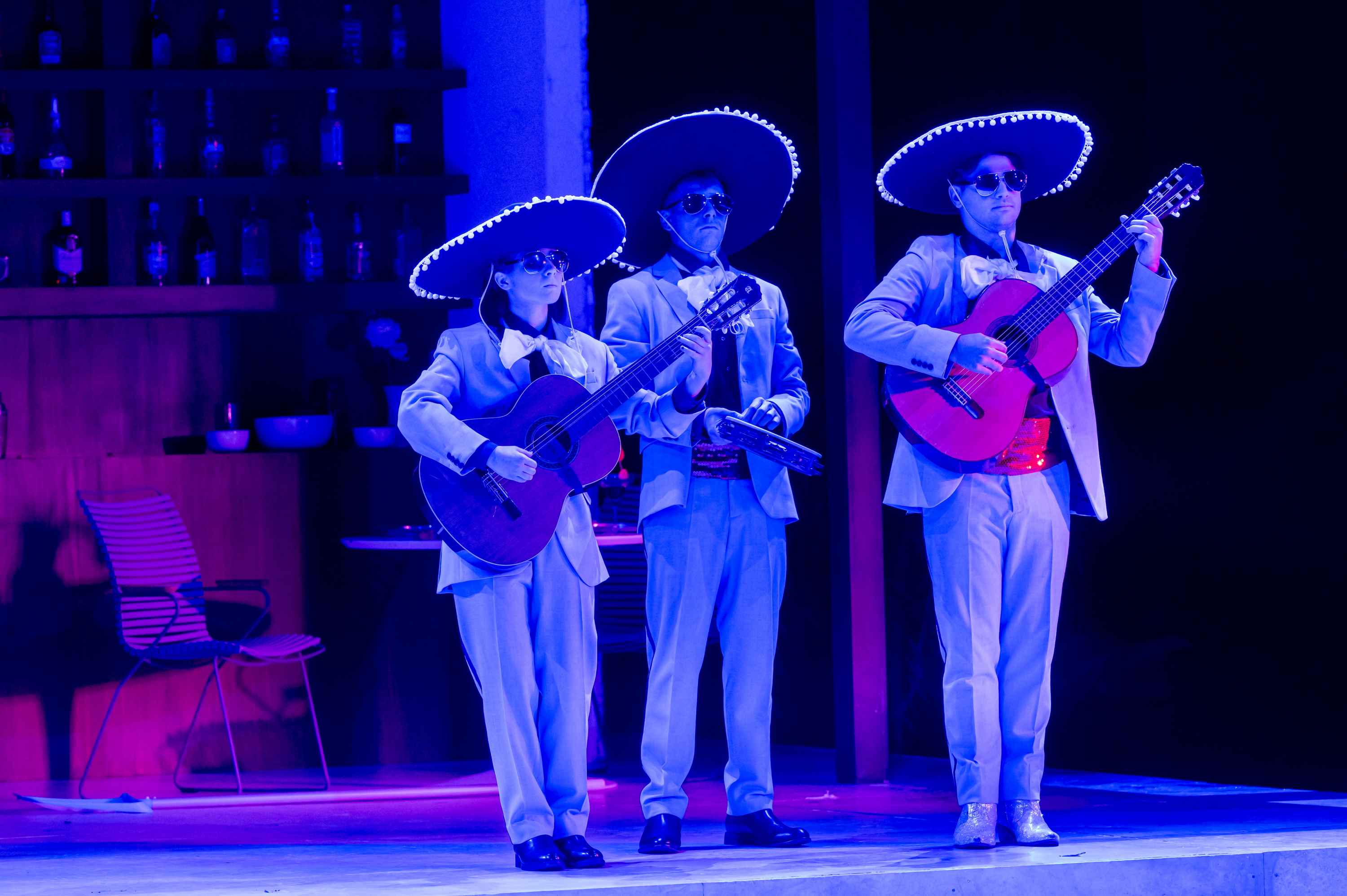
There was an international audience in the house tonight – I heard a lot of Swiss (both German and French) and a fair bit of British English. Perhaps that explains why laughs were in very short supply, because simply put, this was one of the least funny Don Pasquales I’ve seen. It seemed that Niermeyer was unsure of whether she wanted to make this a comedy or a tragedy. Having Don Pasquale and Ernesto as moneyed mature men who hang out around a pool, complete with fake tan for Ernesto, perhaps was Niermeyer’s way of demonstrating how money can lead to a lack of social awareness. And yet, the final scene with Pasquale sitting alone with his plants, while everyone else celebrated, seemed to suggest that this was a tragedy, even if this had been barely explored through the evening. Niermeyer closed the evening with Norina getting into her car and driving off, leaving Ernesto behind. It felt both cynical and a non sequitur all that had gone before. Was Niermeyer attempting to say that Norina was a gold-digger who took advantage of vulnerable men? It’s hard to say, and this was the biggest issue with Niermeyer’s staging: the sheer lack of narrative cogency and the inability to illustrate whether this is a comedy or a tragedy. There was, however, one moment where it seemed to come together, and that was when Camarena sang ‘Com’è gentil’. Suddenly, we had some atmospheric lighting and, accompanied by two guitarists dressed as mariachis, the evening seemed to take to higher plane – albeit as it had almost ended.
Musically, there was much to enjoy. Iván López-Reynoso conducted the festival orchestra in a delightfully vigorous account of the charming sinfonia. There, he gave us excellent precision of attack, lively tempi and a genuine sense of rhythmic impetus. The violins were slightly less than unanimous in approach to tuning in the higher lines, but this was a very minor quibble. I did, however, find that as we went through the evening, López-Reynoso’s tempi had a tendency to sag in places. For instance, the scene where Sofronia was introduced to Don Pasquale, could have been injected with more dramatic impetus and kept zipping along. However, he also injected the patter duet with undeniable energy. It was a rather inconsistent reading, then, which seemed as a whole with the staging. The chorus, provided by the Accademia Teatro alla Scala and prepared by Salvo Sgrò, was absolutely superb. They sang with wonderfully mellifluous tone, impeccable tuning, and outstanding precision of attack.
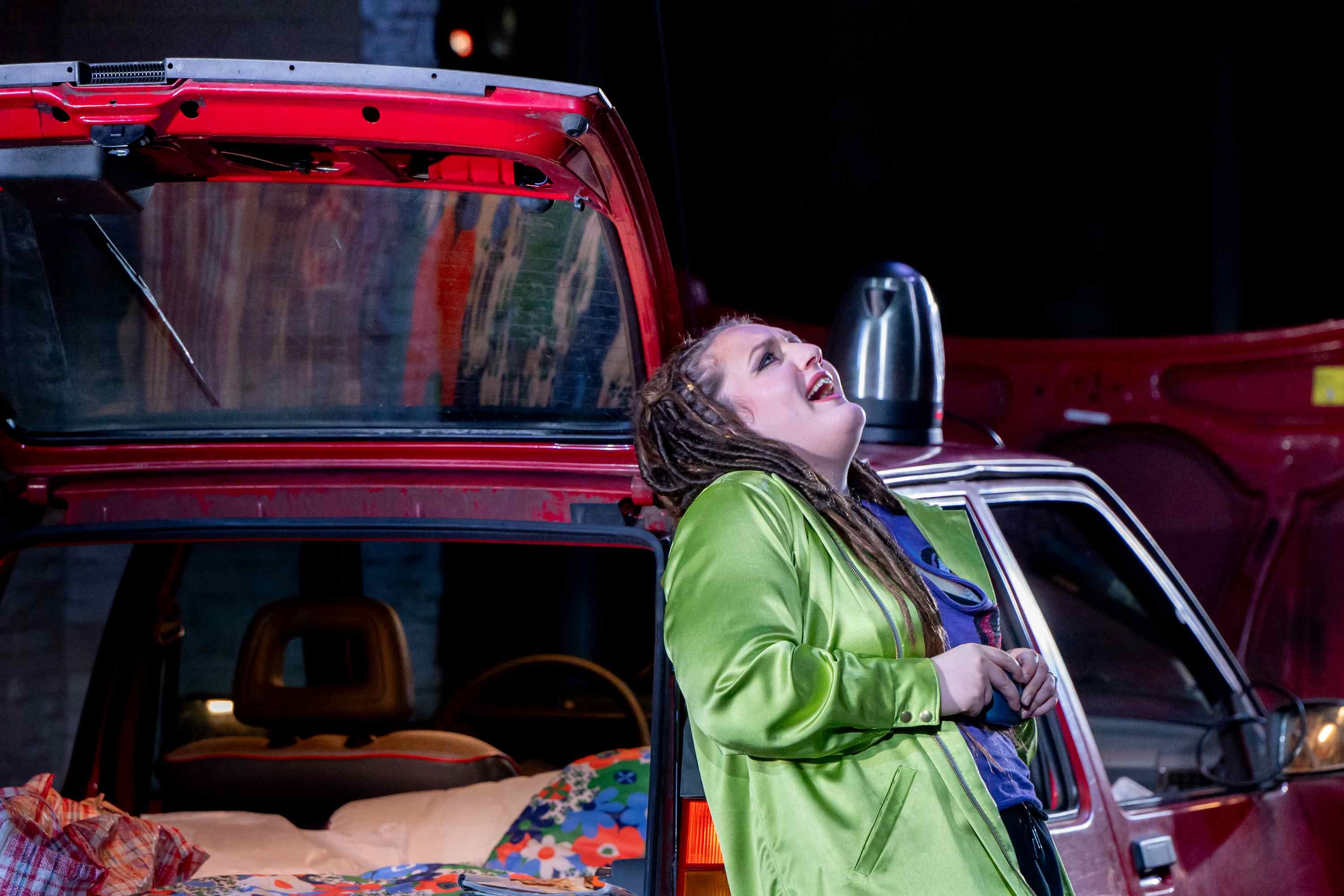
One of the biggest pleasures of attending this festival for me is getting to appreciate a ‘star is born’ moment. In 2019, it was Xabier Anduaga in Lucrezia Borgia. In 2021, it was Caterina Sala in Elisir. This year it’s Giulia Mazzola as Norina. In a time when we have a tendency to worry about the future of this glorious artform, Mazzola is proof that the great Italian lyric tradition still has some of its best days ahead of it. Her voice is wonderfully placed, bright and forward, and rang through the theatre with ease – even when placed at the back of the stage. The tone itself has a delicious smile to it, with overtones of strawberries and cream. Her coloratura is impeccable, able to cross and negotiate the registers with consummate ease and her diction is absolutely immaculate, every word clear and filled with meaning. I’m not yet convinced that Mazzola is the owner of a genuine trill and the very top lacks a little bit in spin, but these are things that will come with time and hard work. Make no mistake, Mazzola is the real thing and a very exciting talent. I very much hope I can see her Susanna soon.

The other younger singer in the cast was Dario Sogos as Malatesta. He has all the bel canto tools at his disposal – an impeccable legato, excellent breath control which allows him to sustain those long Donizettian lines, and registers fully integrated. The voice, as of yet, is a bit narrow, but he’s also very young and this will come with time. Another name to watch. As Don Pasquale, De Candia brought his customary stage presence and verbal acuity to his assignment. He dispatched the patter of his duet with Sogos with precision and fluency, although, perhaps as a result of Niermeyer’s staging, sadly the audience wasn’t engaged enough to ask for a bis – this first time this has happened in the many times I’ve seen this opera. De Candia worked hard to make his Don Pasquale a much more rounded character, his acting making visible the pain of Sofronia’s betrayal. Camarena sang Ernesto with his customary elegance of line. He wasn’t helped by Niermeyer’s direction, there were moments where the breath wasn’t optimally supported due to him having to recline on stage, and there was a troublesome buzz in the tone at fuller volumes at the start of the evening, which later disappeared. His ‘Com’è gentil’ was absolutely exquisite. Camarena sang it with long, seemingly endless lines, embellishing the tone and bringing out a beauty that was simply delightful.
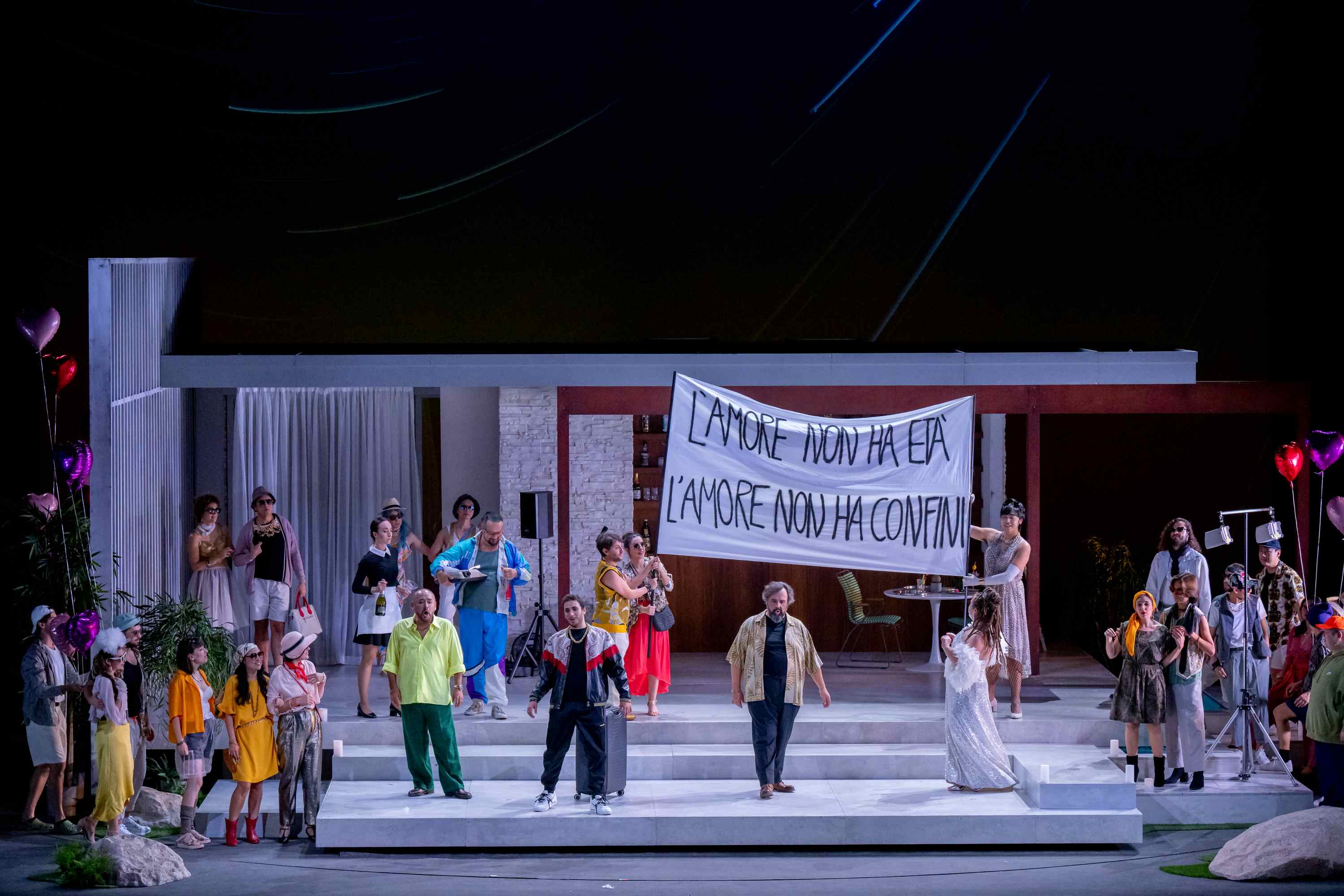
This was something of an inconsistent evening. Niermeyer’s staging was problematic, simply because it seemed she was unsure of what she wanted it to be. It was a very cold evening in Bergamo, but I don’t think that was the reason why the audience reaction during the show was so frigid. It seemed that Niermeyer was determined to make something more of the narrative, yet wasn’t sure quite what. Musically, there were also inconsistences. There was so much that was good in López-Reynoso’s conducting, which made it all the more frustrating that he allowed the pace to sag so frequently. Vocally, however, it was more than worthy of the standards of the festival and once again, it has introduced us to a very major and exciting talent in Mazzola. The audience reaction during the show was muted but the closing applause was relatively generous.
 operatraveller.com
[…] her movements, giving a sense that her fate had already been predicted. Unlike last night’s Don Pasquale, it was clear that Langridge’s direction of the cast on stage was much more singer-friendly. […]
[…] new bel canto talent. I was introduced to the enchanting soprano Giulia Mazzola as Norina in Don Pasquale, in a production that tried to add on a narrative layer that the work couldn’t sustain. In […]