Donizetti – Roberto Devereux
Elisabetta – Jessica Pratt
Il duca di Nottingham – Simone Piazzola
Sara – Raffaella Lupinacci
Roberto Devereux – John Osborn
Lord Cecil – David Astorga
Sir Gualtiero Raleigh – Ignas Melnikas
Un famigliare di Nottingham / Un Cavaliere – Fulvio Valenti
Coro dell’Accademia Teatro alla Scala, Orchestra Donizetti Opera / Riccardo Frizza.
Stage director – Stephen Langridge.
Festival Donizetti Opera, Teatro Donizetti, Bergamo, Italy. Saturday, November 23rd, 2024.
For my second evening at this year’s tenth edition of the wonderful Festival Donizetti Opera, it was time for Stephen Langridge’s staging of Roberto Devereux. Once again, the festival has assembled a cast of notable bel canto specialists – Jessica Pratt as Elisabetta, Simone Piazzola as Nottingham, John Osborn in the title role, and a very welcome discovery in the form of Raffaella Lupinacci as Sara, all placed under the direction of the festival’s Music Director, Riccardo Frizza.
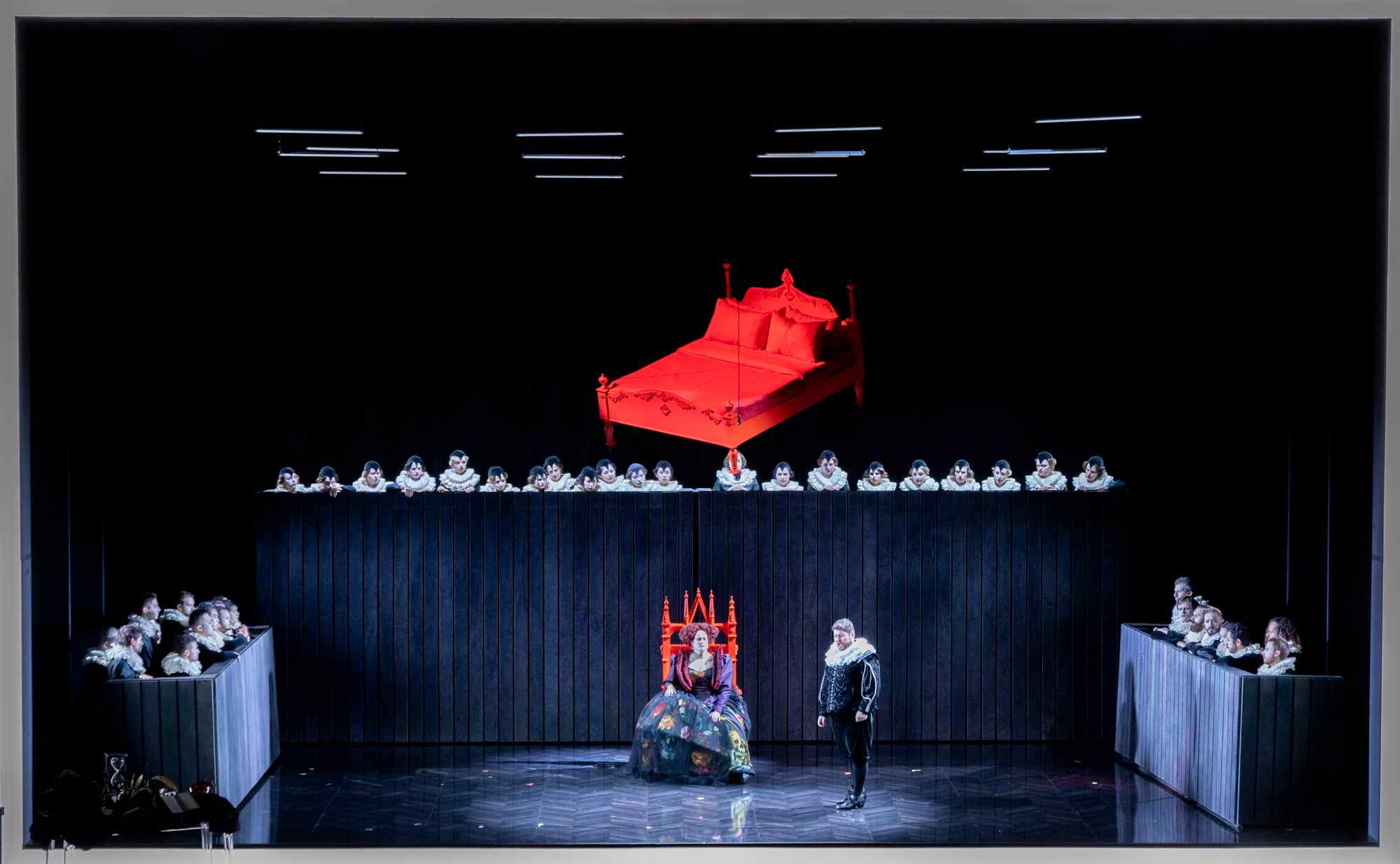
Langridge has given us a very visual staging, yet does so on a stage that is frequently sparse. He used a light frame around the proscenium in order to allow characters to emerge in and out of darkness at the rear of the stage, in an almost imperceptible way. In so doing, it felt that he intimated that Elisabetta’s grasp of sanity was precarious from the very start. Even more so, in that frequently on stage a life-sized marionette dressed in the same costume as Elisabetta appeared, mirroring her movements, giving a sense that her fate had already been predicted. Unlike last night’s Don Pasquale, it was clear that Langridge’s direction of the cast on stage was much more singer-friendly. The set, by Katie Davenport, gave the singers surfaces upon which to project the sound, notably wooden walls that helped significantly with the acoustic, so that the audibility issues that I experienced the previous evening were not present here. The costumes, also by Davenport, were Elizabethan in nature, yet this did not feel like some kind of museum night of the opera. Instead, thanks to the convincing personenregie, we were given an evening of high drama and high passion.
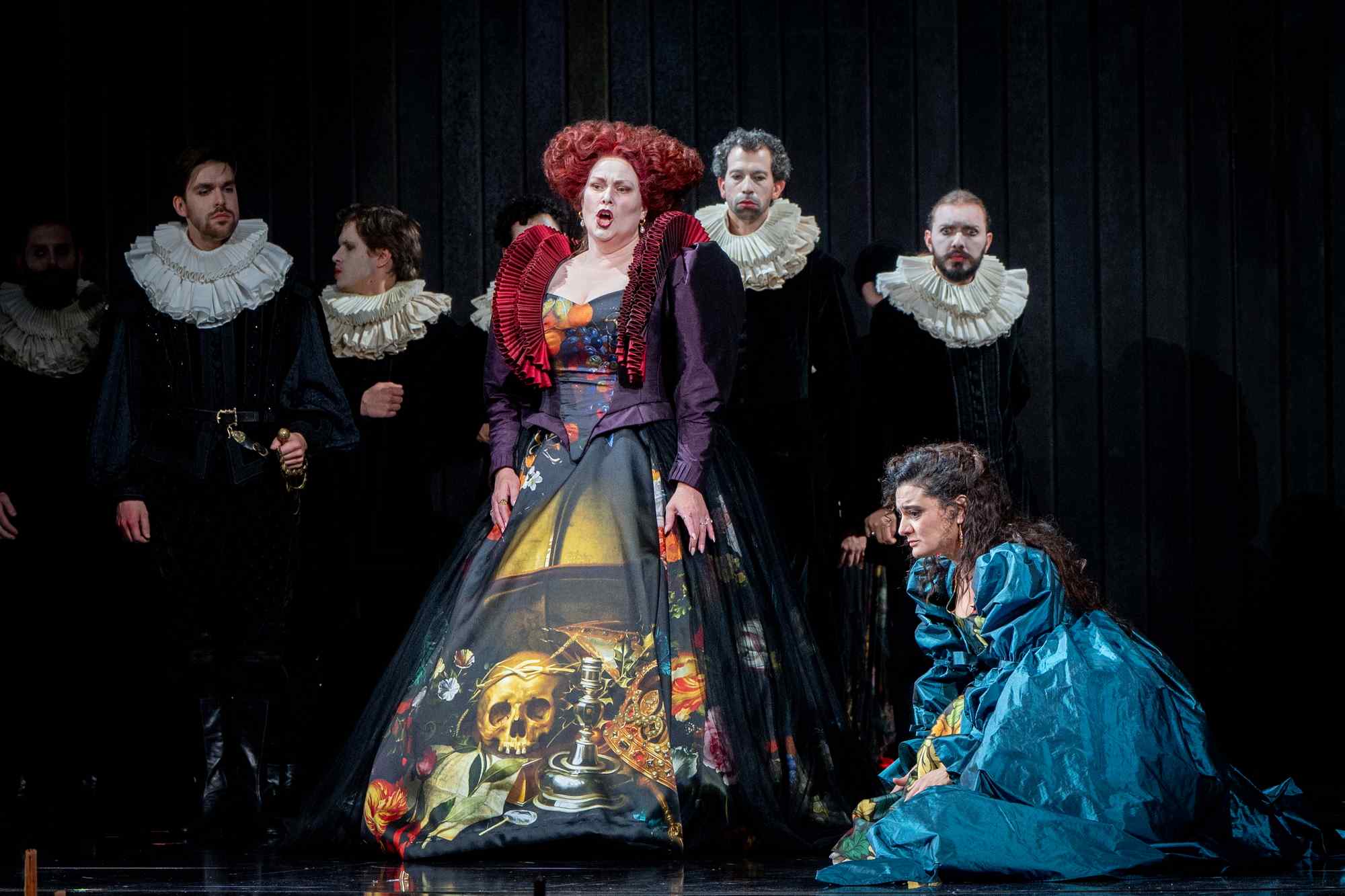
The focus on the visual gave us some striking stage pictures, which generally amplified the music. The way that the strip lights descended to the ground in the final scene gave the impression of Elisabetta being imprisoned in her role as Queen, as much as Devereux was in his physical prison. The bed hanging from the ceiling at the start of Act 2, above rows of peers of the realm, seemed to suggest that physical relations were incompatible with statecraft. So much, in Langridge’s staging was suggested, rather than illustrated. In this respect, he gave us the fragments of the narrative, allowing us to recreate it in our minds, rather than forcing us to put the pieces together of something that did not actually add up. That said, there was one moment where I felt things didn’t work and that was in the closing moments of Act 2. There we had Elisabetta’s skeletal marionette mounting a young man in his underwear on the bed, while the big ensemble took place around them. Sadly, that was the point where the staging took attention away from the music, meaning that we lost the impact of Pratt’s sensational, theatre-filling high E, simply because one wondered what on earth was going on. Still, on the whole this was a staging that worked well.
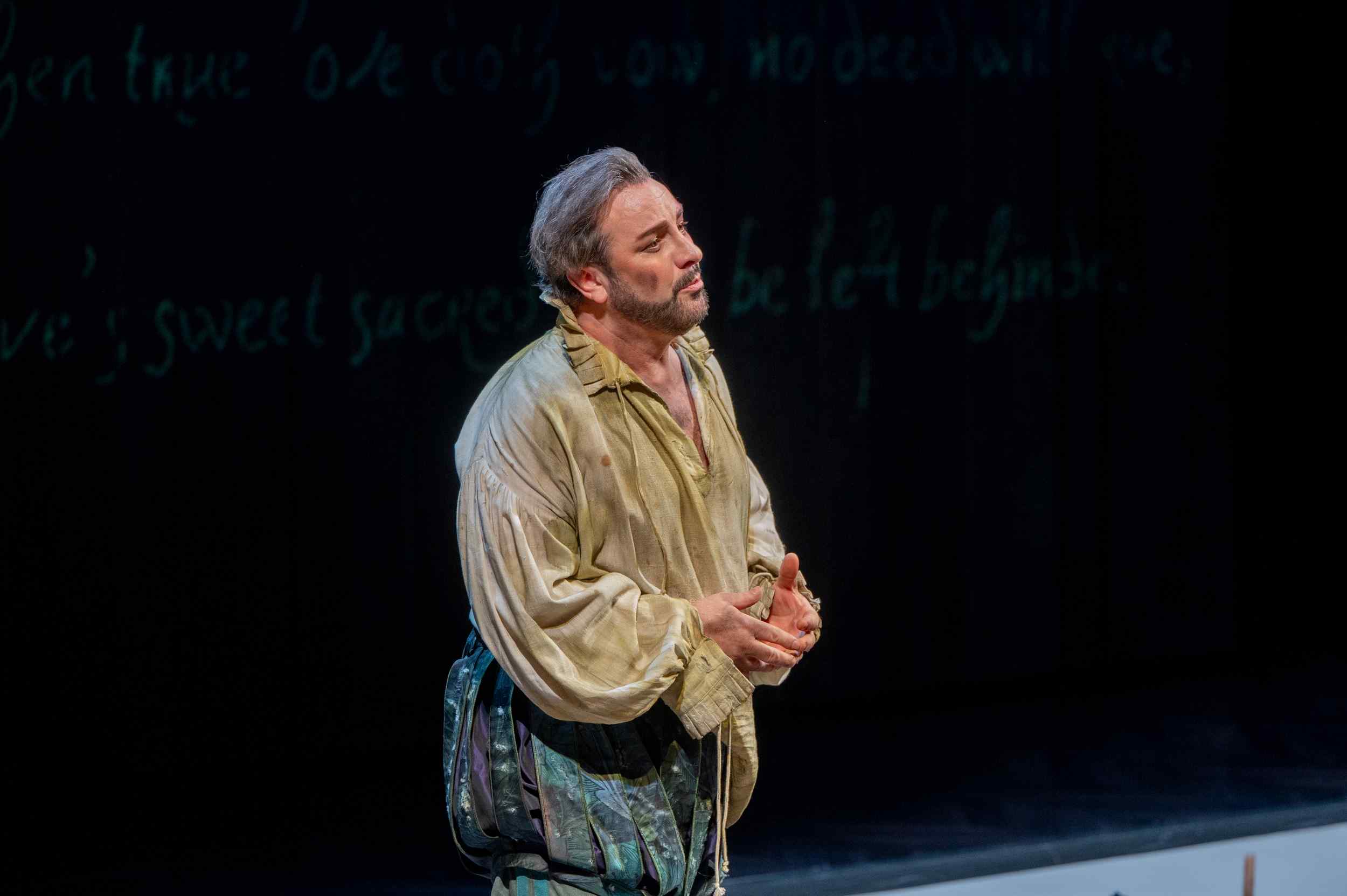
Musically, this was an evening that showed the festival in the very best light. Frizza led an orchestra that sounded like a completely different band to last night’s. The quality of the playing was superb and Frizza’s tempi felt well-nigh ideal. It was almost as if his presence was imperceptible, in the sense that there was a total union between what we heard from the pit and what we heard from stage. Frizza got his musicians to use a wide variety of colours, asking the strings to play without vibrato as Elisabetta lost her grasp of sanity in the final scene, bringing out the daring originality of Donizetti’s writing. There was also a sense of Frizza giving us long, lyrical lines in the winds, over a constantly driving rhythmic framework from the strings. He also got the cellos to bring out a genuine cantabile beauty under the surface in the Sara-Nottingham duet. The brass and percussion played with precision all night. Frizza also encouraged his singers to embellish their lines, which they did with the utmost musicality.

Pratt’s Elisabetta dominated the stage from the very start. Her soprano is perhaps not the most natural fit for the role, it lacks the ideal warmth and amplitude, being narrow and focused instead. And yet, like all great artists, Pratt knows how to make the role her own. She was unflinching in her big confrontation with Nottingham. Yes, the vibrations widened in the middle, yet she hurled out the text with ferocious force. She also didn’t hold back on pulling out a fearless chestiness where required. Naturally, Pratt gave us all the possible acuti, to the audible pleasure of the crowd who reacted to her with roars of ‘brava’ when she pulled them out, filling the theatre in a glow of sound. If I were to be churlish, there were moments where her tuning skated around the notes rather than sat on them, in the longer lines, but Pratt has all the bel canto tools at her disposal – including a genuine trill. This was a big night for her and she gave so generously of herself.
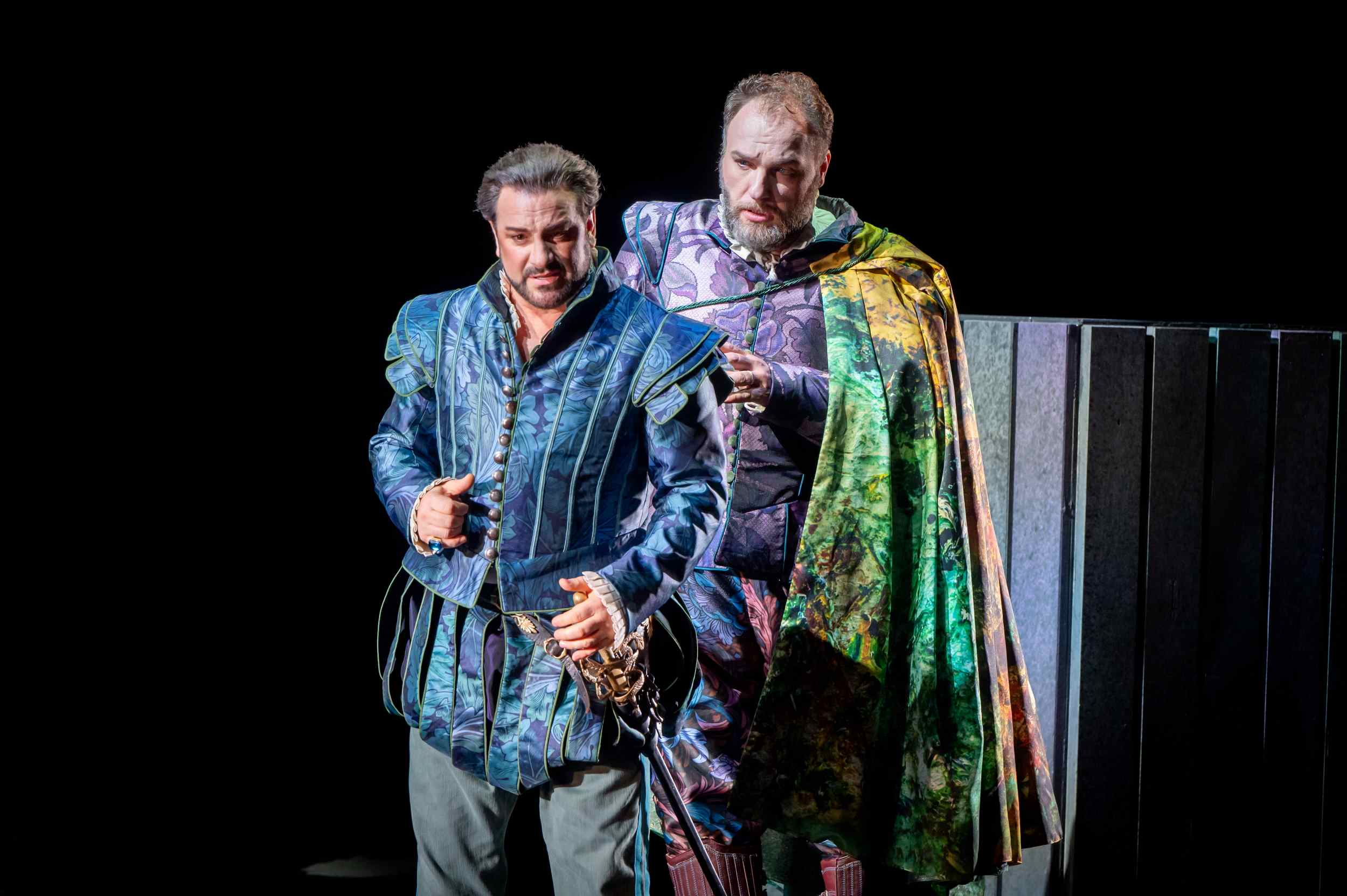
As indeed did Osborn as Devereux. He sang with the utmost musicality and was equally fearless on top. His tenor is also perhaps not the most refulgent in tone, yet what he does is use the dynamics, a tasteful use of voix mixte, and impeccable phrasing to colour the music with so much detail. This approach was exemplified in his big ‘Come uno spirto angelico’, in which he pulled back on the volume, coloured the tone with voix mixte, displayed a total command of his phenomenal breath control, and filled the text with so much meaning. Naturally, the audience rewarded him with a frenzy of applause to which Osborn graciously responded with a bis. What Osborn left me with this evening, is that sense of watching a master technician at work, those hours in the studio paying off in his total command of his instrument and the music. He gave me a singing lesson.
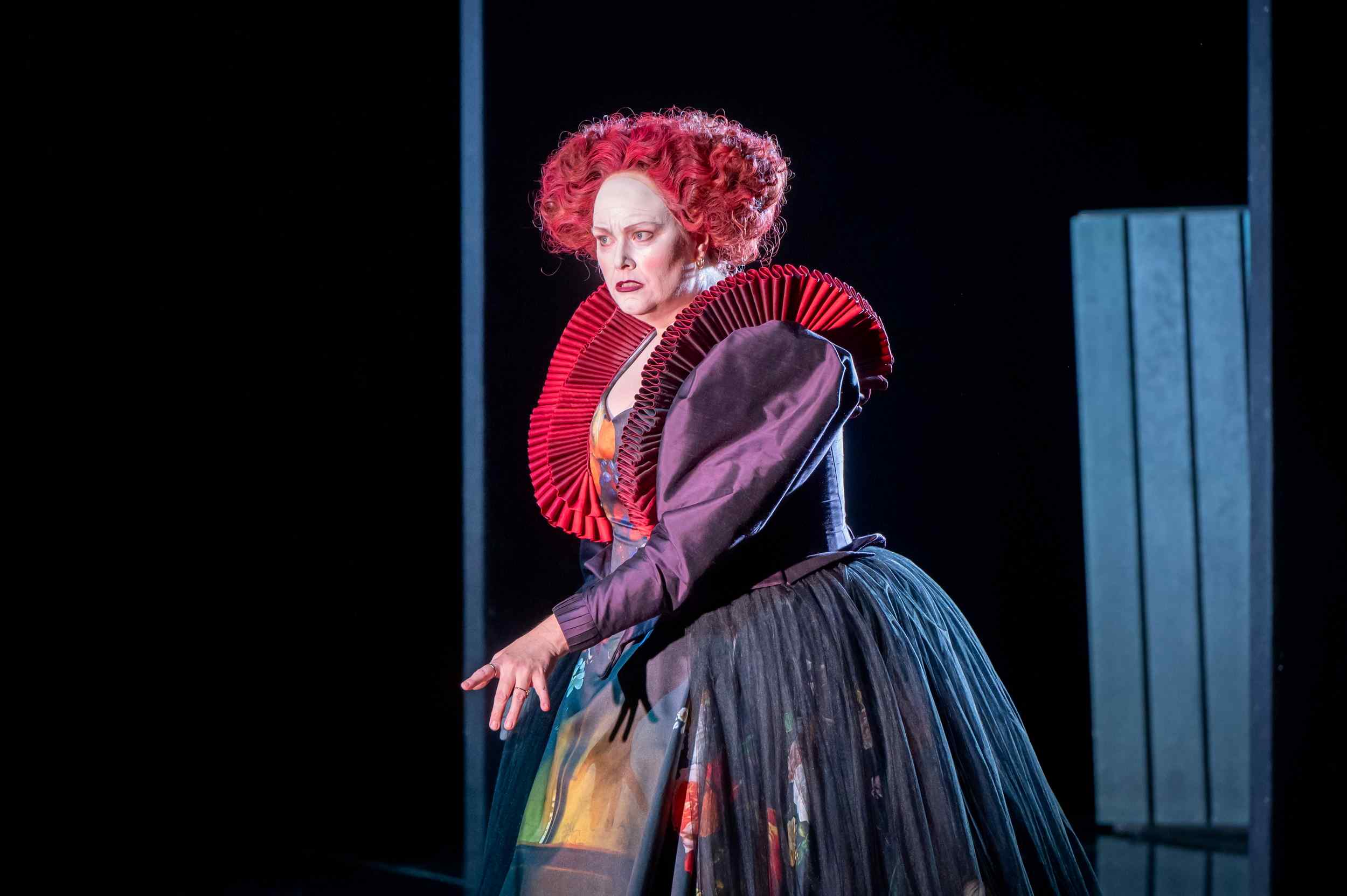
Lupinacci’s Sara was absolutely sensational. This was my first occasion hearing her and I very much hope it won’t be the last. The voice is one of those instruments of rare quality. It has a warmth and amplitude that envelopes the listener in a blanket of sound, through a burgundy, richly contraltoish tone and a natural vibrato. Lupinacci has a thrilling top, bright and seemingly unlimited, opening up thrillingly on high, while the voice descends to a rich and luxurious chestiness. Naturally, her diction was outstanding, filling every word with meaning. An artist I most certainly will seek out again. Piazzola demonstrated some of the attributes of a bel canto technique, in his opening number singing with a genuine attempt to phrase those long bel canto lines. Unfortunately, tonight did not show him at his best. The placement of the voice was rather nasal, the support not sounding completely lined up – an aspect I have previously remarked on in his singing. He took some higher options in the line which were perhaps misadvised, since the voice lacked amplitude and narrowed on high and, as the evening progressed, the tone became dry and colourless. Perhaps Piazzola was suffering from an unannounced indisposition. The remainder of the cast reflected the standards of the festival, with David Astorga an extrovert Cecil and Ignas Melinkas a masculine-voiced Raleigh. The chorus again manifested the very positive impression they gave last night. Again prepared by Salvo Sgrò, they sang with beguiling firmness of tone, beauty of phrasing and theatre-filling amplitude.

This was a terrific evening of bel canto and dramatic intrigue. Langridge’s staging was, by and large, successful and illustrated the drama fully, allowing the principals to inhabit and live their characters. Musically it was stupendous, on almost every level. We were given a feast of bel canto singing from Pratt, Osborn and Lupinacci, who thrilled and moved in equal measure. Naturally, the audience responded with frequent and generous applause. Indeed, there’s nothing quite like attending an evening such as this in Italy, where the audience responds with such uninhibited pleasure. Undoubtedly a night to remember.
 operatraveller.com
[…] in a production that tried to add on a narrative layer that the work couldn’t sustain. In Roberto Devereux the following evening, Raffaella Lupinacci was a sublime Sara, while John Osborn gave us a singing […]