Stravinsky – Mavra (Мавра)
Parasha – Julia Muzychenko
Mother – Kseniia Nikolaieva
Neighbour – Aleksandra Meteleva
Vassili – Iván Ayón Rivas
Puccini – Gianni Schicchi
Gianni Schicchi – Roberto De Candia
Lauretta – Julia Muzychenko
Zita – Valentina Peronzzoli
Rinuccio – Iván Ayón Rivas
Gherardo – Hou Yaozhou
Nella – Nikoletta Hertsak
Betto Di Signa – Gonzalo Godoy Sepúlveda
Simone – Adriano Gramigni
Marco – Yurii Strakhov
La Ciesca – Aleksandra Meteleva
Gherardino – Walter Zecca
Maestro Spinelloccio/Amantio Di Nicolao – Davide Sodini
Orchestra del Maggio Musicale Fiorentino / Francesco Lanzillotta.
Stage director – Denis Krief.
Maggio Musicale Fiorentino, Florence, Italy. Sunday, December 15th, 2024.
For its latest new production, the Maggio Musicale Fiorentino has decided to marry Stravinsky’s Mavra with local hero Puccini’s Gianni Schicchi. On a surface level, one might wonder what would lead the house to pair these two one-acters. Both are stories of youthful love, one thwarted, the other threatened; both are comedies and both were written around a similar time. Moreover, the opportunity to hear Schicchi on Puccini’s home turf, played by a Tuscan orchestra, with a mostly Italian cast is one that would be very hard to resist.
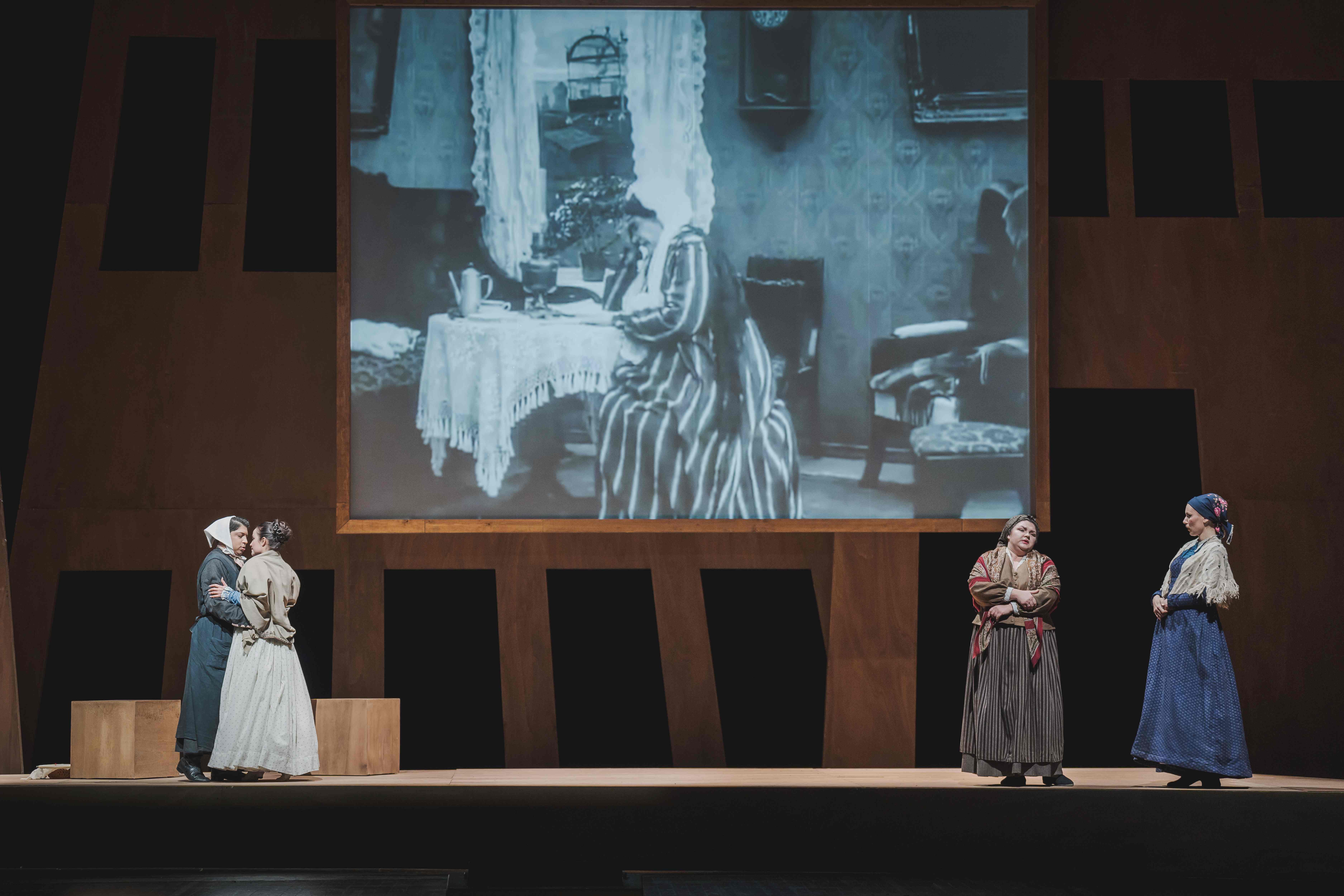
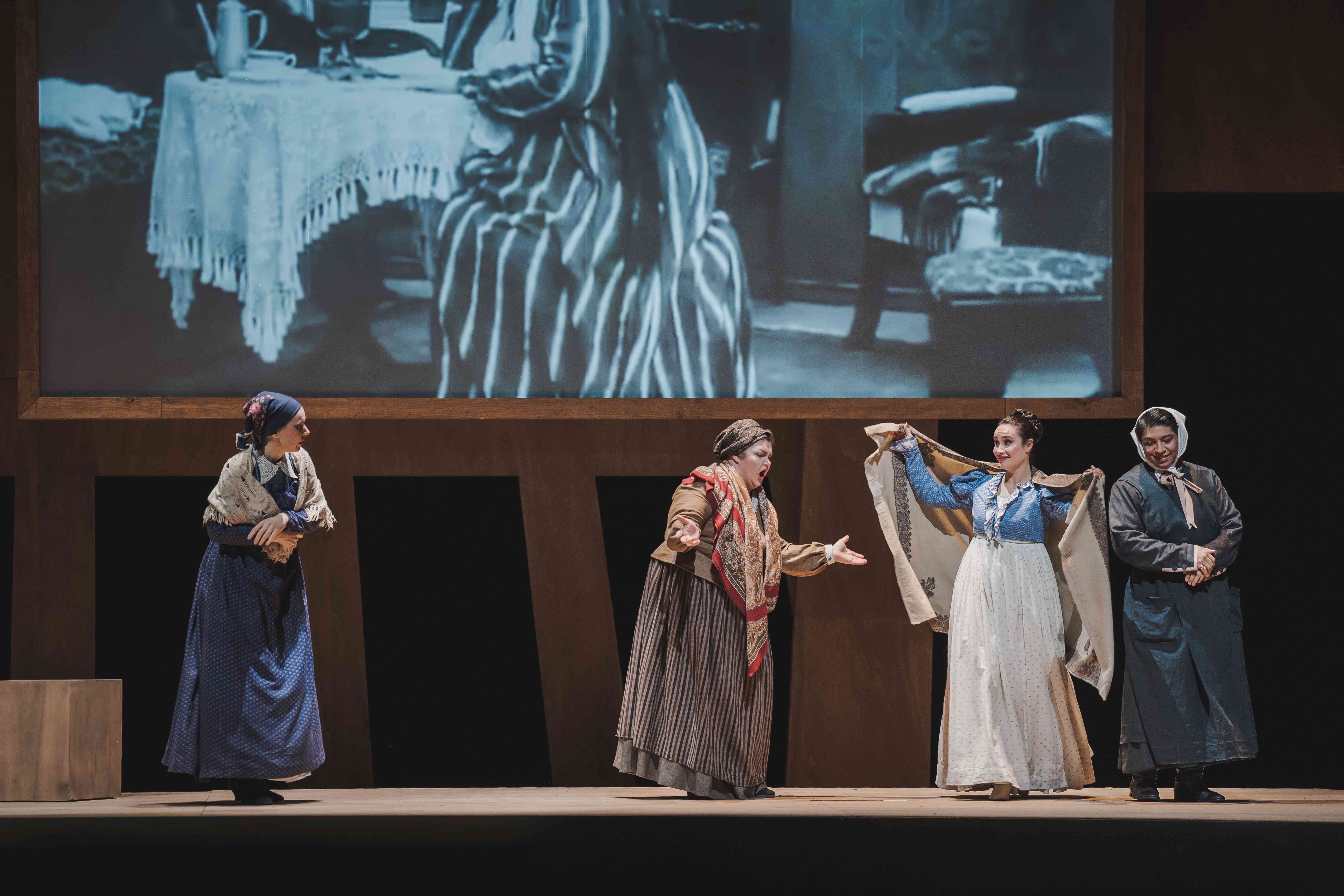
Tonight was the premiere of Denis Krief’s staging. Krief sets the action for Mavra in front of the façades of three houses, with a screen showing a silent movie that appears to be a version of the The Little House in Kolomna, the short story by Pushkin upon which the opera is based. The image on the screen was periodically paused showing an image of the character who was the focus of each particular scene while they held the stage. I must admit that after a while, I stopped paying attention to the screen, since the personenregie was so vivid there seemed to be no need for it. Perhaps Krief felt that, with such an unfamiliar work, the piece needed a little visual helping hand. And yet, given that the performances he obtained from his cast were so clear, it felt unnecessary.
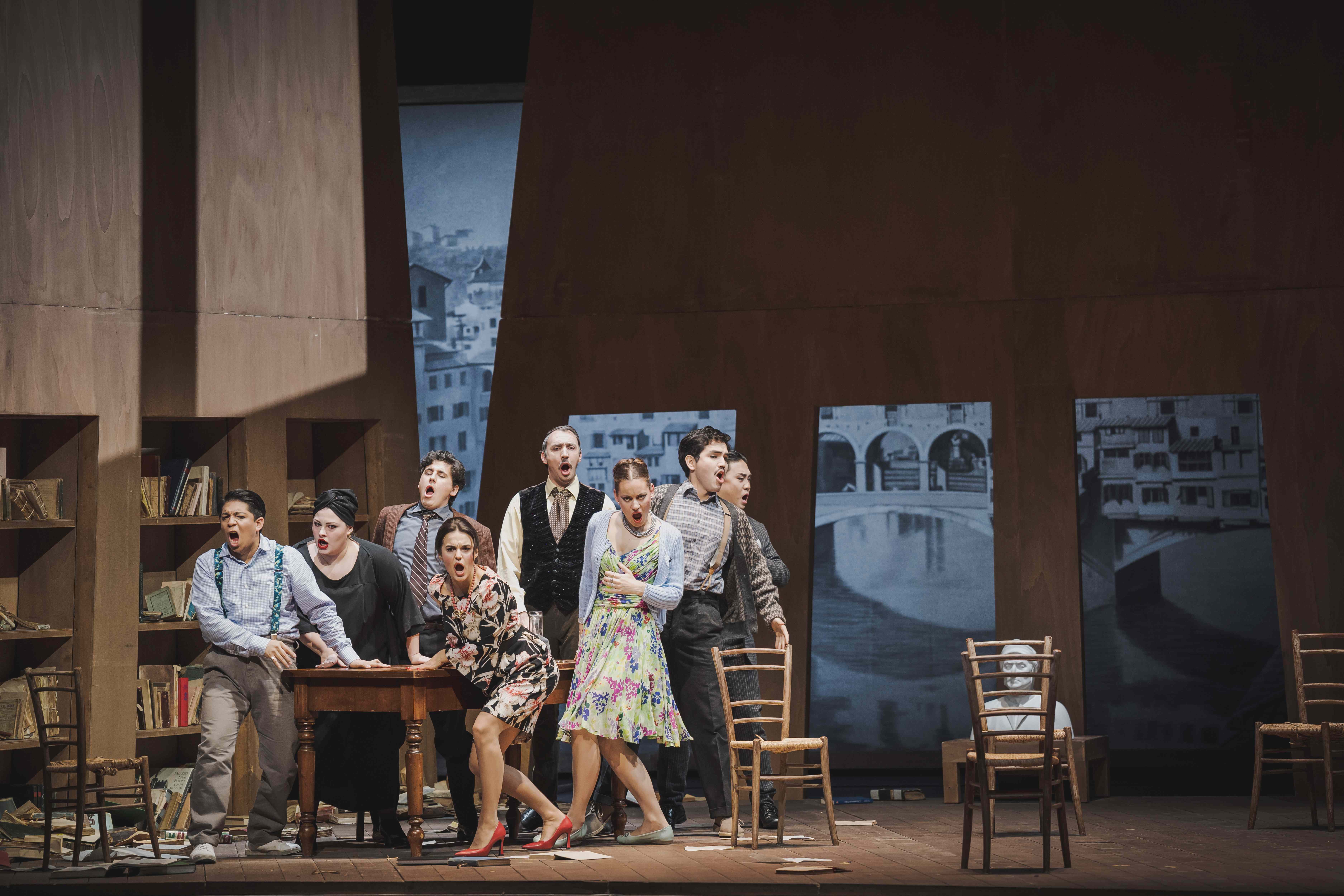
Schicchi was set in a similar structure, the facades now coming together to form a semi-circle, with a view of Ponte Vecchio in the background, together with a desk and bed. Here again, the biggest strength of Krief’s direction was in the vivid characters he managed to create with his cast. Despite the relatively large ensemble, there was a precision to the movement on stage, to the interactions between individuals that I found absolutely captivating – not least because they were amplified by Puccini’s glorious score. There was a tenderness between Roberto De Candia’s Schicchi and Julia Muzychenko’s Lauretta that was so tangible, both in the way that Schicchi tried his best to ensure Lauretta was not part of the scheme, and in how it was made clear he was doing it to ensure her happiness. There was a sense of a real ensemble cast operating and living the action together that felt absolutely winning.
Francesco Lanzillotta conducted a Maggio orchestra on simply magnificent form. In Mavra he was alive to the delicacy of Stravinsky’s scoring, but it was in Schicchi that the evening really took wing. This band has this music in their blood, not least in the lyricism of the wind playing, the richness of the horns, and in the silky strings. The way that the strings played with such effortless cantabile beauty in that celebrated melody of ‘O mio babbino caro’ was utterly magical, as indeed was the way that they surged with that melody as it rang out during Rinuccio’s ode to Florence. They ‘sang’ this score as much as anyone on stage. Lanzillotta’s tempi were relatively swift, yet he managed to maintain a staggering precision between stage and pit, his mercurial tempo changes dispatched by all with a total unanimity of approach. It was a privilege to hear this orchestra in this music.
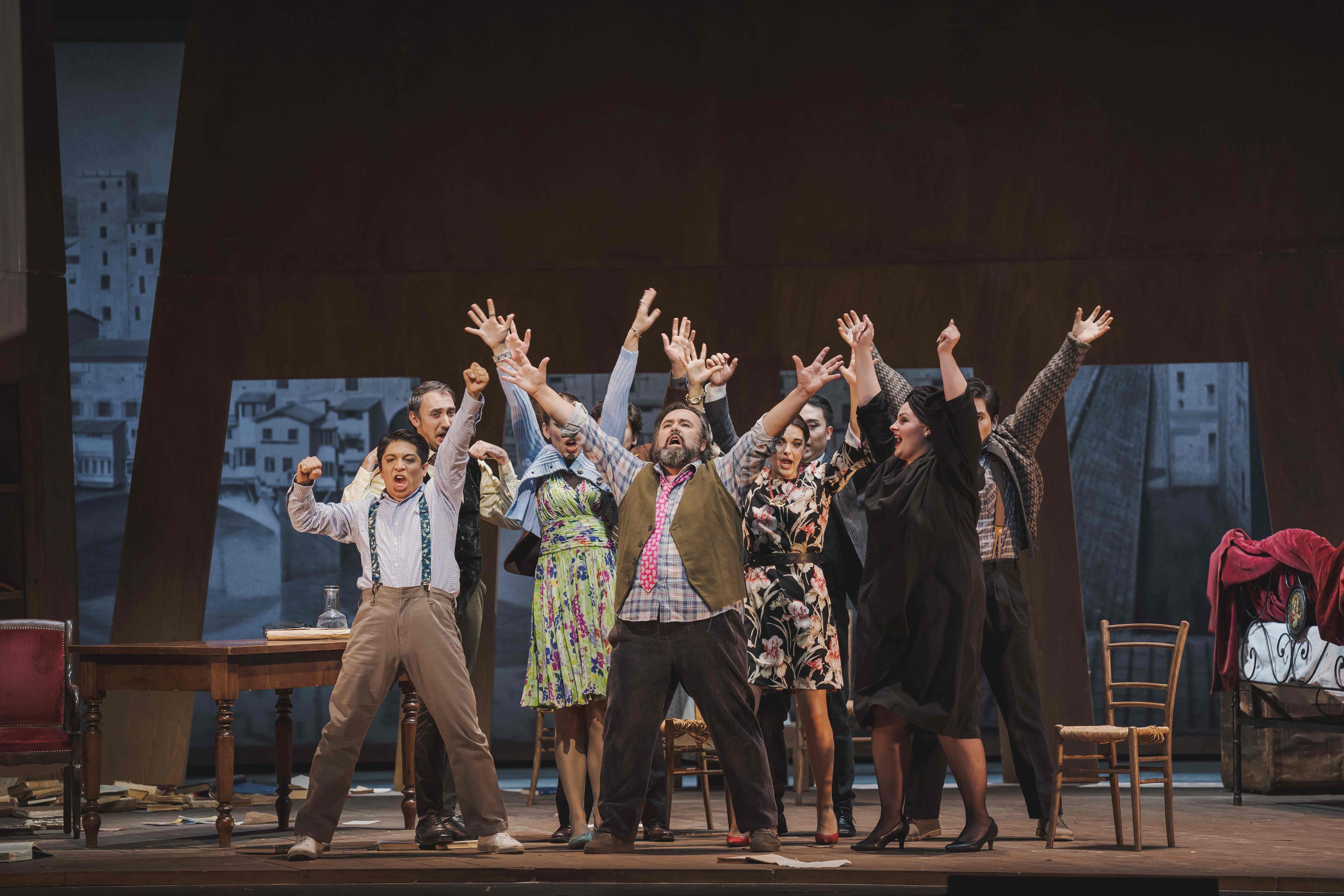
De Candia was a magnificent Schicchi. He held the stage from his very first entry until the end. De Candia was a deliciously extrovert presence, the text always forward. His baritone sounds exceptionally healthy and he varied the tone with real imagination, able to sustain an elderly-sounding tenor-like voice as he was disguised as Buoso. What gave the most pleasure about De Candia’s assumption was his ability to tell the story through his vocalism and use of text, which made the comedy even more vivid and alive.
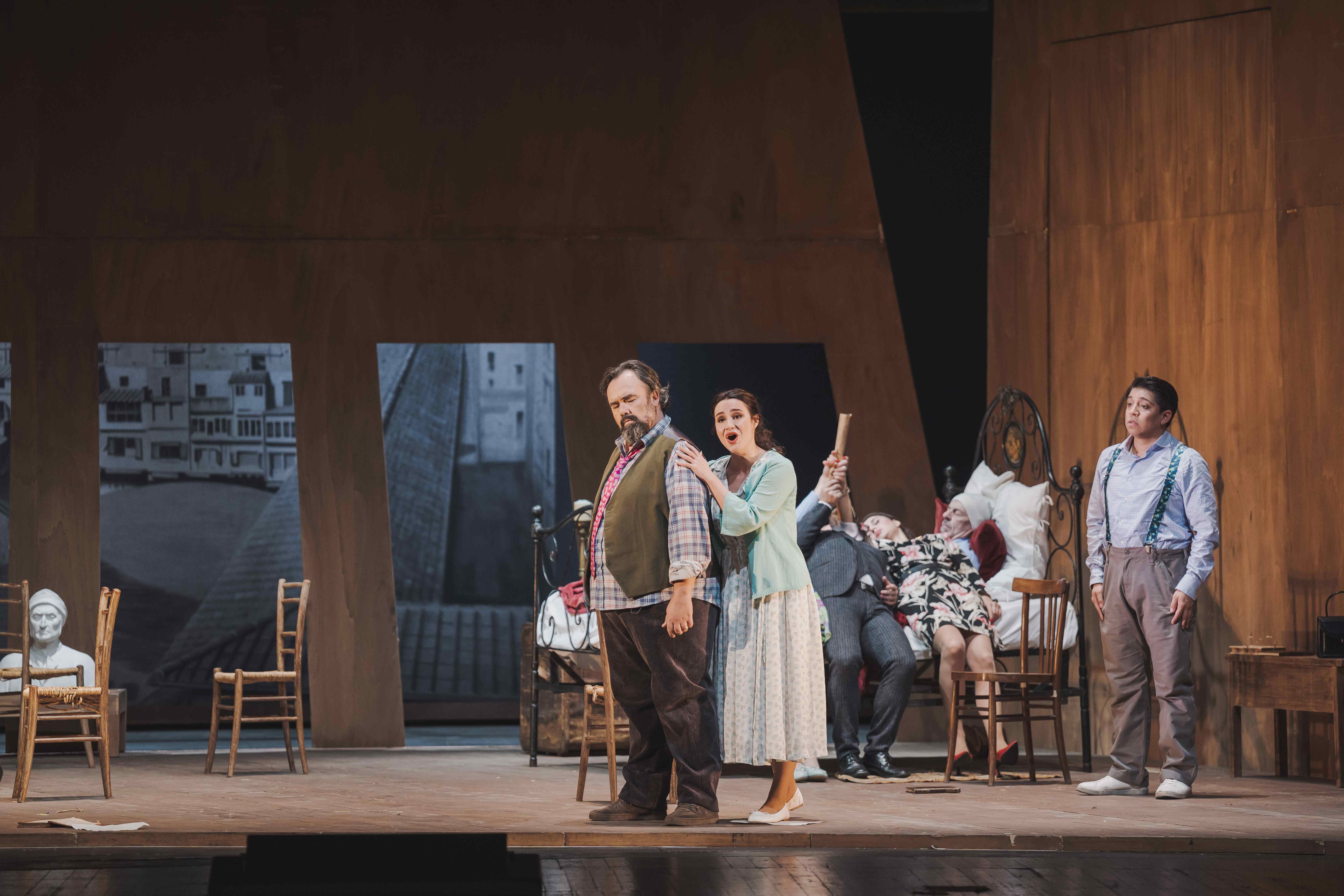
As far as I can recall, Valentina Peronzzoli is a new name to me. Her Zita was fabulous. She tore up the stage as the family matriarch, dispatched in a deliciously full and fruity mezzo. The voice is so healthy of tone, and she also used the text with delicacy and relish. I very much hope to see her again soon. Muzychenko sounded somewhat grainy of tone in Mavra but as Lauretta she was absolutely lovely. She sang her celebrated aria with real poise and relish, phrasing it with effortless beauty and sustaining a limpid line with the utmost musicality. Very impressive. Iván Ayón Rivas had clearly worked hard on the language for Mavra, showing an impressive command of Stravinsky’s melismas. As Rinuccio, he was terrific. The voice has focused squillo, able to penetrate into this difficult acoustic with ease. He sang his tremendous ode to Florence with long, easy lines, sunny tone, and a seemingly effortless top.
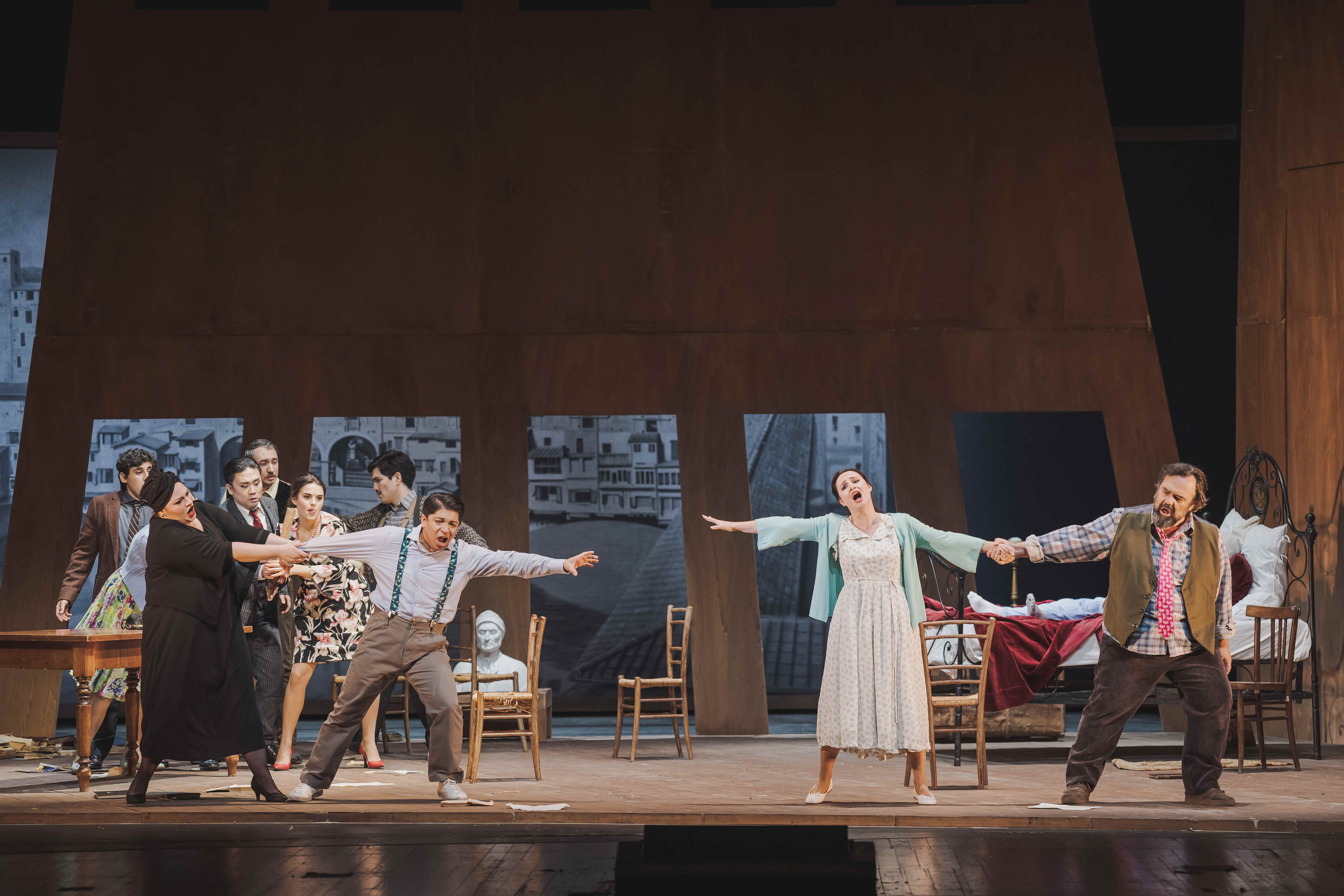
The remaining cast members reflected the quality that one would expect from this address. The fact that they were mainly Italian, along with some Ukrainian and Peruvian guests, also helped with not only the clarity of the diction, but also with the comic timing. It also helped that the audience was so engaged with Krief’s staging and the performances of the cast, reacting with audible glee to the action on stage. As Betto, Gonzalo Godoy Sepúlveda sang his music in a handsome baritone, while Adriano Gramigni sang Simone in an equally attractive bass. In his dual assumption as both doctor and notary, Davide Sodini sang with impeccable comic timing and use of text, with generous resonance of tone. Nikoletta Hertsak brought her crystalline soprano to Nella’s music, blending beautifully with Aleksandra Meteleva’s Ciesca. Meteleva was also an extrovert Neighbour in Mavra, where Kseniia Nikolaieva sang the Mother in a rich contralto. Back in Schicchi, the young Walter Zecca was extremely assured as Gherardino, singing with real confidence.
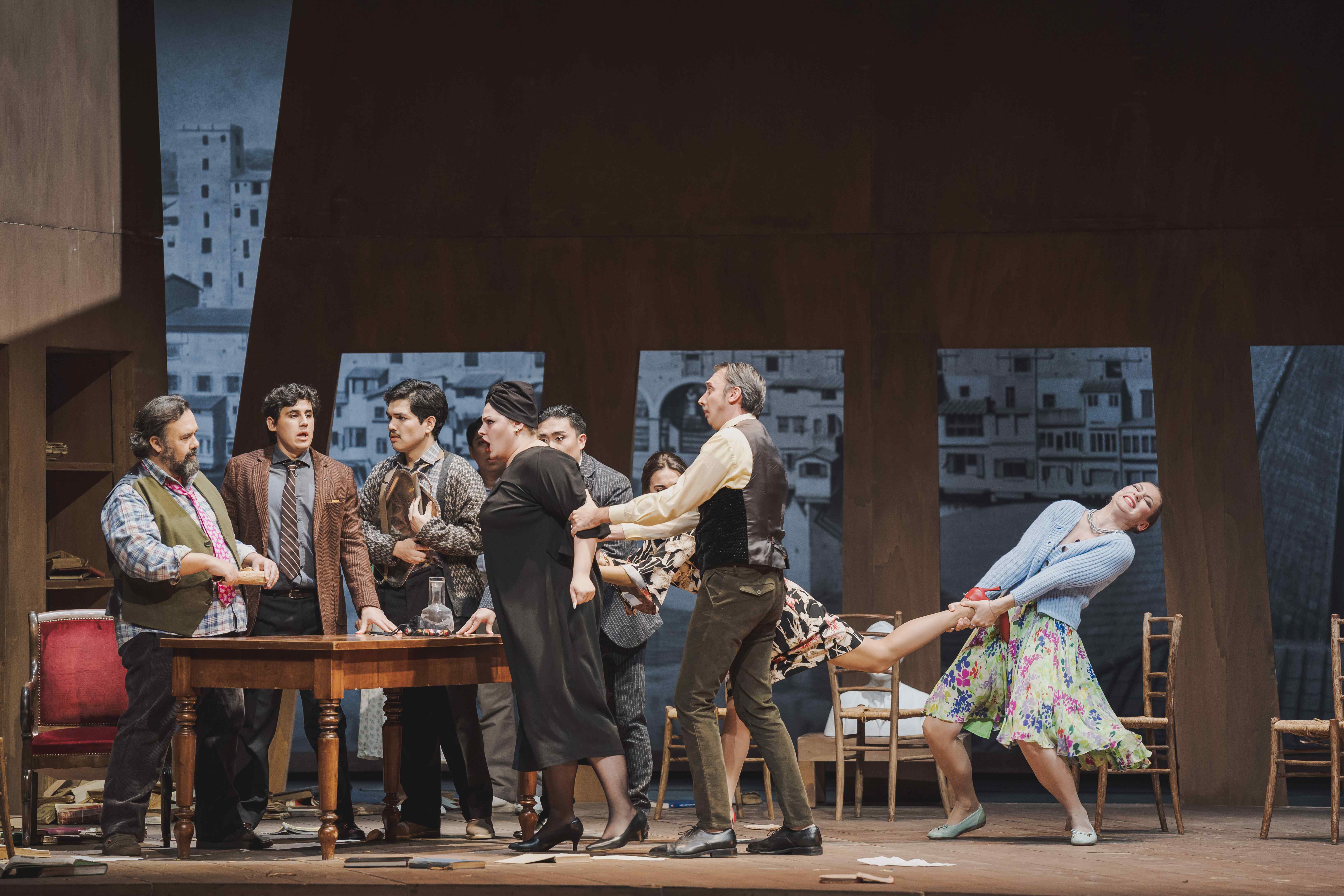
This double bill was a delightfully uplifting evening in the theatre. We were given performances of such vividness, in an ensemble staging that abounded in comic timing. Krief had clearly worked hard with his cast to give us a total unanimity and precision of approach for comedy that lived so completely through the text. Vocally it was sensational, with De Candia giving us a towering and vocally healthy Schicchi, Muzychenko and Ayón Rivas ardent as the lovers, and Peronzzoli such a fabulous Zita. Lanzillotta led a reading that lived so spontaneously, the orchestra playing this celebrated score with magical freedom. When Rinuccio sang his ode to Florence, it really was impossible not to be moved, not just by that superlative orchestra and Ayón Rivas’ effortless soaring, but also by the knowledge that this is Puccini’s homeland, a place that lives and breathes his music. Just being able to experience this glorious music here, those inimitably gorgeous Puccinian melodies imbued with the spirt of this city that has inspired countless artists of all disciplines over the centuries, played and sung so idiomatically, was really something to treasure. Undoubtedly an evening to remember and a holiday treat for all those who can get to Florence to see it.
 operatraveller.com
[…] was a real privilege. It was an experience I’ll never forget. Similarly, in December I saw a Gianni Schicchi that was so fully idiomatic, gloriously sung, with Roberto De Candia so healthy in the title role […]