Leoncavallo – Pagliacci
Canio – Mikheil Sheshaberidze
Nedda – Francesca Sassu
Tonio – Badral Chuluunbaatar
Beppe – Paolo Antognetti
Silvio – Marcello Rosiello
Coro Voci Bianche del Teatro Comunale di Bologna, Coro del Teatro Comunale di Bologna, Orchestra del Teatro Comunale di Bologna / Daniel Oren.
Stage director – Serena Sinigaglia.
Teatro Comunale di Bologna – Comunale Nouveau, Bologna, Italy. Tuesday, December 17th, 2024.
For its final new production of 2024, the Teatro Comunale di Bologna chose to end the year with this new production of Pagliacci, directed by Serena Sinigaglia and conducted by Daniel Oren. As is customary at the house, the run was double-cast with experienced singers in one, and younger talents in the other. Given the strength of casting one has come to expect here, seeing the second cast can often be a great opportunity to discover new talent that one might not previously have been aware of. One might also question whether having such a short opera, complete with intermission, would actually be good value for a night out. Particularly as getting to the Comunale’s temporary theatre is such a mission. I would strongly recommend visitors give themselves extra time to get there – the bus timetables in this wonderful city tend to be more suggestions that dependable – and to go with an empty bladder, given the fact that the temporary theatre is short of washrooms. And yet, Pagliacci contains so much gripping drama that it really does make for an engaging evening in the theatre; and with a curtain time of 18:00, and ending by 19:45, left plenty of time for a meal in one of the splendid osterie that abound in the culinary capital of the Italian Republic.
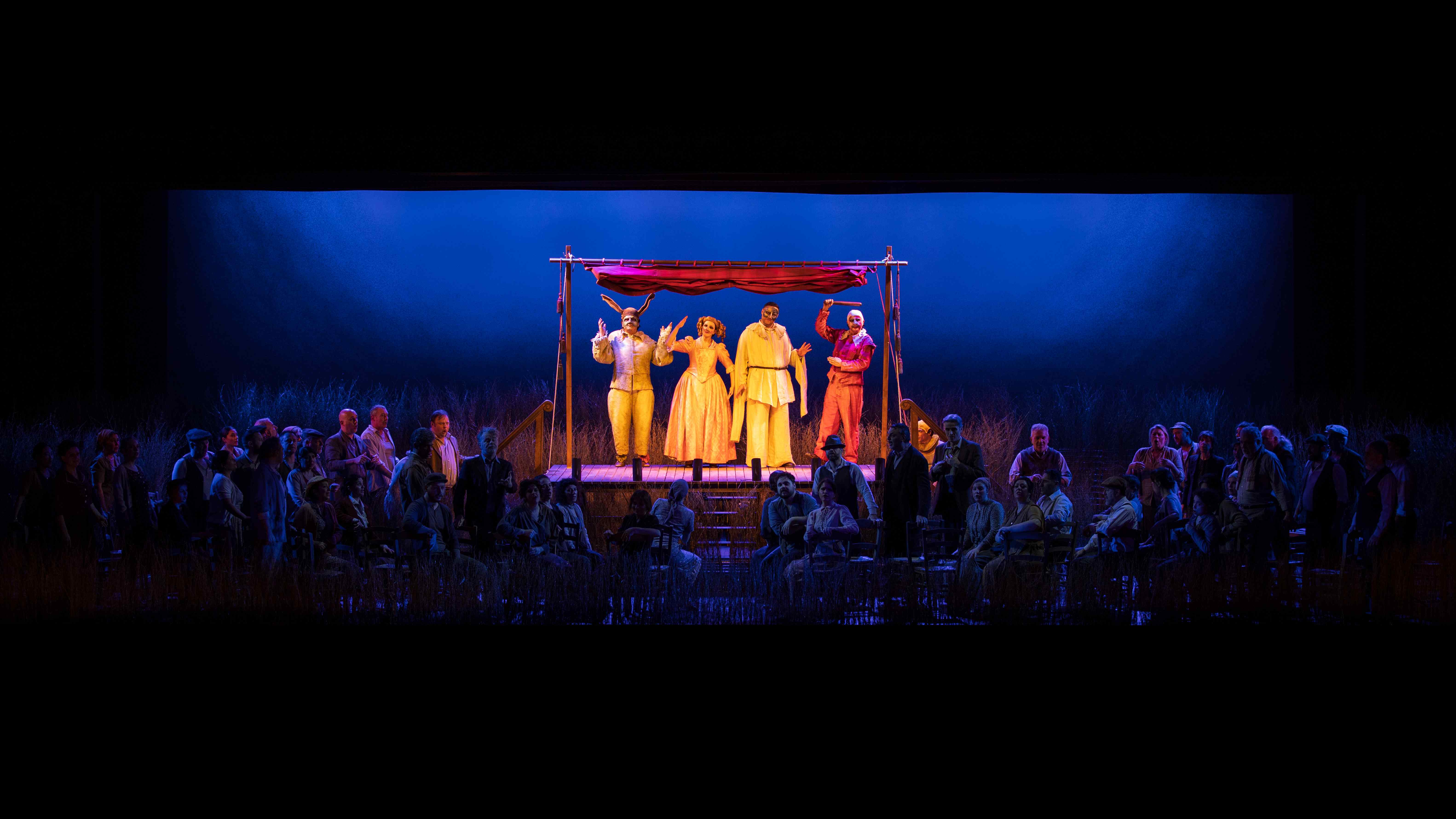
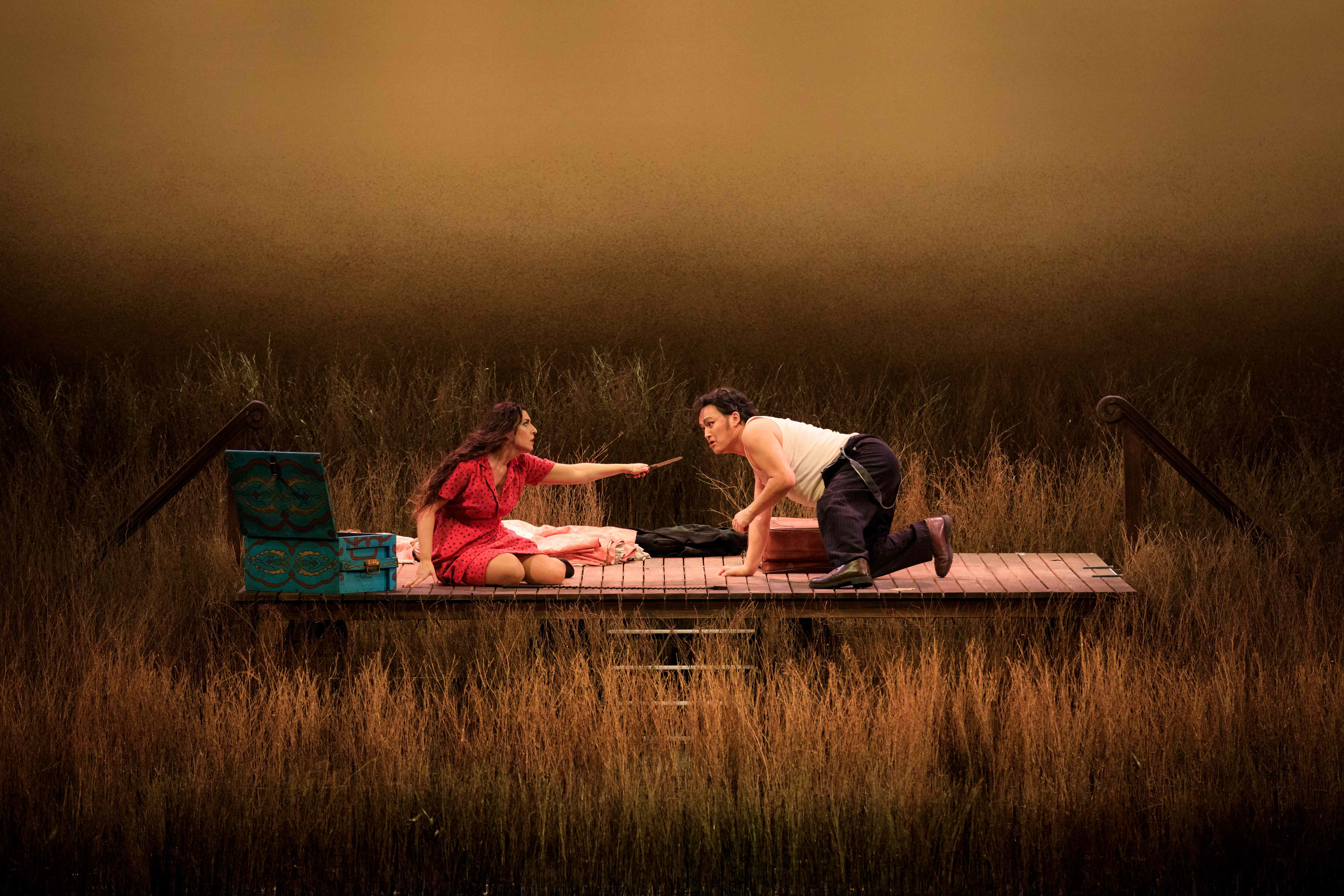
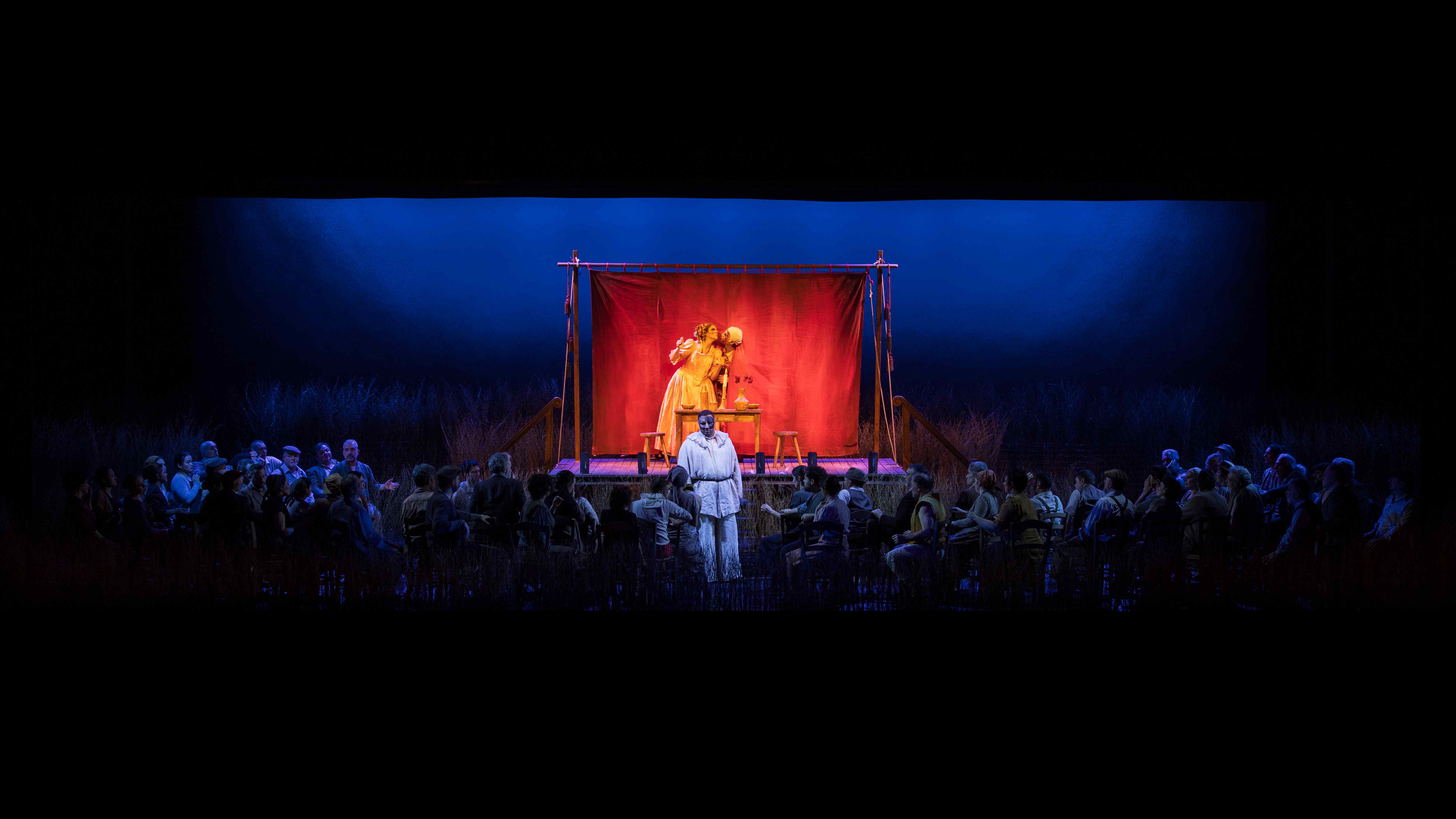
On entering the auditorium, the audience was confronted with an empty stage, with only a raised platform in the centre. As the prelude started, the stage crew set about creating a pastoral scene on stage, creating fields of wheat in which the action took place. This reminded us that this is very much a piece of small-town Italy, the excitement of the visiting troupe brought to life. As a framework for that action, it was effective enough. Although, unfortunately for Sinigaglia, her staging did not allow one to forget Damiano Michieletto’s outstanding production of this work, his love letter to small-town Italy, that I saw in Brussels. Indeed, it felt that Sinigaglia’s handling of the chorus was a bit too self-consciously ‘stagey’, with lots of parking accompanied by emphatic hand gestures. I do also wonder why she had a group of farmers accompany ‘vesti la giubba’ by waving scythes in the air, looking at the audience. Was it to suggest that Canio was doomed to murder? Was it that his suffering was known to him only, while the population went around its business? It’s hard to know, but really did feel unnecessary and indeed distracting. She also had Tonio brutally assault Nedda sexually in their big confrontation. It was certainly striking, bringing out that Tonio was a powerful, psychopathic danger to her, but at the same time, did feel a bit gratuitous. Still, on the whole Sinigaglia’s staging did what it needed to do and allowed the musical aspects to be front and centre, even though it didn’t eclipse memories of Michieletto’s much stronger staging.
The Comunale orchestra was on stupendous form for Daniel Oren. I must admit to a little trepidation at the prospect of Oren’s conducting, but I have to say that working with a truly great orchestra, as he was here, he was able to give an utterly riveting performance. Indeed, I would say that the intermission actually took away from the dramatic tension that Oren had so fully brought out. His tempi were generally quite swift, with ‘Stridono lassù’ taken at a delightfully uplifting lick. The playing of the orchestra was superlative. The sheer sound they made was so idiomatic and their ability to phrase and make ‘sing’ Leoncavallo’s melodies was utterly enchanting. Even in this difficult acoustic, the corporate sound that they made was so distinctively Italian and so right for this work. The sheer personality in the wind playing, the accuracy of the brass, and the warmth of the strings – including an extremely eloquent cello solo, all combined to a fabulous whole. The choruses, with adults prepared by Gea Garatti Ansini and children by Alhambra Superchi, were also superb. The children were terrifically raucous and uninhibited. The adults sang with excellent precision of ensemble and made a massive sound. Indeed, the huge high B on ‘silenzio’ at the start of the pagliacci’s show, must have been heard on the other side of town – it was tremendous. These are house forces that are really on top of their game right now.
All of the cast was new to me and I must admit to particularly enjoying getting to hear new singers. Mikheil Sheshaberidze is based in Italy and sings frequently in theatres around the republic. This meant that he brought a clarity of diction, and communicated an understanding of the text, that gave much pleasure. The voice is big in depth, although it does sound like it needs a bit of heavy lifting to get to the top, which is clarion and focused. I must admit his ‘vesti la giubba’ at first felt a bit restrained, a bit passive. Yet, as Sheshaberidze moved through this celebrated aria, he brought ever more emotion so that his ‘ridi Pagliaccio’ was utterly devastating. There was a quiet anger to his reading, a sense of hiding the torment within, that I found initially a bit too subtle, but it eventually grew to be very convincing.
Francesca Sassu gave us a lovely Nedda. The voice is light and able to float on air, and she’s the owner of a genuine trill. Her legato was milky smooth and her control of the breath allowed her to spin those charming, long lines impeccably. I did have a sense that the role takes her just slightly beyond her current limits in terms of amplitude, not helped by the fact that the orchestra was a shade too loud to allow her to be most optimally heard in the bigger climaxes. Still, her implicit musicality and ability to float her lines were wonderful to hear. Definitely a name to watch.
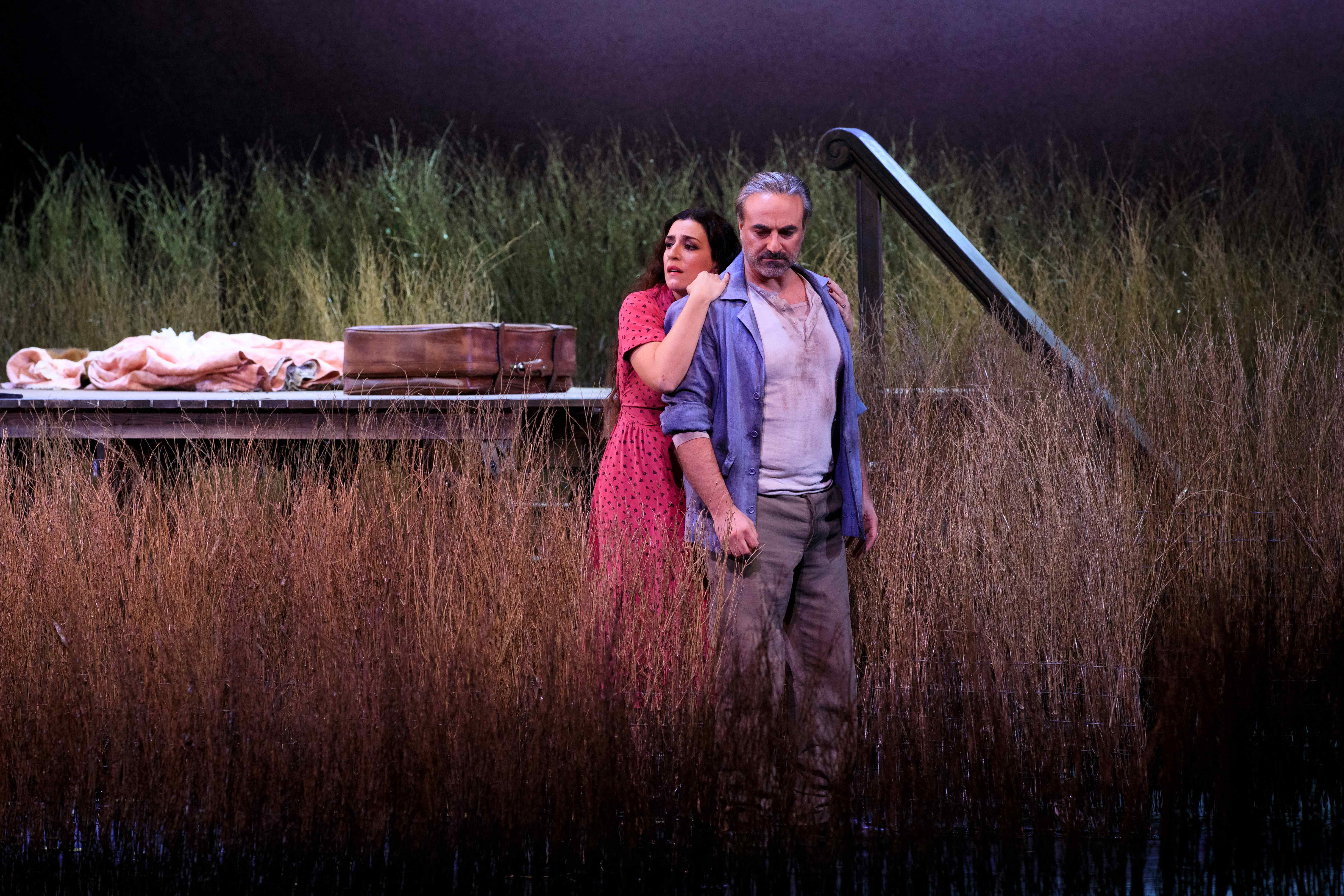
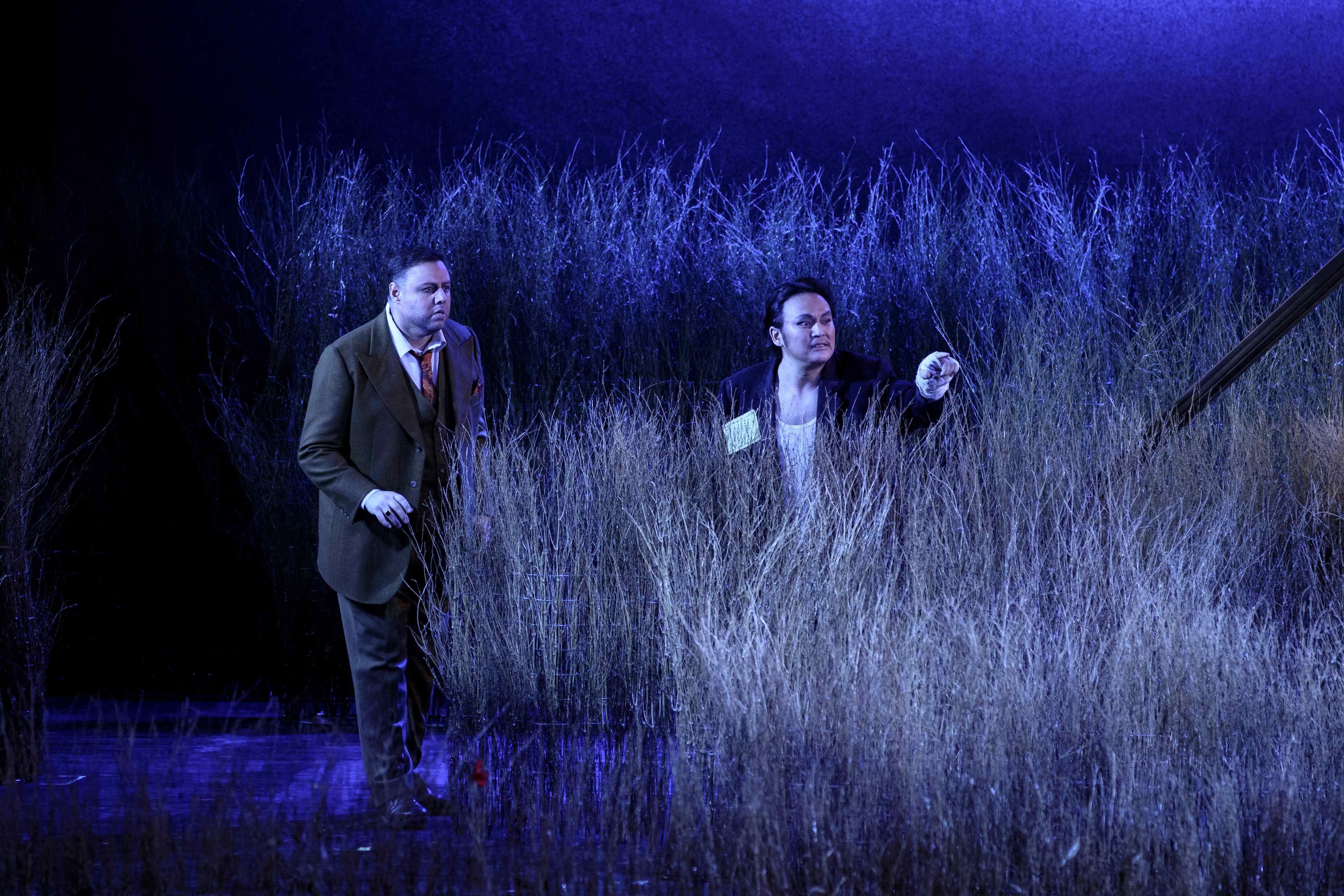
Badral Chuluunbaatar sang Tonio in a burnished, warm baritone with an admirable line and very clear Italian. He ducked the high A-flat in the prologue, even though the voice sounded like it had room to spare. The warmth of his vocalism did sound like he might have been more optimal casting for Silvio, however. That role was taken by Marcello Rosiello who sang his loving lines in a focused, characterful baritone that rang into this difficult acoustic with ease. He was also unafraid to pull back on the volume and shade the music with delicacy, which he did without losing the core of the tone. As Beppe, Paolo Antognetti gave an extrovert account of his arioso, his tenor bright and penetrating, also soaring with ease into the house.
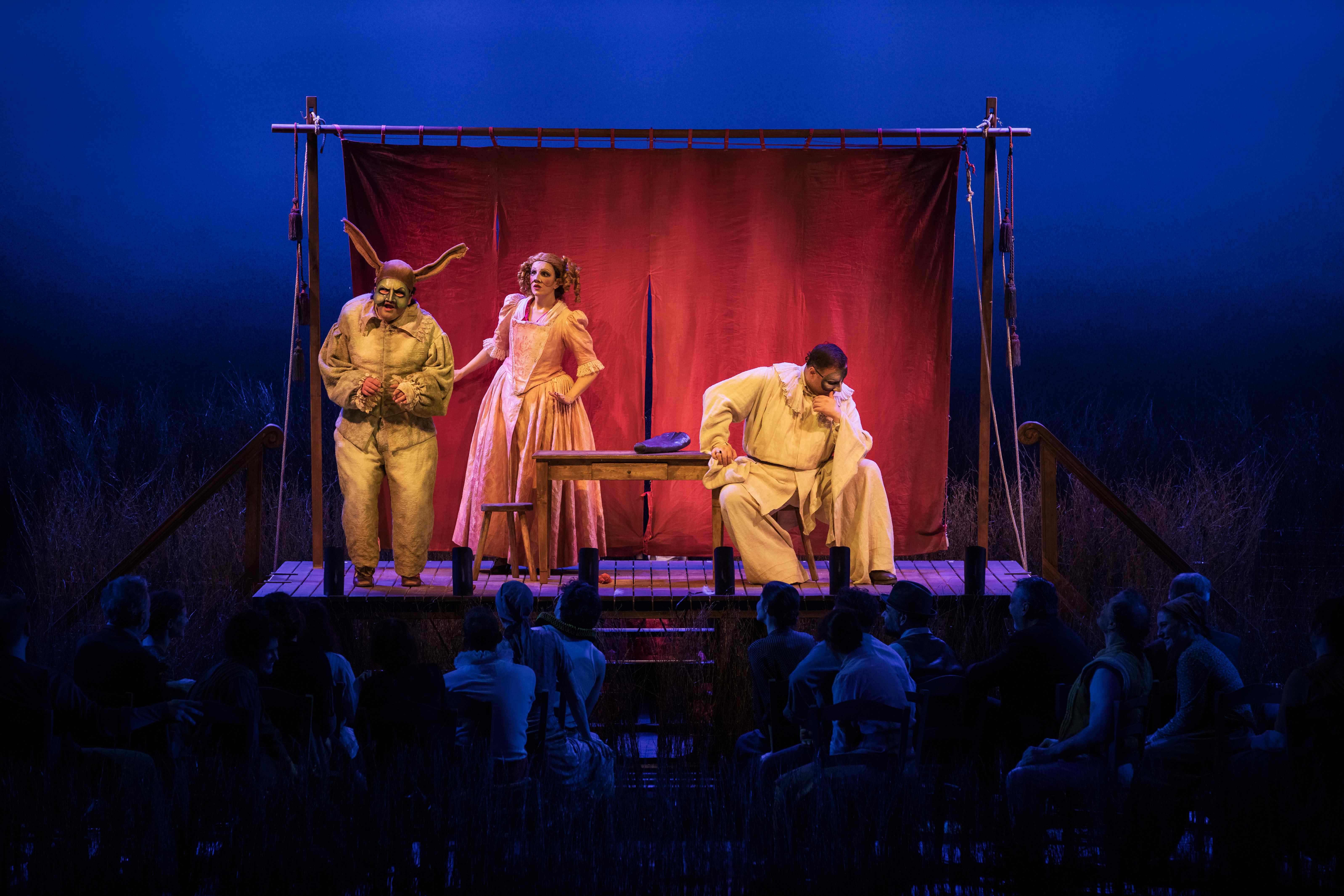
There was a lot to enjoy in this relatively brief evening in the theatre. Sinigaglia’s staging was efficient enough and allowed the drama to unfold naturally, even if some of her decisions were somewhat questionable. The singing was of a very high quality, introducing us to some new names, with Sassu undeniably one to watch. What will stay with me, however, is the excellence of the orchestra and chorus. They’ve had a magnificent year in 2024, capped by that glorious Walküre in October. Even though this temporary theatre is a trek to get to and seriously lacking in washrooms, any discerning opera lover needs to have Bologna on their itineraries. This is a theatre every opera lover should visit right now.
 operatraveller.com
[…] December, I also got to see a Pagliacci at the Bologna Comunale. One might think it rather short measure for an evening’s […]