Strauss – Salome
Salome – Allison Cook
Herodes – Florian Stern
Herodias – Angela Denoke
Jochanaan – Kostas Smoriginas
Narraboth – Denzil Delaere
Ein Page der Herodias – Linsey Coppens
Erster Jude – Daniel Arnaldos
Zweiter Jude – Hugo Kampschreur
Dritter Jude – Timothy Veryser
Vierter Jude – Kim Hyunduk
Fünfter Jude – Marcel Brunner
Erster Nazarener – Reuben Mbonambi
Zweiter Nazarener – Leander Carlier
Erster Soldat – Igor Bakan
Zweiter Soldat – Marcel Brunner
Ein Kappadozier – Reuben Mbonambi
Ein Sklave – Linsey Coppens
Symfonisch Orkest Opera Ballet Vlaanderen / Alejo Pérez.
Stage director – Ersan Mondtag.
Opera Ballet Vlaanderen, Ghent, Flanders, Belgium. Sunday, January 12th, 2025.
Salome is an opera that focuses on obsession and on people who are so infatuated or fanatical, they’re unable to hear what others are saying to them. Whether Salome and her single-minded obsession for a head, Jochanaan in his religious fervour immune to Salome’s overtures, or Herodes in his single-minded pursuit of a dance. In his latest staging for Opera Ballet Vlaanderen, Ersan Mondtag sets the action in what looks like a horror comic book with a fascist aesthetic. The sets and costumes, also by Mondtag, are imposing in their greyness, with a revolving stage providing both the outside of an impressive castle, as well as a dining room where a group of men engage with a group of danseuses.
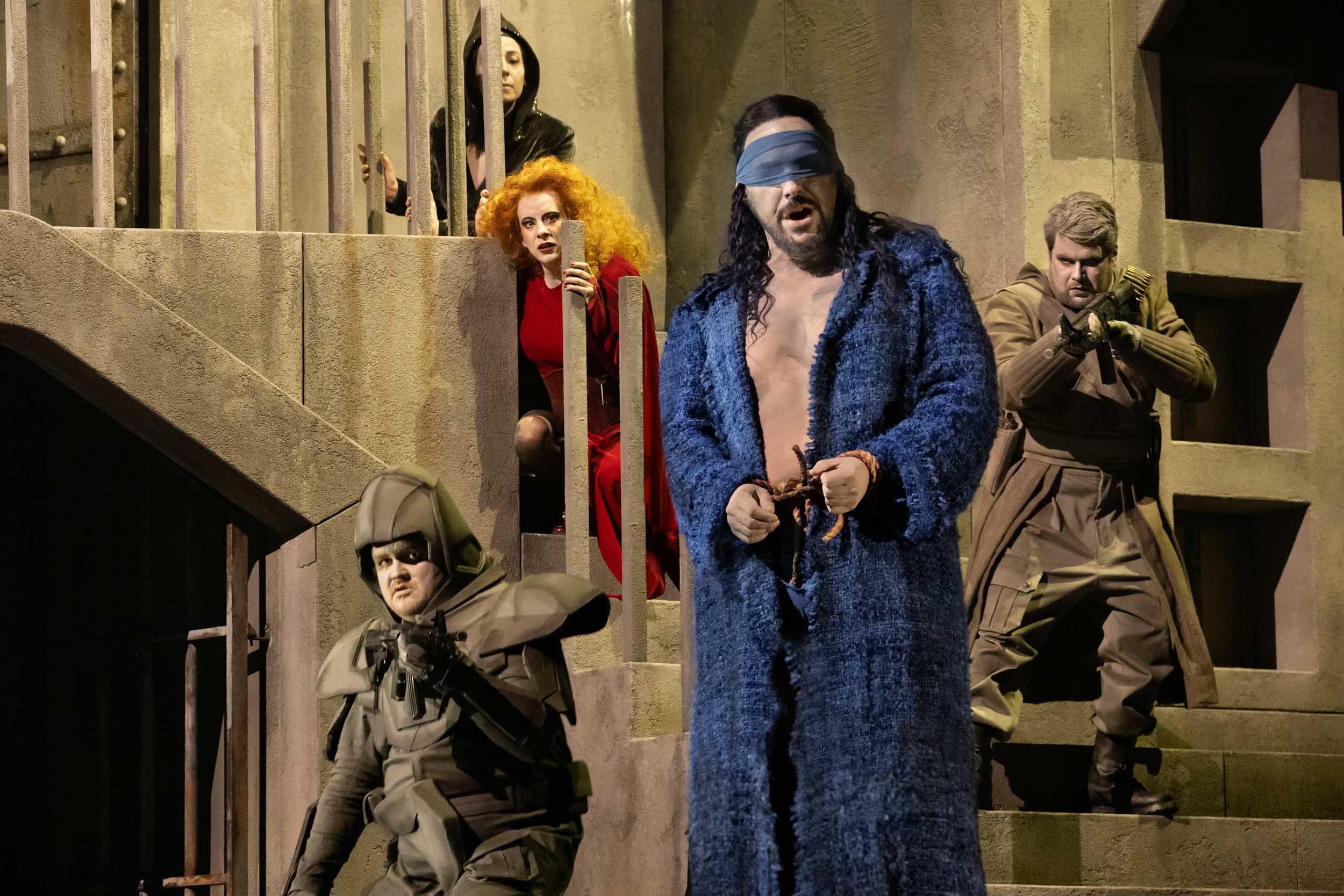
Mondtag’s staging is undoubtedly very impressive to look at and certainly, in its horrific grimness, gives us a very good show. He demands a lot, physically, from his singers. Allison Cook’s Salome hardly stops moving, her energy is impressive, although I was worried about her knees in the way she jumped up and down obsessively in her platform heels. And yet, I’m not always convinced that, on deeper consideration, that Mondtag resolves the issues that he raises. There’s certainly a conflicted sexuality here between Salome and Jochanaan, a sense that he could succumb to her sexual approaches. At the same time, with his single-minded religious obsession and determination to convert her, it struck me he felt that his religiosity could override her sexual obsession with him. Similarly, during the dance, we saw Herodes drag Salome to the cistern, following which screams emerged, suggesting that his response to the dance was for him to sexually assault her. Yet again, it raised the question of whether he deliberately did so in front of Jochanaan, or if we were instead watching a non-linear narrative and the dance was a flashback to an earlier time. Upon reflection, I’m not quite sure why Herodias first insisted that Salome didn’t dance, but then mocked and encouraged her to dance during the Schleiertanz. This just reinforced the impression that I left with: that the staging as a whole doesn’t quite add up. Perhaps, I’m simply overthinking things. Taken on surface level, Mondtag gives us a high-energy, highly visual show, yet one that on reflection doesn’t seem to equate to the sum of its parts.
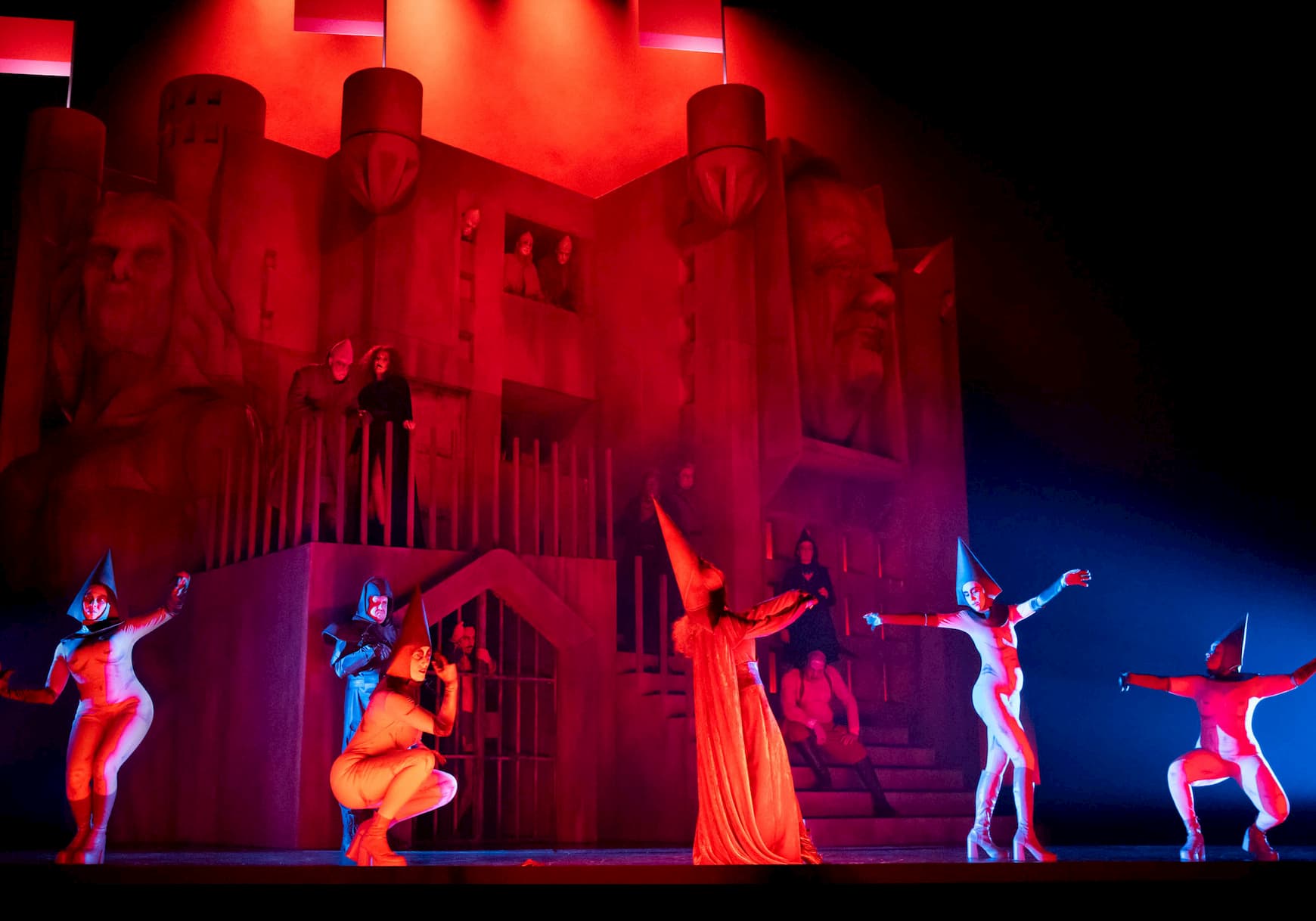
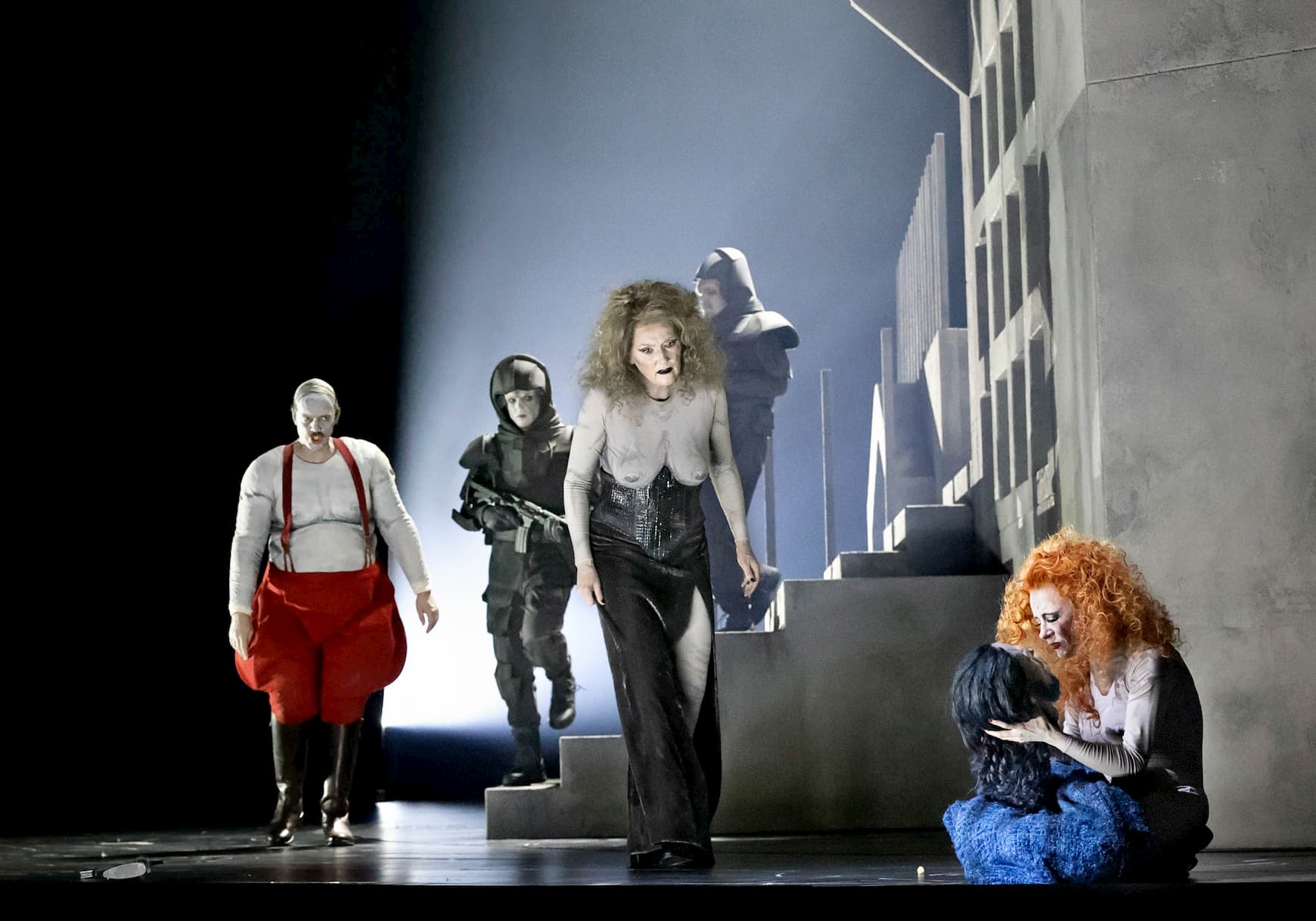
That said, Mondtag does give us some pertinent aspects to consider. One of those is the creepy manifestation of Herodes, complete with moustache and combover. Seeing the Jews running away with their suitcases packed was a reminder of the horrors that happened between Strauss’ opera being premiered and the present day. He also gives us a feminist reading, with Salome and the danseuses taking over the palace in the final scene, taking revenge on Herodes for his abuse of Salome. Both of these aspects are very convincing and make for an interesting take on the drama. Again, watching it on a surface level would offer a number of rewards, particularly as Mondtag’s personenregie is vivid and compelling. It’s just that I remain unconvinced that it stands up to deeper reflection.
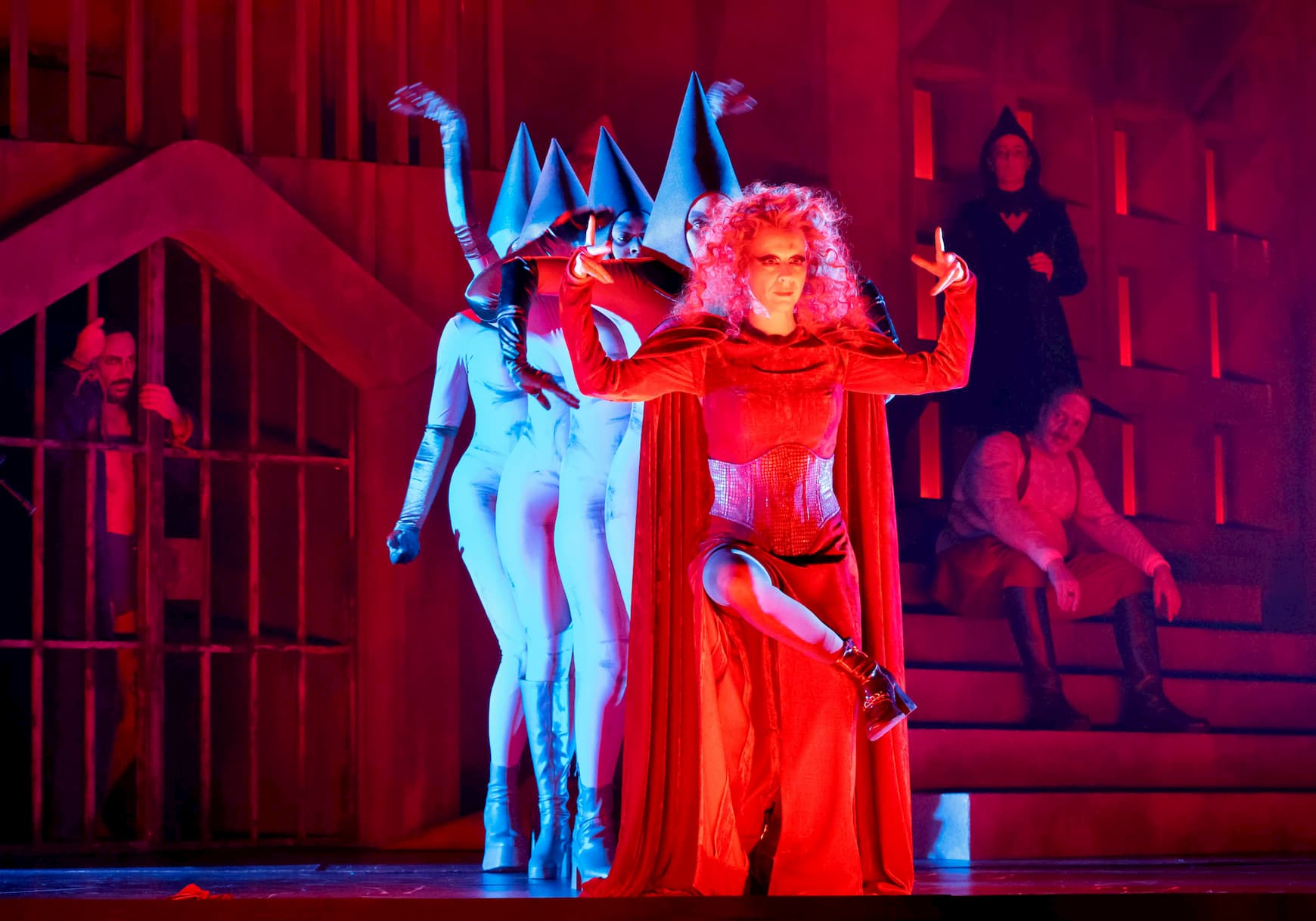
Musically, the evening had a number of rewards but also one significant disappointment. That was Cook’s Salome. She was unflinching in her theatricality, barely stopping throughout the evening, giving so generously of herself to us. Salome is, however, an opera not a piece of straight theatre, for which one needs an artist for whom the pitches on the page are more than just suggestions of a general direction in which to throw the voice. Unfortunately, Cook was severely taxed by the role to the extent that it did not make for comfortable listening. The registers have separated in her mezzo, with a big full bottom and a matronly middle. Her tuning was as wild as her wig, frequently significantly south of the desired destination. I will say that her diction was impeccably clear, as indeed it was for the whole cast, and I am appreciative that she threw herself into the production. But vocally, it was not at the level I would expect at this address.
On the other hand, Alejo Pérez and his orchestra were on sensational form. One of the most celebrated passages in his opera is the dance; yet from the first pages, Pérez’ reading had a balletic edge that carried us through the evening with irresistible momentum and soaring lyricism. He secured playing of the finest quality from his musicians: silky strings, the pungent cries of the heckelphone, and rich powerful brass that filled the auditorium in a vibrant tumult of sound. Pérez’ ear for texture is second to none, which allowed him to precisely bring out those hints of dance that abound in the score and that I’d never been previously aware of. For example, as Salome sang ‘du warst schön’ in the final scene, there was an insistent throb in the double basses I don’t ever recall having been brought out before, one that sounded just like a dance threatening to break out. Today, Pérez and his musicians really reflected the very best of this house and precisely why it’s a compelling place to visit.
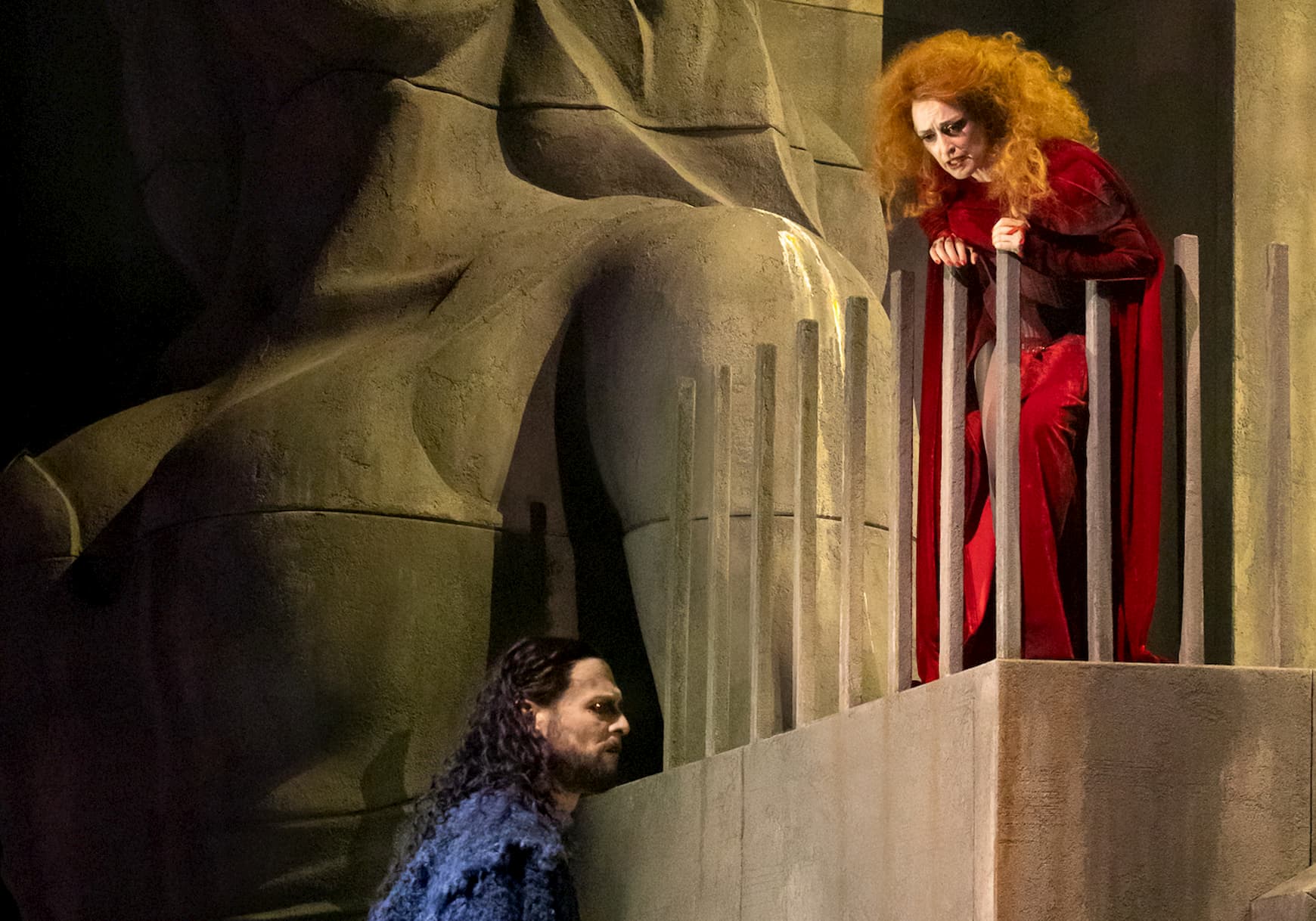
Kostas Smoriginas sang Jochanaan in a firm baritone, with a focused, inky tone. He rode the orchestra with ease, never needing to compromise the tone to be heard. His curses of Salome were dispatched with a satisfying security of vocalism. Angela Denoke sang Herodias in a still ripe soprano, although the effort to rise to the higher reaches of the part is now audible, but she also still has charisma to spare. As indeed does Florian Stern as Herodes, sung in a well-placed tenor, everything sung off the text. Denzil Delaere brought his vibrant, open tenor to Narraboth, singing with generosity. Linsey Coppens coped well with the low tessitura of the Page, sung in a glamorous mezzo. The remaining cast reflected the high standards one would expect here. We had an extrovert group of Jews and Soldiers while, as is frequently the case, Reuben Mbonambi and Leander Carlier sang the Nazarener with warmth and generosity.
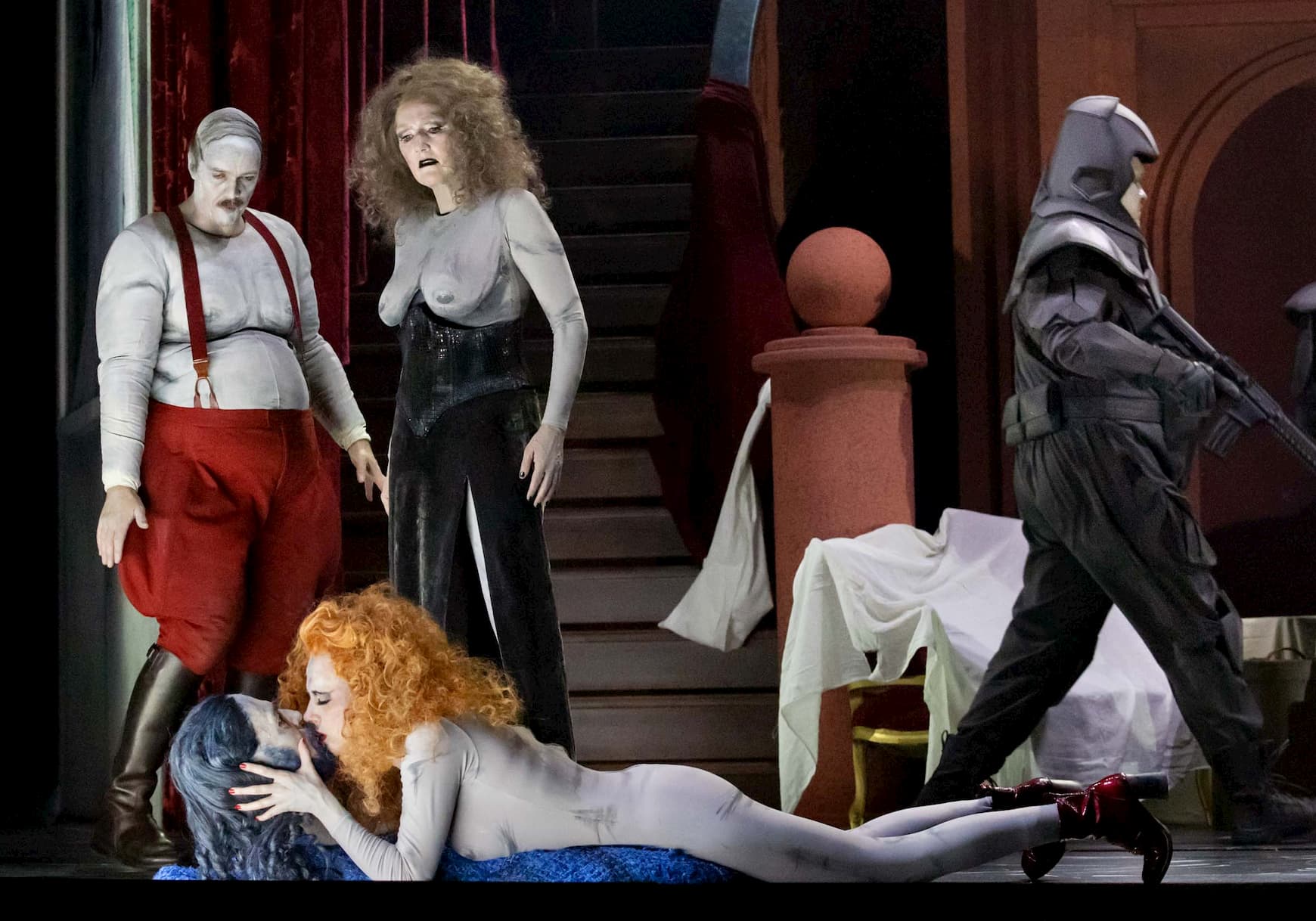
This is a hard one to sum up. Mondtag’s staging undoubtedly looks fantastic, the fascist horror comic book aesthetic brought to life most successfully. His personenregie is also incredibly detailed and he was able to bring out such vivid and believable performances from his singers. And yet, I left the theatre with a sense that it didn’t quite all add up in terms of the concept. Musically, it was let down by Cook’s Salome, although she did give so generously of herself in her stage presence and physicality. Fortunately, Pérez and his orchestra were thrilling and the remaining cast was at the level one would expect here. The audience responded with warm applause at the close, particularly so for Pérez and the orchestra.
 operatraveller.com
[…] quantity this year. At Opera Ballet Vlaanderen, Ersan Mondtag directed a visually adventurous Salome, with Alejo Pérez leading the house orchestra on coruscating form. Unfortunately, Allison […]