Britten – War Requiem
Soprano – Silvia Sequeira
Tenor – Marco Alves dos Santos
Baritone – André Baleiro
Coro da Escola de Música do Colégio Moderno, Coro do Teatro Nacional de São Carlos, Orquestra Sinfónica Portuguesa / Graeme Jenkins.
Concert performance.
Teatro Nacional de São Carlos – Teatro Camões, Lisbon, Portugal. Saturday, January 18th, 2025.
As readers will be aware, while its beautiful historic home is being restored, the Teatro Nacional de São Carlos is, quite literally, taking the show on the road, performing in venues throughout the Portuguese Republic. As part of a miniseries reflecting on the theme of War, sadly all too pertinent these days, the house chose to mount this single concert performance of Britten’s War Requiem at the Teatro Camões, a modern building, located in the grounds of the 1998 Expo. The Camões is certainly a visually attractive theatre in which to perform, but is less than ideal for acoustic music as the acoustic itself is very dry. This, in turn, had implications for the performance and the direction that it took. From my seat in the centre of the plateia, the sound was generally well balanced between the disparate forces, despite that dryness of the acoustic.
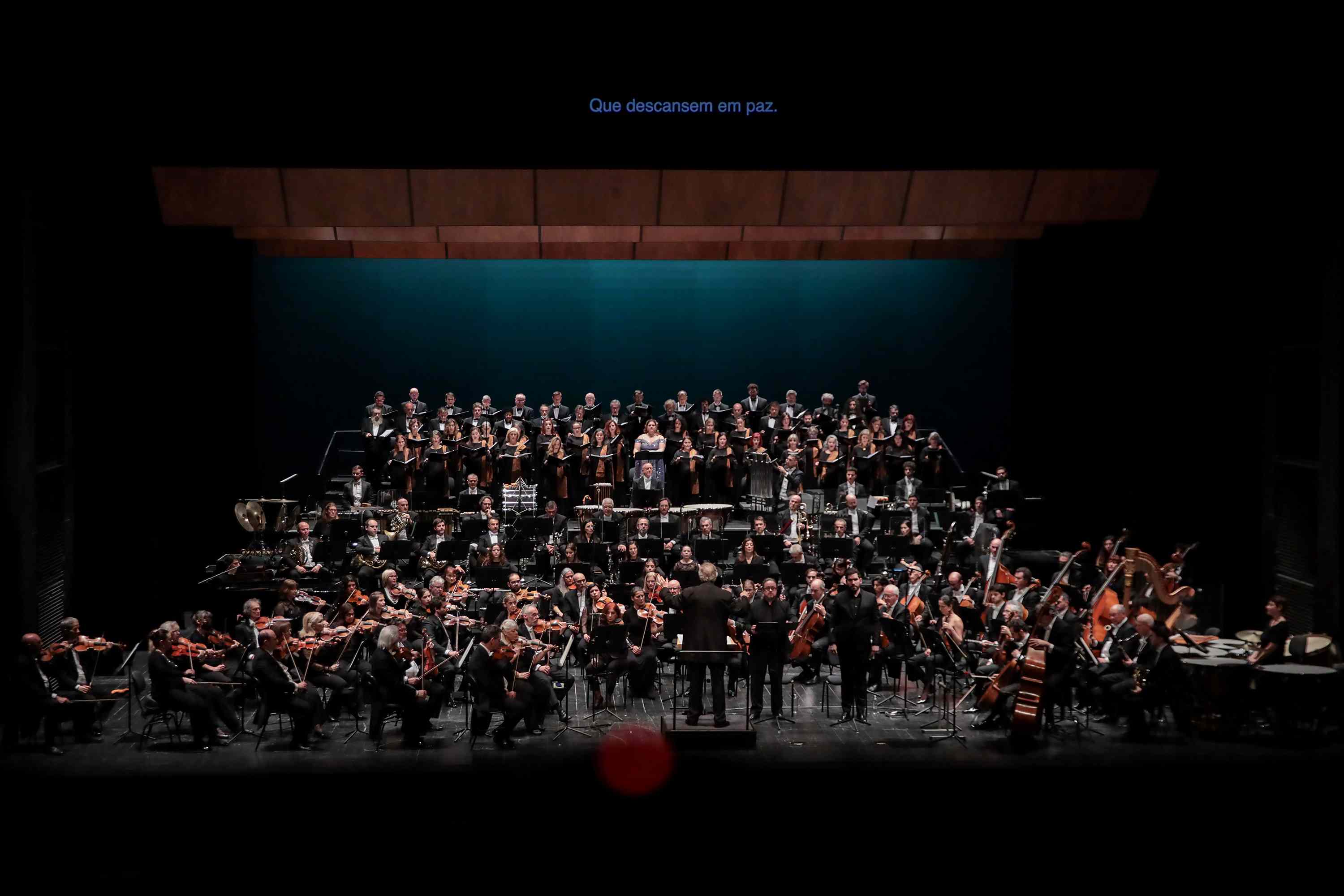
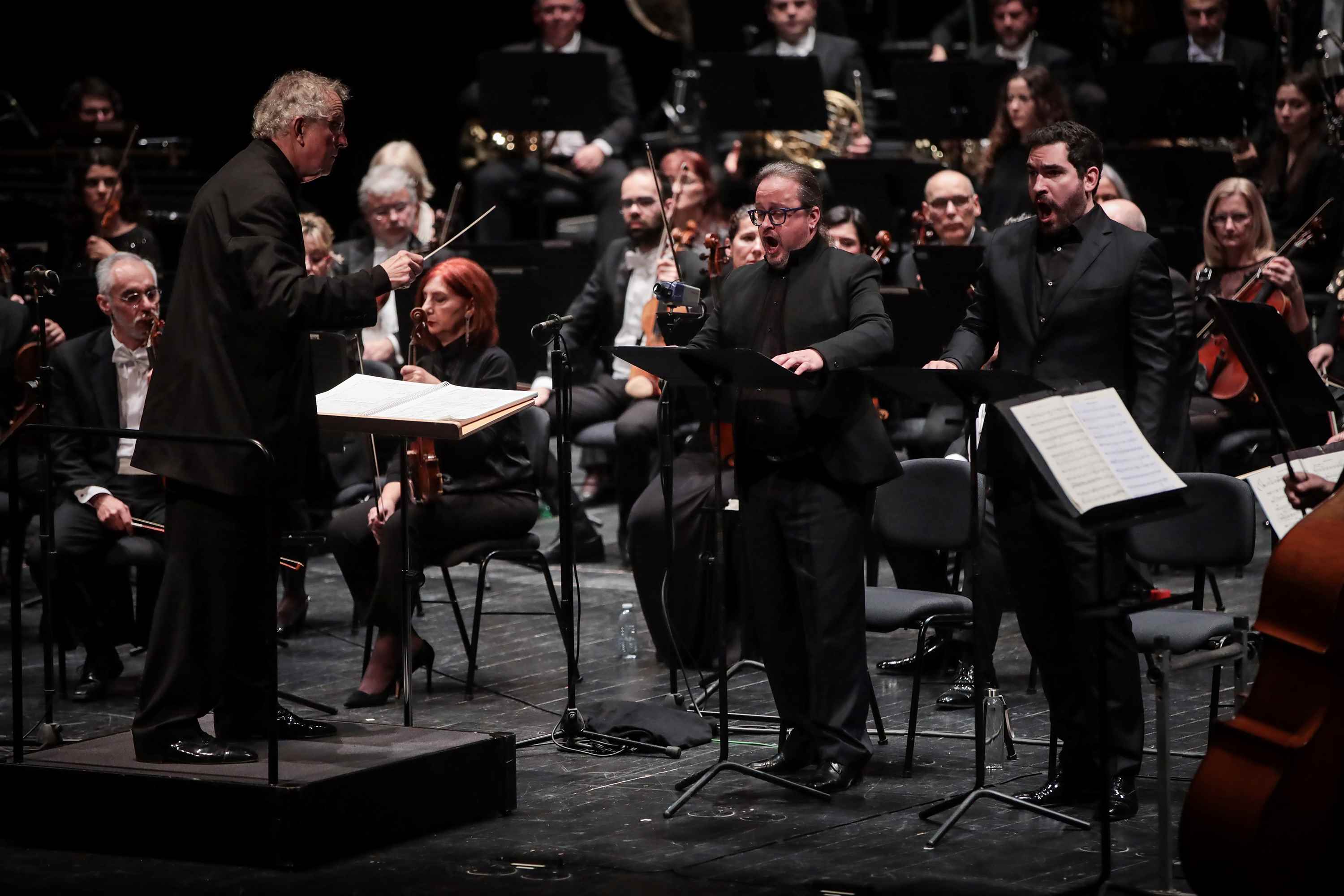
The musical direction of the evening was confided to Graeme Jenkins, a regular visitor to this ancient city where the Tagus meets the Atlantic. He led a cast made up of Portuguese singers, alongside the children of the Escola de Música do Colégio Moderno and the TNSC chorus and house orchestra, the Orquestra Sinfónica Portuguesa. It struck me that Jenkins’ interpretation may have been more appropriate for a venue with considerably more resonance. He kept a very tight control of the disparate forces, maintaining an excellent unanimity of approach, although it did leave me with a sense of wanting him to let his forces loose, particularly in the ‘dies irae’ and ‘libera me’. In a much more resonant building, Jenkins’ approach would be much more effective, but here I longed for him to bring more energy, to push the work forward, and to let the orchestra and adult chorus off the leash. That said, in the more reflective passages, Jenkins’ approach felt far more satisfying. Despite the challenges of the acoustic, he used the pauses in the music to bring a sense of both desolation and drama that I missed elsewhere. That moment before ‘you are the enemy I killed my friend’ was preceded with a seemingly endless pause that, when that line came, made it even more chilling. The ‘in paradisum’ that followed, brought out so much feeling, with Silvia Sequeira’s soprano soaring over the forces from the rear of the stage, and Marco Alves dos Santos and André Baleiro’s tenor and baritone finding a consoling warmth in their ‘let us sleep now’.
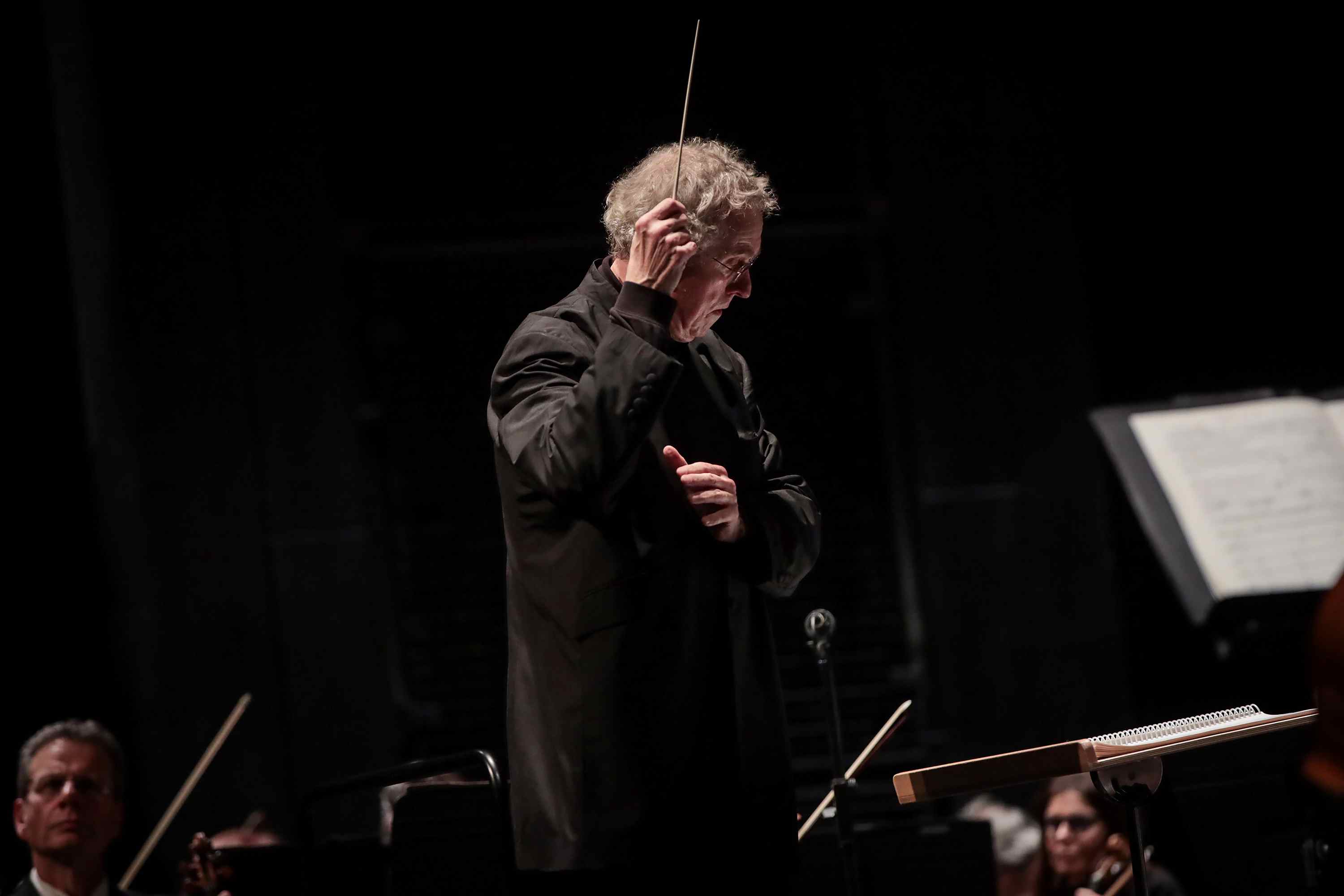
Similarly, the quality of the playing that Jenkins obtained from the orchestra was outstanding. Perhaps as a result of the acoustic, there was a clarity to the sound that seemed to have an almost liquid focus. There was a precision to the attack that belied the, presumed, unfamiliarity of this music and the orchestras made it sound as if they had been playing it all their lives. Jenkins managed to elicit a comprehensive range of colours from his musicians, making both the vibrant tuttis and the strangeness of the individual sounds emerging from the chamber orchestra count.
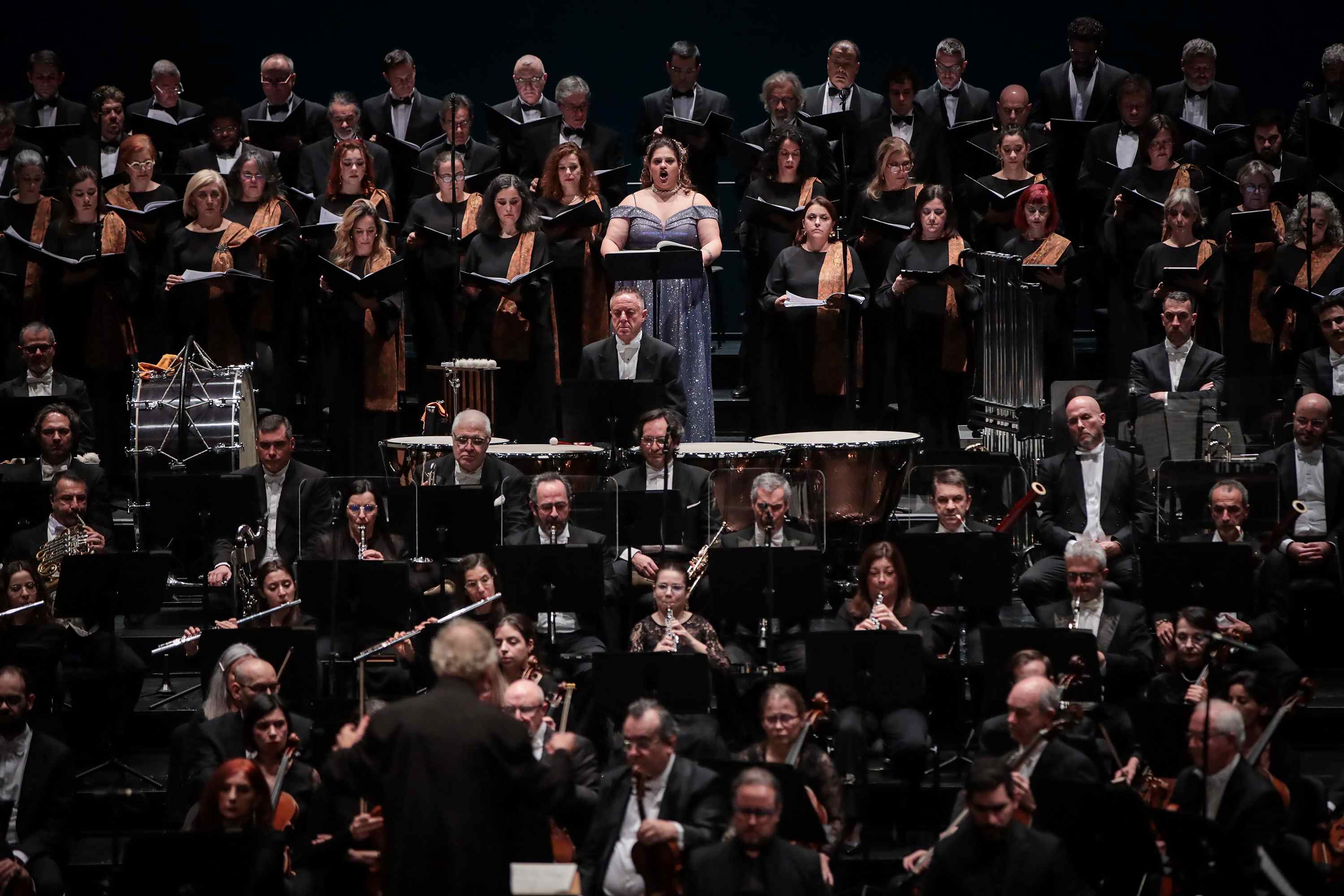
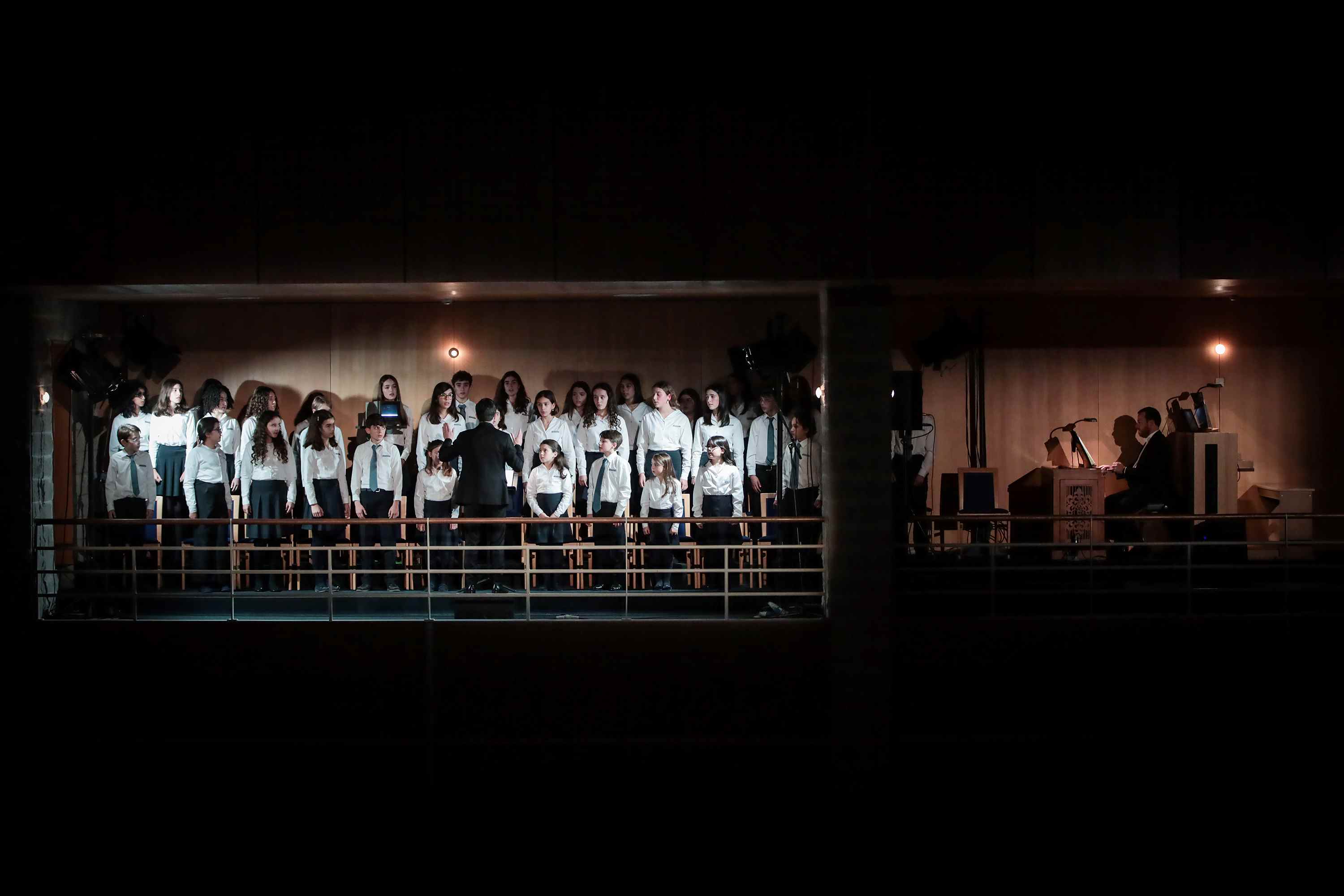
The adult chorus, prepared as always by Giampaolo Vessella, also had a good evening. They almost went astray in the ‘recordare’, where things threatened to fall apart, but otherwise sang with generous tone and unanimous approach. I did, however, leave with a sense that they were slightly understaffed. They were around sixty strong and in this acoustic and from my seat, there were moments where they were somewhat recessed in the sound picture. Still, they dispatched the fugal writing in the ‘offertorio’ with almost improvisatory precision and their tuning in the difficult a cappella passages in the ‘kyrie’ and at the close was absolutely impeccable. As indeed was the tuning of the children, singing from a side balcony, bathing the audience in the luminosity of their singing. They had also been superbly prepared by Francisco Pinheiro, singing with real confidence and extroversion, precision of attack, and similarly impeccable tuning in those very tricky closing pages.
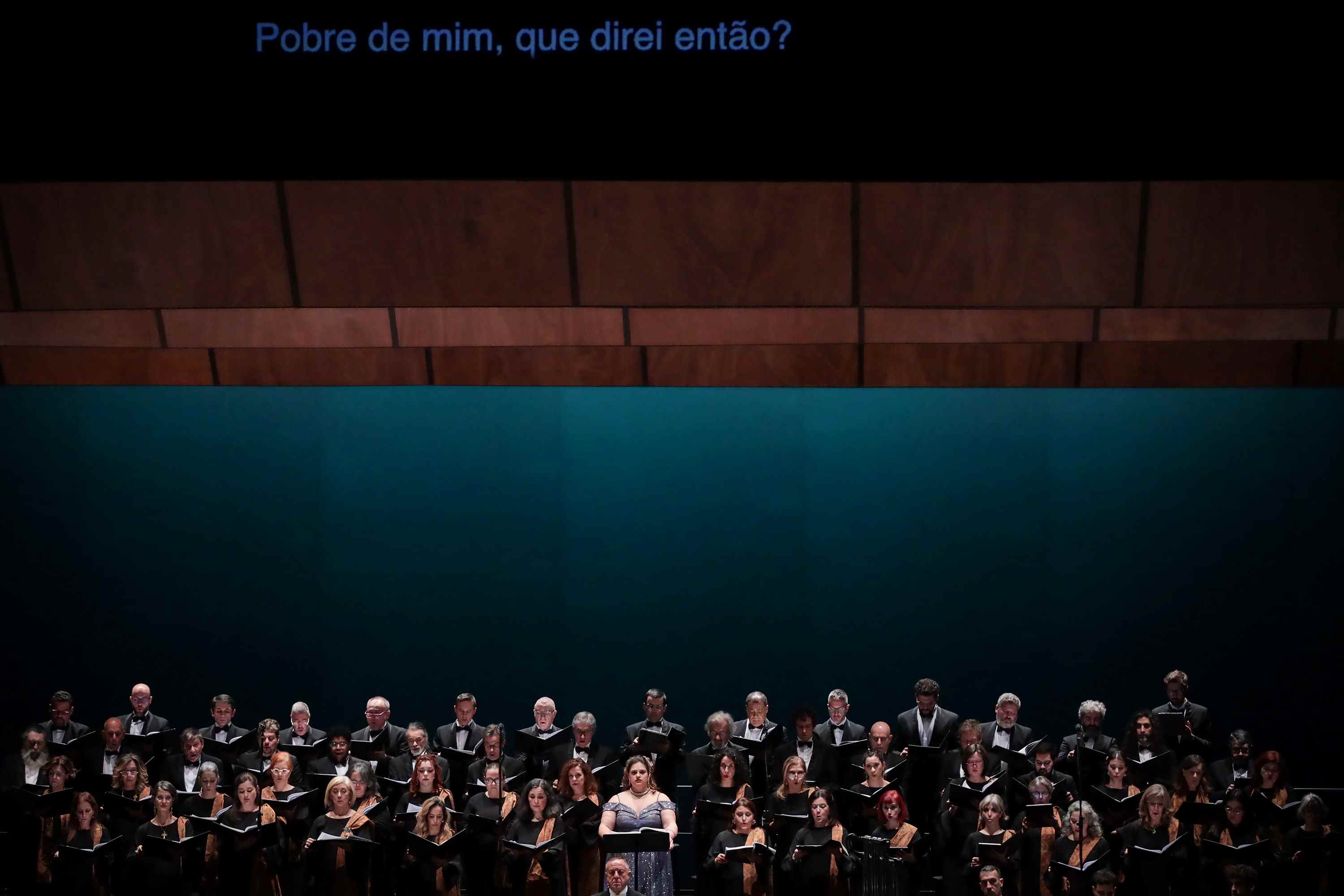
The solo singing gave significant satisfaction. Sequeira dispatched her music with hieratic confidence, ringing out over the orchestra. She also found an autumnal beauty and consolation in the more reflective pages, singing with a smooth legato and warm tone. Sequeira is undoubtedly an extremely musical singer, she knows precisely how to phrase the music and bring out both its searching extroversion and its reassuring succour. She has one of the most naturally beautiful soprano voices I have heard in a very long time. That said, I still can’t dispel doubts in my mind that her technique remains a work in progress. To my ears, there’s a lack of the support being completely lined up that was most apparent in the long, forceful lines of the ‘sanctus’. I really hope that Sequeira has good people around her guiding her to firm up the technique, because she’s an exciting talent with an instrument of rare quality, combined with a deeply instinctive musicality.
Baleiro sang the baritone part with attentive intensity. His was a lyrical reading of his music, focused on an inward line and a lieder singer’s attention to the text. Baleiro made a valiant attempt to support the long rising lines of ‘Be slowly lifted up’, although it needed a concentration of support to carry it through to the trumpet fanfares. That said, he found a haunted depth to his closing ‘I am the enemy you killed my friend’, by draining the colour away from the tone, bringing out the horror and finality of that moment in a way that was deeply affecting. Baleiro’s was an intelligent and thoughtful account of his music.
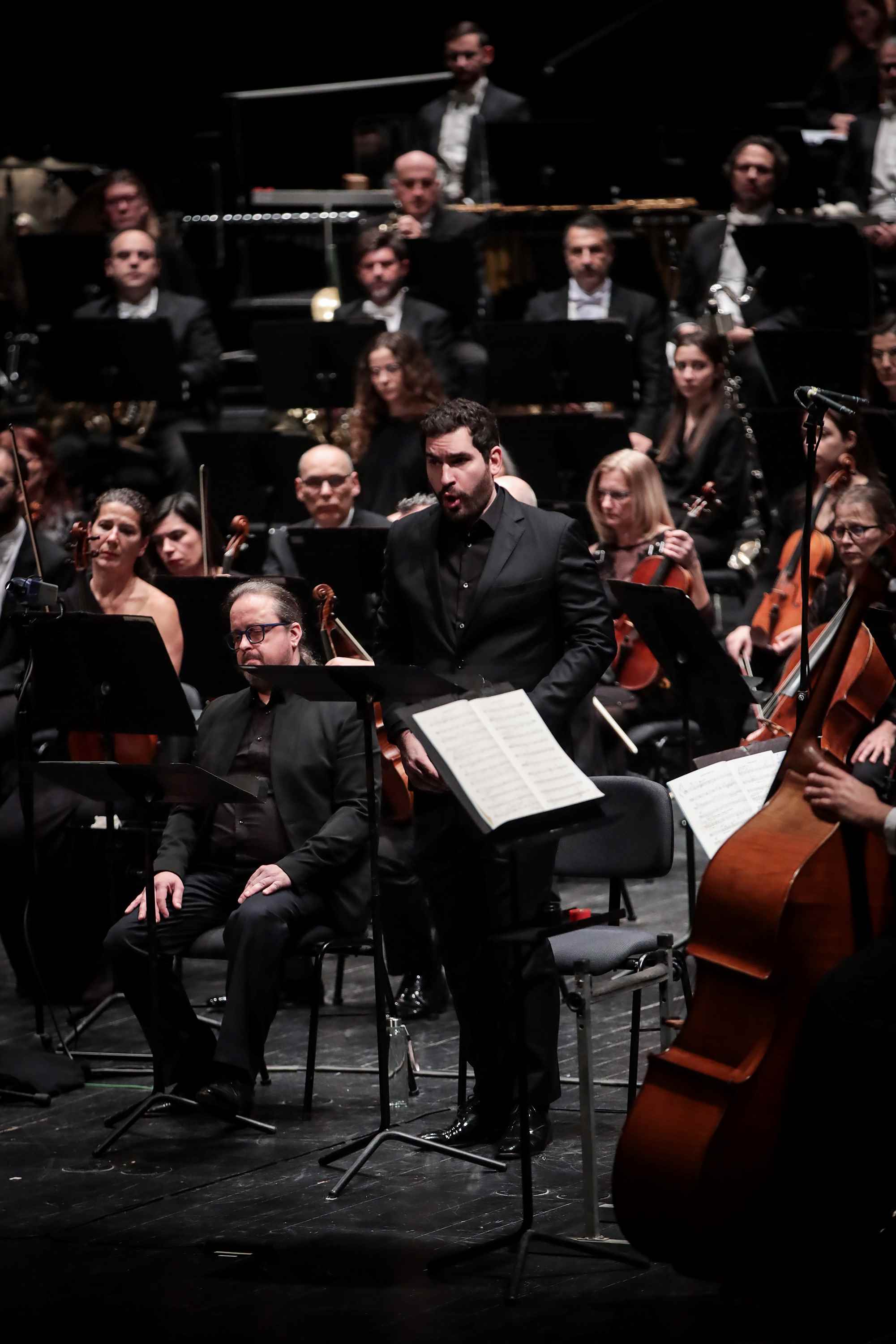
Dos Santos was absolutely superb in the tenor part. Having been one of the generation of Portuguese singers to have trained in London, England, he brought an affinity to the music that was seriously impressive. His diction and the sheer detail he found in Owen’s poetry was remarkable, filling every single word with meaning, colouring the text so that he brought out so much detail and feeling. His tenor is in excellent shape, lyrical yet rich in overtones so that he filled this difficult acoustic in a burst of sound. If the São Carlos has any plans for a Billy Budd, in Dos Santos and Baleiro they most certainly have two voices that would make an excellent Vere and Billy.
This was an evening that showed the São Carlos at its considerable best. The orchestral playing was excellent, the choral singing showed discipline and unanimity of approach, and the solo singing was honourable and moving. I did have some issues with Jenkins’ approach, a sense that his reading was more suited to a different space. Still, those closing pages were unbearably moving, just as they should be.
 operatraveller.com
[…] Blancas gave us an electrifying Kostelnička. The São Carlos also presented the Britten War Requiem, with Sequeira radiant as the soprano soloist, and Marco Alves dos Santos and André Baleiro […]