Verdi – Don Carlo
Don Carlo – Ştefan Pop
Tebaldo – Elisaveta Rimkevitch
Elisabetta – Silja Aalto
Conte di Lerma – Jasper Leppänen
Rodrigo – Andrey Zhilikhovsky
Filippo II – Timo Riihonen
Eboli – Margarita Gritskova
Carlo V – Janne Sihvo
Grande Inquisitore – Mika Kares
Un araldo reale – Yusniel Estrada Viciedo
Voce del Cielo – Saara Kiiveri
Finlands nationaloperas kör, Suomen kansallisoopperan orkesteri / Hannu Lintu.
Stage director – Davide Livermore.
Suomen kansallisooppera ja -baletti – Finlands nationalopera och -balett, Helsinki, Finland. Friday, January 31st, 2025.
The promotional material for this new production of Don Carlo at the Finnish National Opera, might lead one to expect that we would be getting the five-act French version, given that the title and characters’ names are listed in the langue de Molière on the house’s website. In fact, what we got was the four-act Italian version, given with a single intermission. The staging, confided to Davide Livermore, is a coproduction with the Kongelige Teater in Copenhagen, where it was previously seen in the Danish capital. Tonight marked its Finnish premiere, with an international cast assembled under the direction of the house Music Director, Hannu Lintu. For consistency with the other reviews of Don Carlo(s) on this site, any reference to acts during this review will be in line with the five-act version.
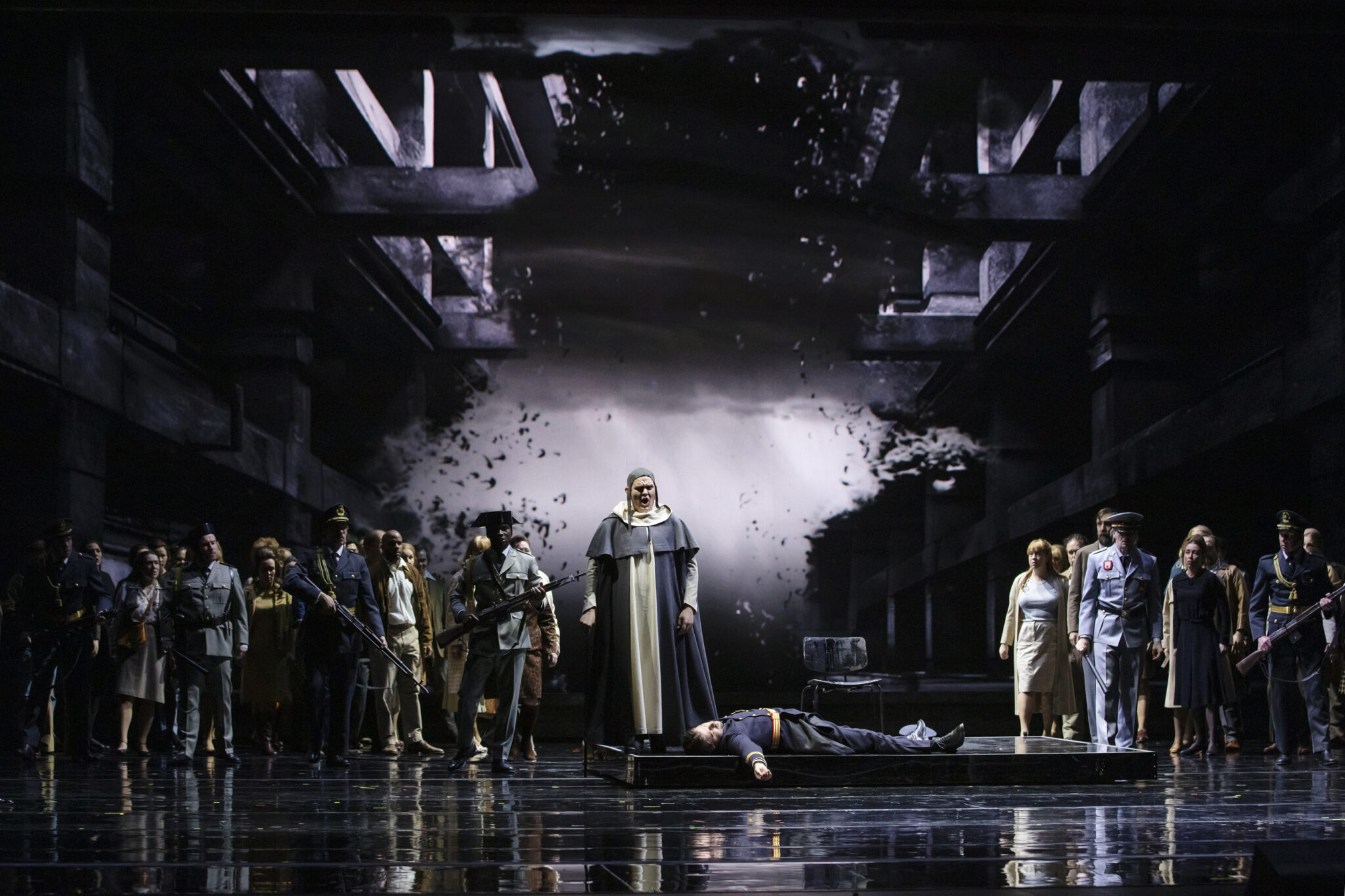
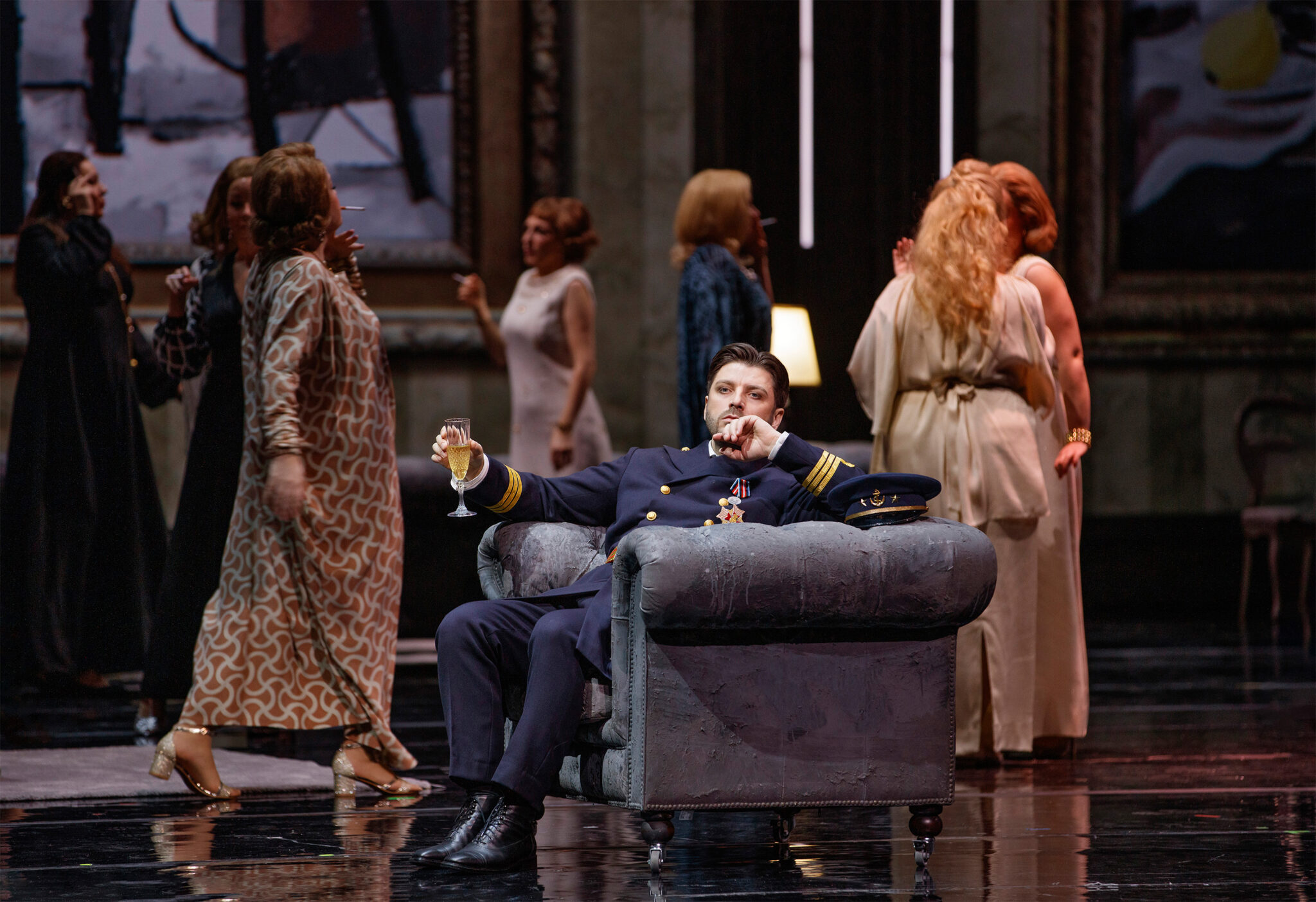
I must admit that this Don Carlo is the best thing I’ve seen by Livermore, a director who hasn’t always enthused me. Here revived by Diego Mingolla, Livermore gives us a staging that truly illuminates the libretto, making the interactions between the characters credible and vivid. He sets the action in what appears to be the Spanish State during the 1950s Francoist era. The sets and costumes, complete with a car that carried characters across the stage, reflected that period, yet it didn’t shirk from showing the brutality and horror of the clerical cruelty that has blighted the history of the Iberian Peninsula over the centuries. The auto-da-fé was accompanied by torture scenes reminding us of the horror inflicted in the name of religion. Similarly, the big confrontation between Filippo and the Grande Inquisitore was extremely powerful, because the power of the church over the king, and his status as a puppet of religion, was thrillingly brought to life through the physicality and vocalism of Timo Riihonen and Mika Kares, the latter unafraid to physically overpower the king, reminding him of his true place.
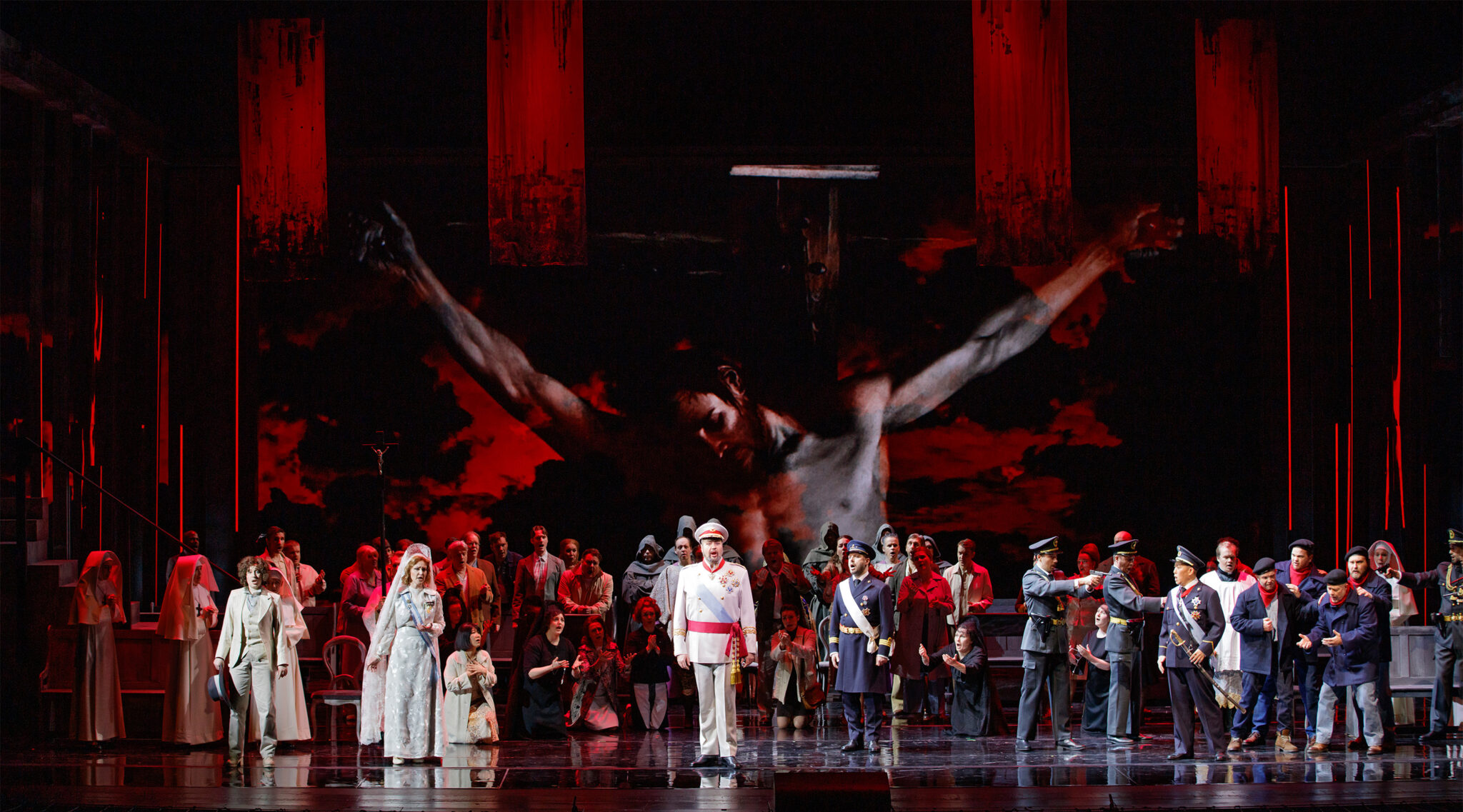
In common with his Trovatore that I saw in Parma in 2023, Livermore accompanied his stage pictures with video, produced by D-Wok at the back of the stage. Indeed, it felt that some of the images were the same as that Parmigiana production, including the anonymous views of what appeared to be a university library at the start of Act 2. The use of the video did serve to add context to what we saw – for instance portraits of Elisabetta and Eboli during the King’s big monologue, or images of Francoist troops parading during the subsequent big bass-off. At others, such as in that opening scene of Act 2, it felt superfluous and something of a glorified screensaver. The positive is that it never distracted from the clear and believable personenregie.
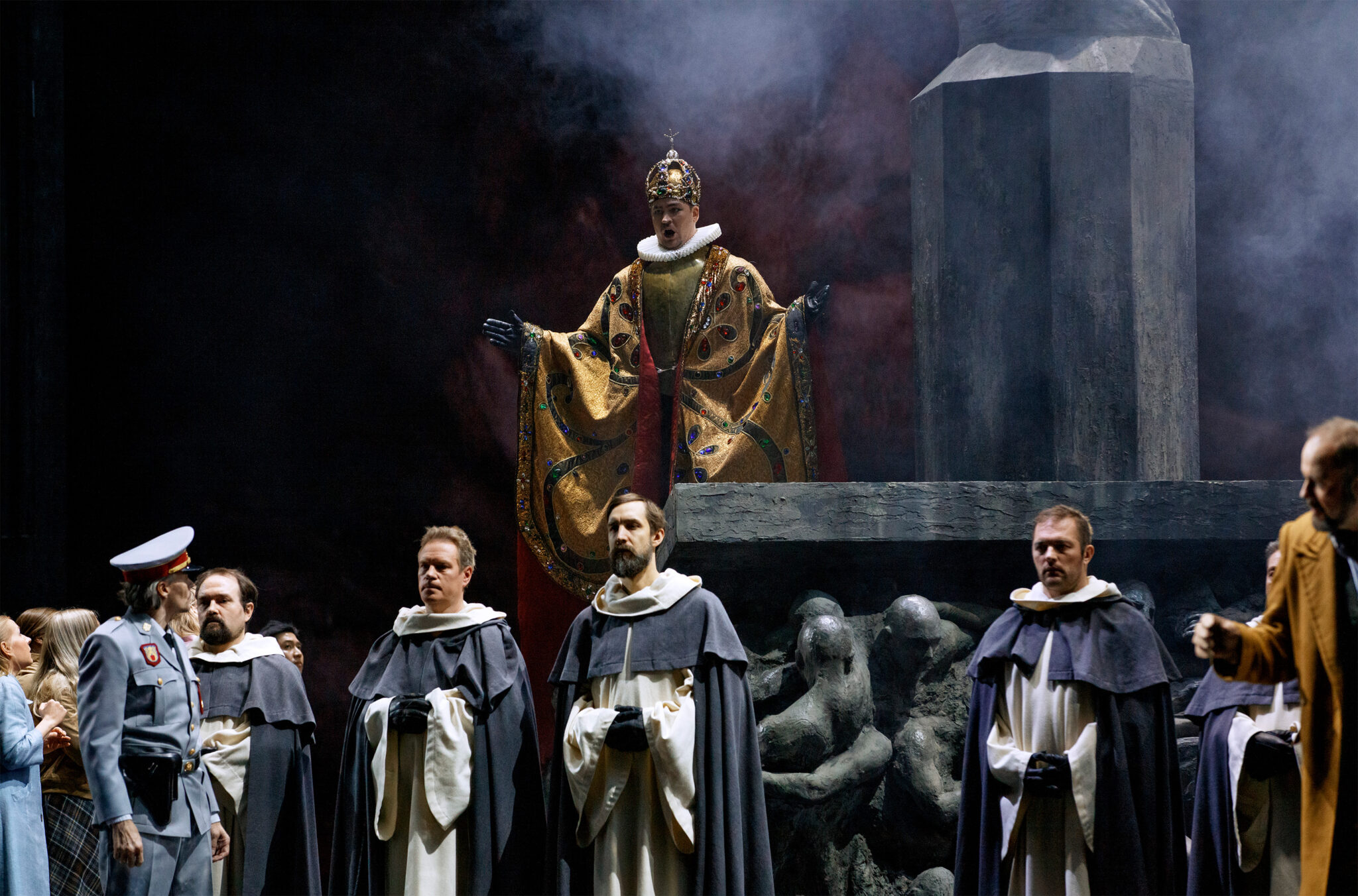
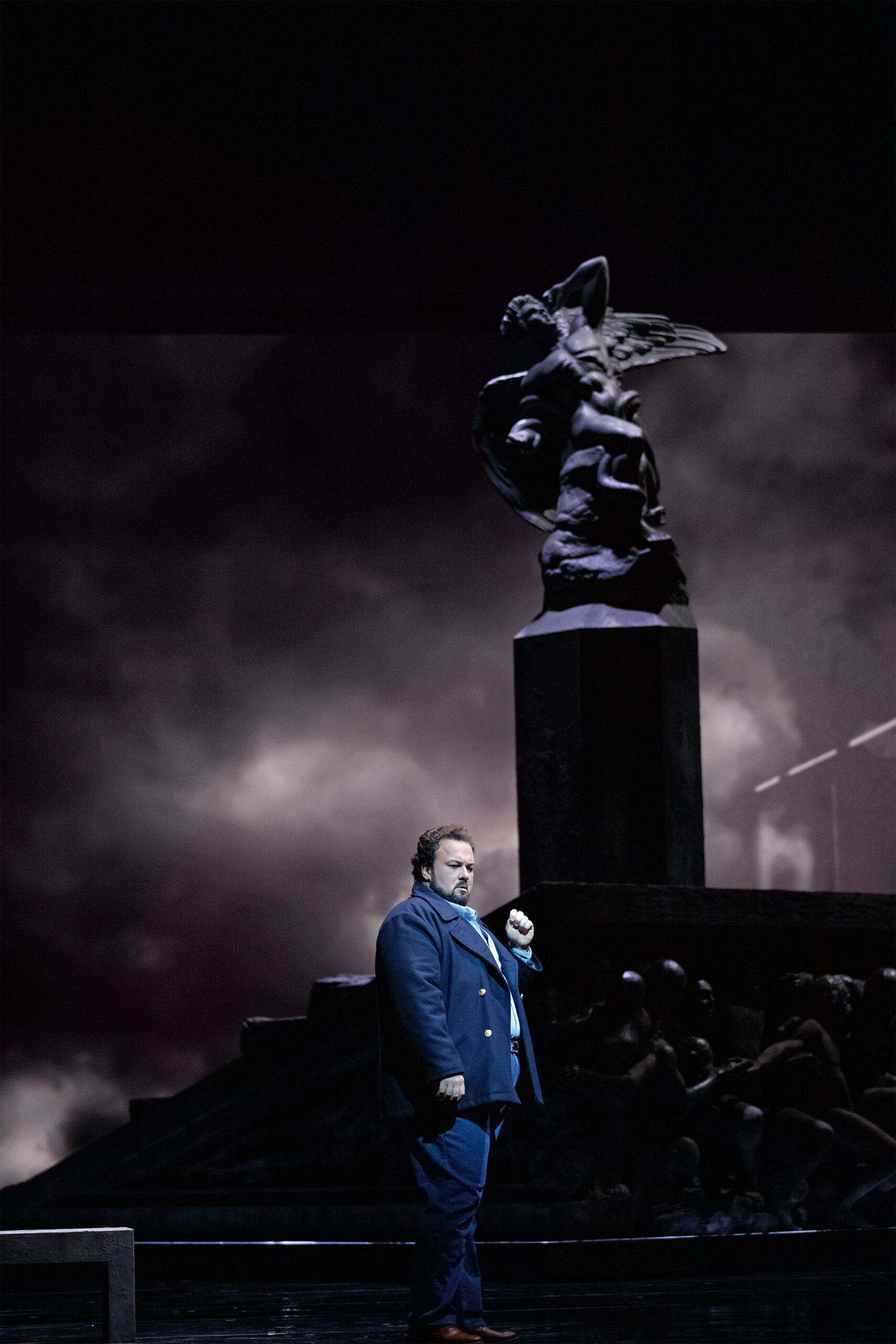
Indeed, Livermore’s staging, more than any other I’ve seen, made so much more of Carlo’s mental illness and faltering grasp of sanity. References to Carlo’s mental illness abound in the libretto. For instance, in his duet with Elisabetta, he sings ‘Piansi, pregai nel mio delirio, mi volsi a un gelido marmo d’avel’, or of course later on as the crowd exclaims ‘L’acciar! Innanzi al re! L’infante è fuor di sé’ as Carlo draws his sword. It felt that in Act 5, during the Carlo/Elisabetta duet, that her love for him was less a romantic one, more a maternal pitying of someone who had lost everything. Similarly, the opening of Act 2 and of ‘Tu che le vanità’, saw statues on the stage come to life, reinforcing that sense of a tentative grasp of reality. I found it an extremely convincing and thoughtful take. Where I felt Livermore underplayed things, was in the latent homoeroticism that abounds in the work, whether in the Carlo/Posa duets, or in the confrontation between Filippo and Posa, the latter a moment that should crackle with unresolved and barely concealed sexual tension. Here it felt lacking, although there was a tenderness in Posa’s demise that did suggest a selflessness on his part.
Musically, this was an evening that showed this estimable house at its very best. The orchestral playing was absolutely superb. Those opening brass phrases, suggestive of loneliness and despair, were played with beauty and accuracy, attack absolutely unanimous throughout. The strings played with gossamer pulchritude of tone, with intonation true and precise. I found Lintu’s tempi to be admirably swift, although he did bring the closing duet to a bit of a stasis, which was unfortunate given the dynamism with which he had paced the preceding three and a quarter hours. Lintu has an admirable ear for orchestral colour, and used the splendid acoustic of this attractive theatre to bring out a range of colours in the band. He brought out the sense of birds in flight, as Elisabetta said farewell to the Contessa d’Aremberg, through the wind writing that soared quite handsomely. Similarly, he gave the introduction to ‘Ella giammai m’amò’ a sense of urgency, of volcanic pain simmering below the surface, in a way I’d never heard it before, but felt completely convincing. Throughout the evening, he, and his musicians, paid scrupulous attention to Verdi’s dynamics and markings, giving the work a sense of lyricism that was truly Italianate. Most impressive. Impressive also was the singing of the chorus, prepared by Marge Mehilane and Tatu Erkkilä. They sang with stagging precision of tone and blend, filling the theatre in a warm and generous blaze of sound. It was regrettable, then, that the staging had them singing at the back of the stage during the auto-da-fé as I really wanted to be bathed in as much of that sound as possible. It was tremendous. The tuning of the tenors and basses in those tricky, off-stage, unaccompanied sections at the start of Act 2 was immaculate. Without doubt this is one of the finest opera choruses I have had the privilege of hearing.
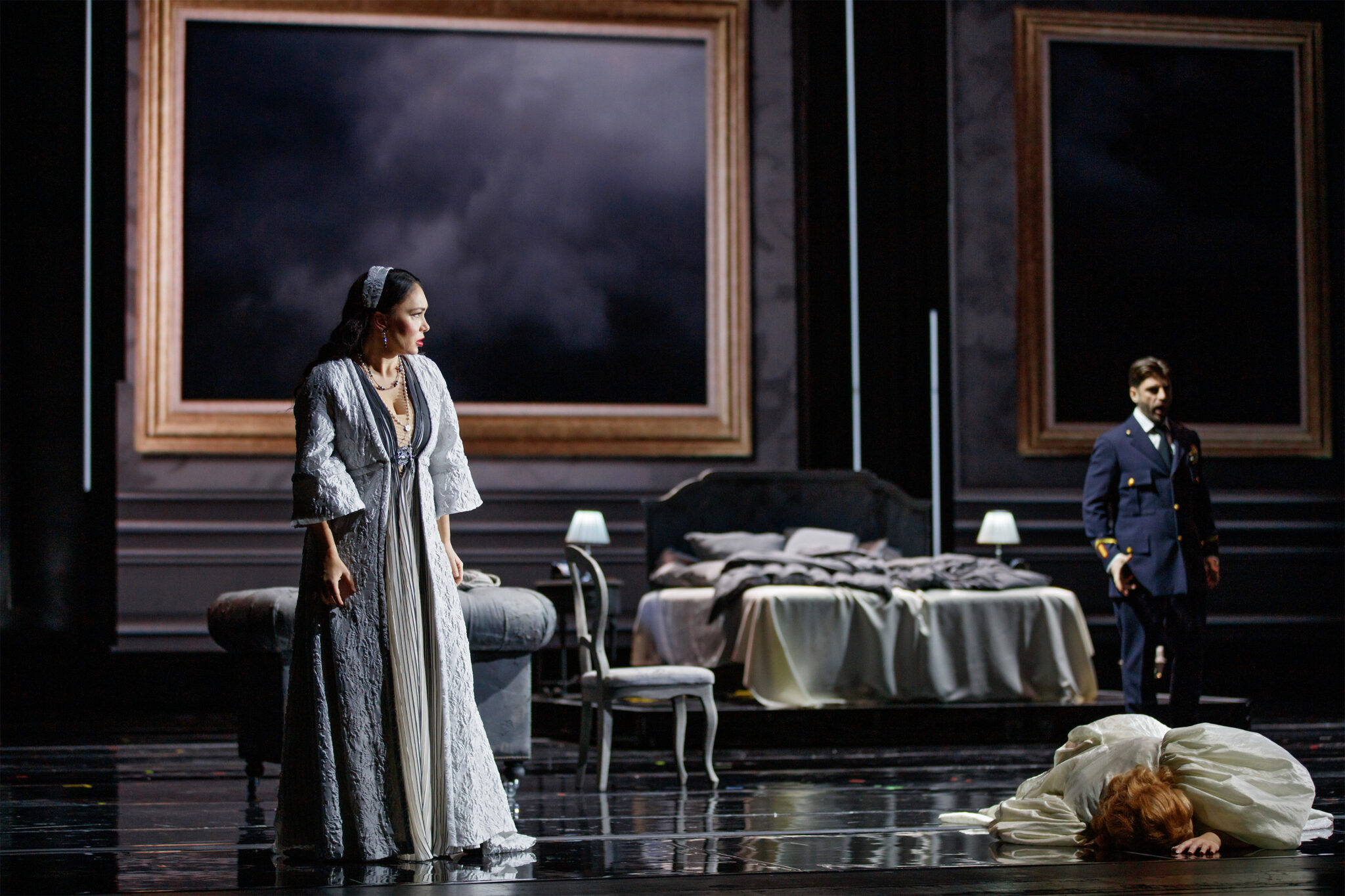
Ştefan Pop brought his customary Italianate tone to Carlo’s music. It took him a little while to find his stride, his tuning landing south of the note in the higher reaches during that opening Carlo/Posa duet. That said, he phrased his opening aria with beauty, a smooth legato, and made a genuine effort to pull back on the tone. Similarly, he found a genuine tenderness to the closing duet, bringing out that wistfulness through his fidelity to Verdi’s dynamics, in a way that was most affecting. Silja Aalto was a regal and statuesque presence as Elisabetta. Hers is a bright, slender soprano that was able to soar over the surging orchestral textures with ease. She has a well-schooled technique that showed a clear understanding of the Verdian style and sang in admirably clear Italian. She sang her big aria with genuine poise and lyricism.
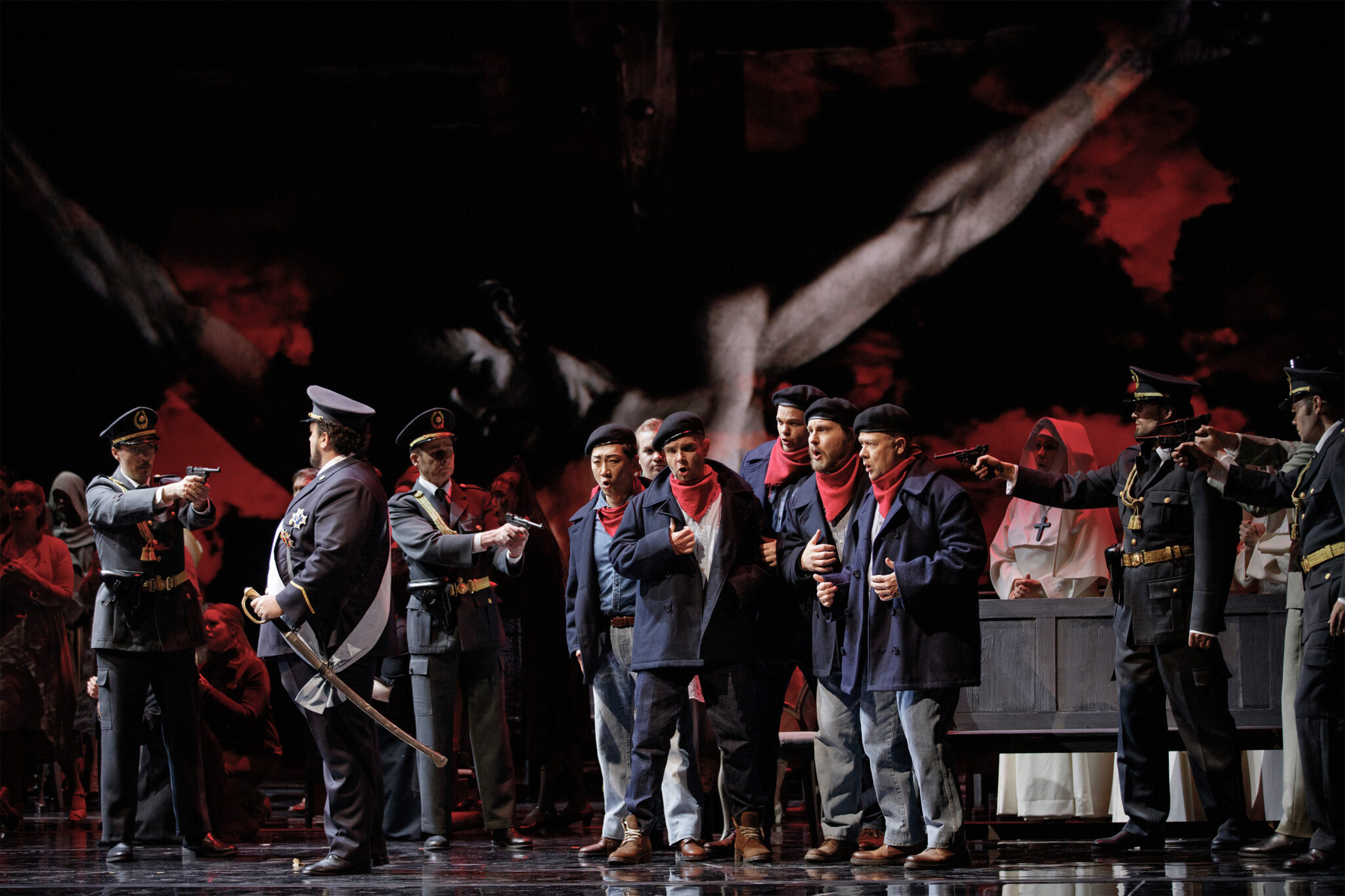
Andrey Zhilikhovsky gave us a magnificent Posa. His baritone is wonderfully firm, his Italian excellent, and his legato impeccable. He also gave us a genuine trill. He sang his big scene with seemingly endless lines, the voice defying gravity as it reached through the range, taking flight with masculine tone. It did feel that he kept the foot on the gas a little too much at the start of the evening, the tone sounding slightly forced, but this could well be first-night nerves as, once he got into his stride, he gave us singing of the utmost musicality and beauty of tone. Margarita Gritskova sang Eboli in a big, vibrant mezzo with an admirable dark richness of tone. Unfortunately, it seemed that the text was optional, lacking that clarity of diction and dramatic involvement that her colleagues brought. She dispatched the veil song with sensual abandon, while her ‘don fatale’ was sung with considerable volume and commitment. I just wish I could have made out some words.
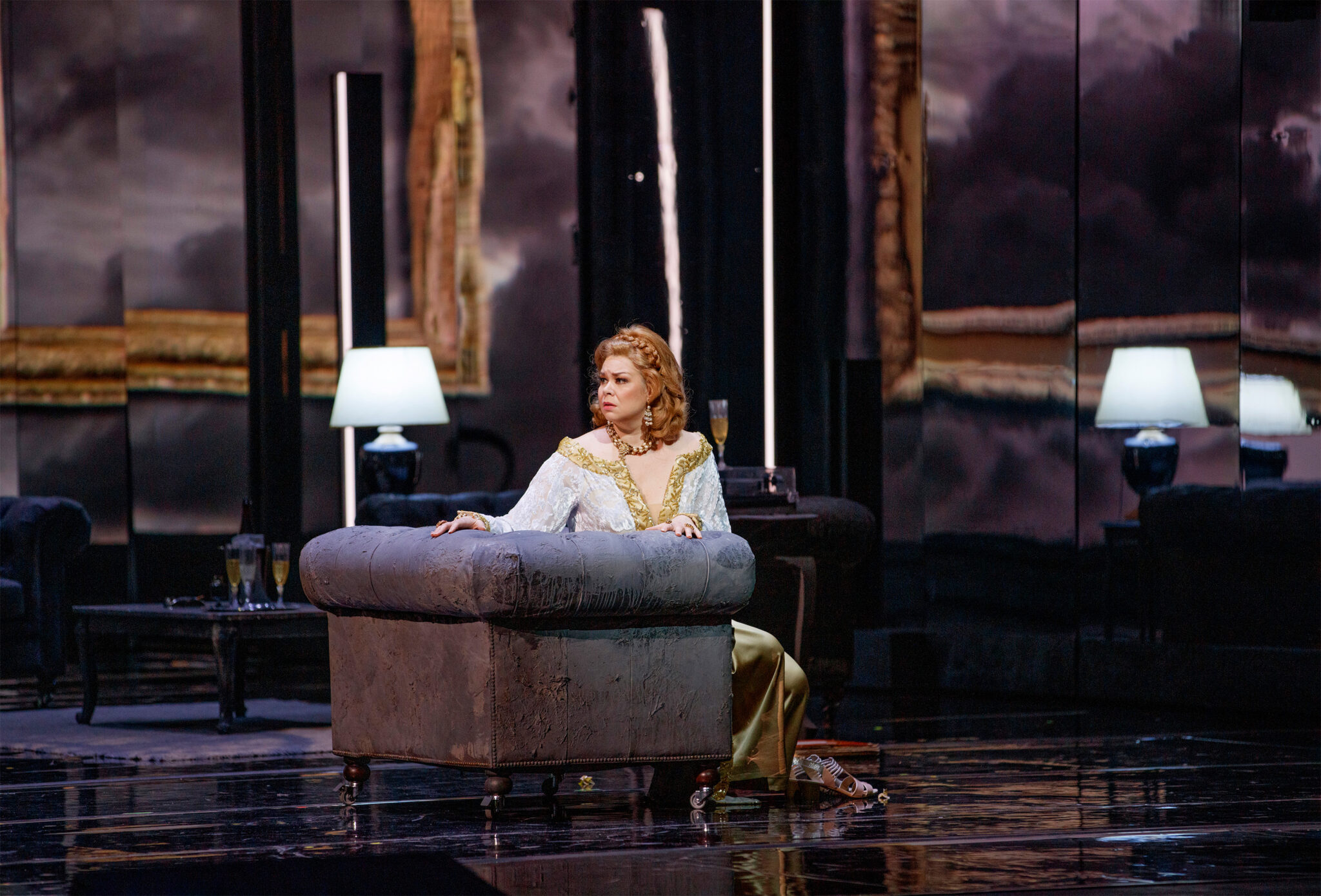
Riihonen took us deep into Filippo’s dark night of the soul with an extremely healthy and resonant bass. The energy that he and Kares brought to their scene together was absolutely electric. What a pleasure it was to hear two voices in their prime in these roles, both booming out tremendously into the hall, striking sparks off each other. It was thrilling. The remaining roles reflected the positive qualities of the house. Janne Sihvo sang the voice of Carlo V with an agreeably warm bass, Saara Kiiveri was a confident Voce del Cielo, while Elisaveta Rimkevitch’s Tebaldo was a game stage presence. The quality of the voices on display was most impressive.
There was so much to enjoy in tonight’s Don Carlo. Indeed, I found the entire evening utterly gripping, so that when the intermission came, I actually wanted to keep going since the drama was so vivid and perceptible. Livermore’s staging is most admirable, giving us a clarity of storytelling that I found extremely convincing, even if perhaps he could have made more of the latent homoeroticism under the surface. Musically, it was excellent across the board, with one reservation for Gritskova. The audience responded at the close with generous and warm ovations for the entire cast.
 operatraveller.com
[…] was a constant thread throughout the year, as he always is. In Helsinki, I saw a Don Carlo that has to be the best production I’ve seen by Davide Livermore. The choral singing was […]