Wagner – Götterdämmerung
Siegfried – Bryan Register
Gunther – Andrew Foster-Williams
Alberich – Scott Hendricks
Hagen – Ain Anger
Brünnhilde – Ingela Brimberg
Gutrune – Anett Fritsch
Waltraute – Nora Gubisch
Erste Norn – Marvic Monreal
Zweite Norn – Iris Van Wijnen
Dritte Norn – Katie Lowe
Woglinde – Tamara Banješević
Wellgunde – Jelena Kordić
Flosshilde – Christel Loetzsch
Koor van de Munt, Orchestre symphonique de la Monnaie / Alain Altinoglu.
Stage director – Pierre Audi.
La Monnaie – De Munt, Brussels, Belgium. Saturday, February 15th, 2025.
It wasn’t quite supposed to end like this. The Brussels Ring, marking the closure of Peter De Caluwe’s acclaimed tenure at this historic house, should have been entirely directed by Romeo Castellucci. However, as readers will surely be aware by now, Castellucci renounced the project early last year, leaving the house scrambling to complete the cycle on a reduced budget. It’s something of a miracle, then, that we got fully staged productions of Siegfried last fall, and now Götterdämmerung, with Pierre Audi taking over directing duties at very short notice.
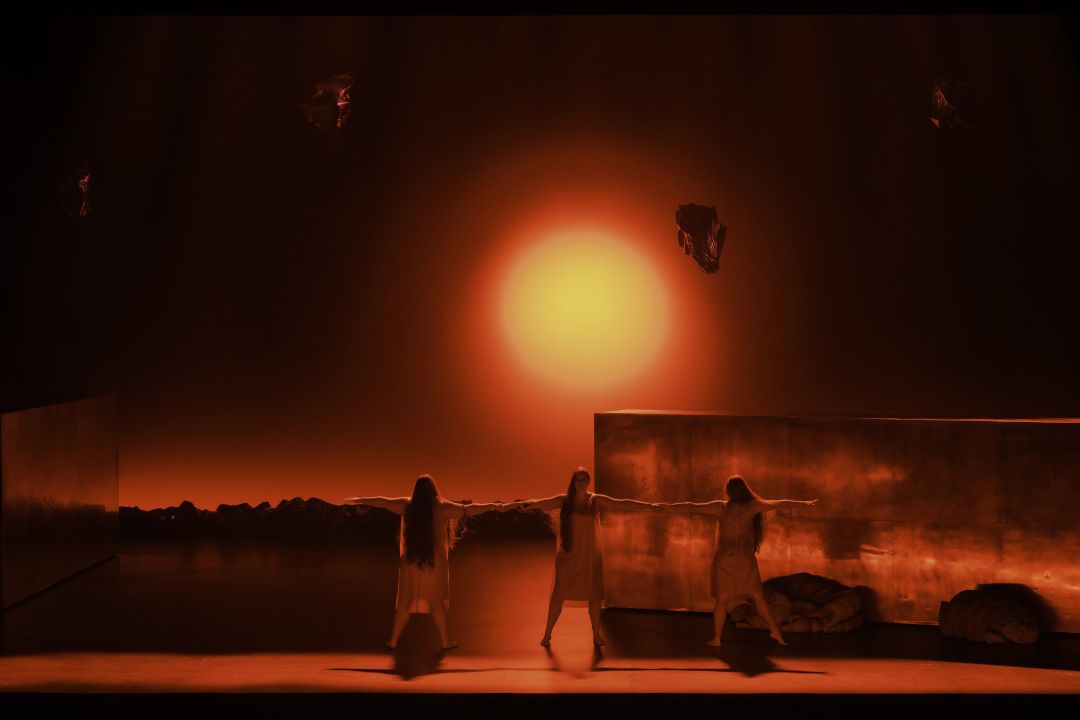
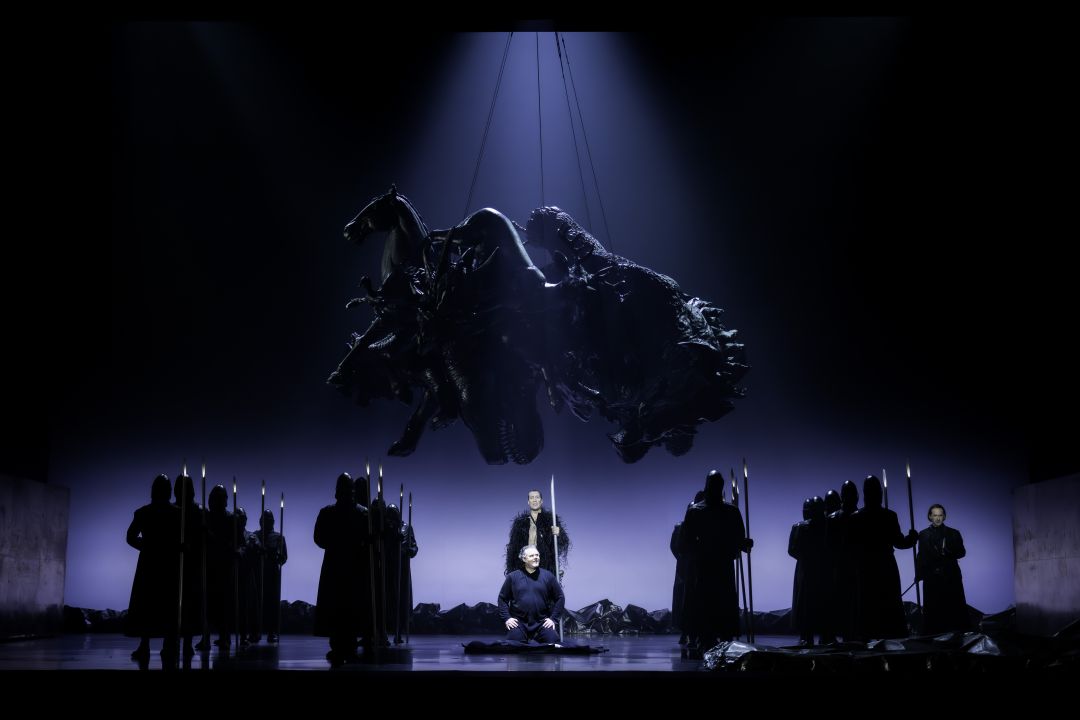
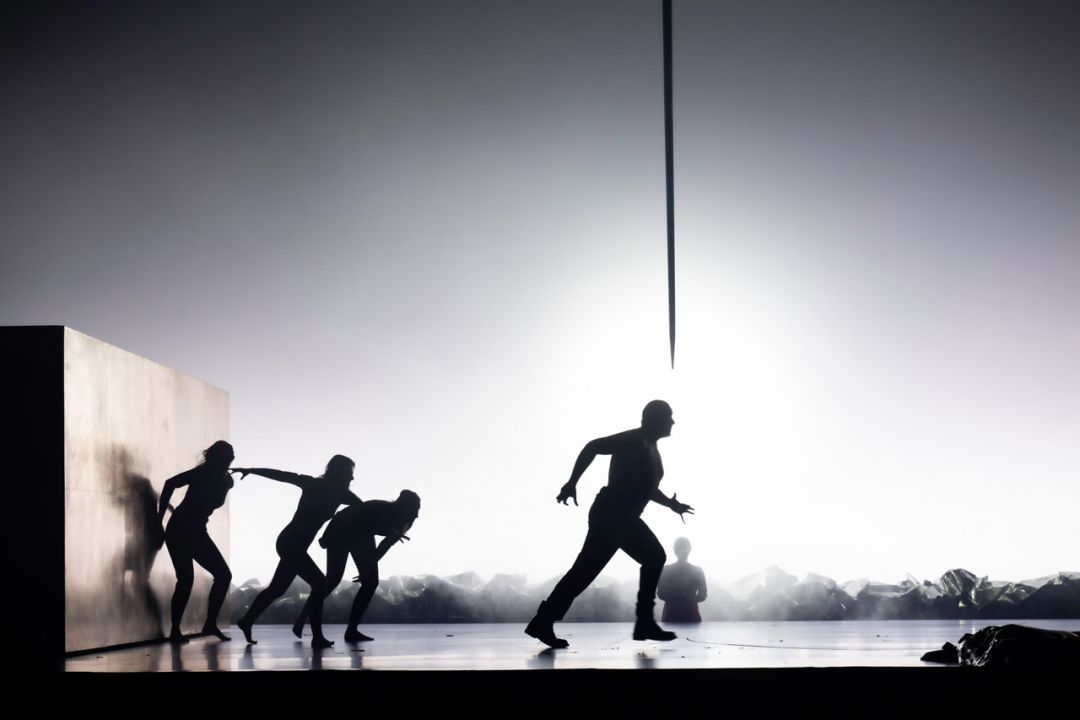
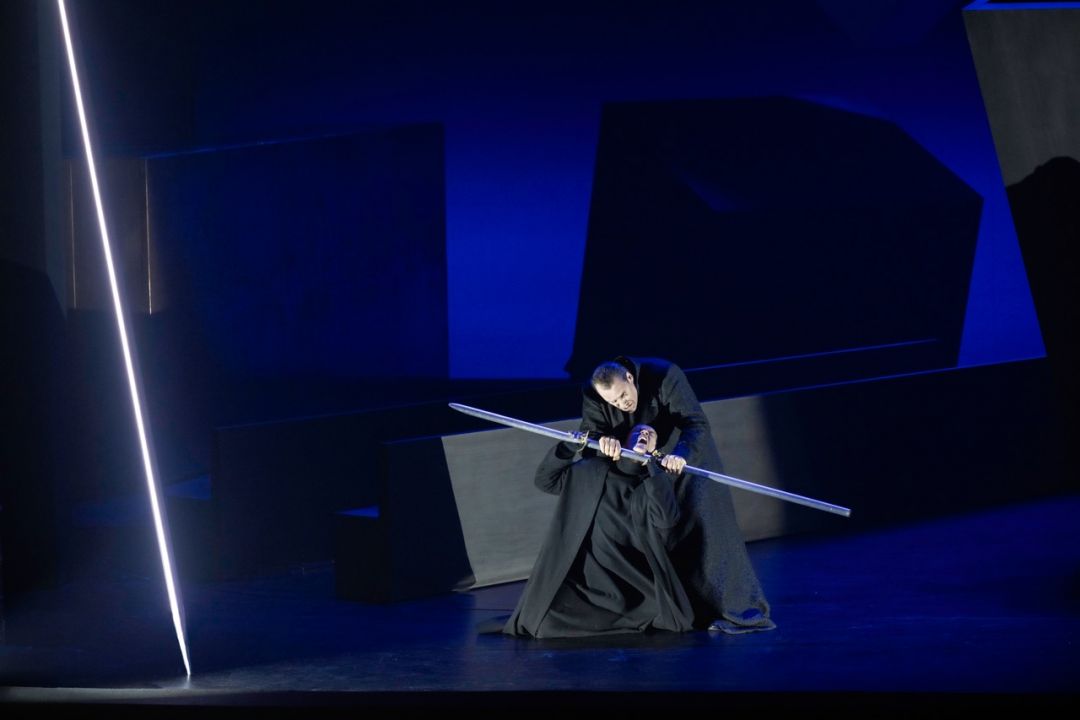
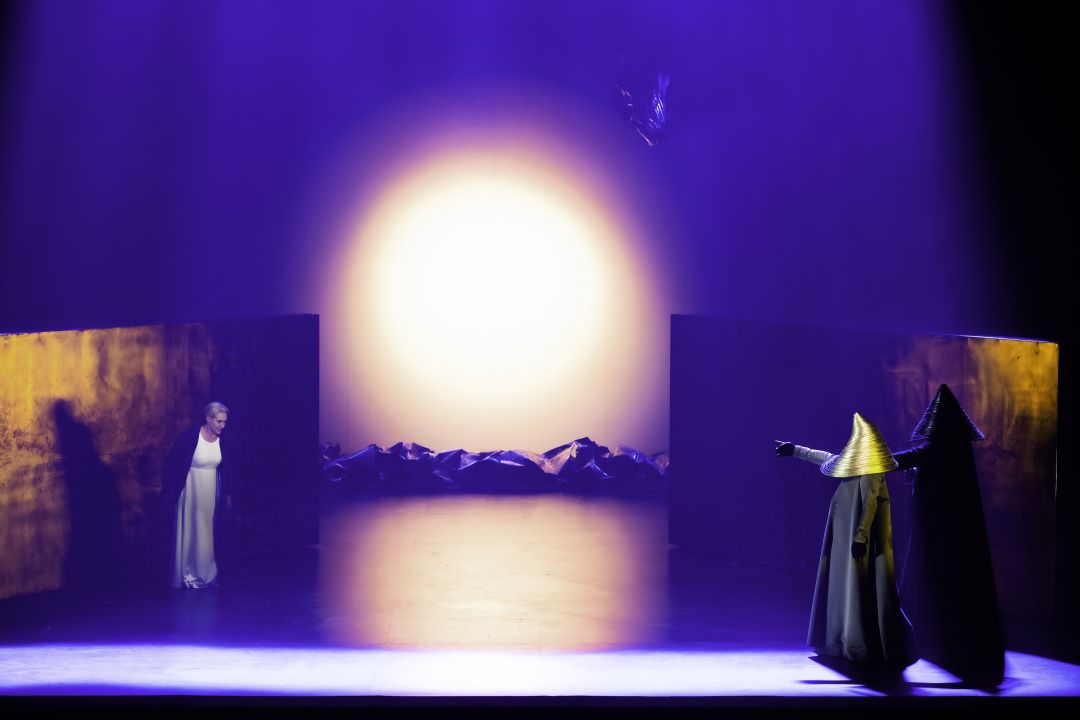
Audi’s is an extremely visual staging, focused on creating striking stage pictures. The sets, by Michael Simon, are minimalistic, constructed around two large blocks for Brünnhilde’s rock and the Norns and Rhinemaidens’ scenes that danced balletically around the rotating stage; while the Gibichung hall, was set in a place where blocks were hung from the ceiling and also circulated around the floor. As was in the case in Siegfried, Audi made use of video, by Chris Kondek, at the start and end of each act, showing children drawing and acting out aspects of the plot. In so doing, perhaps Audi was attempting to remind us of how universal stories of heroes and villains are, although I’m not quite sure how a story about a woman being abducted and forced to marry someone would be appropriate for children. Furthermore, this idea of a child-like story coming to life also felt rather underplayed, as if added on at the start and end of each act, and felt disconnected with the clean lines that Audi and his creative team gave us to look at. It was interesting how Audi parked a replica of the World Ash Tree on one side of the proscenium, and what I presume to be Wotan’s spear on the other. Yet again, it felt that these were placed there for visual interest, rather than engaged with.
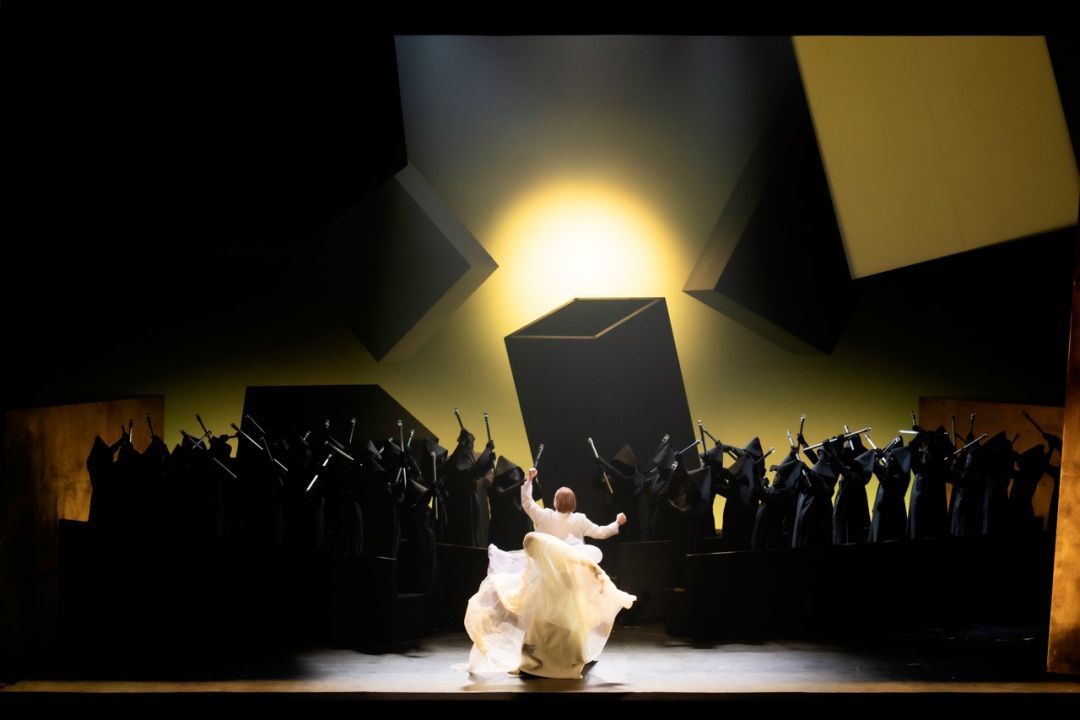
Given the limited preparation time that Audi and his team had, it’s perhaps unfair to critique his staging too comprehensively. And yet, I found his personenregie to be problematic. As with the clean lines of the set, his placement of singers on the stage was also based on linear patterns. The principals would frequently be placed as a triangle on stage, singing their lines to the front. This meant that I felt there was little sense of who these characters really were, and the relationships between them. It seemed instead that they existed in separate worlds to each other. In turn, there was a coldness and lack of emotion to the characterizations that I found lacked humanity. Audi did make the Gibichung siblings rather incestuous, with Gunther and Gutrune initially constantly on top of each other. Elsewhere, some of the direction was rather risible. Waltraute circulated around the stage as if she’d had a few too many of the excellent beers this country offers. Similarly, the Rhinemaidens jumping on Hagen in the closing scene to snatch the ring back was also, perhaps unintendedly, comic. Of course, given the limited budget, one couldn’t have expected a visual spectacular in the closing pages, but having Brünnhilde walk off into the background did feel a bit anticlimactic. That said, the most striking aspect of Audi’s staging was Valerio Tiberi’s lighting. He managed to create so many impressive effects on stage, whether rays of light encompassing the stage action, or amplifying the half-lights of the Tarnhelm in its murky gloominess. It is, however, a minor miracle that we got a fully-staged production this evening and, while there were a number of aspects that didn’t quite convince, that Audi and his team were able to create this lengthy evening is reason for gratitude.
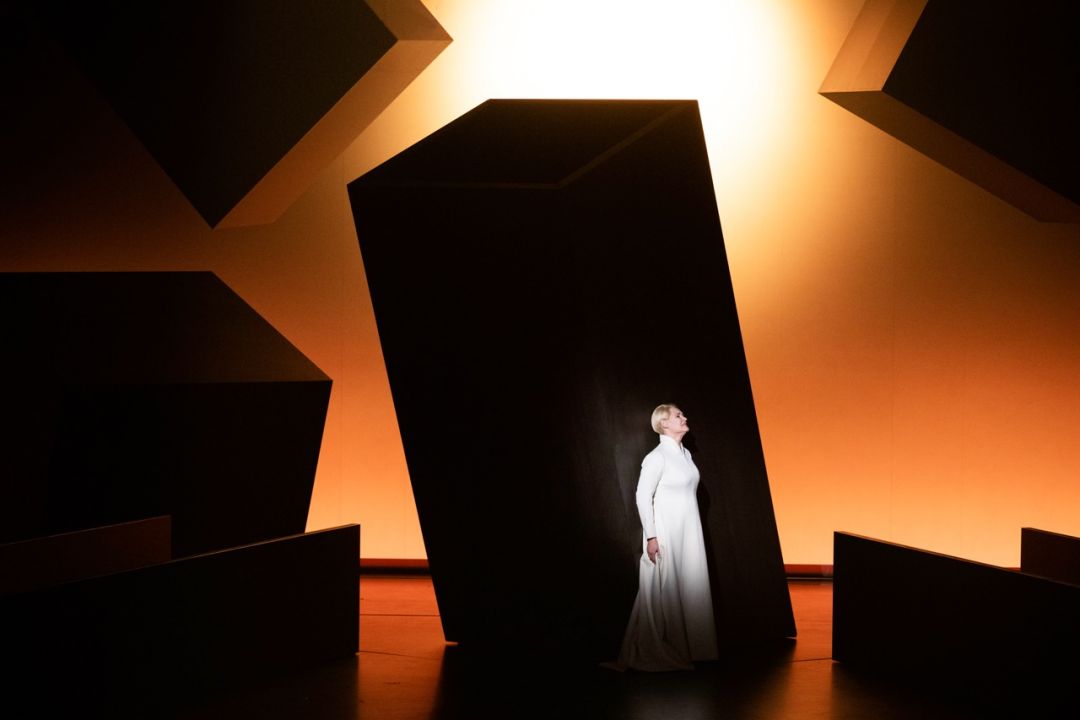
Ingela Brimberg brought her familiar bright soprano to the role of Brünnhilde. My appreciation of her singing has grown since I discovered that she’s in her seventh decade. She certainly sounds like a singer twenty years younger, even if it’s a primarily lyric voice made to sound wider. It did take Brimberg a little while to get into her stride this evening. The opening duet sounded a little dry in tone and she was a little far from the high C at the summit. As the evening progressed, the voice found an appealing freshness and ease on high that rang through the theatre. Brimberg also has an impressively instinctive musicality, knowing how to use the voice and where the tricky spots are, for example in the way that she crossed the registers with professionalism. She rose to a hieratic immolation scene: although parked on stage to sing to the front, she filled the words with meaning, bringing the drama out through the text.
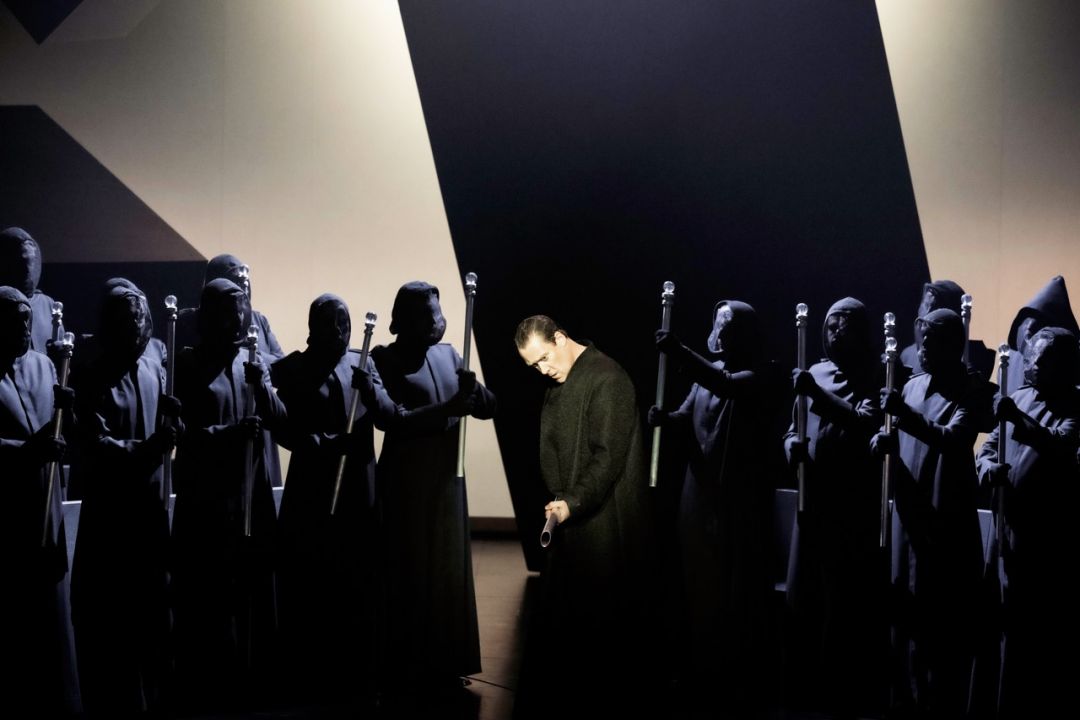
Bryan Register sang Siegfried in a big, bulky heldentenor. The voice is somewhat grainy in tone, but he has stamina to spare, dispatching Siegfried’s greetings to Hagen and his vassals in Act 3 with ease, ringing out on top even after a very long evening. He wasn’t just about the volume though; he paid full attention to Wagner’s dynamic markings, making his character much more three-dimensional than we often hear. It meant that his Siegfried was both heroic and thoughtful. Ain Anger was a massive-voiced Hagen. He focused that huge tone into a burst of sound for his assembling of his vassals, never compromising it, but instead thrilling us with a wave of vocal energy. He was also a consummate stage presence, spitting out the text, finding sheer malice through that union of word and physicality. Most impressive.
Anett Fritsch brought her gleaming soprano to the role of Gutrune. Hers was a more lyrical assumption of the role than we often hear, the voice ringing out with beauty, everything sung off the text, yet the tone was never forced. Andrew Foster-Williams sang Gunther in his compact, focused baritone. The voice sounded slightly stretched by the higher reaches of the part, but his singing was always musical. Nora Gubisch was perhaps miscast as Waltraute. The voice became brittle with fuller dynamics higher up, although when the part sat in the middle, there was an agreeable warmth. She certainly made much of the text and gamely executed Audi’s rather unusual stage direction for her.
Scott Hendricks made so much of little as Alberich, really making his cameo count. The voice had an acidic edge to it that was deliciously evil and his stage physicality was unstinting. We also had a confident trio of Norns, with Marvic Monreal’s plush, warm contralto giving much pleasure, although Katie Lowe’s bulky soprano was verbally rather indistinct. The Rhinemaidens were mellifluously sung by a trio of voices that blended deliciously together. The impact of the chorus, prepared by Emmanuel Trenque, was sadly hampered by Audi’s direction that had them lined up in rows from the front to the back of the stage. This meant that we lacked the opportunity to be pinned back against our seats by the sheer massive wall of sound that they could have produced. That said, they did sing with focus and discipline.
I have left Alain Altinoglu and his orchestra until last. Their playing has been the consistent asset through the whole of this cycle. Over the course of the last ten years, Altinoglu has transformed this band into one of the greatest opera orchestras in the world. It struck me that he conducted them just like a singer would approach their music. For instance, in the introduction to that opening Siegfried/Brünnhilde duet, the way that the strings soared through the registers with a sense of connection between them, felt utterly vocal in approach. Indeed, it felt that Altinoglu’s conducting combined both a beauty of phraseology with a precision of attack, bringing together the best of Latin and Northern European approaches to this music. They phrased Wagner’s lines with the passion and phrasing of Italians, combined with the precision of Germans, creating a sound that was utterly distinctive. He moulded the textures masterfully, bringing out detail, all while bathing the auditorium in a glow of sound. In the Trauermarsch, Altinoglu gave that stabbing motif a sense of horrific precision, yet combined it with an optimistic exuberance that made one feel that there was indeed hope ahead. The quality of the playing he obtained from the orchestra was superlative – the strings both silky and sweet, oboes and clarinets piquant, and the brass solid all night, particularly in the tricky writing in the interlude between scenes one and two of Act 2.
I must admit to some mixed feelings at the conclusion of this cycle. There’s undoubtedly a sense of what might have been had Castellucci completed his vision. At the same time, the fact that Audi and his team were able to give us a fully realized staging on reduced time and budget is something that we should all be grateful for, even if it left me with a number of reservations. The singing was always decent and so much was brought out through the text. This Ring has been, above all, an enormous achievement for Altinoglu and his orchestra. What they have achieved over the last two years is something that will live long in the history of this storied house. The audience responded at the close with an enormous ovation for the cast, particularly and justifiably so, for Altinoglu and his musicians.
 operatraveller.com
[…] of maturity. It’s a sound I’ll never forget. The Brussels Ring cycle concluded with Götterdämmerung. Once again, Alain Altinoglu and his orchestra proved themselves to be one of the very finest in […]