Donizetti – Lucrezia Borgia
Don Alfonso – Alex Esposito
Donna Lucrezia Borgia – Lidia Fridman
Gennaro – Enea Scala
Maffio Orsini – Daniela Mack
Jeppo Liverotto – Raffaele Feo
Don Apostolo Gazella – Arturo Espinosa
Ascanio Petrucci – Alessio Verna
Oloferno Vitellozzo – Eduardo Niave
Gubetta – Roberto Accurso
Rustighello – Enrico Casari
Astolfo – Rocco Cavalluzzi
Coro del Teatro dell’Opera di Roma, Orchestra del Teatro dell’Opera di Roma / Roberto Abbado.
Stage director – Valentina Carrasco.
Teatro dell’Opera di Roma, Rome, Italy. Sunday, February 16th, 2025.
This new production of Lucrezia Borgia at the Teatro dell’Opera di Roma opened this evening. Confided to the stage direction of Valentina Carrasco and the musical direction of Roberto Abbado, as is customary here the house has double cast the production with a number of notable bel canto talents. I’ll come straight out and say that I’m obsessed with this work. It’s a terrific romp with some magnificent musical numbers, not least that bravura final scene for Lucrezia. Yet, as always with bel canto, it requires singers who can really do justice to this magnificent music with its demanding technical detail.
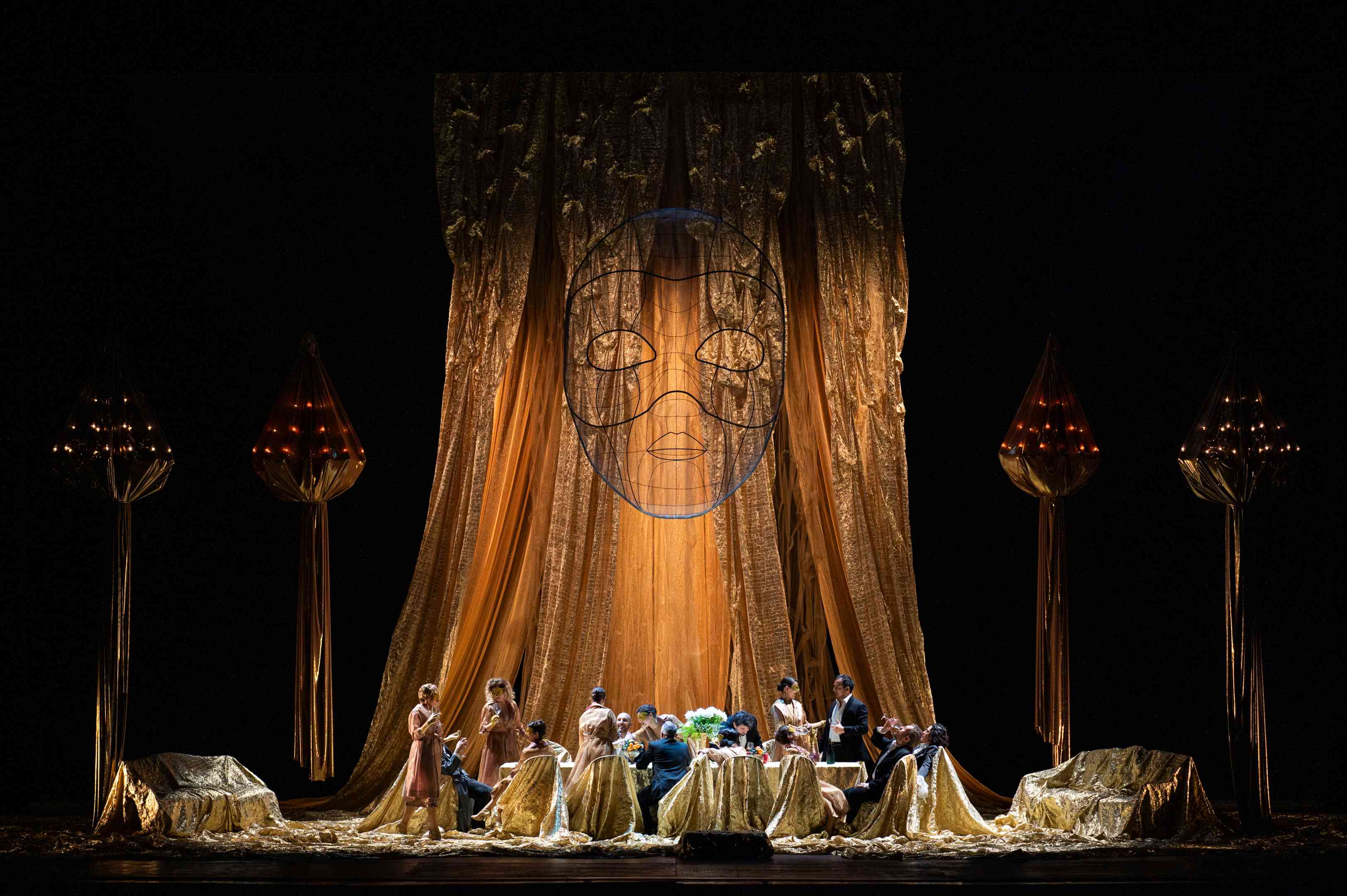
Carrasco’s production manages to tell the story pretty clearly. She presents it very much with a focus on the history of the backstory between Lucrezia and Gennaro, with a stage backdrop in the opening measures of the prologue showing an ultrasound as Lucrezia was prone on a bed. As the evening progressed, Carrasco gave us a world of shadowy conspirators, hiding behind drapes, who would enter and exit constantly, giving us a sense of a world where nothing was as it seemed on the surface. I found this an intelligent and interesting approach to take. Furthermore, there was real dramatic energy between Lidia Fridman’s Lucrezia and Alex Esposito’s Alfonso in their big confrontation, a full sense of characters truly engaging with each other. Indeed, the visuals also included skulls on poles chez Borgia, a reminder that her history very much powered her interactions with others. The party chez Negroni was also nicely done, the stage covered in golden drapes that were dramatically removed as Lucrezia entered to announce the poisoning. This was demonstrated in a most striking way, with the friends developing letters on their backs as a result of the poisoning spelling out BORGIA in a way that was in revenge for Gennaro removing the B in the previous act.

In many respects, Carrasco’s staging gave a great deal of pleasure, and in its clarity rendered the events of the plot in a cogent and dramatically insightful way. Yet, I still found there to be a significant number of issues. The direction of the chorus was relatively perfunctory, with a fair bit of standing and delivering. The stage at the Teatro Costanzi is only slightly higher than the level of the platea, while Carrasco staged the first scene between Lucrezia and Gennaro with both, prone, at the front of the stage. Unfortunately, it meant that I couldn’t see it from my seat towards the back. Furthermore, she also had Fridman sing Lucrezia’s final scene on her knees at the front of the stage, again limiting sightlines for those at the back of the platea. I don’t know whether Carrasco has any vocal training, but it struck me that filling the stage with drapes and not giving singers any solid surfaces to support projection was less than helpful. It did mean that both Fridman and Daniela Mack’s Maffio Orsini sounded lacking in amplitude compared to their male-identifying colleagues. Carrasco’s staging undoubtedly looks good, but I’m not convinced it’s entirely helpful for the singers.
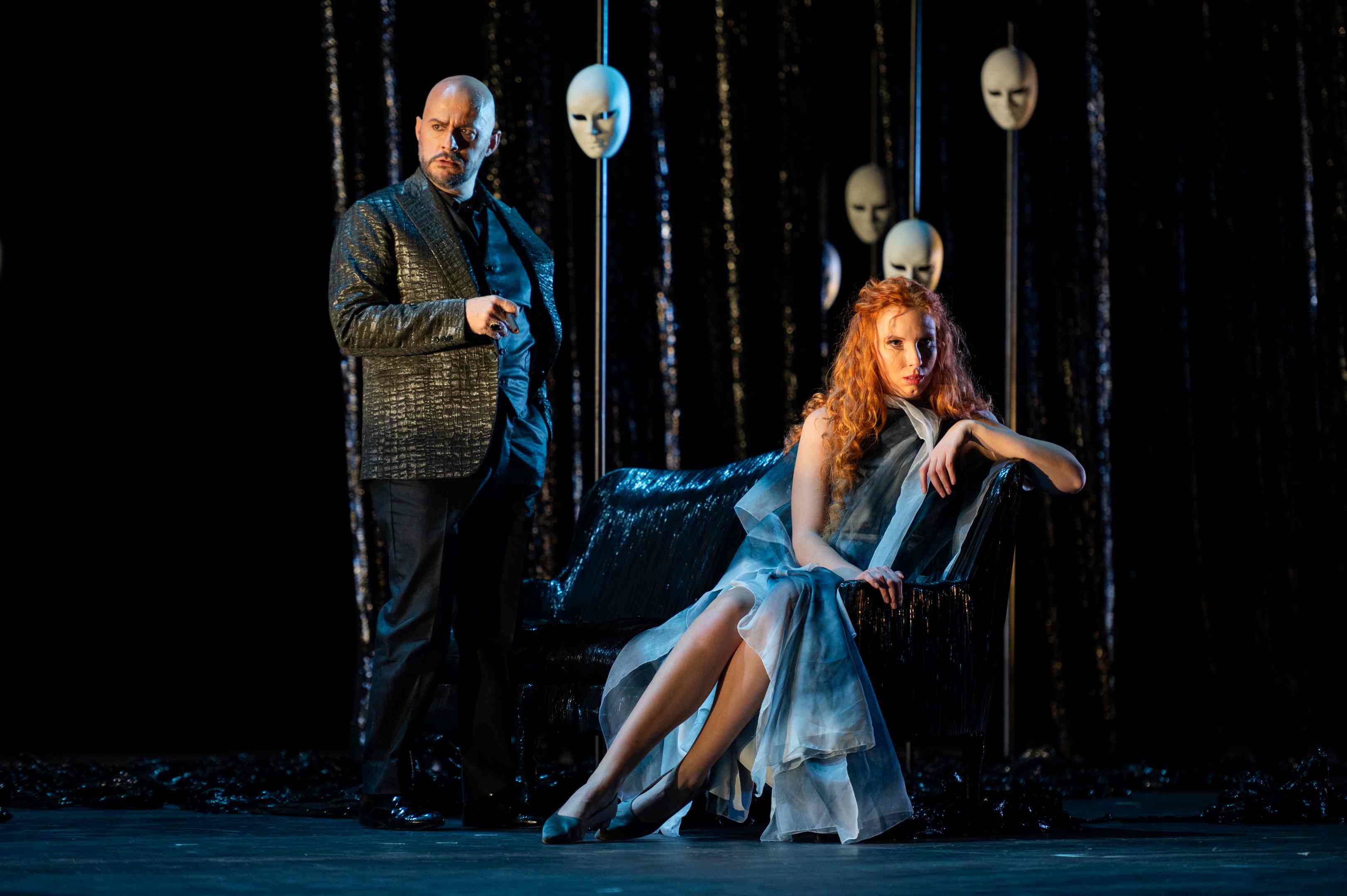
Abbado led an orchestra on terrific form. The quality of the playing he obtained from them was excellent. Strings were true in intonation all night and the winds and brass were nicely balanced. Attack was unanimous and precise throughout the band, and there was a real sense of lyrical beauty superimposed over a driving rhythmic framework. And yet, there was something about Abbado’s conducting that didn’t quite fully convince me, and I’m fully aware that this is very much a matter of personal taste. It was definitely technically proficient, tempi were generally nicely swift, and there was a sense of rhythmic drive there. And yet, it tended towards being slightly over-manicured, perhaps needing more of a sense of dynamism to take us to the horrific conclusion. It felt very professional in approach, yet also rather earthbound. The chorus, prepared by Ciro Visco, was on good form tonight. The tenors and basses sang with real discipline and focus, while the sopranos and mezzos were hampered in their projection by being placed in the pit in the final scene – although the visual of Lucrezia alone was striking.
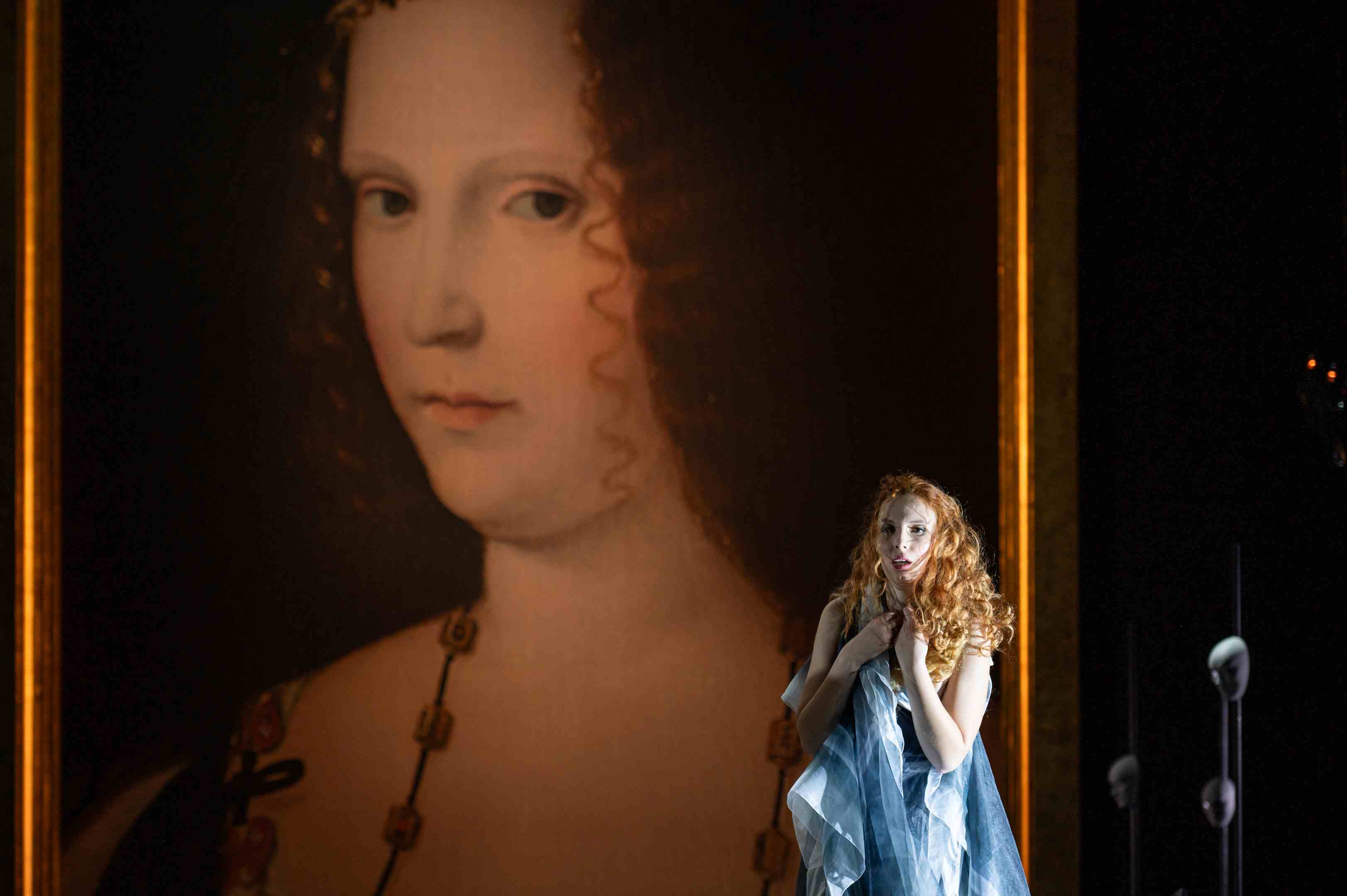
Fridman has clearly worked extremely hard on the style and on her technique. She sang her opening number with real poise, floating the high-lying lines with ease, the legato even. The voice has an appealing darkness, yet she also rose up to the high E-flat at the end of the evening. She, in common with her castmates, frequently decorated the line with stylish ornamentation, bringing the music alive and giving it a stamp of individuality. She found a real sense of loss in the final scene, making the slower sections genuinely reflective, filling them with feeling, and she dispatched the rapid-fire runs with accuracy and a more than creditable stab at a trill. Unfortunately, Fridman was hampered acoustically by the set and her placement on stage, which meant that the voice lacked amplitude – at least from my seat.

Similarly, Daniela Mack’s Orsini also seemed to be hampered acoustically, not always audible in the ensembles. Part of the reason for this was that the role lies relatively low for Mack’s mezzo, being a true contralto role. This meant that intonation in the opening scene was less than optimal, due to the effort of singing down there in a less germane part of the voice. Mack’s musicality was never in question, and when she was able to ornament the lines to take her up through the range, she was significantly more audible – again with the caveat that this was from my seat. Perhaps those elsewhere in the theatre might have had a different experience.
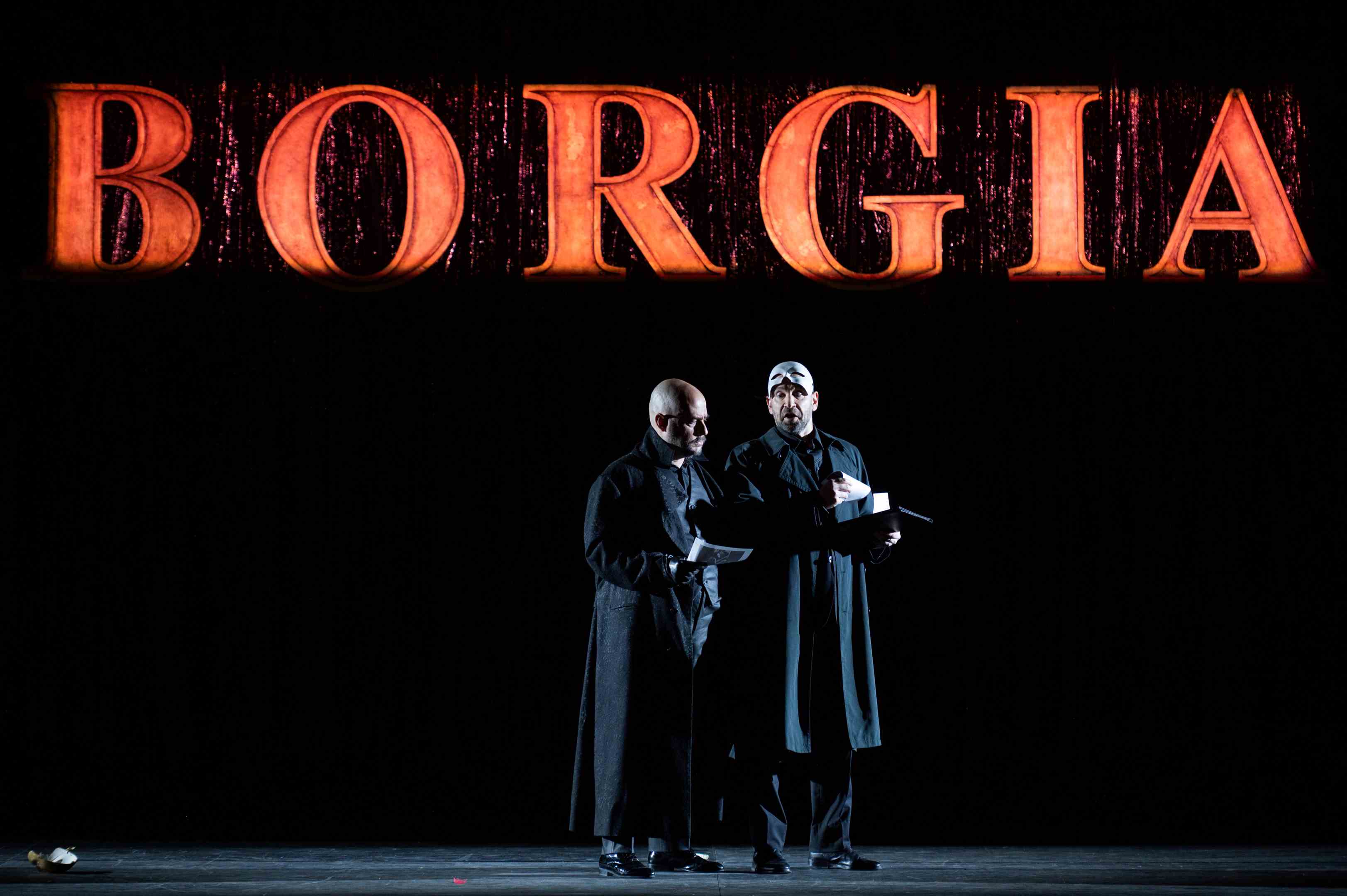
Enea Scala gave us a fabulous Gennaro. He lives and breathes this style, his tenor able to ping into the theatre with ease. He sang his music with an impeccable legato, combined with bright and focused tone. The voice soared with delicious effortlessness through the range and Scala was an appropriately thoughtful yet swaggering stage presence. Another notable role debut for this excellent singer. Esposito also has this style in his bones, given that he’s a native of Donizetti’s home town of Bergamo. His bass-baritone was in magnificent shape tonight, able to dispatch his music with authority, even throughout the range, ringing out into the theatre, yet never compromising the beauty of the tone. Not to mention his impeccable legato and implicit musicality. The remaining roles reflected the quality one would expect at this historic house. Particularly the handsome-toned Arturo Espinosa and Alessio Verna as Gazella and Petrucci respectively.
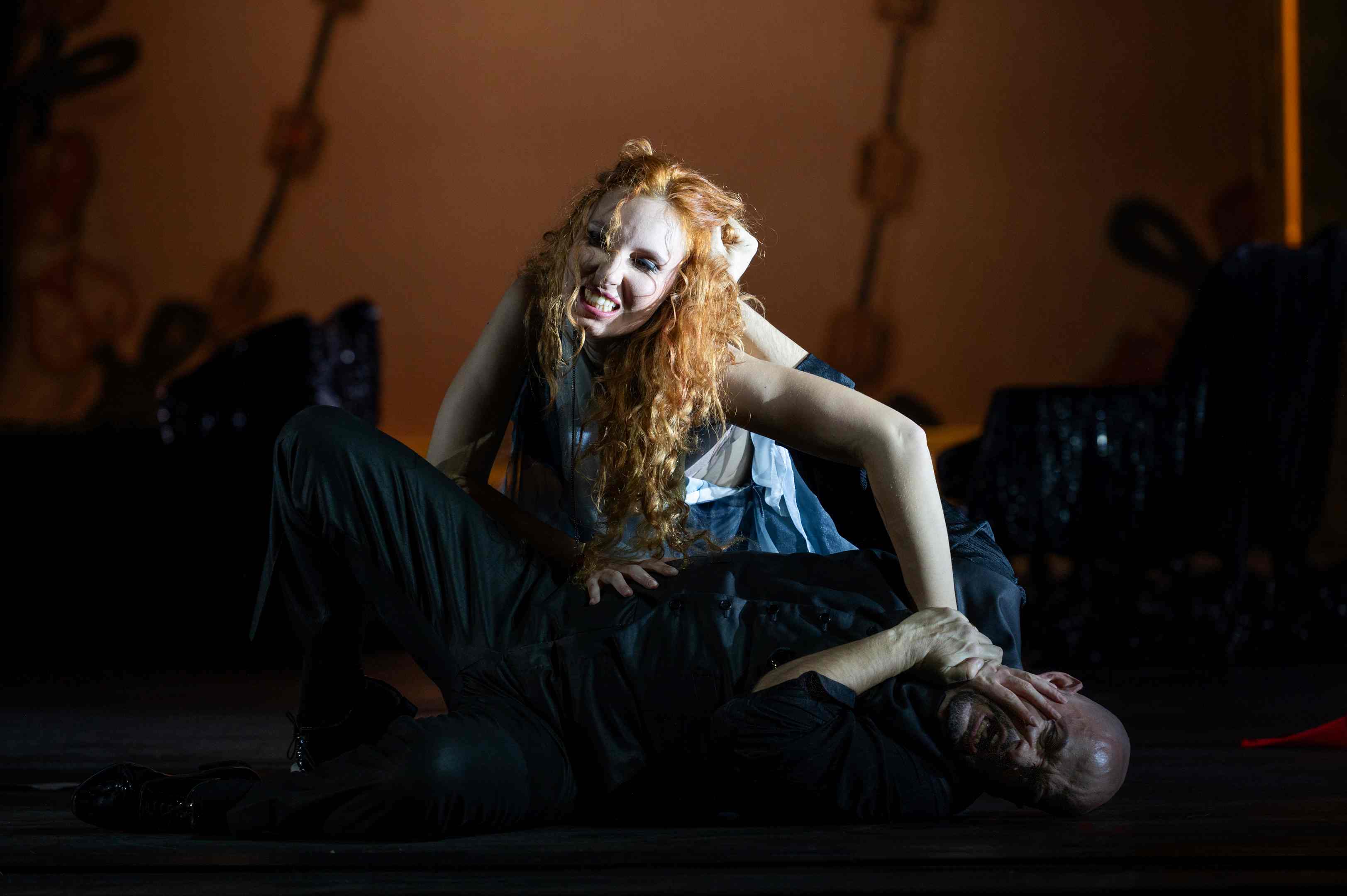
This was an evening that did contain a lot to enjoy. Carrasco’s staging was notable for its visual interest and its clarity of storytelling, even if acoustically it wasn’t ideally helpful for the singers, and in terms of sightlines wasn’t quite optimal. She certainly inspired some vivid dramatic performances from her principals. Abbado’s conducting obtained some excellent orchestral playing and disciplined choral singing, yet I can’t dismiss the nagging doubt in my mind that it was all a bit earthbound in approach. Vocally, there was so much to enjoy. Fridman had clearly worked so hard on the title role, and those hours of study paid off in singing of real poise – though again, not helped acoustically by the set. Scala and Esposito were both absolutely superb. A mixed evening, then, but one that did give considerable rewards. The audience response at the close was polite, but with some bravos for the principals.
 operatraveller.com
[…] was my third Lucrezia Borgia this year, having seen Lidia Fridman in Rome and Jessica Pratt in Florence. Rebeka demonstrated singing of the finest quality tonight. She […]
[…] of today’s leading bel canto specialists over the course of the year was a real treat. In Rome, Lidia Fridman showed poise and well-schooled singing. In Florence, Jessica Pratt invested […]
[…] even if the tone was slightly tight as she reduced the dynamics. After her impressive Lucrezia Borgia in Rome last year, Fridman is certainly taking her place as one of the most interesting singers of […]