Janáček – Jenůfa
Jenůfa – Evelin Novak
Kostelnička – Ángeles Blancas Gulín
Laca Klemeň – Richard Trey Smagur
Števa Buryja – Dovlet Nurgeldiyev
Grandmother Buryja – Cátia Moreso
Mill Foreman – Luís Rodrigues
Mayor of the Village – José Corvelo
Karolka – Rafaela Albuquerque
Barena – Ana Luísa Assunção
Mayor’s Wife – Paula Morna Dória
Maid – Patrícia Quinta
Jano – Cláudia Anjos
Coro do Teatro Nacional de São Carlos, Orquestra Sinfónica Portuguesa / Jaroslav Kyzlink.
Stage director – Robert Carsen.
Teatro Nacional de São Carlos, Centro Cultural de Belém, Lisbon, Portugal. Friday, March 21st, 2025.
For its latest new production during its peripatetic existence, while its historic house is being restored, the Teatro Nacional de São Carlos chose to import Robert Carsen’s staging of Jenůfa from Opera Ballet Vlaanderen, tonight revived by Maria Lamont. Carsen’s is a staging that has been around quite a while and was most recently revived in Flanders, also by Lamont, last summer. The house invited Czech conductor, Jaroslav Kyzlink, to lead the performance, with an international cast joining many of the familiar names one has come to expect at the São Carlos.
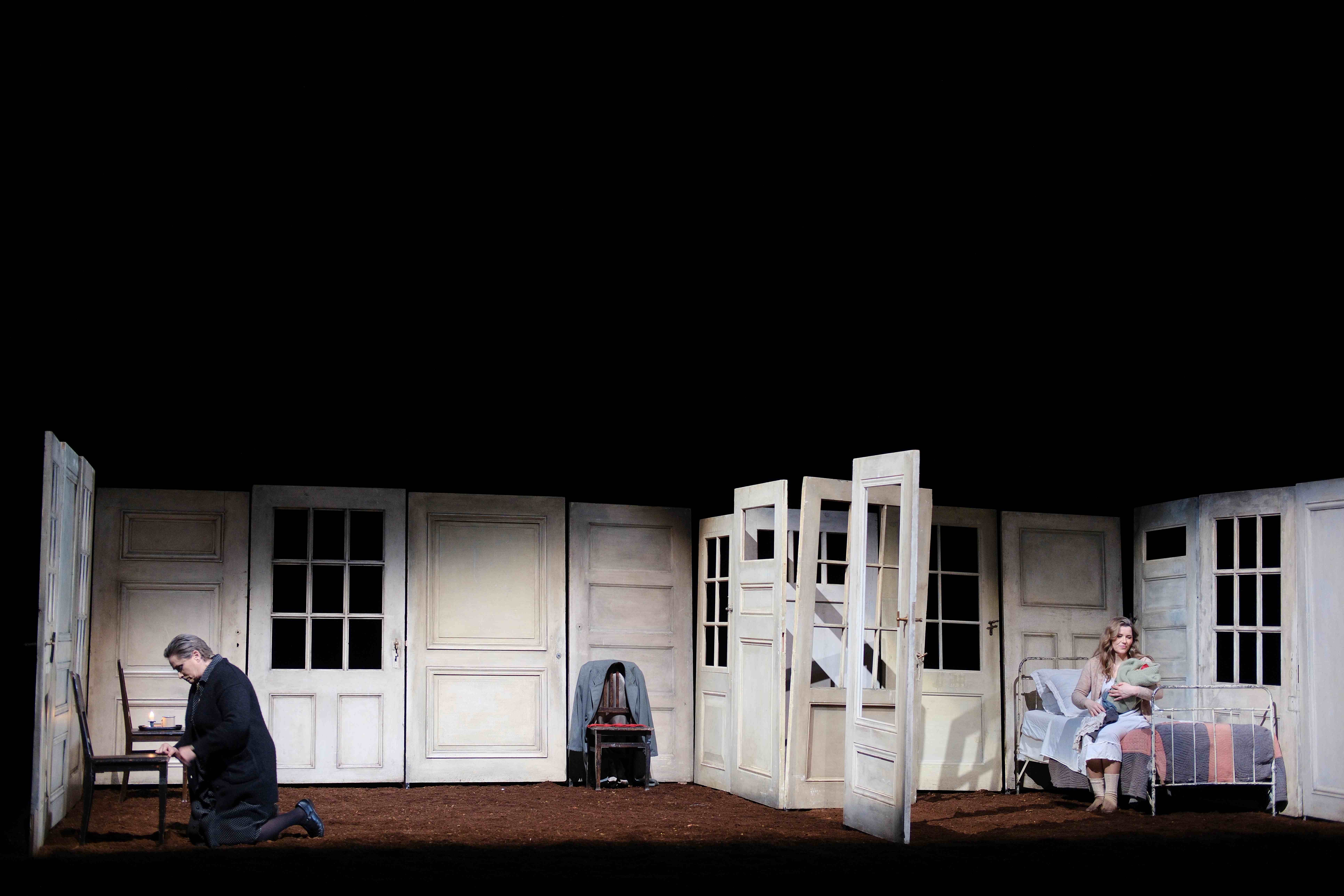
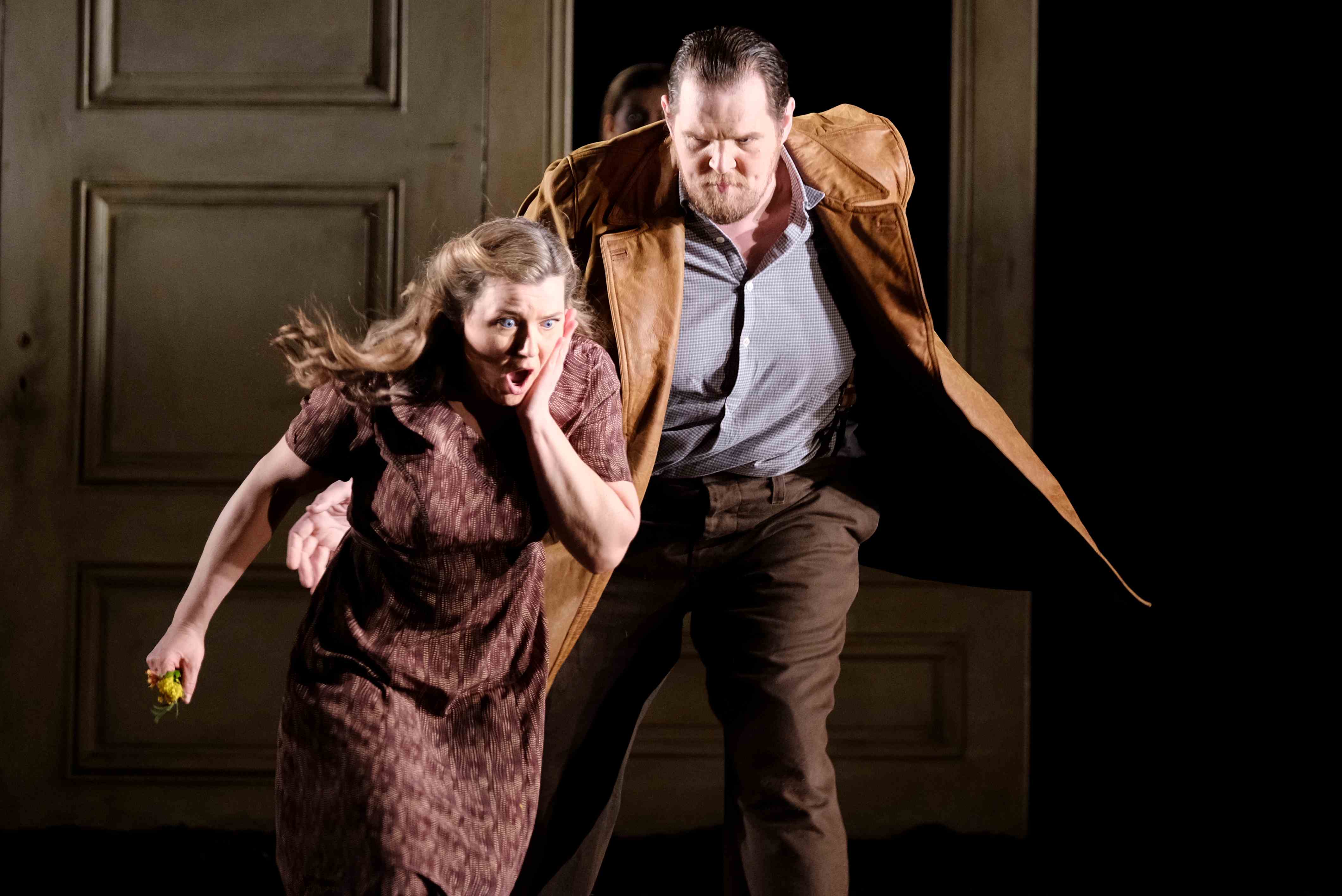
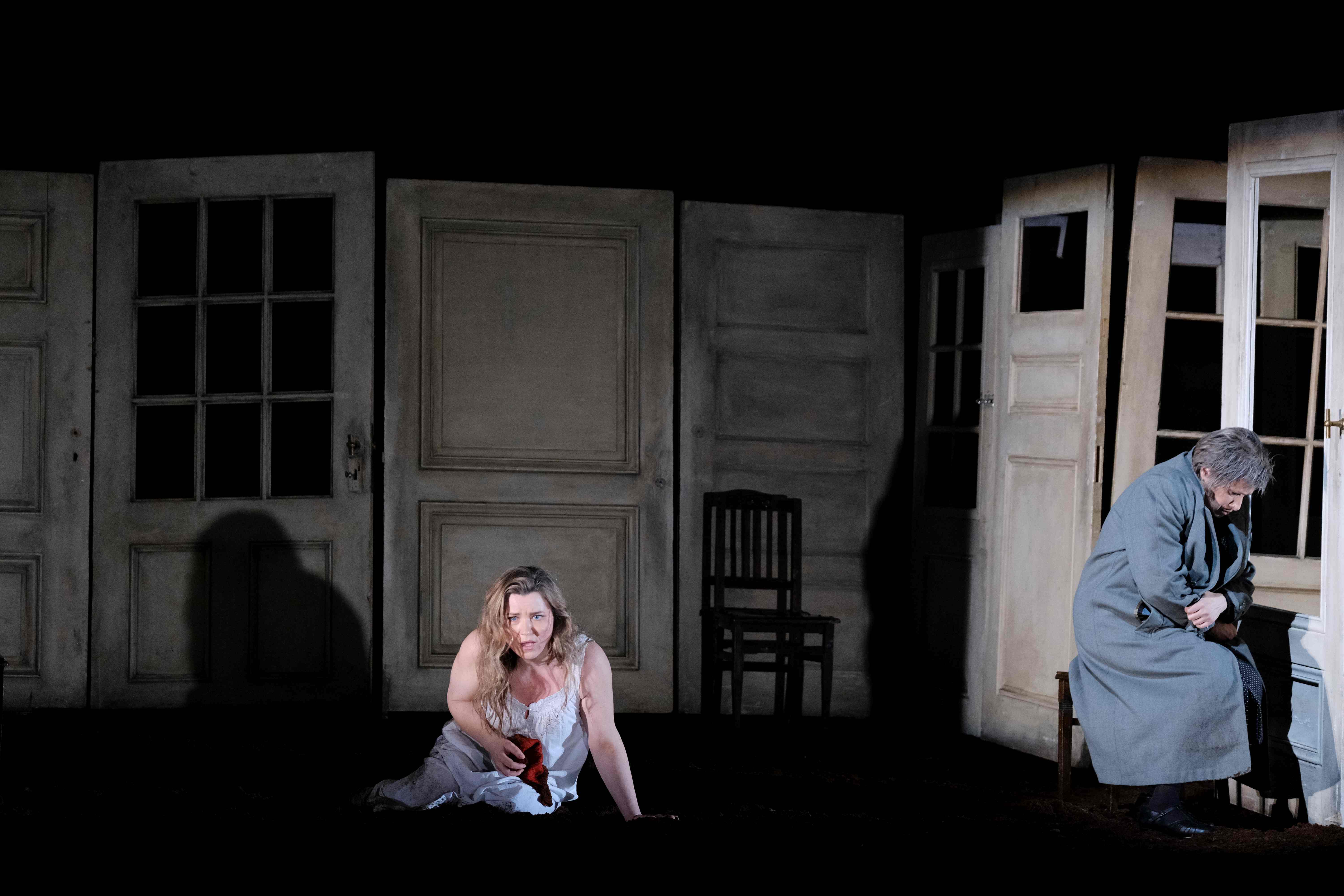
Carsen starts his staging with an interesting premise: what does it take to break free of societal oppression? In the case of Jenůfa it’s a pair of unbearable tragedies, those of infanticide and physical disfiguration. Yet how much of this societal oppression is caused by artificial rules created by humans? Carsen manifests this in a physical way through his staging. The evening begins with a set, by Patrick Kinmonth, consisting of a series of doors organized into a large enveloping square, with chorus members and actors standing outside of them looking in. As the evening progresses, the doors are moved around, manipulated to create two rooms where the Kostelnička hides Jenůfa in Act 2, or the setting for the wedding preparations in Act 3. Interestingly, Carsen and Kinmonth plant the doors in soil that covers the stage, as if to say that the rules that led to the Kostelnička killing the baby are artificial and imposed on a world by humans. Similarly, when the baby is discovered in Act 3, the chorus intimidates Jenůfa by lifting up and threatening her with the doors. It’s only in the closing dénouement, with the doors and furniture removed, that Jenůfa and Laca can find happiness, away from their oppressive society.
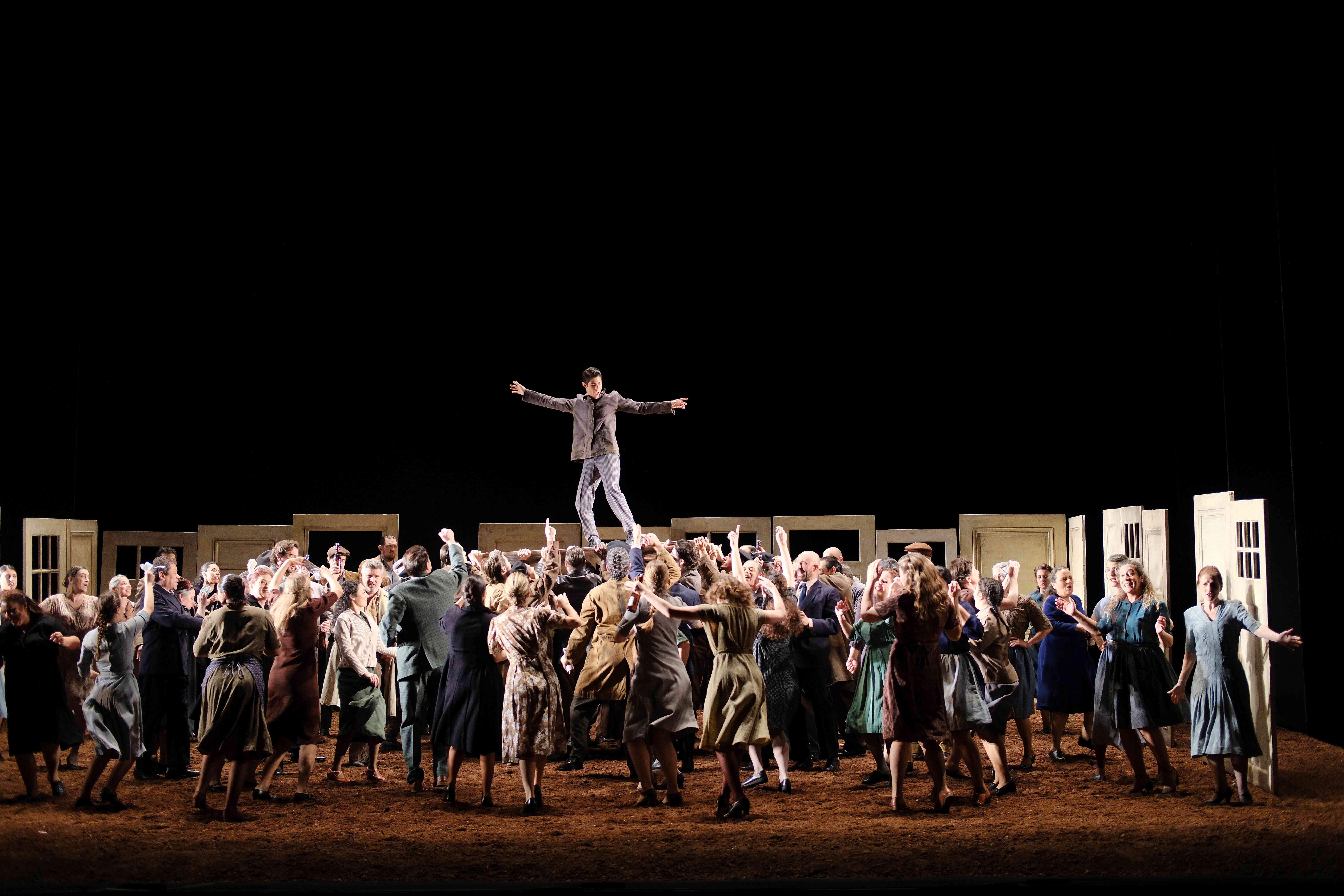
Carsen’s staging is certainly a very thoughtful and sincere one. Yet, I found it more cerebral than emotional as an experience. The opening scene of Act 1, is set behind the doors, rendering sightlines less than optimal, even from my very good seat in the centre of the plateia. This led to a sense of frustration that endured through Act 1, even though the set of doors at the front were removed for the celebrations. Furthermore, the impact of the singers was robbed somewhat by the acoustic effect of the earth on the stage, particularly if they were placed at the back of the stage, not helped by the open set and lack of acoustical support in Act 1. There was also an overreliance on stock operatic gestures – far too often, as was the case for the Kostelnička and Jenůfa in Act 2, they would simply drop to the floor in moments of high drama. Likewise, while the direction of the chorus and actors was definitely fluent and efficient, there was also an overreliance of having them run around on stage to create drama. Carsen’s staging is undeniably intelligent, but I longed for the sheer emotional impact of Calixto Bieito’s Stuttgart staging that I saw in Rouen, for example.
Kyzlink brought considerable idiomatic verve to his reading of the score. He obtained superb playing from the Orquestra Sinfónica Portuguesa; the way that he created balanced, transparent textures, bringing out the sophistication of Janáček’s orchestral writing was very special indeed. There was an almost balletic energy that he brought to the opening measures, that seemed both pastoral and unsettling. That said, I wasn’t always convinced by his tempo choices. In Act 2, the big soliloquy for the Kostelnička was taken extremely slowly, with Ángeles Blancas absolutely searing, yet the prayer that followed felt rushed. The closing pages of Act 1 and Act 2, also lacked dramatic dynamism, the sheer dramatic energy that Blancas fired into the auditorium was responded to with a lack of sheer force from the pit. Given how unfamiliar this score must be to the orchestra, their last performances of it were twenty-five years ago, one might forgive a little tentativeness, especially with tonight being the first night of this two-performance run. And yet, given the sheer confidence of their playing, it really felt that Kyzlink could have pushed things through more, to respond with precisely that excoriating drama that we witnessed in the vocalism on stage. The quality of the orchestral contribution was most definitely not in doubt. They played with the lyrical sensibilities one would expect of an Italian orchestra, not surprising perhaps given their music director is Roman, the orchestra ‘singing’ the score as much as anyone on stage. We were given silky strings and piquant clarinets, while the brass playing was excellent. The way that Kyzlink brought out the throbbing harps and consoling strings in those closing pages gave it even more emotional impact.
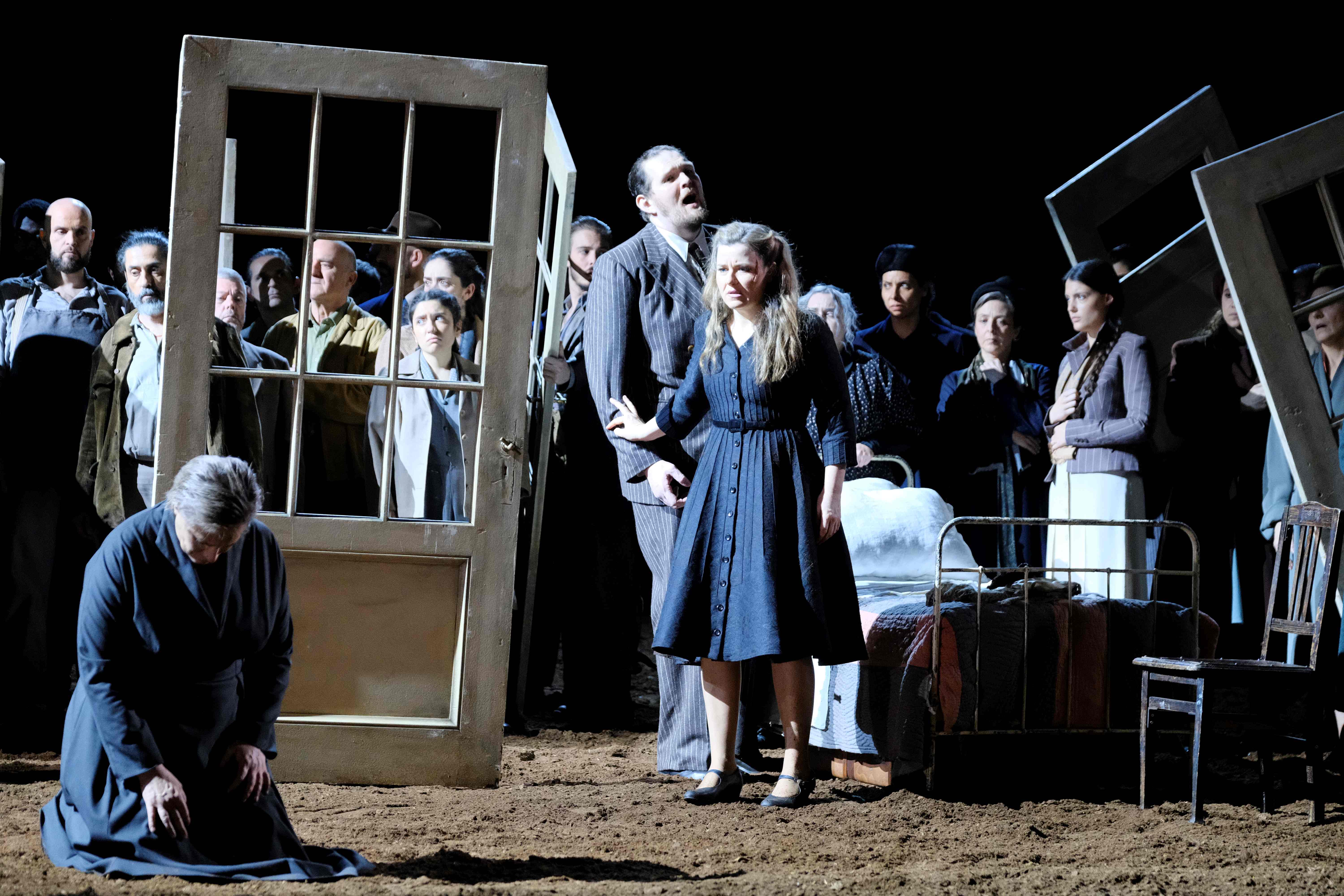
Evelin Novak was a lyrical Jenůfa. The Croatian soprano made much of the words, the text always forward and clear, searching for meaning. The voice has a creamy core, with an attractive even vibrato, enveloped by a bright, almost chalky exterior to the tone. I did find that Novak had a relatively limited palette of tone colours, the emotion brought out through the attention to the text rather than by colouring the tone. She sang her prayer with real sincerity and an impeccable legato. The final scene did find an edge of tiredness entering the tone, a touch of dryness that wasn’t perceptible earlier in the evening, which suggests that role takes her to her current vocal limits. Still, hers was a genuine and heartfelt account of the role.
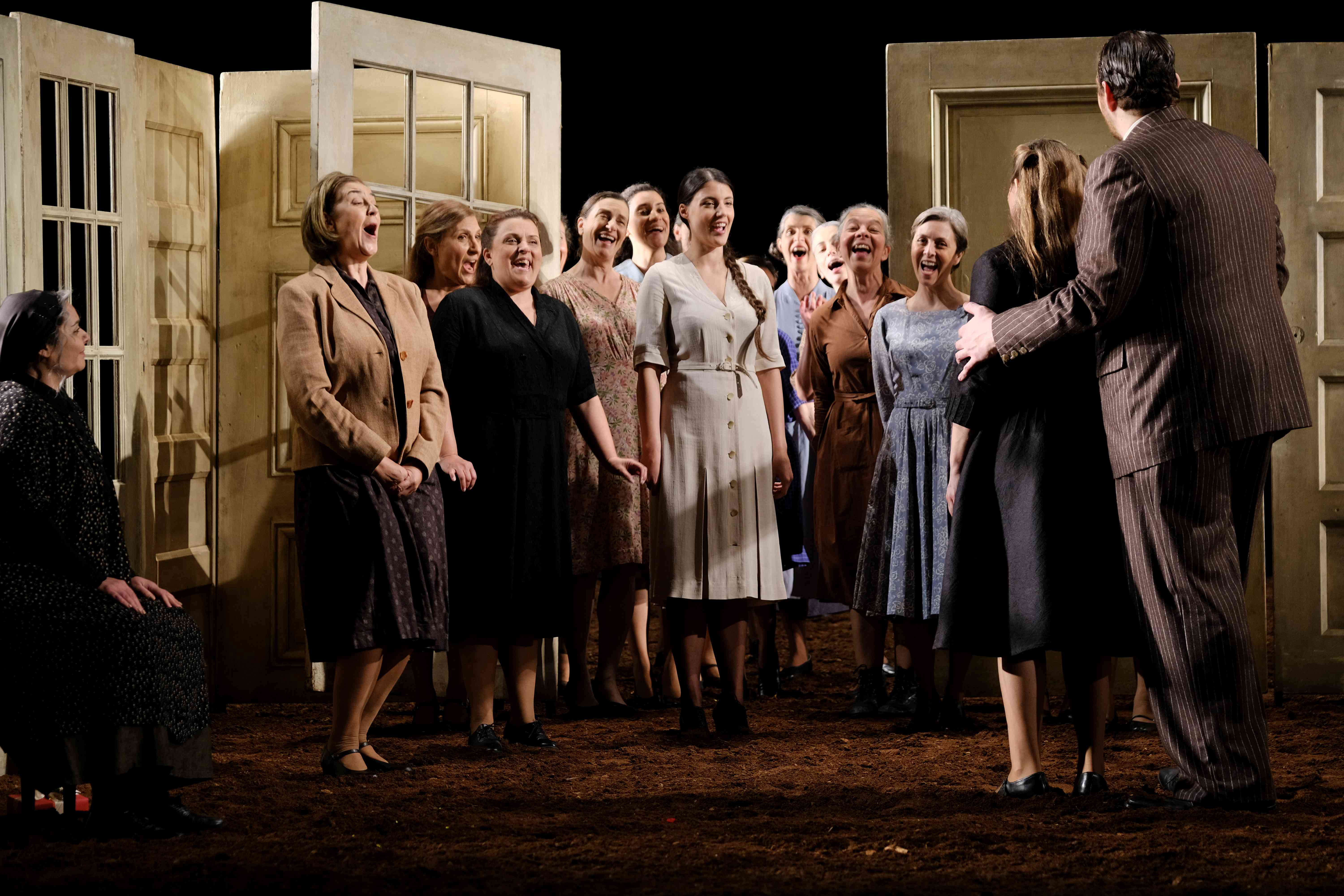
The Kostelnička is a gift of a part to any singer who incarnates her and Blancas rose to the occasion thrillingly. She brought out so much detail in the text, wrenching out the consonants with sheer frustrated force. Her soprano doesn’t always sit precisely on the note, and her ruby-red tone doesn’t quite have the ultimate spin on top. And yet, she used this to thrilling dramatic effect – those repeated high C-flats in her big scene in Act 2 were absolutely gripping, sounding bloodcurdlingly full. Similarly, her closing lines in that act were dispatched with exhilarating energy, which made it doubly frustrating that she wasn’t responded to with comparable energy from the pit. This was a notable account from this always enterprising artist.
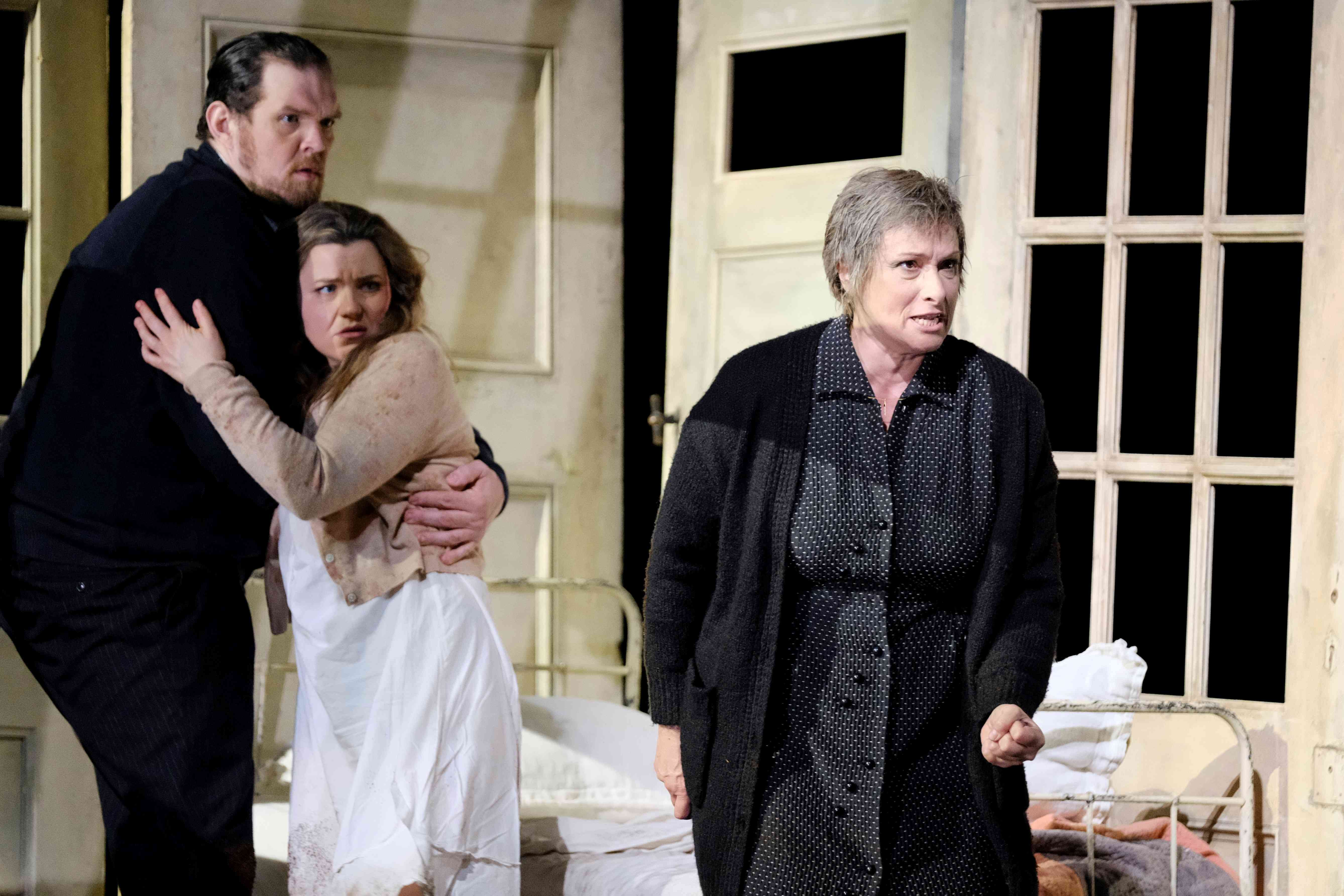
Richard Trey Smagur is a new name to me. His Laca was sung with sincerity, bringing out both his frustrated brutishness at the start and his remorse in the final act. Smagur’s tenor is big and beefy, although I left with a sense that the top isn’t quite integrated fully. He’s young, though, and this is something he can continue to work on. Dovlet Nurgeldiyev was hampered by the acoustic-sucking effect of the dirt on stage in Act 1 as Števa, his contributions in the opening act less than audible, unfortunately. In Act 2, he was brought to the front of the stage, and he dispatched the high writing with consummate ease.
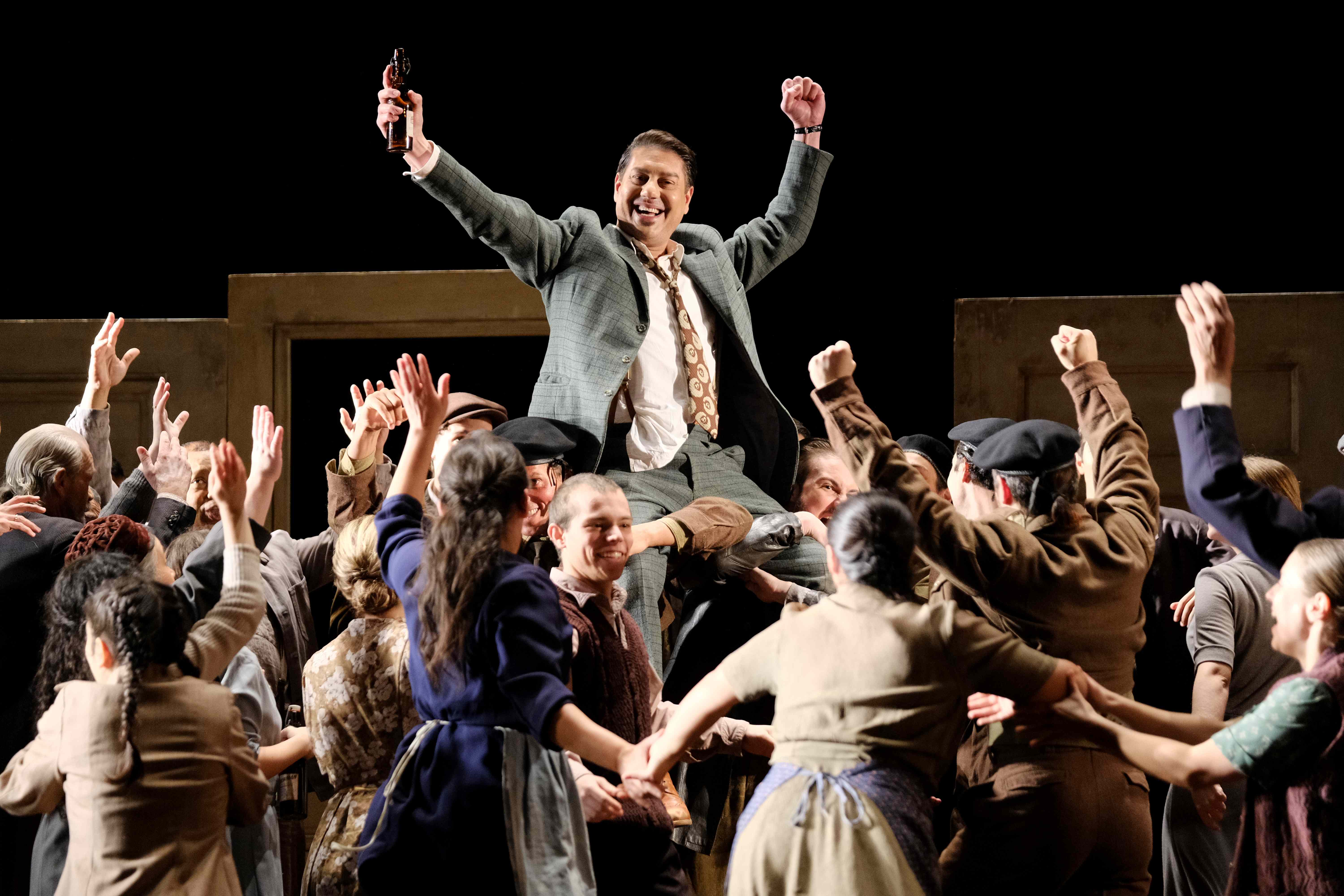
The remaining cast reflected the admirable standards of the house. Cátia Moreso sang Grandmother Buryja in a ripe, healthy mezzo, full of feeling. Luís Rodrigues was an appropriately gruff and rustic Foreman, while Cláudia Anjos was a bright, perky Jano. Paula Morna Dória made so much of her contributions as a deliciously sardonic Mayor’s Wife. The chorus, as always prepared by Giampaolo Vessella, was on excellent form tonight. The sopranos and mezzos sang their folksong in Act 3 with immaculate ensemble and firmness of tone. The tenors and basses also made a confident and generous contribution to the festivities in Act 1.
Tonight’s Jenůfa gave us so much to appreciate. Yes, Carsen’s staging felt more cerebral than emotional, but Act 2 really delivered, through Blancas’ coruscating account of her iconic role. There was so much to enjoy in the quality of singing and the sheer fluency and confidence with which the entire cast approached their music. Kyzlink’s conducting had so many positive aspects that it was doubly frustrating that he didn’t fully deliver in terms of dramatic dynamism at that close of Act 2, where it really mattered. Despite the reservations, this was an evening that offered so many rewards. There remains just one performance left in the run. It is, without doubt, definitely worth seeing. The audience response at the close was generous for the entire cast and production team.
 operatraveller.com
[…] vibrant staging. Also in Lisbon, the São Carlos imported Robert Carsen’s staging of Jenůfa from Flanders in which Ángeles Blancas gave us an electrifying Kostelnička. The São Carlos […]