Mozart – Così fan tutte
Fiordiligi – Mariangela Sicilia
Dorabella – Francesca Di Sauro
Guglielmo – Vito Priante
Ferrando – Marco Ciaponi
Despina – Giulia Mazzola
Don Alfonso – Nahuel Di Pierro
Coro del Teatro Comunale di Bologna, Orchestra del Teatro Comunale di Bologna / Martijn Dendievel.
Stage director – Alessandro Talevi.
Teatro Comunale di Bologna – Comunale Nouveau, Bologna, Italy. Sunday, May 25th, 2025.
This new production of Così fan tutte, which premiered this evening, marks the final instalment of conductor Martijn Dendievel and director Alessandro Talevi’s survey of the Da Ponte trilogy, following last year’s Don Giovanni and 2023’s Le nozze di Figaro. It’s been a fascinating journey to watch these two artists put their stamps on these iconic works. The Figaro was life-enhancing, just as it should be; although the Don Giovanni was more problematic. I was eager, then, to see what they would bring to a work as complex as Così.
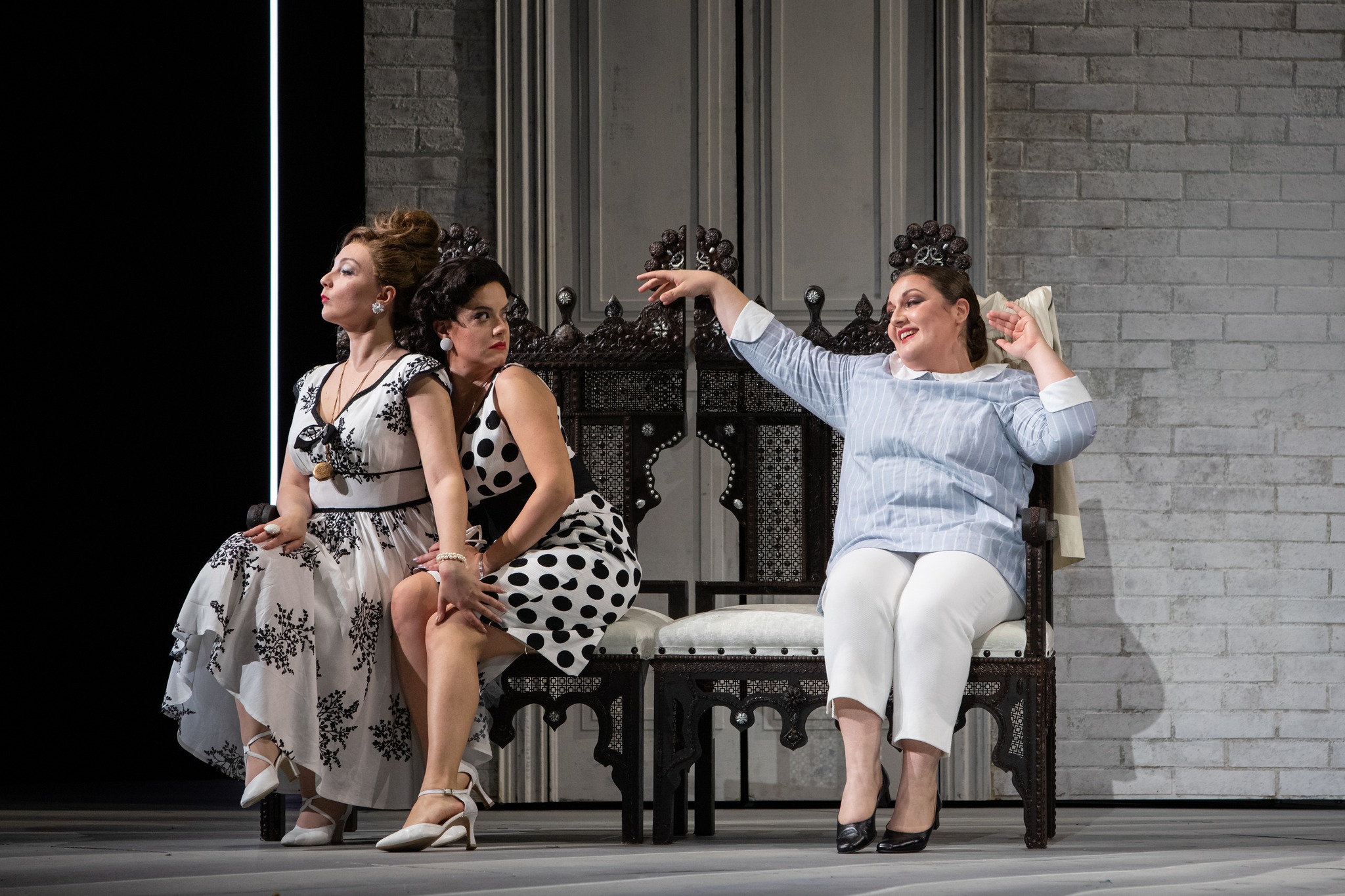
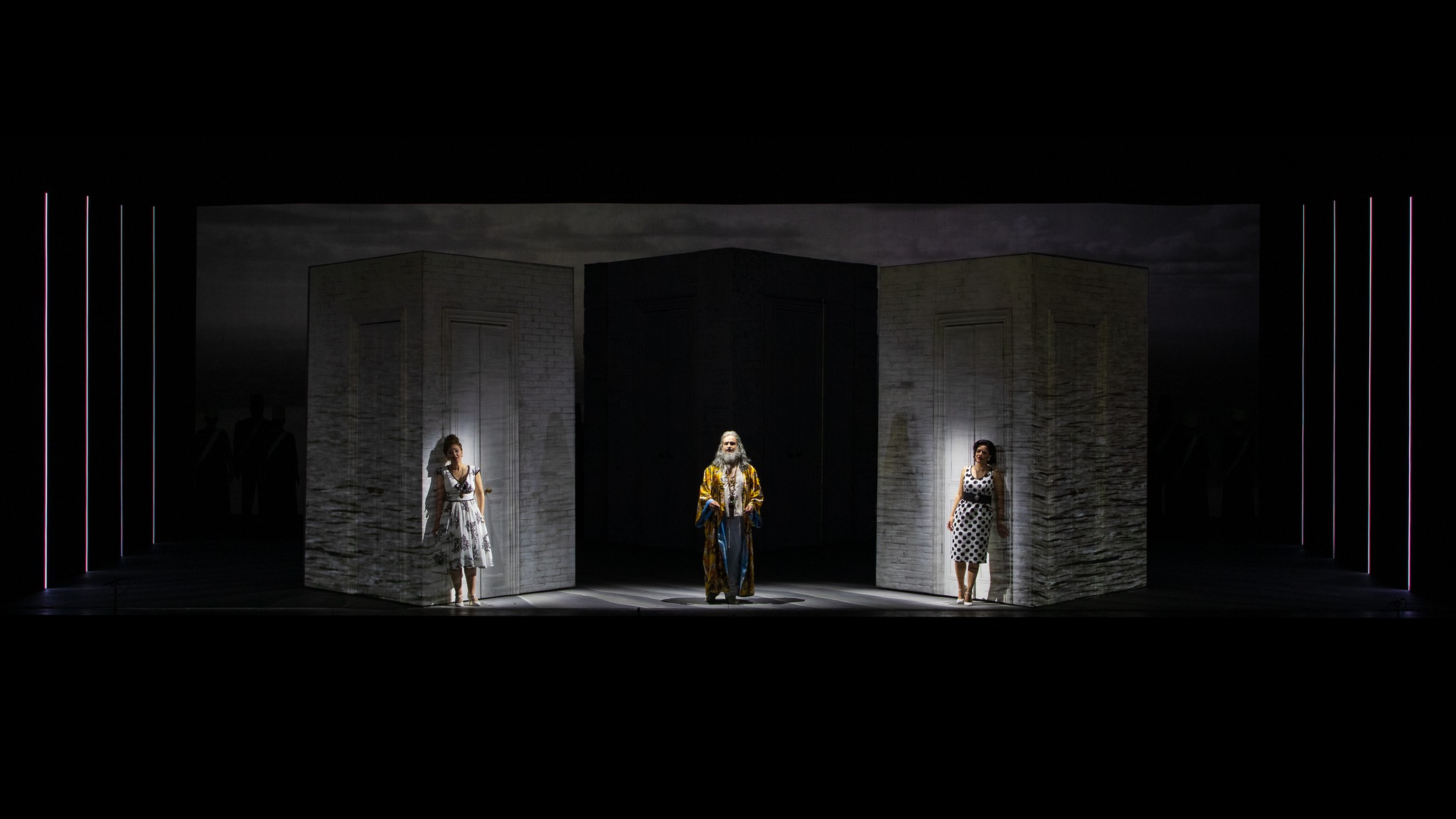
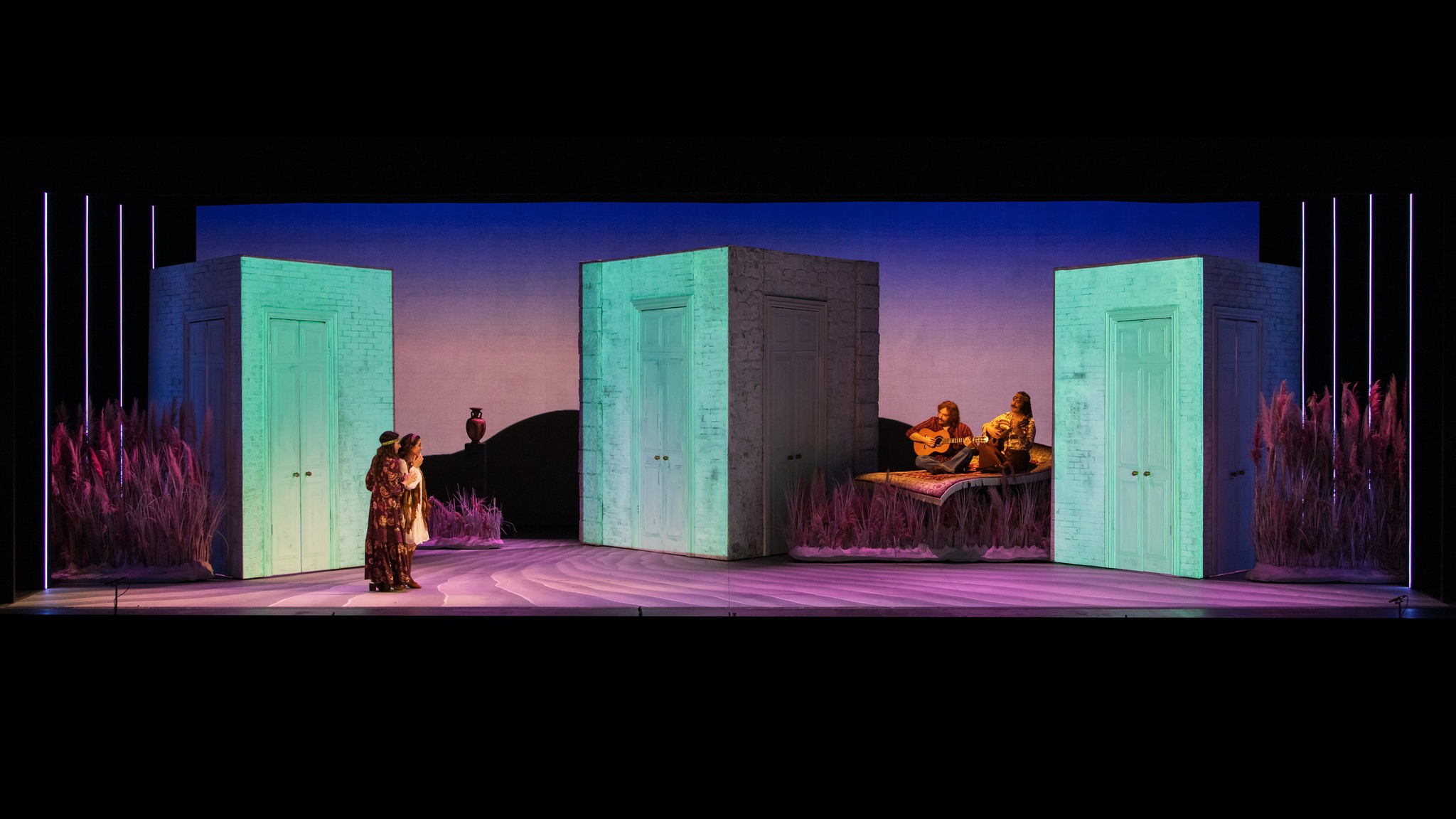
In a note in the program book, Talevi explains how for him Così is his favourite part of the trilogy. I must admit that with time, I have become inclined to agree. While Figaro is probably the one opera I could never live without, it feels that Così tells us even more about the complexities of the human condition in all of its contradictions. The evening’s action took place on a relatively simple set, also by Talevi, that revolved around three blocks with doors on each side, that were wheeled around the stage. As the evening began, it seemed that we might be witnessing a vernissage, with a guru-like figure, Don Alfonso, showing Ferrando and Guglielmo around some sculptures on stage. A video backdrop showed images of a sea and islands, redolent of the Gulf of Naples. The staging in the first act was very spare, just the blocks and a few sculptures. As we moved into the second act, the stage was accessorized with bits of wheat, while the ‘Albanians’ appeared as 1960s hippies, and the sisters joined them in turn in costuming themselves from that era.

There was a genuine sense tonight of a cast working together to tell a story with utmost clarity, so much so that it felt that Talevi could have done away with the sets completely and focused our attention exclusively on the interplay between the characters. There was a naturalness to the personenregie that felt utterly profound and genuinely real, so that the emotions that came to the fore as Fiordiligi sang ‘per pietà’ felt utterly sincere. Talevi did use the placement of the blocks onstage to show characters spying on each other, or Guglielmo and Dorabella conjugating behind a block while Fiordiligi poured her heart out in her big number. Yet, there was a clarity of storytelling here, of complex emotions, of preconceptions around gender roles, that I found absolutely convincing. Particularly so, as Talevi adds a terrific twist in the final seconds of the evening that just left one absolutely uplifted. In so doing, he succeeds in making this a Così that is so completely and entirely human, in all of its contradictions.
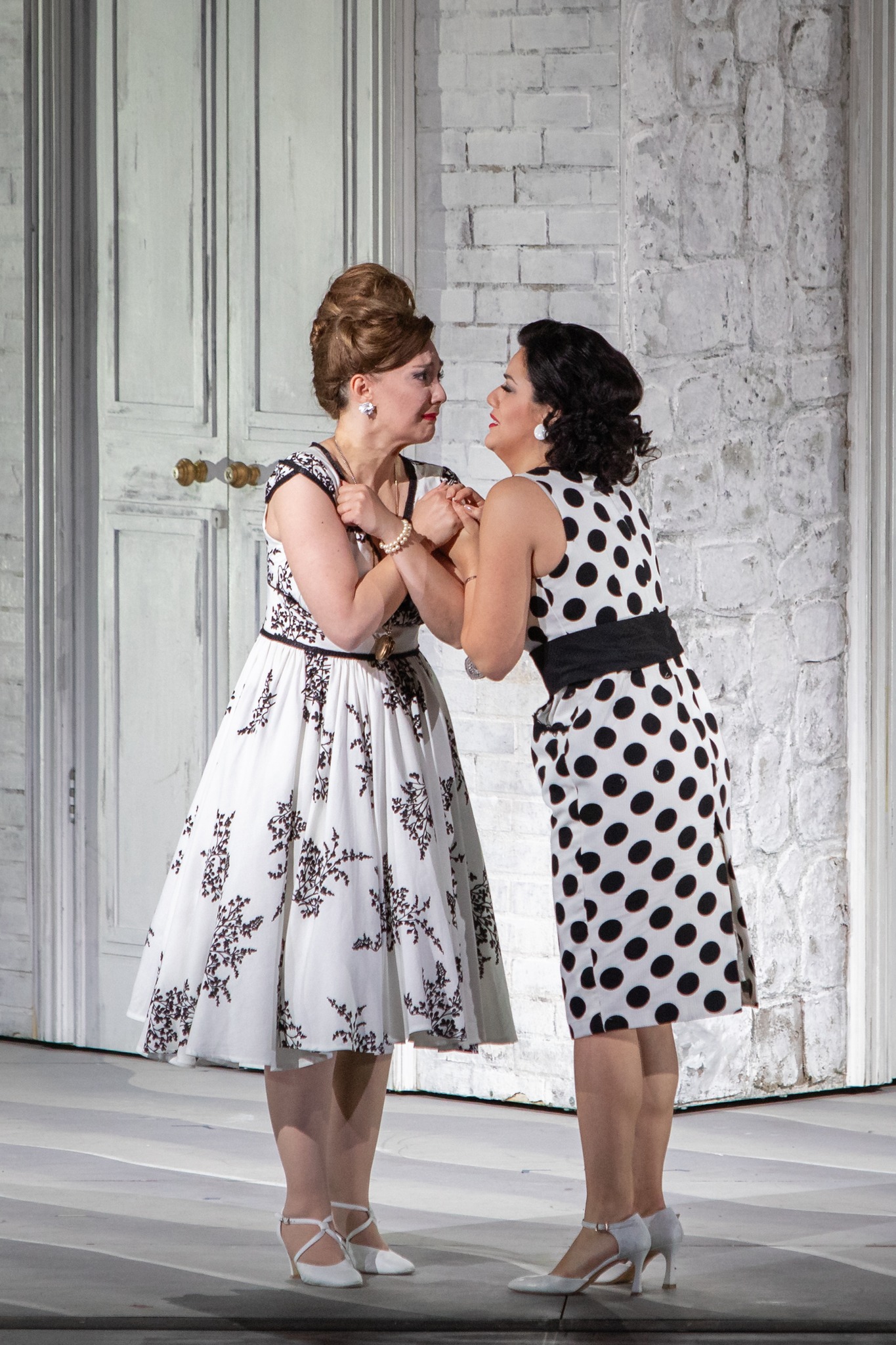
It has been a privilege to watch Dendievel grow as an interpreter over the past three years. Still in his twenties, the Flemish conductor is a major talent. The Figaro had a wonderful sense of grace, although the Don Giovanni wasn’t quite at the same level. Tonight’s Così was simply thrilling. He started off the sinfonia with a moderate tempo, the winds phrasing with eloquence and beauty. Then, as he moved into the Presto, the music immediately took flight, with a lithe, athletic tempo that just swept one along with sheer vigour. There was a physicality to Dendievel’s conducting and the orchestral playing that was simply irresistible. The Comunale orchestra responded with superb playing for him. Strings were lean with minimal vibrato, trumpets played on a mixture of modern and natural instruments, while the modern horns were on good behaviour in the treacherous writing of ‘per pietà’. The sheer poetry of the wind playing, the way that they lovingly phrased those Mozartian lines was captivating, and throughout there was this constant sense of interplay in the orchestral textures that just captured the attention and didn’t let go. Moreover, Dendievel had clearly given the recitatives as much attention as the other numbers, all crackling with dramatic and comic tension, helped by having a cast made up almost entirely of Italian singers who truly and profoundly understand the text. He also encouraged his singers to ornament their lines with impeccable stylishness, displaying an instinctive understanding of Mozartian style, and Nicoletta Mezzini added some charming and ingenious touches from the fortepiano.

Vocally there was much to enjoy, helped by the sheer clarity of the text. Mariangela Sicilia took a little while to find her best form as Fiordiligi. Both she and Francesca di Sauro’s Dorabella had some difficulties agreeing on the centre of gravity of their tuning in their initial duets, with Sicilia having a preference to stay on the southern end of the pitches. Her creamy soprano also had a tendency to lose the core of the tone at lower dynamics, which meant that balance in the trio, with Nahuel di Pierro’s Don Alfonso, was less than ideal, despite the captivating sea breezes that Dendievel inspired from the strings. Still, Sicilia rose to her big Act 2 number with generosity and feeling, embellishing the line with finesse to render every phrase full of emotion. Di Sauro sang her music in a ripe, ruby-toned mezzo. The voice is robust, with minimal natural vibrato, and projected easily into the difficult acoustic of the Comunale’s temporary theatre. She turned the corners in ‘smanie implacabili’ with ease, although with a tendency to push on the tone somewhat, and throughout she was an engaging stage presence.
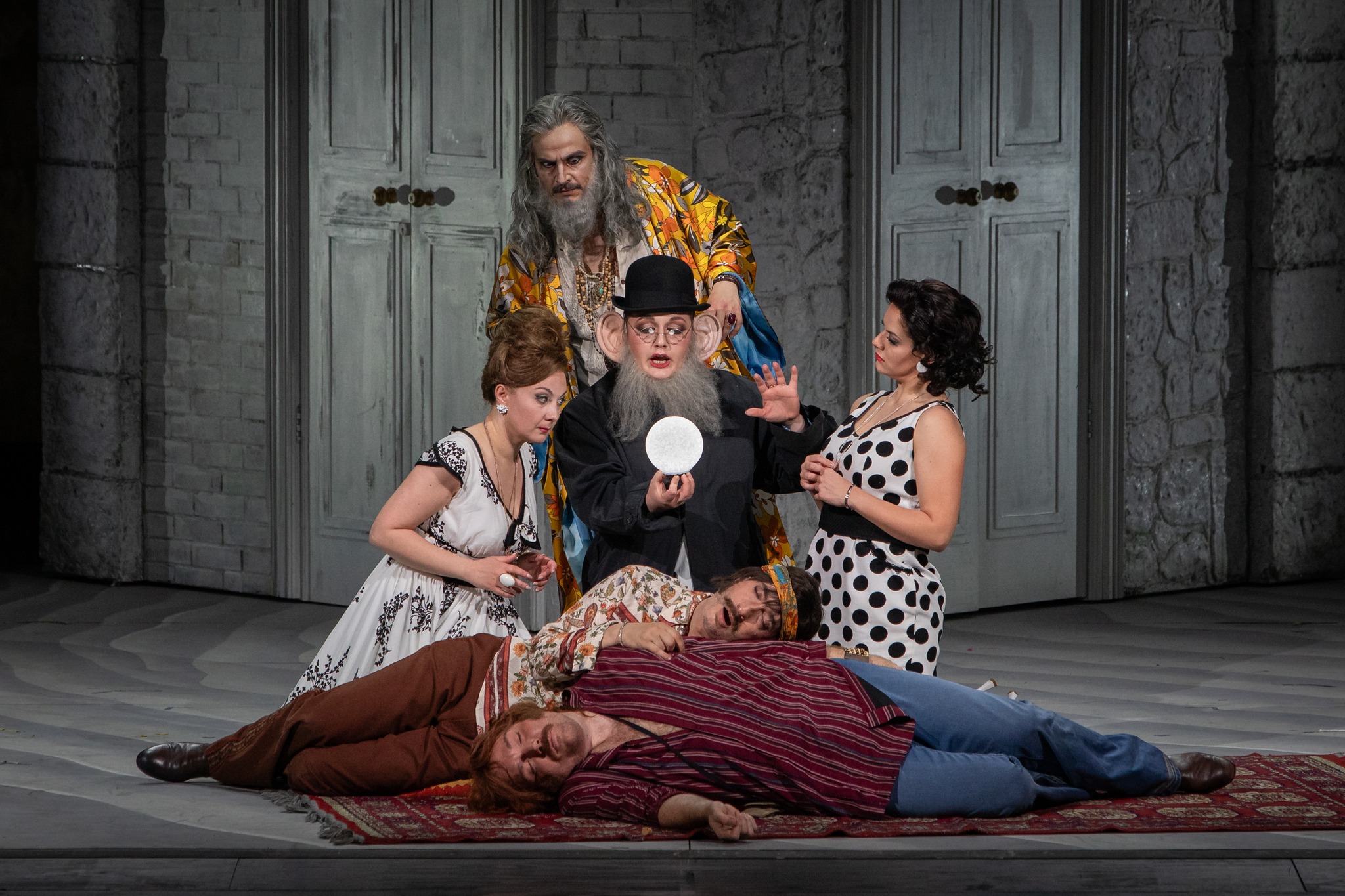
As indeed was Giulia Mazzola’s absolutely winning Despina. Her soprano has a delightful freshness, with a vivacious smile in the tone that completely managed to bring to life Despina’s mischievousness. Her recitatives lived through her ability to illustrate and communicate the text, all with impeccable comic timing. She sang her music with a limpid line and elegant legato. Di Pierro’s Don Alfonso was sung in his customary robust bass, with admirable depth of tone. So much of Alfonso’s character is built in the recitatives and here Di Pierro made so much of the words, his stage presence magnetic and convincing.
Marco Ciaponi gave us a lovely ‘aura amorosa’. He floated the music with staggering breath control, spinning out long, eloquent phrases, with extremely stylish ornamentation. His tenor is well-placed, bright and forward, and he had the agility to negotiate the rapid writing of the Act 1 finale with precision and ease. Vito Priante sang Guglielmo in a firm baritone, relatively dark in colour, with warm resonance. He also managed to turn the corners in ‘donne mie’, while never succumbing to the urge to hector, while his ‘il core vi dono’ was sung with handsome tone and an immaculate line. The chorus, as always prepared by Gea Garatti Ansini, sang with solid tone and immaculate ensemble in their brief interjections.
Tonight’s Così was a fitting closing chapter in the Comunale’s survey of the Da Ponte operas. Talevi has given us a staging that focuses on the individual and the personal, that took us deep into the human condition, in all of its complexities, and succeeded in magnifying Mozart’s score and Da Ponte’s libretto. Dendievel gave us an irresistible interpretation of the score, one that felt vivid and alive, so immediate in its physical impact, all while giving his singers space when they needed it. The singing gave much satisfaction, particularly from the gentlemen and from Mazzola’s winning Despina – who seemed genuinely moved when given a tremendous reception at the curtain calls. The audience responded throughout the evening with laughs and applause, and the final curtain calls were greeted with generous cheers.
 operatraveller.com
[…] In Bologna, Martijn Dendievel and Alessandro Talevi reached the end of their Da Ponte trilogy with Così fan tutte. Dendievel’s conducting here was absolutely terrific, using swift tempi, with […]