Händel – Giulio Cesare
Giulio Cesare – Xavier Sabata
Cleopatra – Julie Fuchs
Tolomeo – Cameron Shahbazi
Cornelia – Teresa Iervolino
Sesto – Helen Charlston
Achilla – José Antonio López
Curio – Jan Antem
Nireno – Alberto Miguélez Rouco
Orquestra Simfònica del Gran Teatre del Liceu / William Christie.
Stage director – Calixto Bieito.
Gran Teatre del Liceu, Barcelona, Catalonia. Saturday, May 31st, 2025.
This new production of Giulio Cesare at the Gran Teatre del Liceu is a coproduction with De Nationale Opera from Amsterdam, where it was seen two years ago. For the Barcelona run, the house has united many of the original cast, with the legendary William Christie leading the Liceu’s own orchestra in the pit. Bieito certainly starts with an interesting premise: is the search for power something all-consuming, and is sex is a means to achieve it? Are those in search of power capable of real human emotions? These two questions set the scene for the subsequent four hours of theatrical exploration.

One of the biggest qualities I appreciate in Bieito’s work, is his ability to amplify the impact of a score through what we see on stage. This Giulio Cesare, however, is different. Here, he focuses much more on the individual characters and their relationships with each other. Or, perhaps I should have written, precisely their lack of relationship with anyone except themselves. Right from the very start, we see a group of people who are so self-obsessed, they can’t see beyond their own desires for power, for revenge, for sexual conquest. Yet there’s a complexity to the characters here that can only be achieved through deep and intense work in the rehearsal studio, with the run having been revived by Astrid van den Akker. Take Xavier Sabata’s Cesare, for instance. His was an unconventional reading of the part, less heroic and more camp in his celebration of victory, or lecherous when eyeing up Cleopatra. His opening number might reveal him as a conquering hero, his physical abuse of Achilla later on, shows that even though he might seem harmlessly foppish, there was a brutality under the surface that was testament to his maintenance for power. The same goes for Teresa Iervolino’s Cornelia and Helen Charlston’s Sesto: both so single-minded in their grief and revenge, they were unable to engage with, or see beyond, their own situations.
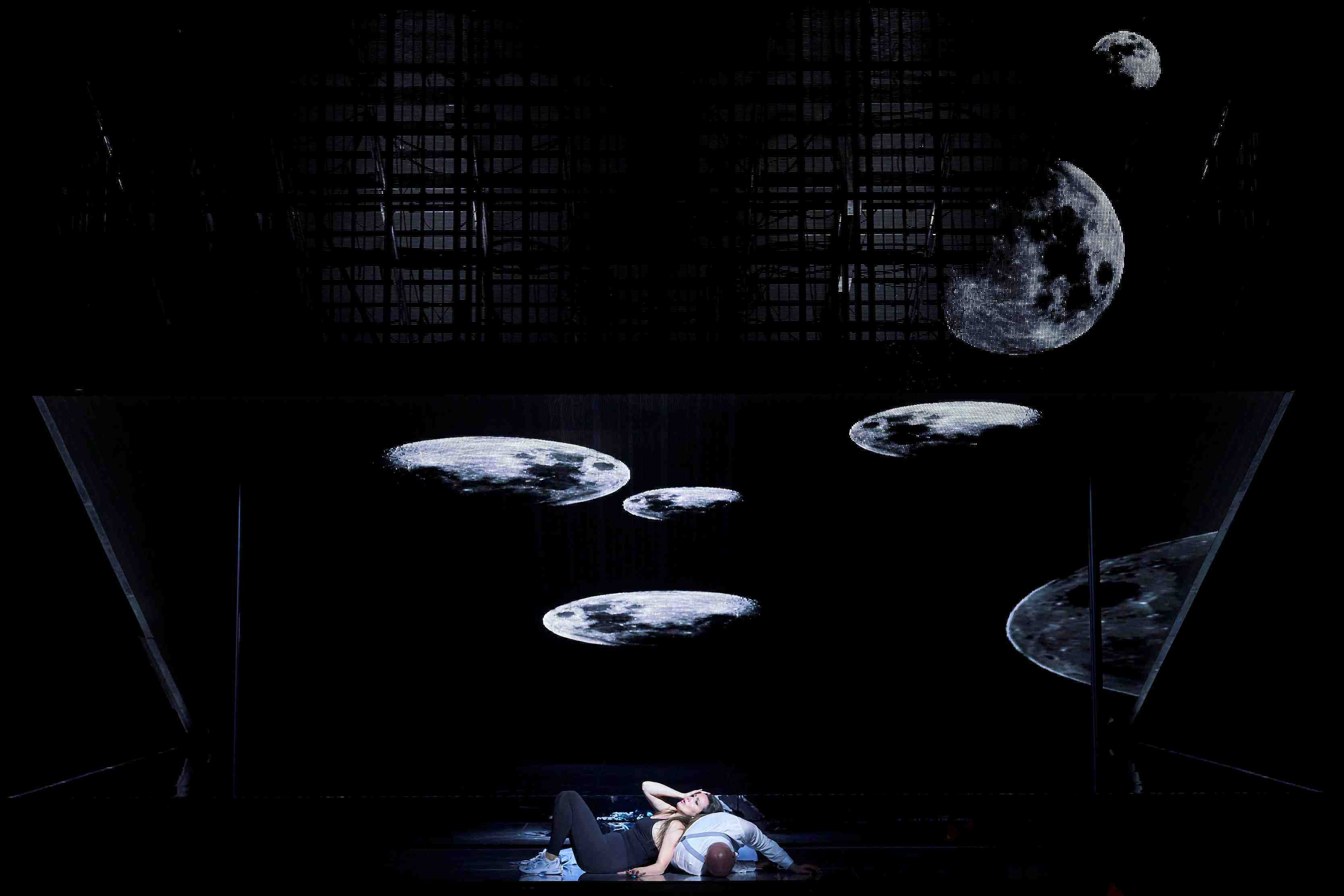
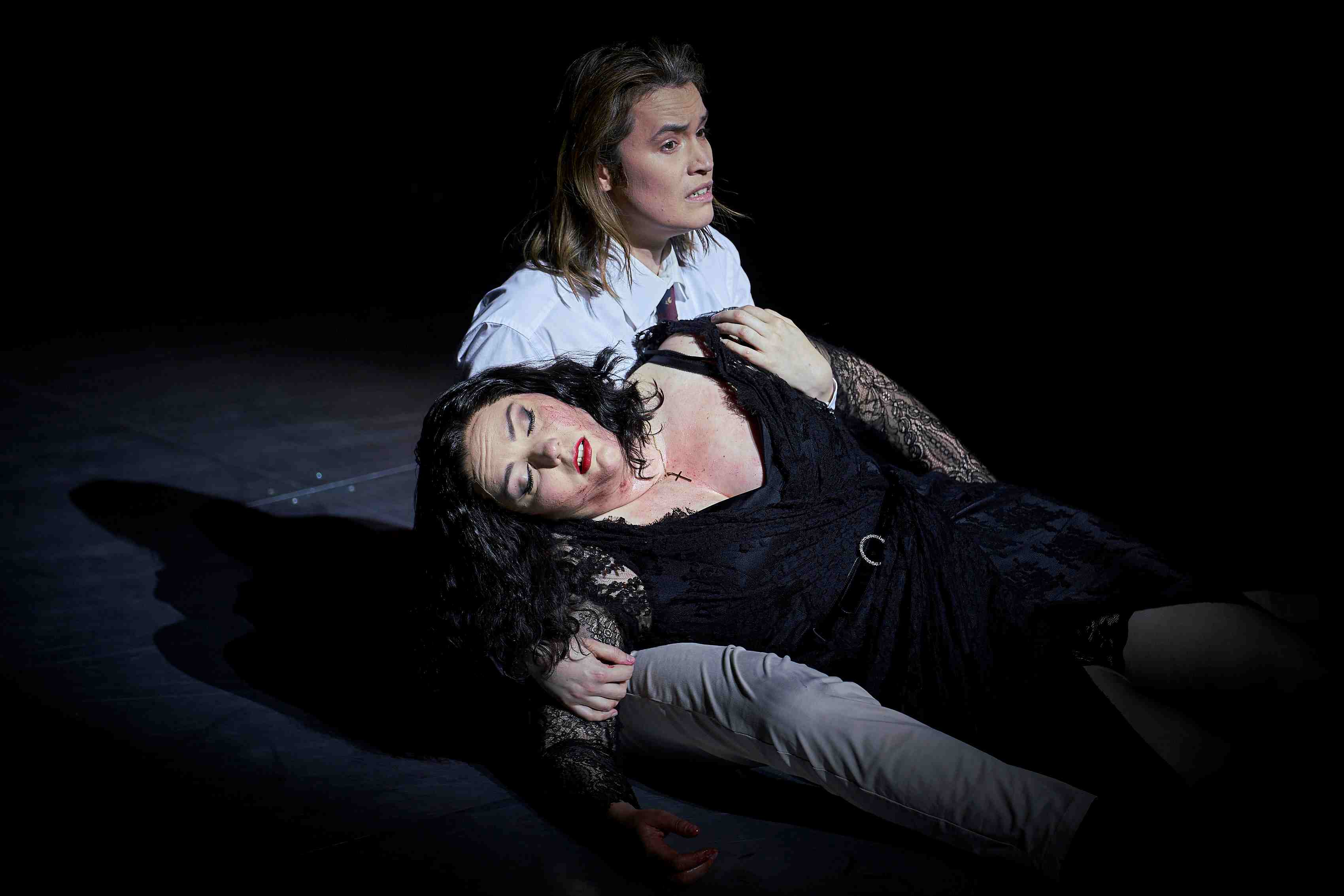
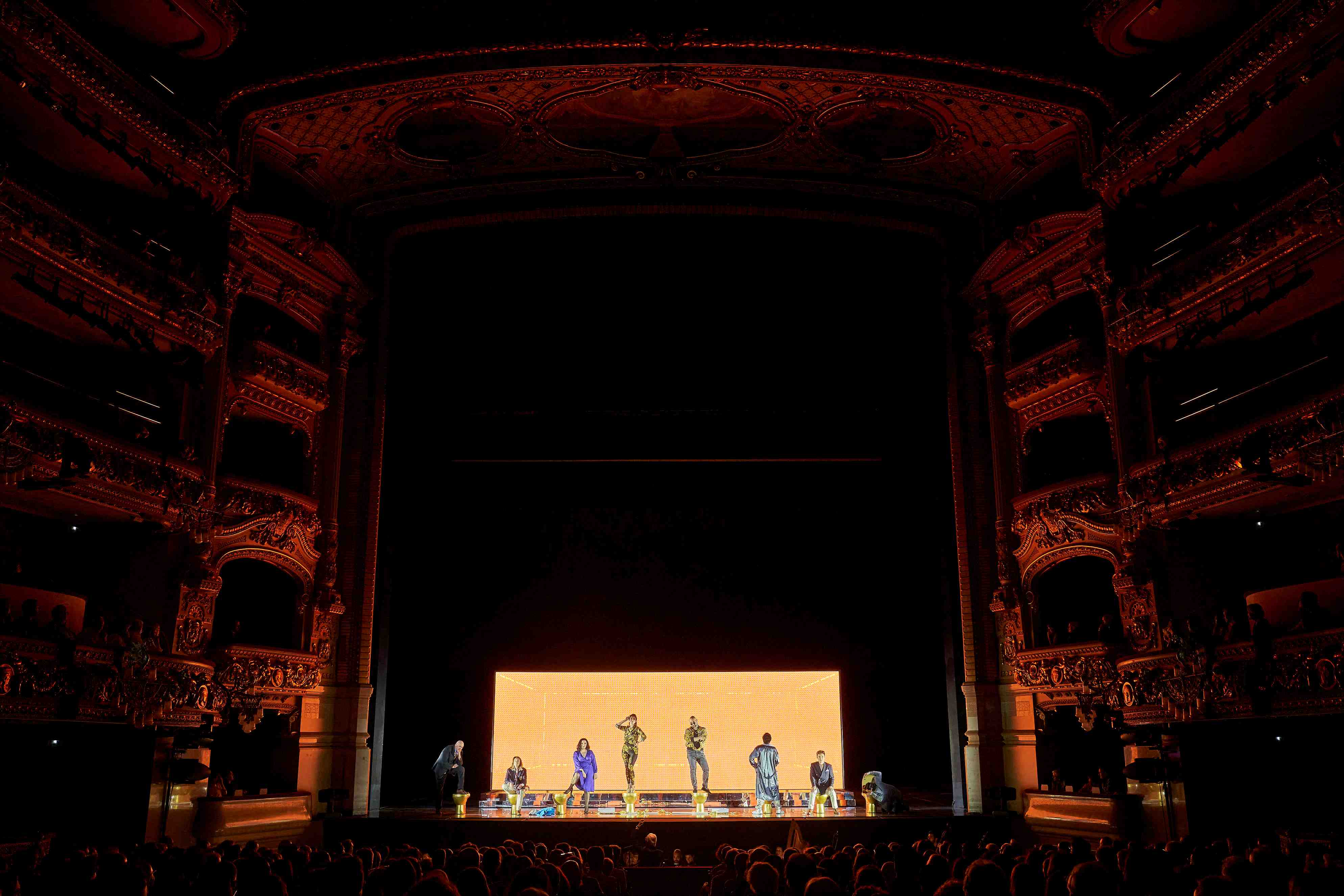
On the opposite side of the violence, grief and revenge aspect of power, comes that of sex, here manifested in Julie Fuchs’ Cleopatra and Cameron Shahbazi’s Tolomeo. Fuchs combined her alluring singing with a physical flirtatiousness that both captivated Cesare and the audience, combined with a side of dark humour. Similarly, Tolomeo manifested his power through his sexual attraction and assignations with a group of four nubile young men, who he flirted with, rubbing ice cream over them, demonstrating his journey through the work from impotent frustration in Act 1 to sexual command later on. Bieito sets the action within a single set, by Rebecca Ringst, which initially strikes us as a prison, through which we can see shady characters operating individually, in the shadows, unable to engage with each other. As the evening develops, the set opens up, physically manifesting that search for power emerging into the open, with the video, by Sarah Derendinger, making the entire set light up. I found Bieito’s staging to be insightful, character-driven, yet riven with a dark humour that lit up the gloomy central messages. Not least in the final scene, with a brilliant little twist on the idea of a gilded throne. That said, it did feel cerebral, abounding in intelligence certainly, but lacking that sheer emotional impact and ability to amplify the music that reflect his very best work.
Musically, there was much to enjoy. Christie brought a lifetime of understanding of baroque music to his conducting. He got the Liceu orchestra, playing a combination of period and modern instruments, to sound like the ultimate Händelian band. Despite the length of the evening, he made Händel’s music sound so inventive, constantly evolving the use of orchestral colour – for instance in ‘l’angue offeso mai riposo’ pulling out a rich string sound that was full of depth, or the lightness of touch that he brought to the twirling heights of ‘non disperar, chi sa?’, not to mention the beauty of the harp and theorbo under the ravishing string sound in ‘v’adoro pupille’. Strings played with minimal vibrato throughout, the period winds brought real character of tone, and the natural horns were on excellent form in ‘va tacito’. Ornamentation was used throughout with imagination, genuinely enhancing the vocal lines and making them live. Christie’s tempi felt right all through the evening, generally keeping things moving, but also giving Fuchs the space needed to spin those beautiful lines.
Indeed, Fuchs’ singing was very much the highlight of the evening. The voice seemed capable of anything she asked of it, able to float with the lightest of touches on high as she added exquisite embellishments to the line. Hers was a very complete Cleopatra and at one with Bieito’s vision of the role as both coquettish and passionate. She had the agility for ‘da tempesta’ and demonstrated throughout the evening her mastery of the genuine trill. Fuchs also brought out the pathos and the pain behind Cleopatra’s surface: she gave us ravishing accounts of ‘se pietà’ and ‘piangerò’ that made time stop still, her easy line and ability to spin seemingly endless phrases giving an enormous amount of pleasure.
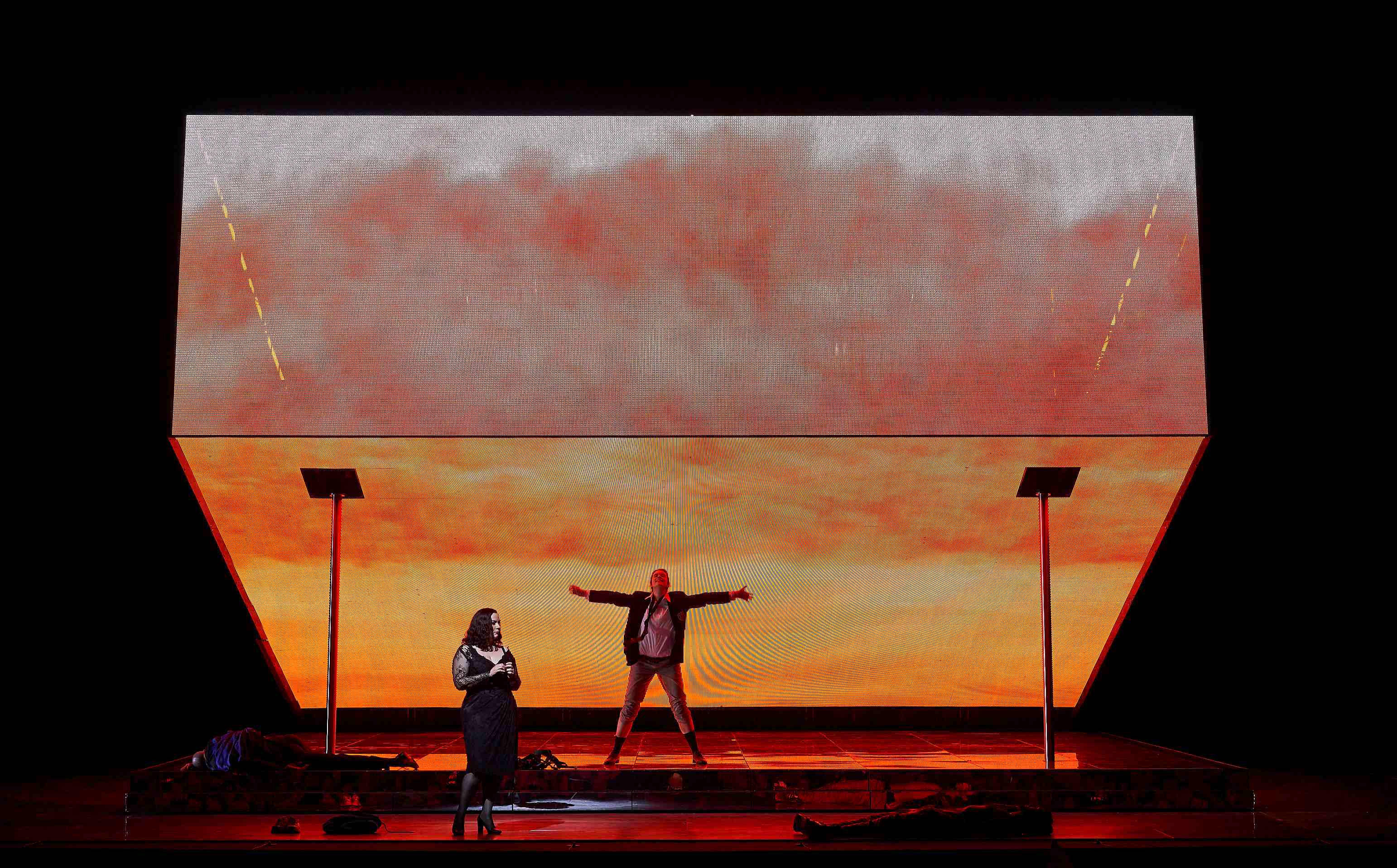
Teresa Iervolino brought her familiar verbal acuity to Cornelia’s music, using those Italian vowels to colour the tone and bring Cornelia’s pain out through the text. She also has an implicit understanding of how this music should go, giving us an impeccable legato, warm ruby-red tone, and a rich bottom. Helen Charlston sang Sesto in a rather brassy, focused mezzo. She was also capable of some impressive breath control, able to turn the corners with ease.
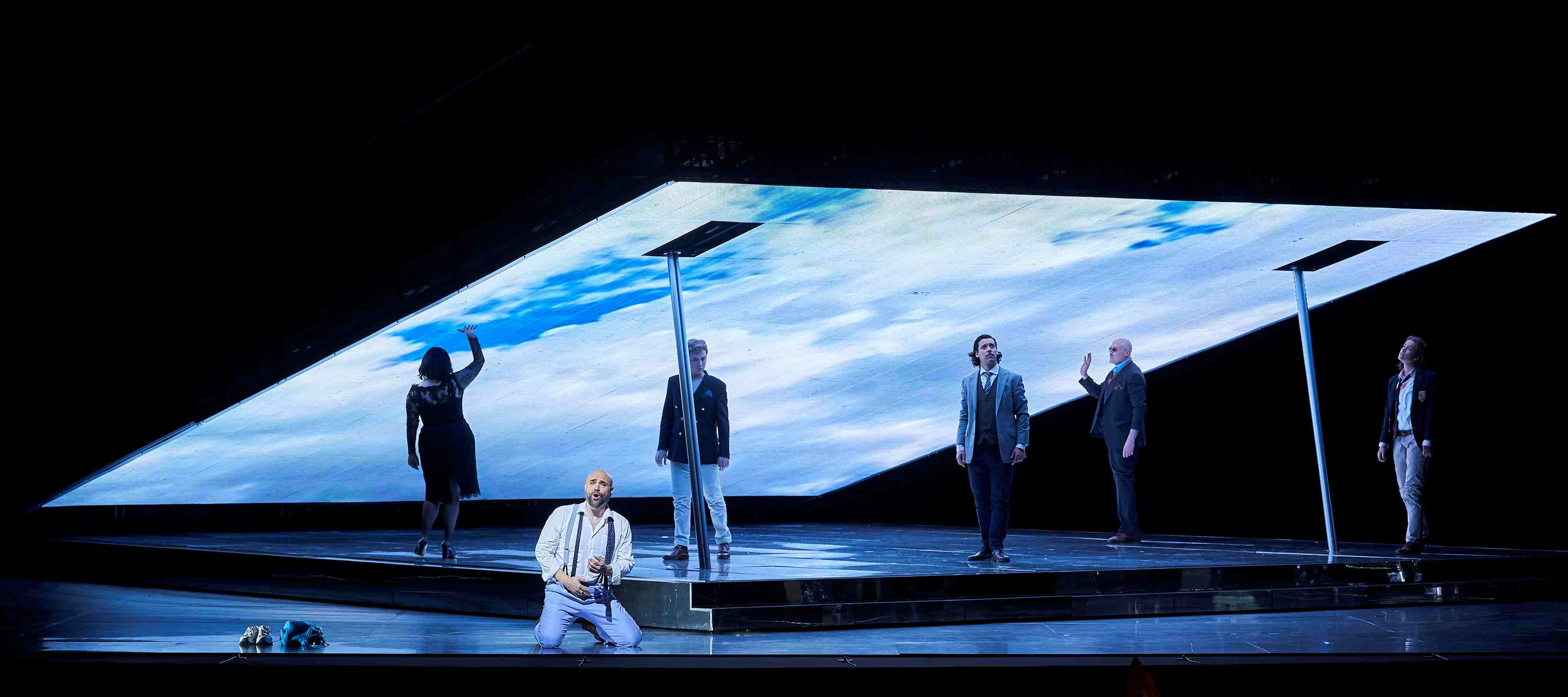
The title role sits low for many countertenors and this was the case for Sabata this evening. Much of the music sits within his lower passaggio, which he most certainly negotiated expertly. He was unafraid to sacrifice the beauty of tone to add an edge of maliciousness to Cesare’s character. His countertenor preserves that oaky beauty of tone in the middle, manifested through an elegant line and immaculate dispatch of the runs. Sabata is also a stage animal, giving us a complex, contradictory account of the role that had enough energy to power a small town. Sabata most definitely rose to the occasion and gave generously of himself, even if I couldn’t dispel the thought in my mind that his considerable talents might perhaps be better matched to Tolomeo.
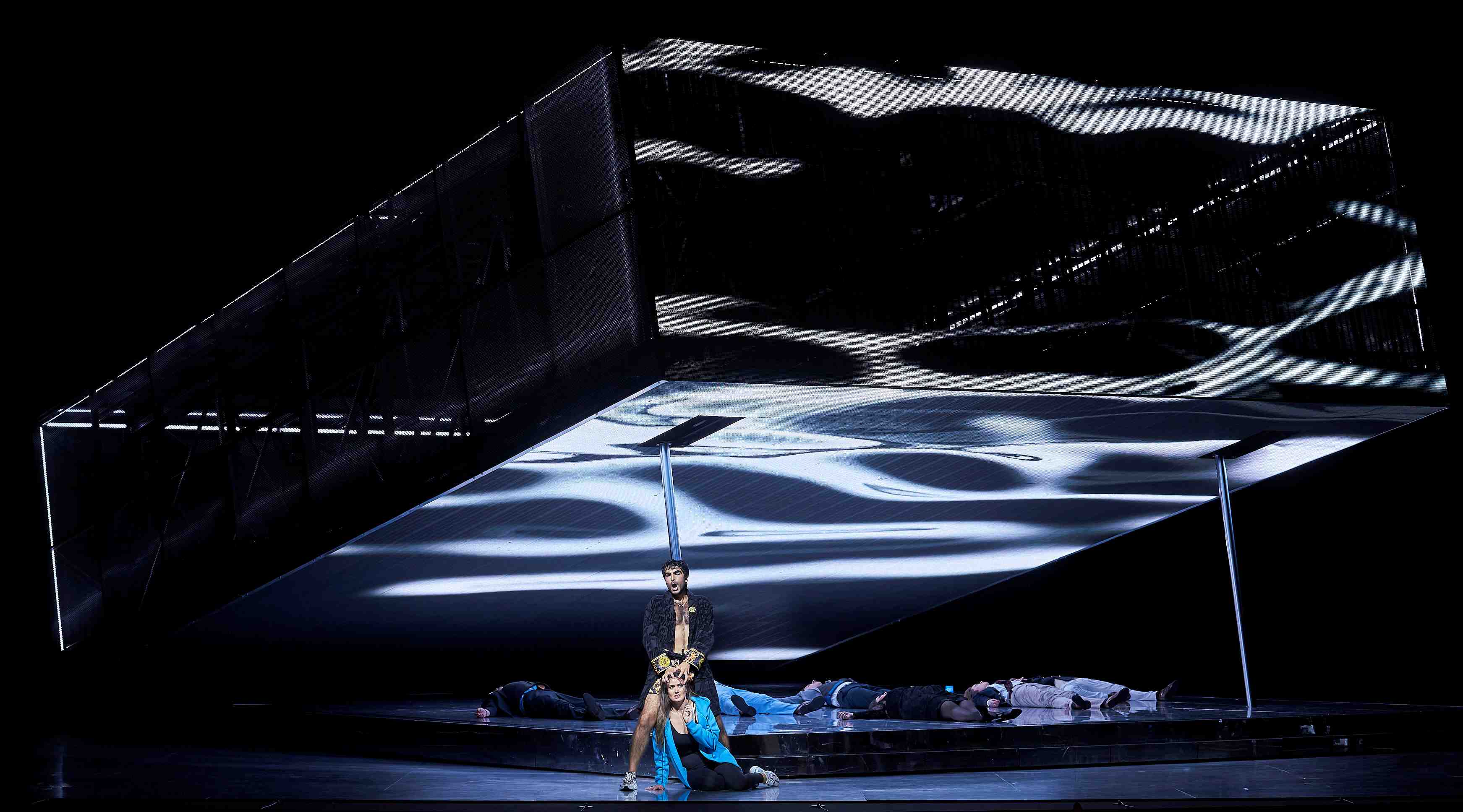
Shahbazi was wonderfully complex in his account of Tolomeo. His lithe, athletic countertenor, with a claret core, was able to turn the corners immaculately. In common with his castmates, he’s also a highly energetic stage presence and made much of the text. José Antonio López brought his robust baritone to the role of Achilla. Despite the size of the voice, he still managed to dispatch his runs with real precision and musicality. Jan Antem’s youthful baritone was a real asset to the cast as Curio, making so much of the words in the recitatives, giving his character a three-dimensional presence. Alberto Miguélez Rouco was a nicely insinuating presence as Nireno, although his light, sunny countertenor was less than ideally audible from my seat in the fourth row of the Platea in his aria.
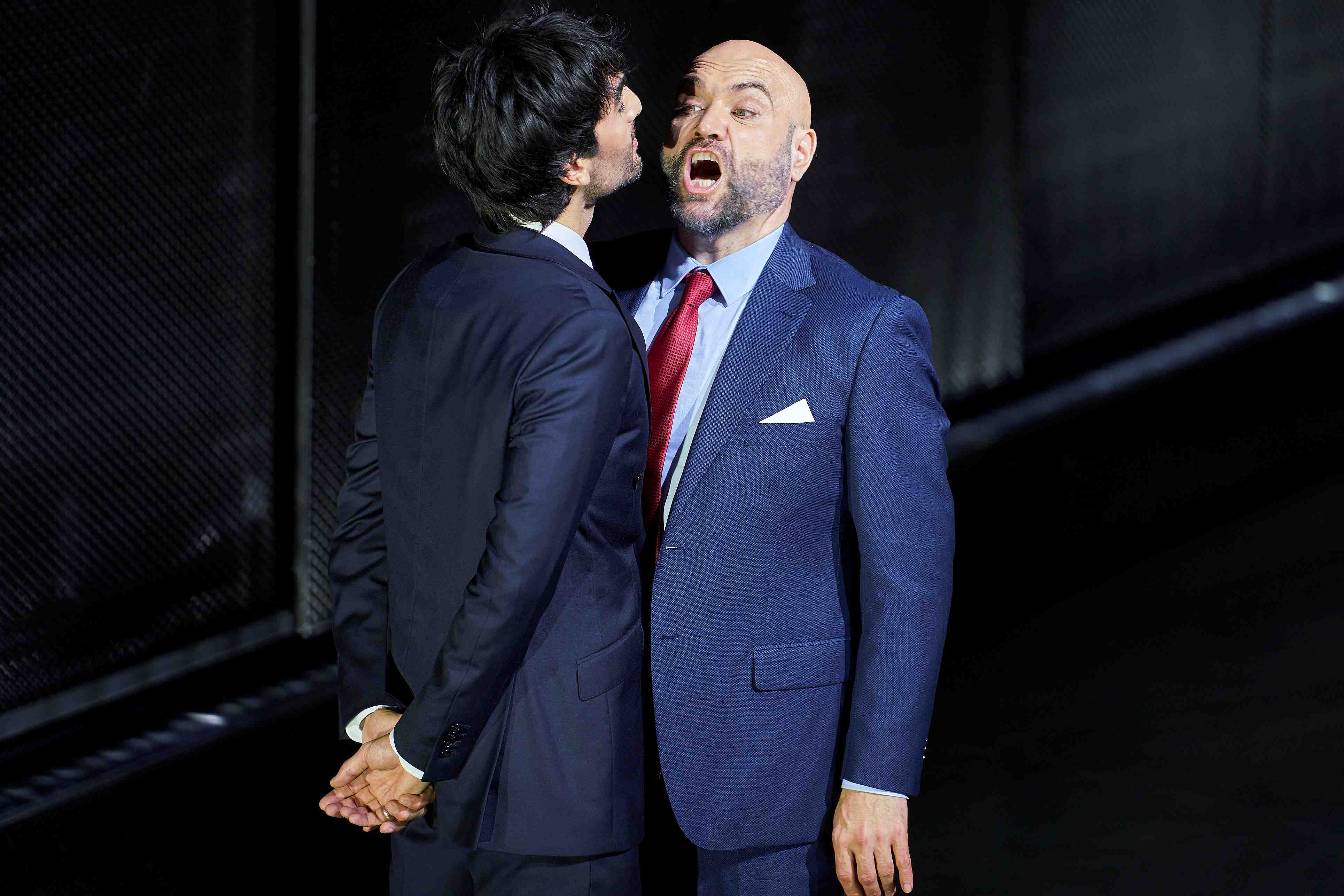
There was much to enjoy in tonight’s Giulio Cesare. Bieito has given us a thoughtful staging, one that examines the relations between a group of people who desire power in some form, yet are singularly unable to relate to each other and find a common humanity. While it is a staging that abounds in insight and intelligence, I didn’t find it to have that visceral impact of Bieito’s best work, focusing instead on a character-driven exploration of the work, rather than that total union of music and vision. Musically, it was in the safest of hands under Christie’s experienced direction, with superb orchestral playing, complete understanding of the style, and decent singing, with Fuchs a consummate Cleopatra. The audience greeted the cast at the curtain calls with a generous ovation, particularly so for Fuchs, Iervolino, Charlston and Christie.
 operatraveller.com
[…] cast. On the other end of musical history, the Liceu presented Calixto Bieito’s staging of Giulio Cesare. Bieito gave us a thoughtful and cerebral staging, if perhaps one lacking the sheer emotional […]