Wagner – Siegfried
Siegfried – Michael Heim
Brünnhilde – Sonja Šarić
Mime – Matthäus Schmidlechner
Der Wanderer – Thomas Johannes Mayer
Alberich – Claudio Otelli
Fafner – Sorin Coliban
Erda – Bernadett Fodor
Stimme des Waldvogels – Julia Grüter
Orchestra del Teatro Comunale di Bologna / Oksana Lyniv.
Concert performance.
Teatro Comunale di Bologna – Auditorium Manzoni, Bologna, Italy. Friday, June 13th, 2025.
And so, it continues. The Bologna Ring, performed in concert at the beautiful Auditorium Manzoni, tonight moved on to Siegfried, following last June’s Rheingold and October’s Walküre. Both of those earlier instalments were revelatory, helped by the superb playing of the excellent orchestra of the Teatro Comunale, who phrase this music with such cantabile beauty and generosity. Indeed, that Walküre moved me for the first time with that work, thanks to honest vocal performances and Oksana Lyniv’s equally lyrical conducting. I’ve always found Siegfried to be the weaker work in the Ring cycle. So much of it is taken up by accounts of previous scenes, and the forest scene in Act 2 always feels embarrassingly ponderous and self-indulgent. I was keen, then, to see if Lyniv and her orchestra’s revelations in those previous evenings would lead to similar insights tonight.
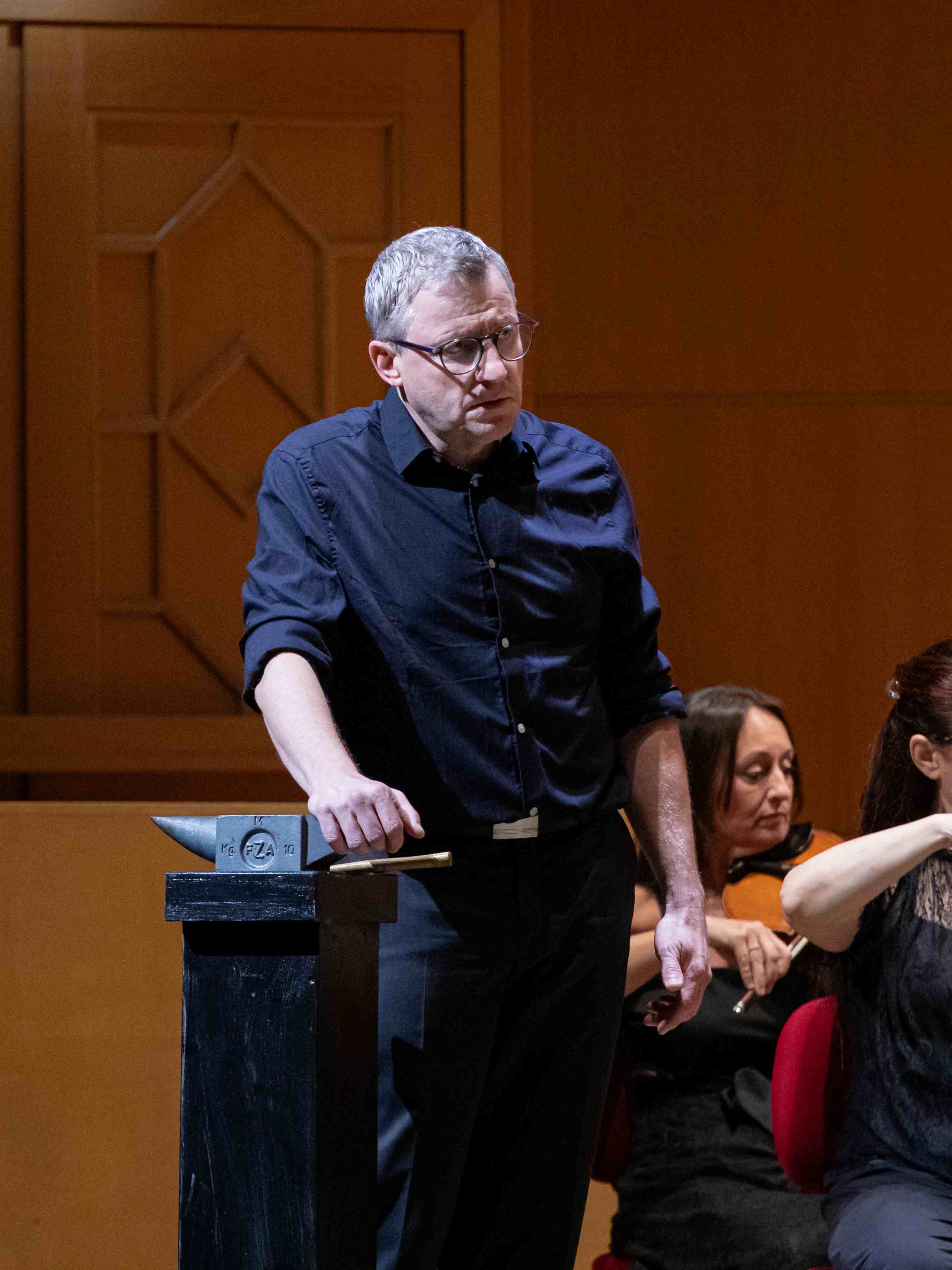
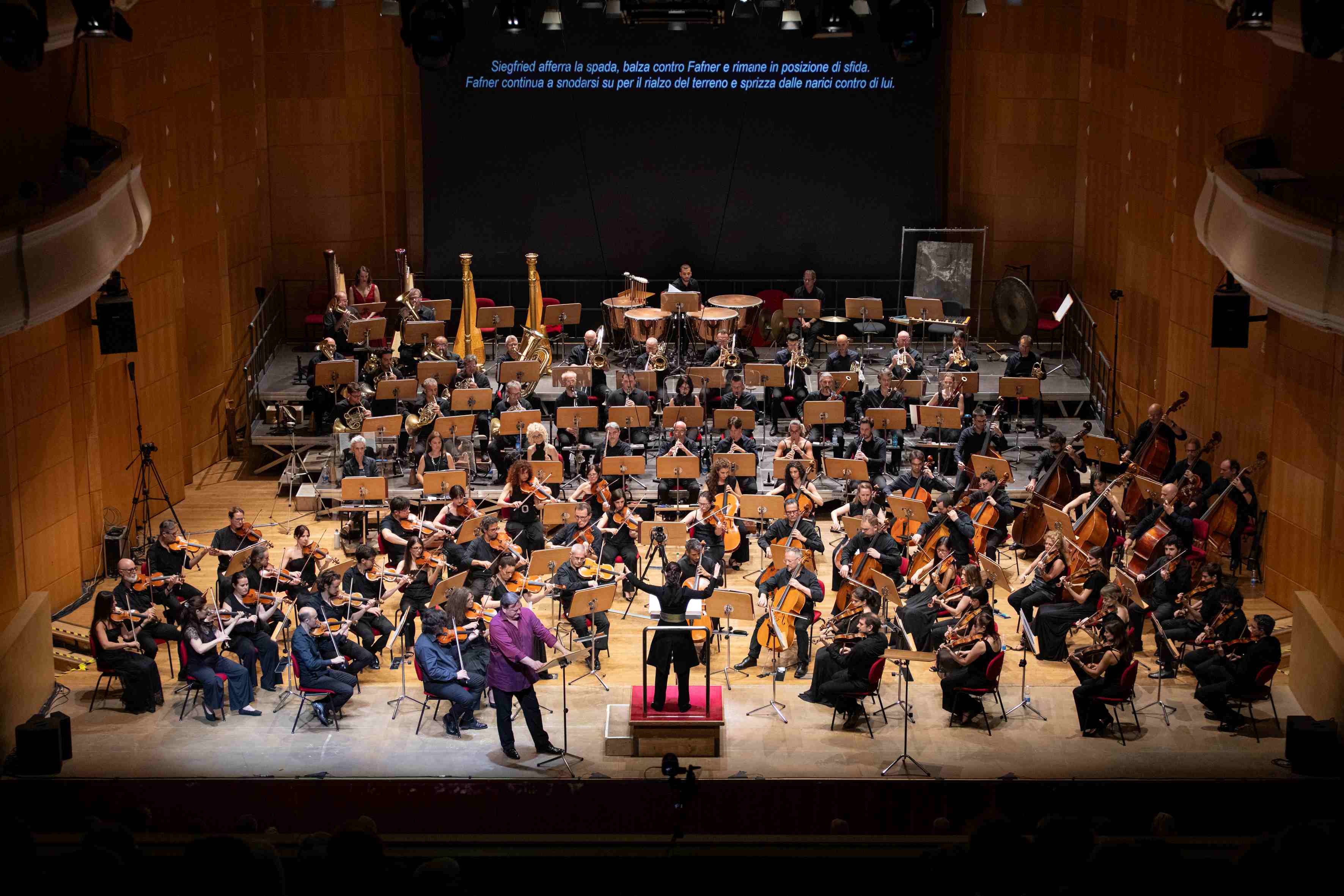
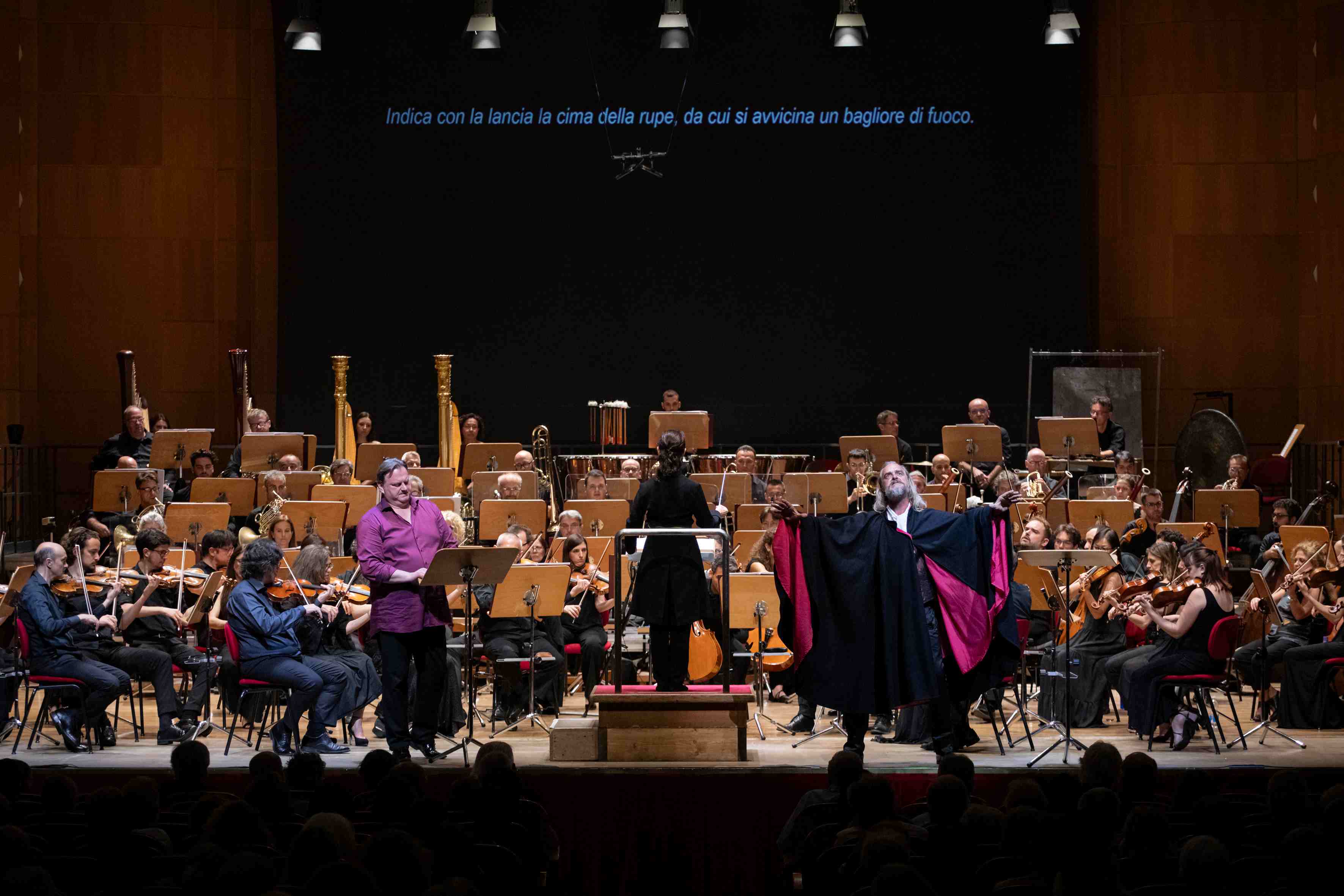
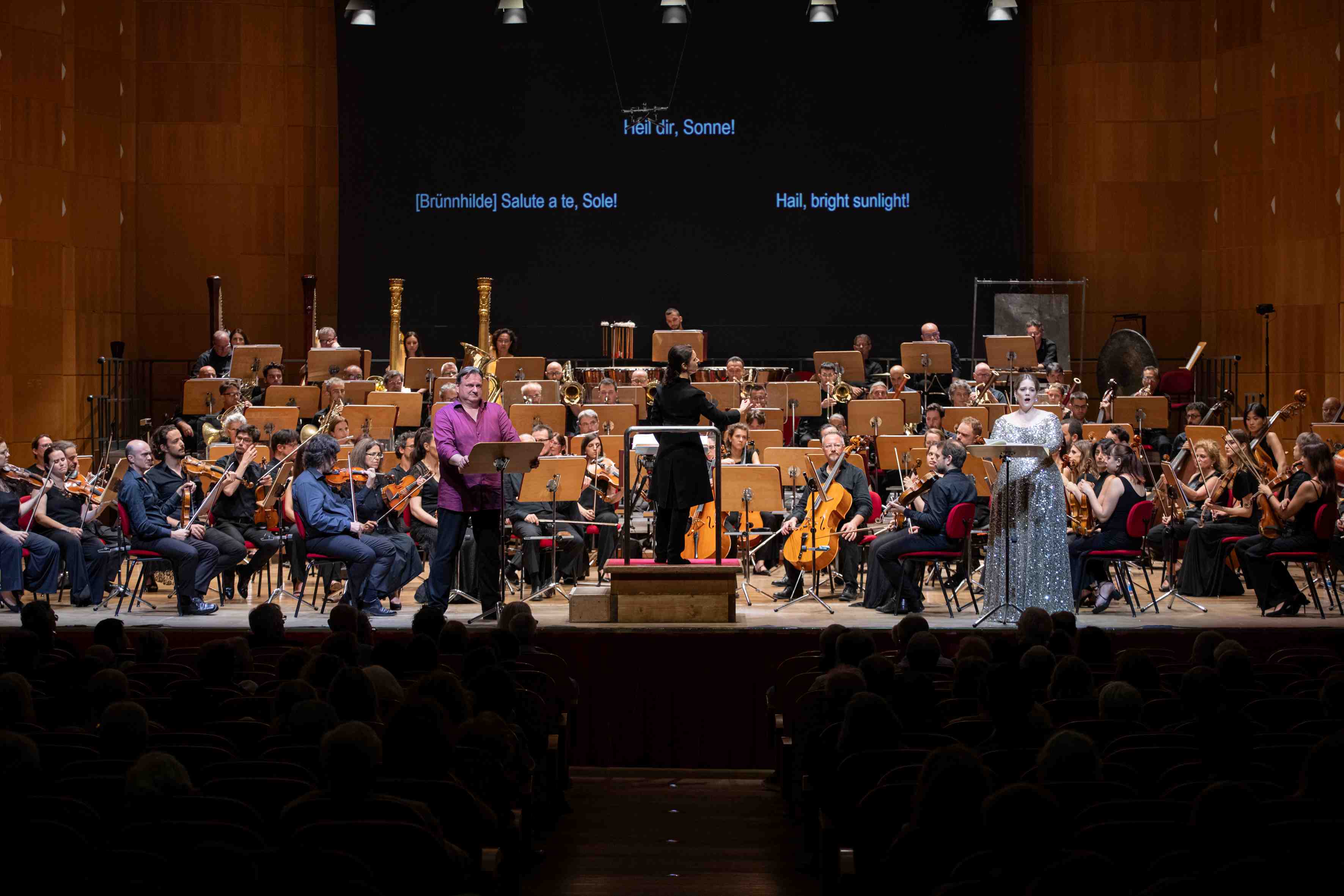
As with the earlier parts, the orchestra was on stage, with the text projected on a screen behind them, the stage directions given in Italian, together with the original German text and Italian and English translations. Although a concert performance, entrances and exits were stage managed, with Thomas Johannes Mayer’s Wanderer making his first entry from the rear of the auditorium; Julia Grüter’s Waldvogel sang from between the harps at the rear of the stage; and Sorin Coliban’s Fafner sang his scene mostly from the hallway at the side of the auditorium. Although Michael Heim’s Siegfried, Claudio Otelli’s Alberich, and Sonja Šarić’s Brünnhilde sang from music stands, the remainder of the cast sang without scores, investing the music with drama, particularly as the text from the entire cast was so clear, rendering the surtitles redundant. There was a little bit of drama at the start of the evening when, around ten minutes in, Lyniv stopped the music and begged the audience’s indulgence, mentioning that she required medical attention. However, she returned to the podium within five minutes, and the remainder of the evening passed without incident.
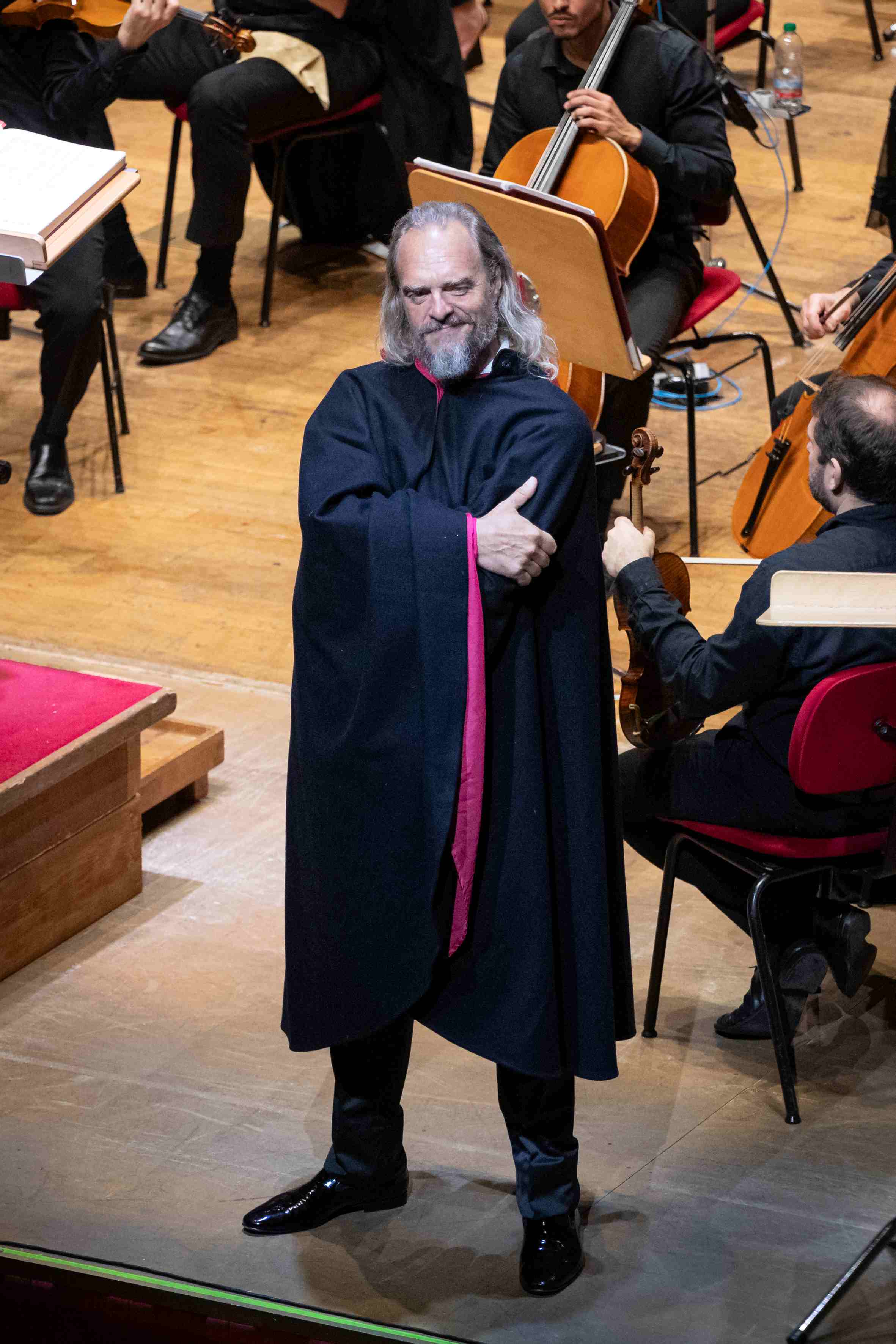
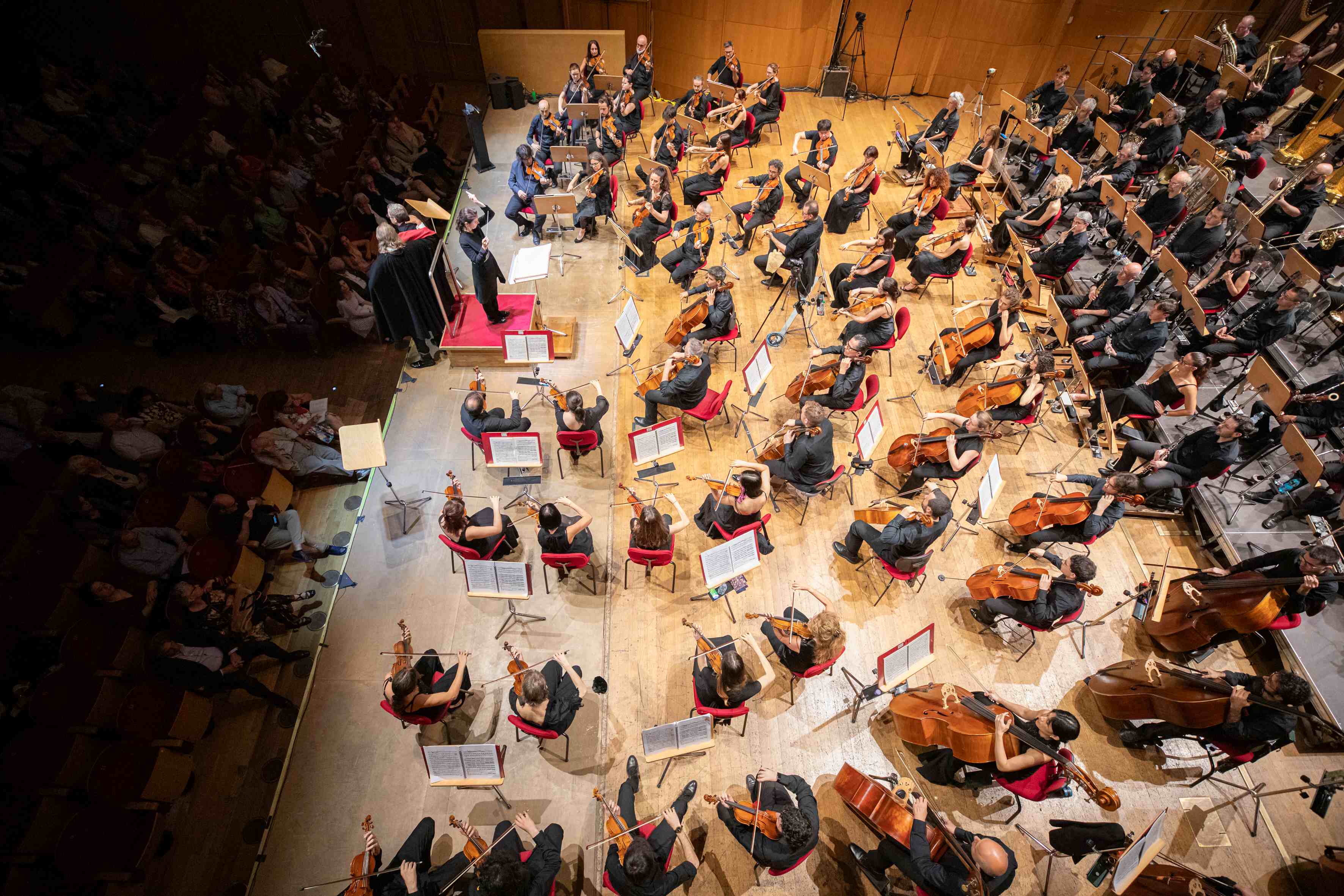
As I mentioned above, the consistent pleasure in this cycle so far has been the playing of the Comunale orchestra and Lyniv’s conducting. The opening pages of Act 1 found a balletic edge, those menacing lower brass hints of the dangers of the woods, took on a sense of furtiveness that I found most engaging. The richness and warmth of the Comunale’s brass section was absolutely sensational, the playing unrecognizable from their somewhat accident-prone survey of Rheingold. The Manzoni’s acoustic is lively and immediate, and the sound of that glorious orchestra in full flight, became utterly overwhelming. Once again, Lyniv demonstrated a superb ear for orchestral colour – those flints of flames in the winds in the forging scene, or the gossamer strings of the forest murmurs were utterly magical. Indeed, the depth of the string tone was most impressive, and yet they were also able to pull back and give us a halo of sound where needed. I did find some of Lyniv’s tempi slightly on the slow side – the forging song could have been taken a notch or two faster for my taste, and she luxuriated slightly too much at the start of the final scene of Act 3, with tension dipping. It was a very long evening for the orchestra. There were some signs of fatigue at the end of Act 3 with a few ragged brass entries, and those very high-lying violin lines as Siegfried arrived on the rock were not completely unanimous in phrasing. But these were very small things and completely understandable given the length of the evening, and the fact that it was 33 degrees outside. Lyniv did fill the Wanderer-Erda scene with gripping drama, the swift tempo she set giving the sense of unstoppable fate. Make no mistake, this Ring is a triumph for this historic orchestra and their conductor.
The singing was also absolutely terrific across the board. Heim was a relatively late replacement for the originally-scheduled Peter Wedd. He does have the role of Siegfried in his repertoire, but tonight he kept very close to the score. This meant that his reading did feel rather score-bound, lacking that ultimate sense of living the drama in the way that his colleagues did. That said, he most certainly has the measure of this beast of a role, singing it with the utmost security, pacing himself with perfection so that, by the time he got to the closing scene, he had more than enough in the tank to ring out on high alongside Šarić’s radiant Brünnhilde. Heim’s tenor doesn’t have the ultimate in cutting power, but he most certainly sings the role and communicates the text. A very welcome find.
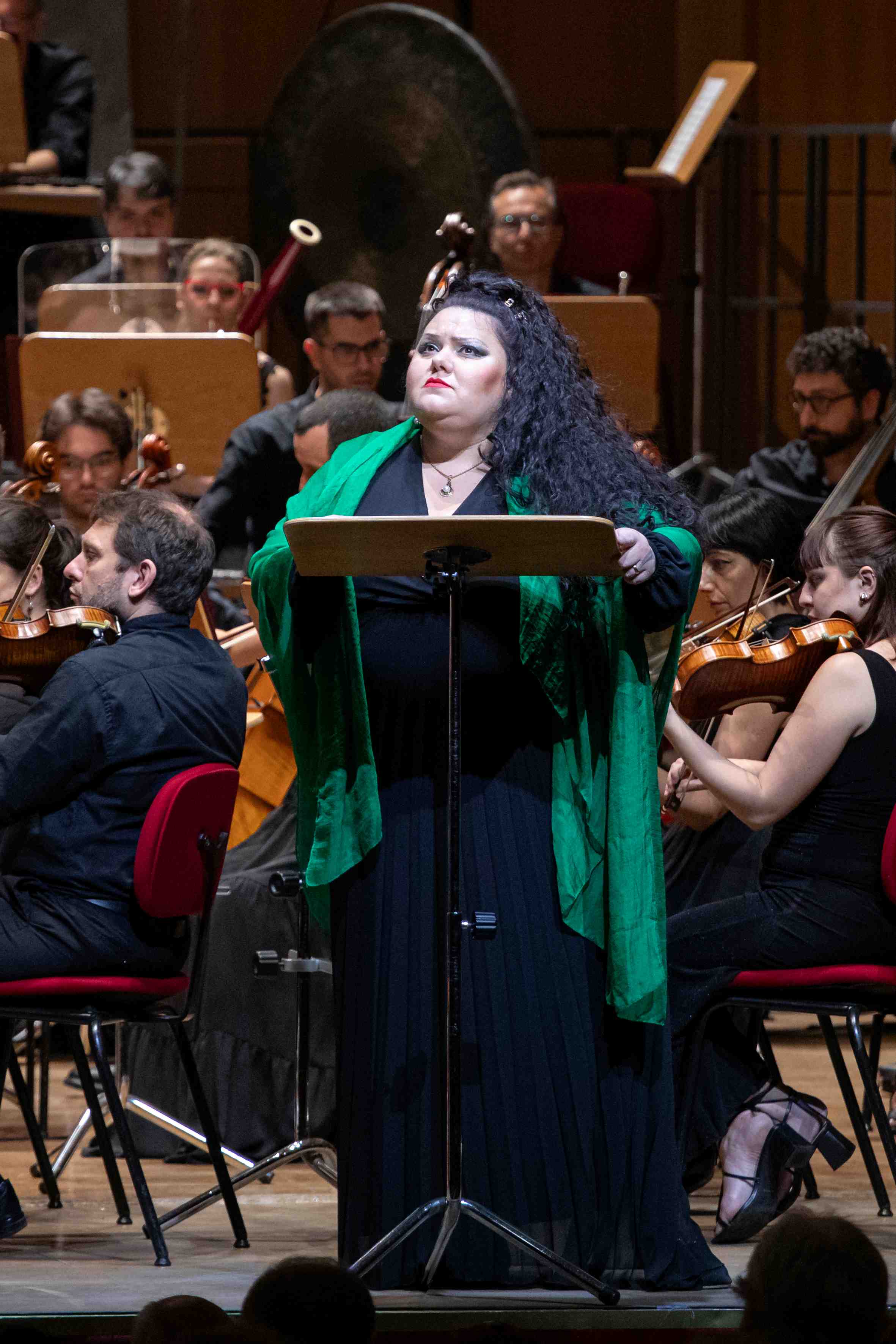
Šarić, who sang Sieglinde in October’s Walküre, poured out streams of pearly tone into the auditorium. The voice is a good size, able to ride the Wagnerian orchestra with ease. Hers is a soprano that sits quite high, which meant that the higher reaches of the part held no terrors for her, the voice soaring magically on high, and culminating with a magnificent, and sustained, high C in the closing measures. Šarić was also able to pull back on the tone with delicacy in ‘Ewig war ich’, the eloquence of her diction giving much pleasure. Matthäus Schmidlechner was a similarly verbally-incisive Mime. His tenor is forwardly placed, focused in tone, and able to penetrate into the room easily. He brought out so much through the text, communicating it with such clarity, even in this concert setting, that I have no doubt that the even the audience members who have no understanding of German would be able to understand his character’s motivations, simply through the way he used the text and the line.
Mayer’s baritone certainly sounds like a voice that has seen much – and indeed he’s an experienced exponent of Wotan/Wanderer. Right from his opening measures, the voice accompanied by those solemn brass chords, there was a sense of Mayer incarnating his character in the most remarkable way, an echo of vocal familiarity from the earlier instalments. Yes, the voice is leathery and prone to dryness, yet Mayer makes it work in service to his character. This is a Wanderer who is audibly acutely aware of his loss of power, who just through the tone and text alone, is able to portray that acknowledgement that the regime he headed will shortly be no more. Mayer’s long experience in the part was evident in the way that he held the stage and filled the words with meaning, his initial confrontation with Mime crackling with energy. When Mayer got to that final scene with Siegfried, he found a finality in his use of text that meant nothing could be the same again. Mayer’s Wanderer is not the most vocally refulgent, but it abounds in so much insight and, as a result, was utterly gripping.
As indeed was the scene with Bernadett Fodor’s Erda. Fodor has stage presence to spare, dominating the platform with a voice of rich, velvety warmth in the middle. The top is also extremely exciting, opening up thrillingly. Fodor was somewhat sparing with the chestiness, when I really wished she would let rip, but her verbal acuity gave much pleasure. As indeed did Otelli’s Alberich. For a singer in his mid-sixties, the health of his instrument is staggering, his baritone able to ring out on top, defying gravity as he opened up the tone. Colibran was a huge-voiced Fafner, his bass descending with jet-black tone to the sepulchral depths. Grüter sang the Waldvogel with an agreeably bright soprano and a delectable fizz of vibrato, although, like many others to have taken on this assignment, I would have appreciated a few more words.
This was another thrilling chapter in the ongoing Bologna Ring. Once again, the evening was immensely enhanced by the playing of the Comunale orchestra, who gave this score a lyricism that so many other orchestras miss. Lyniv’s conducting brought out so much colour in the orchestral sound, while injecting the evening with gripping drama. The singing, across the board, reflected the superb standards this Ring has already set. We were given performances of such insight and vocal security. Certainly, one of the most consistently satisfying Siegfrieds I’ve had the pleasure of hearing in the theatre. The audience responded at the close with immense generosity and cheers for the entire cast – justifiably so.
 operatraveller.com
[…] followed with a glorious Walküre in October, very possibly the finest I’ve ever heard live, with Siegfried performed this past June. It’s been quite a journey for Oksana Lyniv and her orchestra, […]
[…] instruments bringing a revelation in orchestral sound. The Bologna Ring also continued with Siegfried. I’m writing these words a few days after learning of the passing of Thomas Johannes Mayer, who […]