Donizetti – Roberto Devereux
Elisabetta – Eleonora Buratto
Il duca di Nottingham – Lodovico Filippo Ravizza
Sara – Silvia Tro Santafé
Roberto Devereux – Ismael Jordi
Lord Cecil – Filipp Modestov
Sir Gualtiero Raleigh – Irakli Pkhaladze
Un famigliare di Nottingham – Lluis Martínez
Un Cavaliere – Xavier Galán
Cor de la Generalitat Valenciana, Orquestra de la Comunitat Valenciana / Francesco Lanzillotta.
Stage director – Jetske Mijnssen.
Palau de les Arts, València. Saturday, June 14th, 2025.
This evening’s Roberto Devereux marks the final part of the Palau de les Arts in València’s survey of Donizetti’s Tudor trilogy, in coproduction with De Nationale Opera in Amsterdam and the Teatro San Carlo in Naples. In common with Maria Stuarda in 2023 and Anna Bolena in 2022, we had the presence of Eleonora Buratto and Silvia Tro Santafé in the lead female roles, alongside Ismael Jordi in the lead tenor role. The other common thread over the past three seasons has been Jetske Mijnssen’s stage direction.

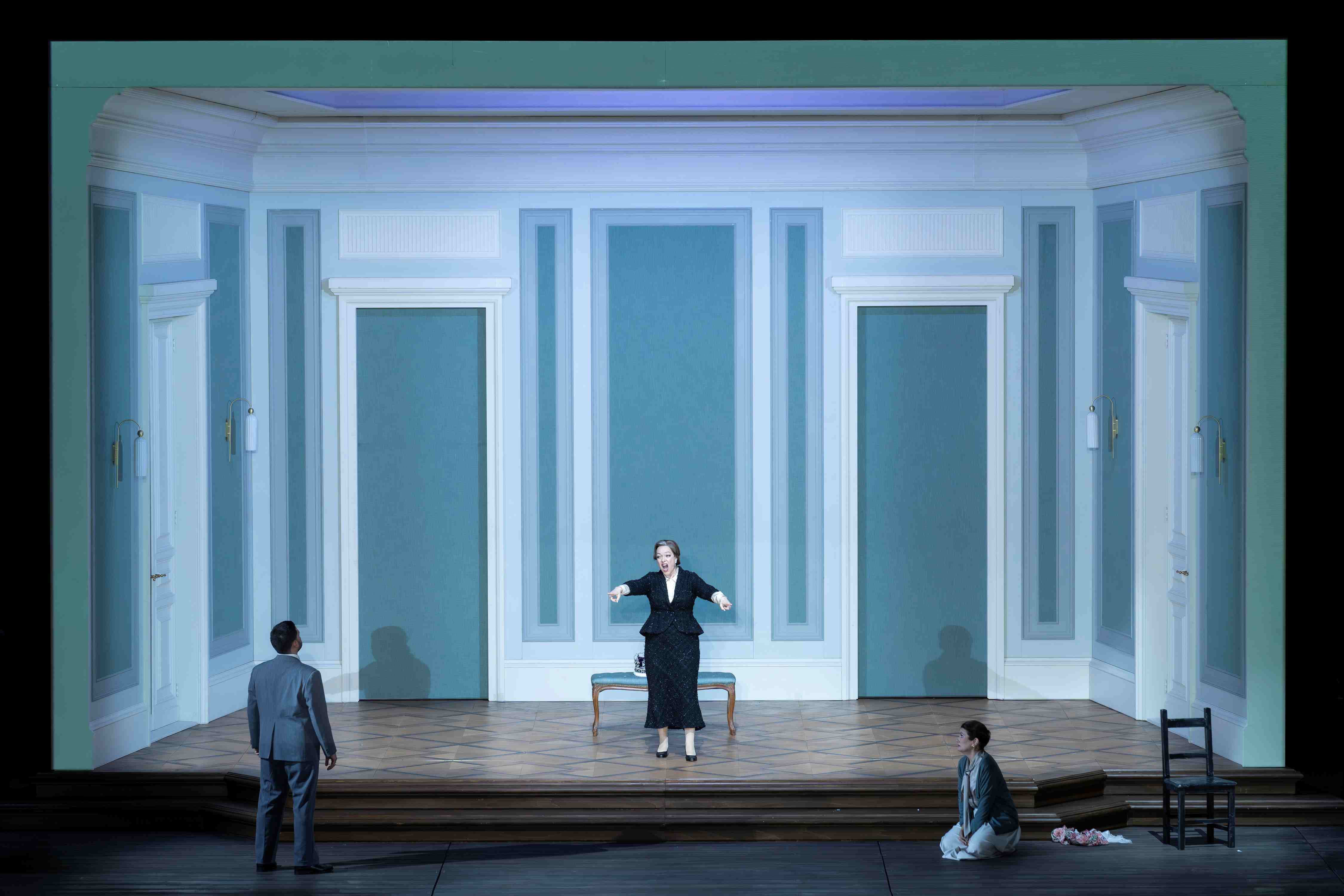
As with the other instalments in this series, the set design was confided to Ben Baur, and this Roberto Devereux certainly had visual aspects in common with the others. Mijnssen sets the action in what appears to be a boutique hotel, where Sara and the ladies wait on the Queen. Devereux might have returned from Ireland, but he looked like he was refreshed after a trip at the spa. While the opening scene takes place in a cramped room that occupies a third of the stage, that set expands to reveal dancing people in evening dress around the set. I thought Mijnssen was making an interesting point, focusing on Elisabetta’s private drama with the populace oblivious to it. Similarly, the Nottinghams have their big confrontation on stage, accompanied by a train set and two perambulating children, again reminding us of domestic life away from the implications of statecraft.
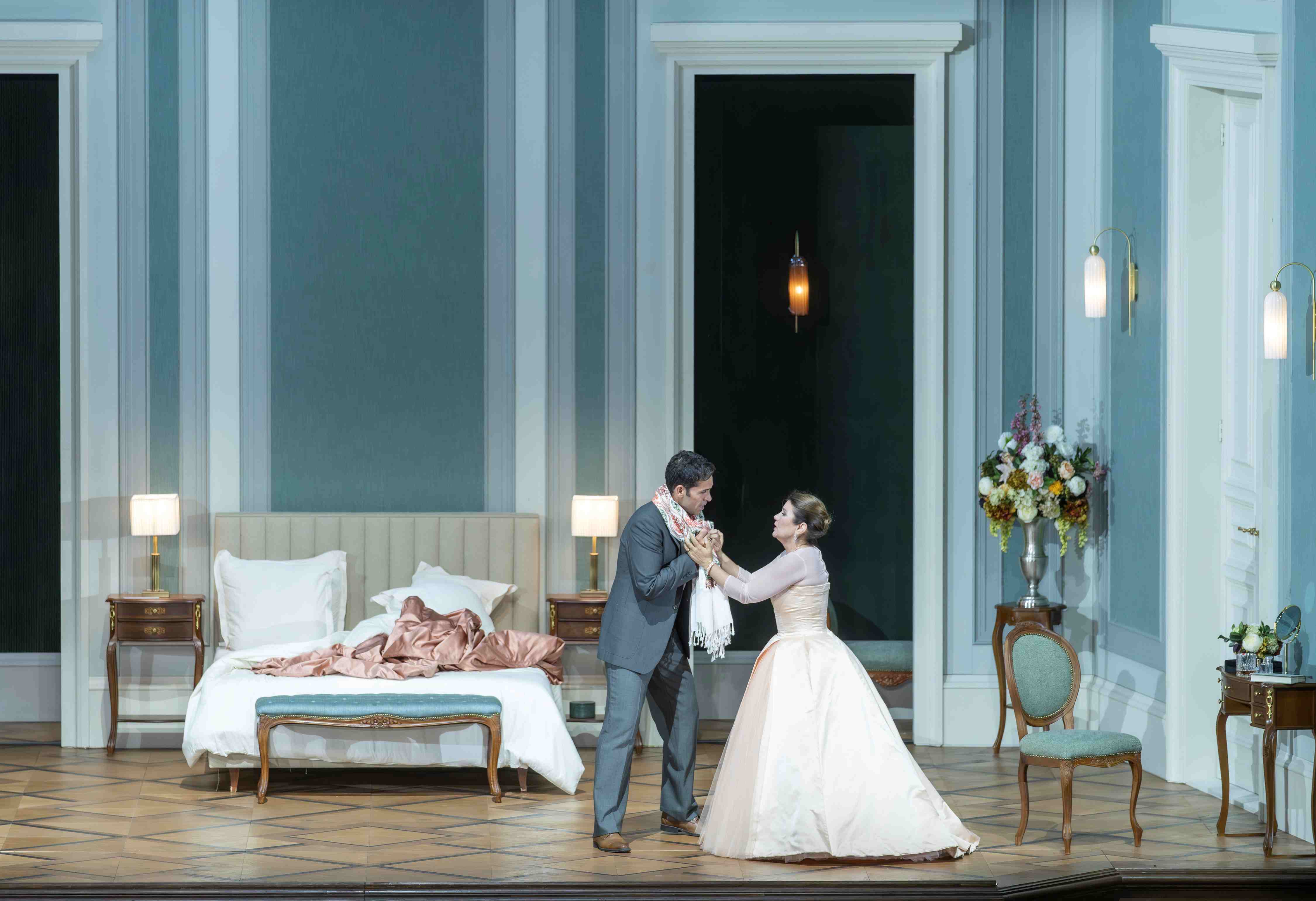
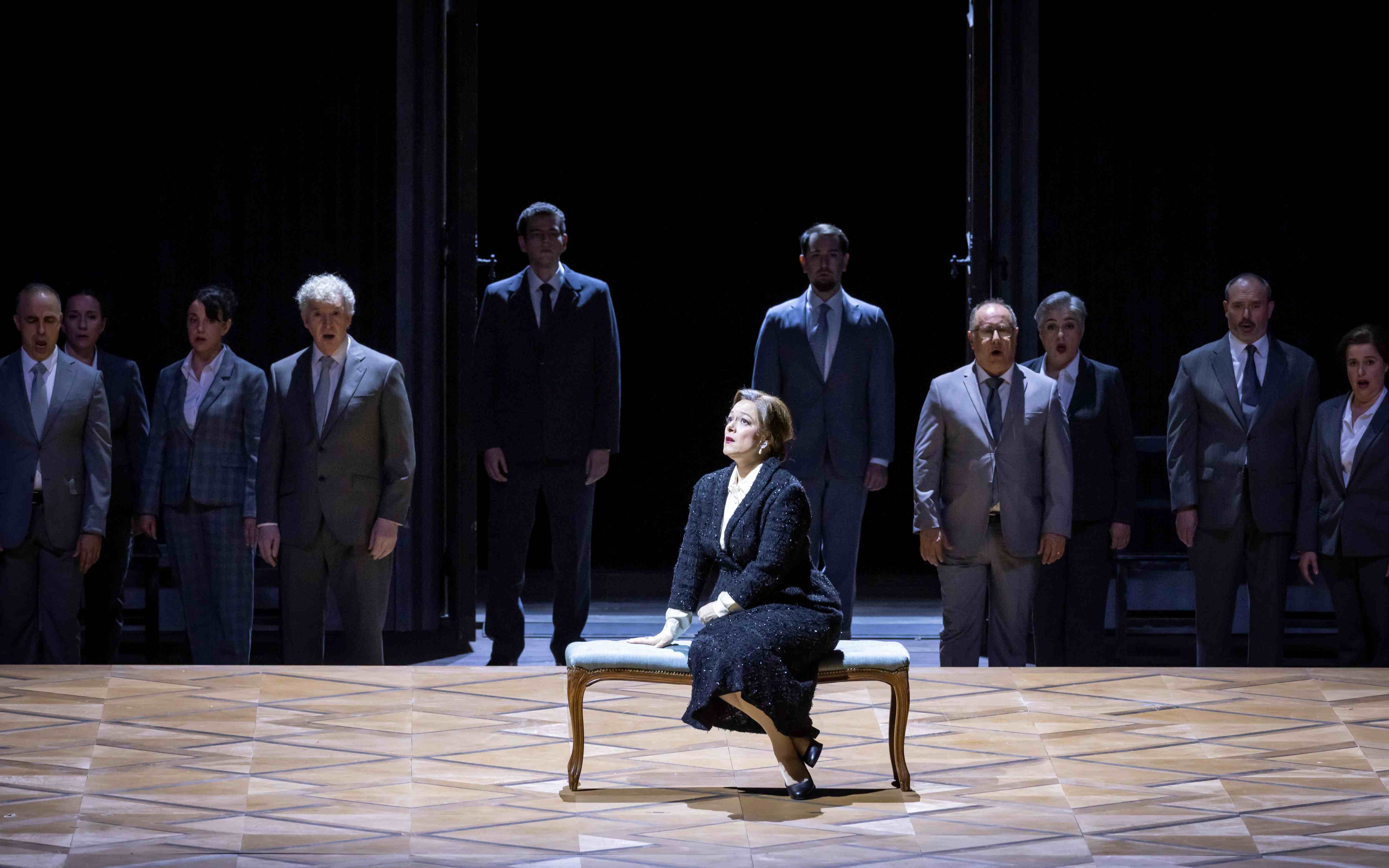
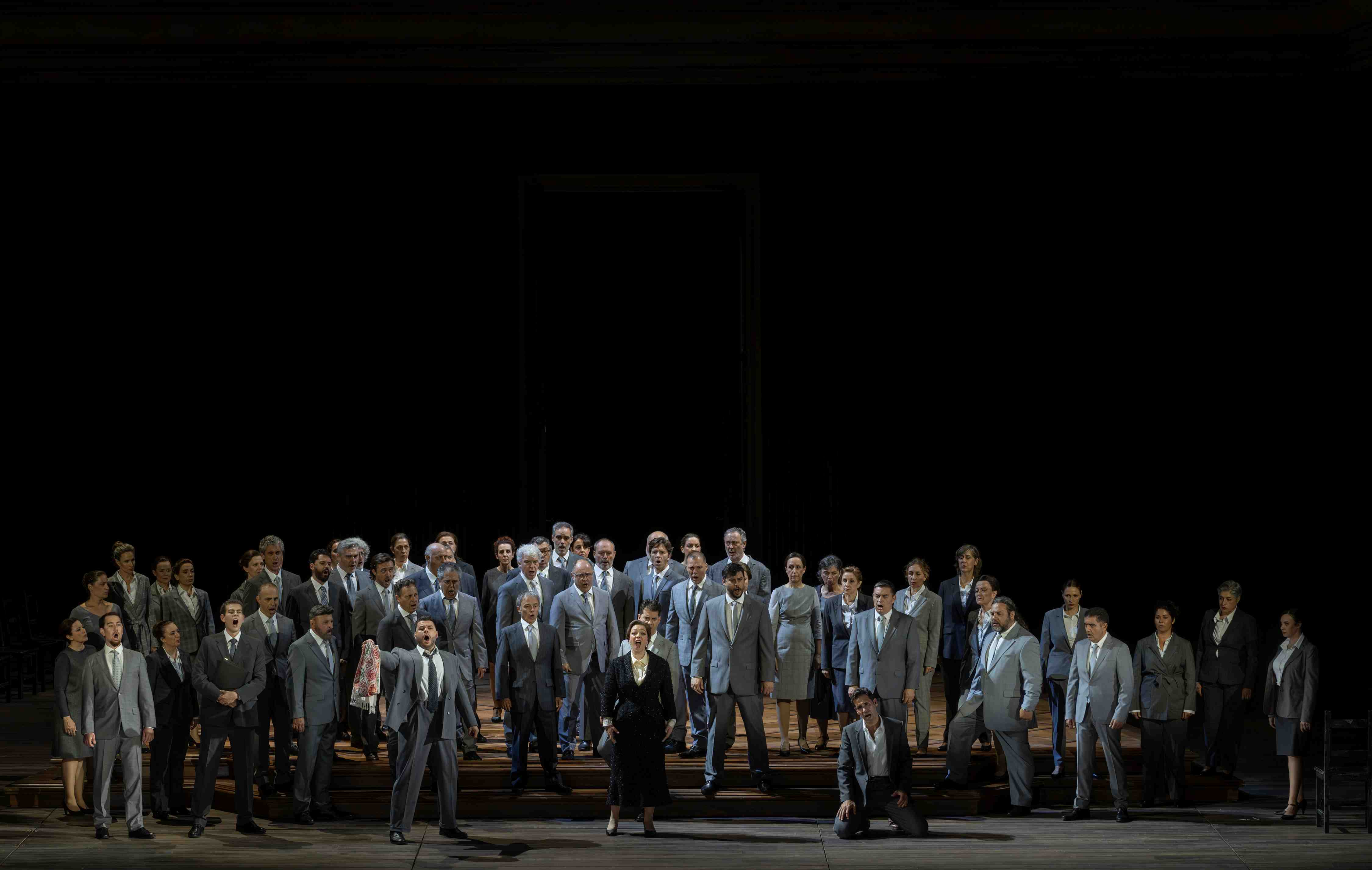
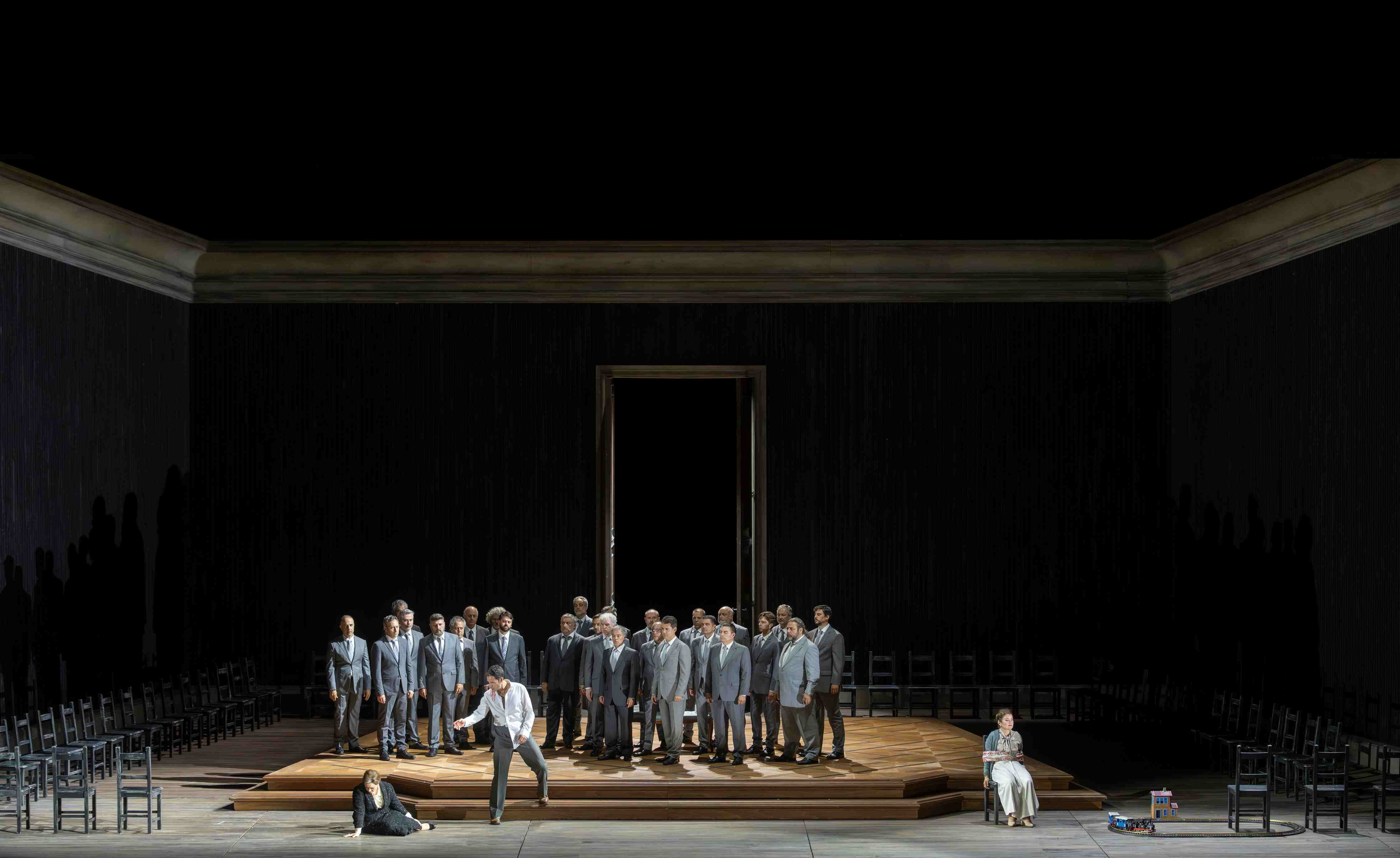
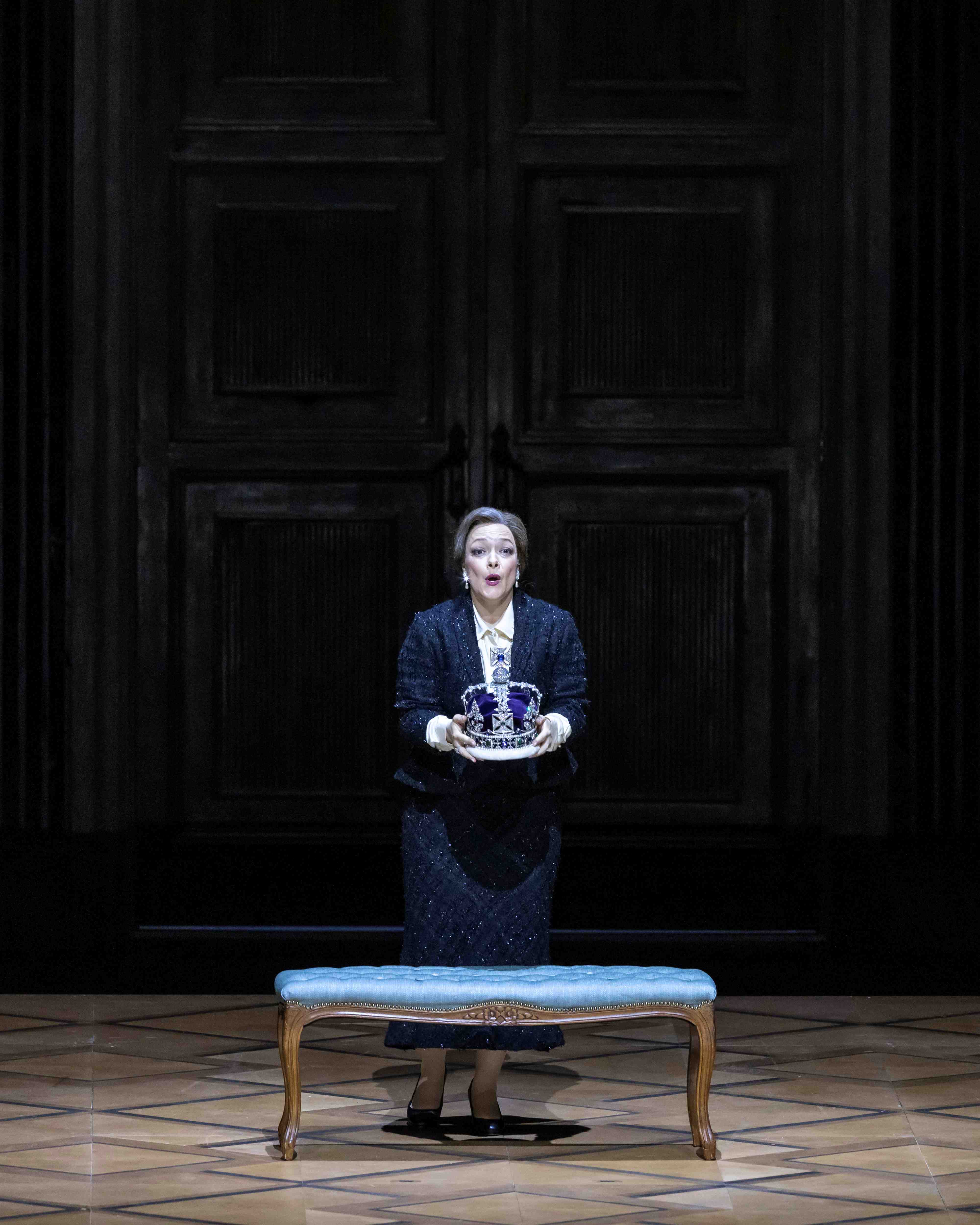
And yet, I found Mijnssen’s staging to privilege the visual over character development. She and Baur gave us some impressive stage pictures. The opening of Act 2 with the peers of the realm ranged around the stage, with Elisabetta on a platform in the middle, was most striking, so much so that many audience members couldn’t resist lifting up their phones to capture it. Mijnssen also had Elisabetta perambulate around the stage and collapse at the front while Devereux sang his big ‘Come un spirto angelico’, all while Sara was seated on stage, strapped to her chair with the scarf she gave to Devereux. The final scene was also impressively visual, with Elisabetta alone in the stage-within-a-stage room, her isolation made visible for us, making it very much a mad scene. And yet, I frequently found Mijnssen’s personenregie to be perfunctory. So often, characters were simply left to emote to the front, making use of stock operatic gestures. The chorus was also generally parked unimaginatively on stage. That said, Buratto’s Elisabetta managed to transcend the dutiful stage direction by living and breathing her role so fully through the music and the text.
The other aspect that kept the evening very much glued to the ground was Francesco Lanzillotta’s conducting. I found it to be frustratingly inconsistent. The evening opened with a vigorous account of the sinfonia, that promised a lively evening ahead. Sadly, Lanzillotta’s conducting frequently allowed tension to drop critically, the closing pages of Act 2 lacking a genuine sense of forward propulsion or dynamism. Then there were some genuinely insightful moments, like asking the strings to pull back on the vibrato, or the lilting tempo for ‘Come un spirto angelico’. He had clearly inspired his principals to ornament their lines with real imagination, making their lines truly live, but I couldn’t escape the sensation that I was listening to someone accompanying by following, rather than leading. Naturally, as one would expect here, the orchestral playing was superb. The strings were wonderfully silky in tone, the brass impressively precise, and winds full of character. The chorus, prepared by Jordi Blanch Tordera, sang with their customary precision of tuning – the opening chorus of Act 2 was immaculately tuned and sustained.
Buratto rose to the occasion thrillingly. Her Elisabetta was imperious yet vulnerable. Right from her opening scene, it was clear that we were in for a very special evening. Buratto floated seemingly endless phrases on the breath, the leaps between the registers were executed with precision and aplomb, rising from a juicy chestiness, through a ripe, rich middle, to a top gilded with steel. The coloratura held no terrors for Buratto, but was more than just a series of notes on a page – Buratto made Donizetti’s writing mean something, that union between text and note all at the service of her character, all while remaining queenly yet vulnerable. Despite the statuesque stage direction, Buratto succeeded in making the final scene the tour de force it should be through sheer manipulation of the tone, putting the text forward, combined with absolutely staggering breath control – despite the plodding tempo she was set from the pit. This was more than just a technical display. Tonight, I had privilege of watching an artist at the peak of her interpretative powers, able to portray that losing of sanity with vivid immediacy, all while offering singing of the utmost technical security. Buratto gave us a singing lesson.
As indeed did Tro as Sara. This was my third occasion seeing Tro in the role, having seen her in Madrid and in Munich and she inhabits this role completely. Her opening aria was sung with an impeccable legato, superb breath control, and that juicy Valencian orange tone that is her trademark. Yet Tro was also willing to sacrifice the beauty of tone at times, for instance in her confrontation with Nottingham, to bring out Sara’s pain and passion. Just as with Buratto this evening, Tro gave us that sense of seeing a master technician at work. Her Nottingham was Lodovico Filippo Ravizza, who I had the pleasure of seeing as a congenial Belcore in Turin earlier this year. Nottingham is very much a step up in terms of size, and I do have to write that I had a sense that this marked Ravizza’s limits currently, particularly as there were some intonation issues in his opening number. That said, he did warm up fully, giving us some genuine, warm Italianate singing. He understands the style implicitly and knows how to phrase it with beauty. His baritone is exceptionally handsome in tone, a nutty core, even vibrations, with a warm bottom rising to a vibrant top. Ravizza is undoubtedly the owner of a highly attractive instrument, implicit musical instincts, and that kind of understanding that cannot be taught. I very much hope he’ll look after the voice as he’s very much an exciting talent.
Jordi sang the title role in his customary compact, focused tenor with Andalucian warmth of tone. He also has a smooth legato and made much of the text. He phrased his big scene with long lines, opening up generously on top, perhaps slightly too generously since there was a troublesome buzz at the core of the tone at higher dynamics that wasn’t apparent elsewhere. Still, that warmth of tone and facility on high did give much pleasure. The remainder of the cast reflected the high standards one expects here. Both Filipp Modestov and Irakli Pkhaladze as Cecil and Raleigh respectively are members of the house’s young artist program. Modestov sang his music in a distinctively plangent tenor, while Pkhaladze injected Raleigh’s brief moments with an equally handsome bass.
Tonight was very much about the singing – and what singing we were treated too. Ravizza gave notice of much promise in his role, while Jordi sang with Latin warmth. Tro demonstrated a total command of the bel canto technique, while also filling her music with drama. Buratto was superlative. She knows how to make this music so much more than simply a showcase, instead using her exceptional technique at the service of the music and portrayal of her character – not to mention her keen textual awareness that made every word live. Yes, the staging was rather statuesque, but thanks to two leading ladies who knew how to make it work dramatically, it certainly gave us much more than the sum of its parts. The conducting was frustratingly inconsistent, at times giving us some vigour, but more often than not weighing proceedings down. Though, as always here, the orchestral playing was exceptional. The audience responded at the close with ecstatic cheers, particularly for the four principals. Undoubtedly a night for those who love bel canto.
 operatraveller.com
[…] evening with this chance to revisit Jetske Mijnssen’s staging of Roberto Devereux, which I saw in València last month, tonight at the Teatro di San Carlo, with an almost entirely Italian cast. This […]
[…] was more Donizetti, with two Roberto Devereuxs in the same production, a month apart. In València, Eleonora Buratto swept all before her with her total command of text, music and technique, […]