Britten – Billy Budd
Vere – Toby Spence
Billy Budd – Sean Michael Plumb
Claggart – Hernán Iturralde
Redburn – Felipe Carelli
Flint – Fernando Radó
Ratcliffe – Francisco Salgado Bustamante
Red Whiskers – Pablo Urban
Donald – Sebastián Angulegui
Dansker – Leonardo Estévez
A Novice – Santiago Martínez
Squeak – Gonzálo Araya
Bosun – Gustavo Gibert
First Mate – Mario De Salvo
Second Mate – Mauricio Meren
Maintop – Andrés Cofré
Novice’s Friend – Luciano Garay
Arthur Jones – Cristian De Marco
Coro Estable del Teatro Colón, Orquesta Estable del Teatro Colón / Erik Nielsen.
Stage director – Marcelo Lombardero.
Teatro Colón, Buenos Aires, Argentina. Wednesday, July 2nd, 2025.
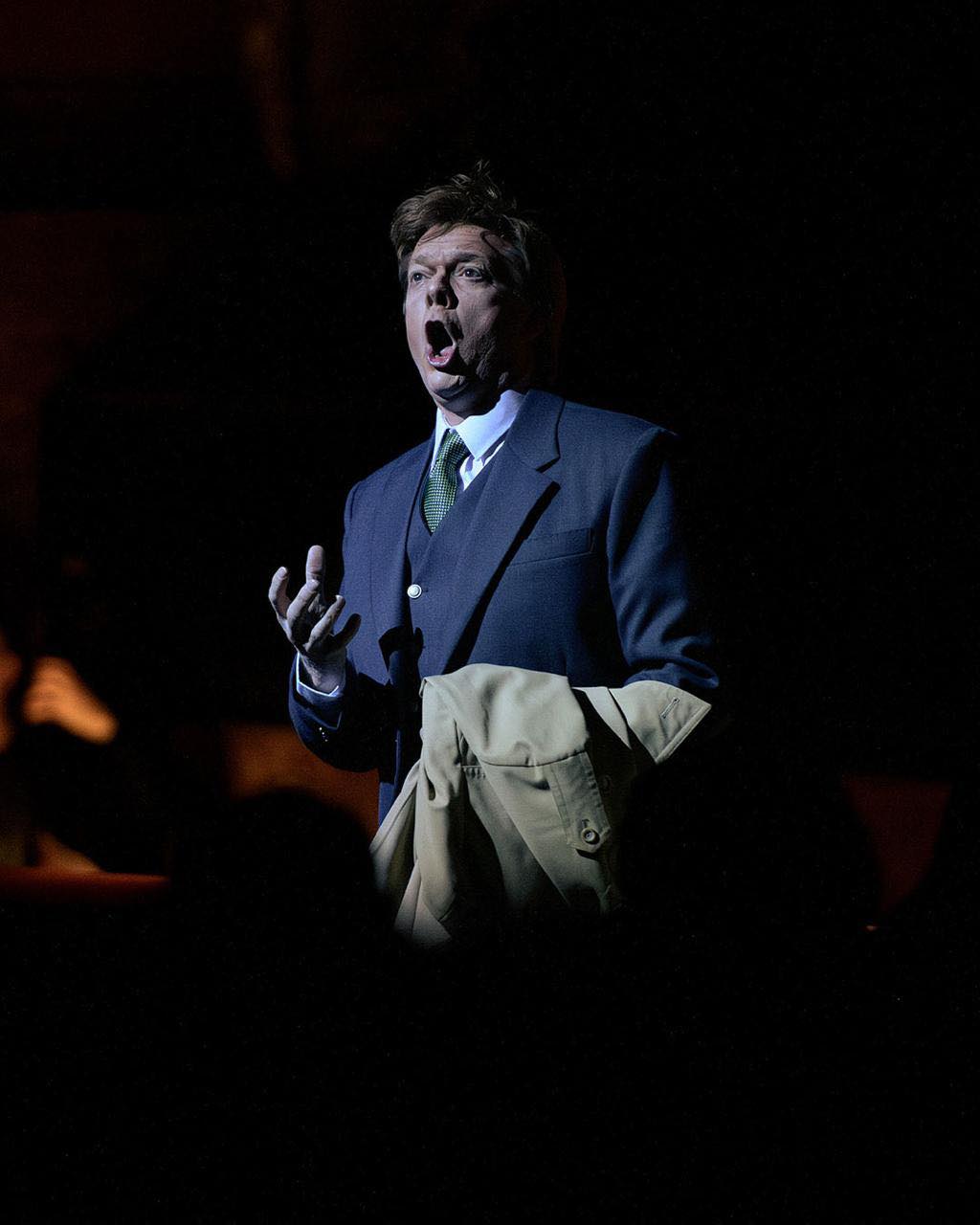
This run of performances of Billy Budd, of which tonight was the second, mark the first ever in the Argentine Republic and at the legendary Teatro Colón. As is often the case here, the run was double-cast. The weather in Buenos Aires is extremely cold at present, with a very strong polar wind coming up from the South Pole. That might explain why the originally-cast Stephen Costello and David Leigh withdrew from this evening’s performance as Vere and Claggart, to be replaced by Toby Spence and Hernán Iturralde from the alternate cast – featured in the production photographs along with John Chest’s Billy – while Sean Michael Plumb sang Billy tonight as planned. The stage direction was confided to Marcelo Lombardero and the musical direction to Erik Nielsen.

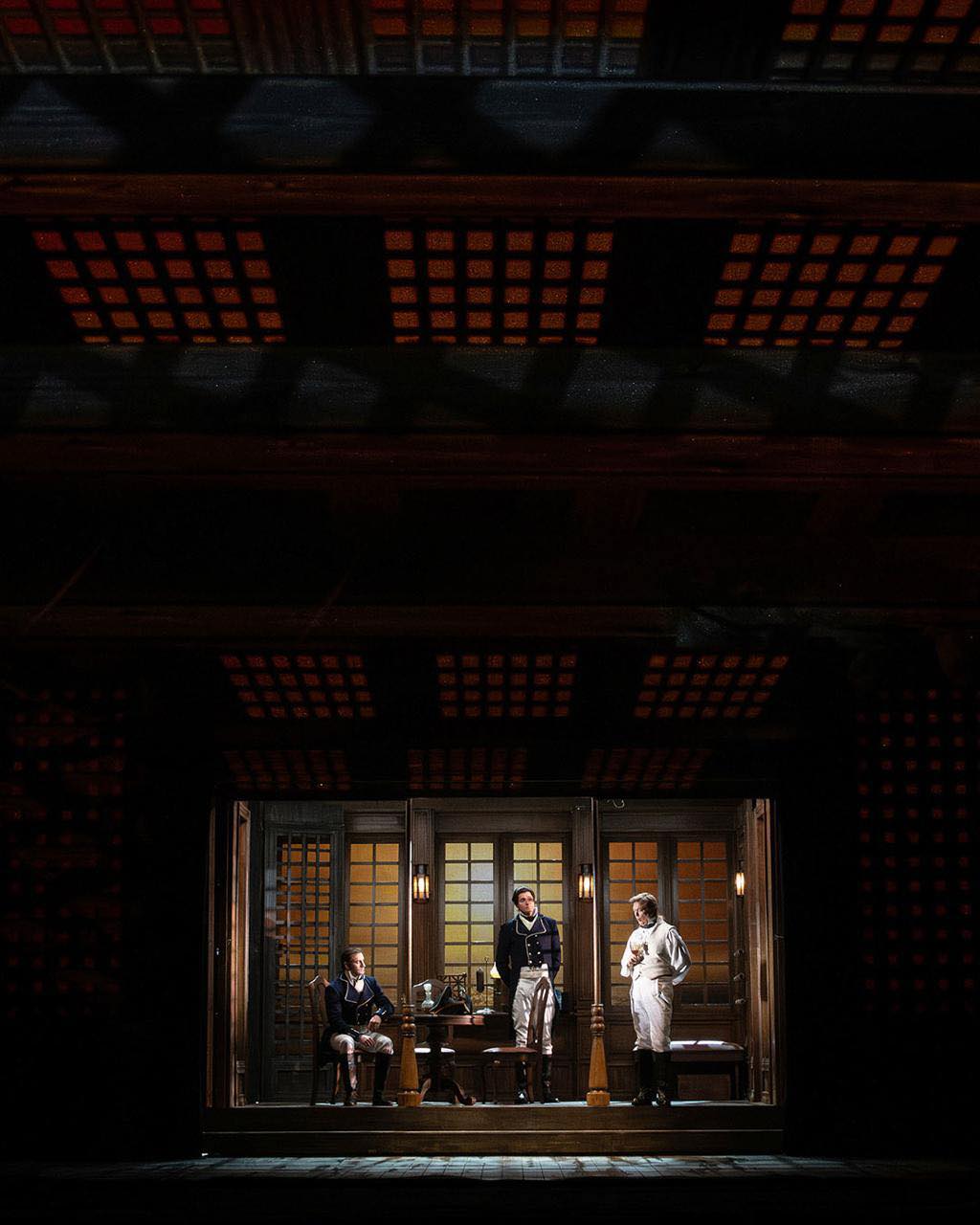
Lombardero gives us a staging that is very much set in the period in question, with costumes, by Luciana Gutman, reflecting those traditional maritime costumes that one might see in story books of the time. The set, by Diego Siliano, made the HMS Indomitable a striking vessel of wood, that dominated the stage, while also allowing for scene changes that brought us into the intimacy of Captain Vere’s cabin. During the prologue and epilogue, Spence sang from the front of the platea, while behind him some swirling visuals projected on to the stage curtain reflected the sea. These also appeared during the scene changes. Similarly, during the scenes on the Indomitable, at the rear of the stage, video set the maritime scene allowing the creative team to show the transitions between day and night. It wasn’t clear from the program book who was responsible for the video design, whether it was Siliano or the lighting designer, José Luis Fiorruccio, but it did make for an engaging visual framework, not least in the epilogue where images of Billy’s body descending into the deep were projected, while Vere mused on his past.
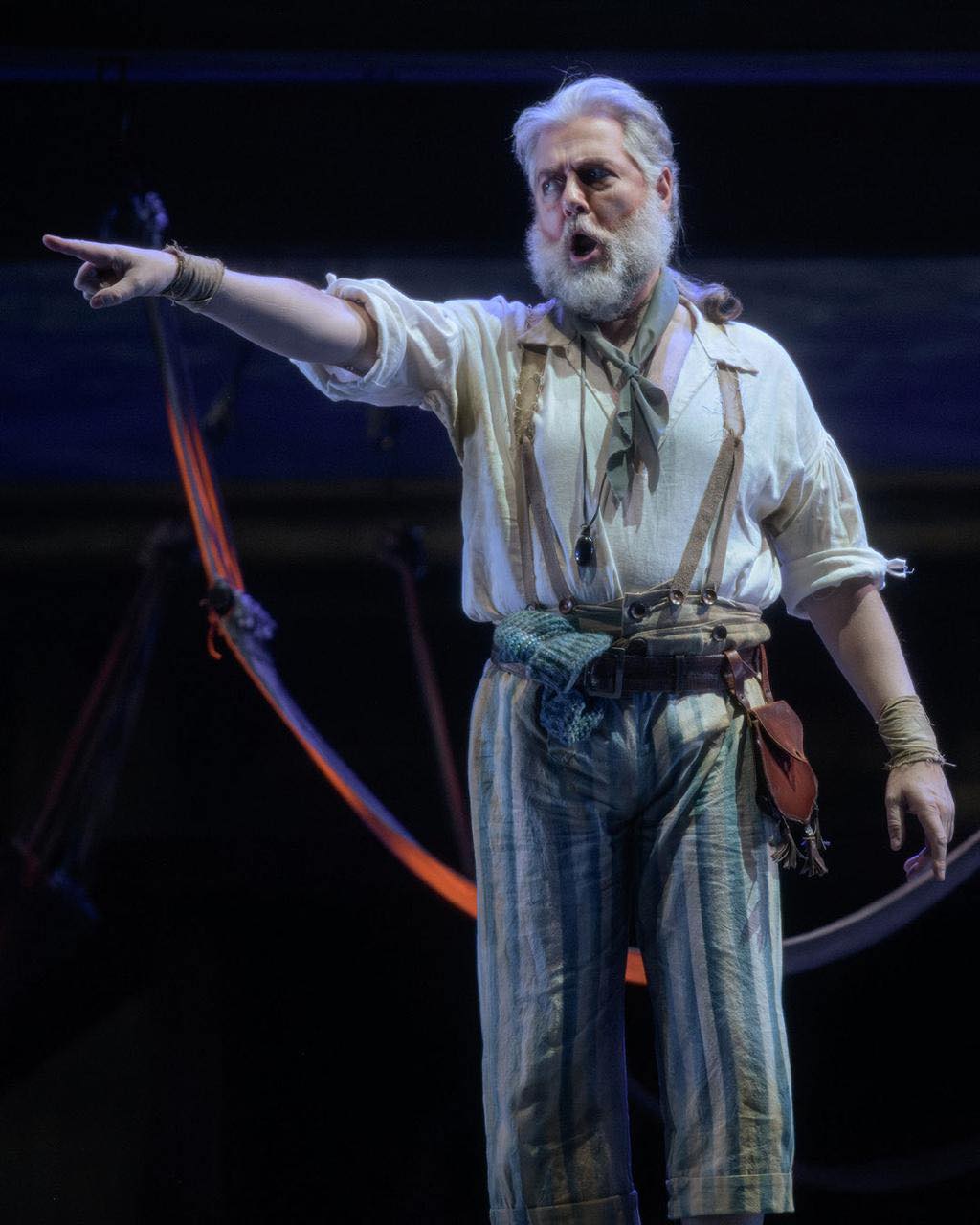
That said, I did find Lombardero’s stage direction to be rather perfunctory. Far too often, characters – particularly the large chorus – were simply parked on stage to declaim. There was a sense of moving people around for the sake of it, rather than for dramatic insight. Furthermore, that latent homoeroticism and homo-obsession that Claggart embodies in his infatuation with Billy, was rather underplayed. Consequently, I found it hard to understand the characters’ motivations, the ‘why’ they did something from Lombardero’s direction, rather than the actual acts that they performed. Still, I did find that the final scene, with the officers on a higher deck overlooking the sailors who threatened to revolt, gave us a sense of the class relations inherent in life on the Indomitable. Similarly, everyone on stage was moved around fluently, and it was clear that everyone knew where to go and when. Yet, that deeper understanding, that sense of what lies underneath the surface, this was something I felt missing from Lombardero’s stage direction.
I’ll also admit to having a similar feeling about Nielsen’s conducting. Given how unfamiliar this music and the idiom is to the orchestra, they gave a very good account of themselves, with some excellent brass playing. There were a few minor passages of raw string intonation in the prologue, which settled down very quickly. I felt that Nielsen’s reading prioritized beauty of sound over rhythmic impetus. Indeed, it felt that he had sanded over the angularity of Britten’s rhythms, to give us something much more romantic and pensive. Nielsen’s approach worked particularly well in the interlude leading into Scene 2 of Act 1, where he built it up with an almost Wagnerian sweep, the chorus opening up thrillingly in their ‘Blow her away, blow her to Hilo’. Then, in the subsequent shanty, it felt that Nielsen had dropped anchor and couldn’t get the ship to move, weighing it down in a way that meant that the rhythms and interactions between the different parts felt heavy and lacking in vigour. Still, where Nielsen did succeed was in creating those light, foggy atmospheres in the strings, finding a satisfying introspection, even if I did find his reading too weighty on the whole.
Plumb gave us a youthful Billy. His baritone is in excellent shape, so handsome in tone, with a rich, full bottom, a middle firm of tone, and a seemingly unlimited top. There was a wide-eyed innocence to his singing, that freshness of tone making Billy sound impetuous and full of life. Yet Plumb also found an introspection to his Darbies aria, founded on a smooth, even legato that gave a great amount of pleasure. This was a role debut for Plumb and, with the handsomeness of the tone and enthusiastic stage presence, it’s a role he was undoubtedly born to sing. A notable debut from this genuine and generous artist.
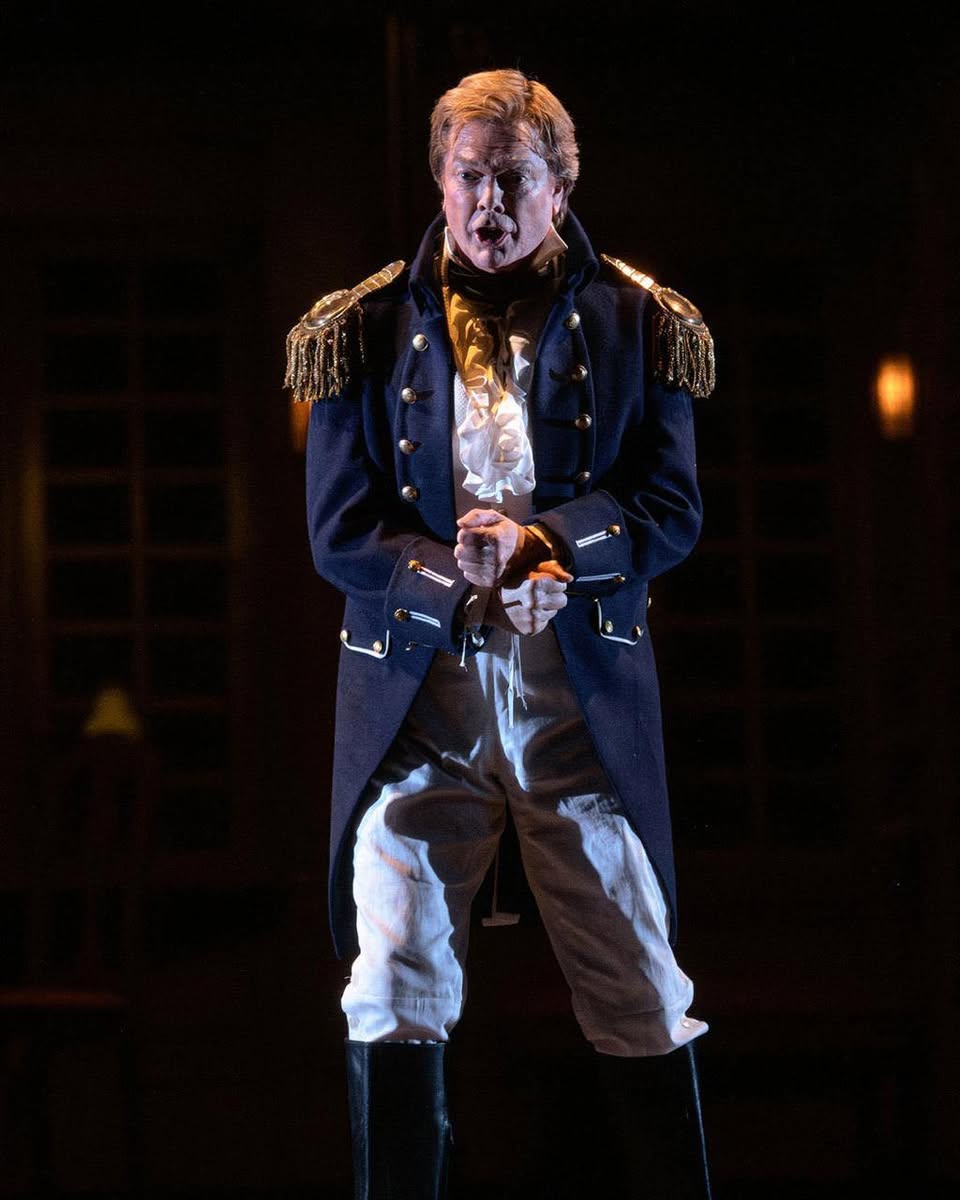
Singing Vere two evenings in a row is a challenge, and Spence more than rose to the occasion. The tessitura sits so awkwardly for most tenors and Spence approached it with a strong sense of muscular support to the sound. He also gave a masterclass in sung English diction, with the words utterly clear throughout. He pulled the colour from the tone in the prologue and epilogue, finding a haunted quality to his Vere that I found most affecting. Iturralde sang Claggart in a big, smoky bass. His English diction was also excellent, the words always clear. He had a deliciously menacing darkness to the tone at the very bottom, that truly brought out Claggart’s evil. And yet, I felt he wasn’t particularly helped by the production, in the sense that I found that frustrated homoeroticism that guided Claggart’s actions to be underexplored, both in his vocalism and physical presence. Instead, what we got was an assumption that was generically evil. Perhaps with stronger personenregie, Iturralde would be able to bring this out more.

Billy Budd is nothing if not an ensemble piece for an opera company, and there were some terrific voices on display in the remainder of the cast. I will mention that diction was not always completely clear – I did have to refer to the Spanish surtitles a bit too often for an opera that is in one of my mother tongues. Leonardo Estévez sang Dansker in a wonderfully gruff bass, while Santiago Martínez’ Novice was sung in a forwardly-placed tenor with excellent diction – perhaps a future Vere in the making. Felipe Carelli and Fernando Radó blended well in their duets, exploiting those mysterious Brittenesque harmonies with impeccable pitching. Pablo Urban also made much of his interjections as Red Whiskers, singing with admirable clarity of text.
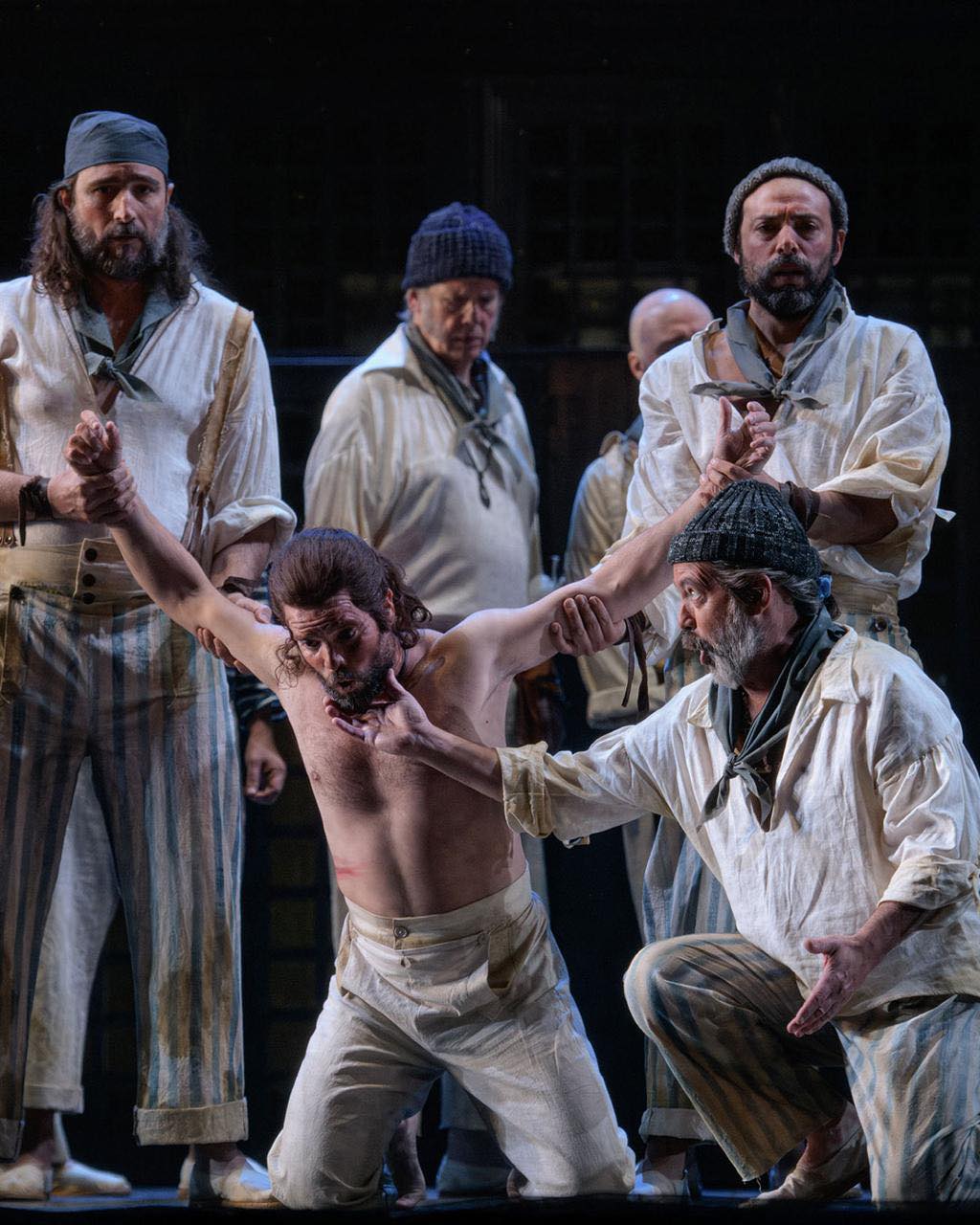
The chorus, prepared by Miguel Fabián Martínez, sang with impressive generosity of tone. Their pitching was immaculate throughout, the tone founded on a rich bass sound rising through to ringing tenors. They also displayed some phenomenal control of dynamics, able to grow from a whisper to filling the room in a blaze of sound. There was also a striking unanimity of approach – no stray final consonants here, despite their disparate placement on stage. This was superb choral singing of the very highest quality.
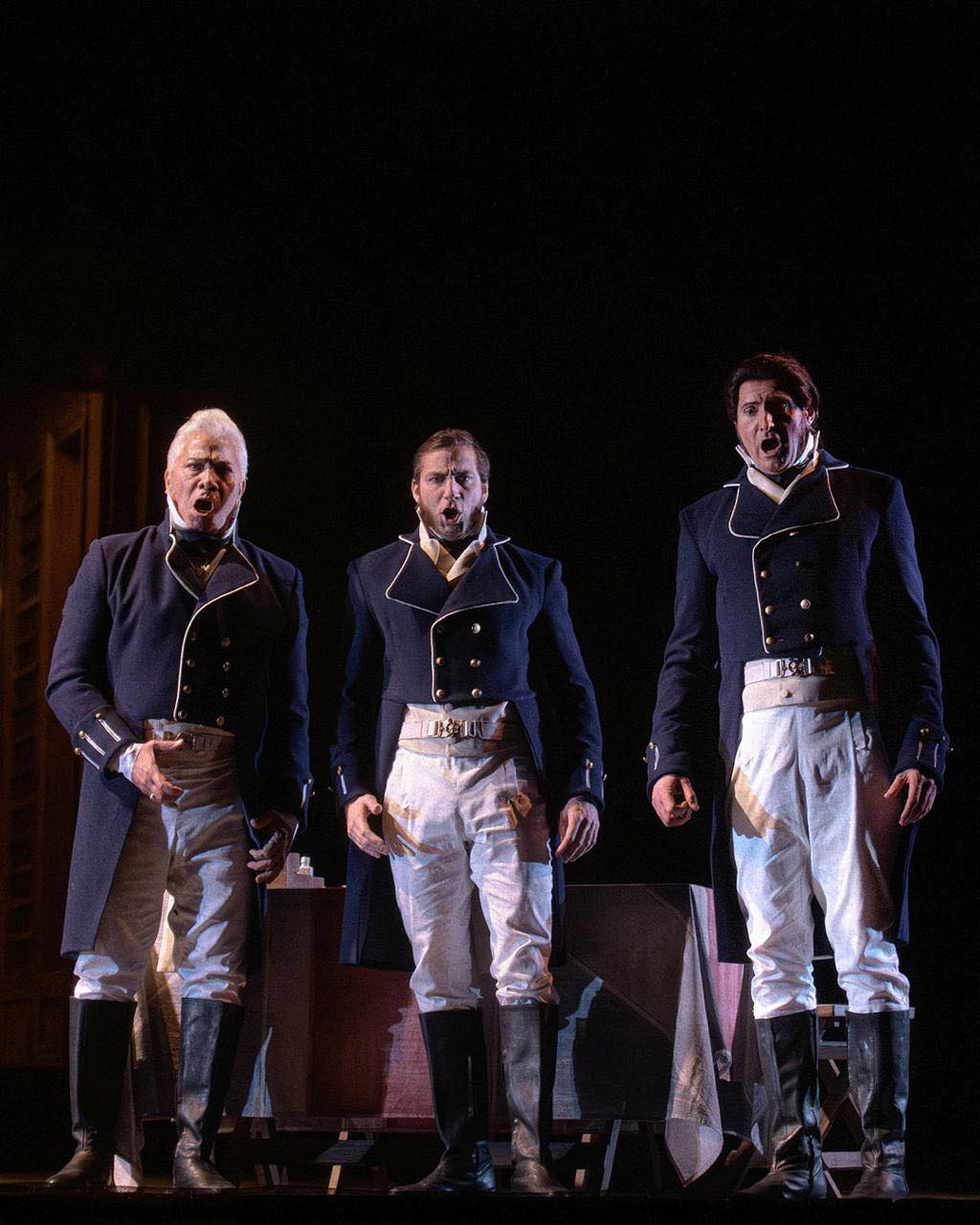
There was much to enjoy in this evening’s Billy Budd. The quality of the voices on display was excellent and the choral singing was glorious. Spence gave us a thoughtful Vere, Iturralde an implacable Claggart, while Plumb’s Billy was youthful and superbly sung. I do have reservations about Nielsen’s conducting and Lomardero’s staging, both feeling rather too generalized and prosaic. Still, it was the singing that gave so much pleasure tonight. The audience response at the close was generous for the entire cast.
 operatraveller.com
[…] There was more Britten in Buenos Aires, where I saw the first-ever run in the Argentine Republic of Billy Budd, with the superb Sean Michael Plumb so fresh and handsome of tone in the title […]