Mozart – Don Giovanni
Don Giovanni – Roberto Frontali
Donna Anna – Maria Grazia Schiavo
Donna Elvira – Carmela Remigio
Don Ottavio – Anthony León
Leporello – Vito Priante
Masetto – Mihai Damian
Zerlina – Eleonora Bellocci
Commendatore – Gianluca Buratto
Coro del Teatro dell’Opera di Roma, Orchestra del Teatro dell’Opera di Roma / Alessandro Cadario.
Stage director – Vasily Barkhatov.
Teatro dell’Opera di Roma – Caracalla Festival, Basilica di Massenzio, Rome, Italy. Sunday, July 20th, 2025
For this year’s Caracalla Festival, the Teatro dell’Opera di Roma is also presenting performances in the imposing Basilica di Massenzio, located in the heart of the Roman Forum, right next to the Colosseum. It’s a striking building, constructed between 308 and 312 CE. The huge central portion of the building is well suited for an operatic stage, offering a large arch with an enclosed circular space which formed the setting for Vasily Barkhatov’s staging of Don Giovanni to take place in. As is customary for the festival, the evening was amplified. While it gave us the opportunity to hear a performance in such an impressive place, it was also problematic since the orchestral sound was recessed, sounding as if it were in a completely different acoustic, and the positions of the voices in the amplification did not reflect the placement of the characters on stage, giving the impression of watching a performance taking place further away from us than was actually the case.
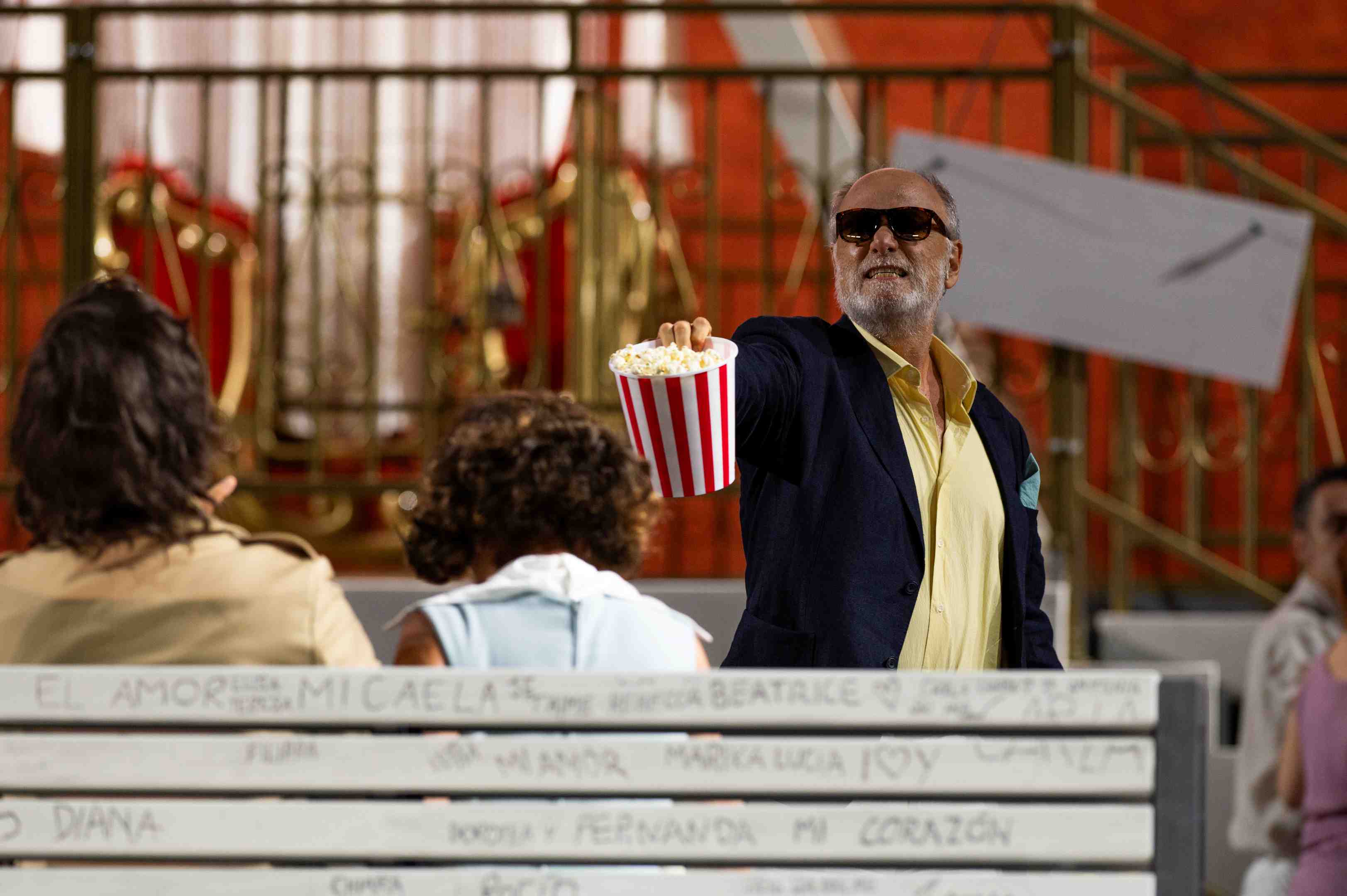
Barkhatov’s staging is an intelligent and thoughtful one. He recognizes that this is a much more complex work that might initially seem the case – it has comedy but it also has tragedy. The Teatro dell’Opera chose to cast an older Don Giovanni than one often sees. I hope Roberto Frontali will forgive this rather ungentlemanly comment, and tonight he was making his debut in the title role. Casting an older singer is a perfectly logical choice, given how many sexual conquests Don Giovanni has experienced. Yet, in doing so, Barkhatov and Frontali draw out the power relationships inherent in the work. Setting the work, as Barkhatov does, in a fairground that appears to be owned by Don Giovanni, with an impressive set by Zinovy Margolin dominated by a real fairground wheel, brings out the fact that Giovanni uses his money, status and power to exploit others. I don’t think I’ve ever seen a production where the exploitation of Zerlina and Masetto was so vividly brought to life – not to mention the impressive fairground train that carried Zerlina, Masetto, and the chorus across the stage.
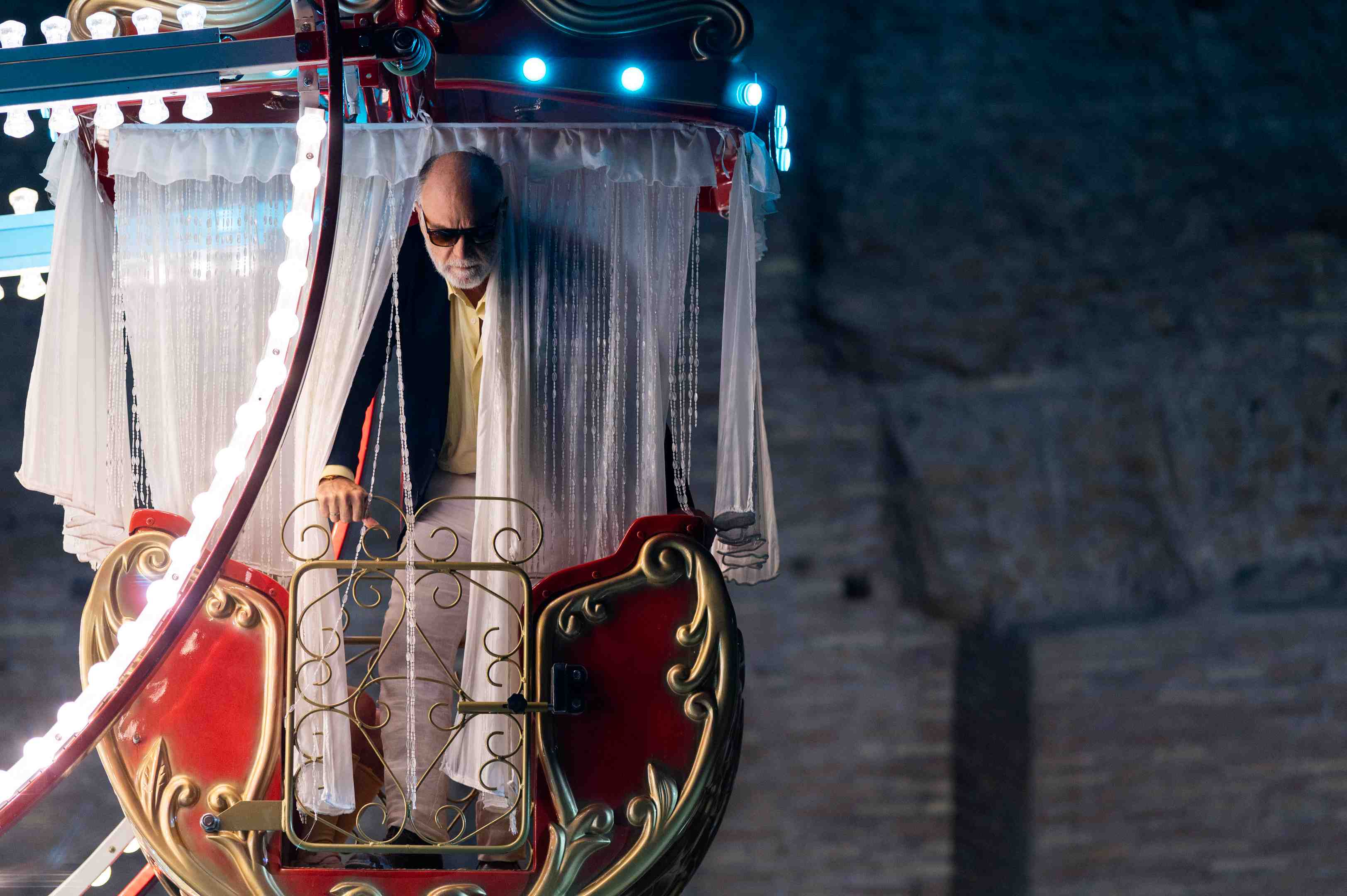
I found that Barkahtov really succeeded in bringing out that fantasy of the work, through this fairground setting. The comedy was also there, for instance in the Act 1 finale, with the principals sitting in separate gondolas on the wheel, going around in circles, yet none of them able to escape from their individual obsessions. There’s a depth below the surface in Barkhatov’s staging that I found to be immensely compelling. Not everything he does works, however, and I did leave with an impression that the staging fizzles out towards the end. Elvira appears to consensually conjugate with Leporello at the start of Act 2, which means the subsequent sextet makes no sense. Although here again, Barkhatov could be making a point about power relations, with Elvira wanting to deny eloping with a servant. Similarly, the stone guest scene fails to convince, with the Commendatore, a constant presence on stage throughout the evening, simply taking Giovanni to a gondola on the wheel. I also can’t quite work out why Anna perambulated the stage with an urn throughout the evening, only to scatter the ashes during ‘non mi dir’. The biggest frustration is that Barkhatov cuts the epilogue. The epilogue is absolutely essential both musically and dramatically, rounding off the characters’ journeys, whereas here they simply fade out of focus. It did feel that Barkhatov’s staging is an extremely strong one, one based in an intelligent reading of the libretto, yet I cannot escape the sense that it did also feel like a work in progress. I very much hope that the Teatro dell’Opera will bring the staging to the Teatro Costanzi and invite Barkhatov back to revise it, since I very much feel that this is a Don Giovanni that has a lot to offer.
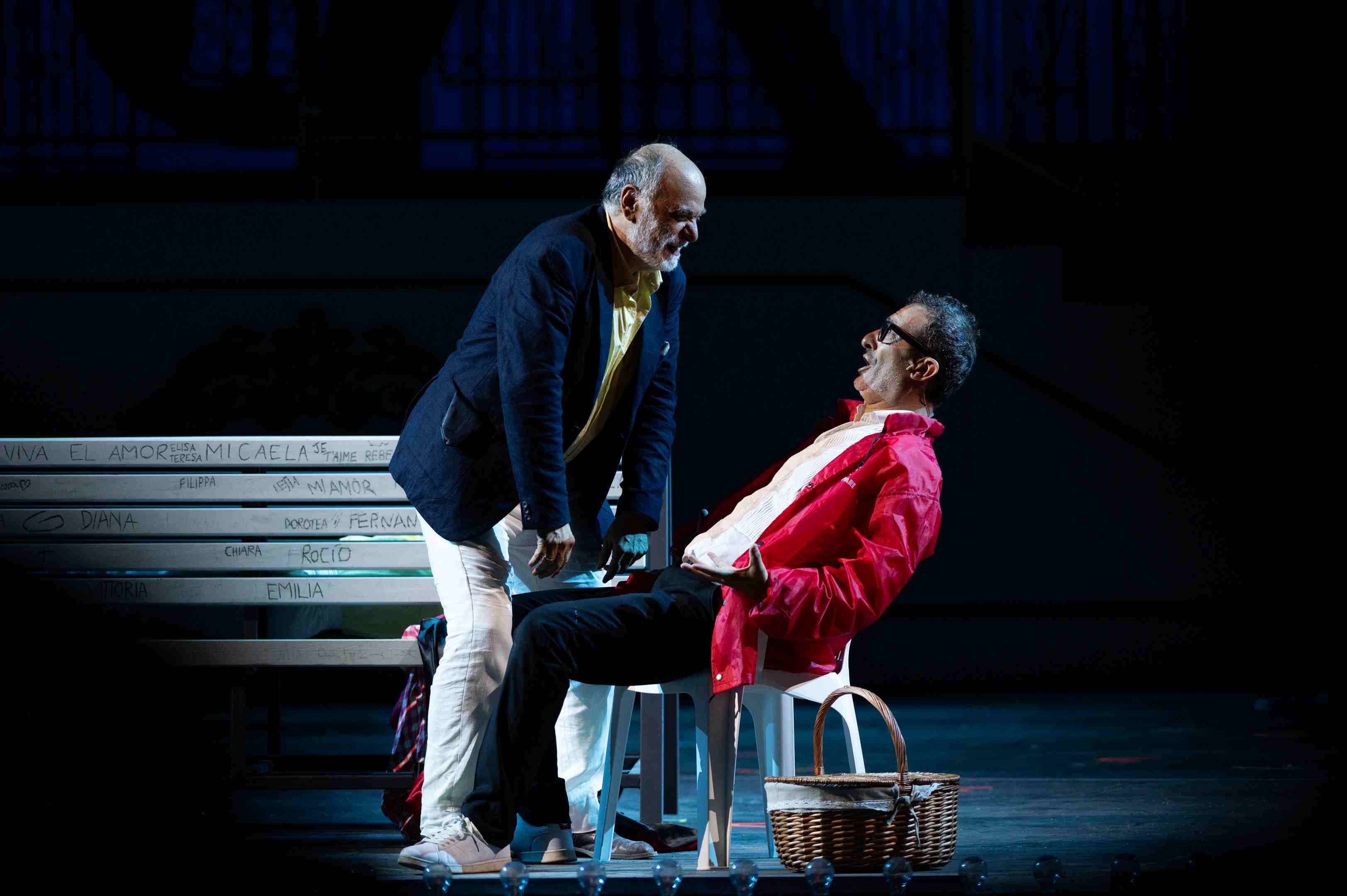
The musical direction of the evening was confided to Alessandro Cadario. Here also, I felt that this was a reading that climaxed rather too soon. Unfortunately, the winds and brass were far too backwards in the already recessed amplified sound, meaning that the sheer personality of the Mozartian writing lacked impact – the moment that the trombones entered didn’t quite register as one might have hoped. His tempi were very much middle of the road and he occasionally asked the strings to pull the vibrato to add a ghostly pallor. Several recitatives were trimmed, but they were generally paced in a conversational way. Working in an outdoor space, with a dry acoustic, amplification and street noise, does require a different approach. The way Cadario pulled the tempo right back in Elvira’s ‘In quali eccessi, o Numi’, felt like a less than optimal choice in this space, accompanied as it was by loud motorcycle engines. Similarly, the stone guest scene lacked forward momentum, the ponderous tempo and mushy articulation weighing the music down. Attack from the strings was rather soft grained, which felt less than optimal in this acoustic. For the most part, Cadario led a sensible reading, but it did feel that it had climaxed too early, an impression reinforced by Barkhatov’s staging.
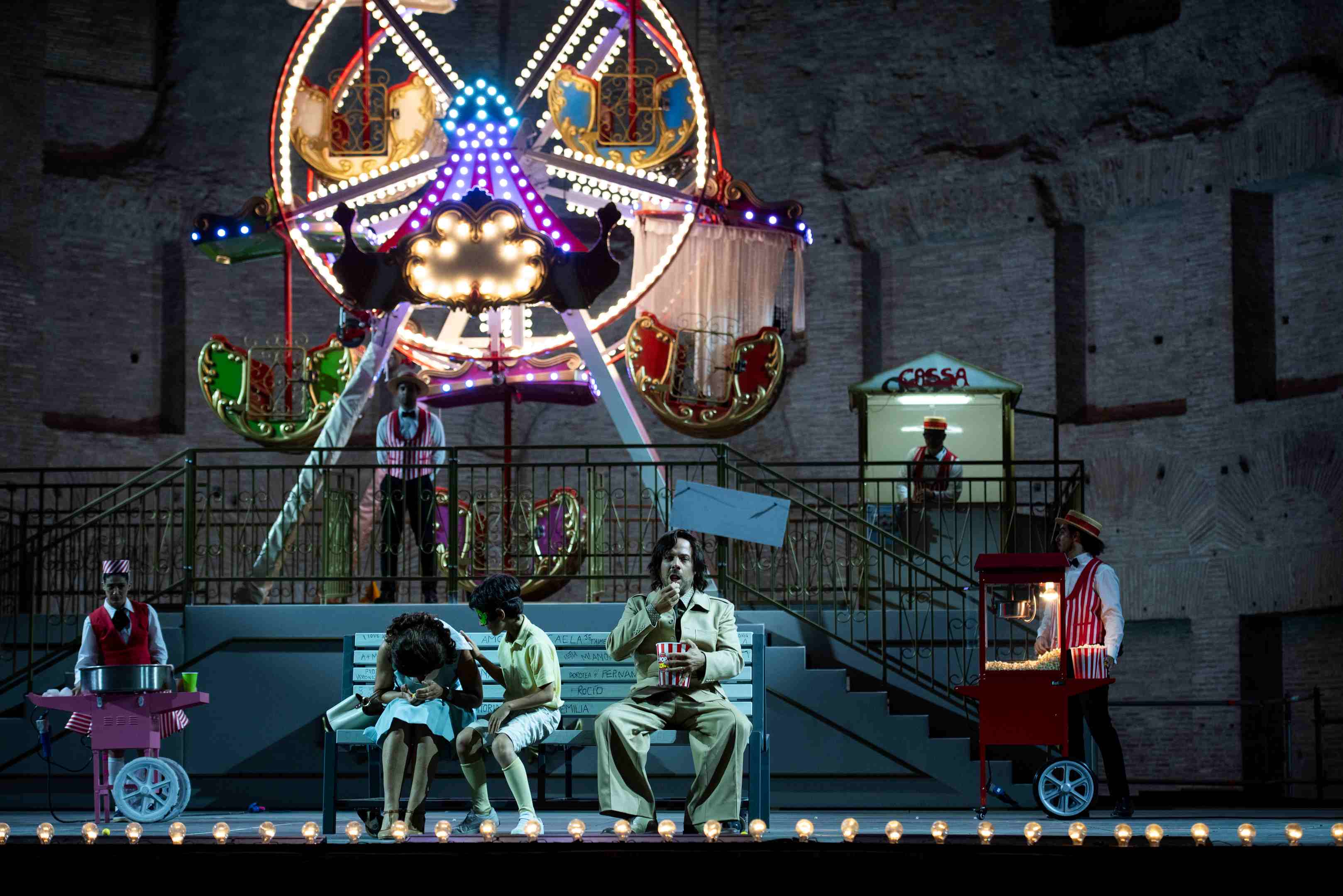
Frontali’s Don Giovanni was a very different reading of the part. His delivery of the recitatives felt cold, almost cynical, reinforcing the impression of a man who had seen everything and had nothing left to live for. His singing of the champagne aria felt like that a man in the middle of a nervous breakdown, the repeated ‘D’una decina/Devi aumentar’ sounding utterly desperate and hopeless, yet Frontali never compromised the integrity of the tone. His long experience of bel canto was evident in the way that he caressed the lines in the serenade, sung with an even legato and he embellished the lines with care. This was an unconventional reading, but also one based in a compelling reading of the libretto and sung by a master technician.
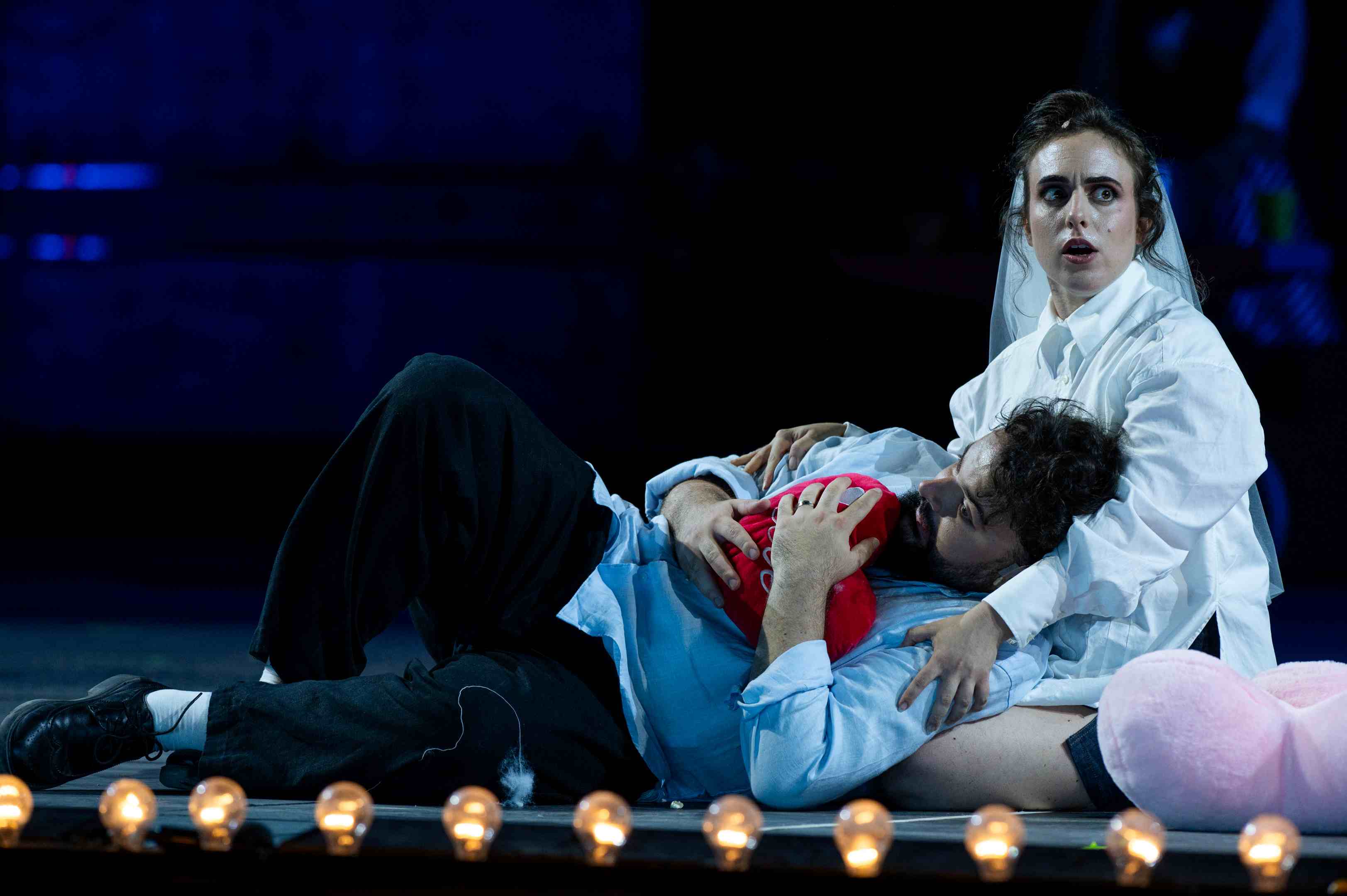
Vito Priante is a familiar Leporello, but tonight it did feel that it took him a little while to get into his stride. The catalogue aria lacked the wit I have heard him bring to it previously, the tone sounding rather grey and lacking in colour. Priante did warm up eventually, his firm baritone finding that familiar mediterranean warmth, eventually bringing out he detail in the text that one expects from him. Anthony León gave us a glorious ‘dalla sua pace’, his compact, focused tenor able to phrase seemingly endless phrases, combined with impeccable use of ornamentation that made it sound like he was the only person in the world able to sing this aria.

As Donna Anna, Maria Grazia Schiavo gave us an impressive ‘non mi dir’, sung with staggering breath control. The voice does seem to lack a large palette of tone colours, but her agility was most impressive. She capped the lines in the ensembles with radiance, and she spat out fireworks in her ‘Or sai chi l’onore’. Carmela Remigio gave us some wonderfully stylish singing as Donna Elvira, showing a deep understanding of the Mozartian style. Her soprano may have hardened somewhat with the years, an impression reinforced by the amplification, but her agility and use of ornamentation to enhance the line gave an enormous amount of pleasure. She rose to a ‘Mi tradì’ of almost Shakespearean depth, full of passion and emotion, yet always utterly musical.
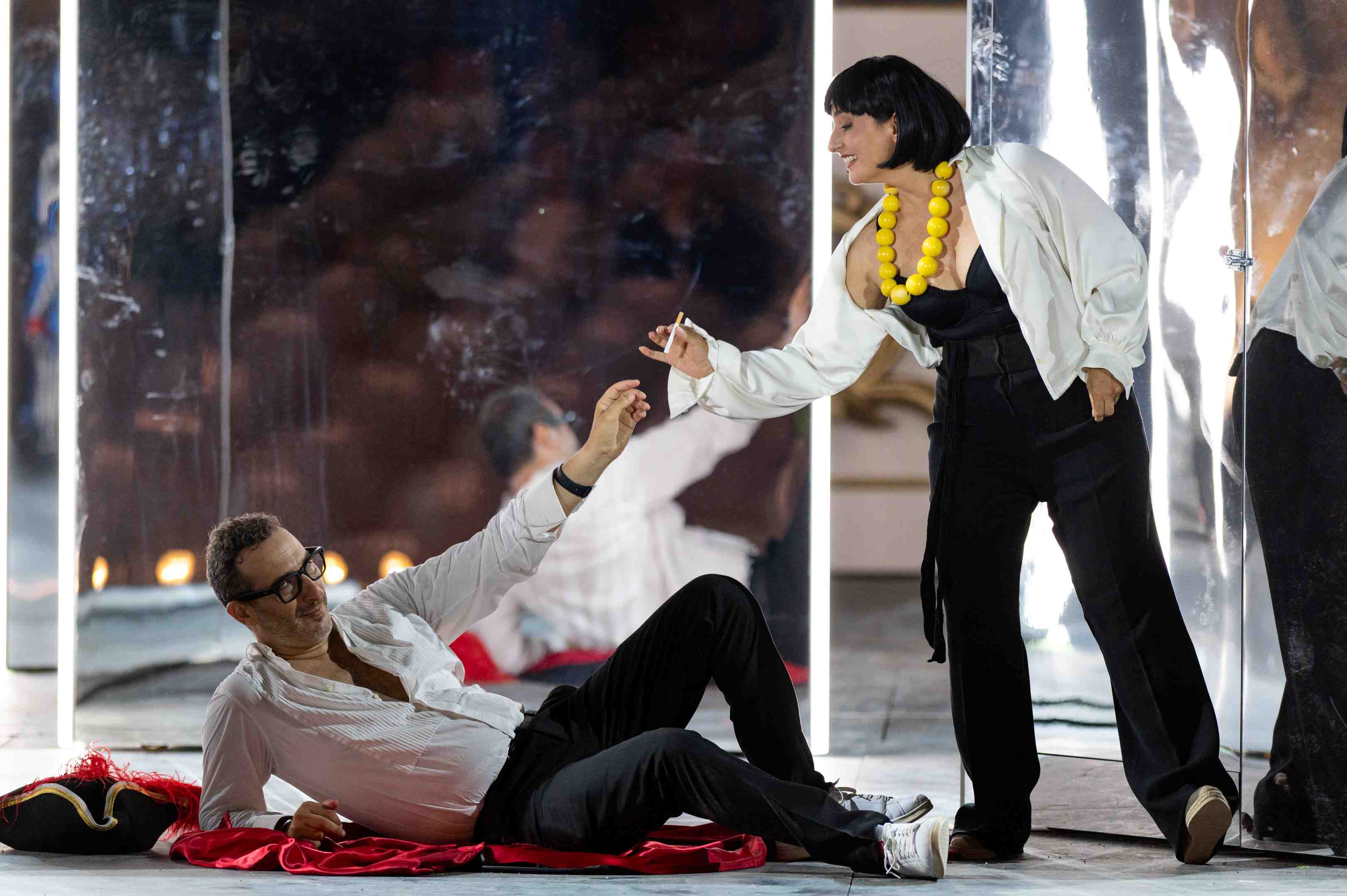
In the remaining roles, Eleonora Bellocci was a delightful Zerlina, her focused, slightly tart soprano had a delightful smile to the tone – I very much hope to hear her Susanna. Mihai Damian sang Masetto in a very handsome and firm baritone, a voice I also hope to hear in the title role one day. Gianluca Buratto was luxury casting as the Commendatore, booming impressively, the text always forward. Indeed, it was a pleasure to hear a mainly Italian cast make Da Ponte’s libretto so clear. The chorus, prepared by Ciro Visco, was efficient.
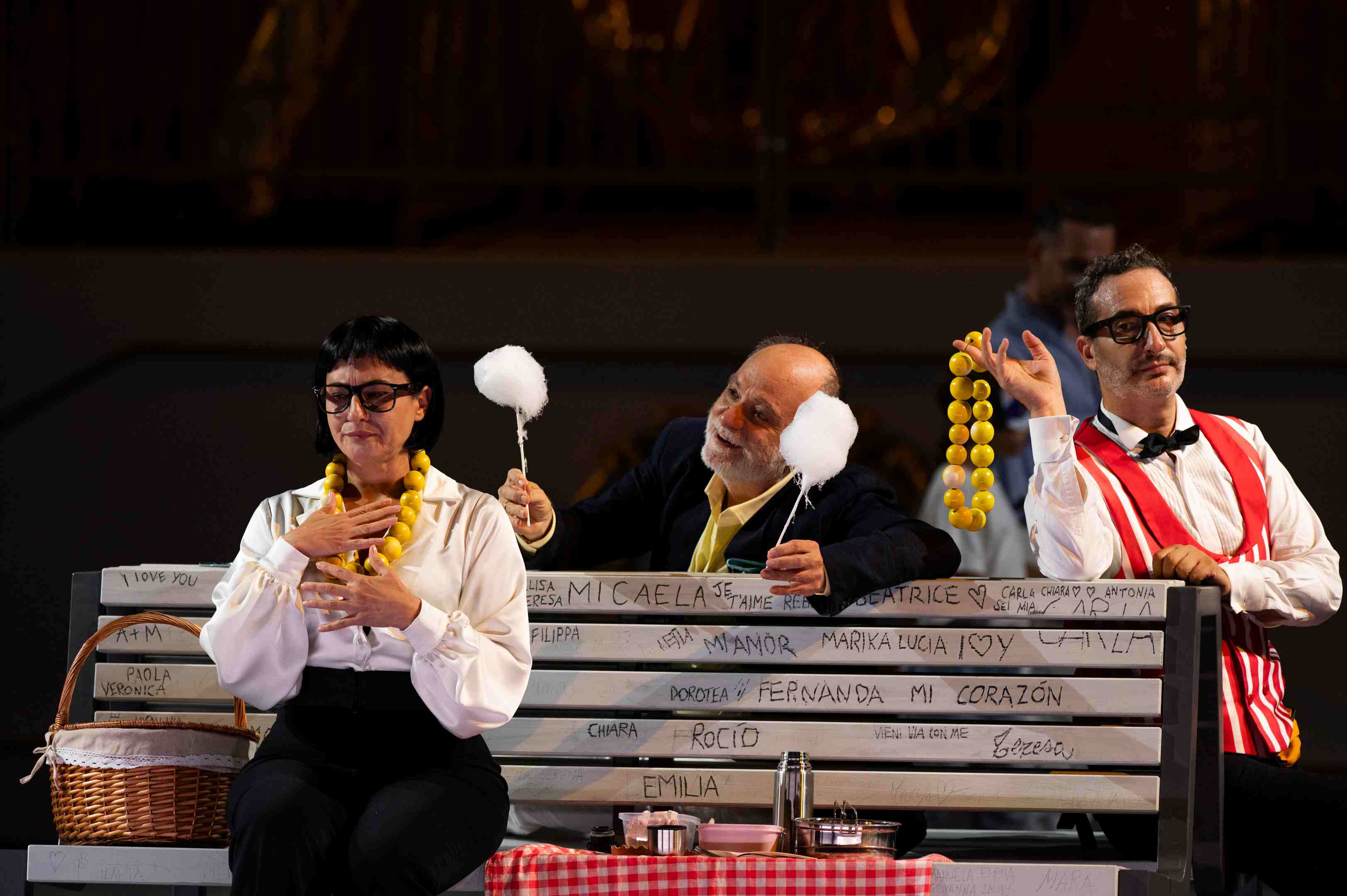
I found this Don Giovanni to be revelatory on so many levels. Barkhatov has given us a cogent and intelligent reading of the libretto that brings out both the comedy and the tragedy. He brings out the fact that this is a complex, multifaceted work that has so much more to meet the eye than one might initially think. Yet it also feels like a work in progress, the second half of Act 2 seeming to fizzle out inconclusively – an impression confirmed by Cadario’s conducting and the cutting of the epilogue. Still, it was decently sung across the board while also being generally stylish. The audience responded with cheers for the principals and Cadario, but sadly a considerable number of boos for Barkhatov and his team, something most regrettable since his is a staging of rare intelligence and insight.
 operatraveller.com
[…] in a picturesque staging by Michel Fau. At the Caracalla Festival, the Rome Opera performed Don Giovanni in a fascinating production by Vasily Barkhatov. Another child genius was Korngold, and his […]