Suor Angelica
Suor Angelica – Silvia Sequeira
La zia principessa – Cátia Moreso
La badessa – Nélia Gonçalves
La suora zelatrice – Paula Morna Dória
La maestra delle novizie – Carolina Figueiredo
La suora infermiera – Rita Coelho
Suor Genovieffa – Elisa Bastos
Suor Osmina – Inês Medeiros
Suor Dolcina – Ana Cosme
Gianni Schicchi
Gianni Schicchi – Luis Rodrigues
Lauretta – Rafaela Albuquerque
Zita – Cátia Moreso
Rinuccio – Francesco Lucii
Gherardo – Marco Alves dos Santos
Nella – Rita Marques
Betto Di Signa – João Oliveira
Simone – Nuno Dias
Marco – Tiago Matos
La Ciesca – Patrícia Quinta
Maestro Spinelloccio – Mário Redondo
Amantio Di Nicolao – Ricardo Panela
Coro da Escola de Música do Colégio Moderno, Coro do Teatro Nacional de São Carlos, Orquestra Sinfónica Portuguesa / Renato Balsadonna.
Stage director – Carmine De Amicis.
Teatro Nacional de São Carlos, Centro Cultural de Belém, Lisbon, Portugal. Saturday, October 4th, 2025.
With this double bill of Suor Angelica and Gianni Schicchi, the Teatro Nacional de São Carlos has opened its 2025 – 26 operatic offering. While its historic home is being restored, the theatre is leading a peripatetic existence, performing in venues all over the Portuguese Republic. Although the theatre has only revealed its season until December on its official website, the site of the Centro Cultural de Belém, informs us that the TNSC has plans for some concerts there in the winter and spring, and a production of Tannhäuser in April.

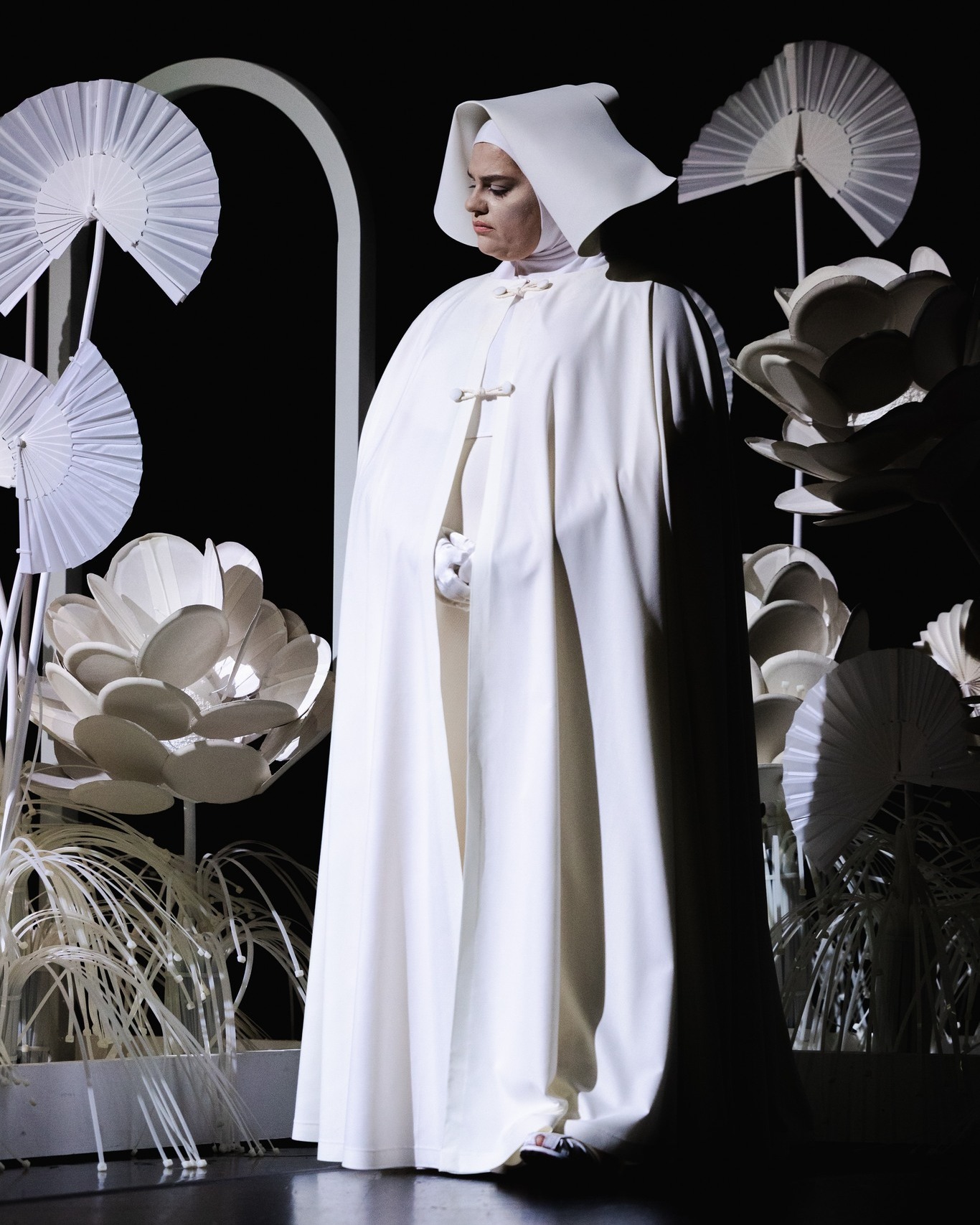
The stage direction of this double bill was confided to Carmine De Amicis, a new name to me. His is a staging that makes much of little. The set for Suor Angelica is a simple transparent structure, with some stylized plants on one side and a statue of the Madonna on the other. There’s a simplicity to the visuals of the nuns’ outfits matching the whiteness of the set, with the Zia Principessa showing up in black, who was accompanied by Angelica’s son, dressed in red, who sat outside during their confrontation. Despite the simplicity of the setting, so much was illustrated through the personenregie, creating a narrative clarity that was in very welcome comparison to the fog of last night’s Faust in València, for example. De Amicis clearly knows how to tell and communicate a story and encourages his cast to do the same. He isn’t the first director to bring the son back in the closing moments, as Angelica expires, but here it was given added impact thanks to Silvia Sequeira’s deeply moving assumption of the title role.
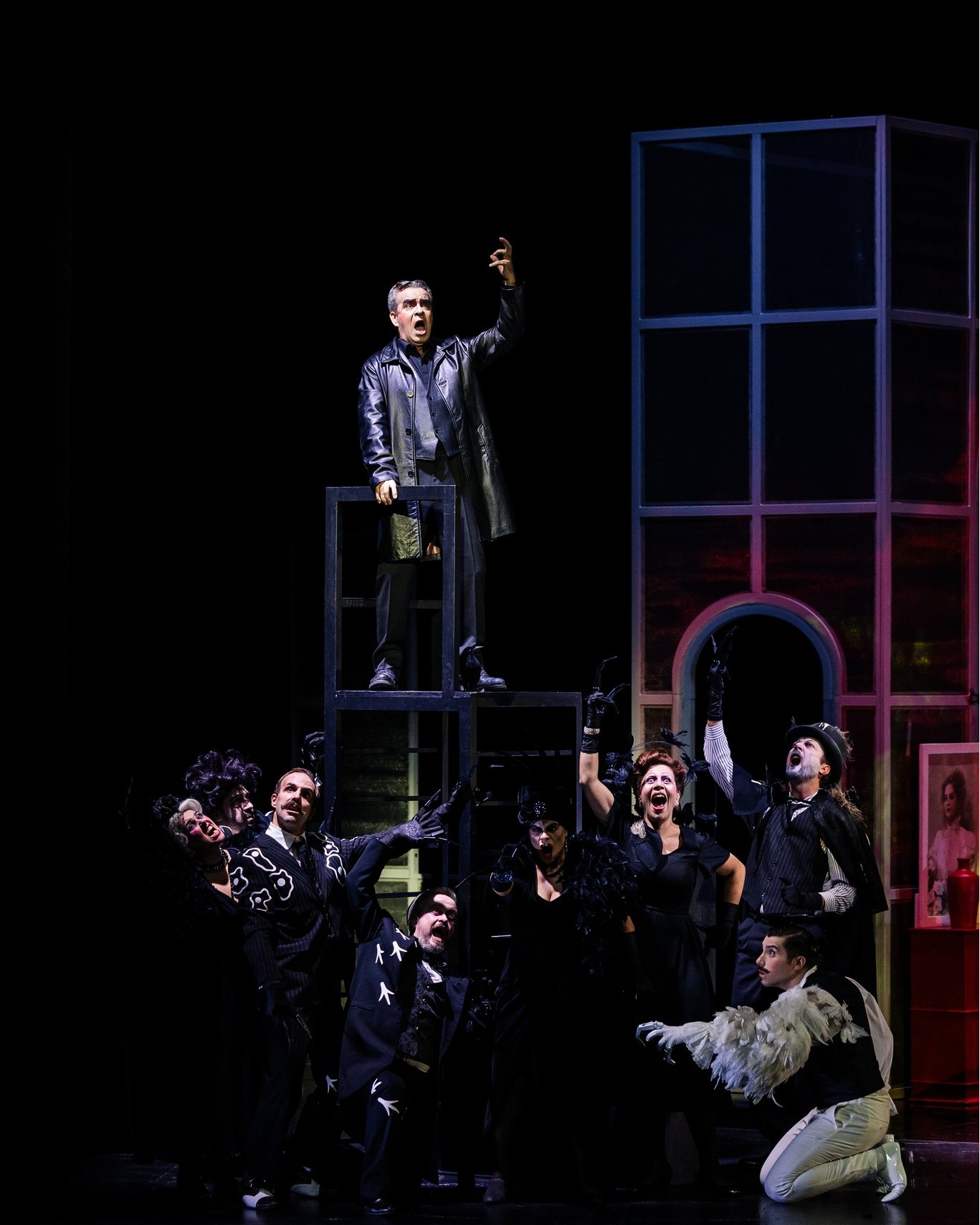
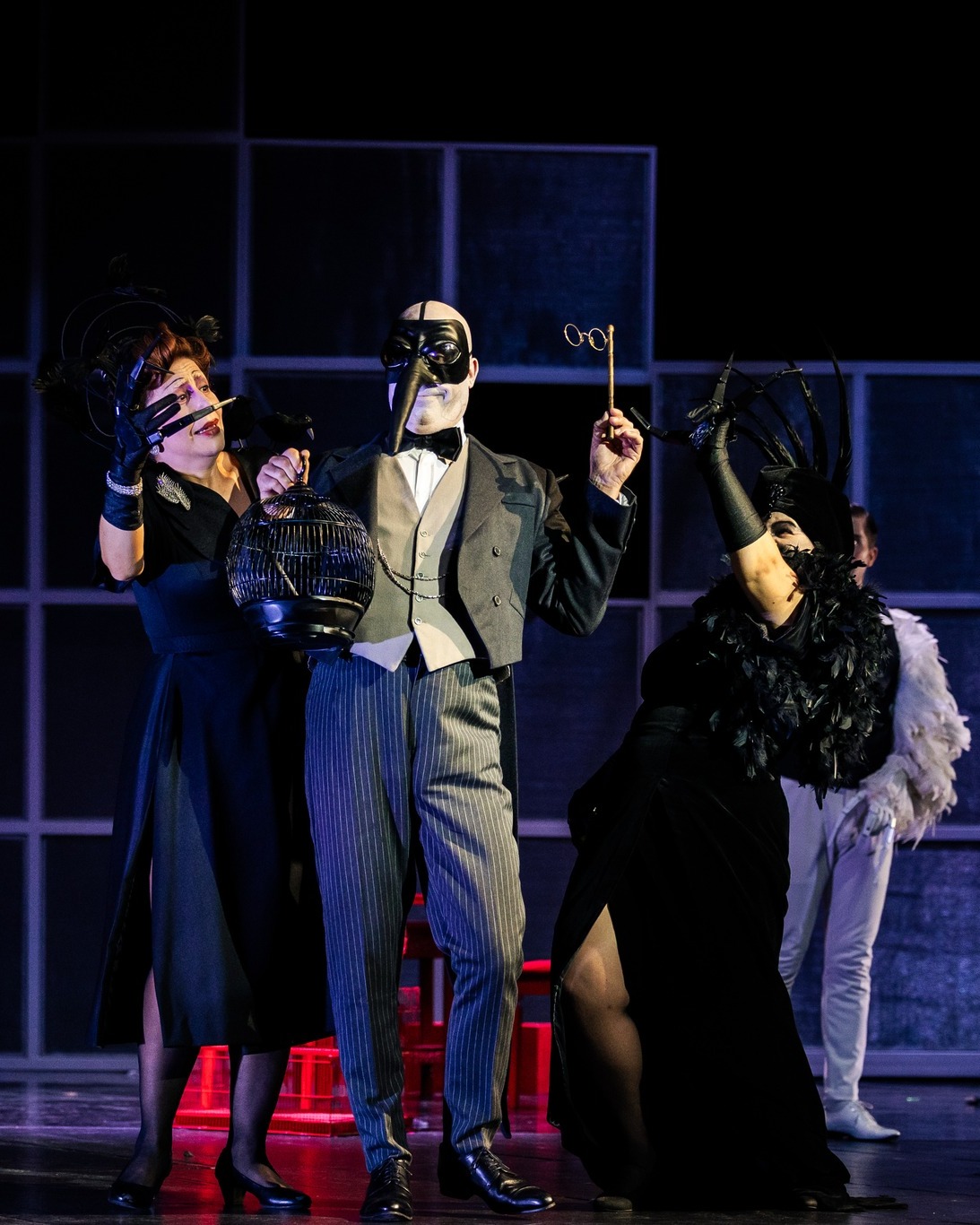
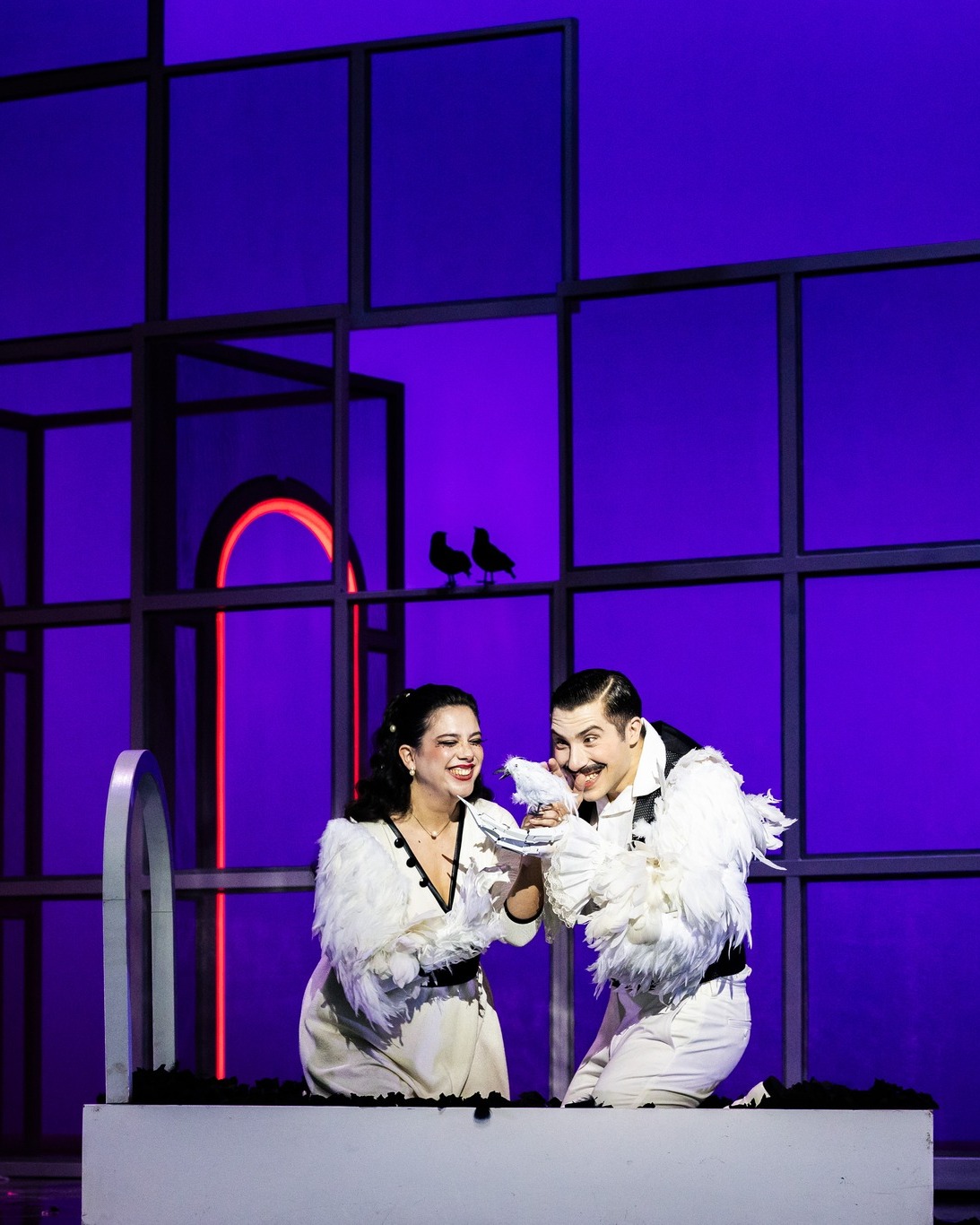
The set was reversed for Schicchi, as if sheltering in the action in a home-like structure. Here, De Amicis made use of video projections, by Leandro Summo, to provide images of birds or the celebrated Duomo in Florence. Indeed, the bird image was central to his staging. The entire cast, with the exception of Schicchi, wore some feathers as part of their costumes, moving around the set as if birds – with Lauretta and Rinuccio giving birth to an egg that hatched in the closing scene. It struck me that De Amicis’ inspiration for this was Schicchi’s line to Lauretta ‘Va’ sui terrazzino; porta i minuzzolini all’uccelino’, in a way portending that, at the dénouement of the opera, Schicchi would be handing the family crumbs of Buoso’s testament, while keeping the choice bits for himself. Again, what De Amicis succeeded in doing was creating a piece of theatre that allowed an ensemble cast to have the time of their lives. He brought out the comedy, exaggeratedly so certainly, but the roars of laughter emanating from the auditorium were proof of an audience that was so fully engaged with what they saw. There was a genuine sense of a group of people playing off each other, a dysfunctional family undoubtedly, but with performances so vivid and so compelling it was impossible not to be engaged.
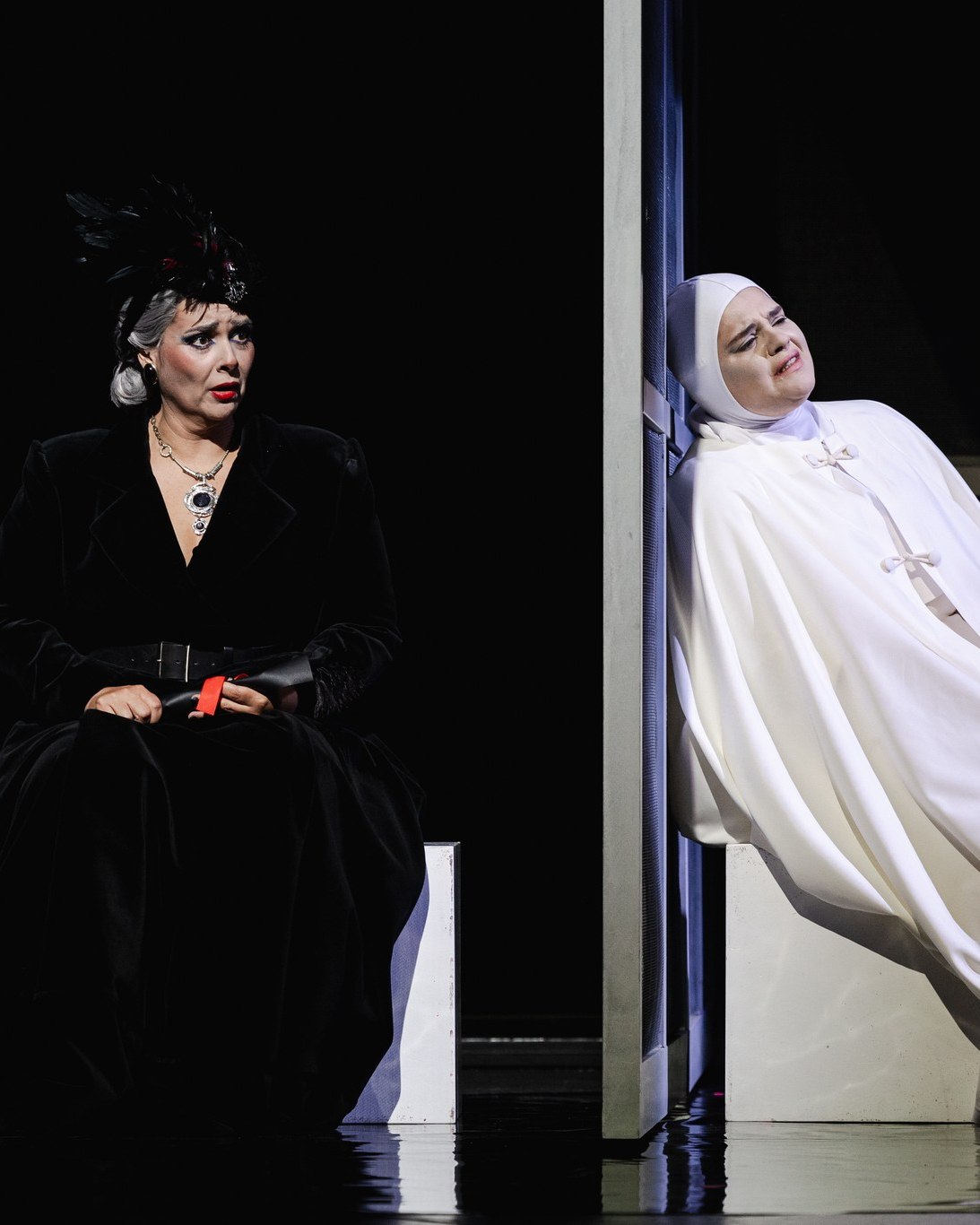
Sequeira’s Angelica moved me immensely. She’s such a special artist. She has this implicit musicality that so few have, she knows how this music should go, she understands the shape of the lines, knows how to phrase them and pull out the emotion. Her ‘senza mamma’ was heartbreaking, the pain so palpable thanks to her copper-toned soprano encased in a captivating fast vibrato. The instrument itself has a genuine plush beauty. And yet, again I left with a sense that the technique just isn’t quite lined up. As her big aria reached its ecstatic high, the support started to give way and Sequeira dropped the off-stage high C. She is without a shadow of a doubt one of the most exciting singers I’ve had the pleasure of hearing. There’s so much she has to offer as artist. The musicality she has is something so few have. I really do hope she has the guidance she deserves to allow her to make the most of what is a remarkable talent. Even with the technical issues, her Angelica absolutely floored me with its emotional power in a way that it rarely does.

Cátia Moreso took on the roles of both the Zia Principessa and Zita. She sang the princess with a rich chestiness, unafraid to boom down there at the bottom. I did find her tendency to let rip on the last syllable of ‘giustizia’, for example, to go against the language and the line, but it was certainly exciting to hear her pull out the organ stops in that way. Her Zita was utterly terrific. She camped it up tremendously, demonstrating a comic timing that was spot on and her silky mezzo nicely extrovert. Back in Suor Angelica, we also had a decent group of nuns, although a few did have a tendency to dwell on the underside of the note.
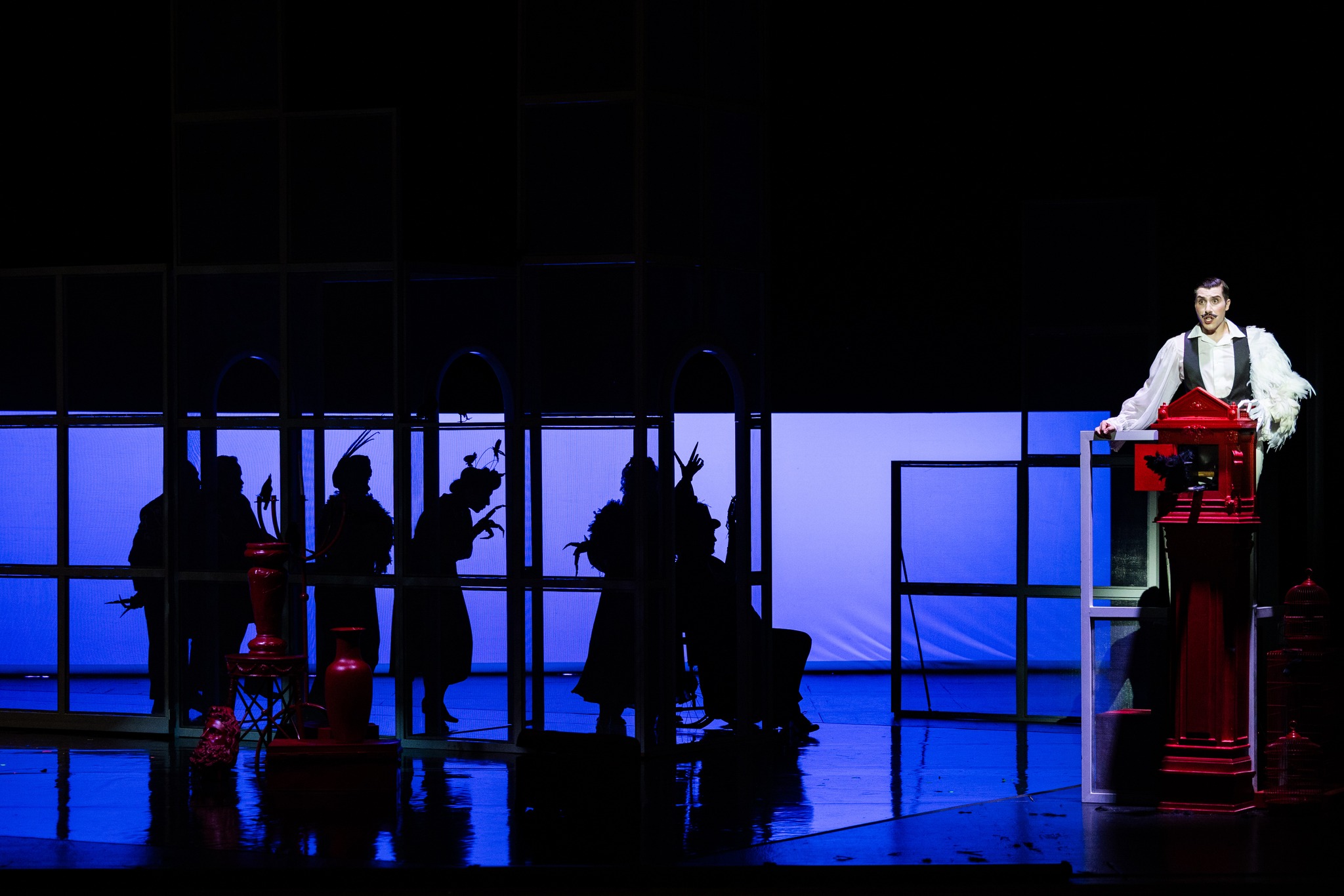
Luis Rodrigues more than held the stage as Schicchi. His baritone may now be betraying signs of the passing years, with the tone somewhat grainier than of yore, but he brought out so much through the text, relishing the extrovert character yet also showing the tenderness of his fatherly love of Lauretta. Rodrigues also lightened the tone with real wit as he imitated Buoso.
Lauretta was taken by Rafaela Albuquerque. She sang her ‘mio babbino caro’ with full tone and impressive breath control, phrasing so much in a single line, where many before her have broken it up. Her soprano has an agreeable milky warmth, the tone open and free on top. Her Rinuccio was Francesco Lucii. His is a bright, narrow tenor, although his ode to Florence was unfortunately less than audible from my seat in the centre of the plateia, due to the sound emerging from the pit. The remainder of the cast consisted of many familiar names. Rita Marques dispatched Nella’s music with scintillating tone, while blending exquisitely with Patrícia Quinta’s Ciesca and Moreso’s Zita. Marco Alves dos Santos brought his focused tenor to Gherardo’s music – indeed, I do wonder if he might have been more optimally cast as Rinuccio. Nuno Dias sang Simone’s music in a lugubrious and warm bass, while Ricardo Panela sang Amantio di Nicolao in a firm baritone. Mário Redondo was a deliciously witty Maestro Spinelloccio, dispatching his interjections with focused tone.
Renato Balsadonna led the house orchestra in a reading that luxuriated in Puccini’s score. This is a band that has the music in their blood, they phrase it like Italians, knowing how to bring out the beauty of Puccini’s writing. And yet, I did find Balsadonna’s reading to be somewhat earthbound. He undoubtedly has a good ear for orchestral colour, bringing out the glowing half-lights in Angelica together with the sheer modernity of Puccini’s scoring. I did find Schicchi to also be earthbound, that glorious eruption of the ‘babbino caro’ theme in Rinuccio’s aria simply failed to take wing. That said, Balsadonna did keep the cast together, no small challenge in a piece as fast-moving as this. The orchestra responded very well to him. There were a few ragged entries in the brass and wind, and a few passing moments when the violins lacked unanimity of tuning in the higher reaches. Otherwise, the playing was indeed excellent, full of fragrant colour combined with an implicit understanding of Italian phraseology. The choruses offered a halo of sound in their brief interjections.
This was an evening that really did given an immense amount of pleasure. De Amicis’ staging was clear and logical, and allowed the cast to bring the stories to life in a compelling and engaging way. Sequeira’s Angelica was so heartfelt and deeply moving, while the Schicchi cast filled the stage with comedic delight. The audience response at the close was particularly enthusiastic. Unfortunately, this was a very limited run of only two shows and tonight was the second. A shame, because this was such a fulfilling evening in the theatre that gave us so much, that I’d happily sit through it again immediately.
 operatraveller.com
[…] might have been represented primarily with Bohème this year, but I did see a Suor Angelica and Gianni Schicchi in Lisbon. Silvia Sequeira gave us a heartfelt Angelica, pouring her soul out for us, while […]