Wagner – Götterdämmerung
Siegfried – Tilmann Unger
Gunther – Anton Keremidtchiev
Alberich – Claudio Otelli
Hagen – Albert Pesendorfer
Brünnhilde – Sonja Šarić
Gutrune – Charlotte-Anne Shipley
Waltraute – Atala Schöck
Erste Norn – Tamta Tarielashvili
Zweite Norn – Eleonora Filipponi
Dritte Norn – Brit-Tone Müllertz
Woglinde – Yulia Tkachenko
Wellgunde – Marina Ogii
Flosshilde – Egle Wyss
Coro del Teatro Comunale di Bologna, Orchestra del Teatro Comunale di Bologna / Oksana Lyniv.
Concert performance.
Teatro Comunale di Bologna – Auditorium Manzoni, Bologna, Italy. Friday, October 24th, 2025.
And so it ends. The Bologna Ring, which started off with Rheingold in June last year, was followed with a glorious Walküre in October, very possibly the finest I’ve ever heard live, with Siegfried performed this past June. It’s been quite a journey for Oksana Lyniv and her orchestra, whose contributions have consistently been revelatory throughout. Tonight’s cast was not the one we were expecting based on the information on the Comunale’s website. Ewa Vesin, a magnificent Brünnhilde in Walküre was being publicized up until about a week ago as singing that role tonight, even though she had been billed to sing Tosca in Hamburg on the same date when they published their season back in March. Instead, we got to hear Sonja Šarić, who gave us a radiant Brünnhilde in Siegfried, having been promoted up from Gutrune, which she was also publicized to sing up until a week or so ago, again according to the Comunale’s website. We were also promised a revolving door of Siegfrieds – originally Peter Wedd was listed, with the change made around a week ago to Michael Heim, who sang in June, only for him to be removed from the billing in the last few days to Tillmann Unger who sang tonight. Of course, this time of year there are always cancellations due to unavoidable reasons, but it would certainly be a bonus if we could rely on the casting information made public in advance.
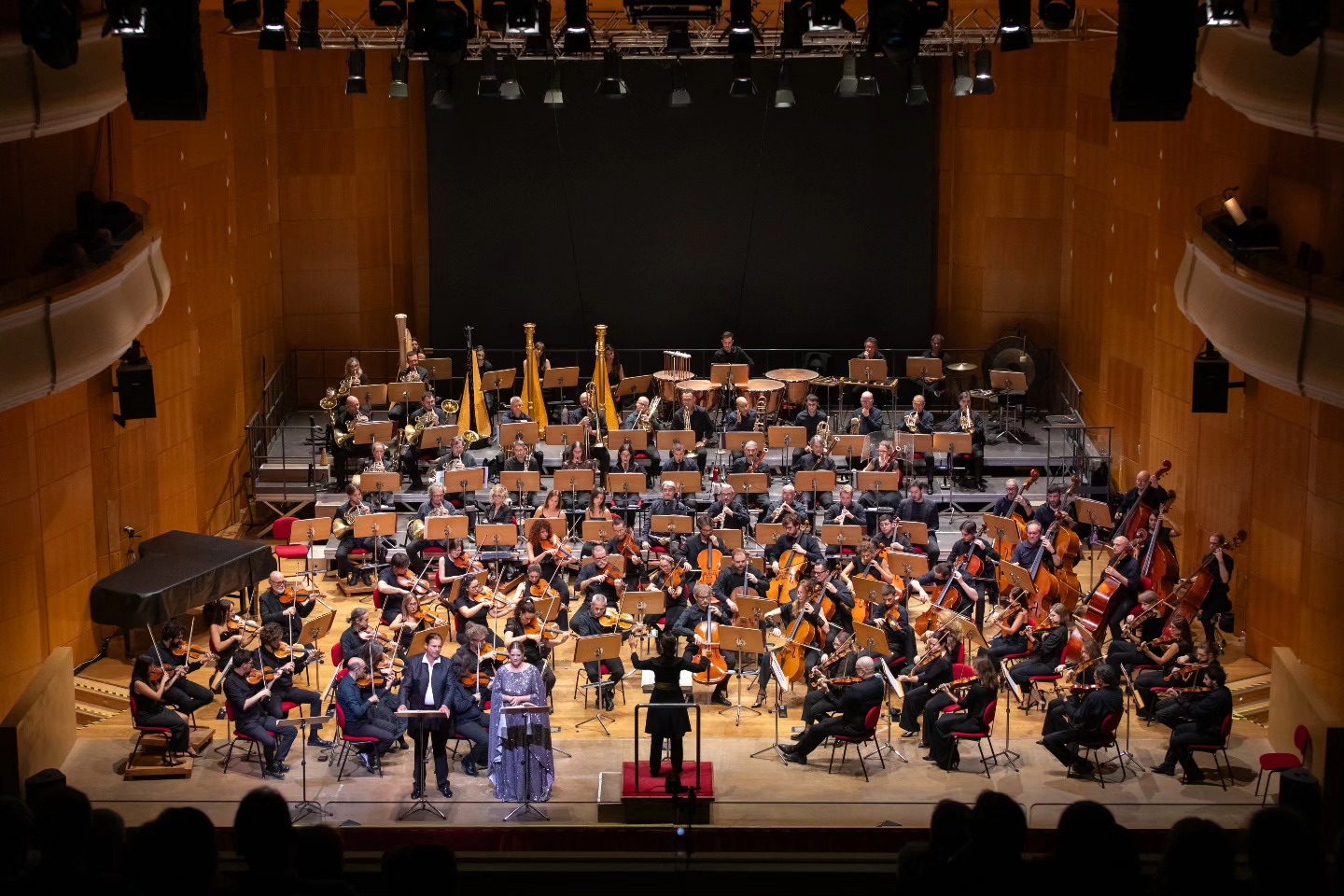
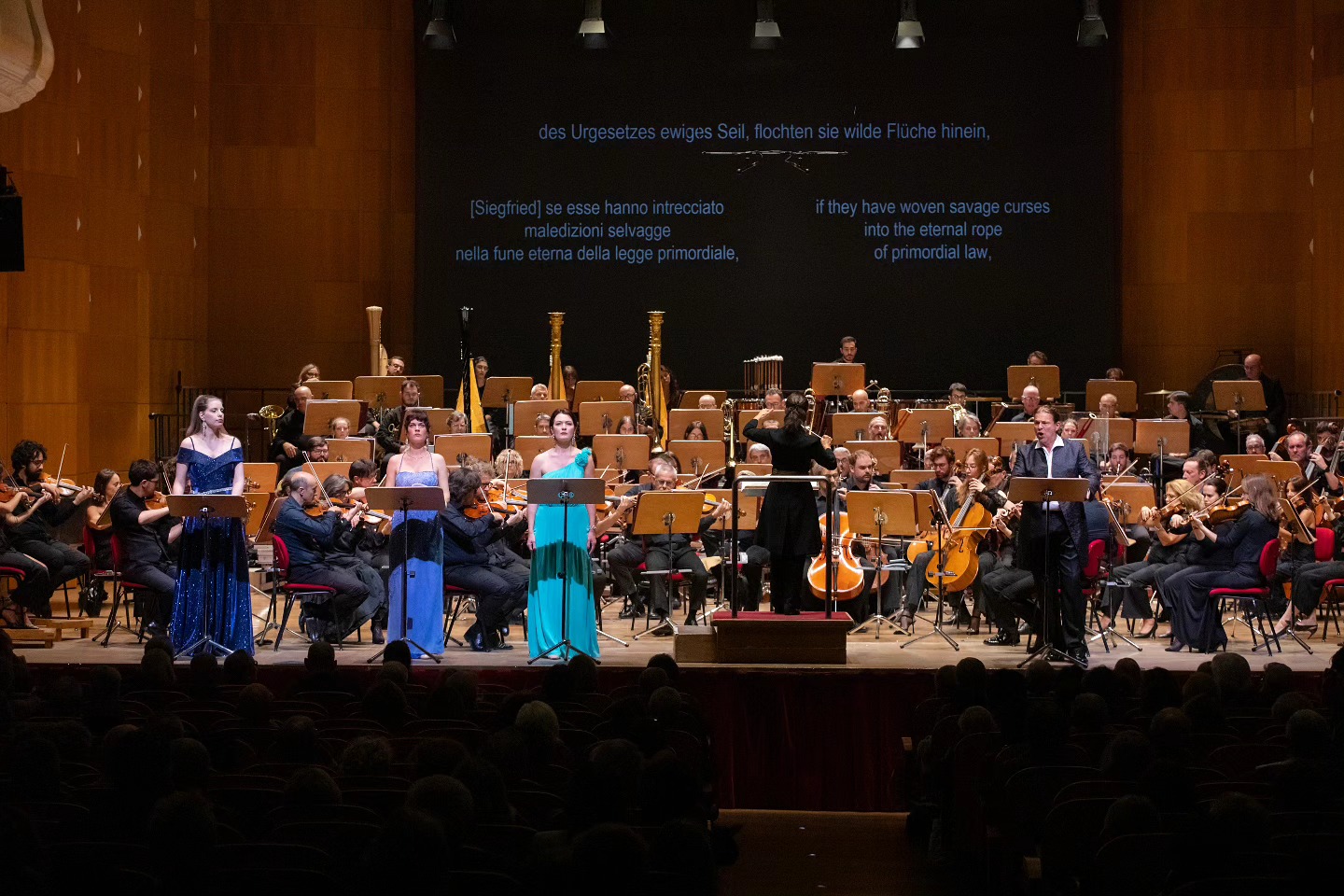
As was the case with the other instalments in the cycle, the performance was given in concert, with the surtitles showing the original German text, with Italian and English translations, and the stage instructions projected in Italian to give setting and context. The cast generally sang from music stands at the front of the stage, with the exception of Albert Pesendorfer’s Hagen who sang without a score, and entrances and exits had been carefully coordinated. The tenors and basses of the chorus sang from the gallery at the right, with the sopranos and mezzos brought in to sing from the platea for their brief contribution. What it did allow us to do was to simply bask in the glow of the playing of the Comunale orchestra and its chorus. The acoustic of the Teatro Manzoni is warm and immediate, with a rich bass, giving ample space for Wagner’s writing to bloom within.
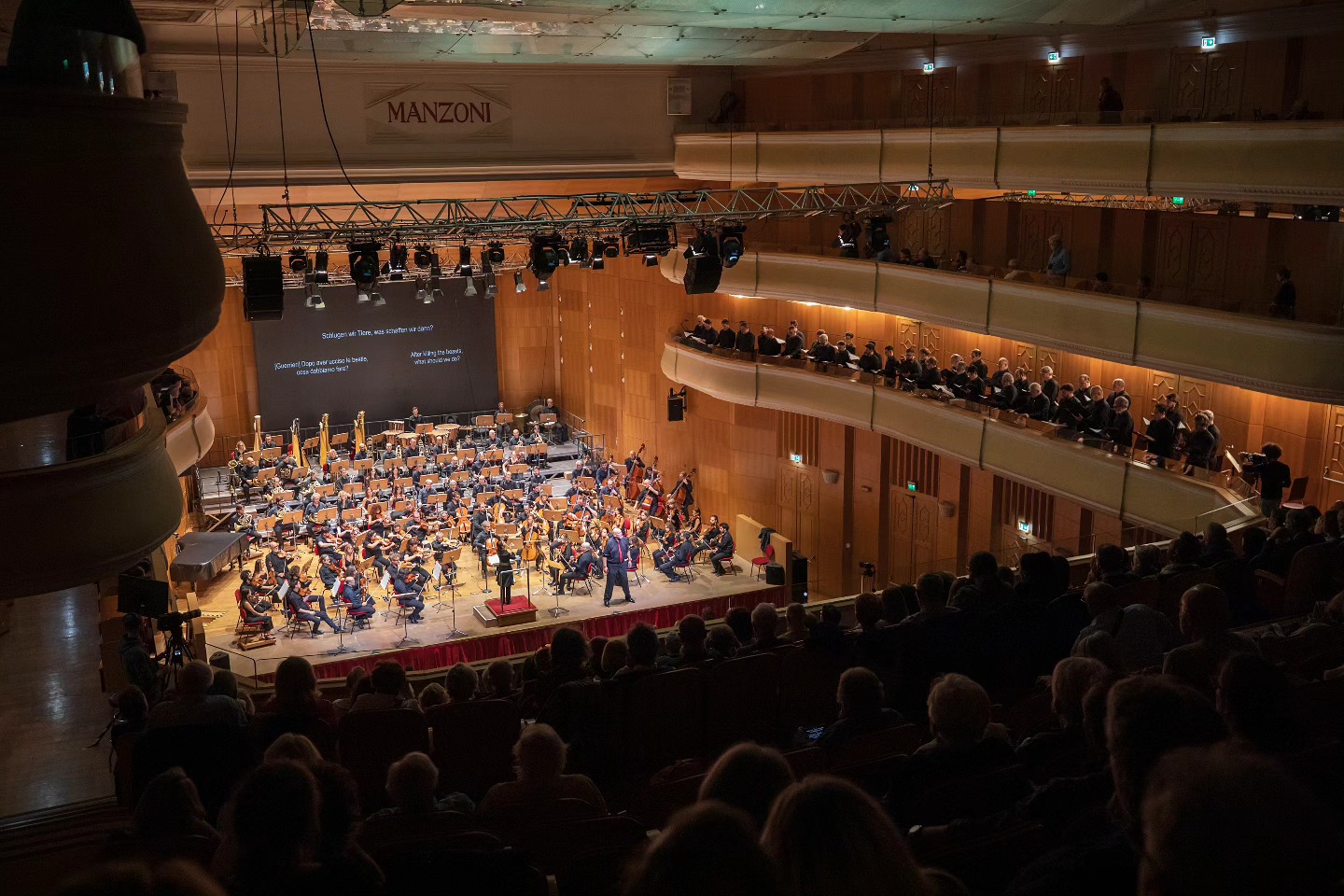
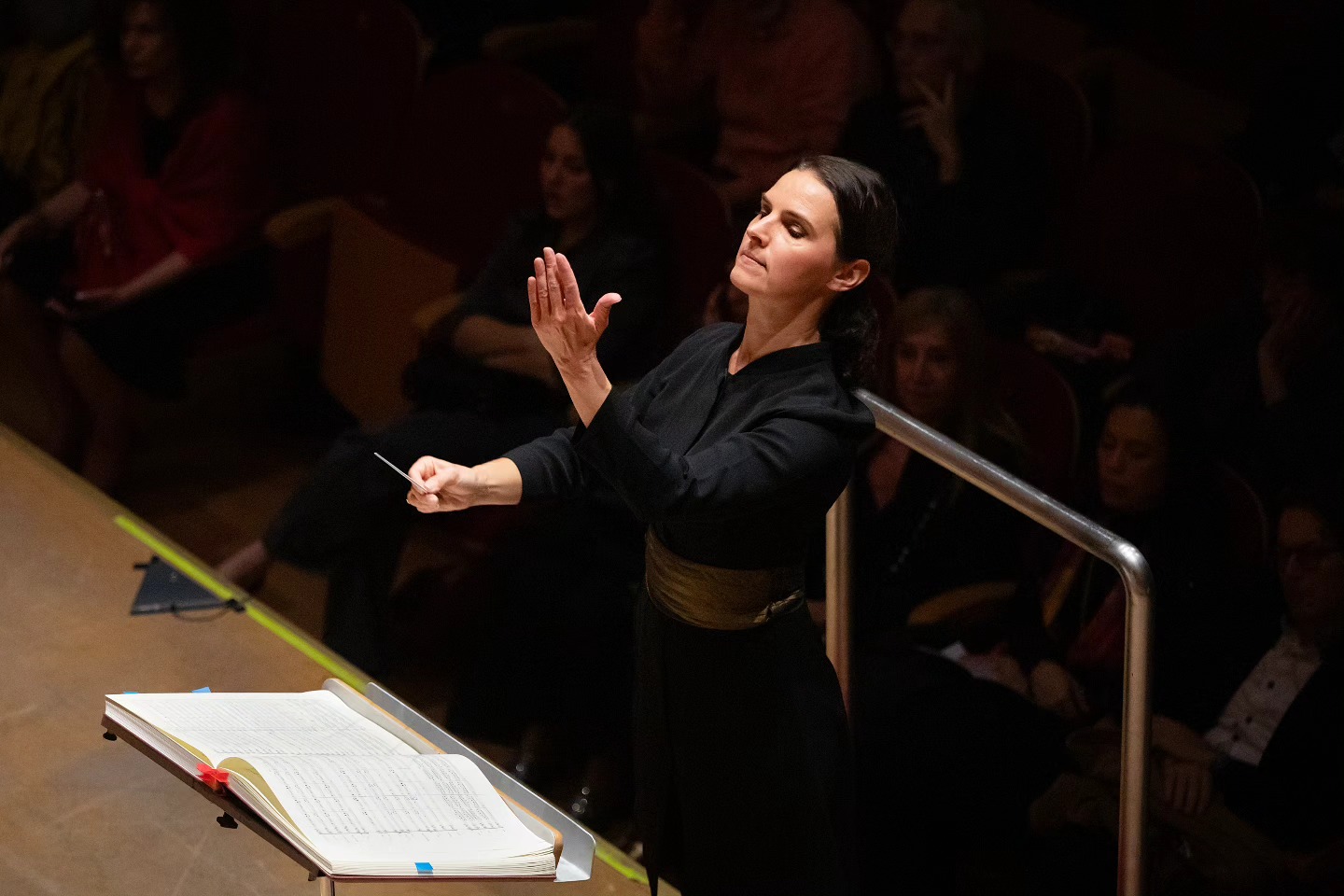
Lyniv led a delightfully swift reading, with the Prologue and Act 1 coming in at around 1 hour and 50 minutes. She gave the Norns scene a wonderful sense of forward momentum, an irresistible feeling of fate deciding its own course. Lyniv then launched into ‘Zu neuen Taten’ quite slowly, allowing us to wallow in the warmth of her string section as it soared up through the registers, the subsequent entrance of the brass filling the hall in a golden glow. What struck me most about Lyniv’s reading was how organic her tempi felt. The gear changes through the evening were handled with sensitivity and a genuine sense that this was how the music was supposed to sound. This was exemplified in the Trauermarsch, where Lyniv again started it quite slowly, only for the tempo to pick up with a real sense of urgency, rendering those huge brass stabs into instances of genuine pain. Hers was a reading that lived, that felt balletic at times, lyrical at others, yet never lingered unduly, and above all filled the music with soaring poetry. The hours passed like seconds.
It helped that she had this magnificent orchestra at her disposal. Yes, there were a few brass accidents along the way, but significantly fewer than there were in Rheingold. What struck me most was the range of colour her musicians produced. The sheer depth of tone available in the strings, the full-bodied richness of the brass, and the piquancy of the winds, accompanied by the four twinkling harps – this was orchestral playing that gave an immense amount of satisfaction. Moreover, there was a beauty to their phrasing, a soaring that just allowed the score to take wing. In those closing measures, Lyniv introduced a slightly longer luftpause just before the redemption through love motif, that gave the following seconds a true sense of resolution. It felt as a piece with her reading as a whole, that desire to use tempo, texture, and colour to find a deeper meaning. The chorus, prepared by Gea Garatti Ansini was sensational. The quality of their singing was just out of this world. The tenors gave us a thrilling high B-flat on ‘Willkommen’, the tone trumpeting into the room, while in Act 3 the basses sang with a rich resonance. The precision of their ensemble, the clarity of their tuning, and the beauty of tone all were utterly thrilling. The fact that they were ranged around the side of the auditorium, filling the hall, drowning me in a wall of sound, was simply spectacular. This chorus is, on current form, the finest in Italy and certainly one of the strongest opera choruses I have had the privilege of hearing anywhere.
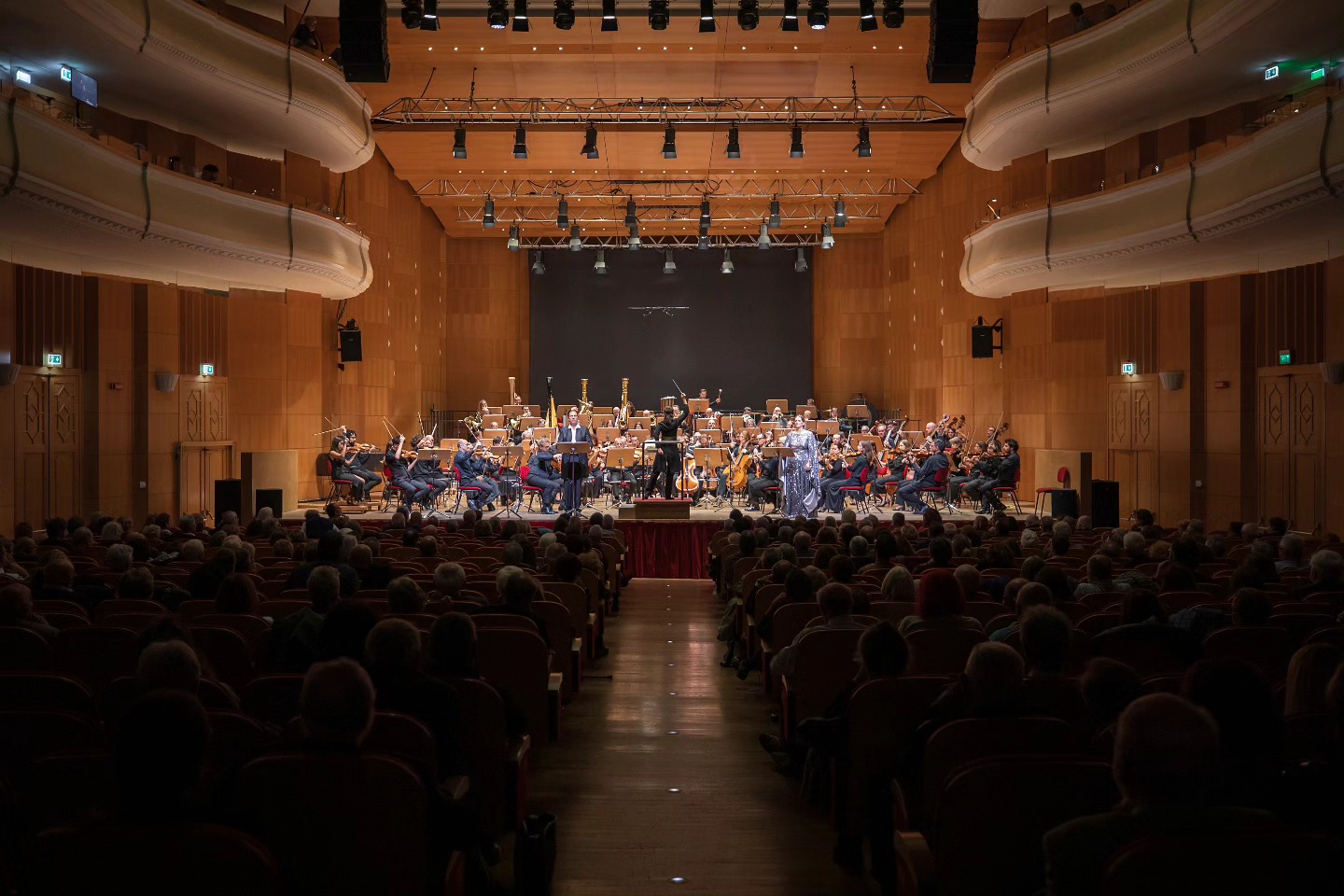
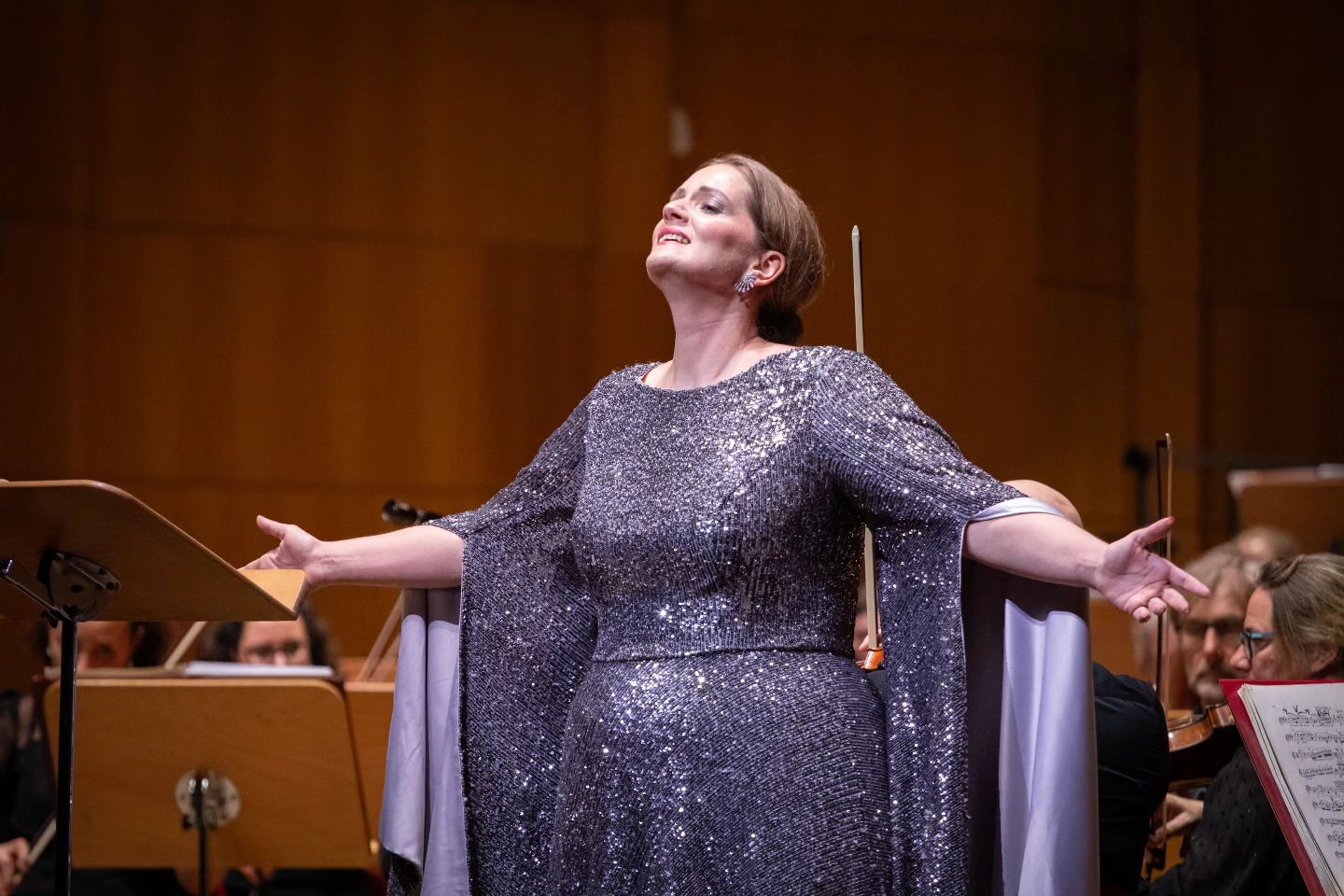
This Brünnhilde was a role debut for Šarić and it marks a significant step forward for a singer who is still relatively young. Hers is a soprano that sits quite high, which means she most certainly has a terrific high C and isn’t afraid to use it, capping her opening duet in ecstatic glee. She also soared gloriously in her duet with Waltraute as she recalled her love for Siegfried. Naturally, the biggest challenge for a voice that sits high comes in Act 2 with the vengeance trio, with a need to find amplitude in the middle. Šarić didn’t shy away from the challenge, using the text, in her excellent German, to push the sound forward, yet never pushing the instrument further than it can naturally go. With more familiarity with the role, I’m sure Šarić will find even more depth in her portrayal – the voice isn’t the most refulgent and with time I’m sure she’ll begin to exploit an even bigger palette of tone colours. Hers was a lyrical Brünnhilde, sung with womanly generosity and heart. The way that she rose to the immolation scene, the voice taking wing, pouring out gleaming tone on high where so many before have run out of gas, this gave notice of an intelligent and generous artist.
Unger’s Siegfried was sung in a robust, healthy tenor. The voice is certainly bulky and he most definitely has stamina to keep the volume up. It does sound that he needs a little heavy lifting to keep the voice sustained in the higher-lying phrases, although he gave us a creditable high C in his Act 3 greeting to Hagen. He also used a wide range of tone colours, enabling him to bring Siegfried’s headstrong naivety to life in this scene with the Rhinemaidens. In a world where heldentenors are rare, Unger gave notice of being a very useful artist in this repertoire.
Albert Pesendorfer gave us a massive-voiced Hagen. That treacherous passage in Act 2, where he called his vassals, was dispatched in a wall of sound – and responded most enthusiastically by the chorus. His smoky bass had significant amplitude and, as a result of his stage experience in the role, his assumption felt fully lived-in, commanding the stage with sheer force of voice and personality. Claudio Otelli returned as Alberich, finding a Shakesperean depth in his scene with Hagen, through the firmness of his vocalism and textual insight. Anton Keremidtchiev was only announced as Gunther around a week ago, so I do wonder how much notice he had of the assignment. This might explain his reliance on the score, although his singing was confident and in complete command of the role. The Bulgarian-Italian baritone also sang in excellent German, the voice utterly firm and even throughout the range, and also a good size for the part. Gutrune was taken by Charlotte-Anne Shipley, the owner of an attractive silky soprano with a core of double cream. Her German, on the whole, was clear and she had obviously worked hard on the text. Atala Schöck, who sang Fricka earlier, returned as Waltraute. She sang her narration with hieratic, imperious generosity, using her plush mezzo through dynamics and text to tell a gripping story. We were given an impressive trio of Norns, although their diction could have been slightly clearer, and a similarly mellifluous trio of Rhinemaidens who blended exquisitely together.
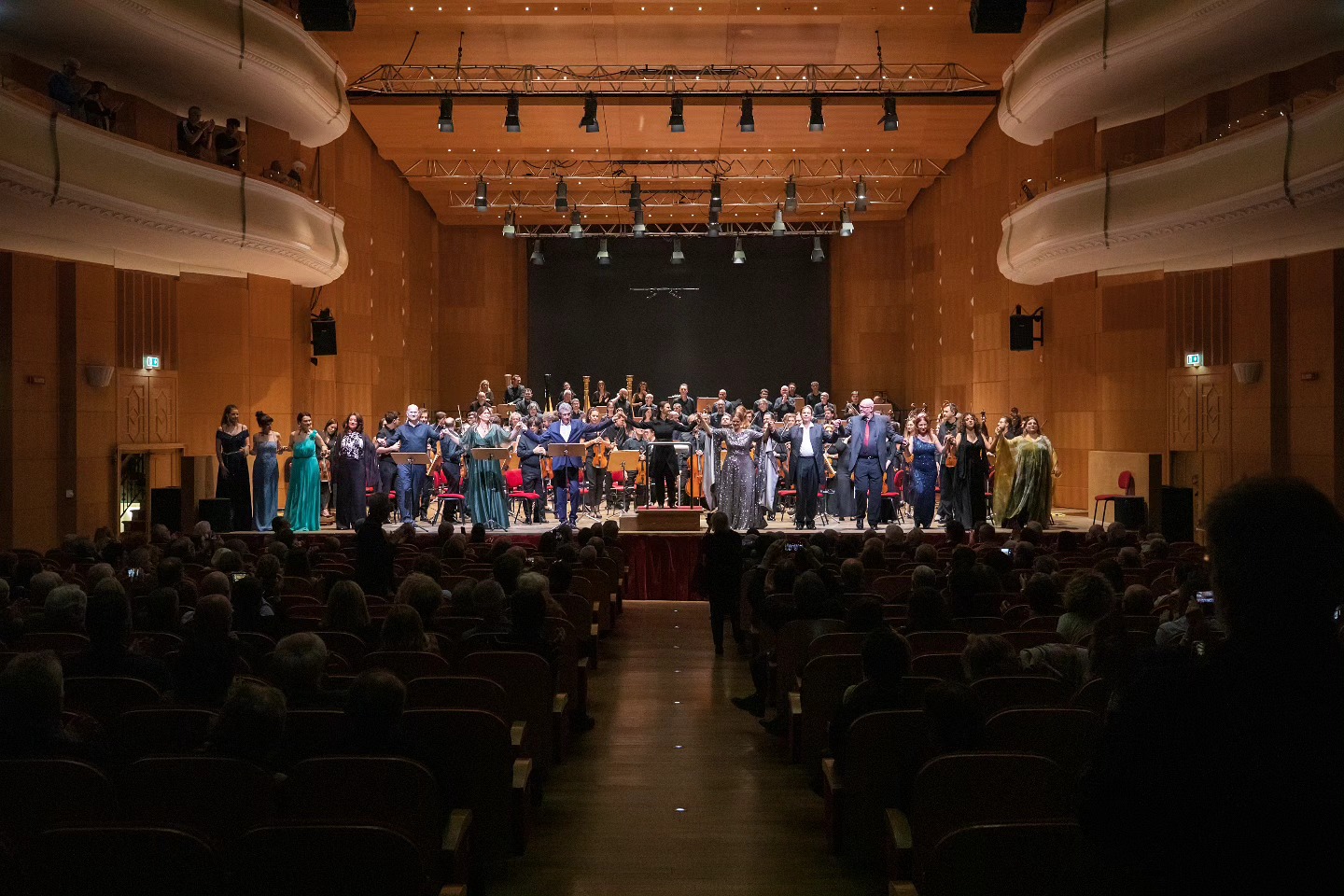
This was a fitting conclusion to the Comunale’s Ring cycle. Once again, the sheer poetry of the orchestral playing, the extraordinary choral singing, and the profound, living insight of Lyniv’s conducting gave enormous satisfaction. The singing also gave much to enjoy, with Šarić’s radiant Brünnhilde, Unger’s staying power as Siegfried, and Pesendorfer’s massive Hagen particularly striking. The audience responded at the close with generous ovations, particularly so for the orchestra and chorus, Šarić, Pesendorfer, and Lyniv. In a house with such a storied history and strong connection with Wagner’s music, this Ring definitely represented the best of this great theatre.
 operatraveller.com
[…] heard Unger as Siegfried in the Bologna Götterdämmerung last year, where his contributions were reliable. To his credit, tonight he made it to the […]
[…] season as a calendar year and they most certainly gave us a spectacular 2025, with that magnificent Götterdämmerung in October and the glorious Bohème in November. This year is rather more modest in scope, […]