Verdi – Nabucco
Nabucco – Alexey Zelenkov
Ismaele – Matteo Desole
Zaccaria – Ramaz Chikviladze
Abigaille – Svetlana Kasian
Fenena – Chiara Mogini
Il Gran Sacerdote – Lorenzo Mazzucchelli
Abdallo – Saverio Pugliese
Anna – Laura Fortino
Coro Lirico di Modena, Orchestra Filarmonica Italiana / Massimo Zanetti.
Stage director – Federico Grazzini.
Teatro Comunale Pavarotti-Freni di Modena, Modena, Italy. Saturday, October 25th, 2025.
Tonight marked my first visit to the Teatro Comunale Pavarotti-Freni in Modena, named, of course, after that city’s most famous children, two of the greatest singers of the twentieth century. It’s a jewel of a theatre, with seating for 901. Having travelled there, I must admit to having had a little trepidation before entering the theatre. The region of Emilia-Romagna has seen an explosion in anti-Jewish hate over the past two years. Earlier this month, the mayor of Reggio Emilia was booed at a public event for calling for the release of the hostages; while in the town of Conselice last week, a memorial to victims of the Shoah was defiled. I did start to fear the worst with an opera that focuses on the oppression of the Jewish people.
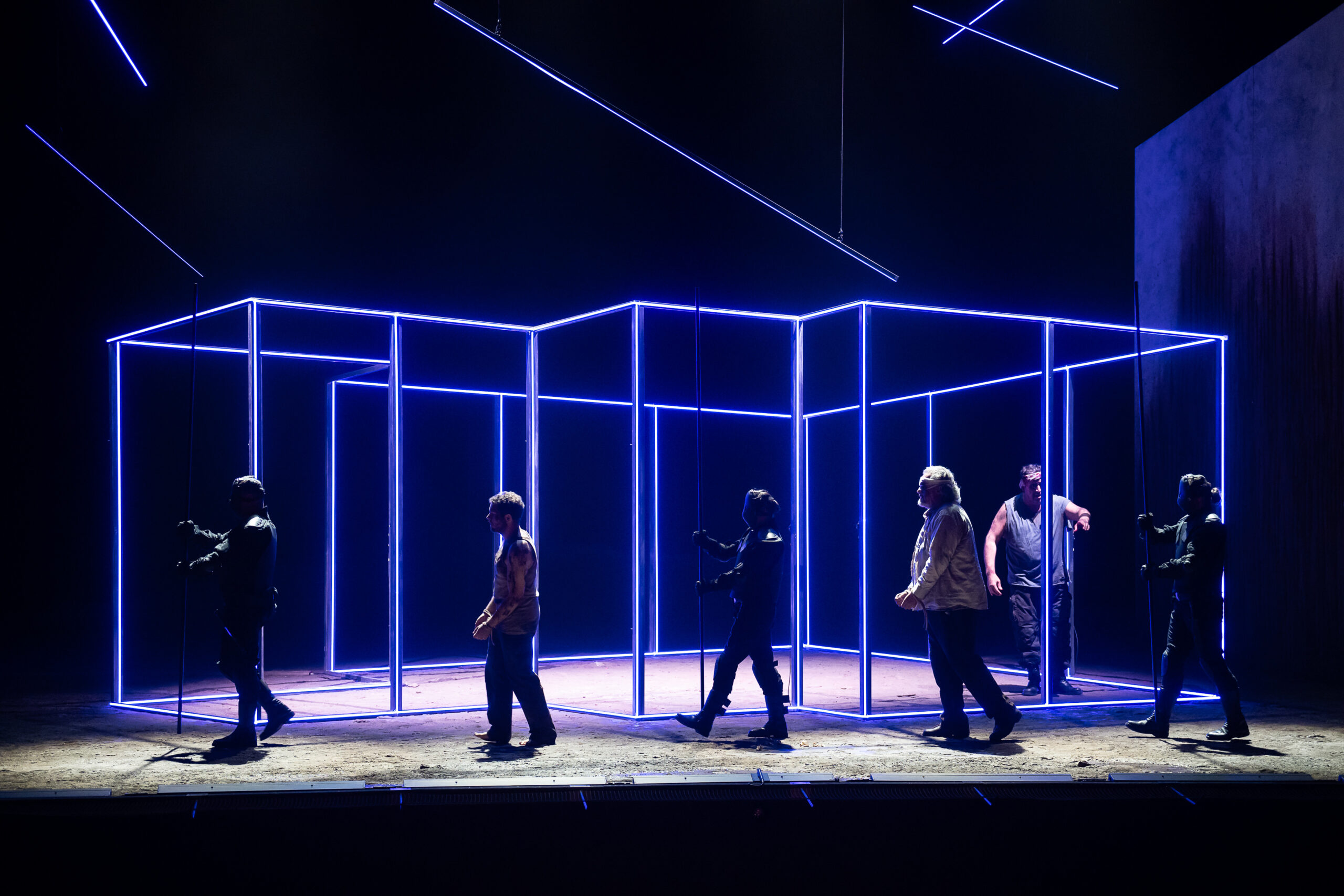
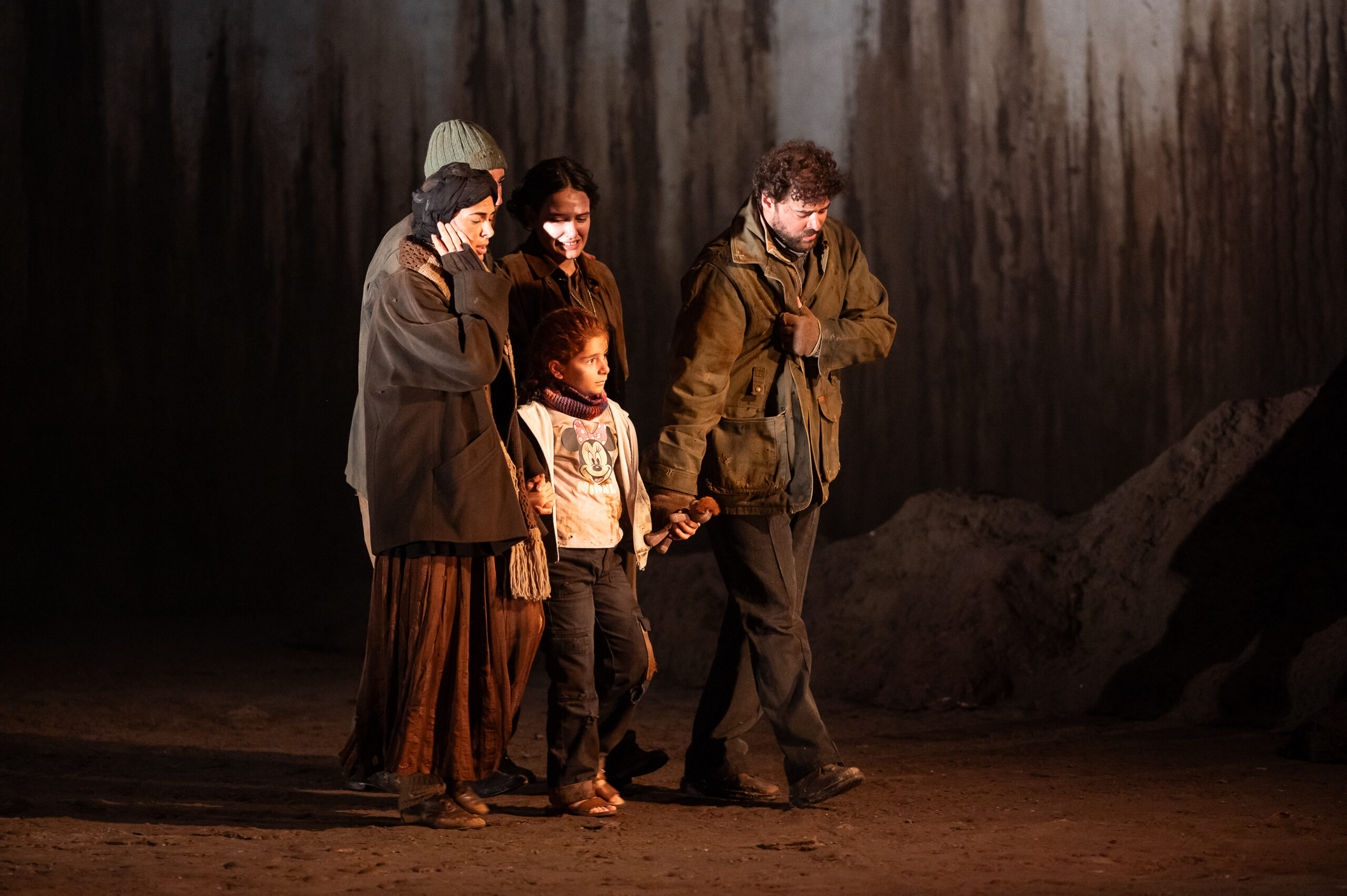
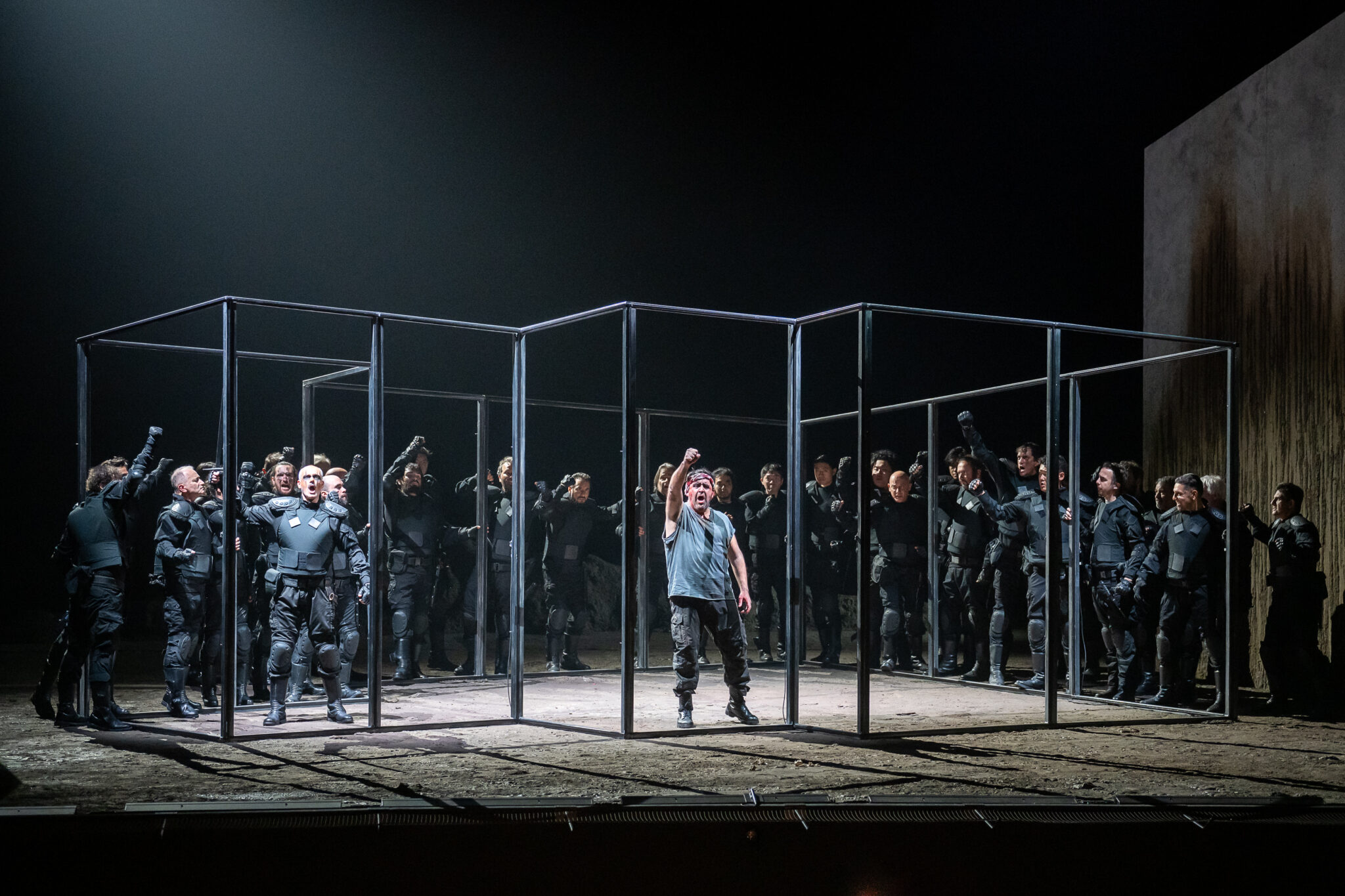
Fortunately, Federico Grazzini’s staging, his second of this opera, did not contain any anxiety-inducing moments. He sets the action in a single set, by Anna Bonomelli who also designed the costumes. The set concentrates the action within three walls, while additional light features add visual interest. The costumes for the Babylonians appear to be futuristic, dressed in sci-fi adjacent military garb with painted faces, while the costumes for the Jews set them up as being in an Eastern European shtetl. There’s a clear dichotomy here, between the rustic spirituality of the Jews and the technological violence of the Babylonians. And yet, under the surface, it felt that Grazzini was making a deeper point. When Nabucco appeared, he did so under a light feature in the shape of a triangle. The red triangle is of course a symbol of Hamas and used by those who support them as a way to display their backing of the terrorists. Similarly, when Abigaille took over as queen, the Jews were imprisoned in a light structure, above which crosses appeared, reminding us of the oppression suffered by the Roman Jews over the centuries by the papal state. During ‘va pensiero’, a young girl appeared and crossed the stage carrying a model aeroplane. This brought to mind how thousands of Ethiopian Jews were rescued and taken to safety in Israel during Operation Solomon in the early 1990s. Furthermore, Grazzini accompanies the sinfonia with a tableau showing a child being taken away by masked gangs from their family, which could not help but bring to mind the Bibas children who were taken from their home by the terrorists on October 7th, 2023, and subsequently brutally murdered. The imagery was subtle, certainly, and perhaps not immediately apparent to those who are either not Jewish or familiar with Jewish history, but it felt extremely thoughtful and honoured the work’s Jewish influence.
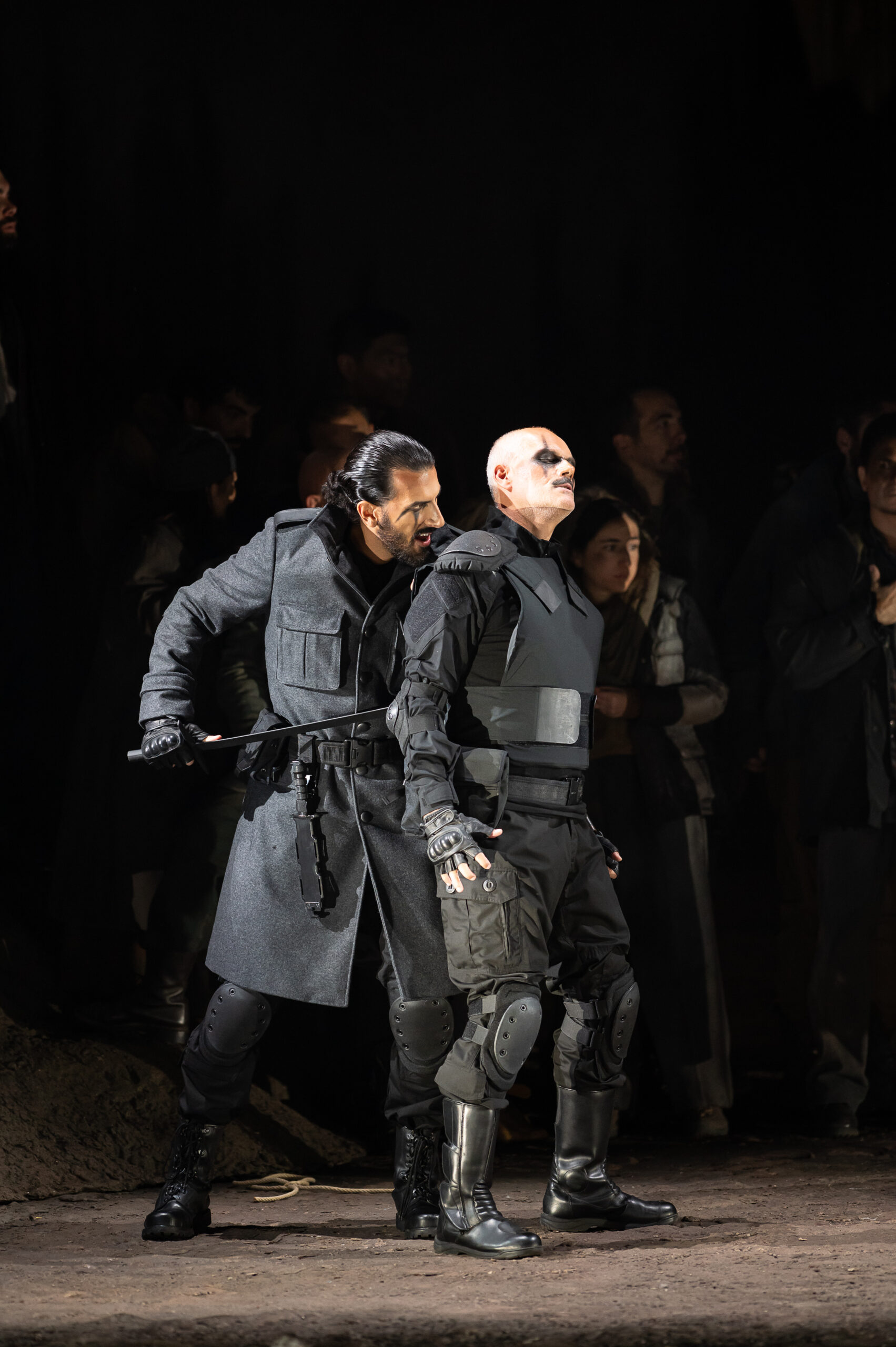
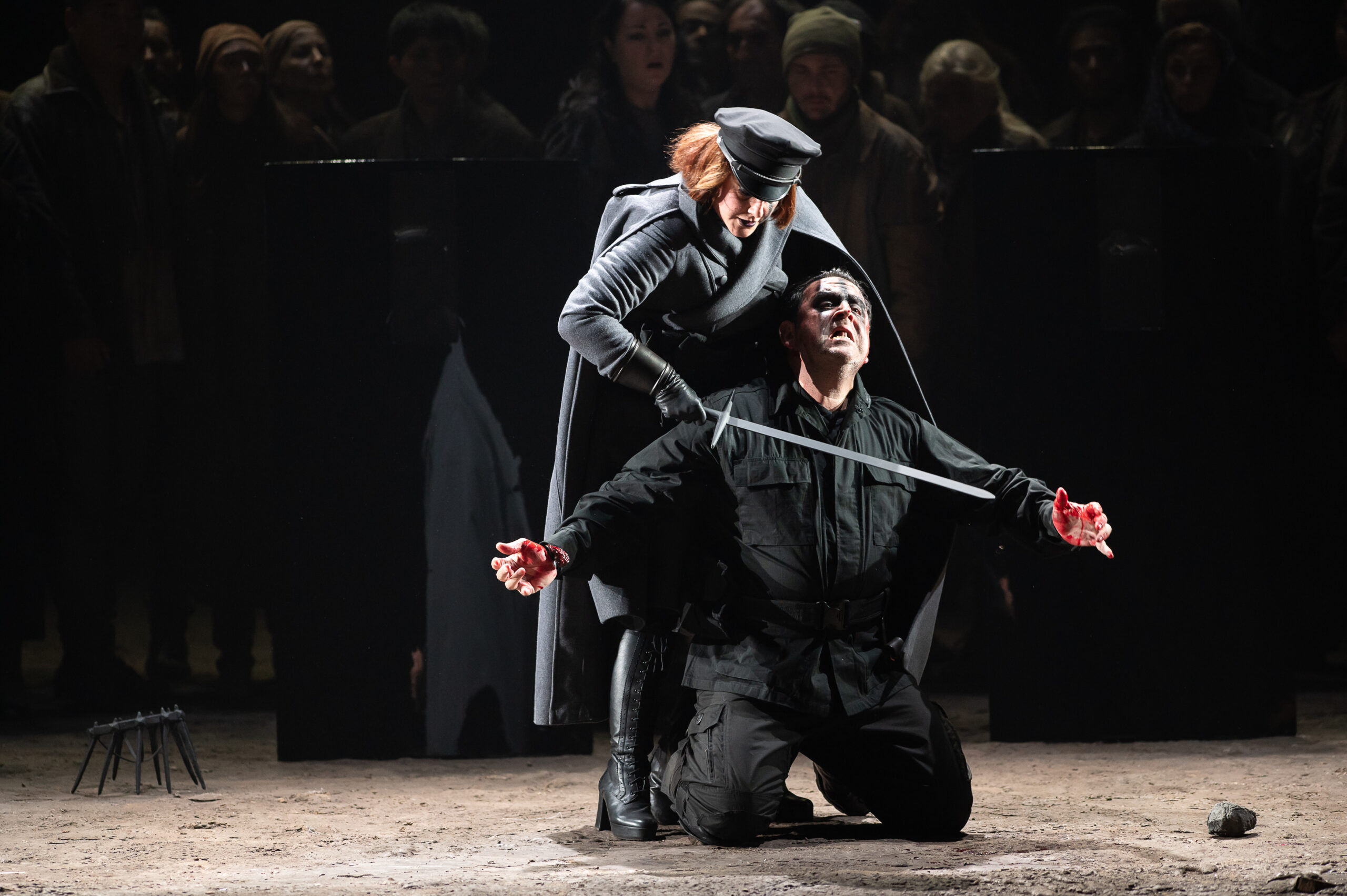
Grazzini’s personenregie, for the most part, was effective in showing a group of characters who genuinely engaged with each other. There was a clarity to his storytelling that was particularly effective. That said, the direction of the chorus did involve a fair amount of parking and raising of hands aloft to the sky, although the stage pictures he and his creative team produced were certainly impactful. This was my first encounter with Grazzini’s work and he’s undoubtedly a thoughtful director with a vivid theatrical imagination.
Musically, the highlight was undoubtedly Massimo Zanetti’s conducting. He led the Orchestra Filarmonica Italiana in a delightfully sprightly reading. His tempi were nicely swift, and given the intimate size of the theatre, the attention he paid to the rhythmic impetus had an exciting physical immediacy. Yet Zanetti was also unafraid to give those longer, lyrical moments the room they needed to take wing in, gaining some exquisite playing from the principal cellist in the meantime. There was also some terrifically raspy playing from the horns in ‘o prodi miei, seguitemi’, and throughout there was a sense of the various sections within the band interacting with each other, the internal dialogue fully brought to life. One thing that gave me particular pleasure was being able to see Zanetti from my seat. The way that he encouraged both the orchestra and the singers on stage, the clarity of his gestures, and the generosity with which he shared the ovations felt supportive and genuine. The only issue I had with Zanetti’s interpretation was the complete lack of ornamentation, absolutely essential in this repertoire. The chorus, prepared by Giovanni Farina, was enthusiastic. They were fully committed to the score and the stage action, and coped admirably with those zippy tempi.
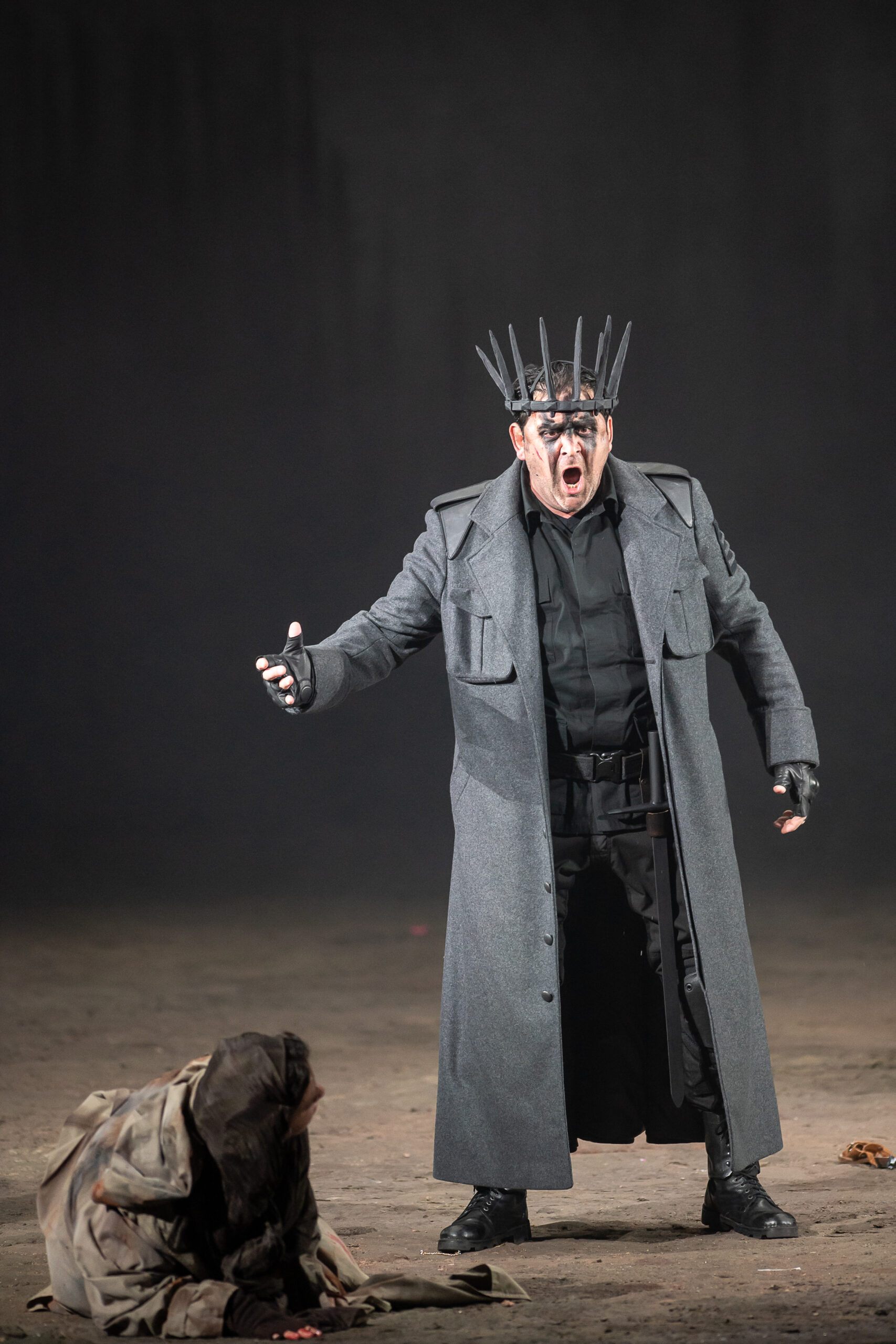
The three main principal roles were double cast for this run of three performances on subsequent evenings and tonight I saw the second of the two casts – the photographs here include the first cast. Nabucco was taken by Alexey Zelenkov. His was a reliable and solid account of the role. His baritone is a good size, able to rise to an exciting high A-flat at the end of ‘o prodi miei’. Zelenkov found a satisfying sense of focus for his ‘Dio di Giuda’, with a decent legato, although elsewhere there were occasionally a few intrusive aspirates that entered the line. Svetlana Kasian sang Abigaille. She was unafraid to go for it. Her soprano doesn’t quite spin on top, but that certainly did not stop her delivering the volume. She attacked those perilous register leaps with confidence, generally landing in the vicinity of where she needed to be. Kasian pulled back nicely on the tone in her closing scene, still able to float the line on high. Her singing was definitely exciting.
Ramaz Chikviladze sang Zaccaria in a big, solid bass. He has an agreeable musicality and a warm legato, the sound opening up nicely as he descended to the sepulchral depths. Chiara Mogini sang Fenena in a full, juicy mezzo. Her ‘Oh, dischiuso è il firmamento!’ was sung with long lines, vibrant tone and soared beautifully up to the high A at its climax. Matteo Desole’s Ismaele was sung in a compact tenor, one that had agreeable ping on high. I did find his initial scene with Fenena to be more robust than poetic, but he was a reliable presence on stage. Laura Fortino was a reliable presence in the ensembles, her bright soprano capping the textures. Saverio Pugliese was a confident Abdallo, while Lorenzo Mazzucchelli was an energetic Gran Sacerdote, sung in a healthy-sounding bass.
This was an enjoyable first visit to this exquisite theatre. Grazzini’s staging was thoughtful and intelligent, while Zanetti’s conducting was invigorating. The singing was decent and the chorus was committed. The audience responded frequently and generously throughout the evening and greeted the entire cast at the close with warm ovations.
 operatraveller.com
[…] it was a much more compelling evening. After his vital and vigorous Nabucco in Modena last month I expected a lot from Massimo Zanetti’s conducting. He took a […]
[…] singing was outstanding. I must admit to having had some trepidation before going to see Nabucco in Modena, since the region of Emilia-Romagna is the epicentre of antisemitism in Italy, […]