Mozart – Die Entführung aus dem Serail.
Konstanze – Sofia Fomina
Blonde – Eleonora Bellocci
Belmonte – Anthony León
Pedrillo – Denzil Delaere
Osmin – Dimitry Ivashchenko
Bassa Selim – Sebastian Wendelin
Coro Teatro Regio Torino, Orchestra Teatro Regio Torino / Gianluca Capuano.
Stage director – Michel Fau.
Teatro Regio Torino, Turin, Italy. Saturday, November 15th, 2025.
As is frequently the case at the Teatro Regio Torino, this run of Die Entführung aus dem Serail has been double cast. Tonight, I saw the second of the casts, who were given two dates during the run, of which tonight was the second, while the accompanying photos in this review feature the first cast. It’s a youthful cast of singers with already strong Mozartian credentials and I was keen to have this opportunity to hear them under the direction of experienced stylist, Gianluca Capuano. Michel Fau’s staging, originating in 2024 at the Opéra Royal / Château de Versailles, is a coproduction with the Opéra de Tours.

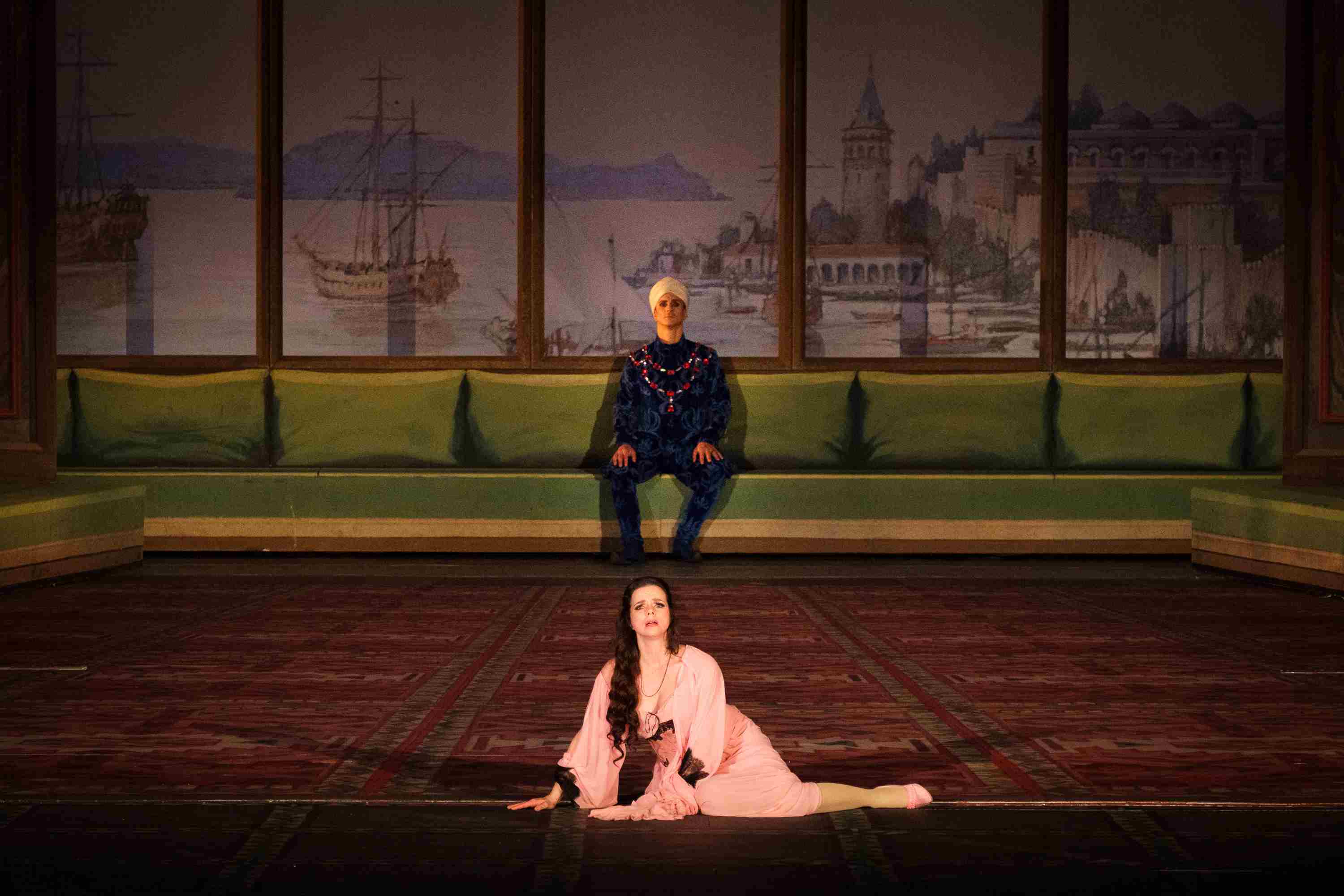
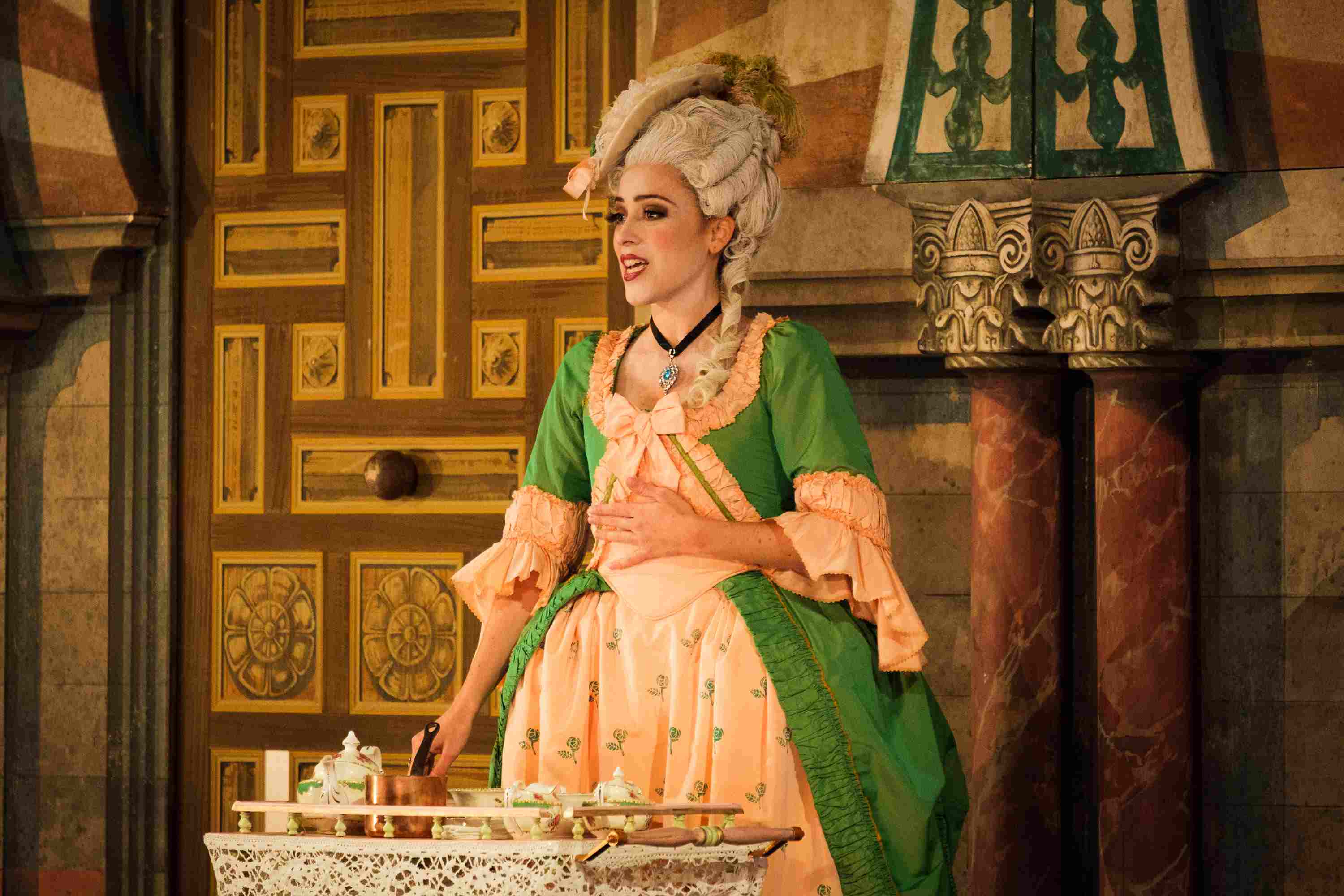
Fau, assisted by Tristan Gouaillier who revived the staging here, takes a very picturesque view of the drama. The set, by Antoine Fontaine, gives multiple views of an ornate palace – showing the exterior wall, or a large room designed so that perspective gives us a sense of a wider space, with a view of the sea and boats beyond. The costumes, by David Belugou, are bright and colourful, reflecting what 18th-century Austrians might have imagined Anatolia to look like. Fau very much takes the plot on surface level, giving the narrative a welcome clarity of direction that allowed the audience to fully engage with the action on stage. It helped that he also had such a charismatic and experienced Osmin in Dimitry Ivashchenko, who was very much the glue that held the evening together. He was terrific fun, unafraid to bust some vigorous moves in his triumph aria. There was a decent amount of slapstick during the course of the evening, which certainly engaged the audience. At one point the surtitle screen gave up during an extended passage of dialogue between Osmin and Pedrillo. They must have been somewhat confused as to why the audience started applauding when it came back, but they continued unperturbed.
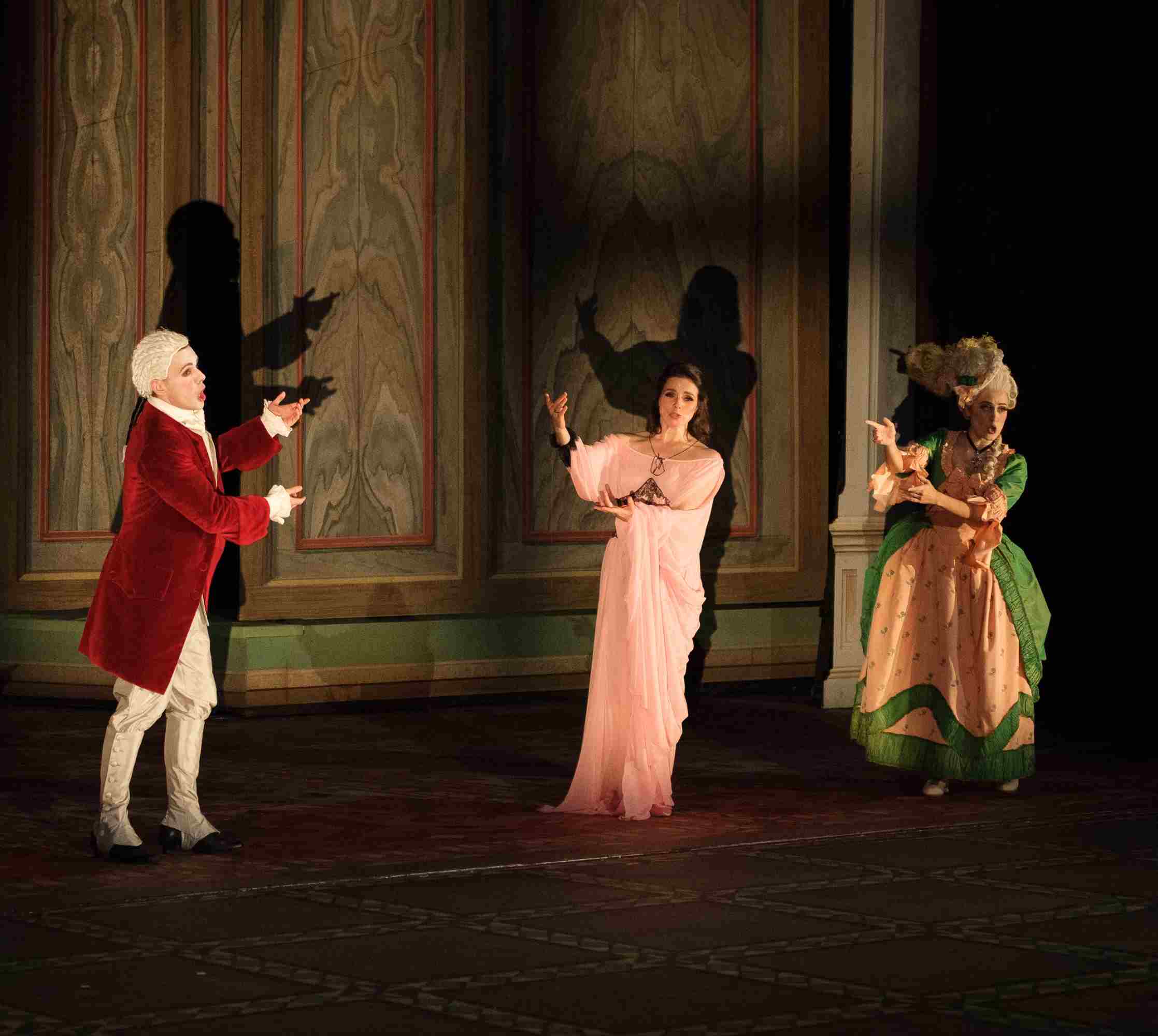
That said, I couldn’t help but reflect on the fact that Fau’s staging doesn’t question the eastern stereotypes in the work, but instead reinforces them. Not least in a closing scene that has Selim flying over the set on a flying carpet. Of course, he doesn’t take as radical approach as Calixto Bieito did in Berlin, for example. But I did long for Fau to at least give us a sense of wanting to question what we saw, rather that stay on the surface. It’s also challenging for a cast, for whom the majority are not German speakers, to deliver the dialogue convincingly, but it’s very much to the credit of the principals and their preparation that the dialogue was so fluently and accurately spoken.
Capuano led a delightfully stylish reading. The overture did take a little while to settle, the tempo was rather congenial instead of vigorous, and the strings were somewhat scrappy initially. Fortunately, things settled down very quickly and the remainder of the evening was marked with tight ensemble and a unanimity of approach throughout the band. Capuano asked his string section to play with limited vibrato, which was extremely welcome, and, once past the overture, his tempi felt ideally judged, giving the evening a sense of pace that meant it never dragged. Indeed, the gear changes in the work felt perfectly organic and well considered, drawing us along and pulling us in to the action. We were also given some wonderfully characterful wind playing and the all-important percussion was terrifically present, with timpani struck with hard sticks. What I appreciated most in Capuano’s reading was the frequent and exceptionally stylish use of ornamentation in the vocal and instrumental lines – so essential in this repertoire. Ulisse Trabacchin’s chorus was a bit understaffed on this occasion, with around twenty singers used for this production. From my seat in row 10, I missed a mass of sound over the orchestral textures, which meant that their singing, while firm and enthusiastic, lacked the impact it could and should have had.
Indeed, it did feel that some of the voices in the principals were somewhat modest for a space as large as this – again, at least from my seat. Anthony León’s Belmonte was not always optimally audible even over an orchestra as modest as this. He coped very well with the language and the dialogue, a few very small mispronunciations were tiny in the grand scheme of things given the overall clarity of his sung and spoken German. I found his singing to be so gratifyingly stylish: the princely line, eloquent legato and the wonderful way in which he embellished his music with real panache. It just made it even more regrettable that the voice is more appropriately suited to a more modestly-sized theatre. He’s an exceptionally musical singer, clearly a fine Mozartian and I do hope to hear him again in a venue better suited to his undoubted gifts.

I had the same impression of Sofia Fomina’s Konstanze. She must have nerves of steel since her ‘Martern aller Arten’ was punctuated twice by the house lights coming on randomly for a few seconds, though she never lost her poise singing one of the most difficult arias in the repertoire. She was costumed in a long flowing peach dress and it felt like a happy coincidence since her soprano has a peachy core under a dusky exterior. Again, it felt that the sound dissipated somewhat into the air before it reached my row, but she executed the long, twisting lines with aplomb and confidence.
Eleonora Bellocci gave us a terrific Blonde. Her soprano is so full of personality with a delightfully fizzy, fast vibrato and carried well into the house. She also delivered the dialogue charmingly and energetically. I’ve only had the pleasure of hearing Bellocci sing Mozart, but the way that the voice fizzed on top did make me wonder if she has the heights for Zerbinetta, for instance – a role that could be a very good match for her. Denzil Delaere, a familiar voice from visits to Brussels and Flanders, was an equally terrific Pedrillo. He was such an engaging stage presence, both in speech and in song, with excellent comic timing. Yes, the very top of the voice sounded slightly disconnected in his ‘Frisch zum Kampfe’ as he passed through the passaggio, but this is something that can be worked on. Having heard Delaere in smaller roles over the years, I was so pleased to have this opportunity to see him take on something more substantial, and he more than rose to the occasion. Ivashchenko’s smoky bass was tremendous value as Osmin, giving us just those organ pedal low notes one would hope for in the role. Combined with his confident delivery of the dialogue, helped by the fact that he’s a fluent German speaker, and his tremendous stage presence and willingness to let himself go into the action, he was so completely and utterly watchable. Sebastian Wendelin’s Selim was a slightly subdued and serious presence, although I do admire his bravery in taking a ride on the flying carpet.
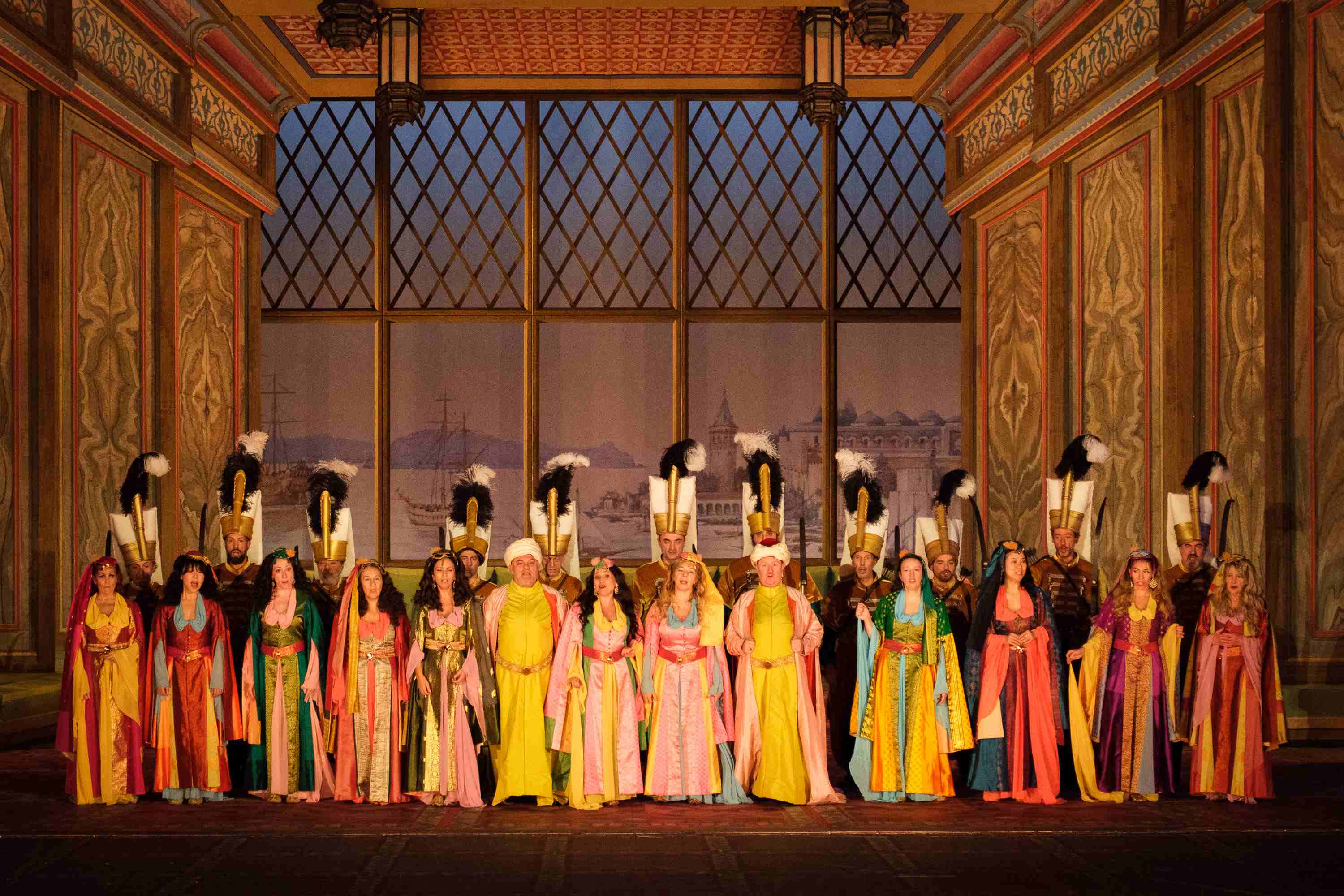
There was so much to enjoy in tonight’s Entführung. We got to see a youthful cast sing with such utter stylishness, under the direction of a conductor who understands deeply how this music should go. Yes, the staging was a little too picturesque for my personal taste, choosing not to engage on a deeper level with the work and question the nature of its clichéd orientalism. And yet, the narrative was appropriately clear and it evidently engaged the audience fully. The evening was received with warm applause from the public.
 operatraveller.com
[…] evening that took grip, and then didn’t let go. In Turin, I got to see a youthful cast in Die Entführung aus dem Serail, in a picturesque staging by Michel Fau. At the Caracalla Festival, the Rome Opera performed […]