Bizet – Carmen
Carmen – Aigul Akhmetshina
Don José – Charles Castronovo
Micaëla – Adriana González
Escamillo – Lucas Meachem
Frasquita – Natalia Labourdette
Mercédès – Marie-Claude Chappuis
Moralès – Toni Marsol
Le Dancaïre – Lluis Calvet
Remendado – Mikeldi Atxalandabaso
Zuniga – David Lagares
Pequeños Cantores de la ORCAM, Coro Titular del Teatro Real, Orquesta Titular del Teatro Real / Kim Eunsun.
Stage director – Damiano Michieletto.
Teatro Real, Madrid, Spain. Saturday, December 13th, 2025.
To mark the end the calendar year, the Teatro Real is mounting Damiano Michieletto’s new production of Carmen, which will also be seen at the Scala next spring. As is often the case here, the run has been triple-cast with international singers, this time under the musical direction of Kim Eunsun, Music Director of San Francisco Opera. Tonight, I saw the third performance of the run, which opened on Wednesday, and the second performance of this cast.
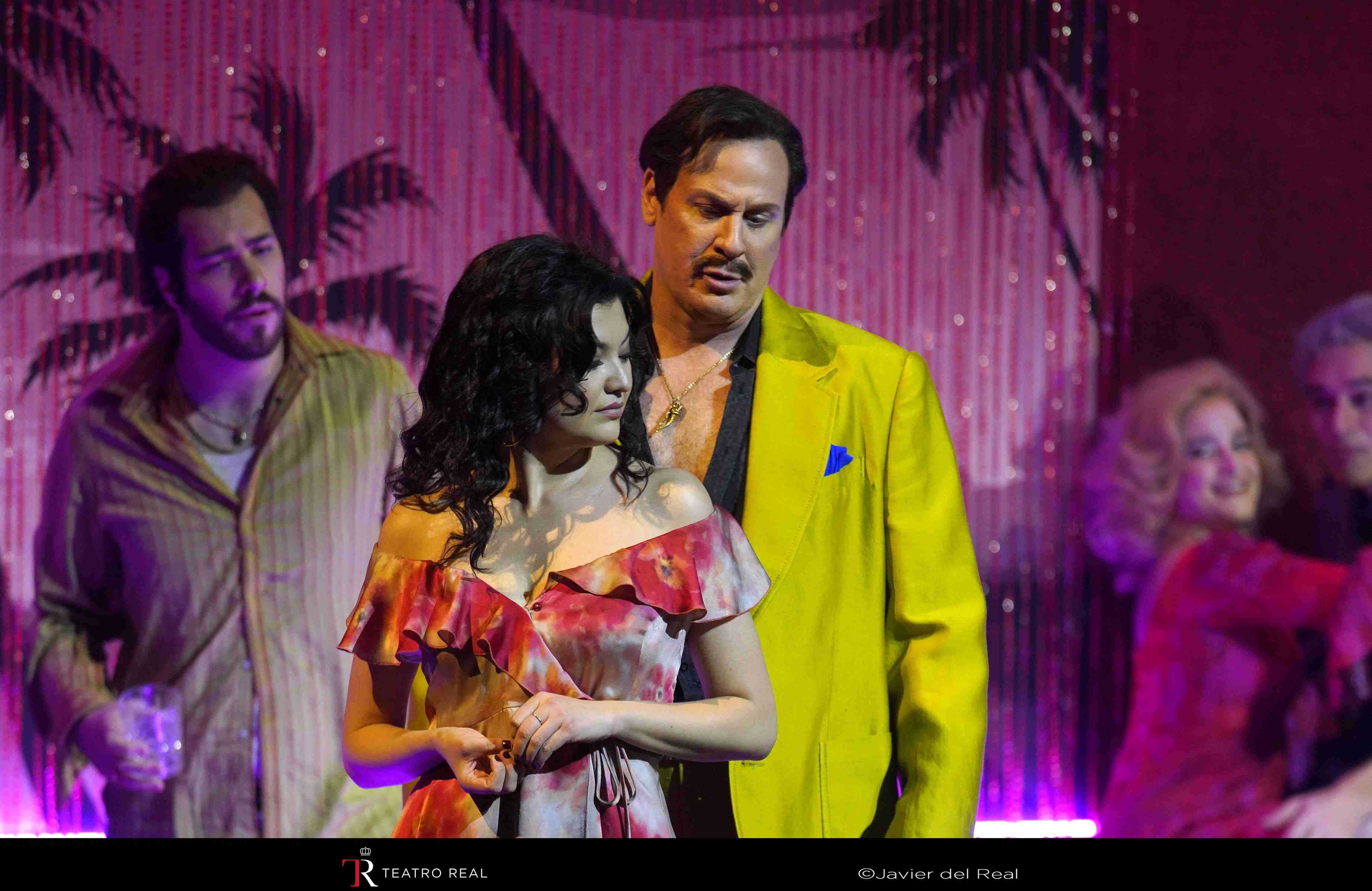
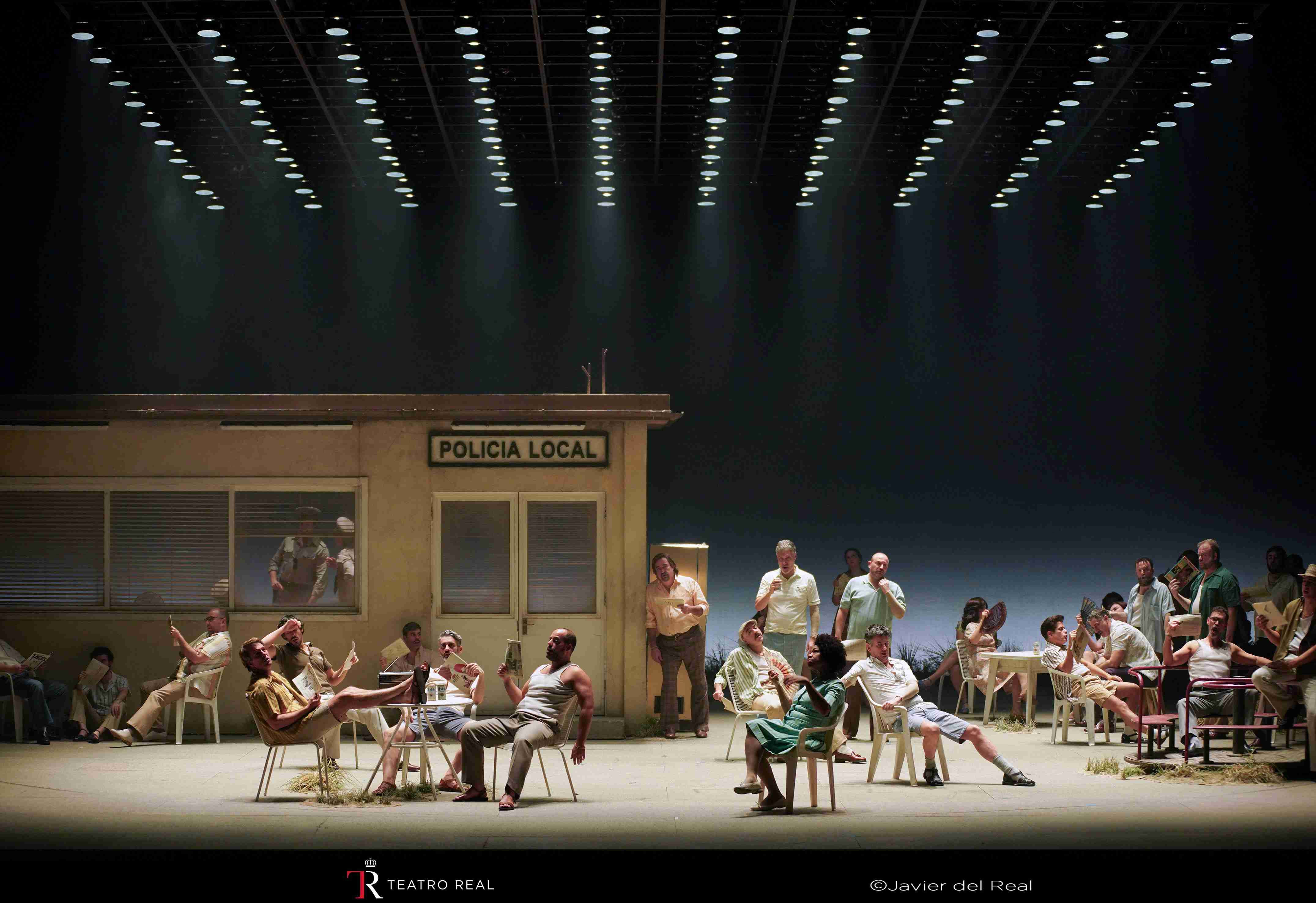
One of the qualities I most appreciate in Michieletto’s work is his ability to make us ‘feel’, and I had high hopes for this, one of the world’s most performed operas. He sets the action in a relatively sparse set, by longtime collaborator Paolo Fantin. The centrepiece of the set was a building, whether a police station in Act 1, a seedy bar for Act 2, a hut for the smugglers in Act 3 – complete with camionette to be loaded – or a green room for Escamillo in Act 4. The set revolves constantly, allowing us to see multiple angles on the action, giving us as viewers a sense of being able to see much of what the characters cannot, while also reinforcing the sense that fate for these individuals is something that cannot be tamed. That sense of fate is also manifested in the figure of Don José’s mother, incarnated by actress Lola Manzano, who appears frequently on set whenever the fate motif is heard, and hands out cards to individuals, underpinning that sense of the characters’ destinies already having been planned. The lighting, by Alessandro Carletti, is also most suggestive, particularly in Act 1, where the sense of the unbearable Andaluz heat emerges over the footlights through the bright colours produced by the lighting effects.
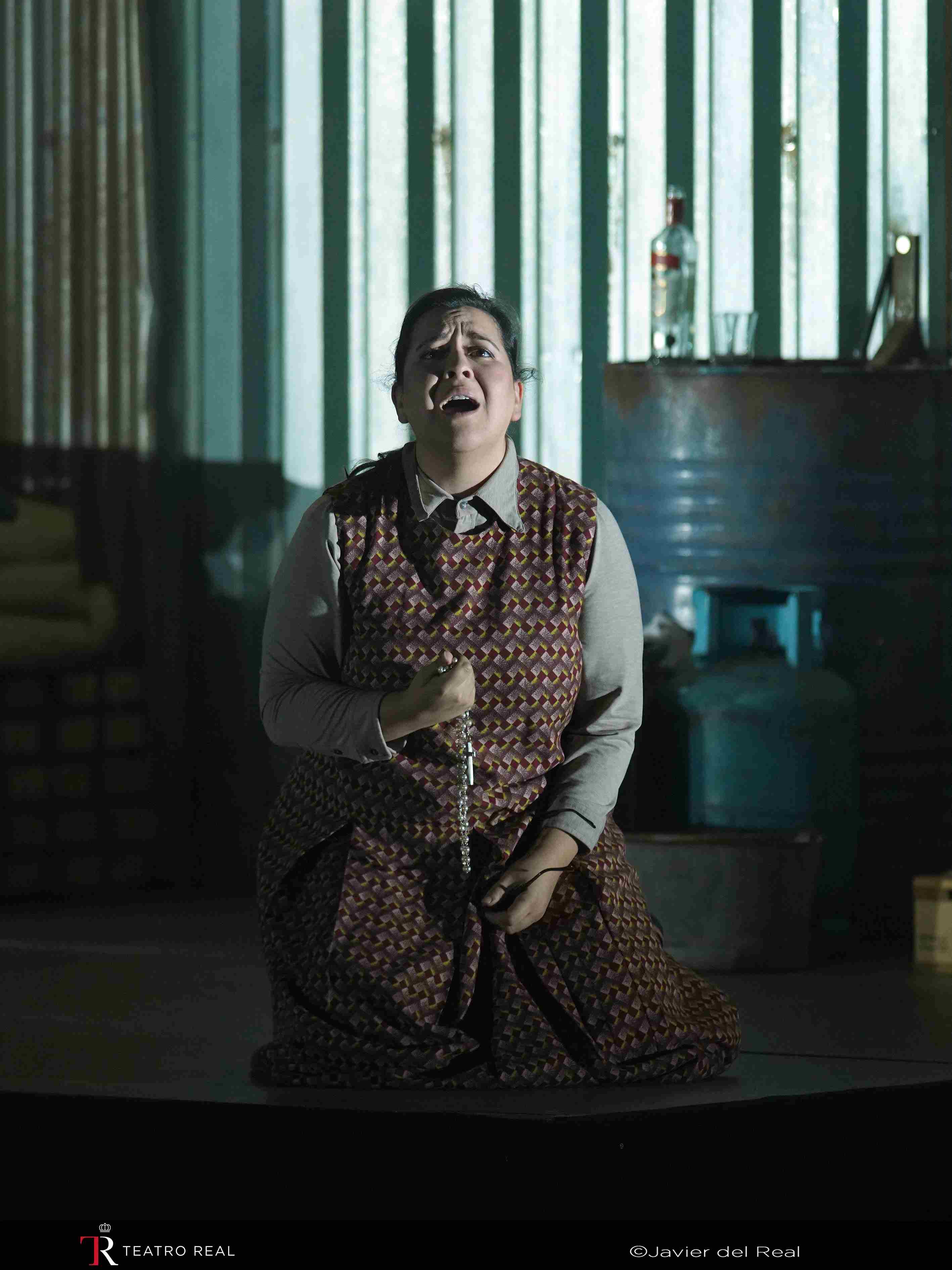
I did, however, find Michieletto’s staging to be more thoughtful than emotional for much of the evening. This was due significantly to Aigul Akhmetshina’s Carmen. She’s an active and devoted actress, but her French diction lacks incisiveness, which significantly neutered the effect of her character. What we saw was a woman completely in charge of her sexuality, who refused to be tamed. Her blatant use of her body to control Don José in their duet after her arrest was certainly striking. And yet, without the words being forward, the impact was lost. I spent the evening thinking that this was a very decent staging, but lacking the impact I expect from Michieletto. Then, in Act 3 something happened. In the scene between Micaëla and José, Adriana González and Charles Castronovo raised the emotional temperature of the evening significantly thanks to their excellent French diction. Castronovo made his threat to not give up Carmen much more psychologically astute than I’ve seen it before. It was both threatening and tender, the sight of Carmen alone on stage after he and Micaëla and the ensemble ran off, reinforced a sense of her less a free spirt in control of herself, and more someone ultimately utterly broken. The crowd scene in Act 4 was managed well, and the final murder was viscerally horrifying. It wasn’t quite as emotional an evening as I expected from Michieletto, but it was still one with considerable impact.

Kim led a competent traversal of the score with the excellent house orchestra. There was a romantic edge to her reading, one that was focused on a generous cushion of orchestral sound that made the score sound almost Pucciniesque. Her tempi were generally middle of the road sensible, although the chorus of the cigarette girls was taken at a very languid tempo. She kept her forces together effectively, with stage-pit coordination tight throughout. The brass playing was excellent and the harps were nicely forward in the texture. It was one of those readings that was serviceable, but perhaps not especially memorable – the kind of interpretation one would be pleased to hear in a regional theatre. At a house as important as the Real, I longed for a bit more excitement and drama. The adult chorus, prepared by José Luis Basso, made a tremendous noise: they filled the house in a blaze of sound, with muscular tenors and sopranos with focused tone, not to mention the nicely fruity mezzos. The children’s chorus, prepared by Ana González, was sensational. They sang in fantastic French, with watertight ensemble, and were also extremely vivid actors.
Akhmetshina is undoubtedly the owner of an extremely glamorous voice. The tone is dark and silky, beautiful even in emission, although it does taper off towards the very top. She’s also a stage animal, incarnating the free spirit with vivid physicality. Unfortunately, for me that’s only half the story. I need to be able to understand the text and feel that she has a deep understanding of what she’s singing and here, it pains me to write, Akhmetshina wasn’t quite what I would have hoped for. The habanera was clear enough, but once we got to the Séguedille, the words disappeared under the long, slinking lines. Similarly, with the chanson bohème and the card scene, I longed to hear her play with the text and make it live. Unfortunately, the final scene also lost its impact, despite Castronovo giving it riveting emotional power, because Akhmetshina sang ‘frappe-moi donc’ with the passion of someone offering to give up her seat to a senior on the bus. Perhaps she was attempting to portray Carmen’s resignation at her fate, but I longed for her to give us a sense that she fully identified with the words. In roles such as Olga and Polina, and perhaps later on, Marfa, I imagine Akhmetshina would be fabulous. In an age where we have so many excellent Carmens, both Francophone and non-Francophone, Akhmetshina certainly vocalized the role well, but I didn’t feel she completely lived it.

I saw Castronovo’s first José back in 2018 in Berlin, and I was keen to see how he’s grown into the role in the intervening years. He, of course, has long received considerable acclaim in the French repertoire. This is a rather punishing run, with shows close together, so it was perhaps no surprise that Castronovo did not sound quite as fresh as I’ve previously heard him in the opening act. There was a sense that there was a bit more heavy lifting required to get to the top than previously. Then, in Act 2, he found his groove, giving us a flower song that was filled with so much tenderness, phrasing the long lines with loving care, and giving us a beautiful diminuendo on the high B-flat. As mentioned above, in Act 3 he took the evening into a completely different gear, the psychological astuteness he found was incredibly moving and so complex – was he making José loving, or was his power due to emotional manipulation? All achieved with the top ringing out. Castronovo injected so much passion into the final scene, José’s disintegration was horrifying to watch, which made it doubly frustrating that his Carmen was so passive and the energy from the pit was so tepid. His sung French was, as one has come to expect, excellent.

As indeed it was for González. She sang her music with fabulous poise, floating some beautiful soft phrases on high. Her ‘Je dis, que rien ne m’épouvante’ found a wonderful balance between determination and tenderness in the way that she masterfully coloured the tone and used the text. Her diction was first-rate throughout. Lucas Meachem was a swaggering Escamillo. Unlike so many before him, he was in total command of the role’s difficult tessitura, as firm on top as on the bottom. The remainder of the cast reflected the excellent standards here. Natalia Labourdette brought her scintillating soprano to Frasquita, while Marie-Claude Chappuis was luxury casting for Mercédès, sung in a warm, fruity mezzo. Lluis Calvet was a firm-voiced Dancaïre, while Mikeldi Atxalandabaso brought focused tone to the Remendado. David Lagares sang Zuniga in a big, inky bass, while Toni Marsol was an extrovert Moralès.

This was a Carmen that promised much. There were definitely flashes of genius from Michieletto: the close of Act 3 raised the emotional temperature exponentially, and the crowd scenes were well choreographed. Musically, it was never less than competent, even if I found Akhmetshina’s Carmen to be well vocalized and capably acted, but also rather anonymous due to the lack of incisiveness in her diction. Castronovo and González most definitely had considerable impact, and the house orchestra and choruses were very much at the level that one would expect. The audience responded generously at the close.
 operatraveller.com
[…] superb conducting. Over in Madrid, I got to see Damiano Michieletto’s production of Carmen. It was a more cerebral staging and less emotional than one has come to expect of him. […]