Strauss – Die Frau ohne Schatten
Der Kaiser – Aaron Cawley
Die Kaiserin – Anne-Fleur Werner
Die Amme – Ruxandra Donose
Der Geisterbote – Tobias Schabel
Erscheinung eines Jünglings – Yun Taehwan
Stimme des Falken – Alyona Guz
Barak, der Färber – Giorgos Kanaris
Sein Weib – Aile Asszonyi
Der Einäugige – Johannes Mertes
Der Einarmige – Martin Tzonev
Der Bucklige – Andreas Conrad
Damen des Hauschores des Theater Bonn, Chor des Theater Bonn, Beethoven Orchester Bonn / Dirk Kaftan.
Stage director – Peter Konwitschny.
Theater Bonn, Bonn, Germany. Sunday, January 4th, 2026.
Die Frau ohne Schatten is an opera I’ve been exceptionally lucky with in the theatre. Indeed, seven years ago tomorrow, I saw a glorious performance in Hamburg. More recently, I saw others in Stuttgart and Dresden, while also seeing Krzysztof Warlikowski’s Munich production on video. I was expecting the worst for this production by Peter Konwitschny, due to the fact that the house listed it as two hours and forty minutes long, with one intermission, suggesting the loss of around an hour of music. Having seen other Konwitschny stagings in the past, I prepared myself for an evening that would be a radical departure from the original text but might, at least, aim to offer some insight.
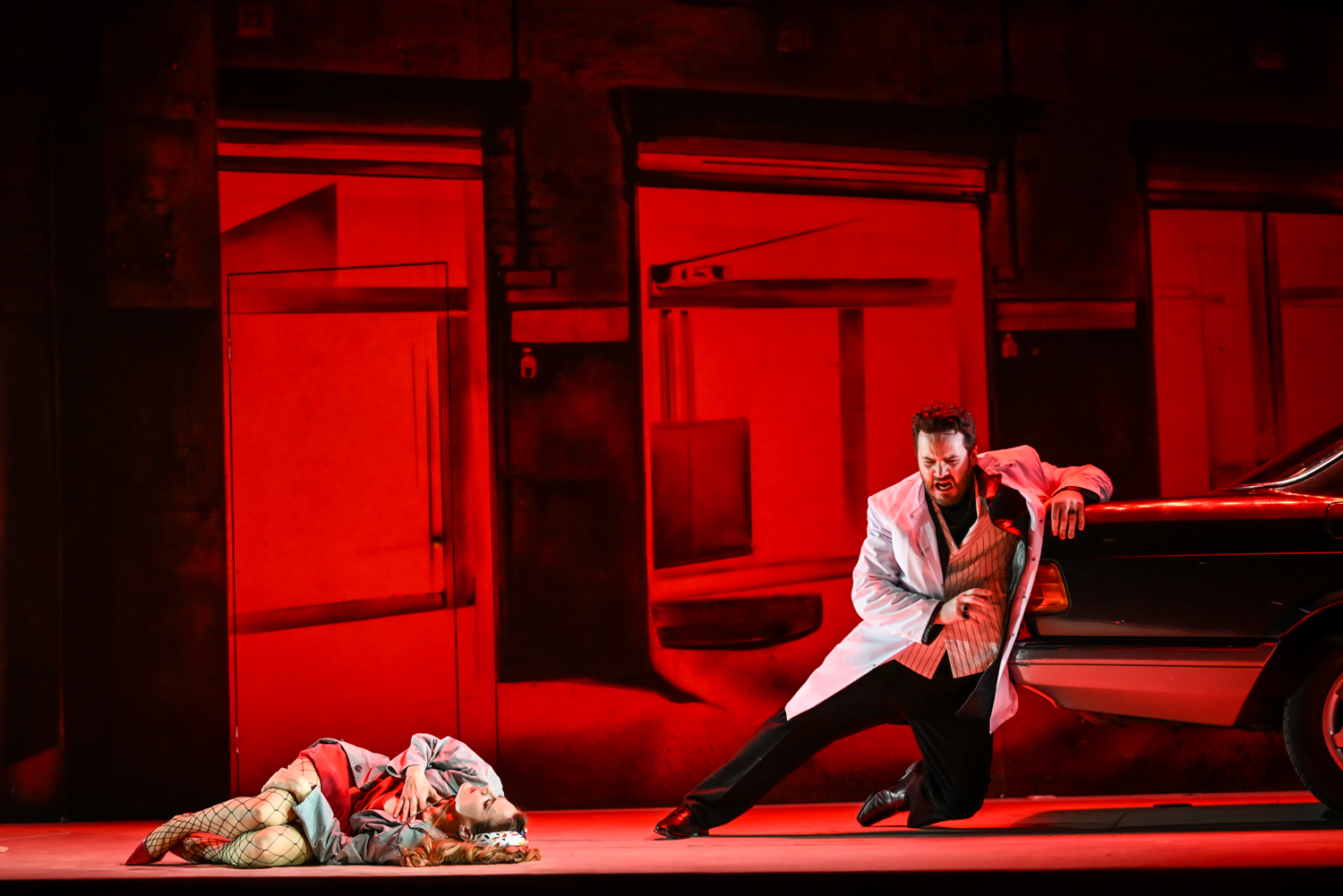
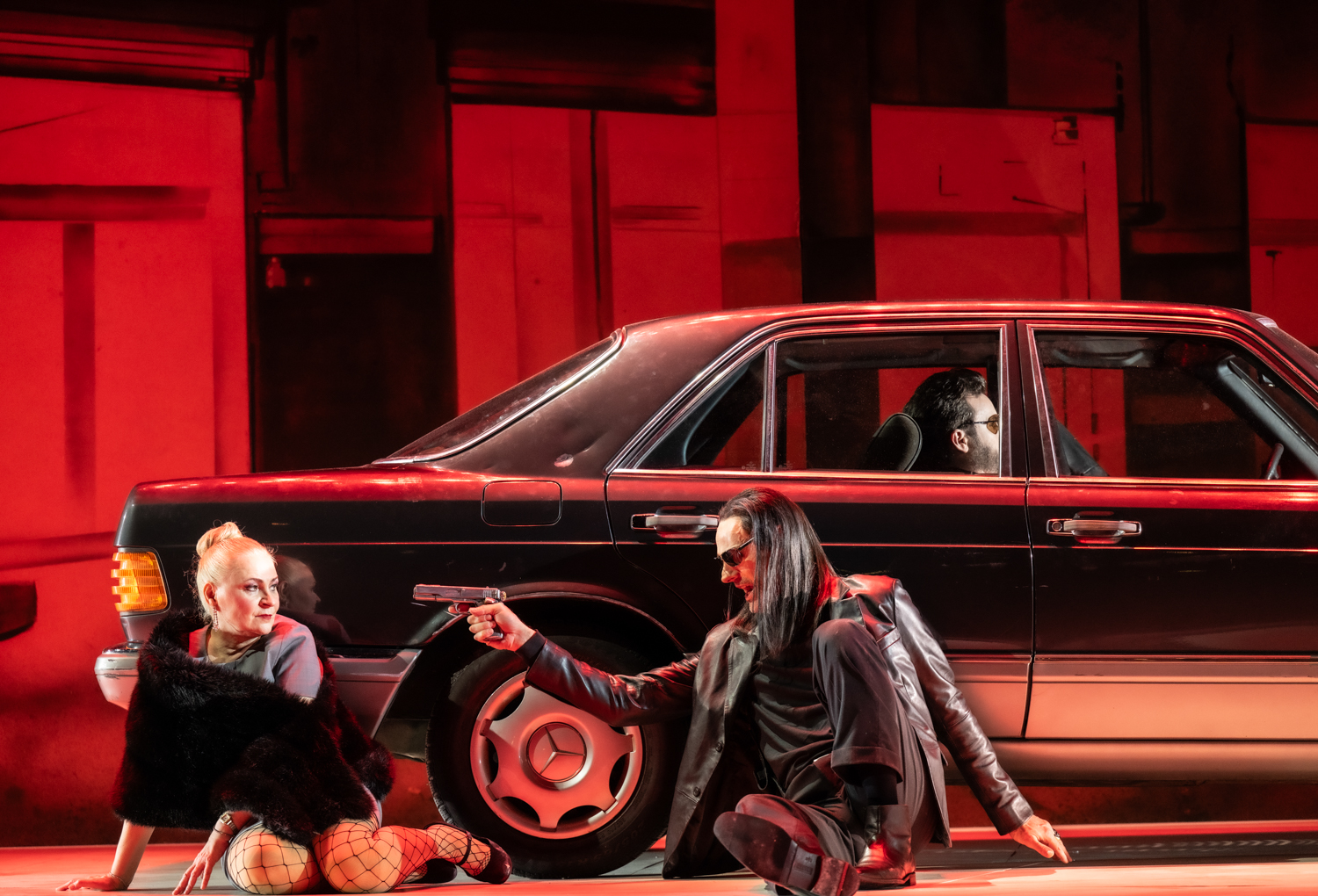
Frau is difficult work to stage, due to the symbolism of the libretto including the suggestion of unborn children’s voices emerging from a pan, or a singing falcon. And yet, Strauss’s music offers us so much in terms of impact, able to pull out so many emotions, even if one might feel the heteronormativity of the libretto to be rather dated. When I go to the opera, I want to see an evening that amplifies the music and that pushes us to feel all the emotions contained within. All this is a preamble to write that Konwitschny’s staging is nothing short of a travesty and complete catastrophe. It vandalizes the work without, in return, giving us any insight or emotional impact. He sets the work as if a gangster film, with the Kaiser as the gangster leader and the Kaiserin a drug-addled streetwalker who he violently abuses in Act 2. The singers are exceptionally brave, even if they precipitated a mass exodus for the exits at intermission. Barak appears to be a gynaecologist, while the Färberin and the brothers work in his surgery. The Amme is a constant presence, to what end it’s hard to tell. Within this framework, Konwitschny seems to be failing at the very simple act of stagecraft – telling a story. What we see has no resemblance to the sung text. That isn’t necessarily a downside if the stage pictures amplify the music. Instead, they actively work against it, giving us an evening completely robbed of emotion. Furthermore, it’s hard to understand who these characters are, and why we should care about them. Particularly since the Kaiser doesn’t show any sign of petrifying, but shows up in Act 2 to rape the Färberin. While in Act 3, Barak sings his ‘mir anvertraut’ directly to the Färberin’s face. Worse, Konwitschny’s treatment of women robs them of agency, removing the compassion that the Kaiserin standing up to Keikobad represents.
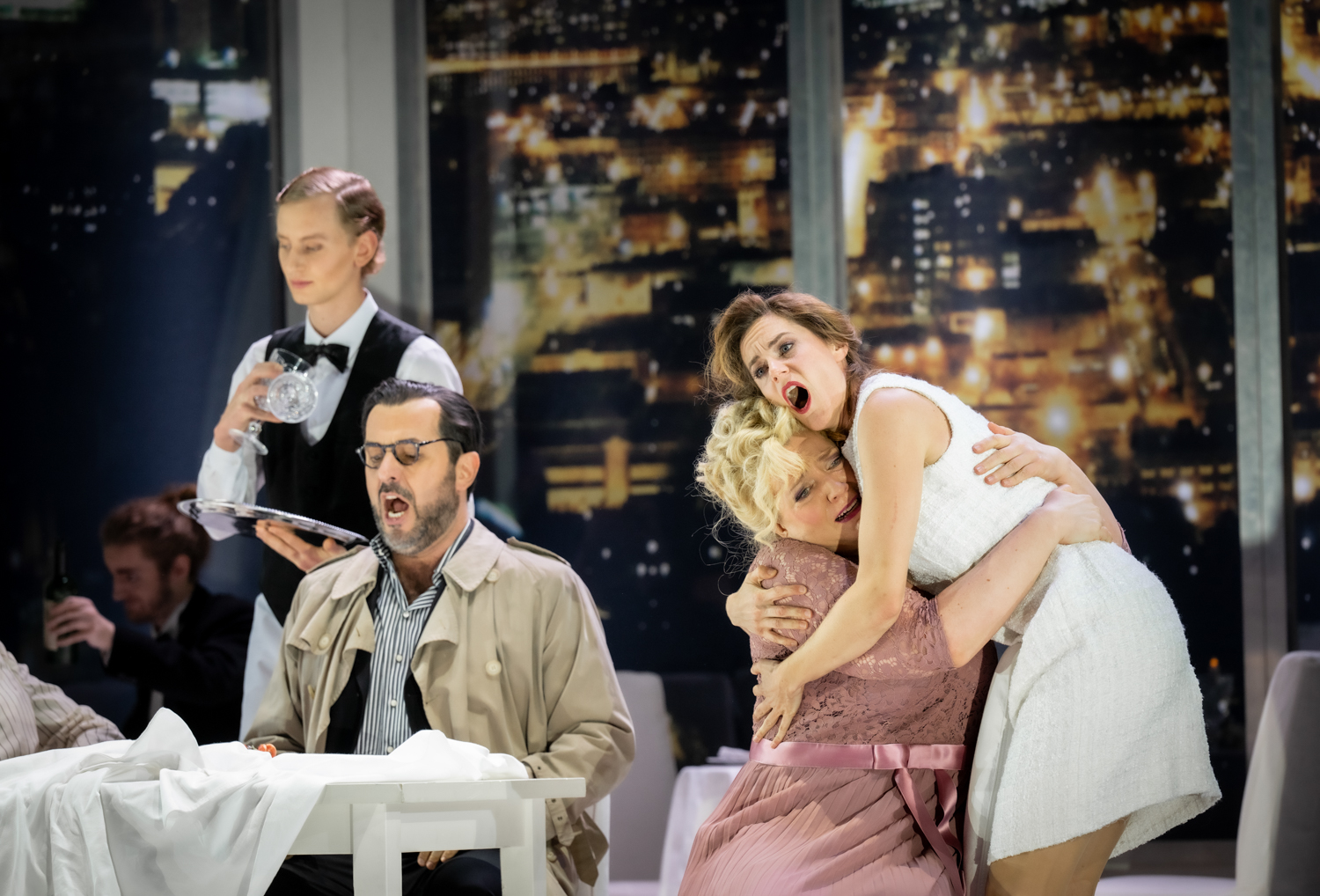
One of the most moving parts in the entire score, indeed in the whole of Strauss, is the close of Act 1. The glorious beauty of the melody, with the off-stage voices of the nightwatchmen and the sheer humanity of Barak’s character, always brings tears to the eyes. Except for tonight. It’s as if Konwitschny didn’t want us to feel or appreciate Strauss’s score. Instead, he has the Nightwatchmen piped through a set of speakers held by Barak, that the Färberin comes in and turns off. This then leads the music to stop for the couple to have an argument, completely contradicting the sound of Strauss’s score. Worse comes at the end of Act 2. Konwitschny cuts the end of the Act, ending instead with the Kaiserin yelling into the audience after she had dry humped Barak for a while. In Act 3, we do actually find where the missing end of Act 2 went – it shows up at the end of the evening, the Amme not being exiled, but instead appearing again pushing a stroller. The evening ends with the close of Act 2, while the closing quartet and chorus completely disappear. The effect is an evening that frustrates, fails to convince, and denies us the opportunity to react to the music.
I imagine Dirk Kaftan was so embarrassed by the mutilating of the score that he conducted it like he just wanted to get it over with. He led the work as if he was running late for a train – seemingly forgetting the constant delays of the Deutsche Bahn. That Konwitschny had allowed the work to be so completely broken up seriously compromised the excellent work that Kaftan did with the excellent Beethoven Orchester. His tempi were swift, as devoid of emotion as the staging, meaning that the spell the work usually exudes was gone. The quality of the playing, however, was excellent, from the solid brass, to the silky strings, with some eloquent solo violin and cello playing.

The singing of the principals was also of a very good standard across the board. They were all completely valiant, going along with all that was asked of them – including some harrowing scenes of violence. Anne-Fleur Werner as the Kaiserin was exceptionally brave, put into a situation where she was strangled with a belt by the Kaiser. Her dusky soprano has easy reach and she coped effortlessly with the exceptional demands of her opening scene, making it sound like a walk in the park. Werner was unflinching in her dedication, her screaming at the end of Act 2 was terrifying, both in its horror but also in my fears for the health of her instrument. Her scene with Keikobad was staged as a phone conversation, with her lines of defiance given instead to a speaking baby. I would certainly like to hear Werner sing the entire role at some point. Aaron Cawley was capable of some considerable volume as the Kaiser. His tenor reminds me of the late Stephen Gould in its size and heft. He attacked the high tessitura with generosity, even if it did seem that there was some heavy lifting to get there. Certainly, an interesting talent.
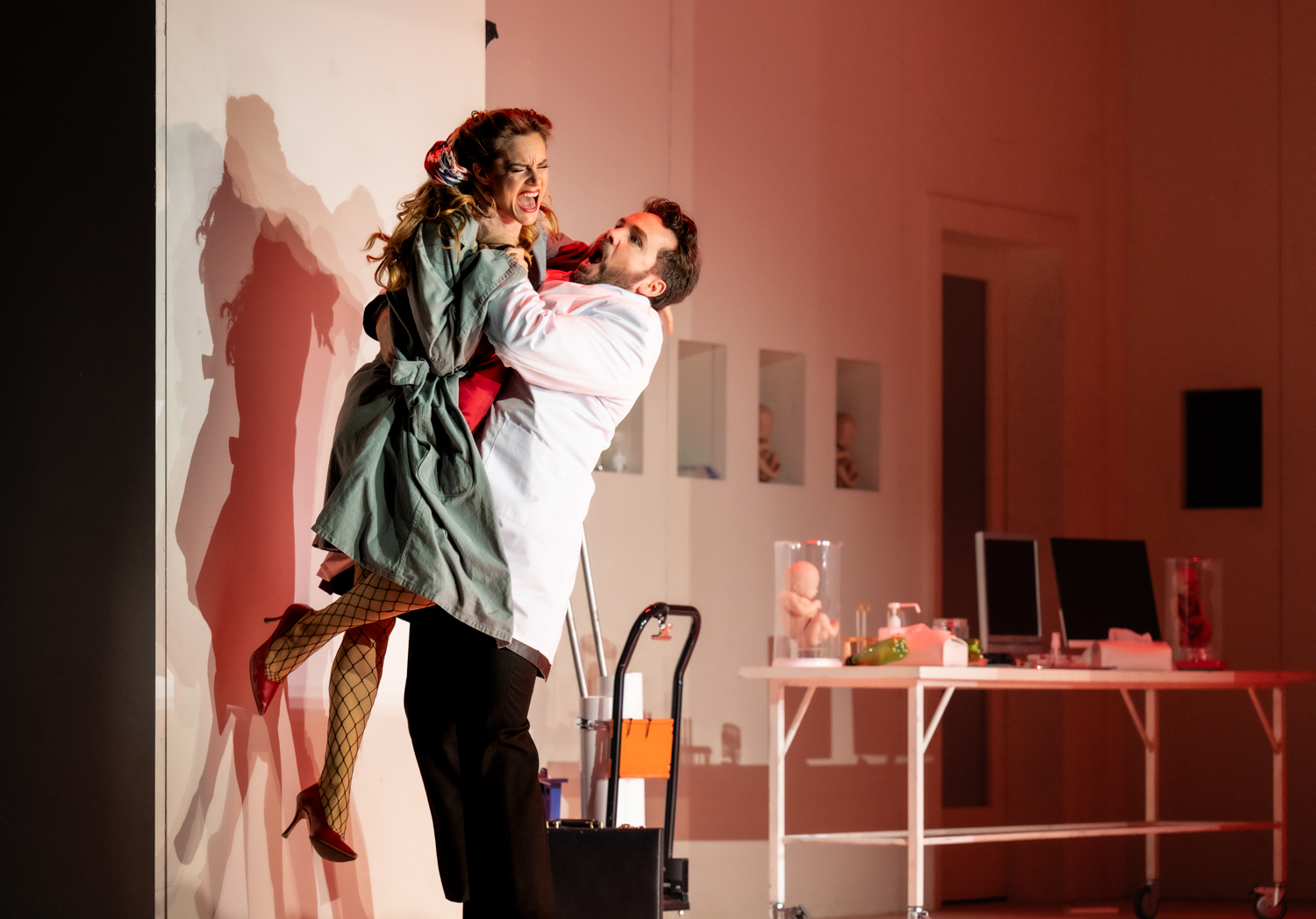
Giorgos Kanaris sang Barak in a firm, healthy baritone. There was a moment, at the end of Act 1, where it felt that he was really trying to communicate Barak’s humanity, his textual eloquence and beauty of tone really bringing out the character’s inner goodness. That was, of course, until his interpretation was undermined by Konwitschny’s staging. Aile Asszonyi brought a generously proportioned soprano to the role of this wife, singing with a great deal of security and evenness of emission. Tobias Schabel gave us an equally firm and handsome Geisterbote, indeed I’d like to hear his Barak one day, while Yun Taehwan sang the Erscheinung eines Jünglings with generosity. As the Stimme des Falke, Alyona Guz sang with confidence, although I’m not quite convinced with optimal pitching. The brothers were robustly taken and the remaining roles were adequate. Ruxandra Donose sang the Amme with real musicality, singing it with lyrical beauty, making those extreme lines seem utterly logical. Unfortunately, she landed a bit of a way from the high B-flat with which she closed the evening, which was doubly regrettable since it felt like the cherry on the top of the disappointing sundae of an evening, and also distracted from the memory of the excellence of her vocalism during the rest of the evening.
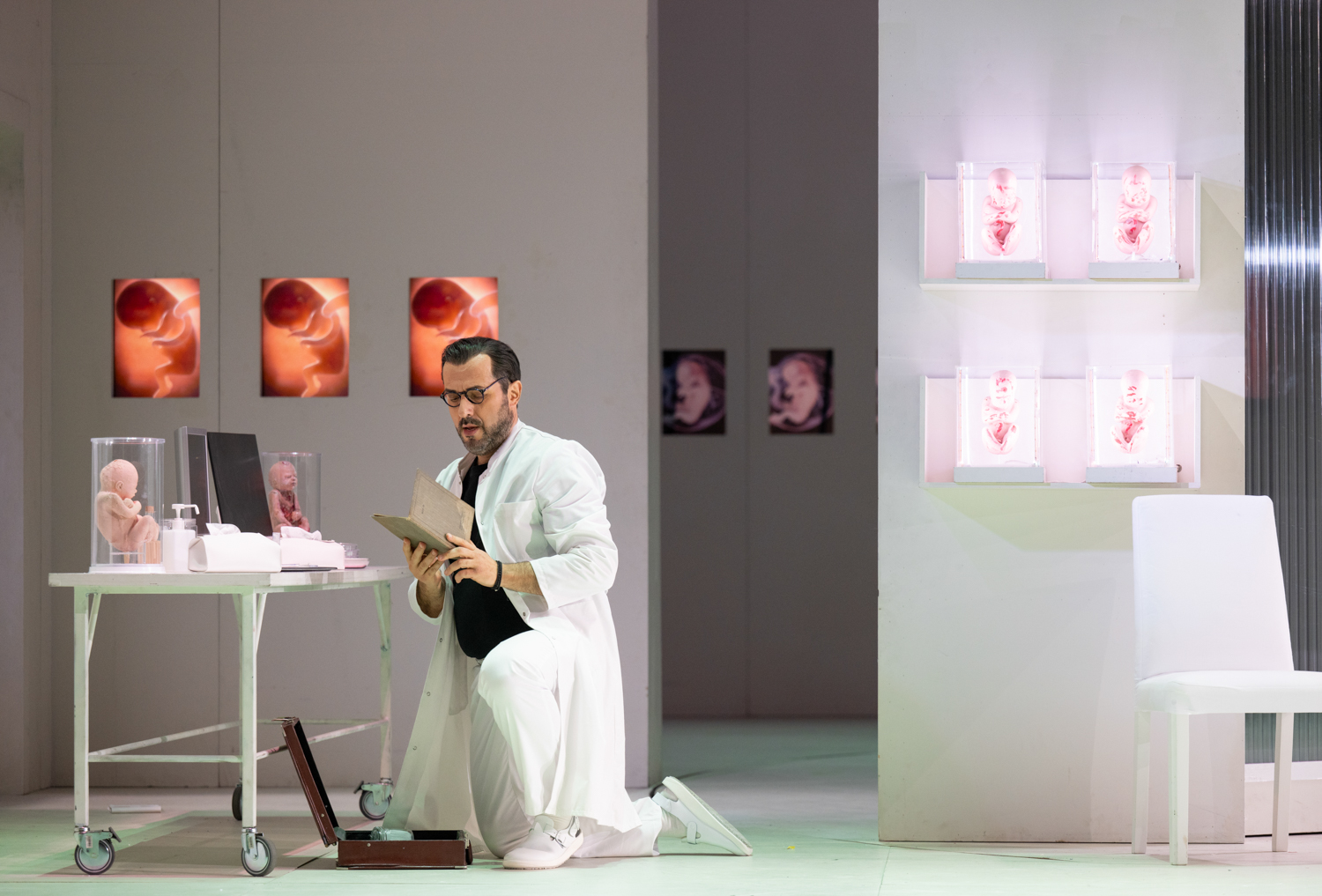
This was a highly disappointing evening in the theatre. Musically, the orchestral playing was excellent and the principals sang with unflinching commitment and acted with bravery and dedication. Had we actually heard the complete score, in a staging that tried to amplify and illustrate it, then I imagine I’d be going home satisfied. Instead, we received an evening that undermined the work, that failed in the simple act of creating a cogent narrative. Perhaps Konwitschny wanted to be provocative. Yet a theatre barely a third full tells its own story. This is a coproduction with Madrid and I imagine the knowledgeable and discerning public there would be likely to savage this, if presented there as it was tonight. The Bonn audience, at least those who remained at the end, responded respectfully to the cast at the close, with a few solitary boos after the curtain came down. I strongly feel, however, that the house should not be publicizing this as Die Frau ohne Schatten. It’s been cut too much and bears too little resemblance to the opera to be worthy of the name.
 operatraveller.com
[…] and I very much hope to be able to return sooner next time. Following the disaster that was Die Frau ohne Schatten in Bonn, I was desperate to see the work done properly and this production by Mariusz Treliński, […]