Wagner – Tannhäuser
Hermann, Landgraf von Thüringen – Wolfgang Rauch
Tannhäuser – Stefan Vinke
Wolfram von Eschenbach – André Baleiro
Walther von der Vogelweide – Marco Alves dos Santos
Biterolf – Luís Rodrigues
Heinrich der Schreiber – Sergio Martins
Reinmar von Zweter – Christian Luján
Elisabeth – Allison Oakes
Venus – Annemarie Kremer
Ein junger Hirt – Mariana Castello-Branco
Coro Lisboa Cantat, Coro do Teatro Nacional de São Carlos, Orquestra Sinfónica Portuguesa / Graeme Jenkins.
Stage director – Max Hoehn.
Teatro Nacional de São Carlos – Centro Cultural de Belém, Lisbon, Portugal. Thursday, April 23rd, 2026.
This new production of Tannhäuser marks the second main-stage opera of 2025-26 for the Teatro Nacional de São Carlos, currently leading a peripatetic existence while its beautiful, historic home is being restored. For this pair of performances, the theatre returned to the Centro Cultural de Belém, where this evening’s opening night was sold out. It was wonderful to see such a diverse audience in terms of age in the hall tonight, the hunger for opera in this ancient city is definitely apparent, and one is most definitely looking forward to returning to the fully restored house in due course.
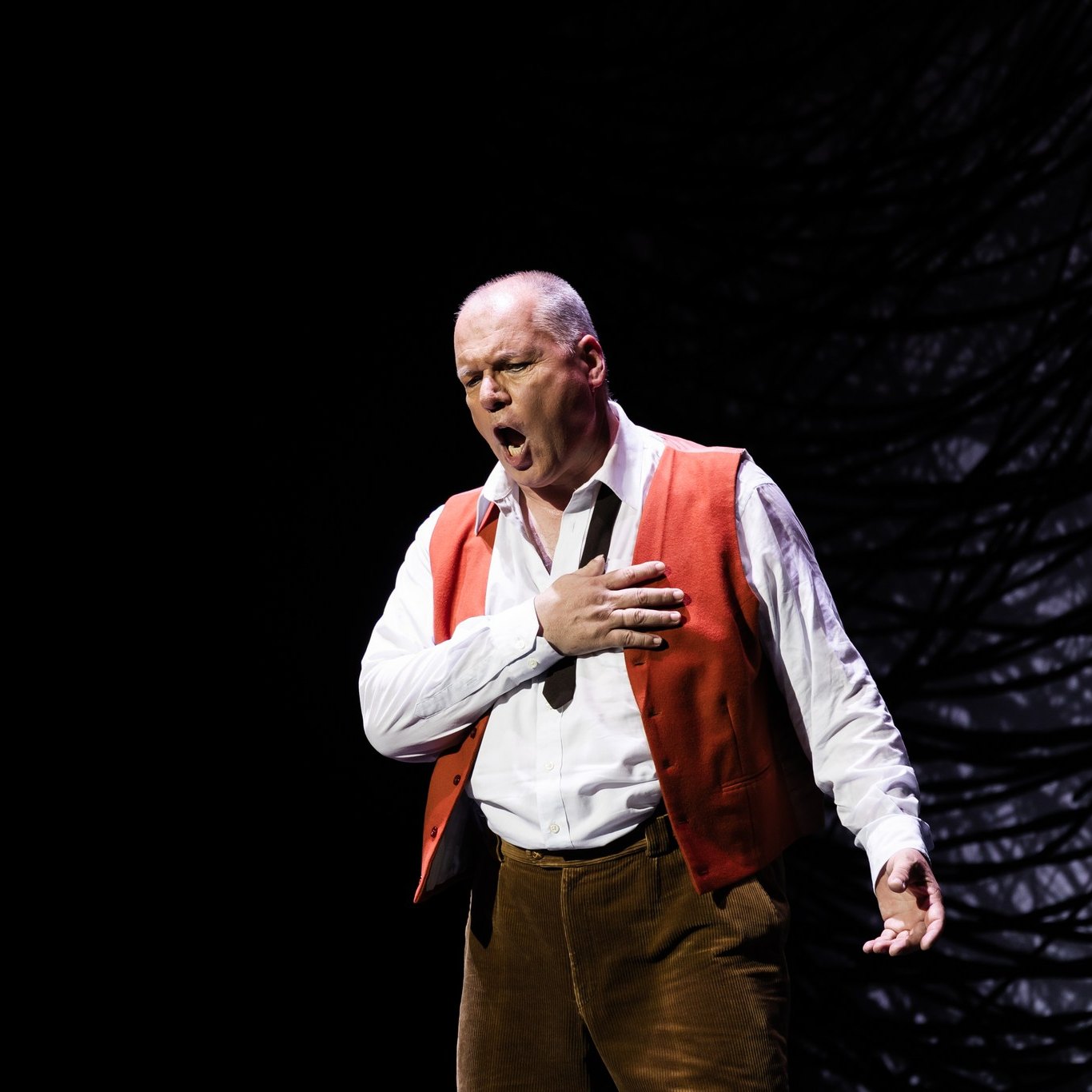
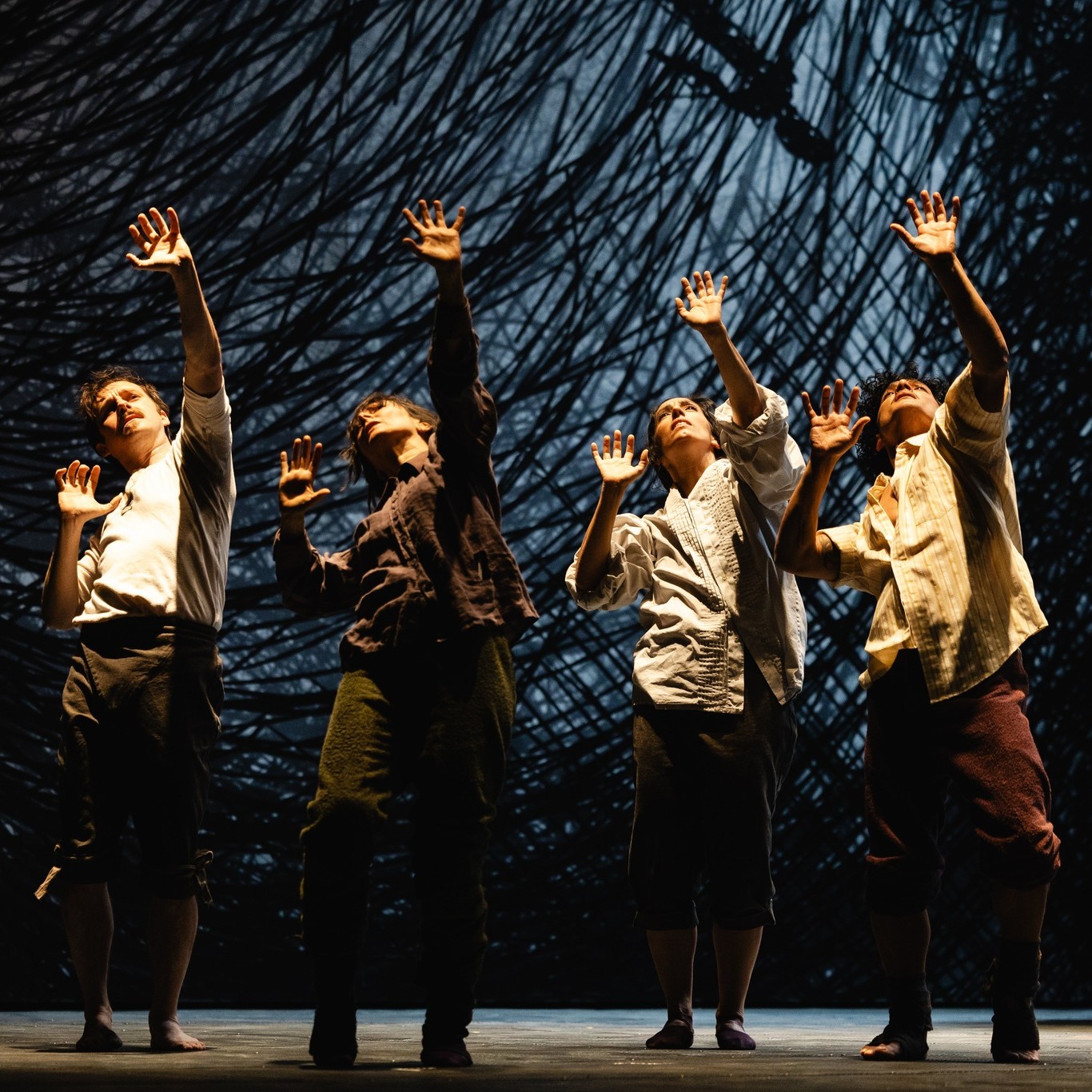
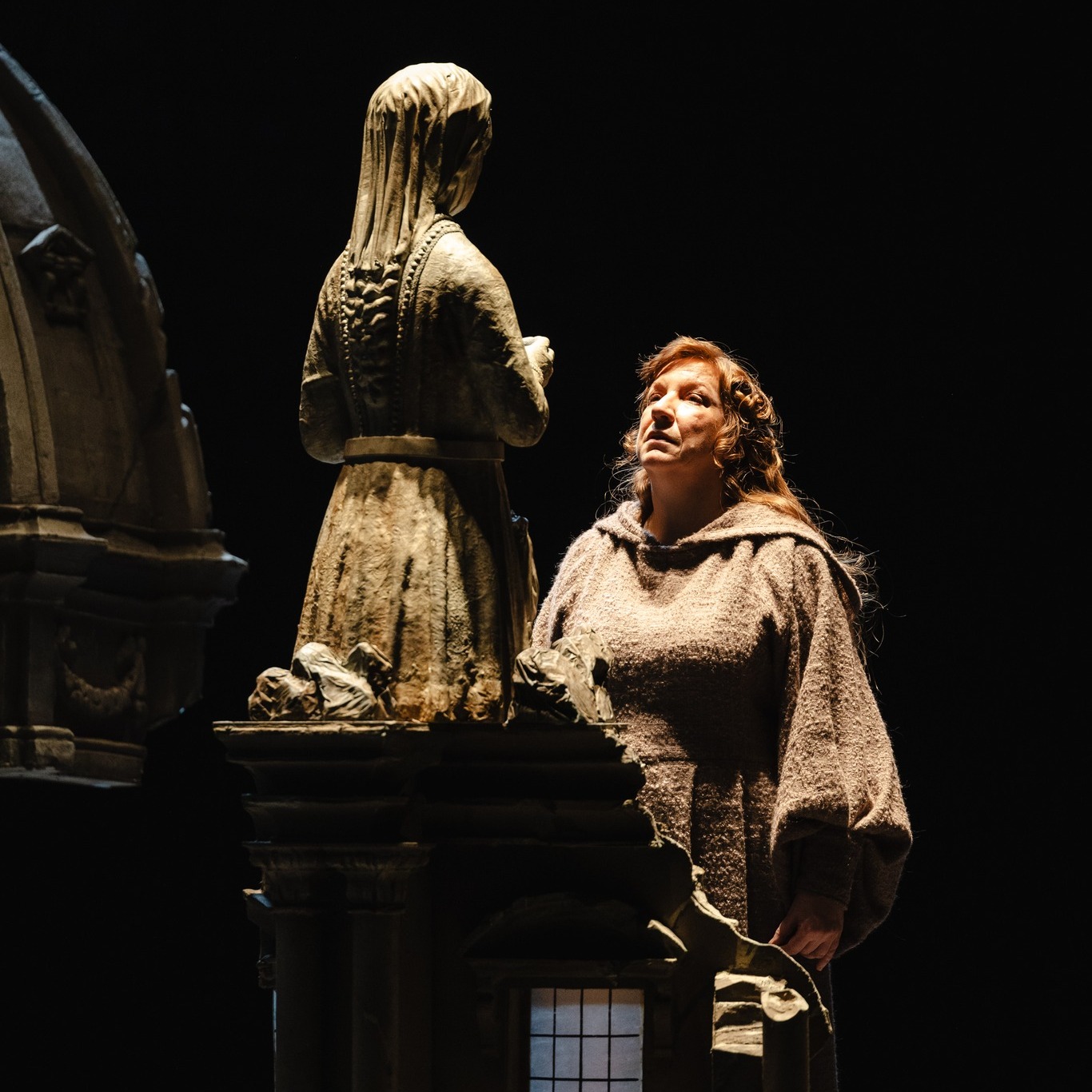
The production was confided to Max Hoehn, with musical direction by Graeme Jenkins. The international cast was not quite the same as initially billed, with Stefan Vinke taking over the title role at short notice from the originally-cast Jonathan Stoughton – with the latter still billed to be taking on the second performance on Saturday. Hoehn’s staging had clearly been done on something of a shoestring budget. The set, by Darko Petrovic, consisted of two large panels that were positioned at the left and right of the stage, that opened and closed periodically, with the addition of a bed for Venus and Tannhäuser to lounge on, a set of chairs for the chorus in Act 2, and a cupola of St Peter’s in Rome, which turned around to contain a bed upon which Tannhäuser raved in Act 3. In order to create visual interest, Hoehn added some cartoon videos, by Amber Cooper-Davies, that were projected onto the side panels. These included some images of polysexual copulating during the bacchanale, while the entry of the guests was accompanied by visuals of Bayreuth and Wagner singers over the centuries. The costumes, by Nuno Velez, were redolent of the 1920s, a time of sexual revolution in Germany. Finally, a group of four danseurs, choreographed by Isabel Galriça, added further physical interest, gyrating during the orgy, while also accompanying the brass chorale in the introduction to Act 3 with what looked like limbering-up exercises.
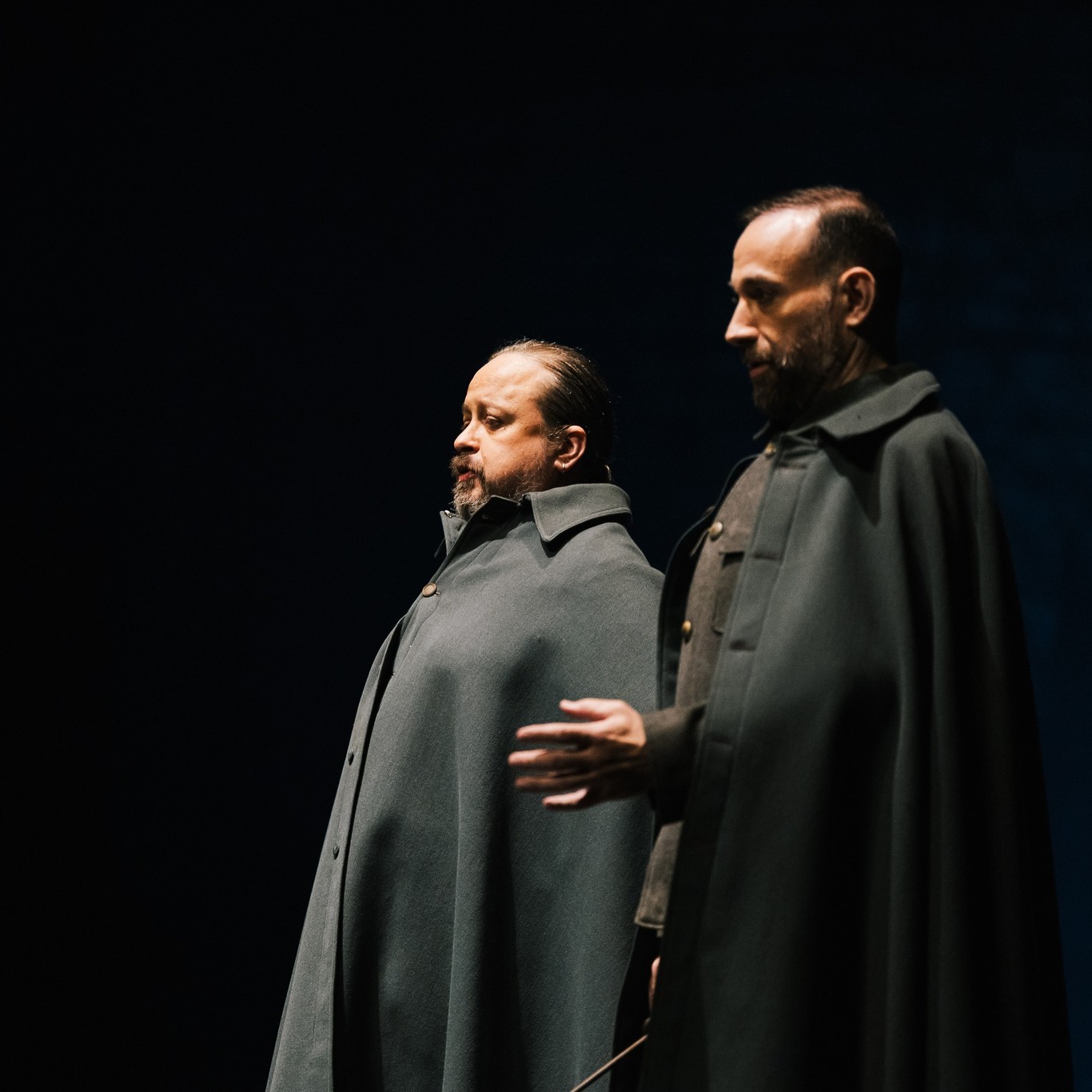
Naturally, having a sparse set means that more attention has to be paid to convincing personenregie in order to drive the narrative forward. Here, I must admit that I found the staging fell short. The direction of the principals effectively consisted of standing at the front with an arm aloft, with characters barely looking at or engaging with each other. The chorus was either marched across the stage, for example during the pilgrims’ entry in Act 1, or simply parked while the video played above them during the entry of the guests. Indeed, the video at this latter moment simply felt superfluous since one was more drawn to enjoying the lusty singing of the choruses. I did appreciate Hoehn’s willingness to introduce all-gender copulating, but I also felt that his exploration of the female characters in the work was underdeveloped. This is certainly a problematic work in terms of its female representation, with it presenting that dichotomy between sexual liberation and puritanical conformism. And yet, with the perfunctory personenregie, the lack of development of the female characters felt even more apparent, leading one to simply ask what was the point of them? It should be admitted that Hoehn’s staging moves the characters around the stage effectively, everybody knew where they needed to be, and they moved around efficiently. Ultimately, however, it felt very much like a staging that stayed on the surface.
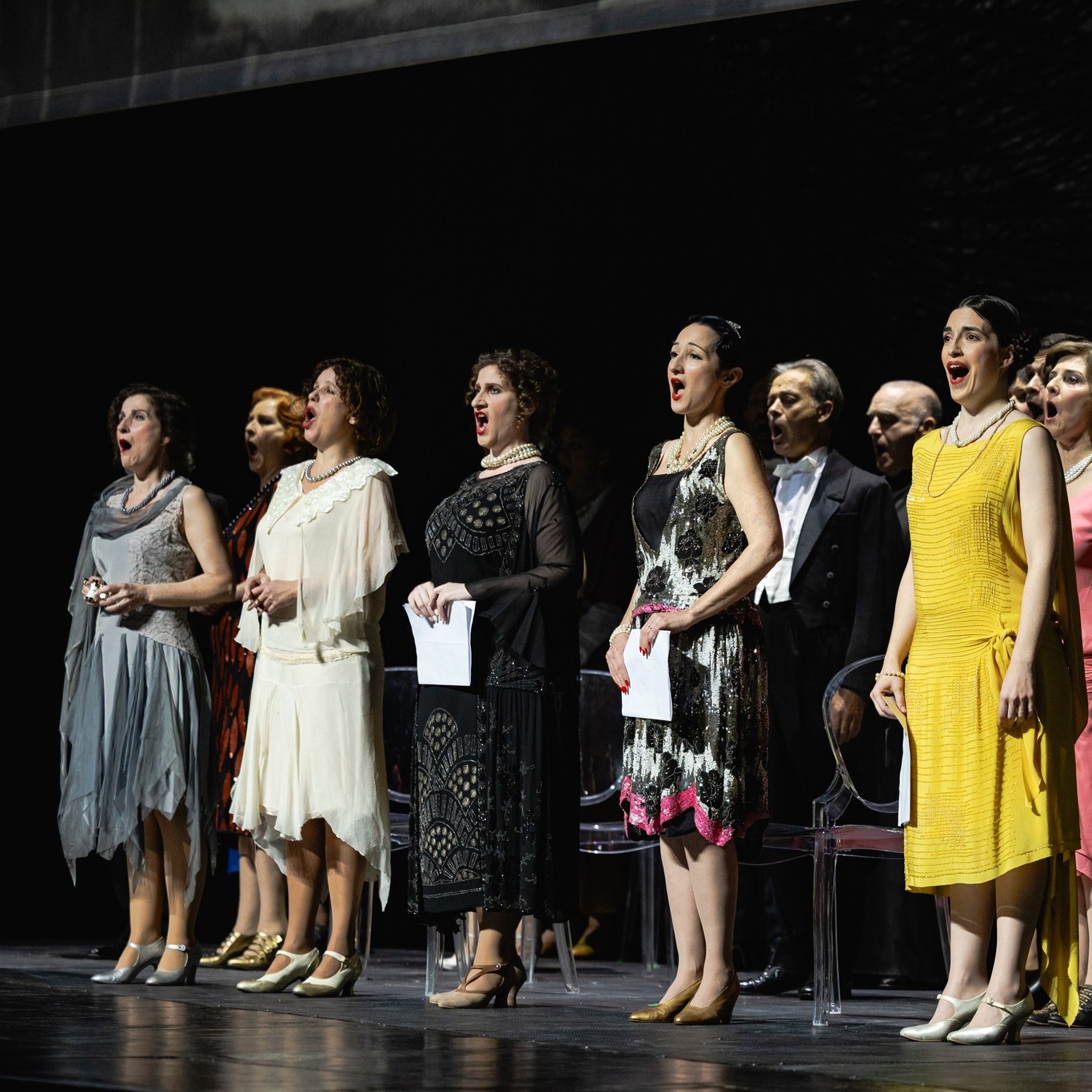
Musically, there were certainly enjoyable elements to the evening. I was encouraged at the start of the overture with the sheer cantabile phrasing of the orchestra, bringing a beauty often all-too lacking in Wagner. And yet, as we moved into the depiction of the Venusberg, Jenkins’ phrasing felt four-square, heavy in nature, missing the ideal sense of playful seduction that the music takes wing with. His tempi were generally on the slower side, although he opened Act 2 at a terrific lick, which did seem to catch the strings slightly unaware. Tension did also have a tendency to sag in Elisabeth’s sermon to the masses towards the end of that act, and there were several passages, particularly in the choruses, where ensemble was not quite unanimous – again, not unusual for a first night. The brass, particularly those big horn calls and trumpet fanfares, were excellent throughout, while the solo winds played with beauty and expressiveness. The string sound was rich, while also providing an agreeable translucence to the texture. The TSNC chorus, prepared as always by Giampaolo Vessella, was joined by members of the tenors and basses of the Coro Lisboa Cantat, prepared by Jorge Carvalho Alves. It was pleasing to hear the sopranos rise to the big moments in the entry of the guests with accuracy of pitching on high, while they also sang with beguiling mellifluousness in their off-stage contributions to the Venusberg. The tenors and basses made a fabulous noise in their big chorus, singing with warm, open tone that filled the room magnificently.
I saw Vinke as Tristan at the Liceu around a decade ago, and recall how his softer singing in the love duet was problematic, but that he had so much left in the tank for the ravings of Act 3. His Tannhäuser was very similar. His is not a bel canto technique, with the support in the opening scene sounding problematic, and intonation coming in and out of focus. Yet, when he needs to, Vinke is able to pull out some tremendous power, particularly in his narration in Act 3, and his diction is absolutely superb, bringing out so much detail and allowing him to realize his character much more vividly than through the stage direction. His Venus was Annemarie Kremer, who I saw recently as the Kaiserin in Warsaw. She’s a dedicated and highly-musical singer, but I do feel that this assignment might not be the best fit for her undoubted talents. She was unfortunately frequently inaudible from my seat, and the voice sits high, which meant that the power required to carry through in the middle wasn’t there. Similarly, her easy top meant that the sheer excitement one gets when a mezzo sings this role, was rather lacking, although one did certainly appreciate the musicality of her singing and the easy top.
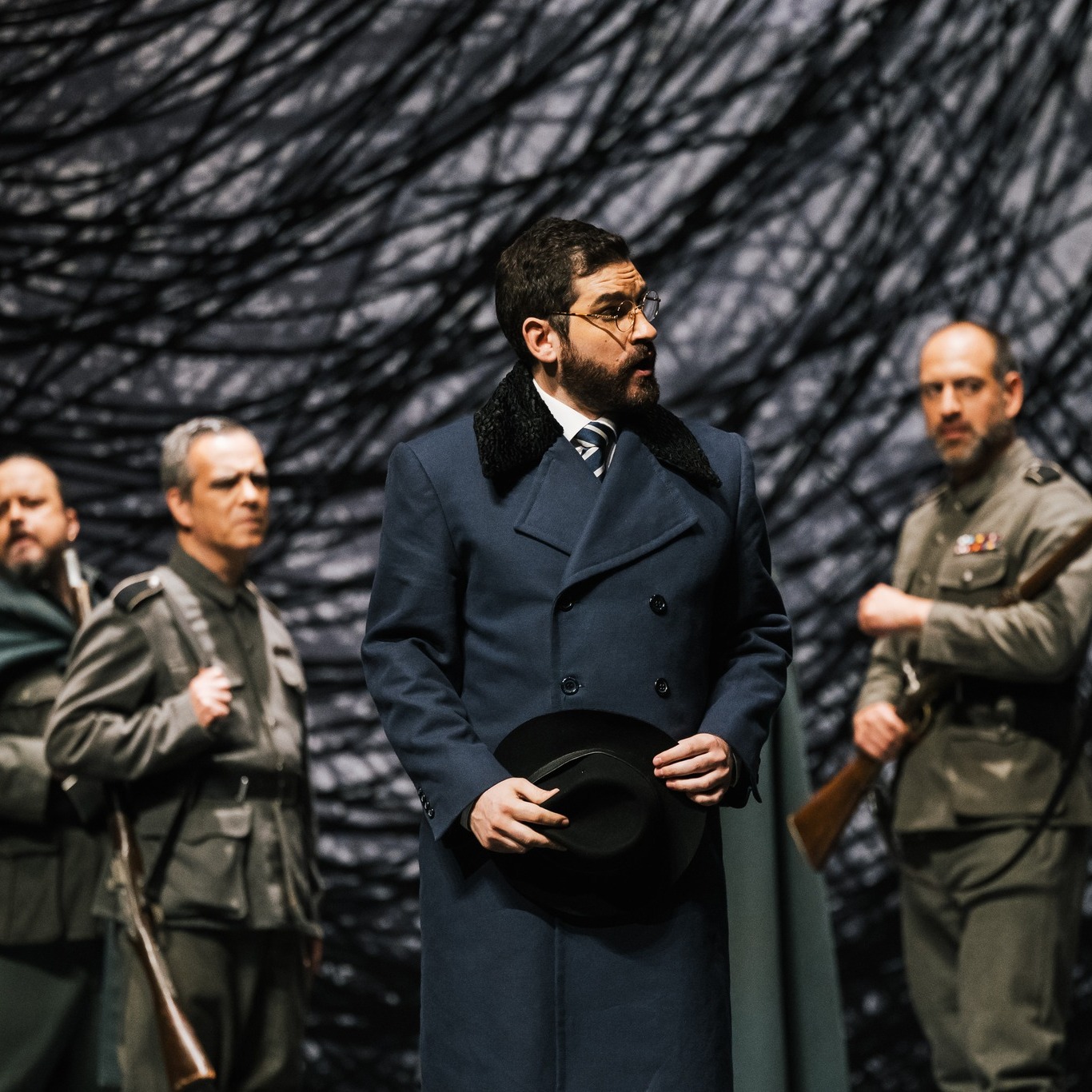
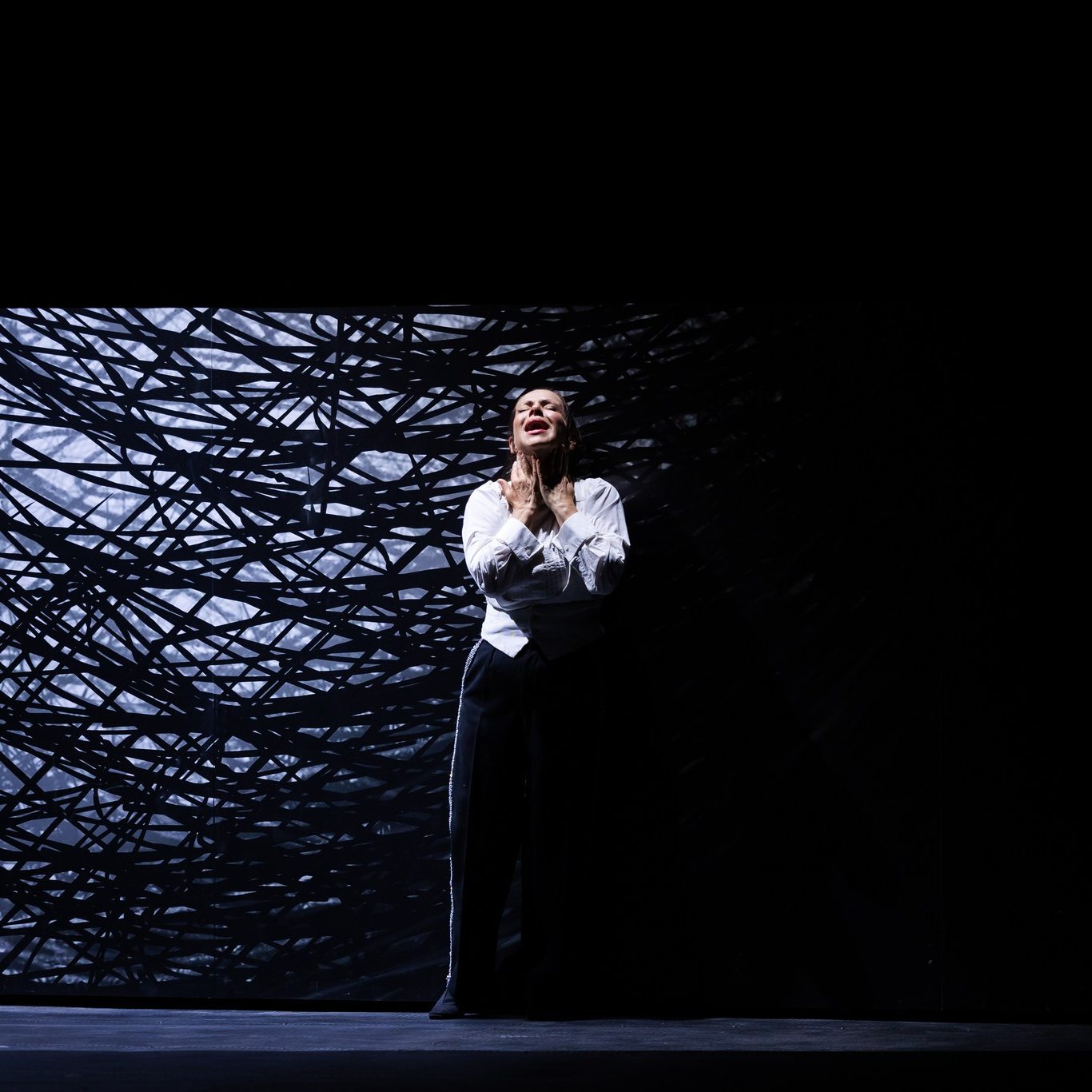
I did, in fact, wonder if she and Allison Oakes might have been more optimally cast in each other’s roles. As with Vinke, Oakes focuses her vocalism on room-filling amplitude instead of long, bel canto lines. She’s certainly capable of blasting out on top, and it was definitely exciting. Yet, Elisabeth is a much more lyrical role, requiring precisely that beauty of line that Oakes worked hard on implementing. Hers was certainly an interesting reading, less of a shrinking violet and more of a determined young woman, and her diction was excellent throughout. For me, the most consistently satisfying singing in the cast came from André Baleiro, tonight making his role debut as Wolfram. This is a part that could have been written for his handsome, nutty baritone, with its impeccable legato and clarity of text. He phrased his Abendstern aria with introspective eloquence, impressive breath control, and smoothness of line. His long experience in lieder was most apparent in his innate ability to simply tell a story. Most satisfying.
The remainder of the cast, featured many familiar names. Wolfgang Rauch sang Landgraf Hermann in a lugubrious bass. As always, Marco Alves dos Santos was an asset to the cast as Walther, singing his music in his easy, focused tenor, while Luís Rodrigues was an agreeably gruff Biterolf. Sergio Martins and Christian Luján confidently dispatched their assignments as Heinrich der Schreiber and Reinmar respectively. Mariana Castello-Branco sang the Hirt from within the auditorium in a creamy, youthful soprano.
There were most certainly elements that gave pleasure in this evening’s Tannhäuser. The choral singing was wonderfully uplifting, Vinke brought heft and staying power, while Baleiro gave an enormous amount of pleasure with his eloquent and handsome singing. Hoehn’s staging did so much with little, although it did feel that it didn’t fully engage with the more problematic aspects of female representation in the work. The audience response at the close was warm and enthusiastic for the entire cast, with a generous standing ovation.
 operatraveller.com