Debussy – Pelléas et Mélisande
Arkel – John Relyea
Geneviève – Marie-Nicole Lemieux
Golaud – Simon Keenlyside
Pelléas – Bernard Richter
Mélisande – Sara Blanch
Yniold – Allegra Maifredi
Un médecin – Zhang Zhibin
Un berger – Lee Geunhwa
Coro del Teatro alla Scala, Orchestra del Teatro alla Scala / Maxime Pascal.
Stage director – Romeo Castellucci.
Teatro alla Scala, Milan, Italy. Sunday, April 26th, 2026.
For its latest production of Pelléas et Mélisande, the first since 2005, the Teatro alla Scala has engaged Romeo Castellucci to direct and design the work, under the musical direction of Maxime Pascal. Castellucci’s work always attracts considerable interest and demand was high for tickets for this run. Pelléas et Mélisande is a work where so much is unknown and unsaid, and it was perhaps appropriate that my seat this afternoon only had around a 60% view of the stage. This means that unfortunately, I won’t be able to offer you as detailed an analysis and appraisal of the staging as my esteemed readers have come to expect.
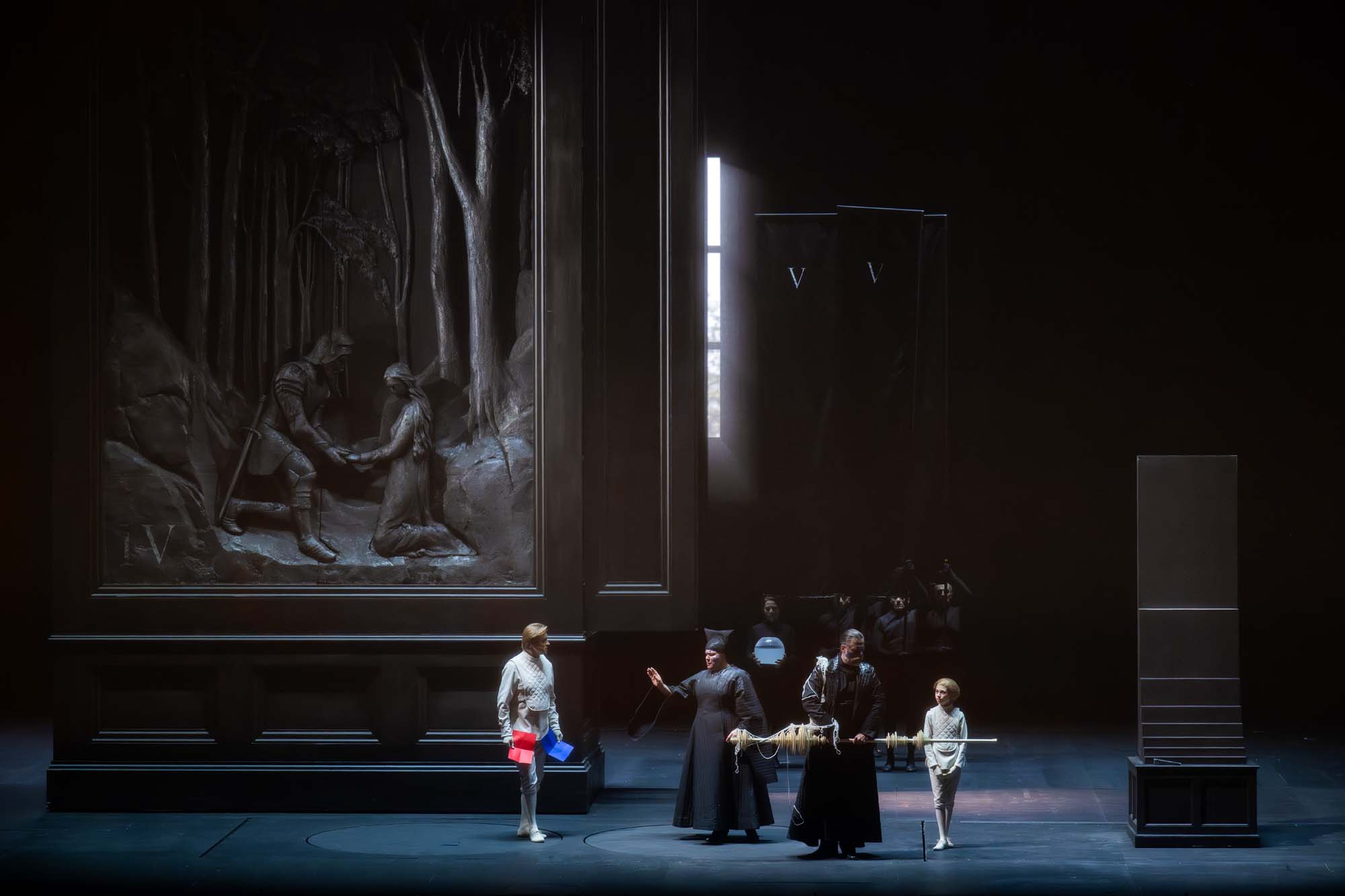
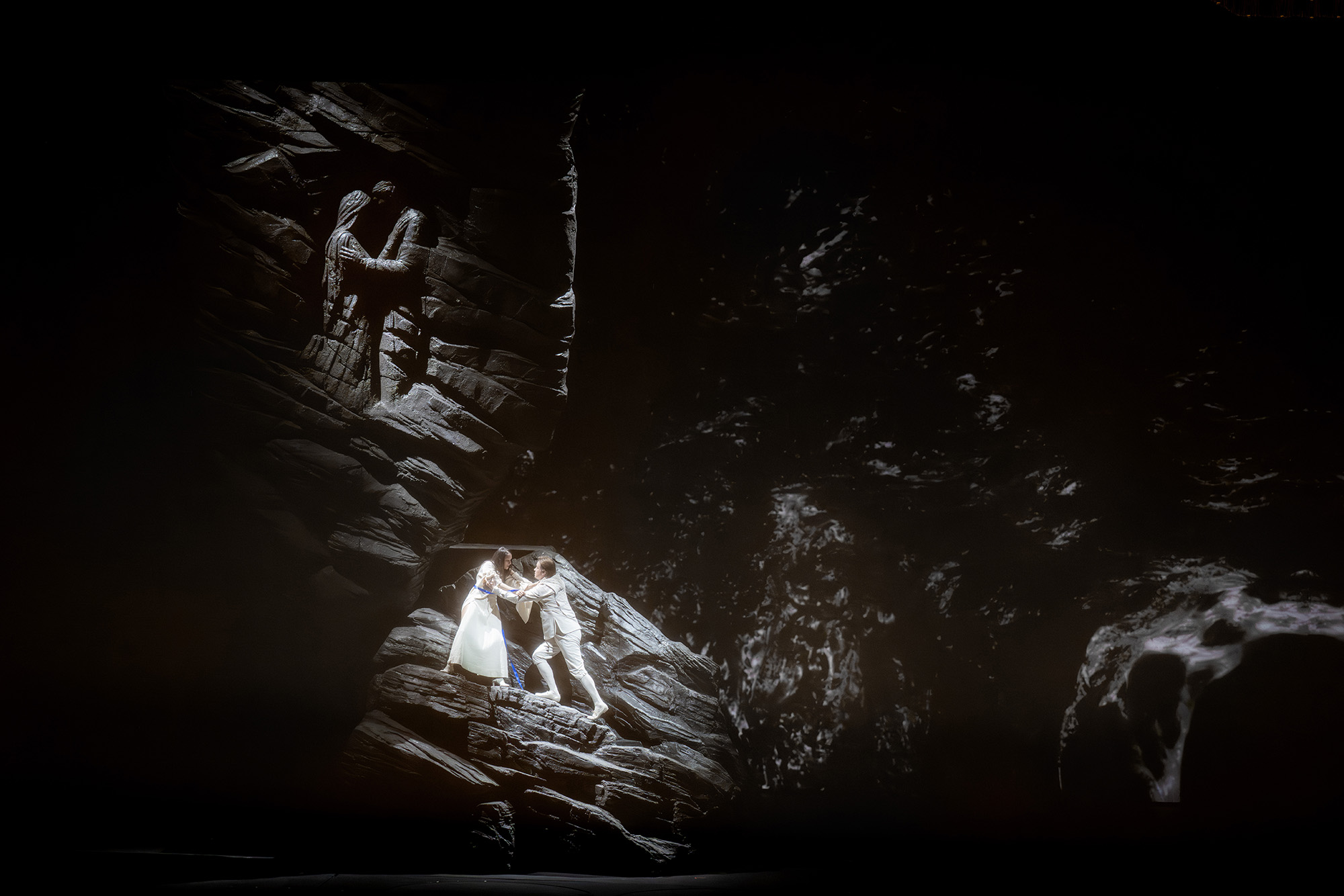
That said, I witnessed enough of the action to be able to offer some considered reflections on it. As so often with Castellucci, the colour palette on stage was focused on black and white. His vision of Allemonde is a place of lifelessness, of darkness, a place literally fossilized with fossils on the walls. A place where one young person, Pelléas, repeats his desire to leave, while the child, Yniold, plays alone, and into which the mysterious Mélisande arrives to turn this world on its head. It struck me that Castellucci made it seem so inevitable that Pelléas and Mélisande would end up in ecstatic copulation in Act 4, since, in the final scene of Act 2, Pelléas announces ‘la clarté’ within a set that appears to show a couple in an embrace above – Pelléas and Mélisande’s fate literally etched in stone.
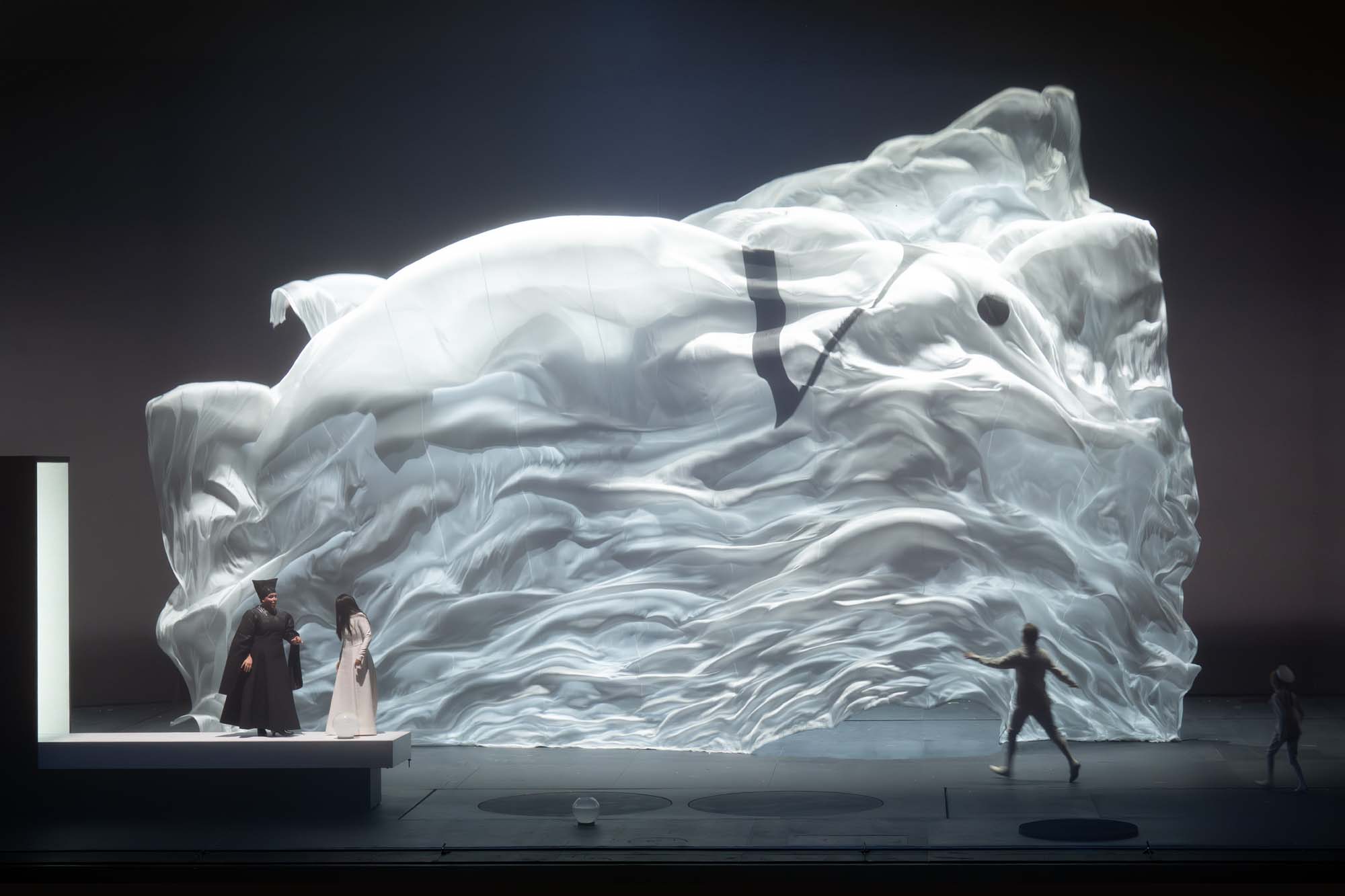
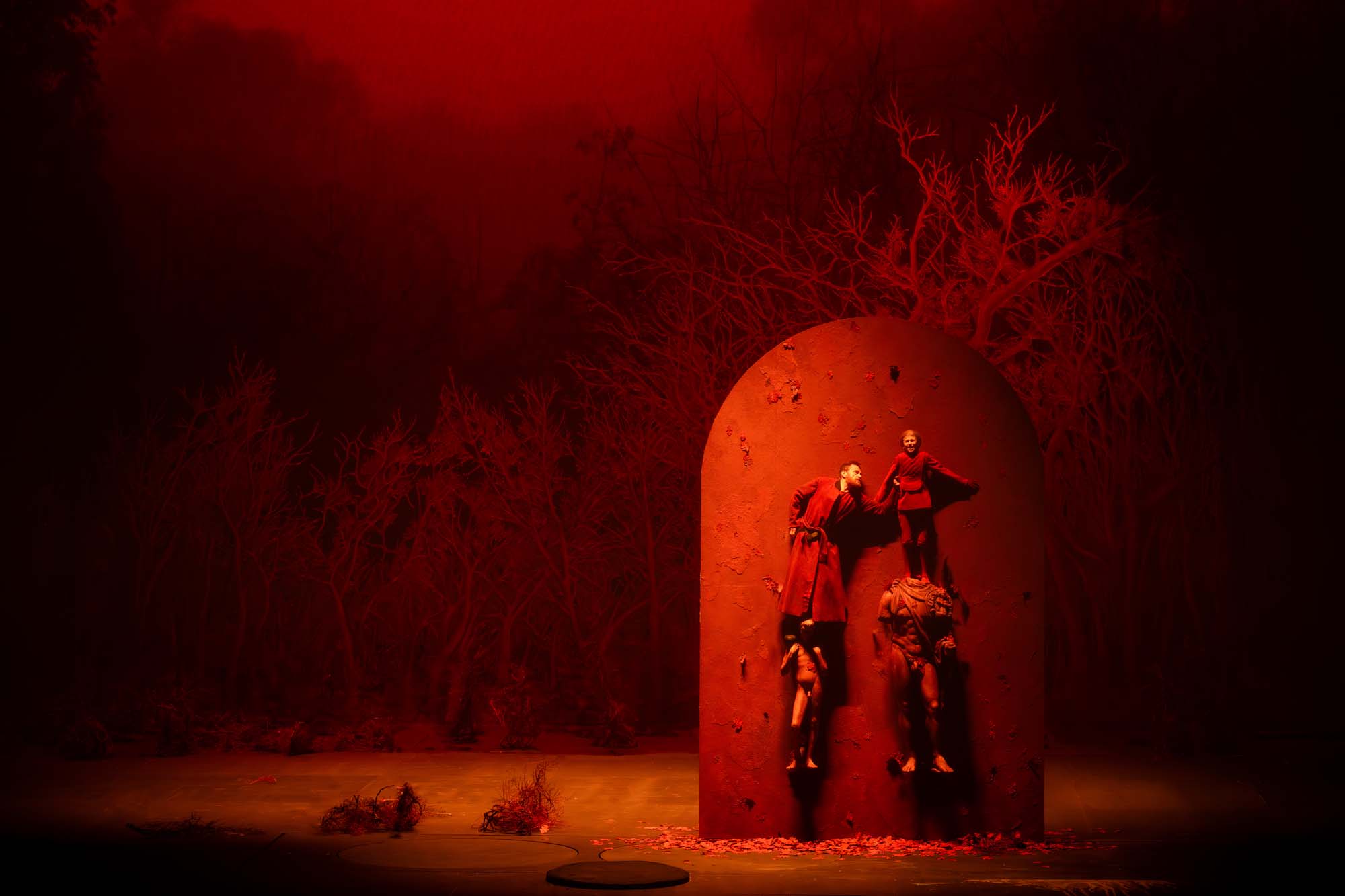
I also found it intriguing how Castellucci had Pelléas and Mélisande dress up as Pierrot figures in their Act 4 love scene, in a way attempting to create a playfulness absent from the kingdom. With this action taking place on a bright, white stage Castelucci then had the stage turn to black as Golaud approached Pelléas to murder him, taking away the light that briefly illuminated the gloom of the kingdom. Even though I was unable to fully appraise Castellucci’s staging, it’s clearly an extremely thoughtful and insightful piece of theatre, virtuosically executed in Castellucci’s own sets, lighting and costumes. It provoked reflection and provided constantly-changing visuals that, even with a limited view, seemed to amplify Debussy’s score – just as they should. The closing scene, with Mélisande expiring, encased in a glass case as if in a museum, felt completely appropriate for a kingdom doomed to lifelessness.
Musically, it was clearly in the most capable of hands under Pascal’s direction, with the Scala orchestra on luminous form. Pascal seemed to revel in the seemingly contradictory aspects of coaxing out some transparent string tone within a thick carpet of sound. Indeed, there was a beauty to the string playing that I found utterly captivating, combining Italian lyricism with Gallic transparency. Pascal brought out so much detail in the textures, creating as much of a story as the visuals on stage. The swirling strings of the opening took us out of our quotidian existence and deep into the forest. Along the way, the low brass and double basses snarled with so many portents of doom. There was a unanimity of approach to the orchestral playing that exuded the most detailed of preparation, yet Pascal’s reading felt completely natural, unfolding with undeniable inevitability. The chorus, prepared today by Giorgio Martano, added a clear halo to the sound in its brief interjections.
Sara Blanch is a superb artist, a singer who has given me much pleasure in roles such as Ann Trulove and Ophélie. Mélisande is a different vocal challenge altogether, given that so much of it lies in the middle of the voice. Her diction was clear, and her Catalan-accented French gave her Mélisande an appropriately otherworldly air for the outsider who appears in the forest. She sang her song from the tower in a limpid, easy line with the beauty of folksong. And yet, so much of the role lies in the lowest part of the range for Blanch and while she was unstinting in her vocal engagement, she frequently burst into sprechgesang at the bottom rather than the smooth Debussyan lines one would expect. Blanch’s dramatic engagement was not in doubt and I hope to hear her again soon in a more congenial assignment.
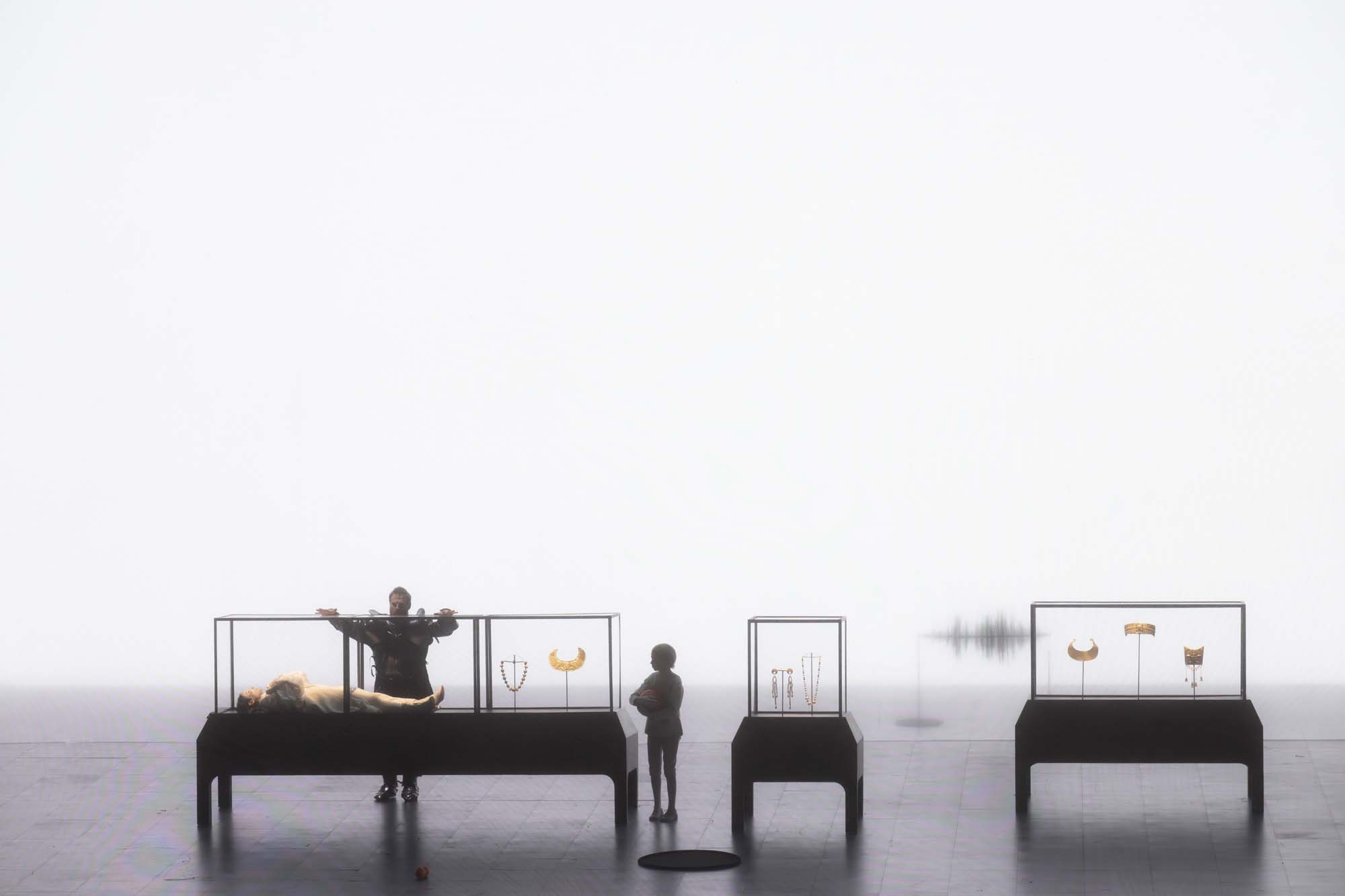
Simon Keenlyside was, of course, for many years the leading Pelléas on the international circuit. Now in his mid-sixties, he has become a similarly insightful Golaud. The voice is still as firm as yore, even if the tone has become somewhat grainier with time. His diction, as always, was very good. He mapped Golaud’s journey from awkward hunter to broken husband with a logical trajectory. His was a rather contained reading, perhaps in line with Castellucci’s view of the world of the work. Less one of volcanic eruptions, particularly at the end of Act 3, and more one of the acceptance of inevitability. It was a thought-provoking interpretation and sung with the utmost authority.
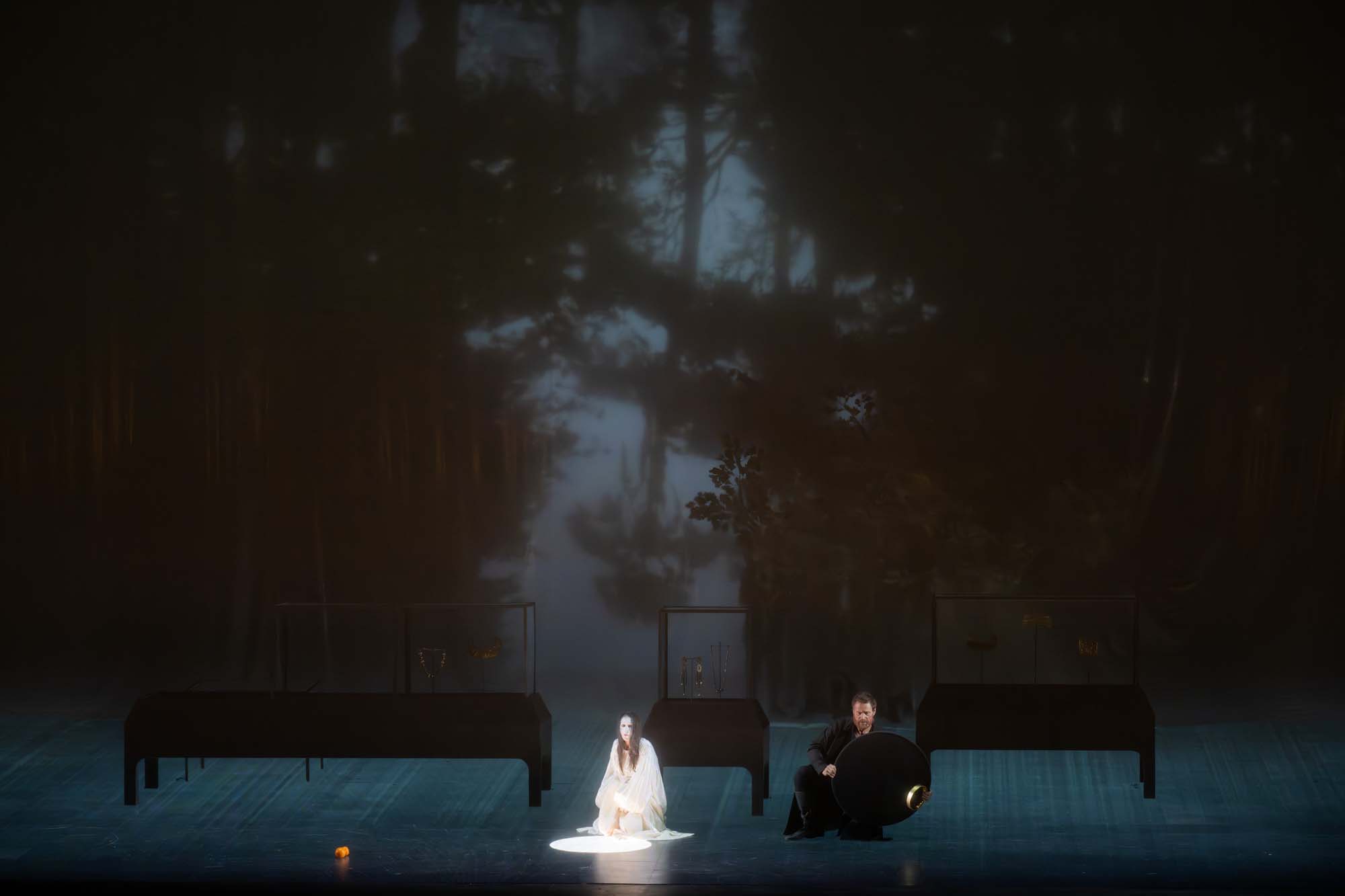
I found Bernard Richter’s Pelléas similarly interesting. For a tenor, to my ears, I found the role sat slightly awkwardly for him, the ecstatic high A as he addressed Mélisande’s hair sounded tight rather than open. Similarly, the outpouring of love at the end of Act 4 was more muscular rather than open on top. The voice itself is handsome and his diction excellent, so much brought to life in that union of word and line.
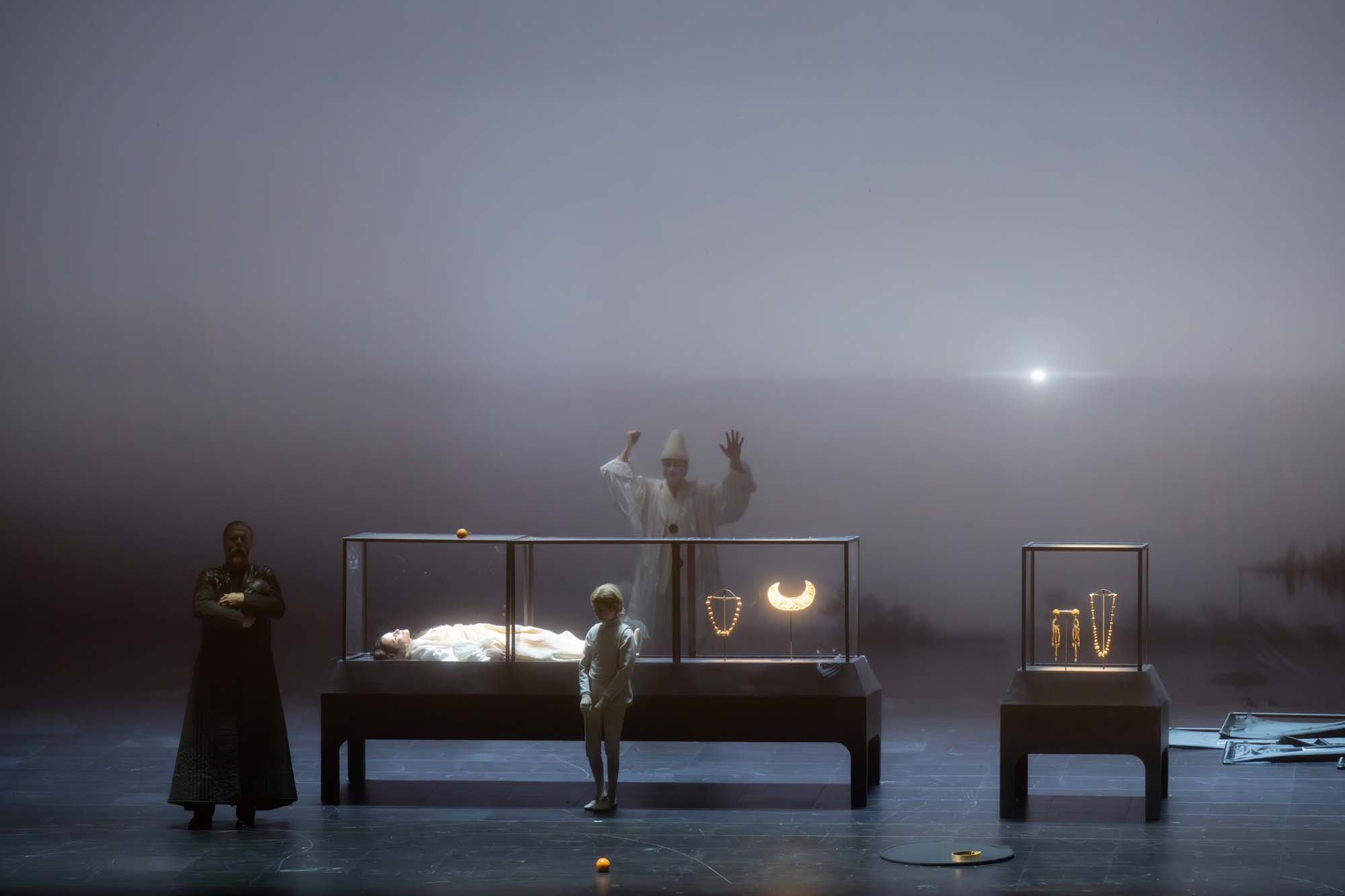
As indeed it was with Marie-Nicole Lemieux’s Geneviève. Her long experience in French song was evident in the warmth of her vocalism and the way she used the text to colour the tone, making her brief interjections truly mean something. John Relyea sang Arkel in his big, cavernous bass, the voice carved from granite. While much of the text was clear, I did miss some of the incisiveness his colleagues brought in his use of the words. The warmth and generosity of his singing was undeniable. Allegra Maifredi is a member of the Scala’s children’s chorus, and she sang Yniold with the utmost confidence. The remaining two roles were taken by members of the Scala’s young artists’ program, Zhang Zhibin and Lee Geunhwa, are both owners of very fine instruments, although I’m sure they will be doing further work on French diction during their time with the Accademia.
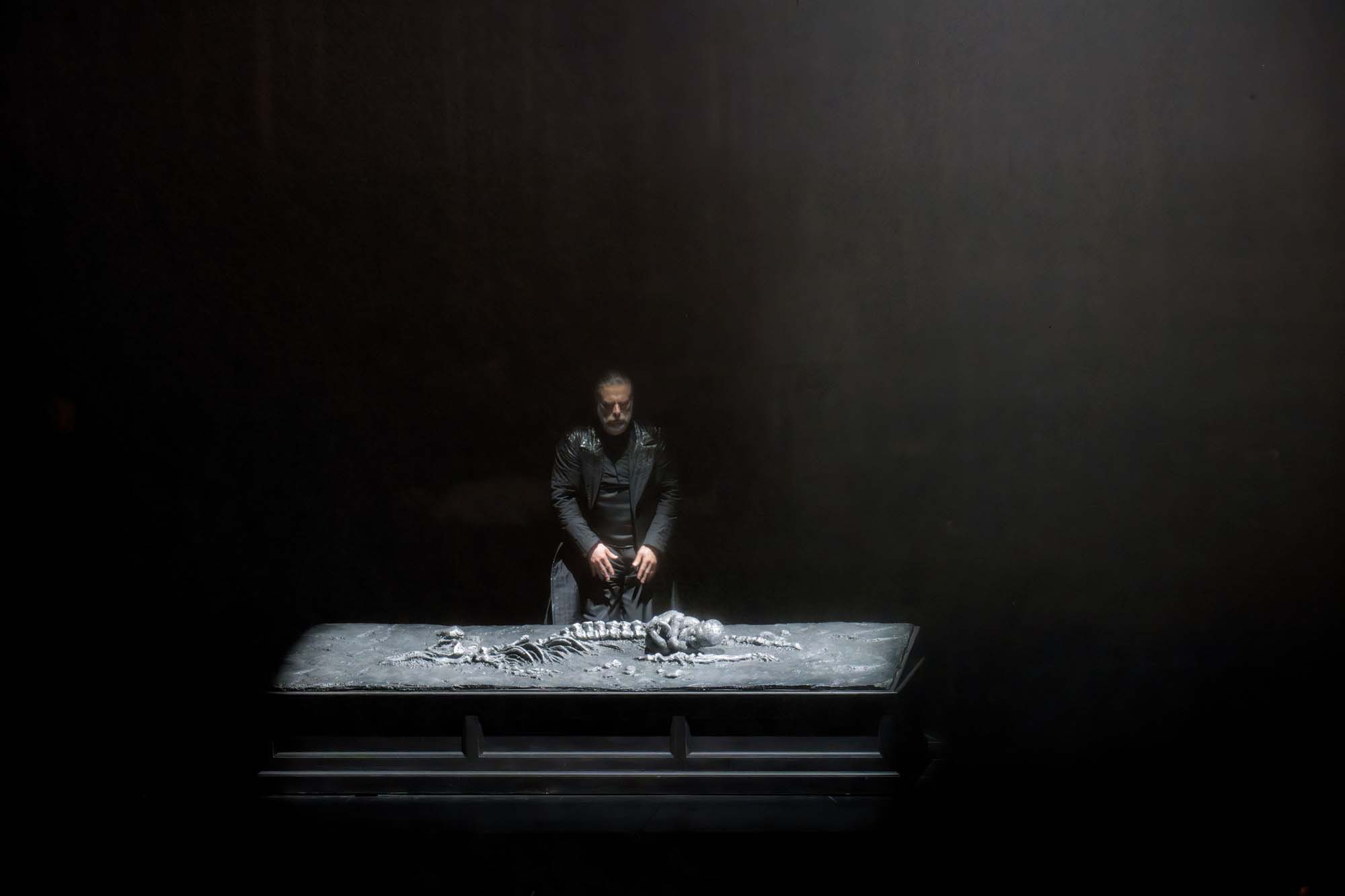
This was a Pelléas et Mélisande that gave much to offer. Castellucci’s staging seems to amplify Debussy’s fragrant score and is based in a clear and logical reading of the text. He was partnered by Pascal in the pit, who coaxed out of the Scala orchestra playing of the utmost distinction, giving the work a logical and focused direction. Vocally, the evening gave a number of elements to appreciate. The reception at the close was warm for the entire cast.
 operatraveller.com