Verdi – Un ballo in maschera
Amelia – Chiara Isotton
Riccardo – Antonio Poli
Ulrica – Ksenia Dudnikova
Renato – Bogdan Baciu
Oscar – Lavinia Bini
Silvano – Janusz Nosek
Samuel – Mattia Denti
Tom – Adriano Gramigni
Un giudice – Francesco Congiu
Coro del Maggio Musicale Fiorentino, Orchestra del Maggio Musicale Fiorentino / Emmanuel Tjeknavorian.
Stage director – Valentina Carrasco.
Maggio Musicale Fiorentino, Florence, Italy. Sunday, May 17th 2026.
This year, the venerable Maggio Musicale Fiorentino is celebrating its 88th edition, with, as always, a full program of concerts and staged operas. Coming up next month is a new production of Giulio Cesare, while the current focus at the house is this new staging of Un ballo in maschera by Valentina Carrasco, with the musical direction confided to Emmanuel Tjeknavorian, the chief conductor of the Orchestra Sinfonica di Milano. Having had the opportunity to see several of Carrasco’s productions by now, I was intrigued to see what she would do with this particular work.
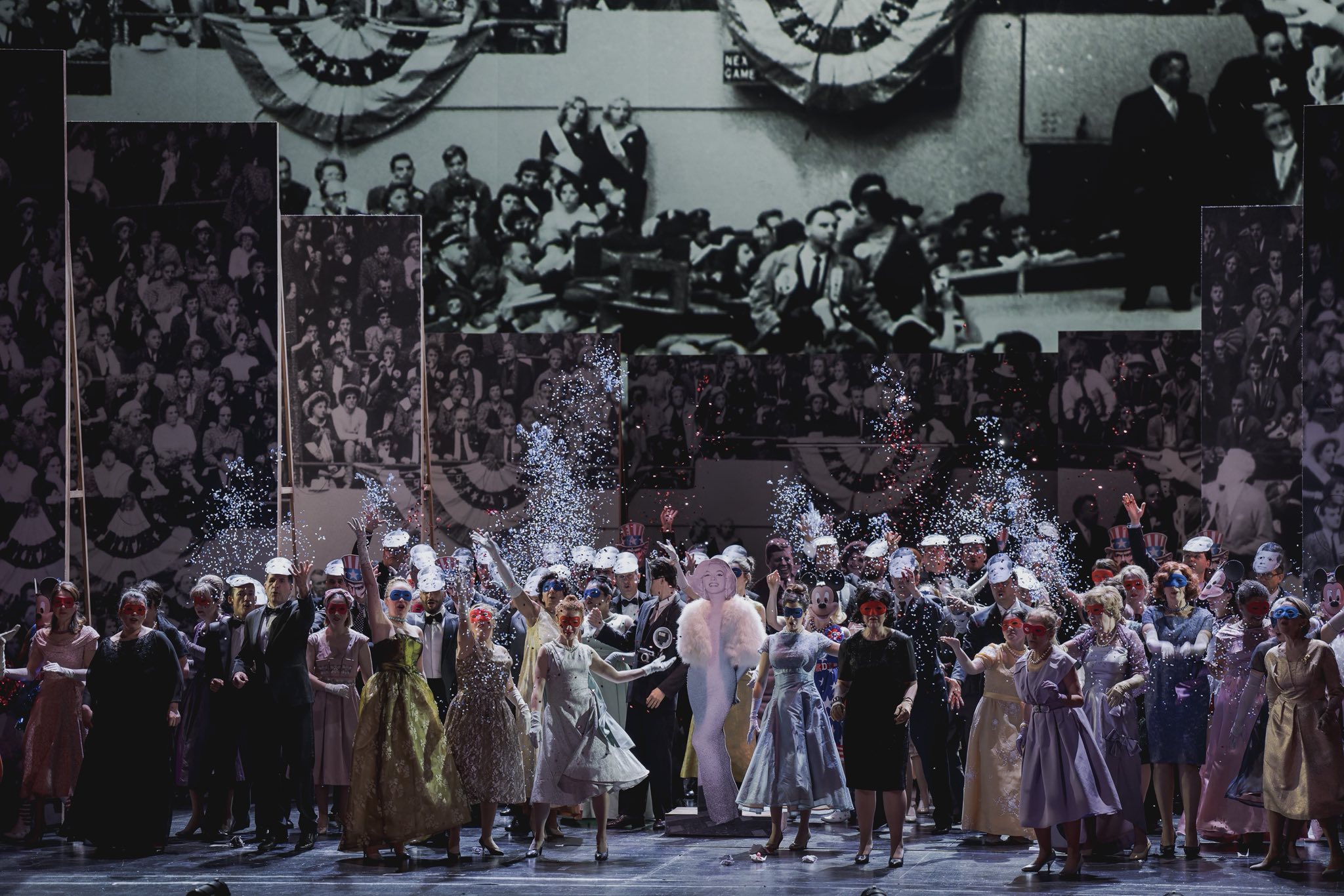
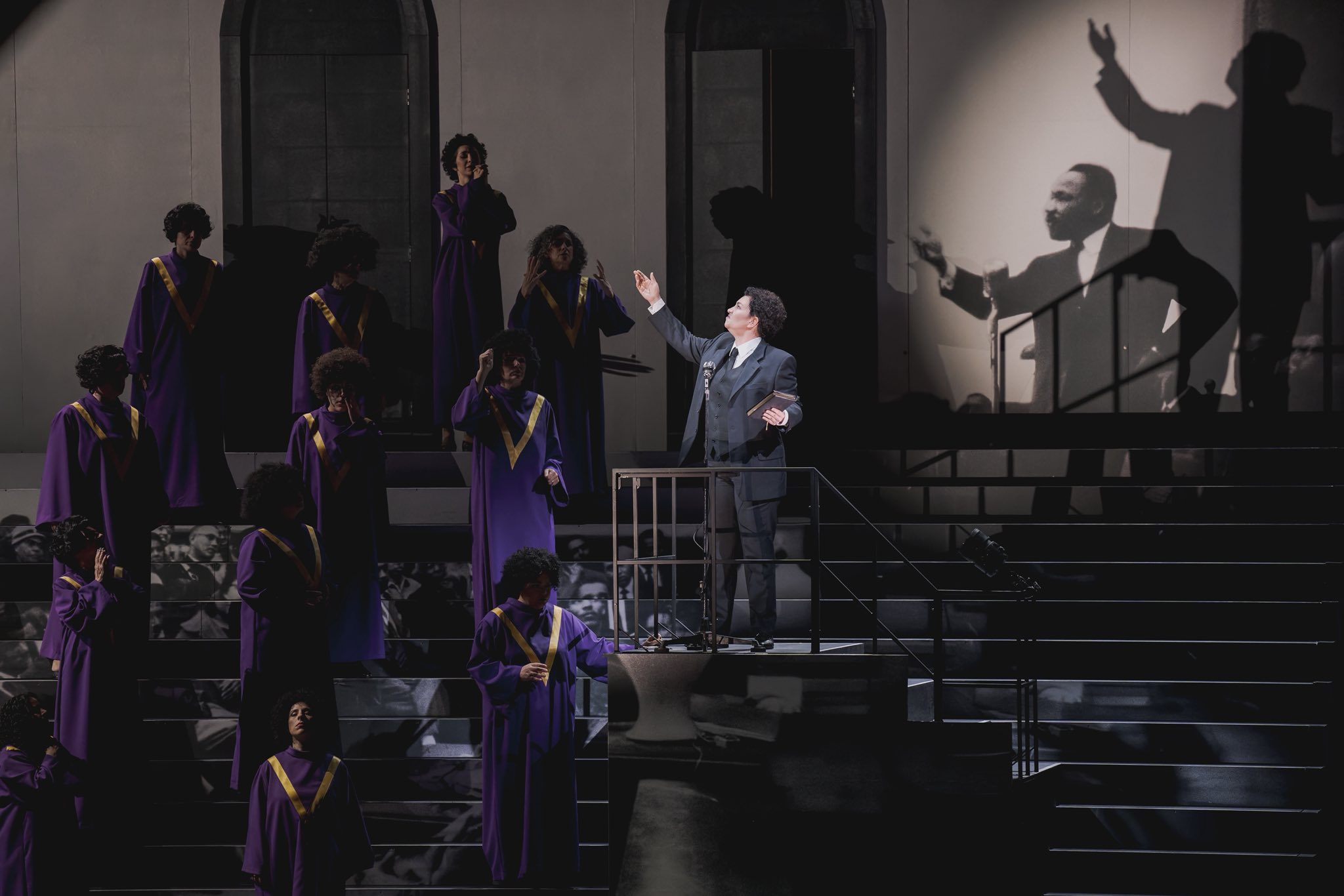
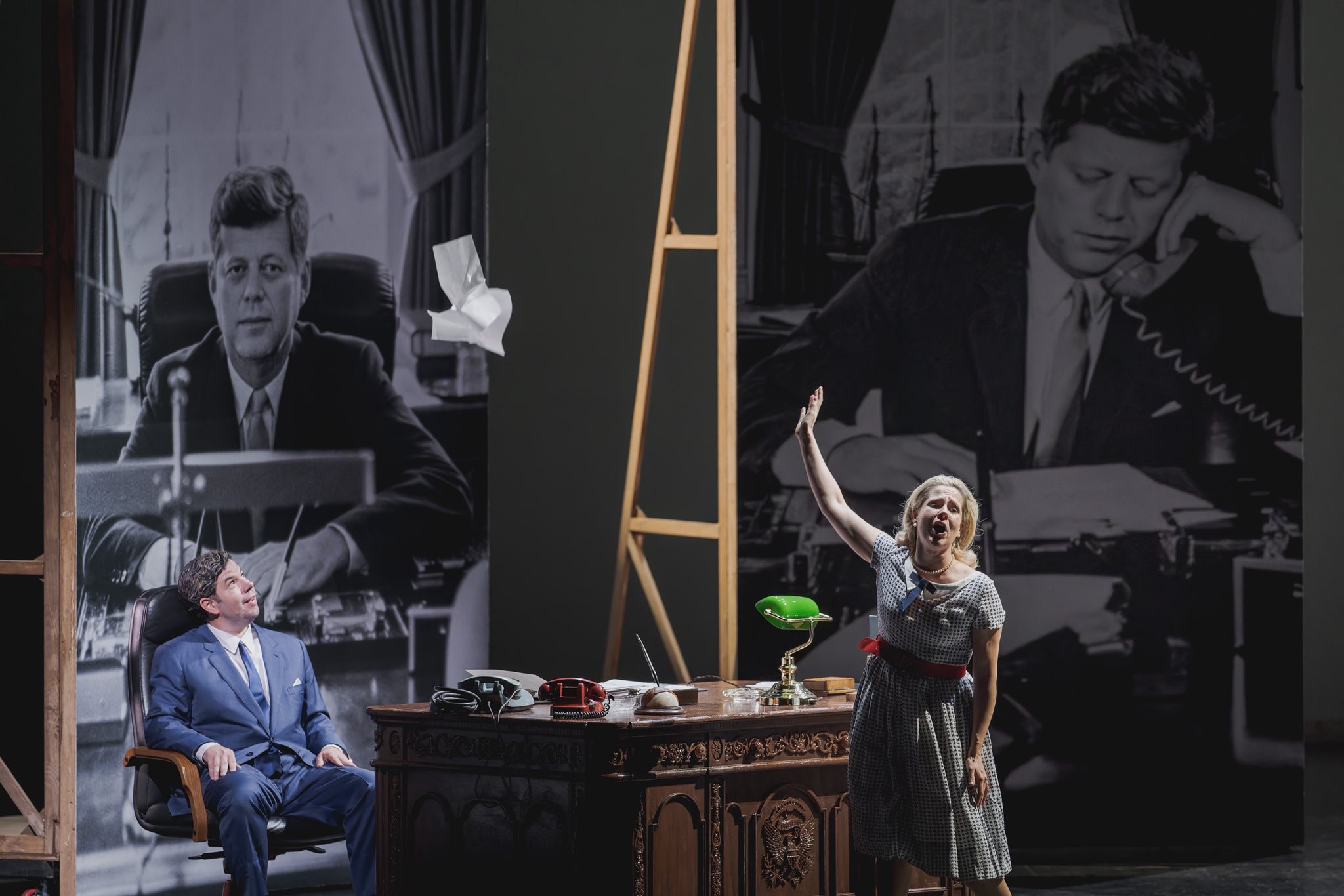
Carrasco sets the action in the USA in the 1960s, a similar starting point to the Rafael R Villalobos’ staging in València. The 1960s have certainly been illustrated as an era of intrigue and espionage in media depictions over the years, and a time that could provide a fertile starting point for a considered staging of the action. Unfortunately, this is not it. Carrasco populates the stage with images of JFK, yet to what end it’s not clear. Is she telling us that Riccardo is JFK? If so, Antonio Poli is made up to look rather different, with costumes by Silvia Aymonino. An actress incarnating Jackie O appears at the start and at the end, yet again, the why is not especially evident. Perhaps we’re watching a parallel universe unfold. Carrasco points to the history of segregation in the US, setting the Ulrica scene in an African-American church, with Ulrica, the character who communes with Satan, dressed up in a suit with a photo of Dr King behind her. This feels far from respectful. Particularly so, since Ksenia Dudnikova is given a tan and Afro-inspired hair. Similarly, several of the Caucasian female-identifying singers of the Maggio chorus are also given large Afro-inspired wigs. Seriously, is Carrasco comparing Dr King and the African-American community to satanists? Because that seems to be the intention. Furthermore, having Riccardo’s fortune scene interrupted by characters dressed up like the Ku Klux Klan just felt gratuitous. Carrasco’s staging feels like the work of someone desperately trying to make a concept work, but remains incoherent.
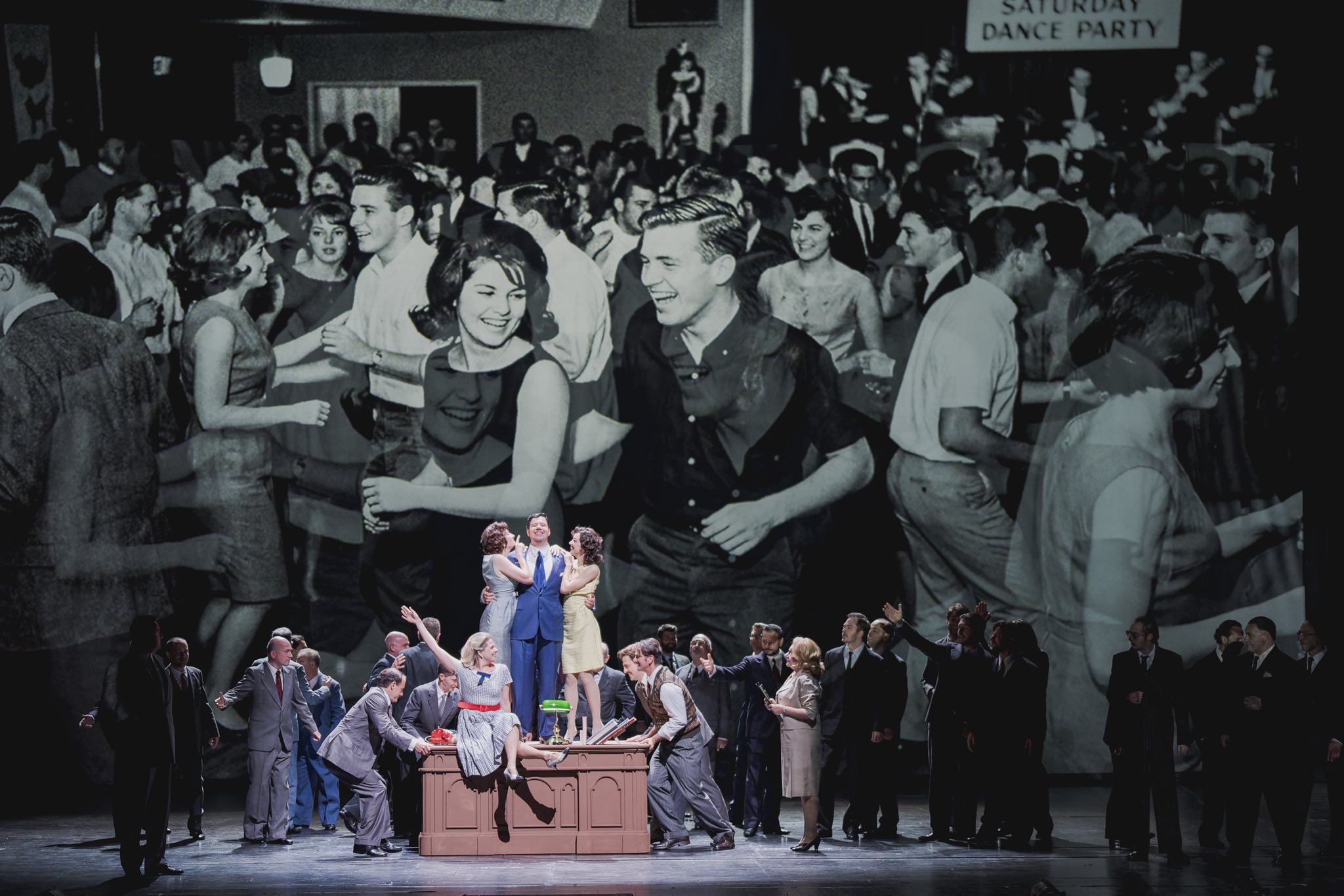
The strongest scene of the evening happens at the horrid field where Riccardo and Amelia are alone, with no images of JFK or other historical figures. Carrasco sets it outside a mixed-use residential and commercial building, where they clearly sell some alternative substances. There, she finally allowed her principals to tell their story; though here again, having Riccardo borderline assaulting Amelia robbed her of agency and made one wonder why on earth she would profess her love and try and save him in the final act. I did appreciate the cheerleaders with pompons adding a touch of gaiety to the ball scene itself, but Carrasco’s staging just never manages to convince us of who it is we’re watching and why they’re doing what they do. The frustrating thing is that the staging could have worked if Carrasco had dropped the JFK references and blackface, and instead focused on allowing her principals to drive the action. Then, in the final tableau, Carrasco brings on a gunman who shoots Riccardo from the side before Renato has a chance to stab him – again, adding a further additional confusing layer to the narrative. Finally, she displays a slow-motion film of JFK’s assassination with the final measures. This feels simply gratuitous and gruesome, sending us out into the Florentine evening with a sense of frustration for a production that could have been so much more.
Tjeknavorian led the excellent Maggio orchestra in a reading that focused on creating a big, bold sound over rhythmic impetus. Attack was unanimous but rather soft grained. This is a score that abounds in so many fabulous and memorable melodies, yet Tjeknavorian’s reading stayed stubbornly earthbound. The Maggio orchestra had clearly responded to his direction fastidiously, creating a big, thick sound that was more Mahlerian than Verdian. There were undoubtedly some striking moments, the huge drum sound as Amelia pulled out the name for who would murder Riccardo made the entire room shake. He also pulled back on the tempo in the slower numbers which made ‘morrò’ extremely slow. Tjeknavorian certainly got the orchestra to give him precisely the sound he was looking for, though I longed for something leaner, more vibrant and vivid. The chorus, prepared by Lorenzo Fratini, sang with their customary focus of tone and discipline. It was unfortunate that balance wasn’t optimal in the opening scene, with the basses too prominent in the texture, but this was due to their placement on stage by Carrasco, rather than their preparation or approach. They sang throughout with unanimous attack and rich, warm tone.
Poli has come a long way since I first heard him as Don Ottavio over a decade ago. He’s now established himself as a decent Verdi tenor and certainly much more reliable than many who currently sing this music. The voice has wonderful Italian warmth, is bright and forwardly placed. He makes an admirable attempt at singing with a smooth legato, though there are frequent aspirates that enter the line, making it slightly bumpier. The voice has definitely grown in squillo over the years, but he did attempt to shade the tone and pull the dynamics back from time to time. Poli more than gave a dignified account of himself today.
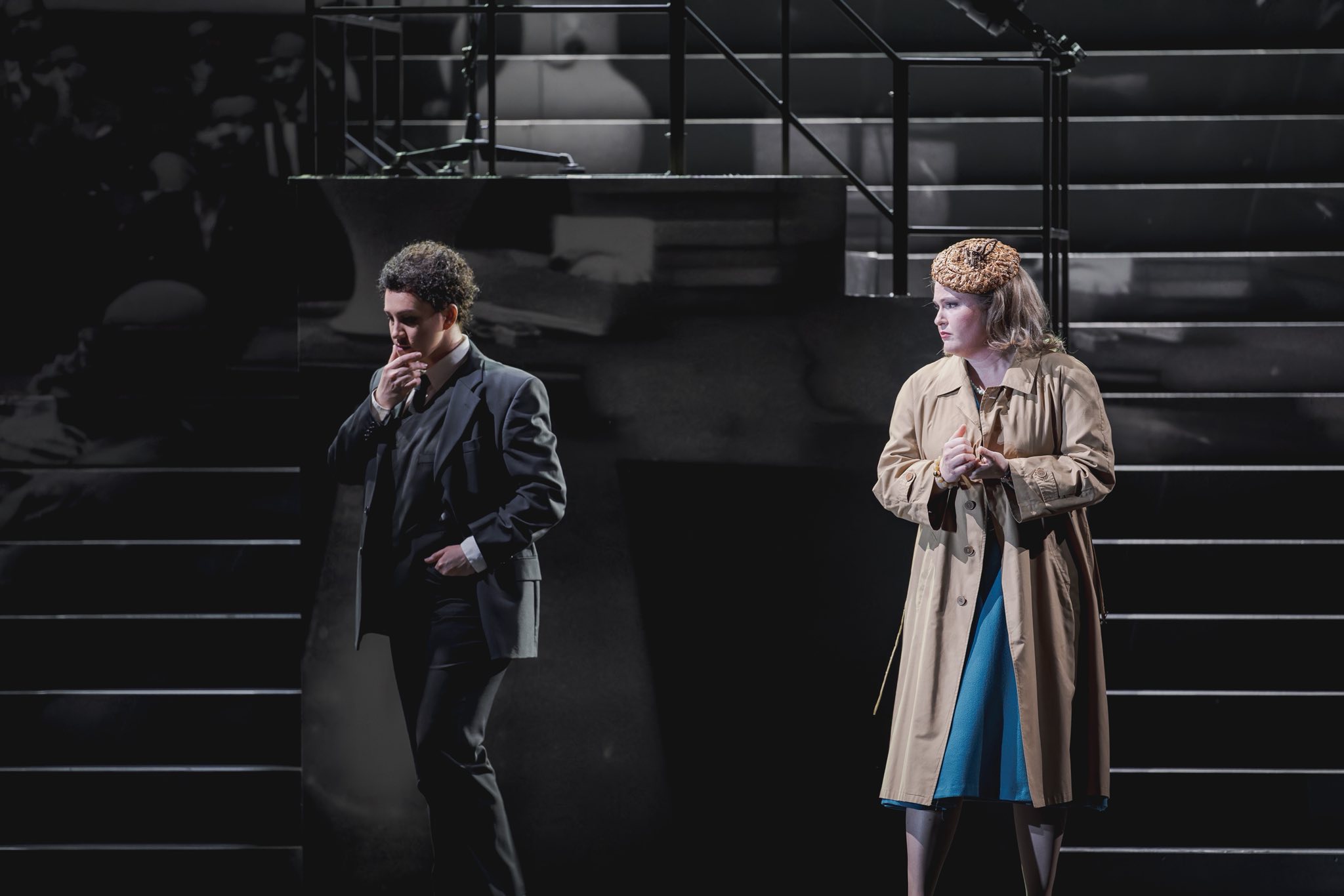
His Amelia was Chiara Isotton. She’s a warm and generous singer and genuine actress, one who had clearly thrown herself into Carrasco’s conception of the role. She negotiated the treacherous ascent to the high C at the horrid field with generous vibrations and impressive breath control, managing both the ascent and descent in a single breath. Isotton also coped very well with the extremely slow tempo for ‘morrò’, phasing the music in long, searching phrases with warm tone and scrupulous attention to dynamics. The voice is founded in a warm chestiness, utterly even throughout. Most definitely a useful artist in this repertoire.
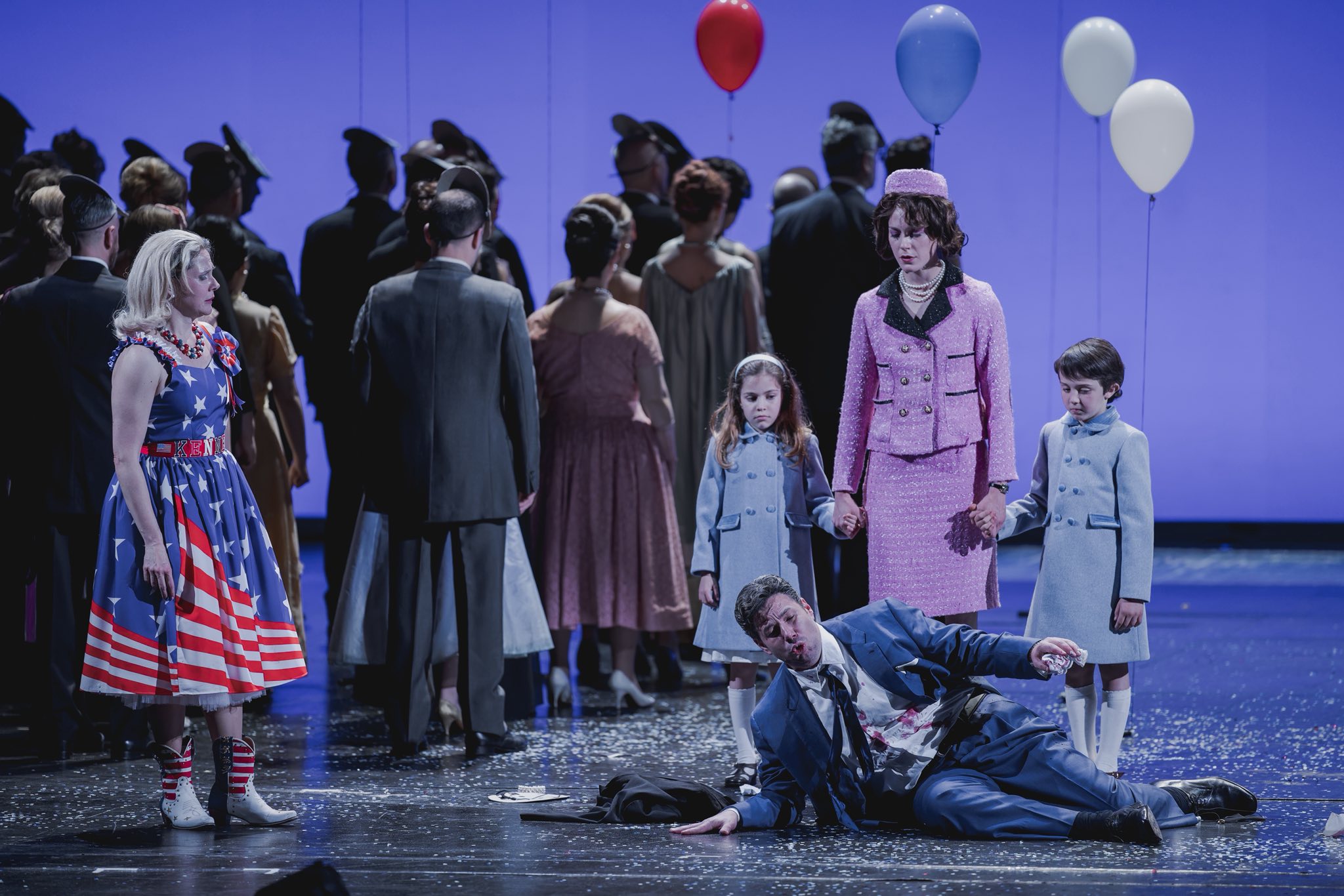
Bogdan Baciu sang Renato in a big, resonant baritone. The voice a huge, even column of sound. There’s a metal to the core of the tone which allowed him to project with ease into the house. He made his ‘eri tu’ truly mean something, taking us from anger to wistful regret through careful use of dynamics and an excellent legato. The voice soared up to the top with seemingly limitless height. Baciu is most definitely a name to watch. Dudnikova similarly dispatched her assignment with vibrant extroversion. The voice is similarly large and she soared through the ascending twists and turns of her aria with impressive evenness. She has the big organ pedal notes below but is also able to open up excitingly on high.
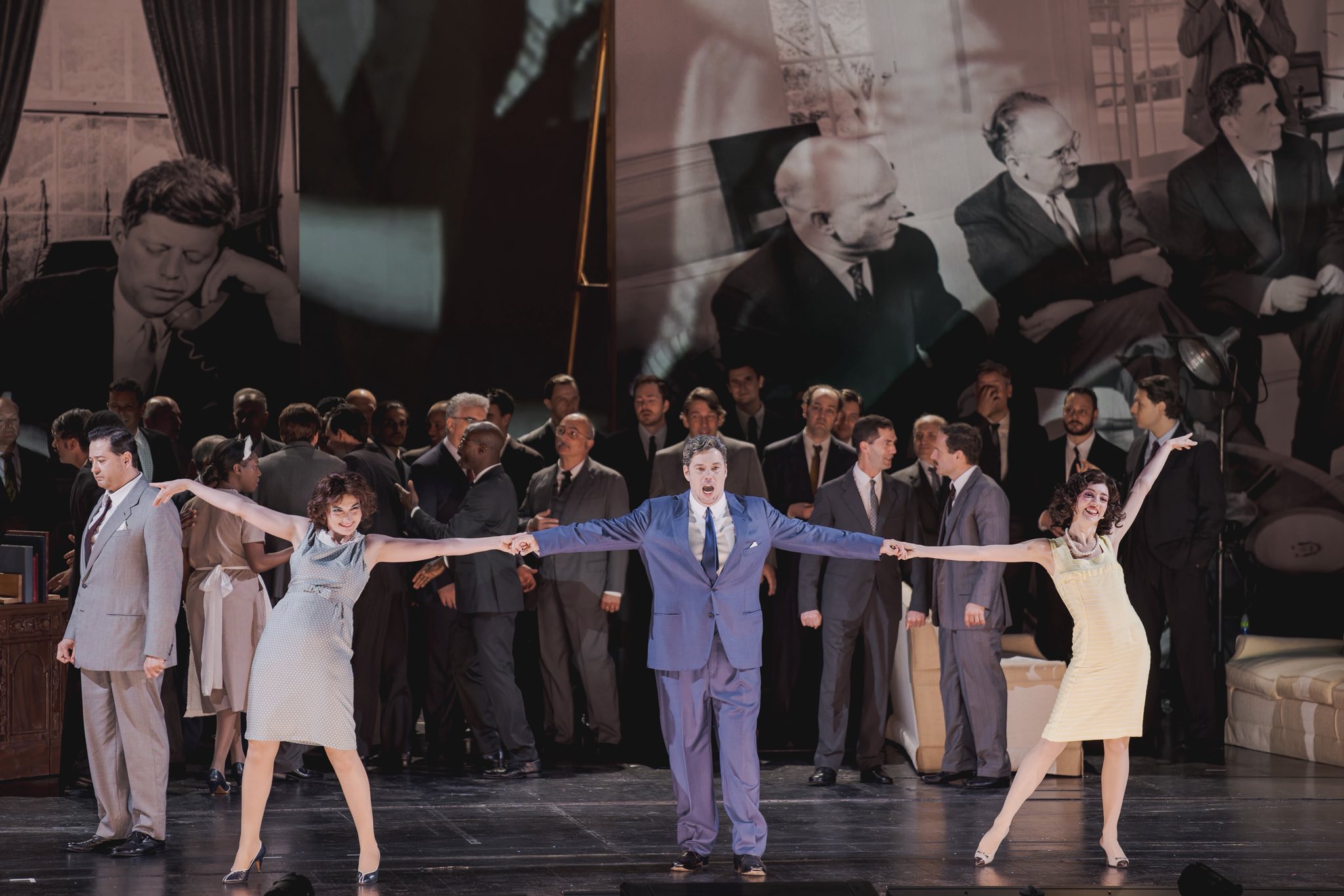
Lavinia Bini’s extremely feminine Oscar, complete with stars and stripes dress, was dispatched in a bright, agile soprano with scintillating fizz on top. She also made a more than respectable stab at a trill. The remaining roles were at the extremely high level one expects at this address, notably Janusz Nosek’s handsomely-sung Silvano, while Mattia Denti and Adriano Gramigni were appropriately conspiratorial as Samuel and Tom.
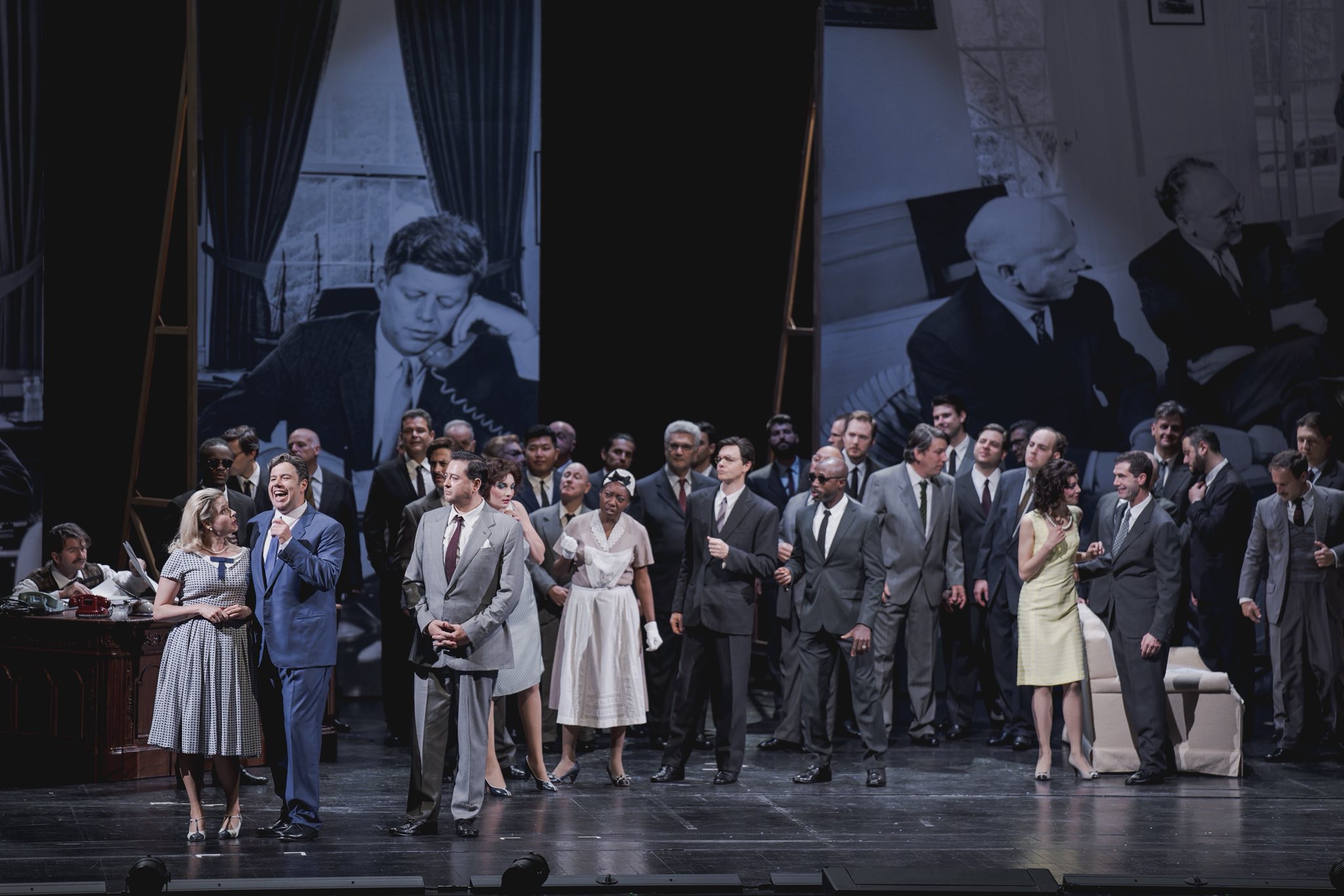
Vocally, this Ballo was a satisfying afternoon in the theatre. The singing gave much to enjoy throughout the cast, both in its stylishness and idiomatic nature. Tjeknavorian had clearly worked hard with the orchestra and succeeded in getting them to align with his musical vision, but I must admit I found it rather too plush a sound for my taste and longed for more forward momentum. Carrasco’s staging is, frankly, something of a missed opportunity. It really could have worked if she hadn’t insisted on adding an extraneous visual layer that distracted so much from what we saw. As this was the third performance of five, the audience response to the singers was appropriately warm. Definitely an evening worth listening to.
 operatraveller.com