Wagner – Die Walküre
Siegmund – Joachim Bäckström
Hunding – Ain Anger
Wotan – Nicholas Brownlee
Sieglinde – Irene Roberts
Fricka – Ekaterina Gubanova
Brünnhilde – Miina-Liisa Värelä
Helmwige – Dorothea Herbert
Gerhilde – Julie Adams
Ortlinde – Elene Gvritishvili
Waltraute – Claudia Mahnke
Siegrune – Niina Keitel
Rossweisse – Christina Bock
Grimgerde – Natalie Lewis
Schwertleite – Noa Beinart
Bayerisches Staatsorchester / Vladimir Jurowski.
Stage director – Tobias Kratzer.
Bayerische Staatsoper, Nationaltheater, Munich, Germany. Sunday, June 28th, 2026.
This new production of Die Walküre directed by Tobias Kratzer and conducted by Vladimir Jurowski, follows the superb Rheingold that was given here back in 2024. While there has been a two-year gap between the two instalments, the next will follow on quite quickly, with Siegfried opening at the end of October this year and Götterdämmerung at the end of June 2027, with two complete cycles planned for the Opernfestspiele next summer. The notable aspects of Das Rheingold were the fact that the cast had been hand-picked to represent the next generation of Wagnerian talent, alongside Kratzer’s vivid theatrical imagination and his ability to bring the fantasy to life. Furthermore, this is a piece that belongs in this house, with its extensive Wagner tradition, not to mention the fact that the work was premiered in this very theatre.
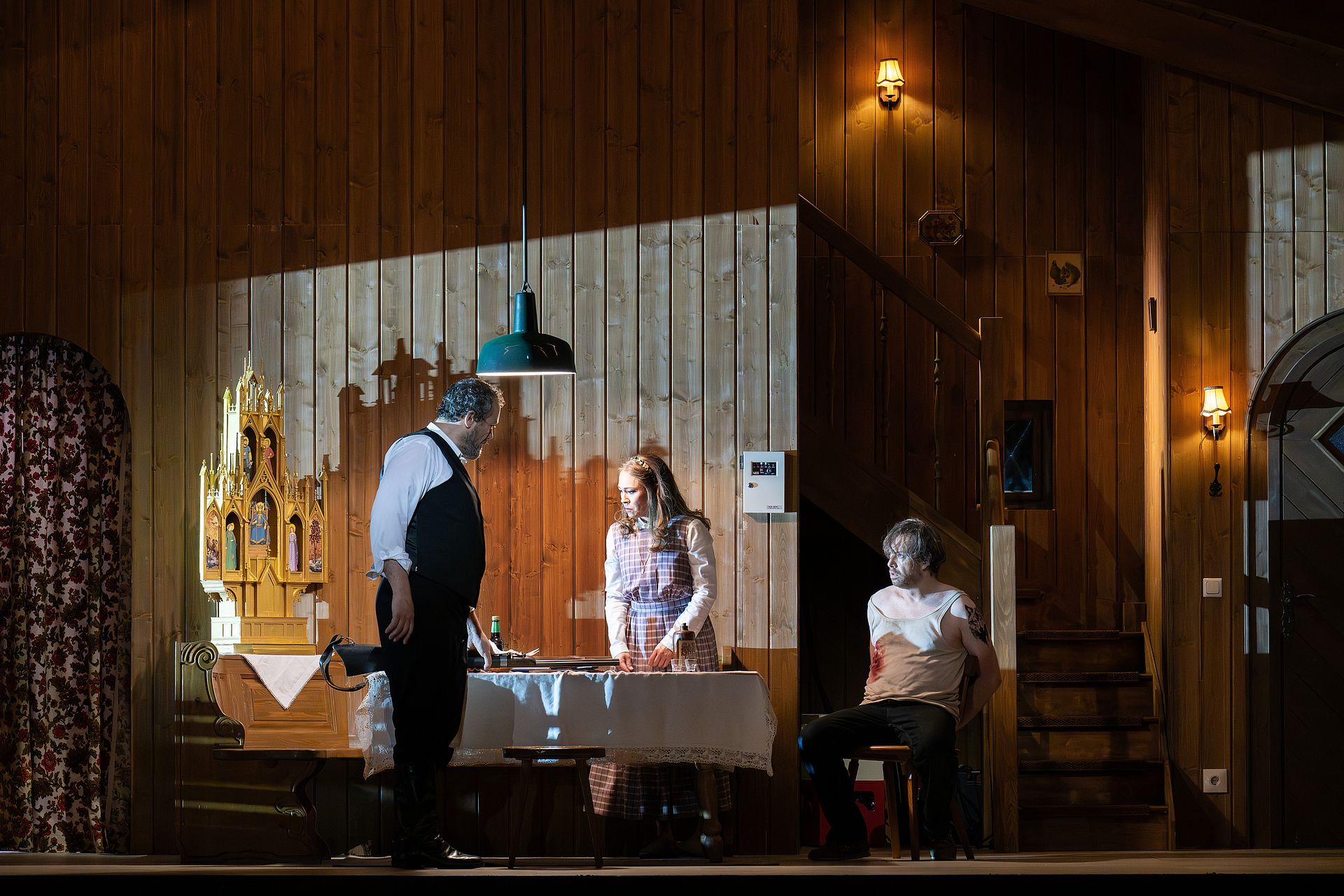
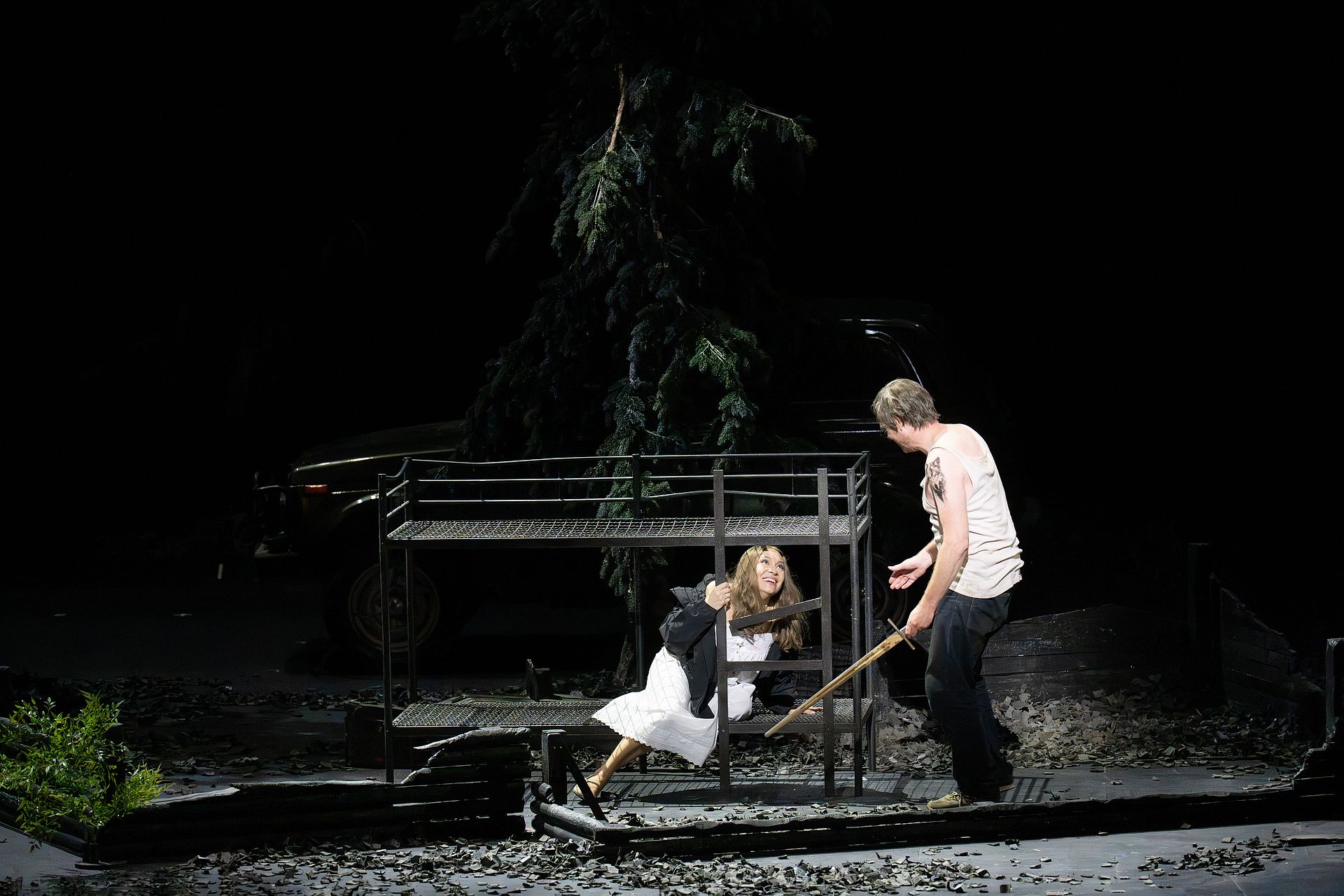
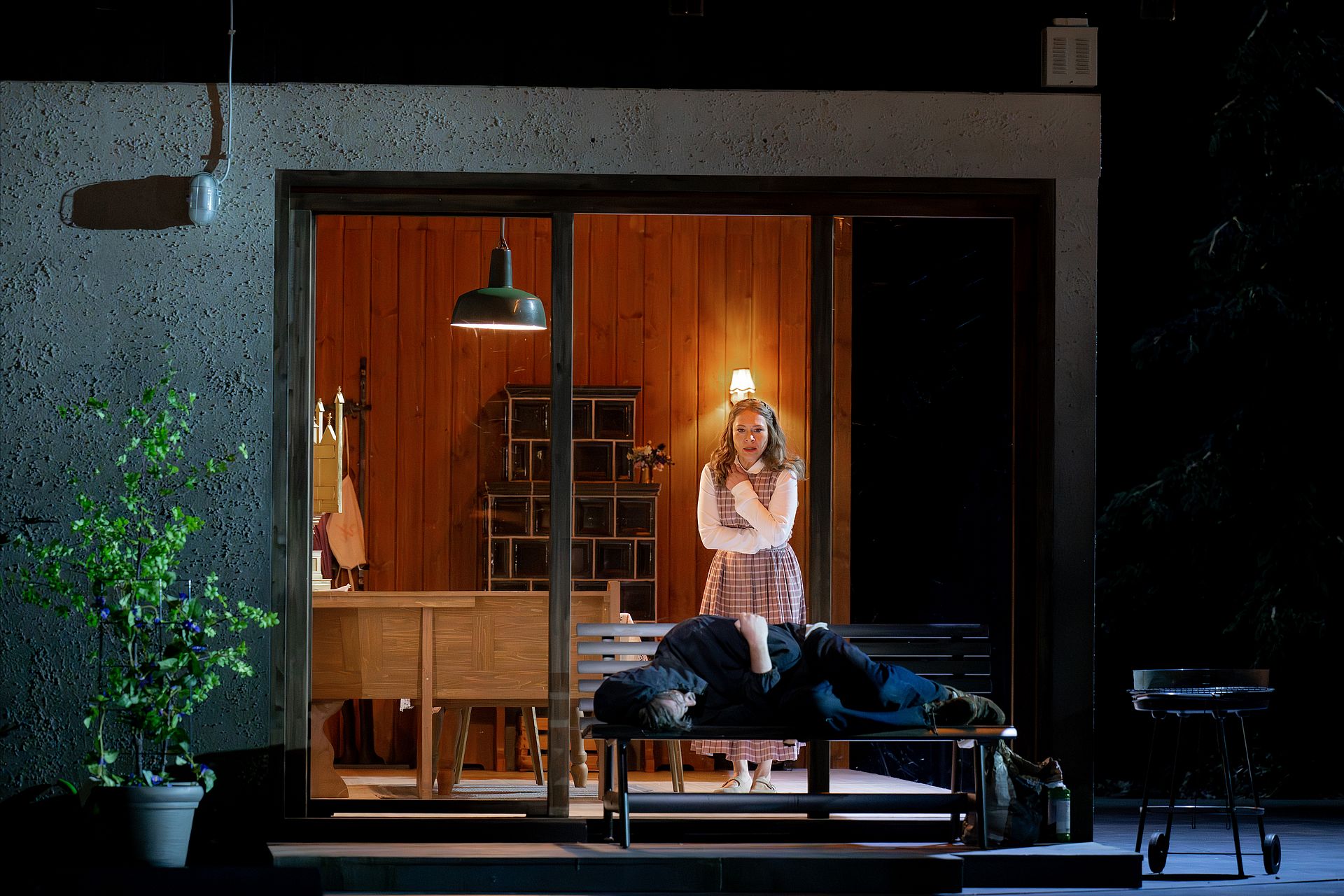
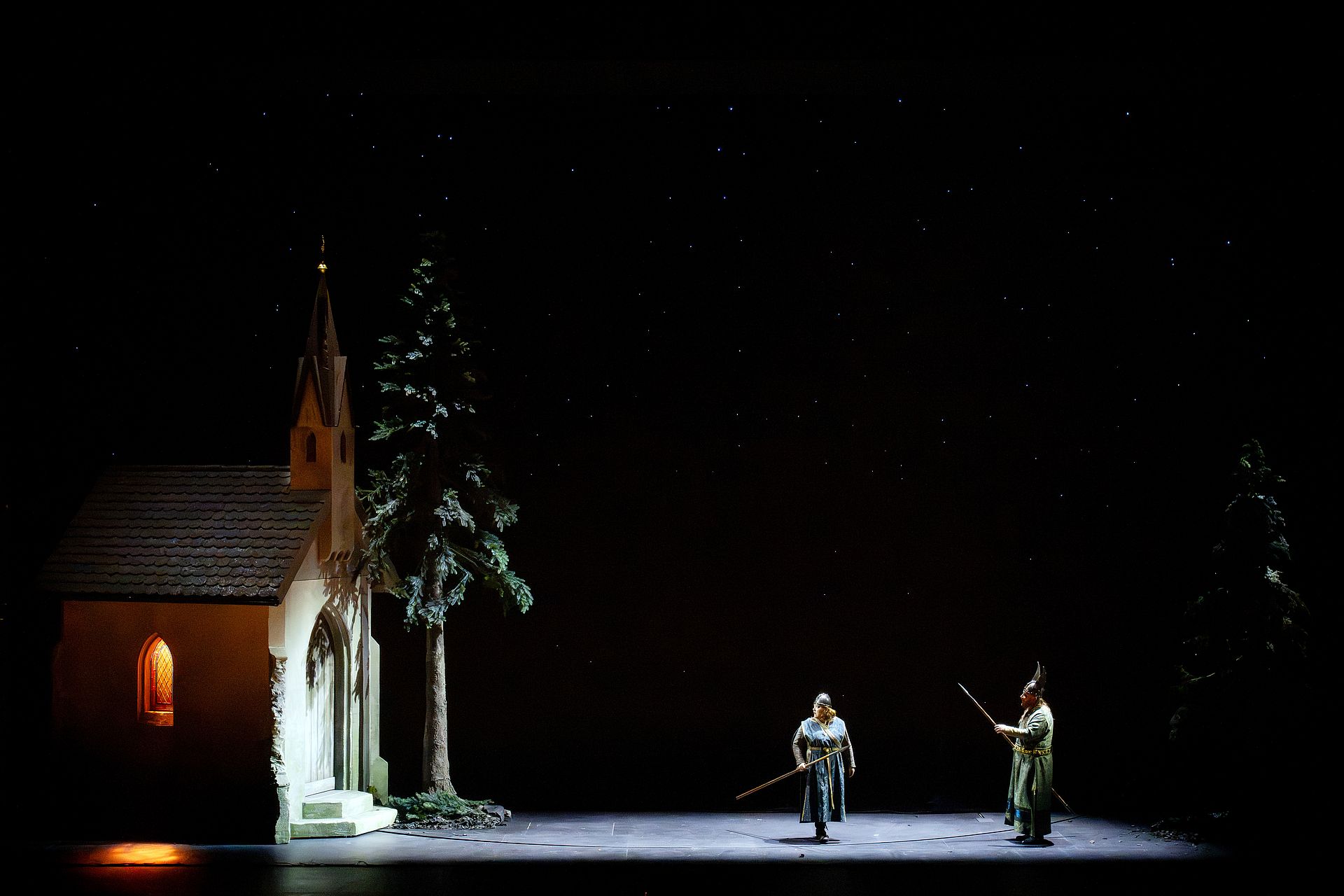
This Walküre is very much a continuation of the visual world of Das Rheingold and it’s clear that Kratzer is conceiving the cycle as one large continuous canvas. He takes us into a world where the gods live among us, contrasting the traditional costumes of the gods, with the quotidian world inhabited by Siegmund, Sieglinde and Hunding. Hunding’s home, a forest chalet, contains an altar that reflects the one where the gods were seated at the end of Rheingold, and Kratzer contrasts Hunding’s piety towards the gods with Siegmund and Sieglinde’s rejection of them, as they destroy the altar when they copulate. Kratzer gives us a real sense of power shifting throughout the evening, whether in Wotan submitting to Fricka’s will and sacrificing the siblings, or the fact that the gods are barricaded behind barbed wire at the start of Act 3. His staging of the ‘Walkürenritt’ is spectacular. He shows it as a movie, with video by Manuel Braun, Jonas Dahl and Janic Bebi, with images of the Valkyries flying over downtown Munich in a helicopter, or riding horseback through the city, to the surprise of tourist groups visiting the celebrated monuments. They drag the wounded back to the Nationaltheater building, which is surrounded by the aforementioned barbed wire, while the set for the final act, by Rainer Sellmaier who also conceived the costumes, reflects the lobby of the house, a place where here the Valkyries appear to be creating an army of warriors.

Kratzer’s visual imagination is staggering but also, in common with the earlier instalment, he has the technical ability to inspire his team to bring it to life. There’s so much more to Kratzer’s staging than the visual thrills, there’s a clear message here about power, about rebellion, and the relationship between those who dominated society for so long, coming to terms with the fact that that society has moved on. In the closing scene, Kratzer has an extra, who bears a physical resemblance to Sean Panikkar who sang Loge in Rheingold, appear to create the ring of flames around Brünnhilde and stands with Fricka to watch Wotan give her up. The personenregie is utterly natural throughout; Kratzer has obviously worked very hard with his cast to create vivid, believable characters. There was one aspect, however, that I felt didn’t quite work. During Act 1, there was occasional video to show Siegmund and Sieglinde’s idyllic childhood, featuring child actors with Nicholas Brownlee’s Wotan looking over them in domestic bliss. At the climactic moment of Sieglinde’s big declaration of Siegmund’s name, Kratzer shows video of the two children branding each other with a burning log, to create some kind of sibling marking. The effect was to distract from Irene Roberts’ big moment just when she needed to impose herself. Otherwise, this was a superb staging and one cannot wait to see what Kratzer will do with the rest of the cycle.
Today was a very hot day in Munich and we were given an announcement from the stage just before Act 3, that Brownlee was feeling unwell due to the heat and begged our indulgence. Perhaps it was also due to the heat that I found Jurowski’s conducting to be a bit stop-start. He certainly kicked off the evening in a visceral, exciting way, with a storm scene that was taken at a very brisk tempo. And yet, in the middle of the act, when Siegmund recounted his journey, or in Act 2, in the long duet between Wotan and Brünnhilde, the tension dipped significantly. Indeed, I missed a sense in Act 1 of it being conceived as a long, unbroken arc, in the way that Oksana Lyniv gave us in Bologna for instance. Instead, I did find Jurowski’s approach to be more episodic, alive to the changes of mood, certainly, but I did wish for him to push forward a bit in the more loquacious parts. At the same time, he and his musicians gave us some genuinely exciting moments. The ‘Walkürenritt’ was tremendously exhilarating, while Jurowski gave Wotan’s farewell a lovingly flowing tempo, and the winds in the closing flames felt almost redolent of the bells in the coronation scene of Boris Godunov. This is, of course, a Bavarian orchestra, one that, quite literally, owns this score. I did wish, however, that the strings had brought more emotion to the loving melody in the farewell – once you’ve heard an Italian orchestra play this, it’s really hard to hear it another way. I did appreciate how Jurowski led the ‘Todesverkündigung’, shaping the dynamics masterfully, allowing it to evolve organically and deliberately. The orchestral playing throughout, was of the highest quality. Even in this heat, the brass were utterly thrilling, and the solo timpanist made a tremendous noise.
One of the biggest pleasures I have is seeing artists grow in stature, authority, and technique. In previous encounters with Brownlee, I have had a sense of the support not being completely lined up. Tonight, that wasn’t a concern at all. He was absolutely sensational. Despite the extremely difficult circumstances, he gave so generously of himself. The voice is massive, rich and dark, with a striking verbal acuity that made the text live. He rode the surging textures from the pit with absolute ease, with Jurowski not having to hold back on the volume, and the top is so free and easy, which meant that the voice rang out in his final phrase where so many before him have run out of gas. This will not have been an easy evening for Brownlee, but his commitment, his generosity of vocalism, and the healthiness of his instrument all gave an enormous amount of pleasure.

Miina-Liisa Värelä, who sang Sieglinde alongside Joachim Bäckström’s Siegmund in Helsinki, tonight graduated to Brünnhilde. It’s rare to hear this role sung with such a sheerly beautiful instrument. Värelä’s soprano is so glamourous in sound, with a bright, silky sheen to the tone. The role lies relatively low, once past those opening battle cries, and there’s a richness to Värelä’s voice that was beguiling to listen to. Moreover, she gave notice of a bel canto technique in the way that she crossed the lower passaggio in the final act, the registers always integrated. Previously, I’ve found Värelä to be rather verbally indistinct. Tonight was different. She savoured the text in the ‘Todesverkündigung’, using the words to colour the tone, making every word tell. Yes, at fuller volumes, the words weren’t quite as clear, but Värelä has come a very long way already and I’m so excited to see her grow even further as we progress through the cycle.
Bäckström’s Siegmund reinforced the positive impression he made in the Finnish capital. The voice is bright and forwardly placed. He also made much of the words, the clarity of his diction most impressive. He held onto his ‘Wälse’s for a tasteful length of time and his ‘Winterstürme’ was sung in a loving legato. He did run out of steam at the end of Act 1 but, again, given the heat, this was forgivable. Roberts brought her bright, sunny mezzo to Sieglinde. She’s a stage animal, throwing herself into Kratzer’s regie with uninhibited energy. I did find the voice to become a little cloudy in tone higher up, and the text could have been slightly clearer at fuller volumes. She rose to her big moment in Act 3 with generosity, the voice taking wing thrillingly, the sound blooming gloriously into the house. Ekaterina Gubanova was a real asset to the cast as Fricka, singing her music in her focused, smooth mezzo, with easy reach on top. Ain Anger’s Hunding was sung in a large, somewhat grainy baritone, with a dangerous snarl to the tone. We also had a tremendous group of Valkyries who sang with great extroversion.

This was a tremendous second instalment in the Staatsoper’s evolving Ring cycle. Jurowski and his orchestra were on terrific form, and even if I had some reservations about some of his tempi, the combination of the whole was more than satisfying. Vocally, it was magnificent, even with a cast with very few native German speakers, the text was so utterly clear, driving the drama forward. What a privilege it was to witness Brownlee and Värelä grow so much as interpreters and technicians. Then, there was Kratzer’s staging. The sheer inventiveness of his visual imagination, the way that the arc of the cycle is becoming apparent, the clarity of his storytelling, all made for a thrilling evening in the theatre. The audience responded warmly at the end of each act and, at the close of the evening, gave the entire cast a thunderous ovation. The performance on July 4th will be broadcast online, if you can’t get to Munich, don’t miss it.
 operatraveller.com