Donizetti – Lucia di Lammermoor
Lucia – Rosa Feola
Edgardo – Piero Pretti
Enrico – Boris Pinkhasovich
Raimondo – Michele Pertusi
Arturo – Leonardo Cortellazzi
Alisa – Park Hyeonsol
Normanno – Paolo Antognetti
Coro del Teatro alla Scala, Orchestra del Teatro alla Scala / Speranza Scappucci.
Stage director – Yannis Kokkos.
Teatro alla Scala, Milan, Italy. Tuesday, July 14th, 2026.
For its final operatic offering before the summer break, the Teatro alla Scala has chosen to revive Yannis Kokkos’ 2023 production of Lucia di Lammermoor, with a mainly Italian cast, and conducted by Speranza Scappucci. This was an evening that gave us an opportunity to hear the current state of bel canto in the land that gave the operatic form to the world.
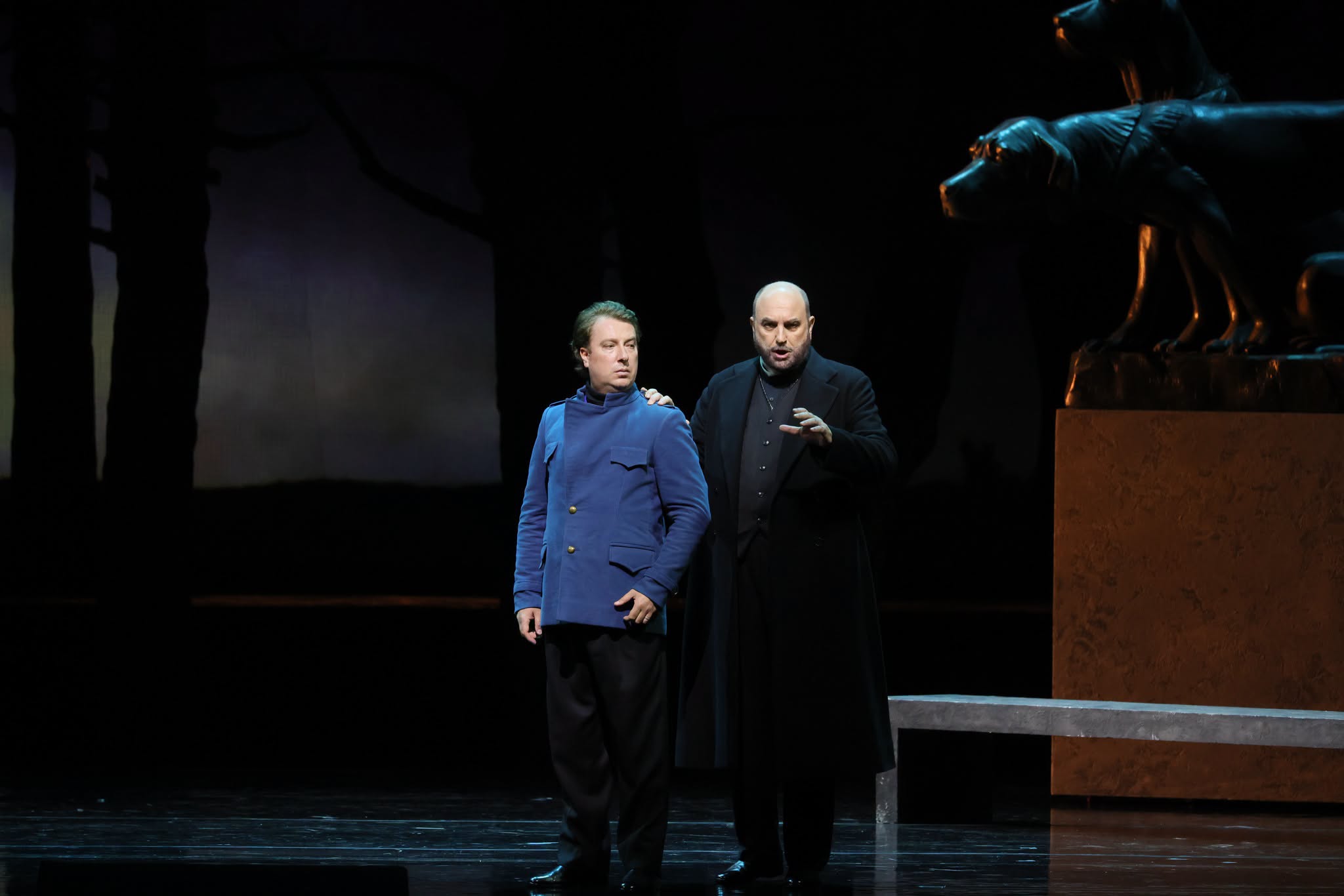
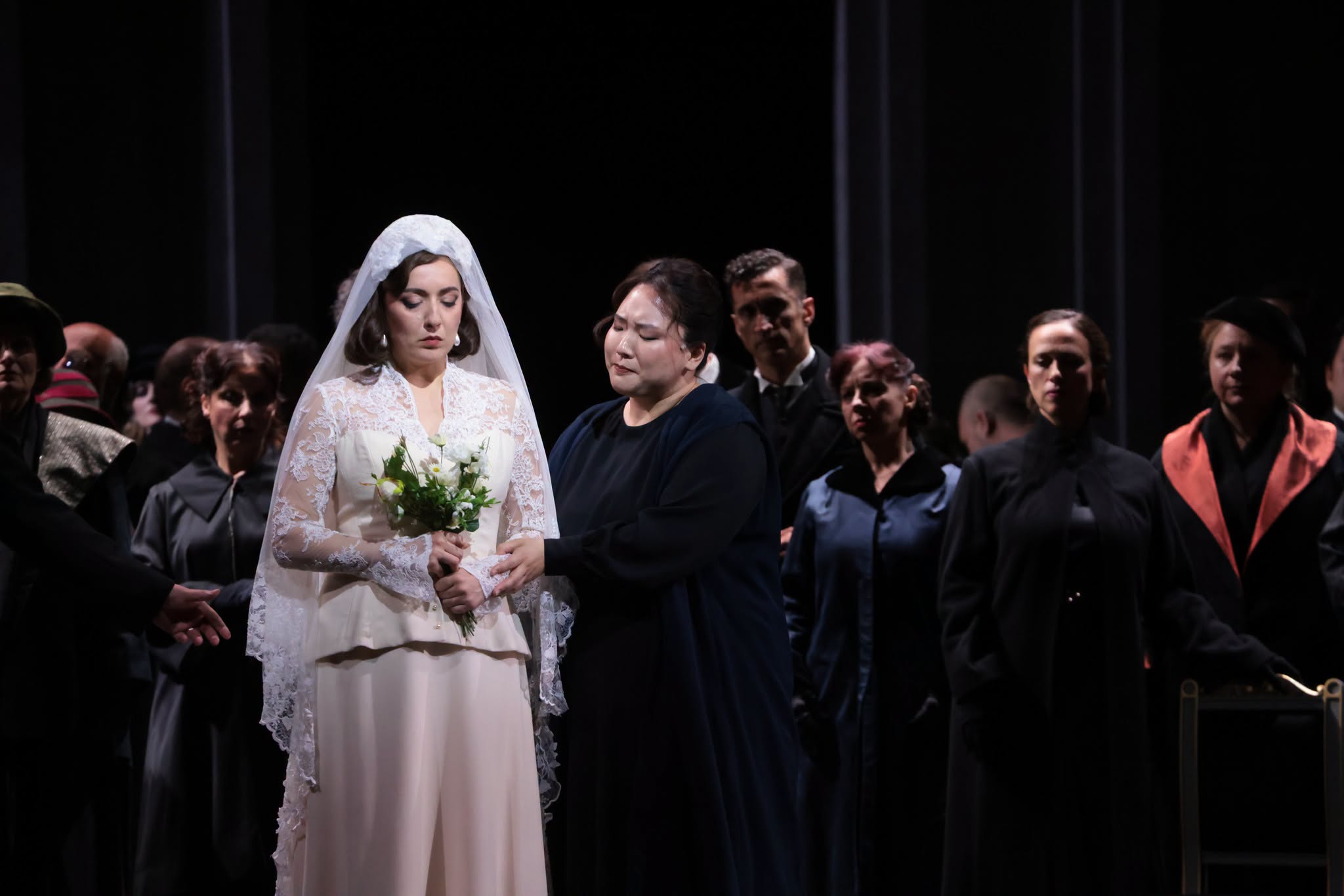
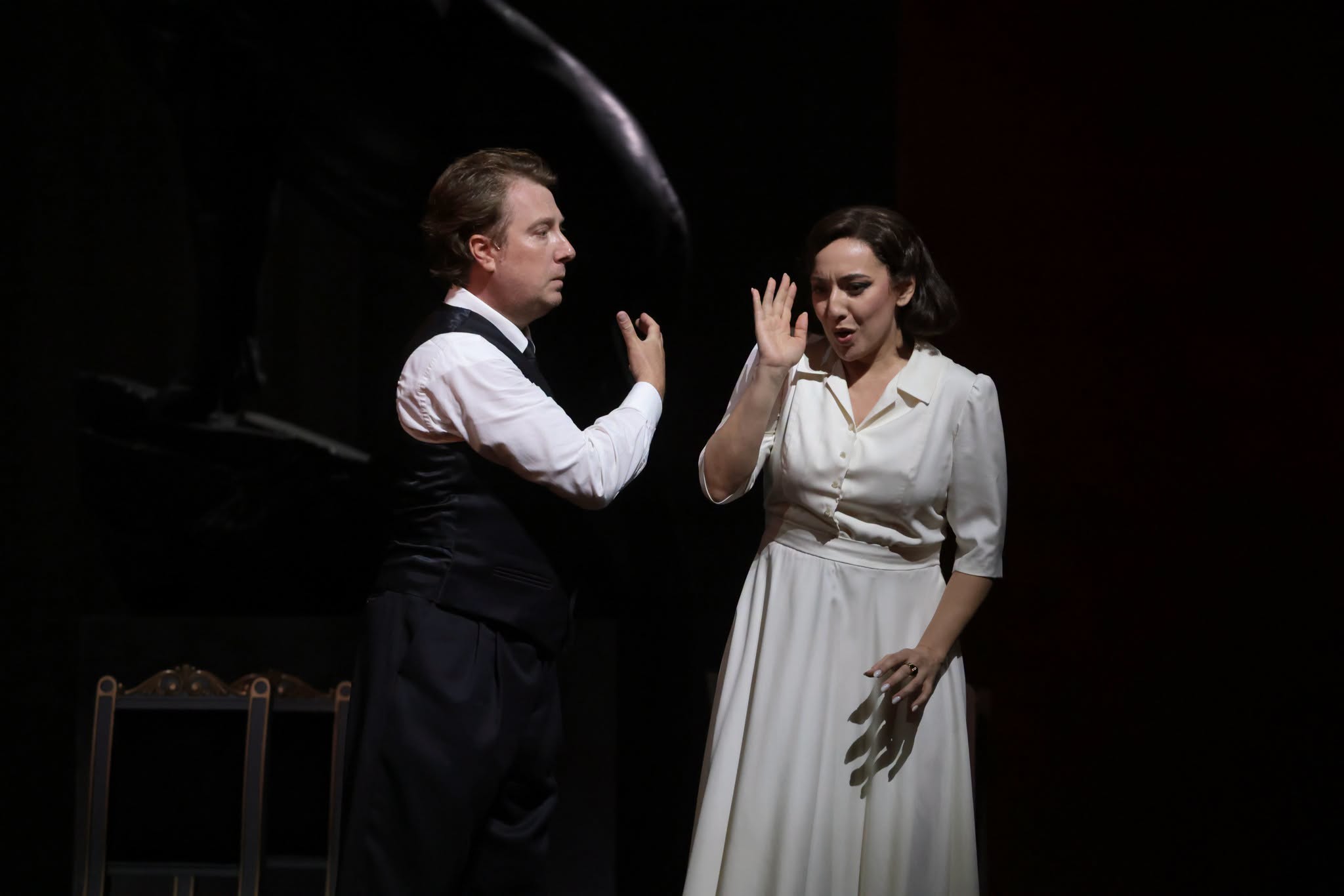
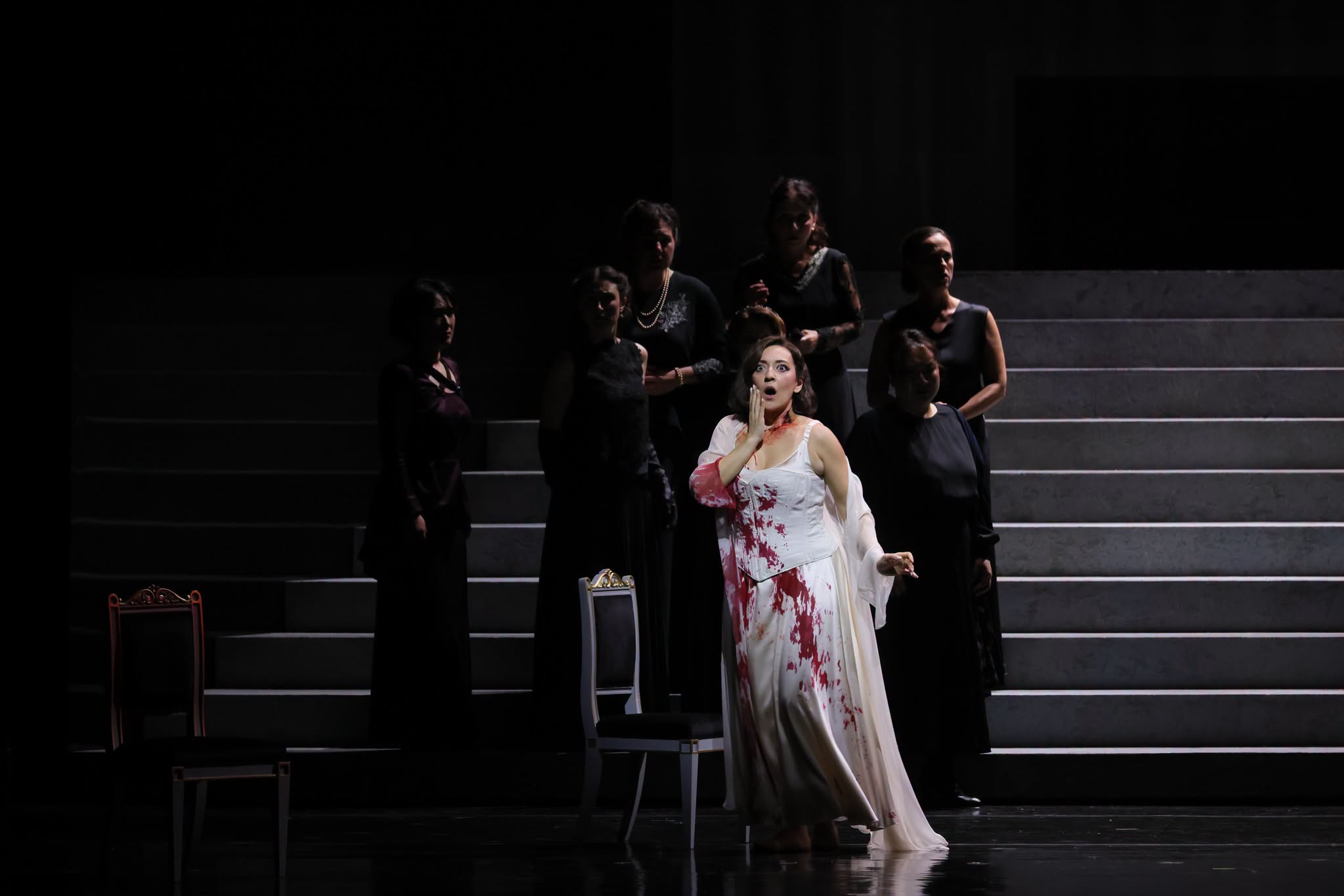
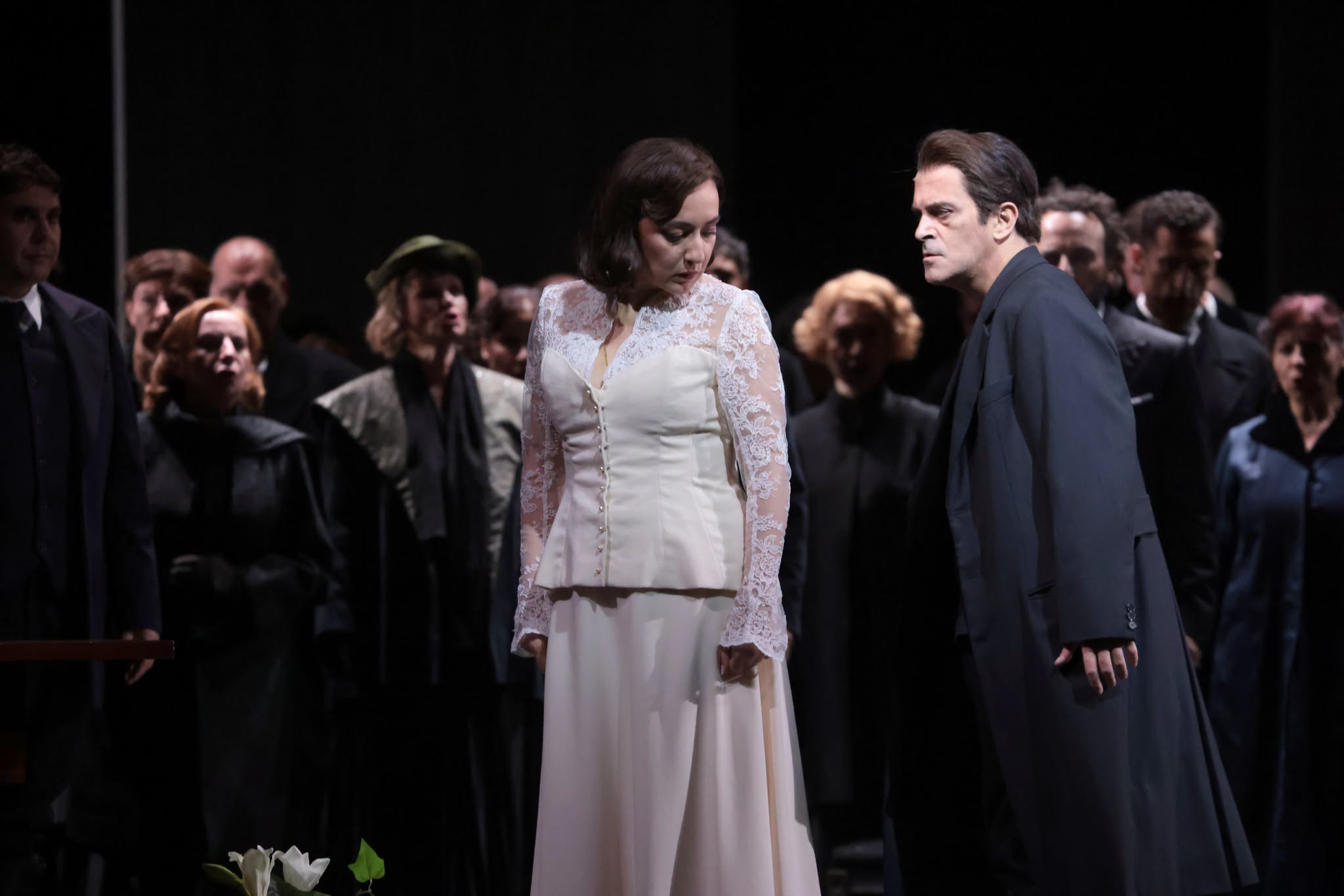
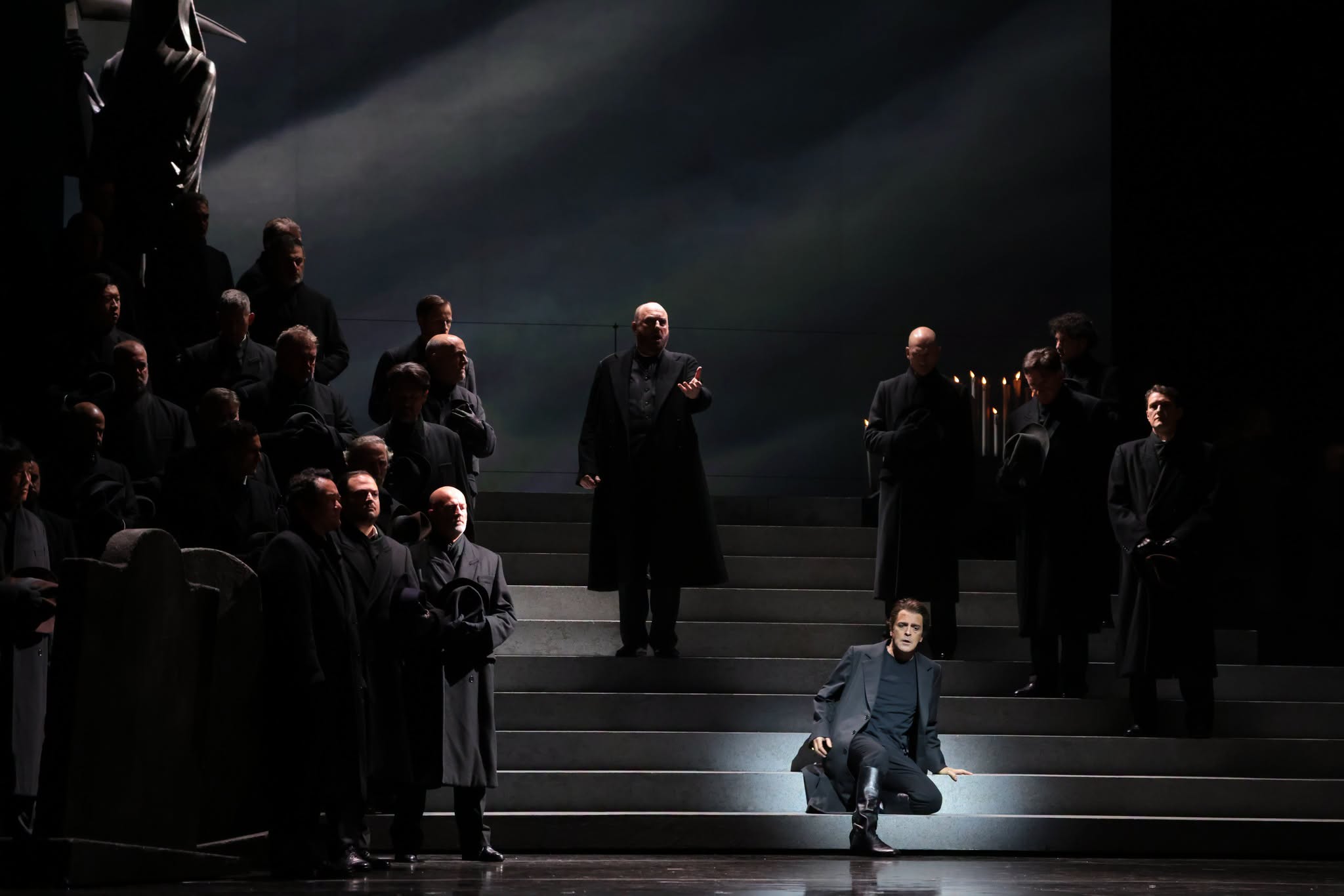
Kokkos’ staging, tonight revived by Marco Monzini, harks back to an earlier operatic era. The personenregie was extremely rudimentary, with characters left to gesticulate, arms outstretched to the front, and movement, for both the principals and the chorus, consisted of moving from one side of the stage to another. As one might expect with Kokkos, there are some interesting stage pictures, built around clear lines. The opening act saw the action take place in a forest, with video projections by Eric Duranteau, offering visual accompaniment throughout. These were used to most effect in the Wolf’s Crag scene, where the auditorium was occasionally lit by lightening. The setting for the mad scene gave us a staircase, down which Lucia entered to offer us her showpiece. Some of what Rosa Feola’s Lucia was required to do in that scene seemed to have been imported from a production of Salome, with dance-like moves up and down the stage. The stage was occasionally decorated with some sculptures, also designed by Kokkos, that added appropriate furniture – for instance a statue of the grim reaper in the final scene. For much of the evening, it all felt rather perfunctory, pedestrian even. Then, when Feola entered for her opening number, something happened. She held our attention in a way that the staging didn’t, taking the evening to another level. More on that shortly.
The rather slow start to the evening wasn’t especially helped by Scappucci’s tempi from the pit. We were given two intermissions, and when she returned for Act 2, it felt that both she and the professors of the orchestra must have enjoyed an affogato or an espresso at intermission, because from then on things seemed to pick up. Scappucci moulded Act 1 in a heavily manicured, weighty way. The quality of the playing she obtained from the Scala orchestra was excellent – the character of the winds, the unanimous attack in the brass and strings, all reflected thorough and efficient musical preparation. Yet this was an interpretation that initially left me in admiration of the quality of her direction, if not utterly convinced by it. Then, in the Act 2 finale, the espresso must have kicked in because Scappucci picked up the tempo, drove the stage and pit forward in total unanimity, picking things up with genuine excitement. What also struck me in Scappucci’s conducting was her elastic use of rubato and ability to keep her forces in total unanimity with her approach. Hers was a reading that initially felt overly ponderous and weighty but grew in excitement as the evening progressed. She gave us a big, grand orchestral sound, but also encouraged the strings to pull back on the vibrato in places to give the sound an other-worldly tint. The glass harmonica player also added an appropriately ghostly edge to the sound.
Boris Pinkhasovich also sang Enrico when the production was new. Perhaps it was due to the heat, on this sultry Milanese evening, but it did sound that he took a few moments to get into his stride. He has an impressive ease on top, giving his numbers some appropriately virtuosic embellishments to the line. Initially, the tone did some rather grainy and effortful up there, but, by the time he got to the Act 2 duet with Lucia, the top rang out thrillingly. Moreover, that duet was shaded in a most sensitive way, filling Enrico’s music with fear of what could happen to him if Lucia’s marriage were not to go ahead. Pinkhasovich gave us a much more psychologically astute account of his character than I have previously heard– a villain with motivations, rather than a simple cartoon character.
Piero Pretti was rather unflatteringly costumed by Kokkos, to create an Edgardo who reminded me visually, at least from the back of the Platea, of Lurch in the 1960s television version of The Addams Family. Fortunately, there was nothing horrific about his singing. His is a compact, focused tenor, with plenty of squillo despite its narrow sound. As with his colleagues, he was able to shade his music to striking effect, his repeated incantations of ‘O bell’alma innamorata’ all given a constant variety of approach. That said, I did find his vocal production to be rather robust, more appropriate for verismo, perhaps, than the even lines of bel canto. Still, his was an efficient and reliable account of his role.
Michele Pertusi also returned from the initial run to assume the role of Raimondo. His bass is now displaying the passage of time, with the tone now grey, though with vibrations still fairly even. What is undimmed is his understanding of the style and the language. Leonardo Cortellazzi was an asset to the cast as Arturo, making a positive impression in his brief role, with a focused, penetrating tenor. The two supporting roles of Normanno and Alisa were confidently taken by Paolo Antognetti and Park Hyeonsol respectively. Once again, the Scala chorus demonstrated the tremendous improvement in standards that has taken place in the half-decade since Alberto Malazzi took over. They made a big, massive sound, rich yet even in tone and attack, with the tenors, in particular, shining out of the textures.
Then there was Feola. In a world of homogeneity, what a pleasure it was to hear a Lucia in the great Italian tradition. From her very first entry, Feola held our attention, not only due to her immaculate technique, but also due to her ability to combine note, line and text to really mean something. The voice is founded in a firm chestiness, the tone abounds in peaches and cream pulchritude, and the registers are all evenly integrated. Feola is a supremely intelligent singer. She added always tasteful and interesting embellishments to the line, making it feel, for those moments, that she was the only person in the world who could sing this music. She didn’t shy away from adding some thrilling acuti, the voice ringing out into the auditorium thrillingly. Feola also sang her mad scene with wonderfully limpid tone, pulling back on the dynamics while always allowing the voice to soar magically through this legendary auditorium. There are evenings where one feels like a performance is routine, and then an artist enters and transforms the course of the evening. Feola achieved that tonight. She pulled us in and made us live Lucia’s story through her, thanks to her deeply idiomatic musicality. Feola most certainly gave us an evening to remember.
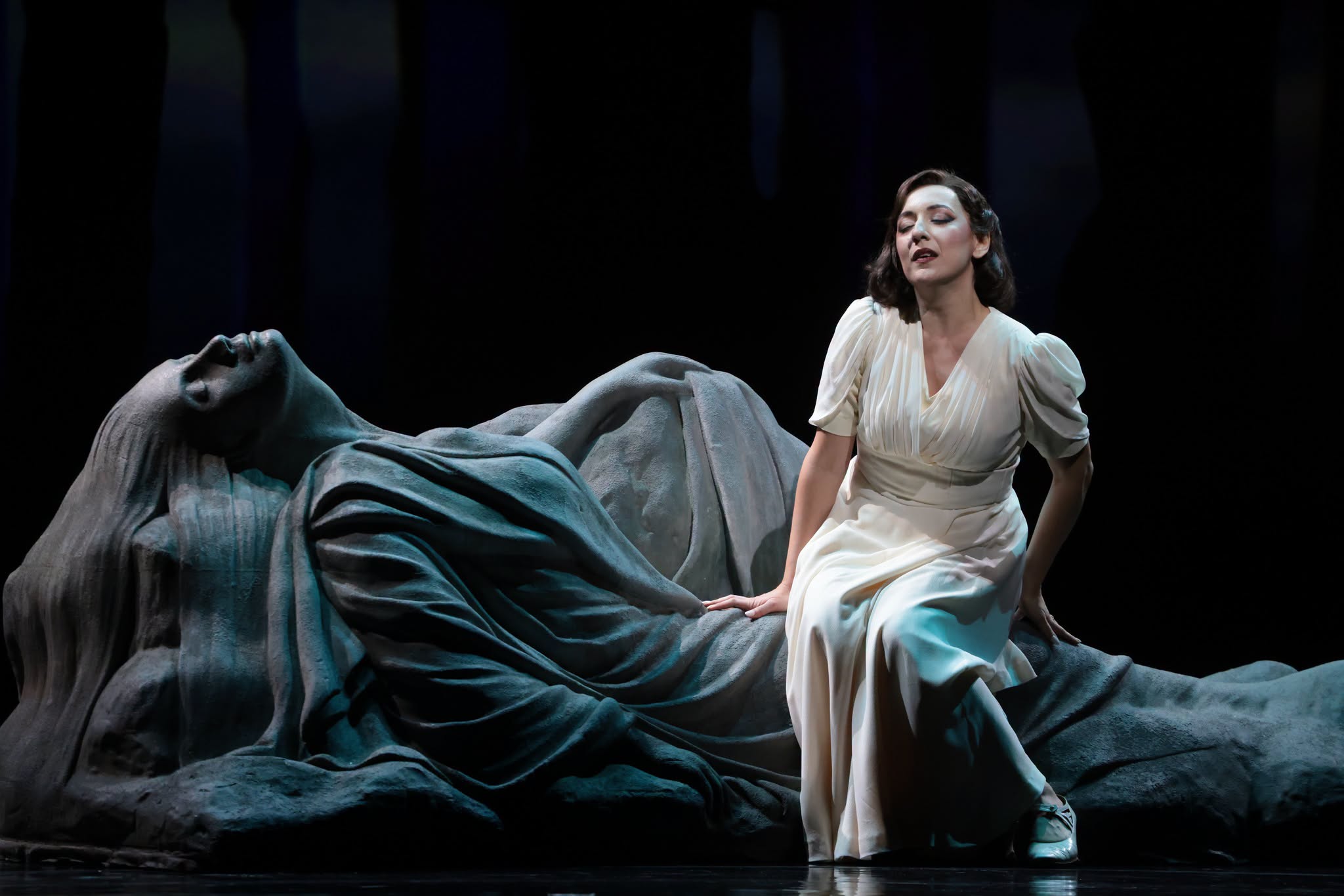
This was an evening that gave us so much to appreciate. Kokkos’ staging was statuesque, literally, but at least gave us something to look at. The focus was very much on the music. Yes, the singing from the male characters was robust and Scappucci and her musicians took a little while to come to life, but then something happened. And that something was Feola, who transformed the course of the evening, giving us a singing lesson in how this music should go. There’s only one more performance left in the run. If you are lucky enough to get tickets, do go. The audience response at the close was generous and warm, with a massive roar of approval when Feola took her curtain calls.
 operatraveller.com
Thank you for this detailed and perceptive review. I was fortunate enough to see this powerful production with the original cast. It has just been released (with that cast) as a beautifully-produced 2 dvd set. I find I appreciate this stately production more with each viewing. It seems to me it is reminiscent of Greek tragedy.