Rossini – Il barbiere di Siviglia
Il Conte d’Almaviva – Marco Ciaponi
Don Bartolo – Roberto De Candia
Rosina – Alexandra Meteleva
Figaro – Kim Min
Don Basilio – Giorgio Caoduro
Fiorello/Un ufficiale – Gonzalo Godoy Sepúlveda
Berta – Aloisia de Nardis
Coro del Maggio Musicale Fiorentino, Orchestra del Maggio Musicale Fiorentino / Riccardo Bisatti.
Stage director – Damiano Michieletto.
Cavea del Teatro del Maggio, Teatro del Maggio Musicale Fiorentino, Florence, Italy. Saturday, July 18th, 2026.
For the month of July, the Maggio Musicale Fiorentino moves its activities to a space called the Cavea, situated on the roof of the modern theatre. Getting there requires one to walk a staircase along the side of the building up to the top, quite a challenge on a humid Florentine night, but once up there, visitors were rewarded with a coupon for a refreshing, free ice cream, which was a lovely touch. The space itself is wonderful. It’s a natural amphitheatre, suitable for unamplified music, and being able to watch opera under the ‘cielo divino’ of the cradle of the renaissance is simply magical. Even more so because those willing to walk a few more steps to the top of the auditorium are rewarded with glorious views of Brunelleschi’s dome and other Florentine landmarks. I must admit, I was absolutely enchanted by the setting.

It also helped that the performance was similarly delightful. For its summer program, the Maggio has chosen to present Damiano Micheletto’s staging of Il barbiere di Siviglia, tonight revived by Stefania Grazioli, and conducted by Riccardo Bisatti. This staging is testament to how Michieletto is one of the finest opera directors around. Given the limitations of working in the outdoor space, he makes so much of little, the set consisting of two dozen red chairs on the black stage that are moved around to create varying stage pictures, and occasionally accessorized with other accoutrements, such as some cushions for Rosina’s boudoir, or a sheet upon which graffiti artists paint a storefront for Figaro’s salon. With a relatively small stage, the chorus sings dressed in black on the side. Michieletto starts the evening with a train announcement, announcing an express train from Florence to Seville. The overture is then staged with the principals acting out passengers on a train, along with some actors who are constant presences on the stage to move the chairs around. I loved that idea of the opera taking us from our quotidian reality of train delays and commuting to a fantasy world, full of outlandish costumes, by Carla Teti.

Throughout the evening, Michieletto throws so many visual gags into the action. Whether, soldiers showing up in Donald Duck masks in the Act 1 finale, or Rosina acting as a boxing match hostess while the Conte squares off against Bartolo. The entire evening is deliciously zany and, in that respect, felt so completely Rossinian. The hours passed by as if they were seconds, the stage action was intricate, while also feeling completely spontaneous – and had clearly been revived most efficiently by Grazioli. The principals all threw themselves into the action fully and seemed to be having the most wonderful time, the energy emerging from the stage was completely winning. This, combined with the magical setting, meant that one sat watching the evening with a constant grin from beginning to end.

Musically, the evening was in the very competent hands of Bisatti. He was aware of the limitations of operating in an outdoor venue such as this. He kept the tempi nicely swift – the ‘buona sera mio signore’ was taken very quickly, as was Berta’s subsequent aria. Despite the very humid evening, the string and wind intonation was true throughout, the modest string section (8 first violins and 3 double-basses) played with exceptional precision of attack, in an acoustic where there was nowhere for them to hide. The recitatives were accompanied by an amplified electronic keyboard set to resemble a harpsichord. Of course, one might have preferred a fortepiano, but given the limitations of operating in a venue such as this, this was an effective solution. I had not previously been aware of Bisatti, but tonight he proved himself to be a terrific Rossinian and a young conductor I would be keen to hear more from.
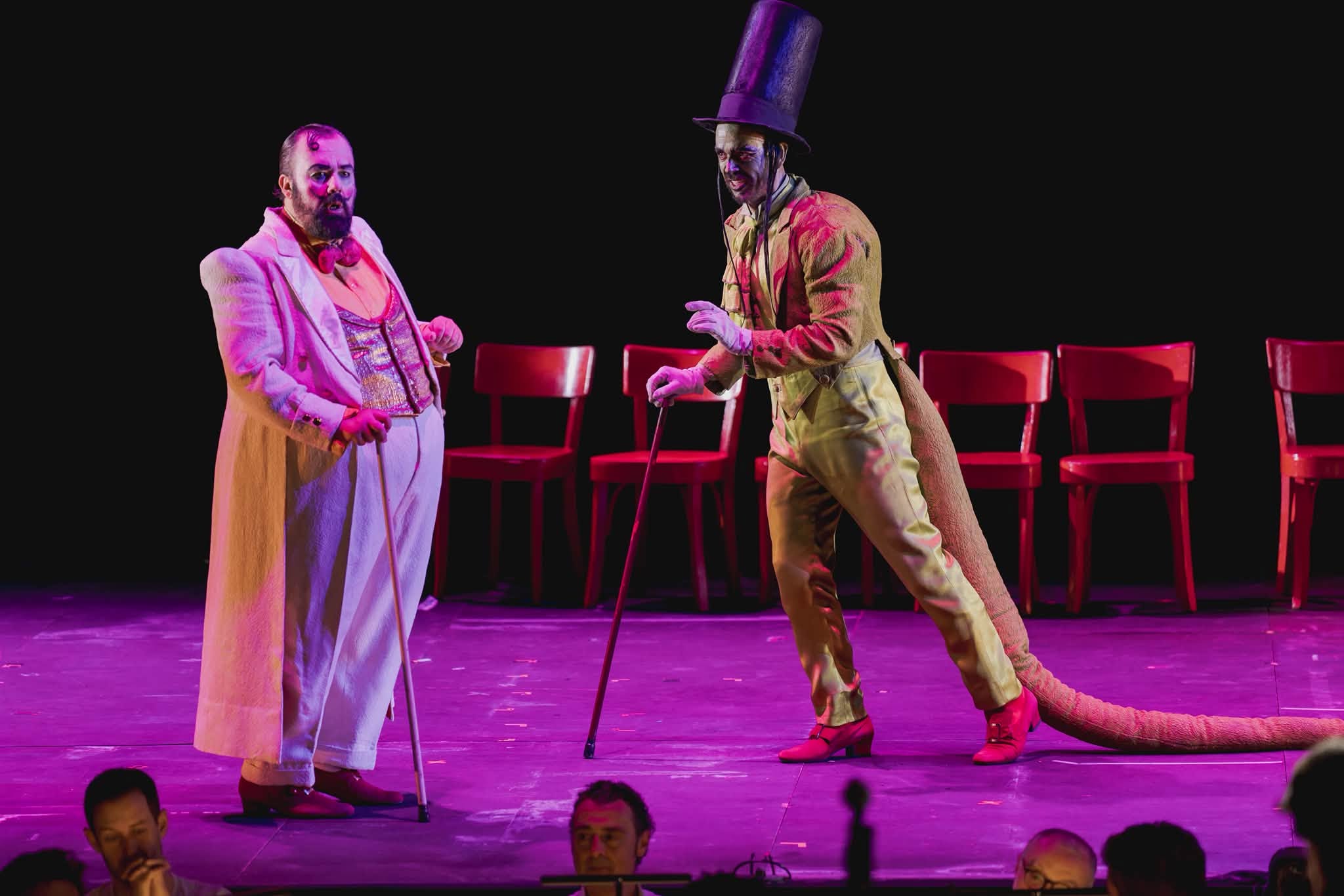
Marco Ciaponi sang the Conte in a bright, forwardly-placed tenor. He sang his opening cavatina, ‘Ecco ridente in cielo’, with a princely line, the legato wonderfully smooth, and the voice opening up with sunny ease on top. He also has delicious comic timing, entering into his various guises most gamely. Unfortunately, we didn’t get to hear his ‘Cessa di più resistere’, which is a real shame as I’m sure he would have sung it spectacularly. Ciaponi has the ability to dispatch the rapid-fire coloratura with brilliant ease. Naturally, his diction was superb, but this was the case throughout the entire cast, which meant the evening took wing even more.
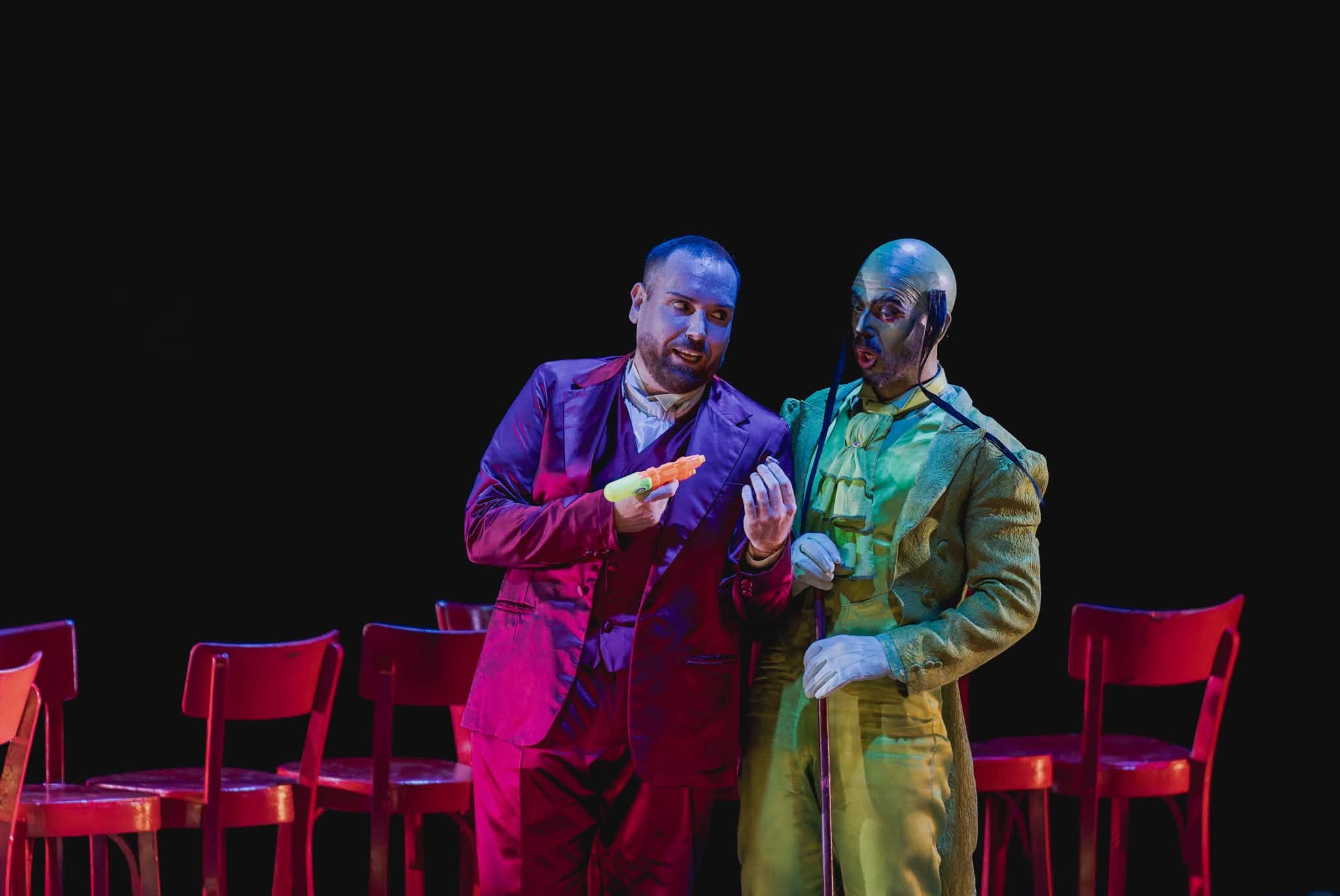
Alexandra Meteleva sang Rosina in a similarly sunny mezzo. Her ‘una voce poco fa’ was dispatched with immaculate coloratura and genuine wit in her stage presence, the words always nicely forward. Hers was a strong Rosina, one who was never going to submit to Don Bartolo. From the very first moments, Metelva made that clear through her constant playful mocking of Bartolo and the way that she used her vivacious tone colours to illustrate the words. It was a luxury to have Roberto De Candia as Bartolo. He’s a true Rossini master, dispatching the rapid-fire patter with precision, while never compromising the clarity of his diction. He was also tremendously game, compromising his intonation, while singing his arietta of admiration, to Rosina to terrific comic effect.

Kim Min sang Figaro in wonderfully idiomatic Italian. He’s clearly learned the style well, dispatching the recitatives with genuine personality and character. He immediately made an impression in his entrance aria, giving it a scintillating bravura edge, yet never succumbing to the urge to compromise the tone. Throughout the evening, Kim was a deliciously congenial presence on stage. Giorgio Caoduro sang Basilio in a big, rich bass. His ‘la calunnia’ was wonderfully conspiratorial, even in this outdoor setting, he used the dynamics to grow the aria gradually so that the ‘colpo di cannone’ felt genuinely exciting. In his roles, Gonzalo Godoy Sepúlveda sang his music in a handsome, burnished baritone, sung nicely off the text. Indeed, I very much hope to hear his Figaro soon. Aloisia de Nardis capped the ensemble in the Act 1 finale in a diamantine soprano, while she sang Berta’s aria with genuine wit and easy reach. Despite their placement at the side of the stage, Lorenzo Fratini’s chorus sang with good blend and genuine presence.
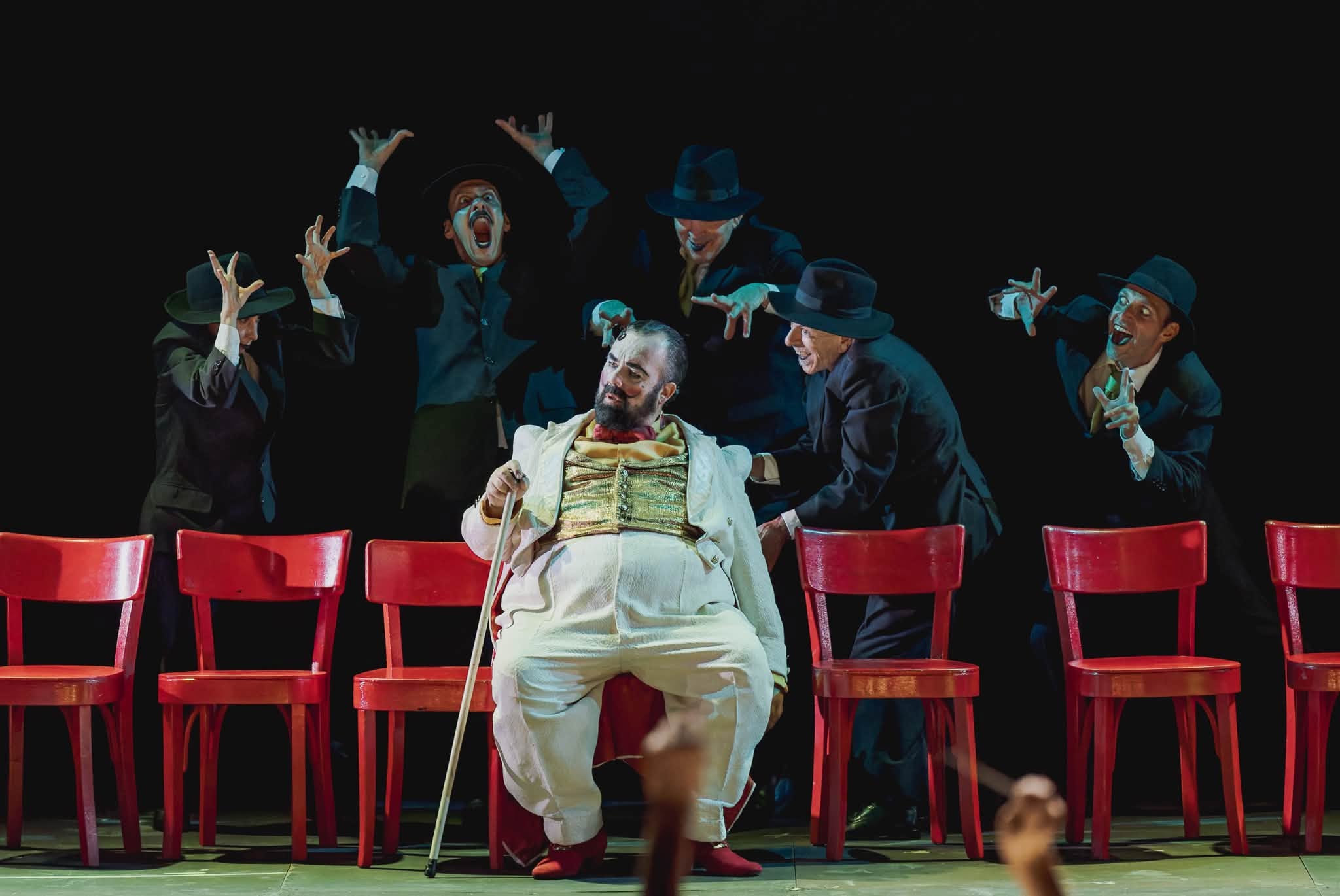
This was an absolutely uplifting evening in the theatre. The setting, under the Florentine stars, was simply magical. Yet what made it even more special, was the combination of Michieletto’s fabulously zany staging, one so clearly based in the music and text, with the youthful and vivid performances of the principals, together with Bisatti’s nicely zippy conducting. The audience seemed to be genuinely enjoying it as much as those on stage were, responding frequently with glee, and rewarding the entire cast at the close with a warm and genuine ovation. Regretfully, tonight was the last show of the run, which is a real shame since I would gladly sit through it all again immediately.
 operatraveller.com