Bizet – Carmen
Carmen – Vasilisa Berzhanskaya
Don José – Charles Castronovo
Micaëla – Ruth Iniesta
Escamillo – Davide Luciano
Frasquita – Aitana Sanz
Mercédès – Lora Grigorieva
Moralès – Isaac Galán
Le Dancaïre – Cristòfol Romaguera
Remendado – Matías Sebastián Herrera
Zuniga – Manuel Fuentes
Escola Coral Veus Juntes, Escolania de la Mare de Déu dels Desemparats, Cor de la Generalitat Valenciana, Orquestra de la Comunitat Valenciana / Michele Spotti.
Stage director – Ted Huffman.
Palau de les Arts, València. Sunday, October 1st, 2026.
To open its 2026-27 season, the Palau de les Arts in València is staging this new production of Carmen, by Ted Huffman, in collaboration with the Grand Théâtre de Genève. This was my first introduction to Huffman’s work and I was eager to see something by a director who is receiving considerable exposure in the operatic world, currently. As always, the house has assembled an enticing cast of singers who are familiar quantities either in these roles or in the French repertoire, while the peerless house orchestra and its chorus were confided to the musical direction of Michele Spotti, music director in Marseille and, from this season, principal guest conductor at the Deutsche Oper.
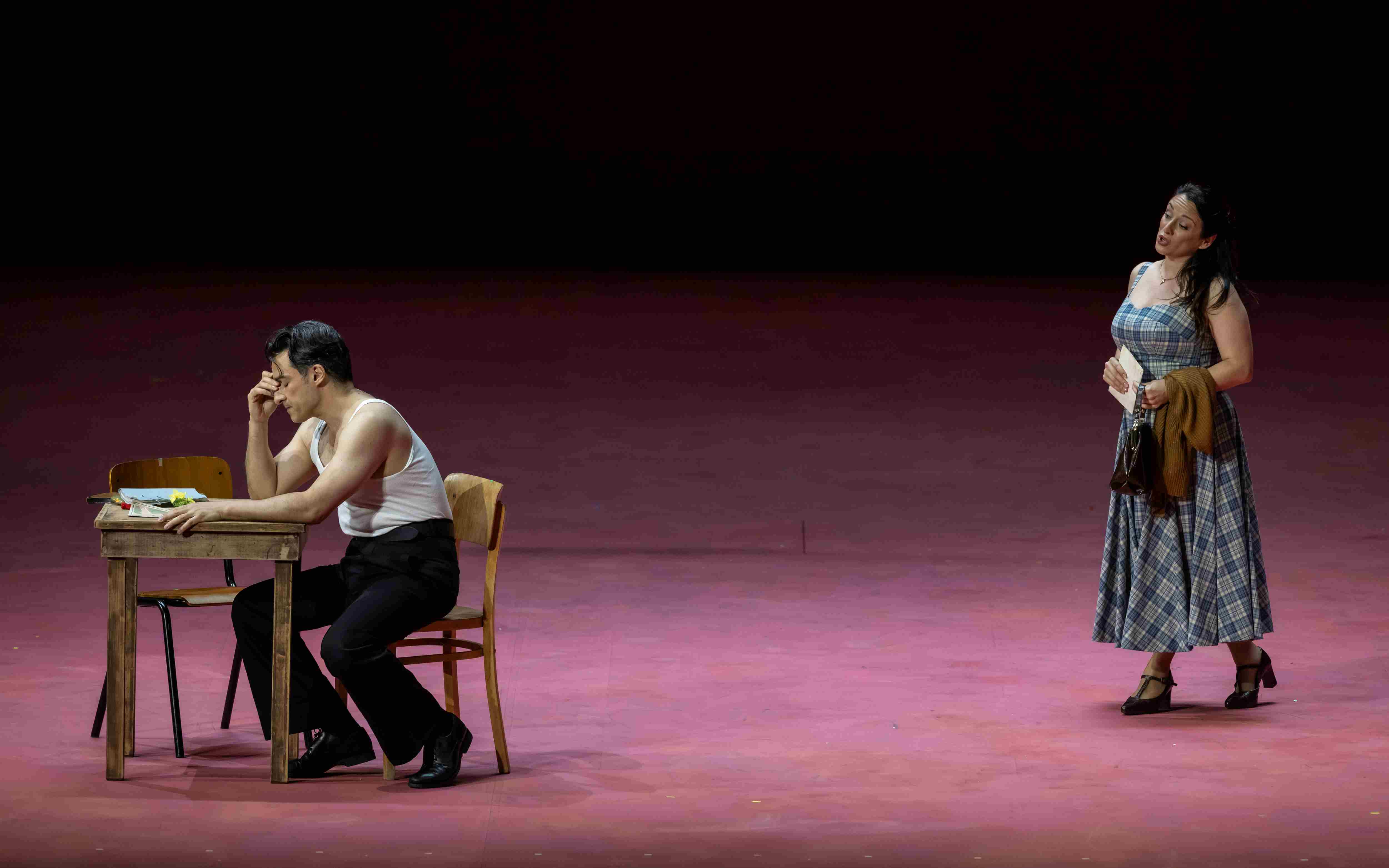
Huffman begins the evening on a bare set, the only accessory a large raised panel that dominates the centre of the stage and forms the main focus for where the action takes place on the set. As the evening develops, we see the entire cast, including the ladies, moving from their initial Act 1 uniforms of white vests and black pants, to more sophisticated attire as the story moves away from the military setting. The set, by Nadja Sofie Eller, consists of nothing more than some chairs moved on and off where necessary, a bar for chez Lilas Pastia, and some contraband hidden under the raised platform. It certainly makes for a stark setting, with the action wholly reliant on the principals and chorus to drive forward. Perhaps with that in mind, Huffman introduces a corps of six danseurs and nine danseuses who add additional visual insight – whether moving in synchronized dance patterns during the habanera, or giving us a three-quarter-time intermission flamenco show just before Act 4. Moreover, one of the danseurs or danseuses would set the scene at the start of each act by giving a summary of the prior plot in the Castilian tongue. I’m not quite sure why Huffman chose to do that rather than use either the Valencian variant of Catalan spoken here, or have an Andaluz speaker read the text to give it a more sevillano flavour, but it didn’t really add much, nor did it distract. The flamenco was impressive, however, and the insistent foot-tapping rhythms and Andaluz-inflected shouting did give us an appropriately visceral introduction to the Act 4 entr’acte.
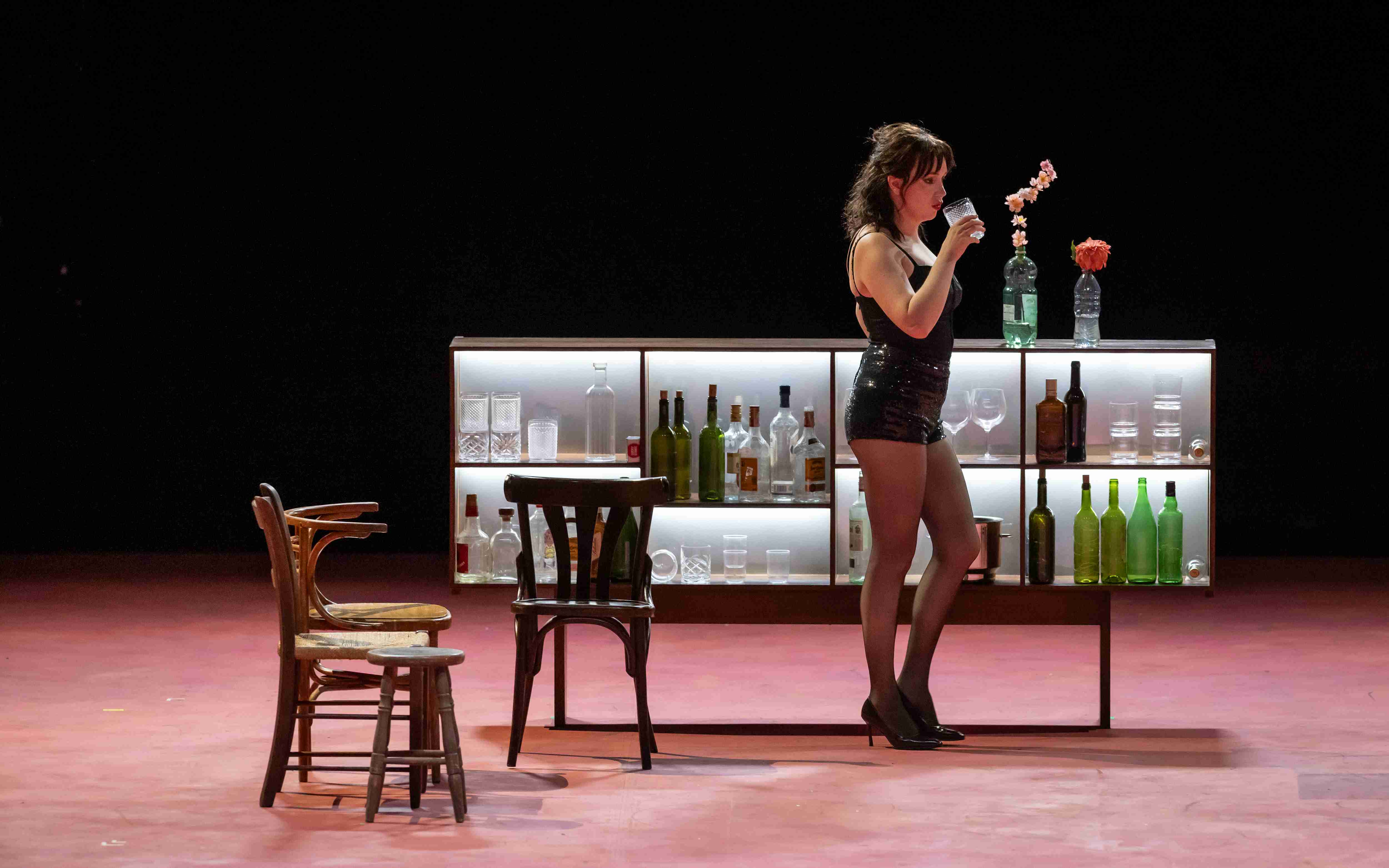
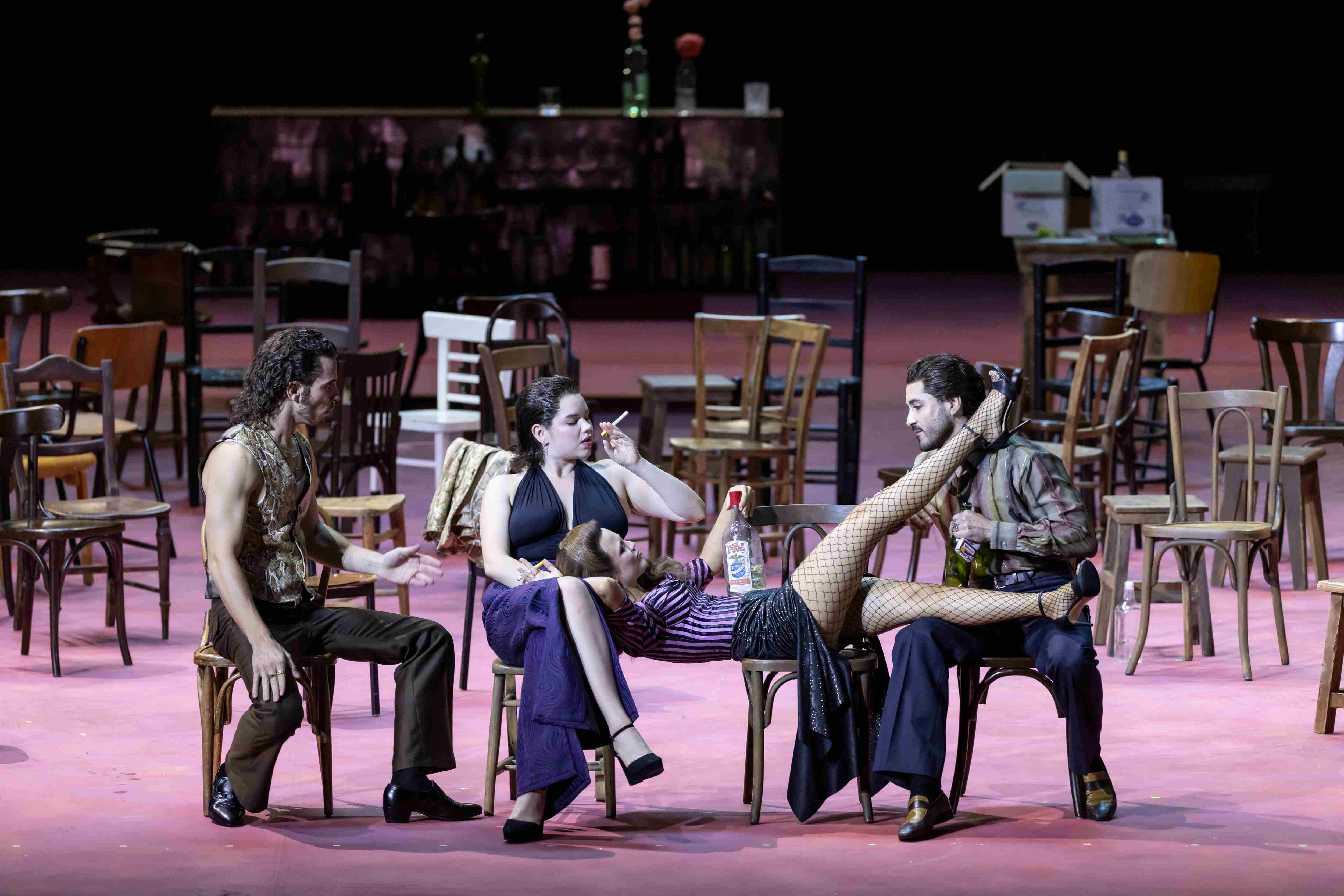
That said, Huffman’s staging does feel like a work in progress. On the one hand, we had a dramatic assumption as committed and visceral as Charles Castronovo’s Don José. On the other, there was Vasilisa Berzhanskaya’s Carmen, whose portrayal here made me think of a Russian exchange student who got lost on a night out. There were some interesting touches. The ‘chanson bohème’ was staged with some lively dancing from the corps, with Carmen made to stagger around looking as if she had consumed a bottle of Stolichnaya. There was also a superbly choreographed moment following ‘Avec la garde montante’, with a child playfully stealing a soldier’s hat. The ensuing cat-and-mouse game between the soldiers and the child was superbly executed with impressive physical precision, with choreography by Pim Veulings.
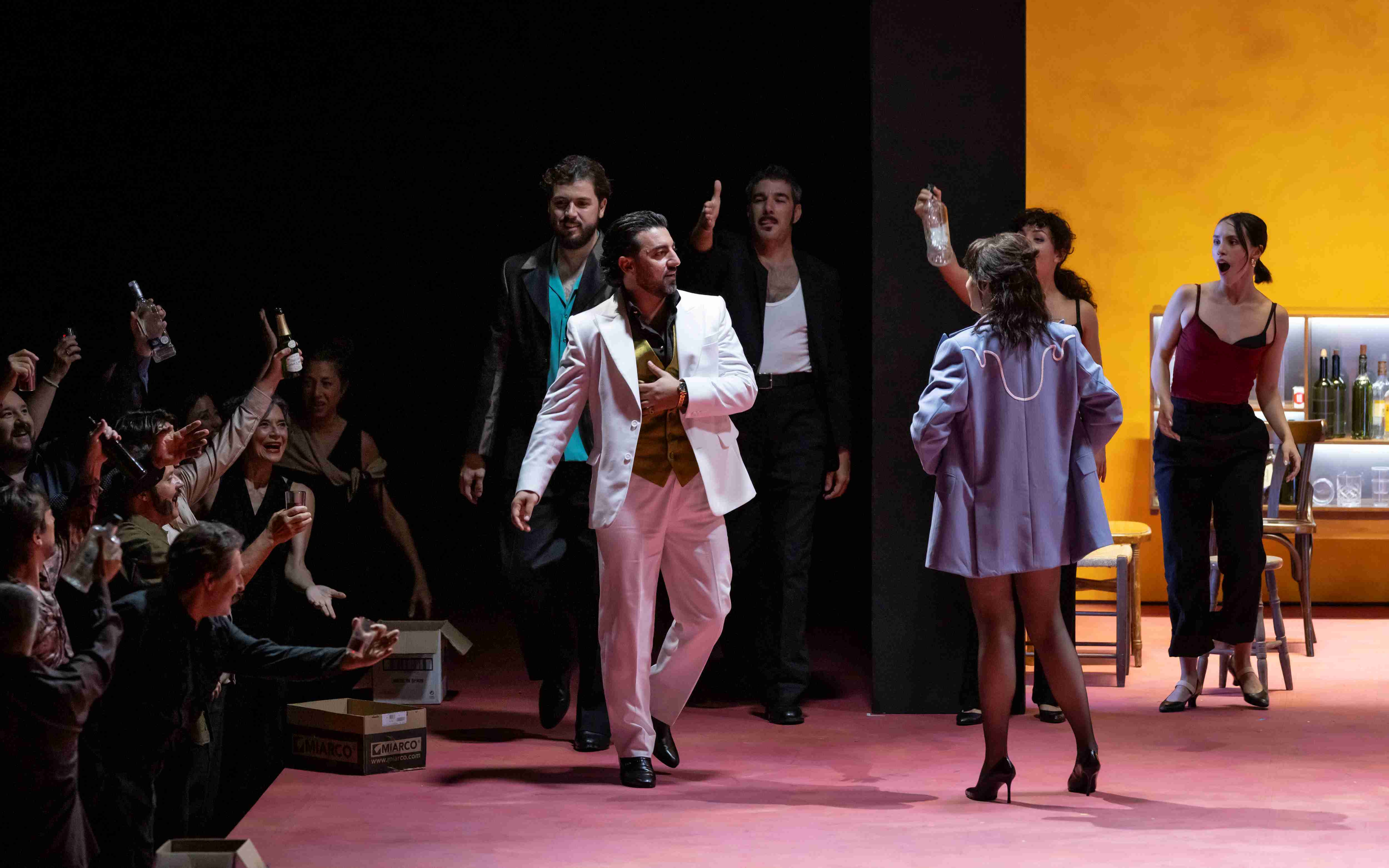
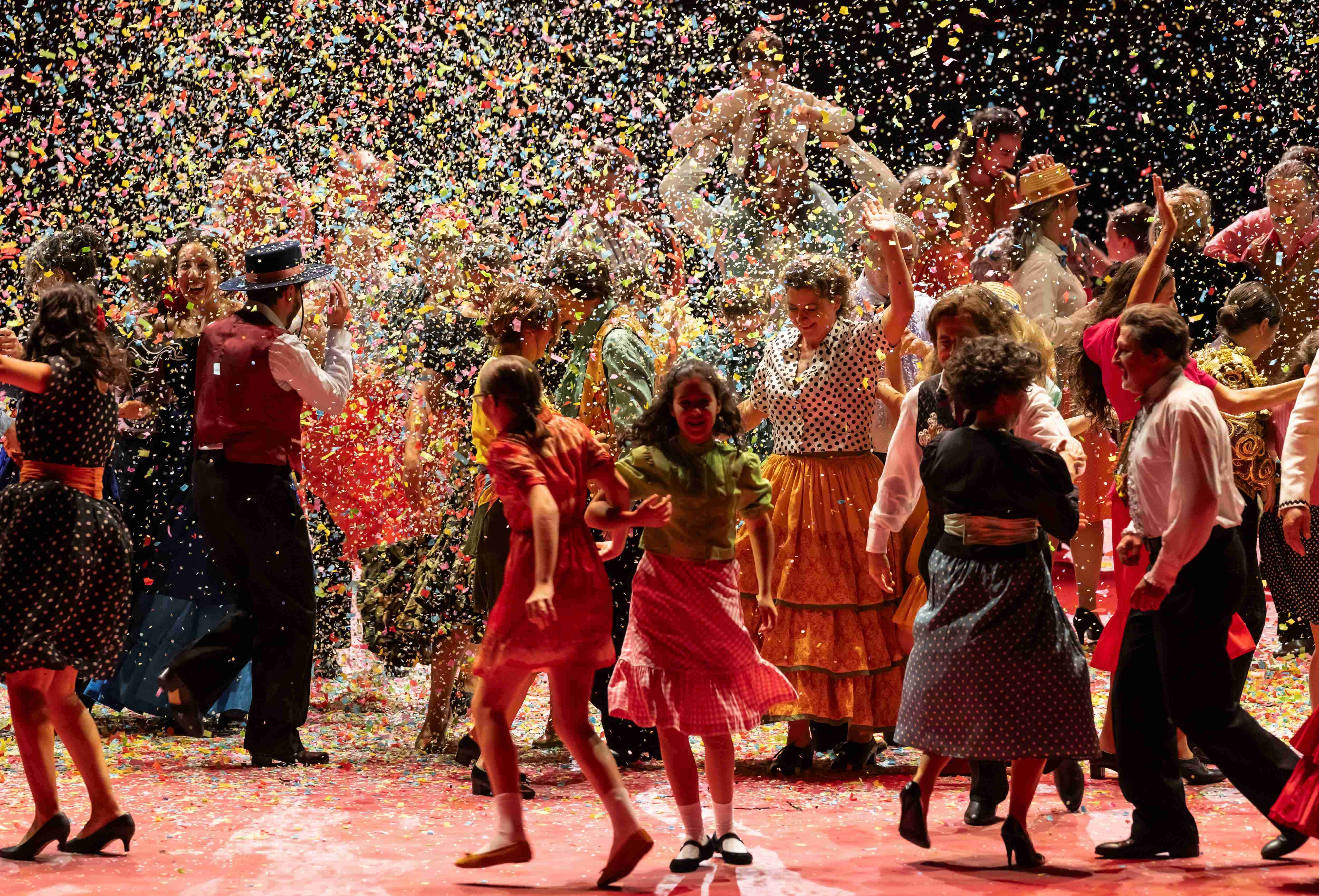
And yet, it felt that the dancing served to drag attention away from the drama – not the first time this has happened in this work. In a way, it felt that we were watching three separate productions of Carmen: one a ballet; another a tight thriller where José was broken from the start, only to melt as Micaëla talked to him about his mother in Act 1; the third a bright, glitzy torero fantasy. And yet, I left the theatre not completely convinced that Huffman succeeded in connecting these three together. There were definitely moments: the big Act 4 chorus was a bright stage picture of a ticker-tape parade with confetti falling from the flies. Indeed, the jumping of the chorus was a clear nod to Bieito’s seminal staging, one that anyone who hears that chorus can’t fail to recollect. Despite those moments, however, it was an evening that felt theatrically rather disjointed, despite some exceptionally powerful performances within.
Musically, there was an enormous amount to enjoy. Spotti opened the evening with a terrifically vigorous account of that celebrated overture. His reading somehow seemed to be full of energy, precision, clarity, and elegance simultaneously. Indeed, the precision he obtained from this orchestra was absolutely staggering. Even on a first night such as this, they played with total and absolute unity of approach, coping with an extremely swift tempo yet never offering scuffed passages or split notes. It was seriously impressive. Throughout the evening, Spotti pushed ahead, opening up several cuts along the way, but always in flowing tempi that made the entire evening seem to pass by in seconds. In a way, it felt that what we heard from the pit was very much the glue that held the evening together in a coherent whole. Spotti also gave us a moment of repose in the Act 3 entr’acte, with the solo flute and clarinet playing with absolute poetry and the harp accompanying sensitively. The strings played with silky elegance throughout, founded on a rich bass line, and the clarity of articulation and strength of the brass playing was utterly remarkable. I’ve long considered this orchestra to be one of the top three opera orchestras in the world and tonight they very much confirmed that.
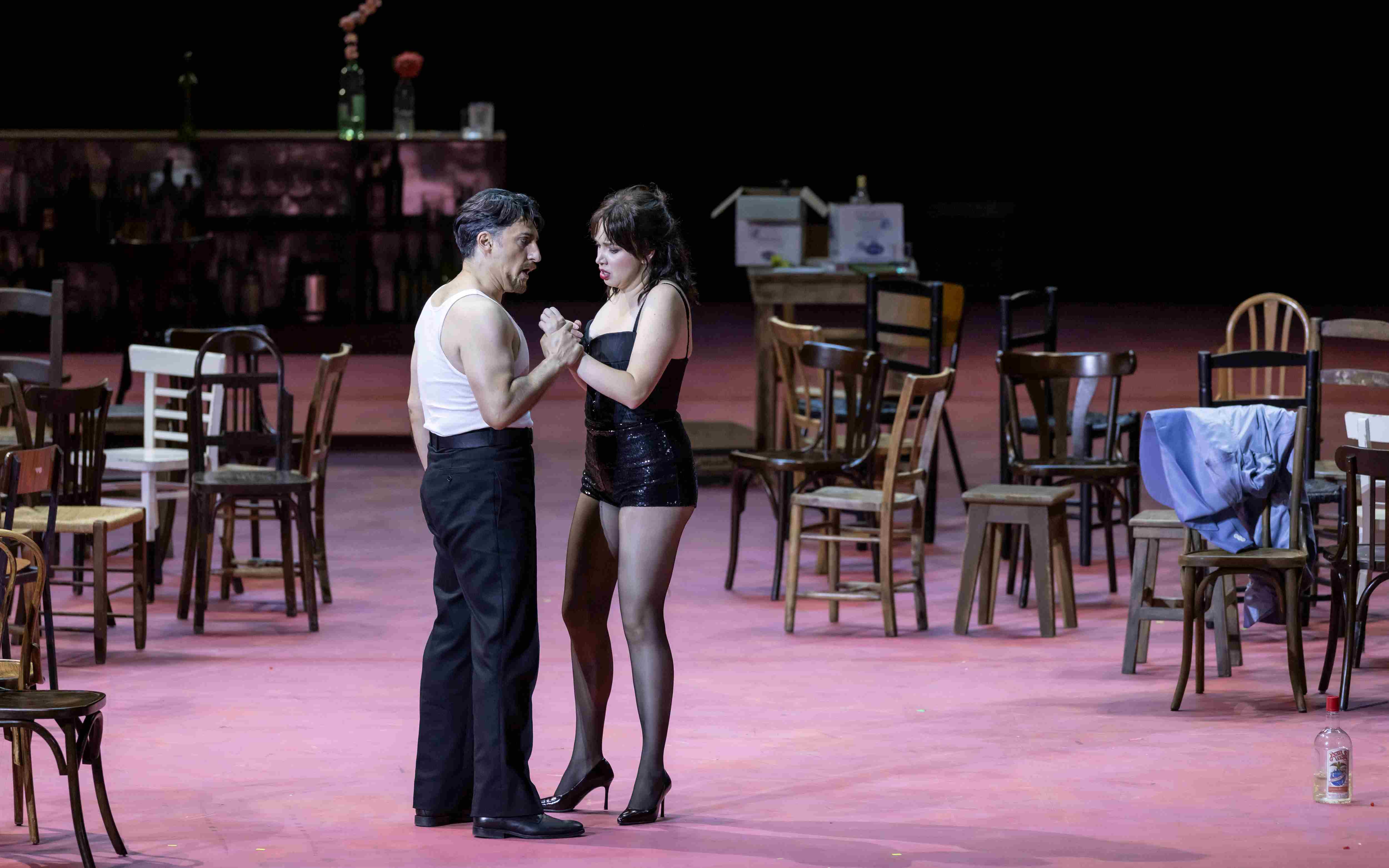
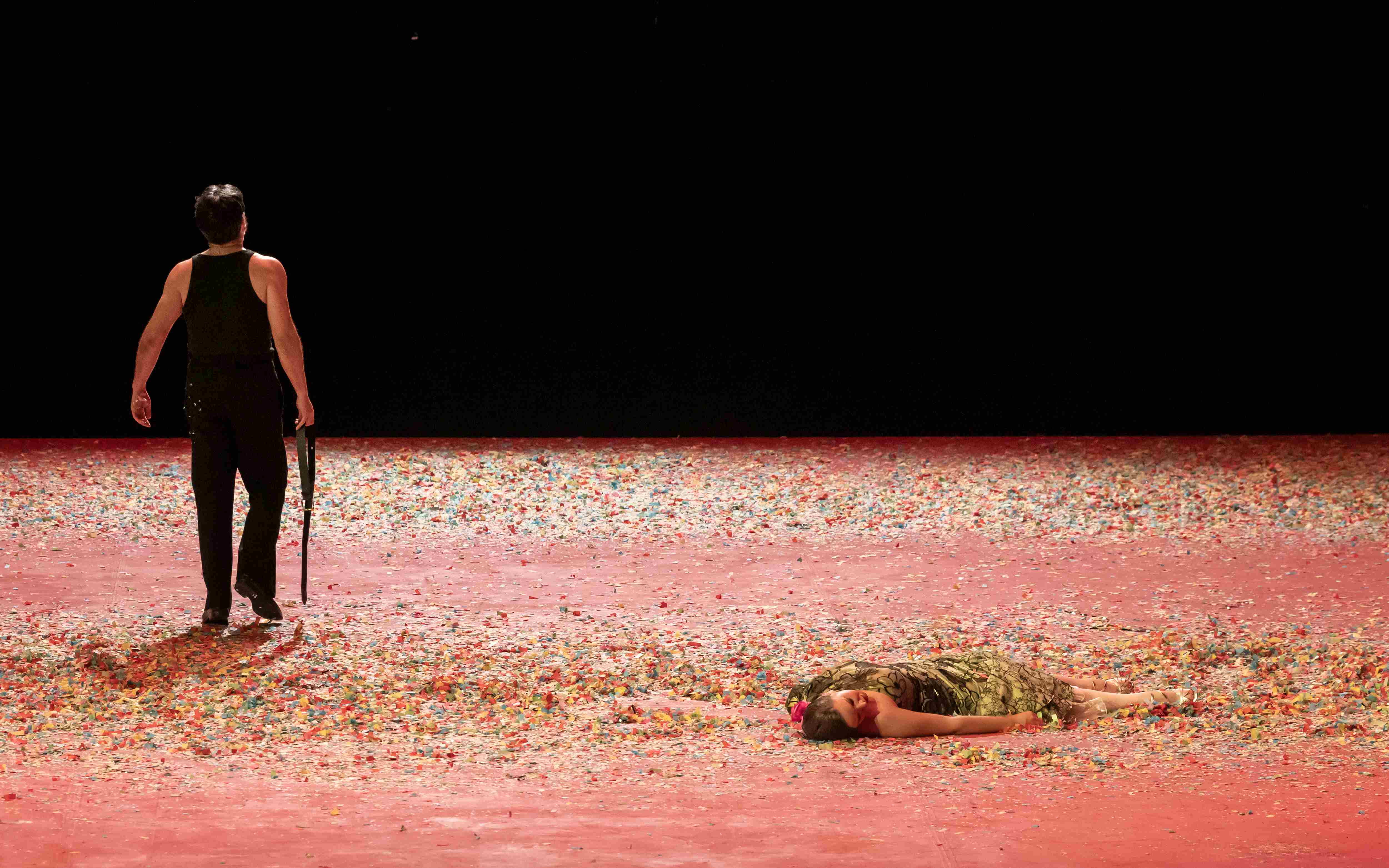
I saw Castronovo’s debut as José back in 2018, and it’s fascinating to see how he’s developed in the role. He’s been singing for almost three decades at the top houses and the voice is now darker and richer than before, yet is still able to spin with ease on high. Castronovo has always been a dedicated actor and an excellent singer of the French language, and tonight it very much felt that he was taking his José to the next level. This was clearly a damaged figure from the start, unable to understand his emotions, lashing out when he could take no more. His flower song felt less like a declaration of love and more of a need to find a reason to live, soaring up with ease to a ringing B-flat on which he gave a perfectly executed diminuendo to a simple thread of sound. In Act 3, his anger and urge to control Carmen were thrilling, the repeated statements of ‘je te tiens’ ringing out with the pressure of a man who can no longer hold it in. His murder of Carmen was absolutely terrifying in its physicality and it made me reflect on whether his closing ‘Ma Carmen adorée’ was actually a mourning for Carmen or more for the life that he thought he might have. At any rate, this was a gripping, exceptionally complex, and vocally magnificent account of this iconic role by a singer who truly is at his peak.
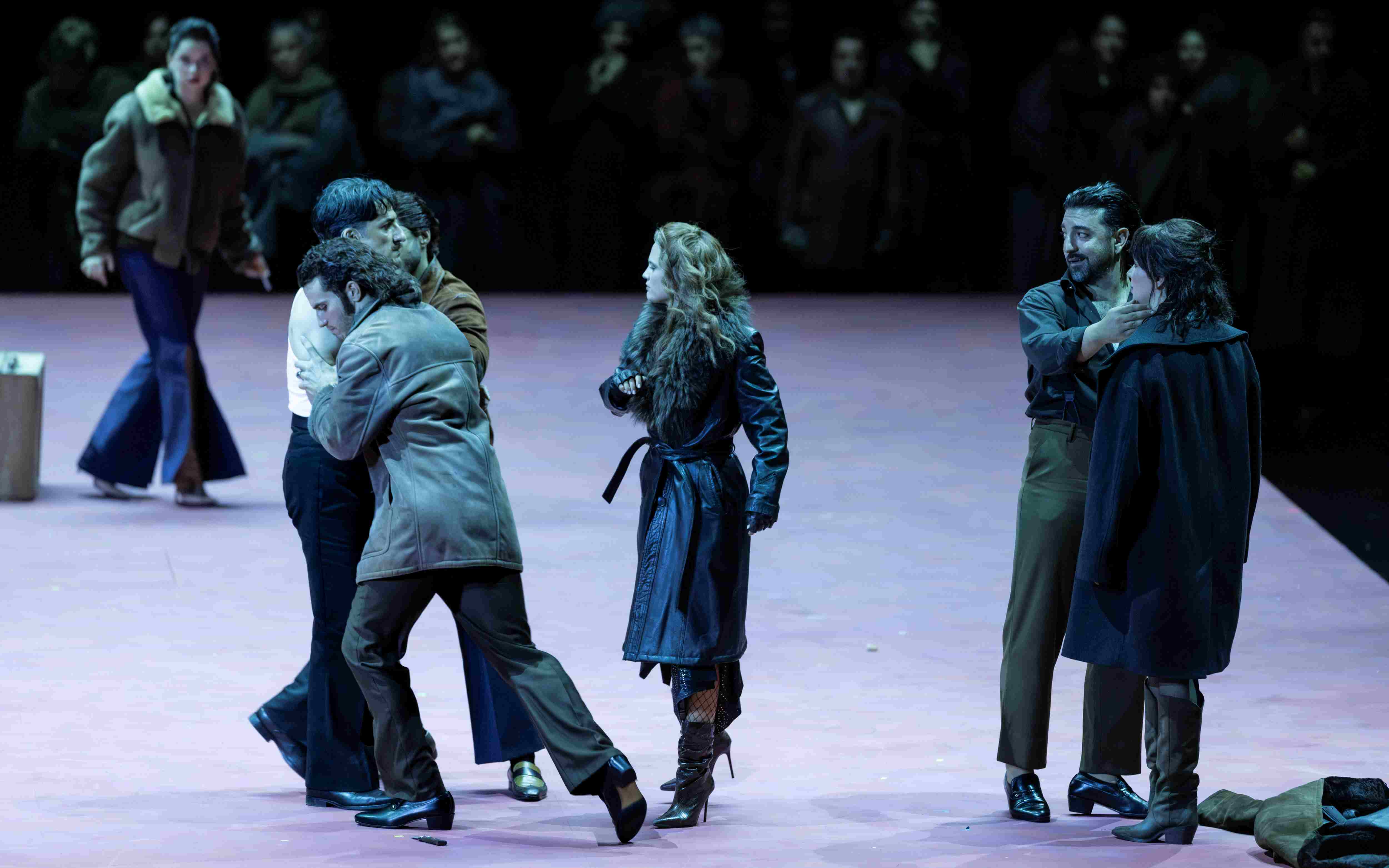
Berzhanskaya’s Carmen didn’t quite have the same impact on me. In a way, it felt that her character was a blank canvas upon which others projected their ideas – certainly an interesting reading of the role. Her diction was clear in places, although the words disappeared completely in the card scene, and, as is so often the case, the lack of absolute clarity in her diction meant that her character consequently lost impact. Berzhanskaya is going through a register change currently, transitioning into a soprano, yet the voice still has an agreeably dark chestiness that contrasts with the steel on top. Hers was an interesting Carmen, the tone was peachy and youthful, a more innocent Carmen in a way, rather than the more common figure of a powerful woman more in control. Her ‘libre elle est née’ felt neutral as a result.
Ruth Iniesta gave us a fabulous Micaëla. Her soprano is well-placed and luminous in tone, her aria sung with long lines and generous tone. Her French is also absolutely impeccable, every word clear. Davide Luciano’s Escamillo was certainly an extrovert presence, his aria sung with big, bold tone and words that were often understandable. Manuel Fuentes was luxury casting as Zuniga, his exceptionally handsome bass, abounding in warm resonance, made one look forward to him taking on the big bass roles when the time is right. Aitana Sanz sang Frasquita in a bright, crystalline soprano. The remainder of the cast, either current members or recent graduates from the house’s training program, was of the highest standard. Lora Grigorieva sang Mercédès in a deliciously fruity mezzo. Cristòfol Romaguera’s bright baritone and Matías Sebastián Herrera’s focused tenor were assets to the cast as the Dancaïre and Remendado respectively, both with a deliciously camp edge. Isaac Galán sang Moralès in a firm baritone. The choruses, with adults prepared by Jordi Blanch Tordera, and children by Marta Mármol, Roser Gabaldó and Luis Garrido, were magnificent. The adult sound had a blend and homogeneity that few choruses manage to match, the tenors and basses in particular singing with big, vibrant tone. The precision of their approach matched that of their colleagues in the orchestra. The children had also been exceptionally prepared, singing with confidence and very clear French.
There was much to enjoy in tonight’s Carmen. Musically, in particular. Spotti’s conducting kept the evening moving, while securing orchestral playing of the very highest quality. Castronovo’s José was a complex and riveting portrayal of a man incapable of understanding himself and others, while Iniesta’s Micaëla brought love and humanity to a dark place. Berzhanskaya had her moments as Carmen, but she was less well served by the stage direction. Huffman’s staging did occasionally offer some insight but felt, on the whole, not quite ‘finished’. The audience response at the close was enthusiastic for the principals, with particularly loud cheers for the orchestra, while the production team was received with polite applause.

