Rossini – Il turco in Italia
Selim – Alex Esposito
Donna Fiorilla – Lisette Oropesa
Don Geronio – Misha Kiria
Don Narciso – Edgardo Rocha
Prosdocimo – Florian Sempey
Zaida – Paola Gardina
Albazar – Pablo García-López
Coro Titular del Teatro Real, Orquesta Titular del Teatro Real / Giacomo Sagripanti.
Stage directors – Laurent Pelly.
Teatro Real, Madrid, Spain. Sunday, June 4th, 2023.
Today’s performance of Il turco in Italia was the fifth performance of this run of Laurent Pelly’s new staging, a co-production with Lyon and Tokyo. As is usually the case with the Teatro Real, the run was cast in multiple formations. Toda’s Fiorilla, Lisette Oropesa, was due to sing in the premiere last week, but withdrew due to an influenza. She was back today, and also felt up to meeting her public with a signing session after the show.
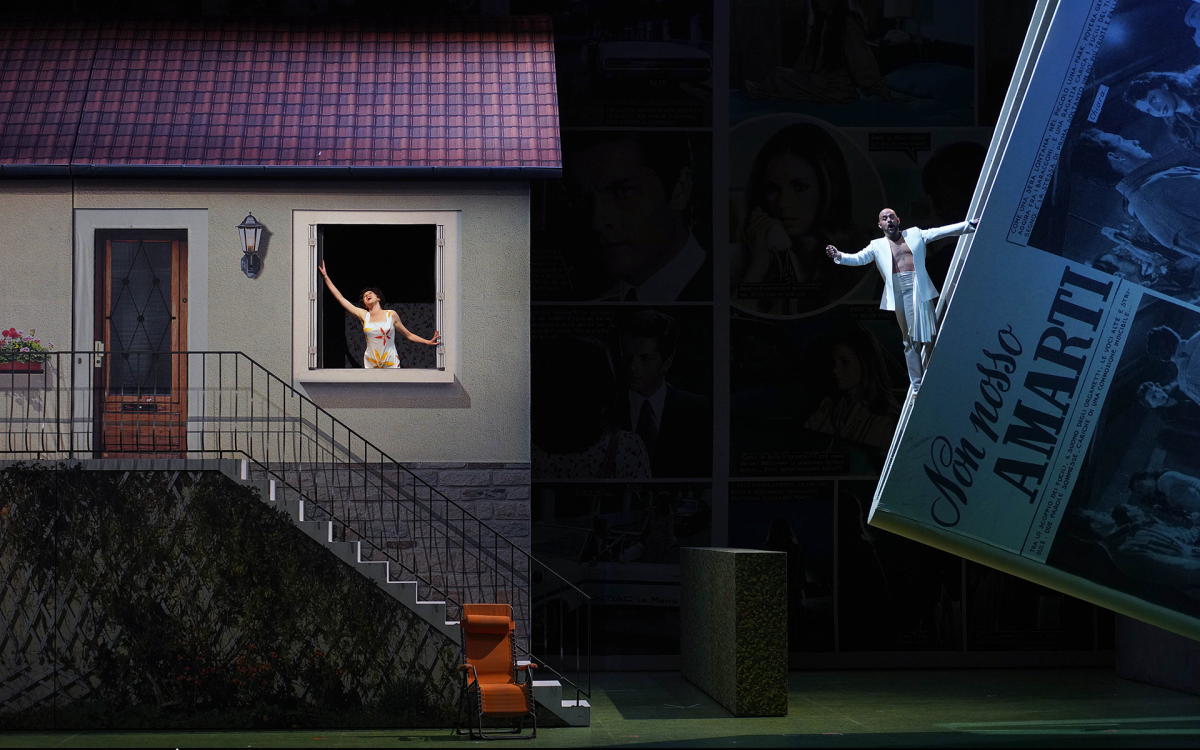
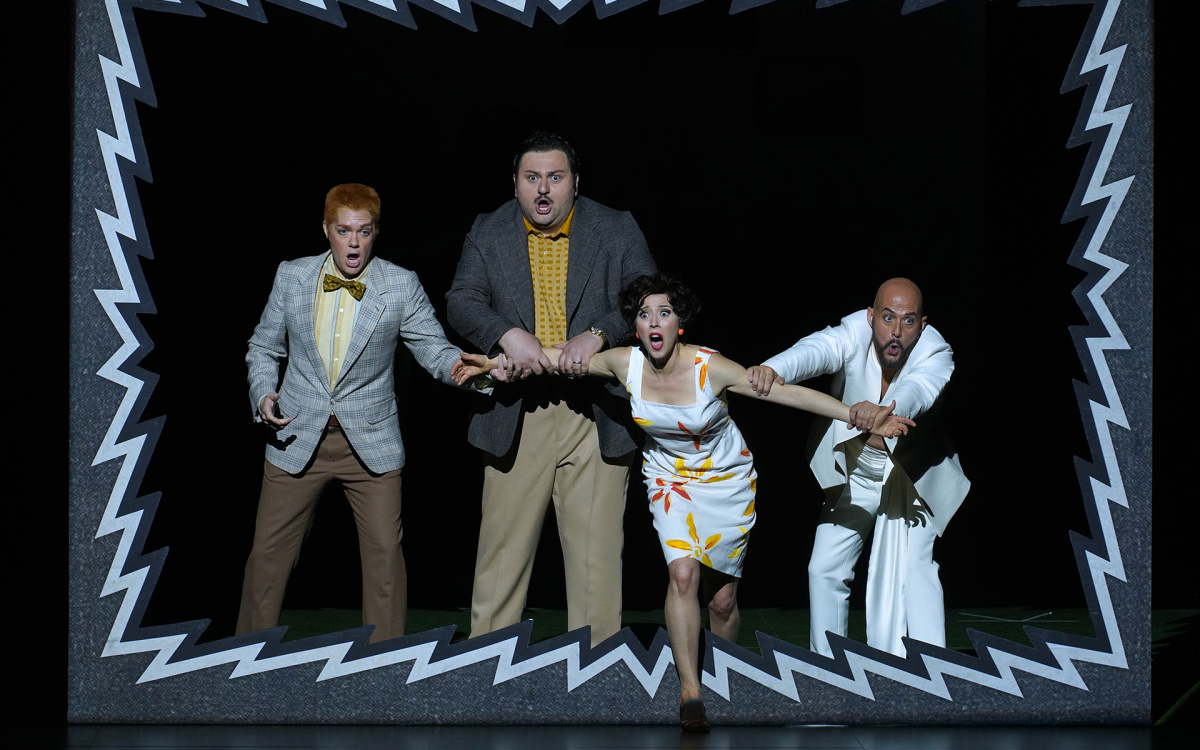
Pelly’s staging gives us a piece of uplifting, Sunday afternoon escapism. He takes as his influence the fotoromanzi that were an omnipresent feature in Italian society following World War Two. The costumes, also by Pelly, are redolent of the 1950s, with Alex Esposito’s Selim showing up, open-shirted, dressed entirely in white. Pelly sets his staging both in a quotidian suburbia, uplifted by the arrival of both Selim and the gypsies, while also showing Selim as arriving on a ship made up from the cover of a fotoromanzo called Non posso amarti. As the evening progresses, images and captions from the fotoromanzi reflect events in the staging, whether in a stage covered in these images as a background, a frame falling from the flies within which a character sings, or with characters stepping in and out from within the images and captions.
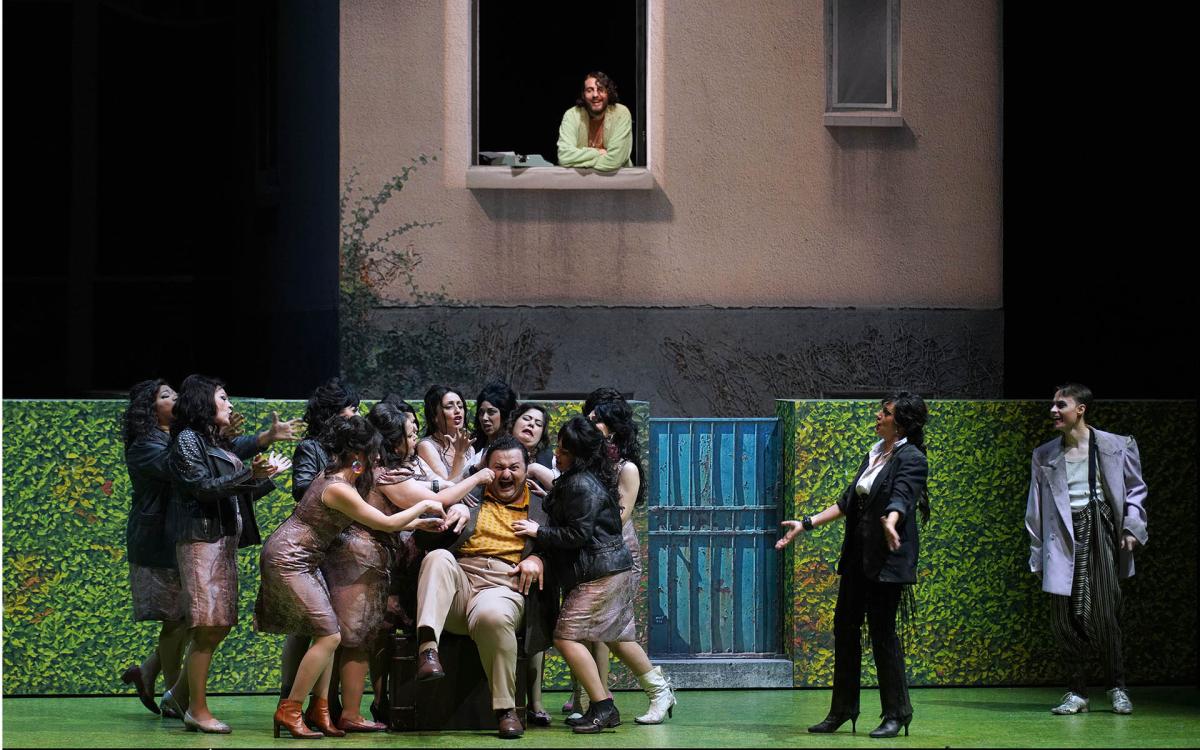
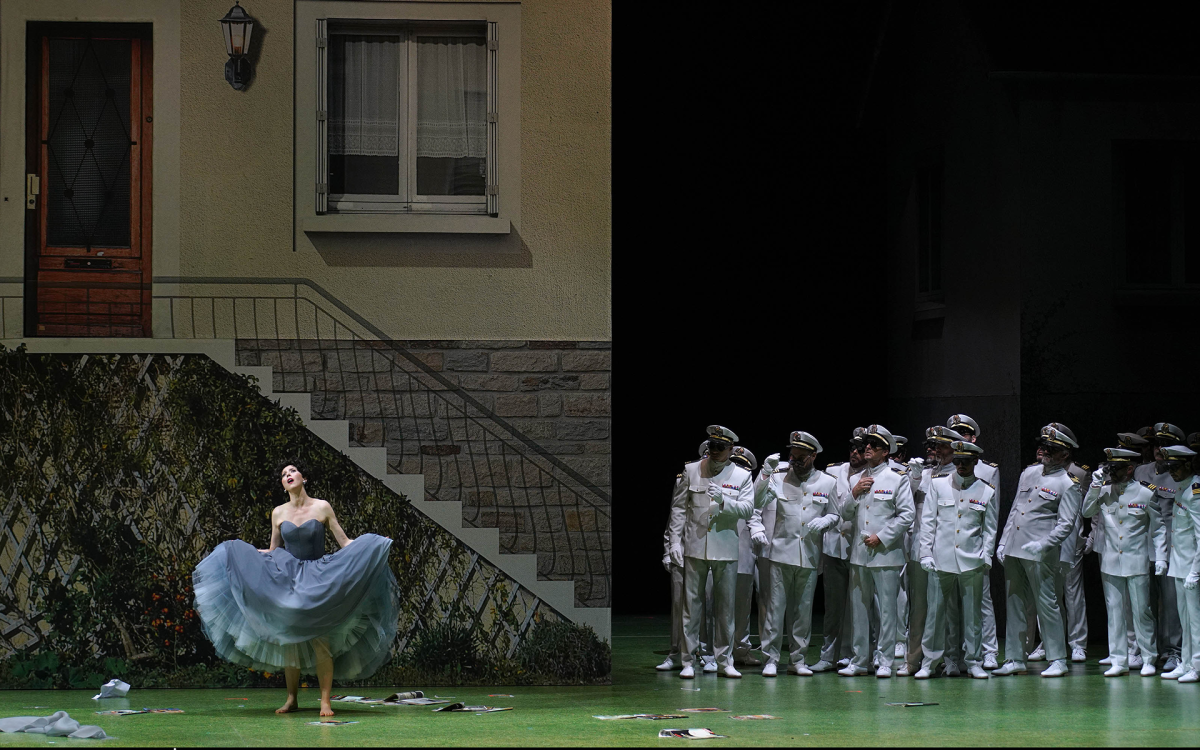
The staging had clearly been fluently rehearsed – it all flowed nicely with undeniable physical energy. I initially found the direction of the chorus to be a bit perfunctory. At first, they were simply marched on, sang, and were then marched off again. In Act 2, however, this changed, thanks to a masked ball scene in which they dispatched the intricate choreography with aplomb. The staging was certainly attractive to look at and gave us clearly delineated characters, who genuinely related to each other. As a framework for the action, it was engaging and effective.
Giacomo Sagripanti led a spirited reading from the pit. The playing of the house orchestra was sensational. Strings coped extremely well with the rapid, intricate writing. The clarinets were deliciously piquant and the horns nicely raspy. Attack was sharp and crisp throughout. Sagripanti’s tempi were sensible and generally swift, but I did feel a sag in tension in the Act 1 finale. The recitatives were well paced and crackled with life.
In the title role, Esposito brought his characteristic stage energy and verbal acuity to his music. It did sound that he needed a little while to warm up – the tone was initially grainy and vibrations generous. As we got through the evening, the tone became more focused and he gave us a sensational duet with Misha Kiria’s Geronio, both feeding rapid fire patter off each other, the text so clear. Esposito’s Selim was utterly magnetic in stage presence, yet also not afraid to make fun of himself with tireless physicality. Kiria’s Geronio was superb. His was a big, domineering stage presence, with terrific comic timing. He sang his music in a warm, ample bass. Kiria not only understands implicitly how this music should go, but his deep musicality and textual awareness allows him to communicate it fully too. There was a genuine joy in his interactions with Esposito’s Selim, despite the rivalry of their characters, that felt life-enhancing. In his big Act 2 aria, Kira pretty much stopped the show, dishing out the rapid-fire patter with accuracy and using it to create genuine comic effect.
It was clear that Oropesa was not completely recovered from her illness. The voice had trouble at the very top, the sopracuti were very dry, lacking in spin, and the long, high sustained phrases up there did show signs of succumbing to gravity. Oropesa is a superb technician and knows her limits, and would have thought carefully about whether it was right to go on today. But it was clear that she was not at her best. That said, her coloratura was immaculate and the genuine trill was present. Her intonation was woozy, perhaps as a result of the indisposition, frequently sharp, occasionally flat. As I often find with her, I lacked a sense of being able to penetrate the text, to bring out meaning and make it more than impeccably dispatched dots on a page. The audience gave Oropesa a very warm and generous ovation, clearly grateful that she had given fully of herself for us today, despite not being on top form.
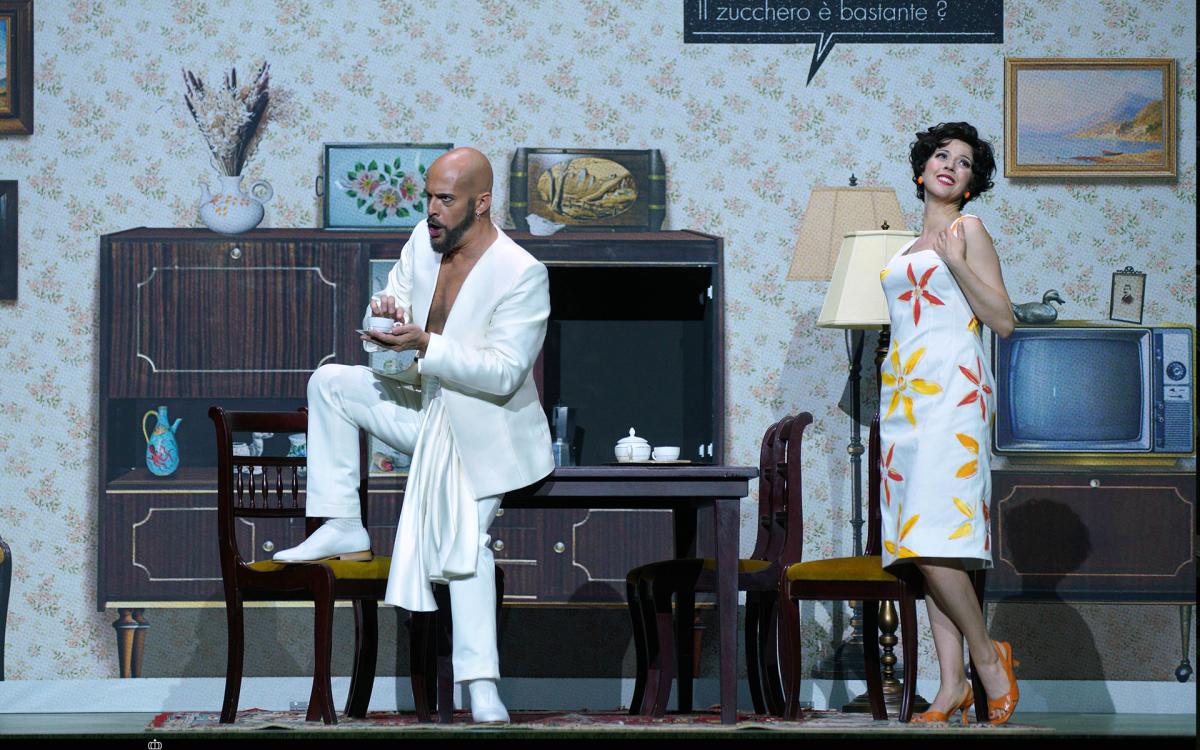
Edgardo Rocha sang Narciso in a focused tenor with an impeccable legato and clarity of text. His Act 2 aria demonstrated his ability to turn the corners and he crossed the registers with ease. Florian Sempey was a virile and textually-aware Prosdocimo. His singing once again displayed his excellent command of the style and his vocalism was very generous throughout. Perhaps, he could have exploited a wider range of dynamics, but the firmness of tone was gratifying. Paola Gardina was a lively presence as Zaida. Her mezzo also has good agility, but tends to sit around the note rather than directly on it. Her diction was a pleasure to hear. Pablo García-López made much of little as Albazar. An energetic stage presence, he sang his music in a light, easily-produced tenor. The chorus, prepared by Andrés Máspero, was enthusiastic. The sopranos and mezzos were a bit shallow in tone, while the tenors and basses made a big, lusty sound.
This was a lively afternoon in the theatre, one that offered an enjoyable burst of Sunday afternoon escapism on an early summer’s day in the capital of the Spanish state. Pelly’s staging was engaging and offered an effective framework for the action, one that had clearly been thought through and had been fluently rehearsed. It was sung at a very high level, acted with genuine glee, and conducted with spirit. The audience responded with rousing enthusiasm at the close.
 operatraveller.com