Verdi – Il trovatore
Il Conte di Luna – Alessandro Luongo
Leonora – Cristiana Oliveira
Azucena – Cátia Moreso
Manrico – Ivan Gyngazov
Ferrando – Dario Russo
Ines – Joana Seara
Ruiz – Sérgio Martins
Vecchio zingaro – João Rosa
Messo – João Cipriano
Coro do Teatro Nacional de São Carlos, Orquestra Sinfónica Portuguesa / Antonio Pirolli.
Stage director – Stefano Vizioli.
Teatro Nacional de São Carlos, Lisbon, Portugal. Monday, June 5th, 2023.
Il trovatore has quite an illustrious history at the Teatro Nacional de São Carlos. It was first performed in the Portuguese capital a year after the work’s premiere in Rome, Italy, and since that time, some of the most legendary names in opera have performed the work on the stage of this beautiful house: Beniamino Gigli, Régine Crespin, Franco Corelli, Fiorenza Cossotto, Piero Cappuccilli, just to name a few. Stepping into those shoes must have seemed quite daunting for tonight’s cast, made up of both local singers and international guests. The house music director, Antonio Pirolli, was in the pit with the staging, imported from Trieste, confided to Stefano Vizioli.

Vizioli’s staging certainly gives something to look at. The costumes, by Alessandro Ciammarughi, are full of long flowing dresses for the ladies and medieval looking garb for the gentlemen. There’s a symmetry to the sets, also by Ciammarughi, that makes for interesting stage pictures. The set is composed mainly of two structures that are set to the sides of the stage for the most part, with stairs for characters to climb, while they are brought together to provide an enclosed space for the prison of the final scene. What this means, however, is that for much of the evening, the singers don’t have much in the way of acoustic support. The effect was heightened because Vizioli puts so much of the action in the middle of the stage, which meant that the impact of the singing wasn’t always optimal – Cristiana Oliveira’s Leonora suffered from this in her opening scene, while the chorus lost impact in the anvil chorus due to being placed so far back, combined with an enthusiastic anvil player at the front side who made an deliciously rowdy noise.
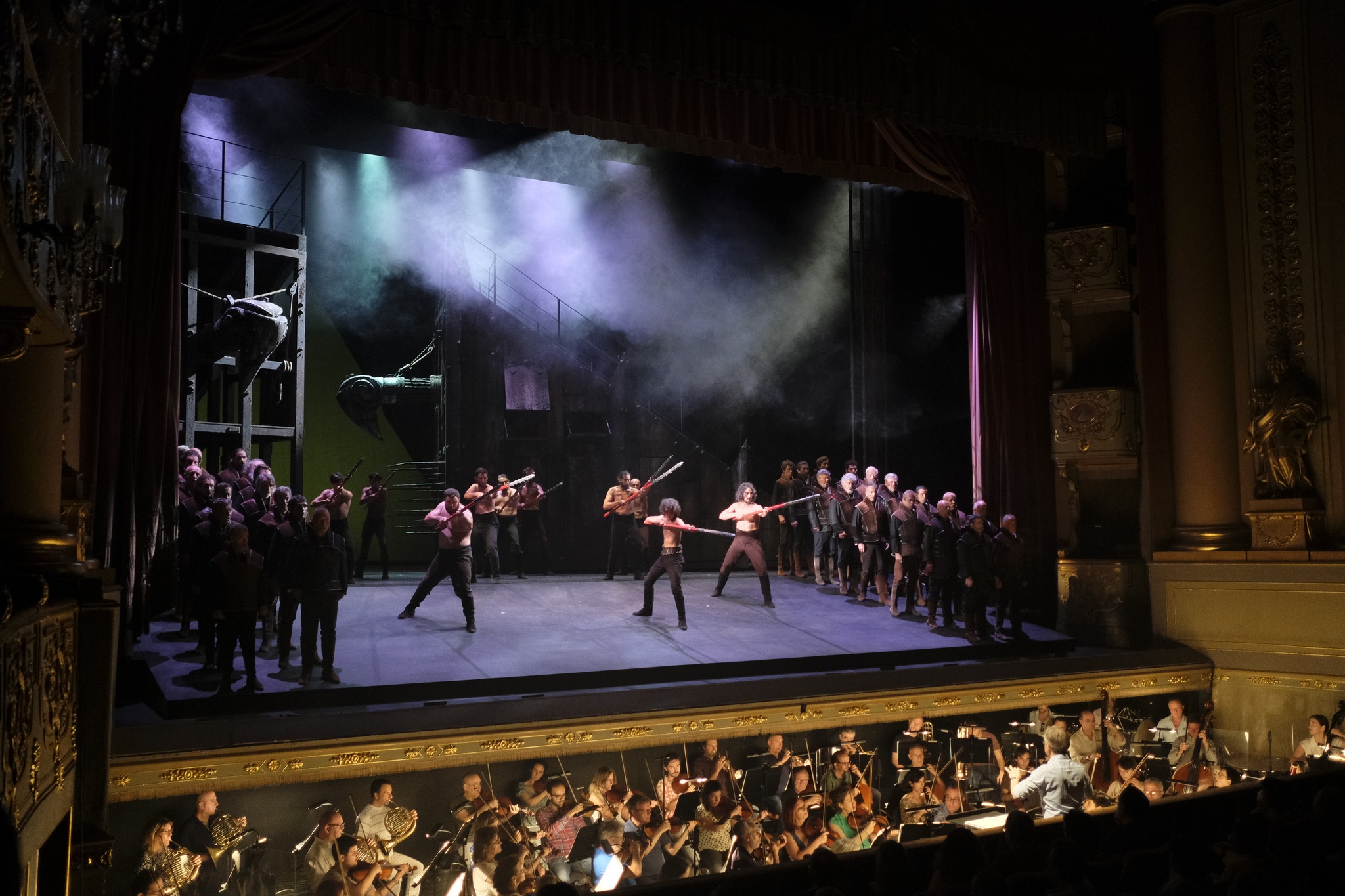
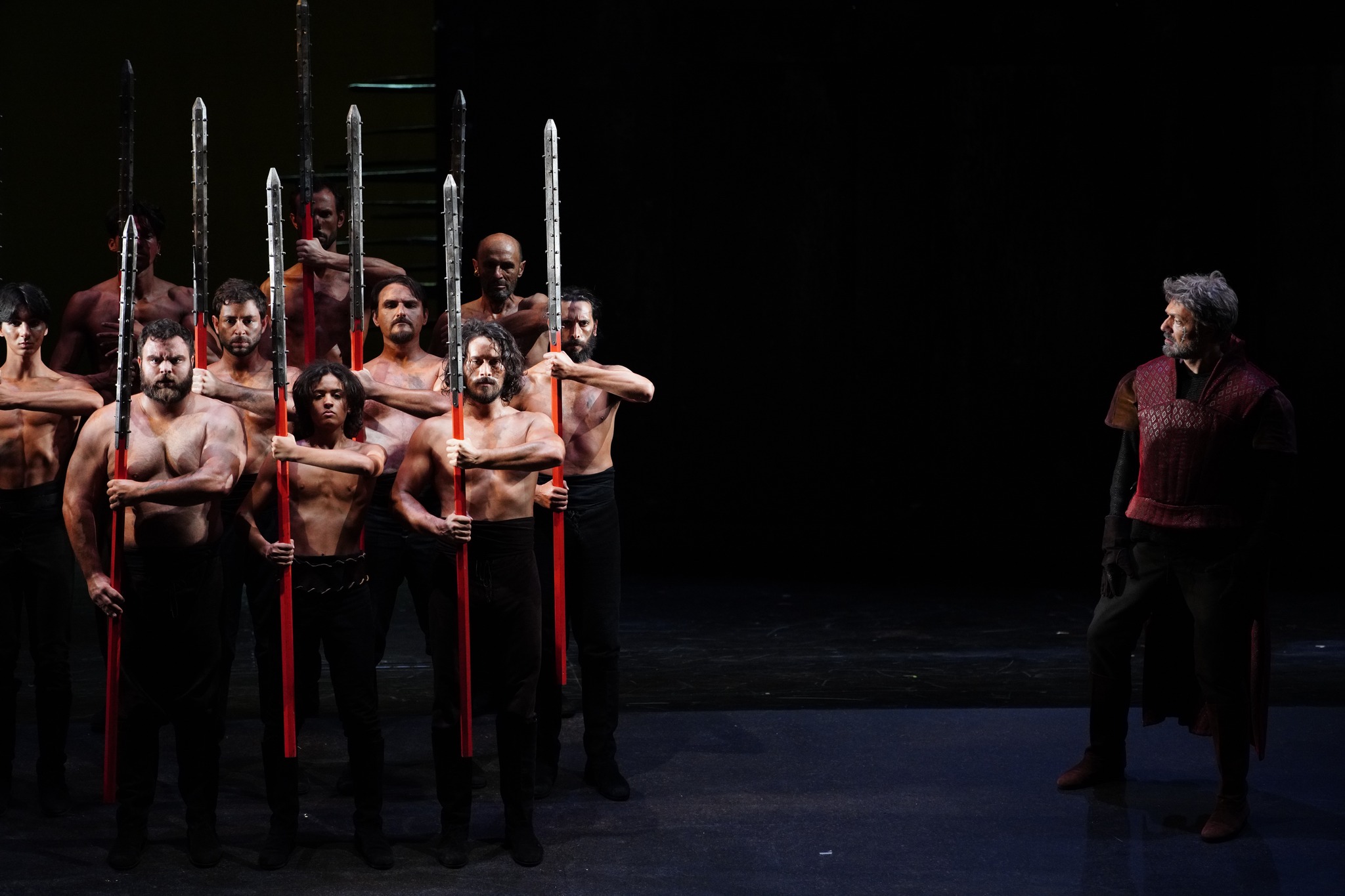
The personenregie was perfunctory. There was lots of emoting to the front and staring into the middle distance. That said, the stage energy increased exponentially in the initial Leonora, Manrico, Luna trio, with Ivan Gynzagov’s Manrico and Alessandro Luongo’s Luna indulging in some terrifically energetic sword fighting and, with the singers placed stage front, the impact of their singing was heightened – and indeed it raised the spirits tremendously. Vizioli makes considerable use of a corps of dancers to add visual interest, including some sword fighting ladies in the anvil chorus. In the soldiers’ chorus, Vizioli placed the chorus on each side of the stage, while shirtless men waved erect, skywards facing poles at each other. It wasn’t unpleasant to look at, but I can’t say I could understand why it was necessary.
Pirolli led a reading that was based on beauty of line and impeccable phrasing. I was, in particular, struck by the discipline of the choral singing, prepared by Giampaolo Vessella. Both the chorus and orchestra reacted as one to Pirolli’s baton, bringing a striking unanimity of approach and attack. I did, however, find Pirolli’s tempi slightly on the slow side. They certainly didn’t drag, but it felt, as in the big Azucena/Manrico duet, that they could have been a notch or two swifter and added further drama into the proceedings. The quality of the orchestral playing was superb, the strings true in tuning and the brass rock solid all night. The choral tenors and basses sang with fantastic lustiness, while the sopranos and mezzos sang with a refreshing beauty of tone and good blend.
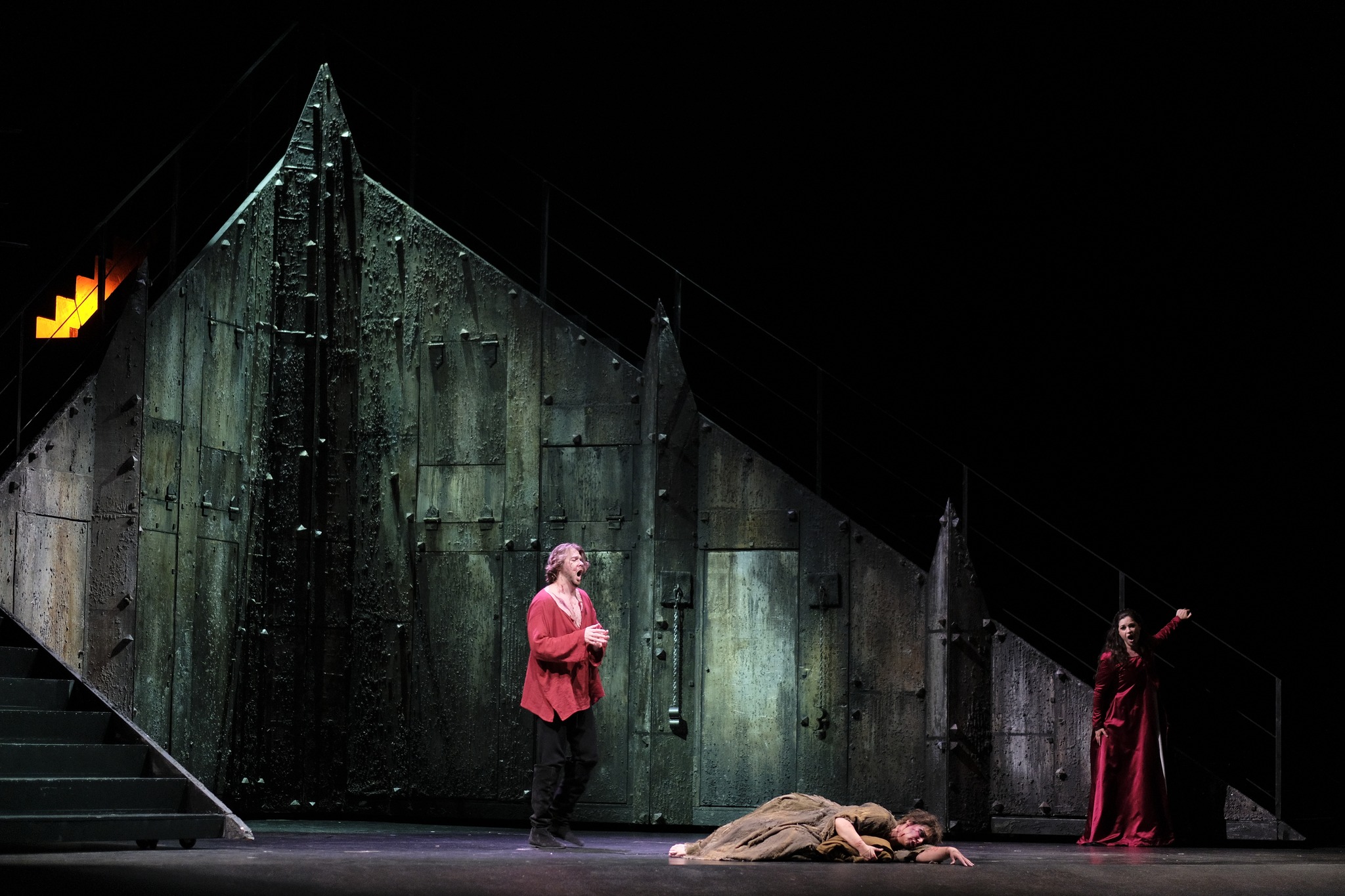
It sounded to my ears that it took Oliveira’s Leonora a little while to warm up, not helped by placing her so far upstage for her opening scene. The placement of the voice was somewhat recessed and the ‘L’s rather Lusophone. As the evening progressed, Oliveira warmed up nicely and the tone became more focused and forward. The voice has a wonderfully plush, fast vibrato that gives the tone a pleasantly velvety edge. She has good agility and made a more than respectable stab at a genuine trill. She capped the ensembles splendidly. Oliveira did attempt to shade her ‘D’amor sull’ali rosee’, pulling the tone back in places, but I would have appreciated her taking a few more risks in pulling back at the very top. Her diction could also benefit from being clearer, partly due to her vocal production not being quite forwardly-placed, and the tone is somewhat narrow. Still, Oliveira is most certainly an interesting singer and is a useful artist in this repertoire.
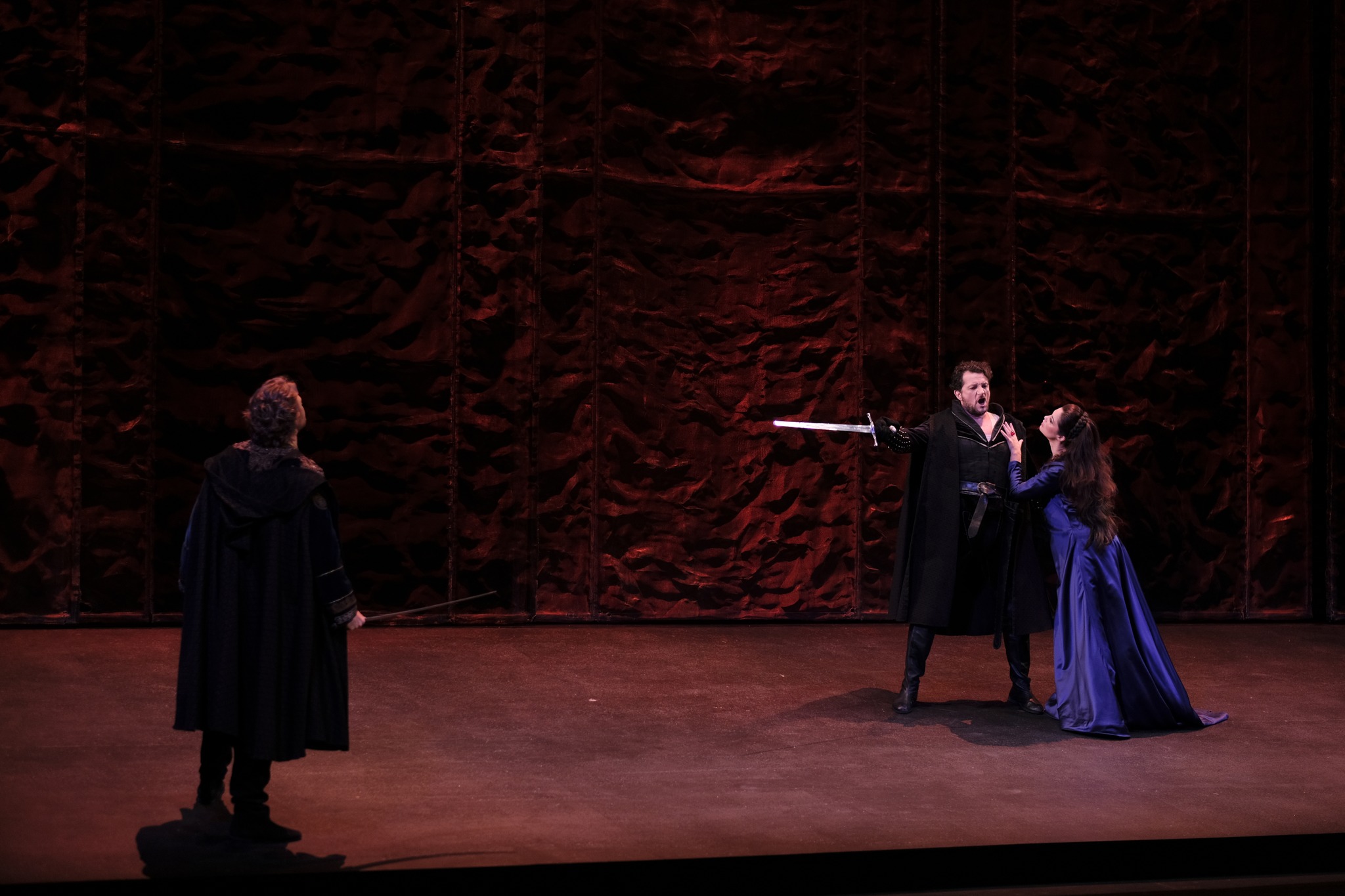
This was my first time hearing Gyngazov. The Siberian tenor has a striking instrument, dark in tone with a muscular core. It carries well, with a focused trumpeting edge. His was a virile Manrico that powered on all cylinders. It did mean that when he pulled back on the volume, tuning did sag somewhat. He went for it in ‘di quella pira’, one verse only, giving us both high Cs. I appreciate he wanted to give the audience full value with his closing C, but it did threaten to succumb to gravity. Gyngazov gave us some good, old-fashioned robust singing. It sounded generally healthy, gave us plenty of volume, and in that respect, he also has much to offer in this repertoire.
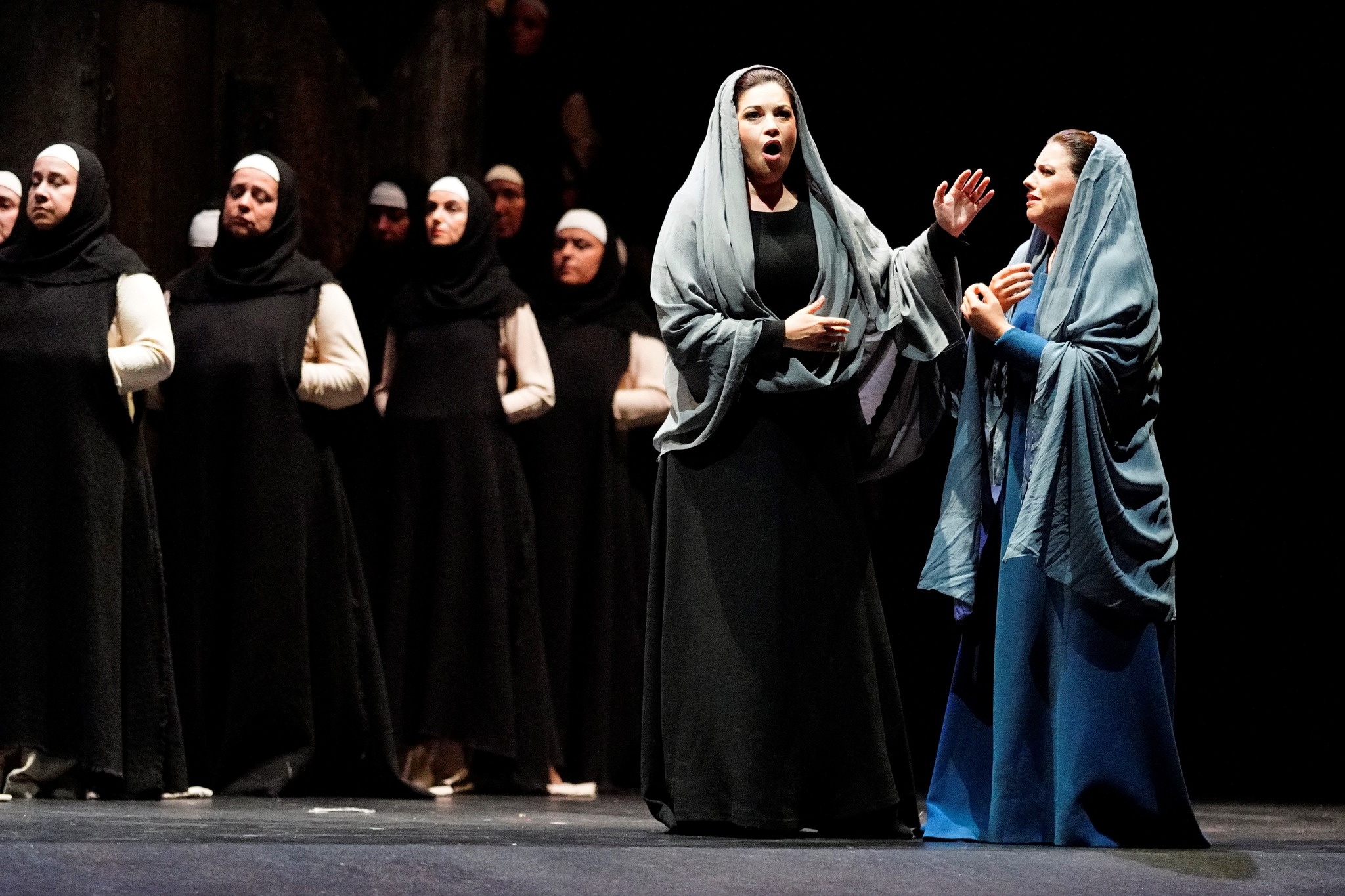
Luongo sang Luna with genuine passion, savouring the text, always using the words to drive the line. The tone does tend to greyness at the very top, but he has an implicit understanding of how this music should go, and he seemed to find the core of the tone in Act 3, where the registers felt even more integrated. He phrased his ‘Il balen del suo sorriso’ with generosity, using Pirolli’s leisurely tempo to spin out seemingly endless phrases on the breath. It was impressive.
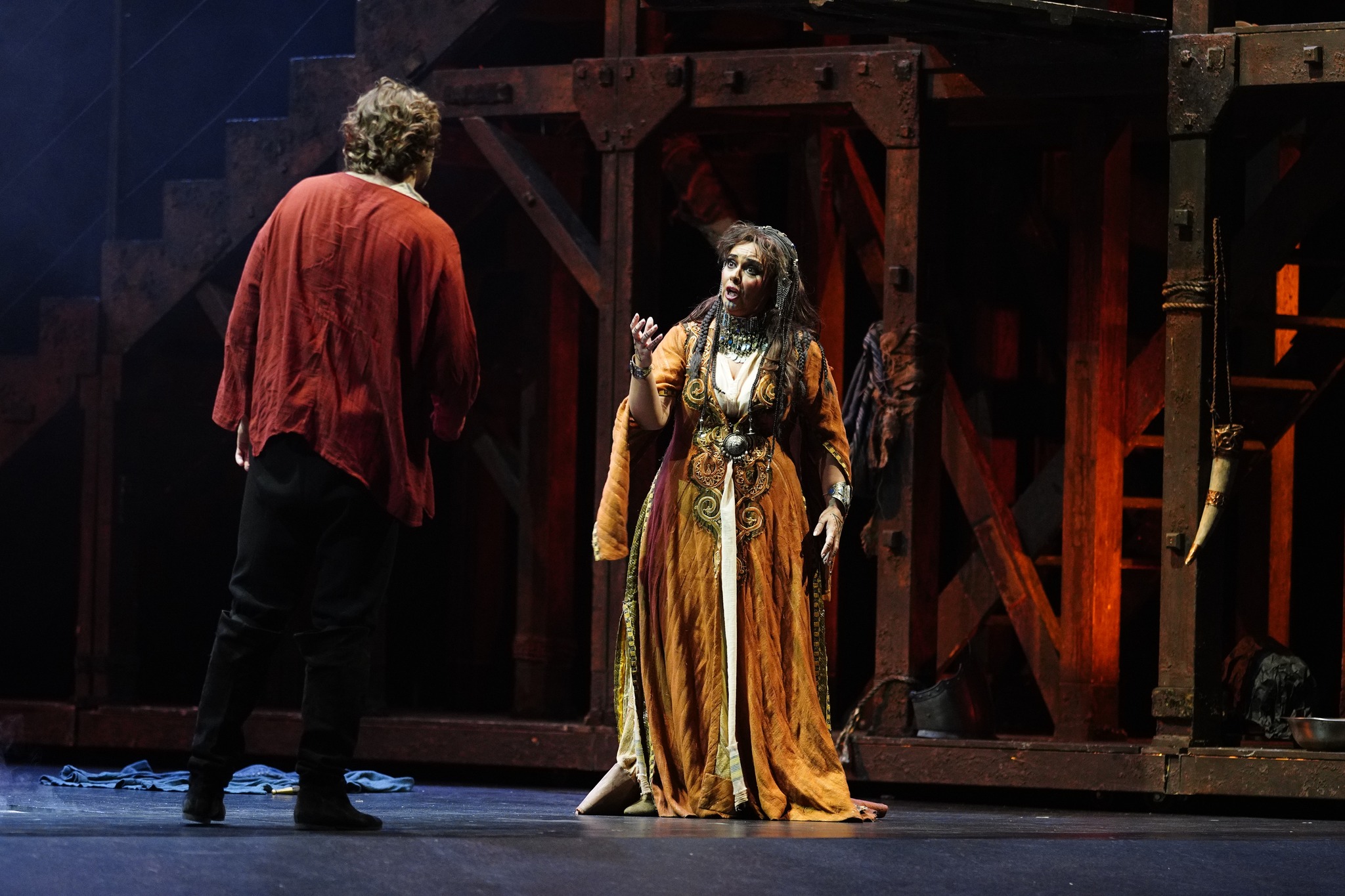
The biggest surprise in the cast for me was Cátia Moreso’s Azucena. She trained in London, England, but her career so far has been focused on the Portuguese capital. Based on tonight’s assumption, she could be at home at any stage in the world. Her mezzo is wonderfully big, rich, and generously produced. She took tremendous risks with the line, with a striking ease on high. The downside is that lower down, the voice lacks some resonance, I did long for her to just bring an indecently fuller chestiness and throw caution to the wind. Her diction is superb, using the text for meaning and always making it the starting point of the line. Moreso was riveting. The remainder of the cast reflected the positive standards one has come to expect at this address. Dario Russo was a somewhat grainy, world-weary Ferrando. Joana Seara an Ines with pearly tone and Sérgio Martins an energetic Ruiz.
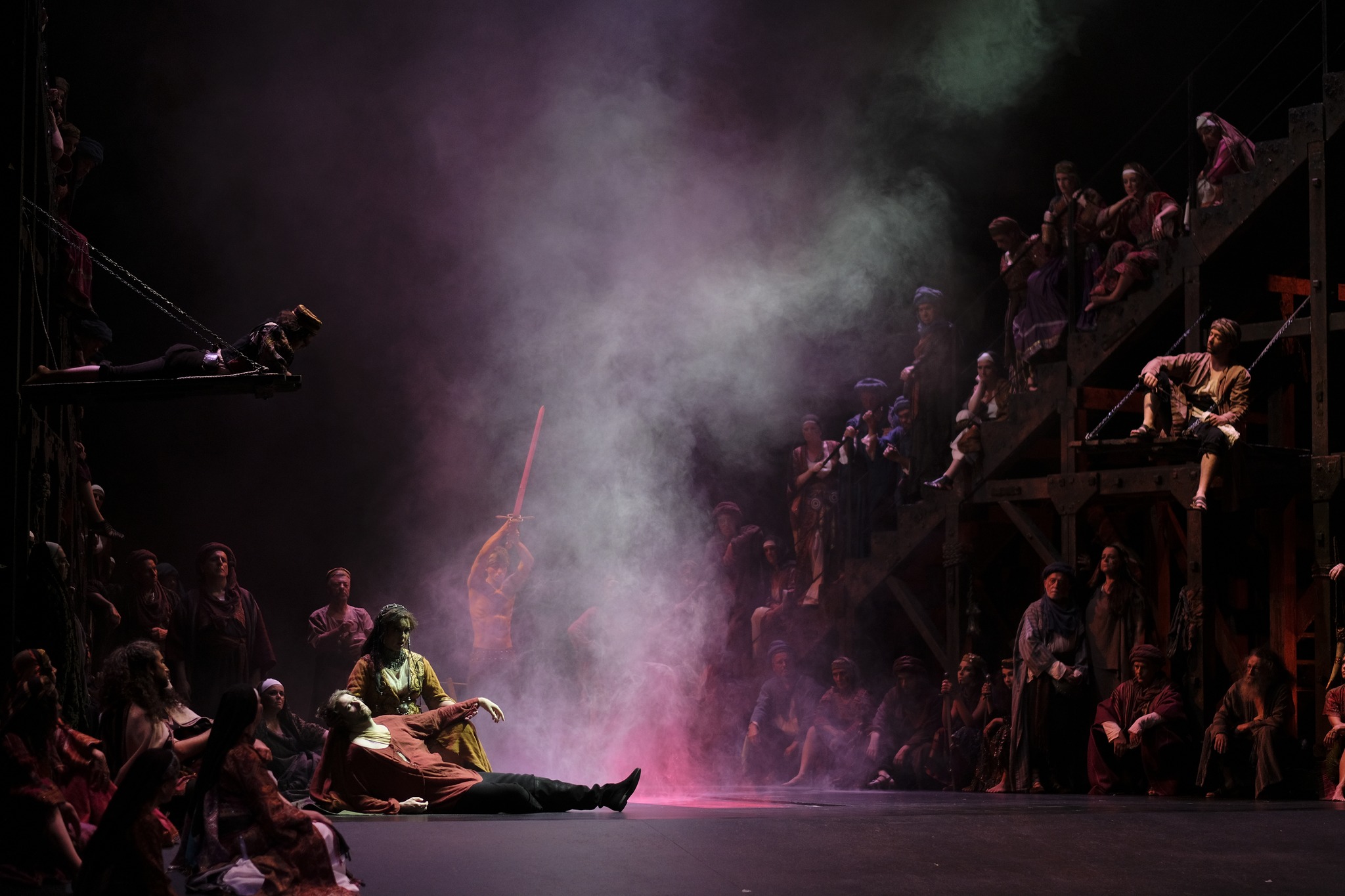
This was one of those evenings where one emerges from the theatre engaged and refreshed by what was a terrific romp. The staging was camp and bodice-ripping, but did give much to look at. The singing was tremendous value and also satisfying, while Pirolli and the house forces brought lilting lyricism with superb discipline and unanimity of approach. The audience responded with a warm and generous instant standing ovation at the close.


[…] as Nannetta and Fenton. House favourites Dora Rodrigues and Catia Moreso – a thrilling Azucena a few months ago – sing Alice Ford and Meg Page, while the title role is taken by José Fardilha. […]
[…] orchestra and chorus was wonderfully idiomatic. Similarly idiomatic was Antonio Pirolli in Lisbon leading a very camp staging by Stefano Vizioli, with Cátia Moreso a exhilarating Azucena and […]