Verdi – Aida
Aida – Mónica Conesa
Il Re – Abramo Rosalen
Amneris – Olesya Petrova
Radamès – Lee Yonghoon
Amonasro – Simone Piazzola
Ramfis – Rafał Siwek
Un Messaggero – Carlo Bosi
Sacerdotessa – Francesca Maionchi
Coro dell’Arena di Verona, Orchestra dell’Arena di Verona / Marco Armiliato.
Stage director – Stefano Poda.
Arena di Verona, Verona, Italy. Friday, July 21st, 2023.
Tonight was my third attempt to see Aida at the Arena di Verona. The first, back in 2021, was affected by a strike of the orchestra and the entire evening was given with piano accompaniment. There was something very special in seeing an intimate performance in such a massive space. The second was last year, when my accommodations in Verona fell through at the last minute and I couldn’t find an affordable alternative and so had to cancel the trip. Naturally, I was hoping that tonight would be the third time lucky.
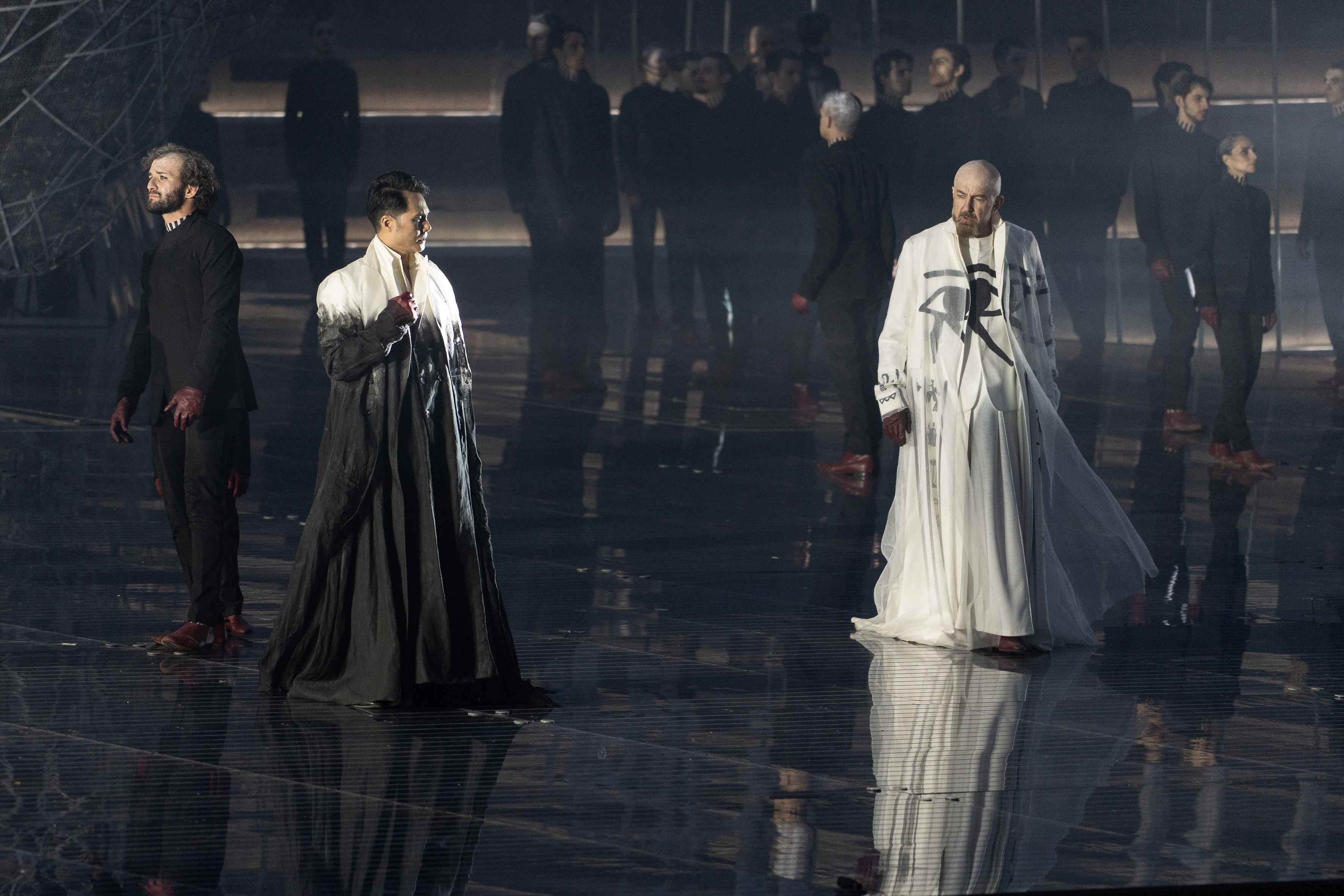
Attending a show in the Arena is a magical experience. The atmosphere is unlike any other venue in the world. Not only with the sight of thousands of people all here to enjoy opera, or the ambulant sellers with beer, wine, programs and cushions. More than that, it’s the fact that so many people are sitting still, listening to the wonder of the unamplified human voice in this extraordinary space. It meant that Mónica Conesa’s Aida was able to use the Roman acoustic to float some enchanting pianissimi. I wrote ‘so many people’ because the two mature German-speaking ladies next to me wouldn’t stop talking or taking photos – despite the announcement at the start not to do so during the performance – while the teenagers behind me were exceptionally well behaved and captivated by the evening.
Unfortunately, however, this was not to be third time lucky. As we got to the end of the intermission, it started to rain. And then it really rained. Naturally, I had come prepared with my raincoat. But even this waterproof one was no match for the Veronese storm. Thousands of people were attempting to leave the Arena to get inside the covered areas. I was caught in a crush and was trapped among people jostling and pushing each other under the torrential rain for a good ten to fifteen minutes. I must admit it was rather alarming being stuck and pushed from every angle while the thunder and lighting continued overhead. As a result, I was utterly soaked, my shoes full of water and even my underwear was wet. I finally managed to extricate myself from the crowd and took an alternative exit where I sheltered, waiting for the storm to end. After around an hour, we were informed the show would recommence at just after midnight. Given how completely wet I was, I made the extremely difficult decision to return to the hotel.
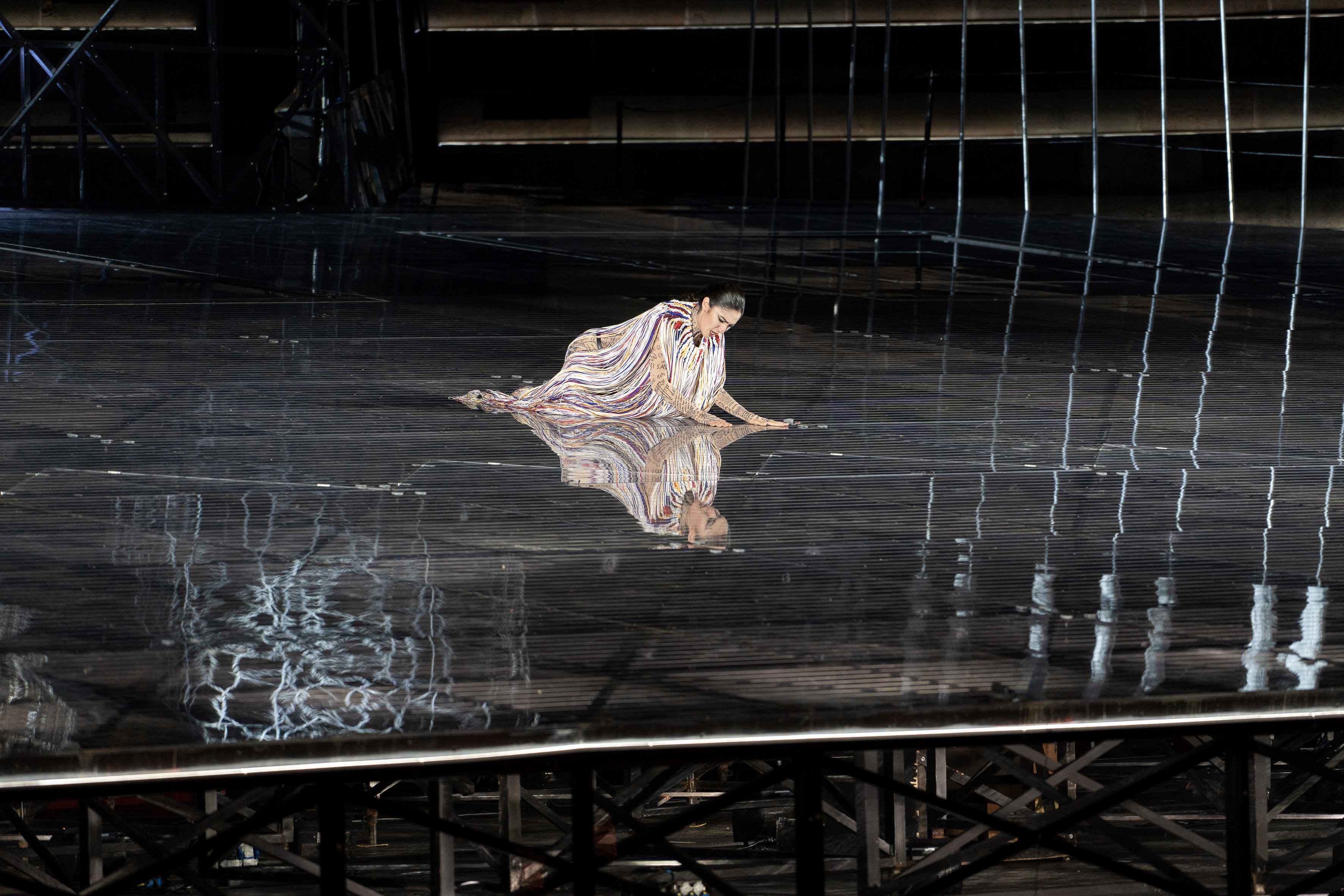
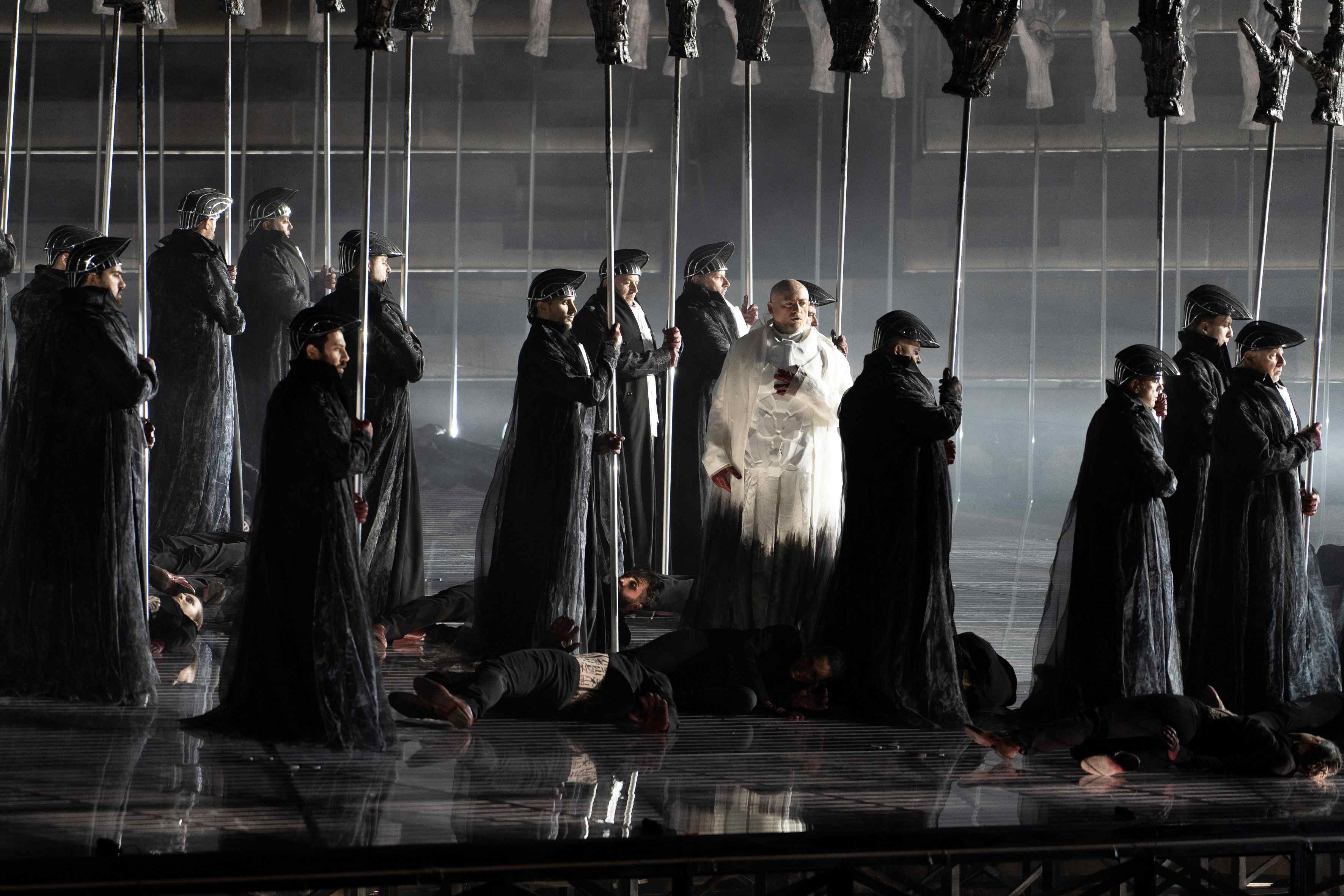
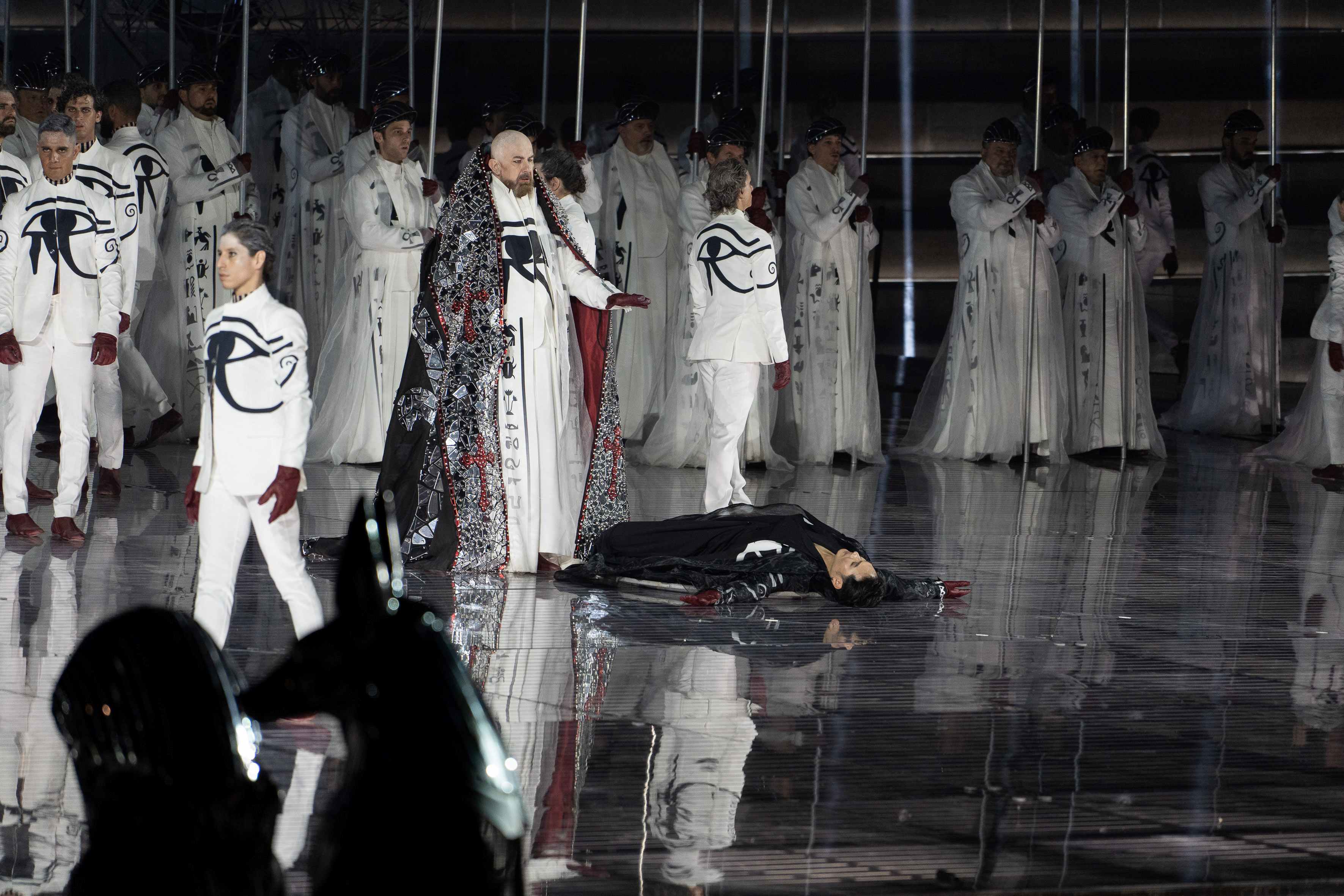
What follows is a review of half the performance. Stefano Poda’s new production was premiered earlier this summer. In this, the centennial season of the Arena’s opera festival, my impression of what I got to see is that Poda has given the Arena an Aida for its next hundred years. It’s visually stunning, giving the audience the kind of awe-inspiring spectacle that one would hope to see in a venue such as this. Yet, he achieves this, paradoxically, through simplicity. Poda uses the lighting to create staggering stage pictures: whether spotlights projecting beams of light to encase Aida, seemingly as in a prison, while she sang the reprise of ‘numi pietà’, or the way he confidently moved around the hundreds of choristers, danseurs, and extras, to create constantly-changing stage pictures. Poda also makes nods to Egyptian tradition too – Amneris and her ladies are seen mummifying bodies in the opening to Act 2, or the intricate symbolism printed on those scores of costumes. The set is dominated by a large hand that opens and closes. This is an intelligent and highly visual staging and I sincerely regret not being able to see how it concluded.
I also wish I could have heard how Conesa sang her ‘patria mia’. Her singing in Acts 1 and 2 gave notice of a very special talent. Conesa is only in her late twenties, but the Cuban-American soprano is a singer of immense promise and technical poise. The voice is focused, with a nicely tart edge, slightly narrow but capable of the most ravishing pianissimi that carry in this vast space. She soared over the massed forces with ease in the triumphal scene. Her Italian and her use of text are wonderfully idiomatic and the voice is founded in a warm chestiness, the registers even. There was a slight hardness to the tone that did make me wonder whether Conesa is singing on the capital rather than the interest, as one of the great Aidas of all time, Miss Leontyne Price, would say. Conesa is, without doubt, a singer I would like to hear a lot more from.
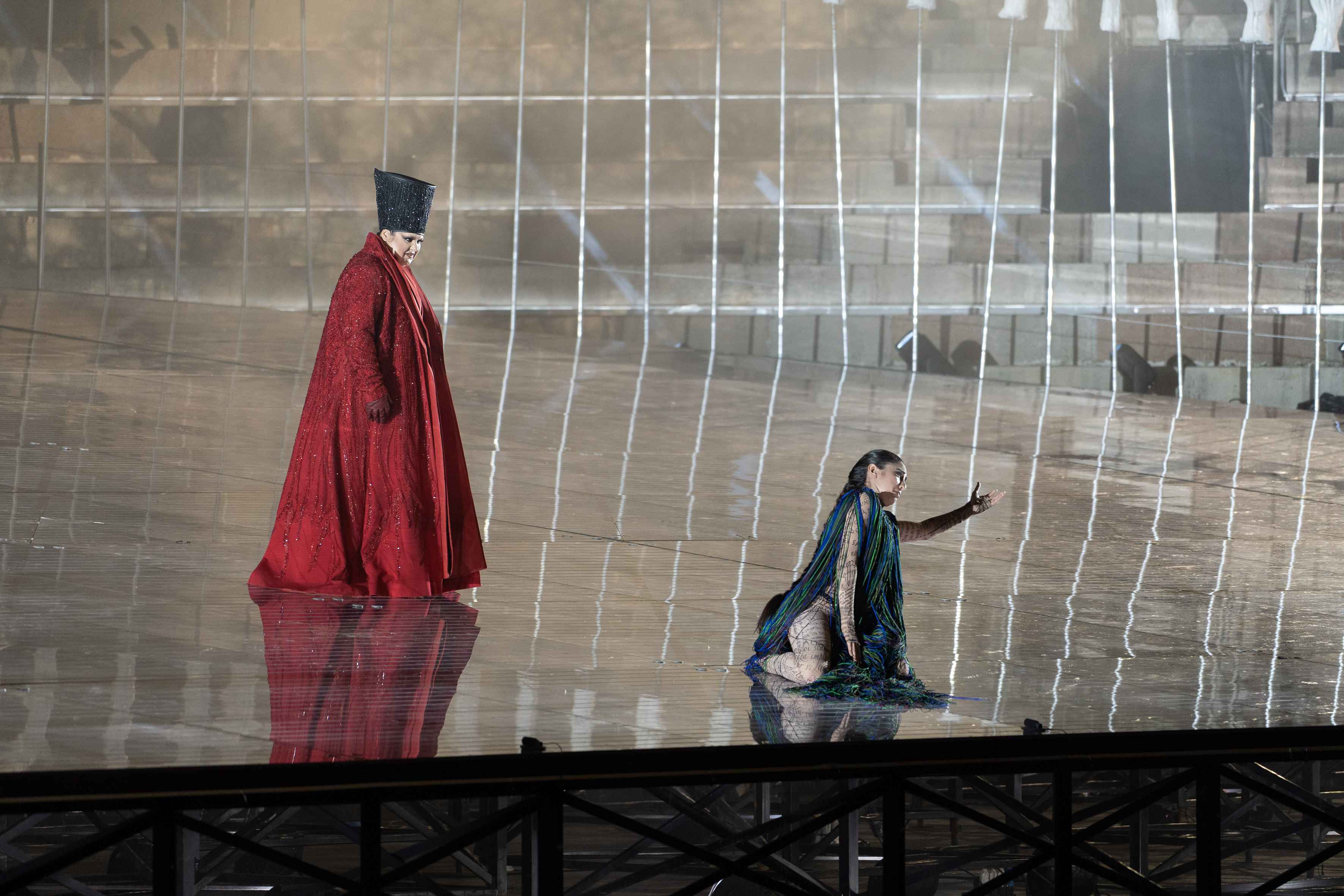
Lee Yonghoon sang his ‘celeste Aida’ with considerable volume and choppy phrasing. He trumpeted out the closing high B-flat. It did sound like his larynx was about to pop out of his throat, the tone sounding tight and forced. I would have liked to have heard whether he did manage to rein things in, in the final act. Olesya Petrova’s Amneris is familiar from the 2021 run. At first, her mezzo had two distinct registers, but she warmed up nicely singing with extrovert freedom and negotiating the passaggio expertly. Both Rafał Siwek and Abramo Rosalen were towers of strength and warm resonance in their respective roles. In this brief interjection in Act 2, Simone Piazzola sang with his familiar focused tone.
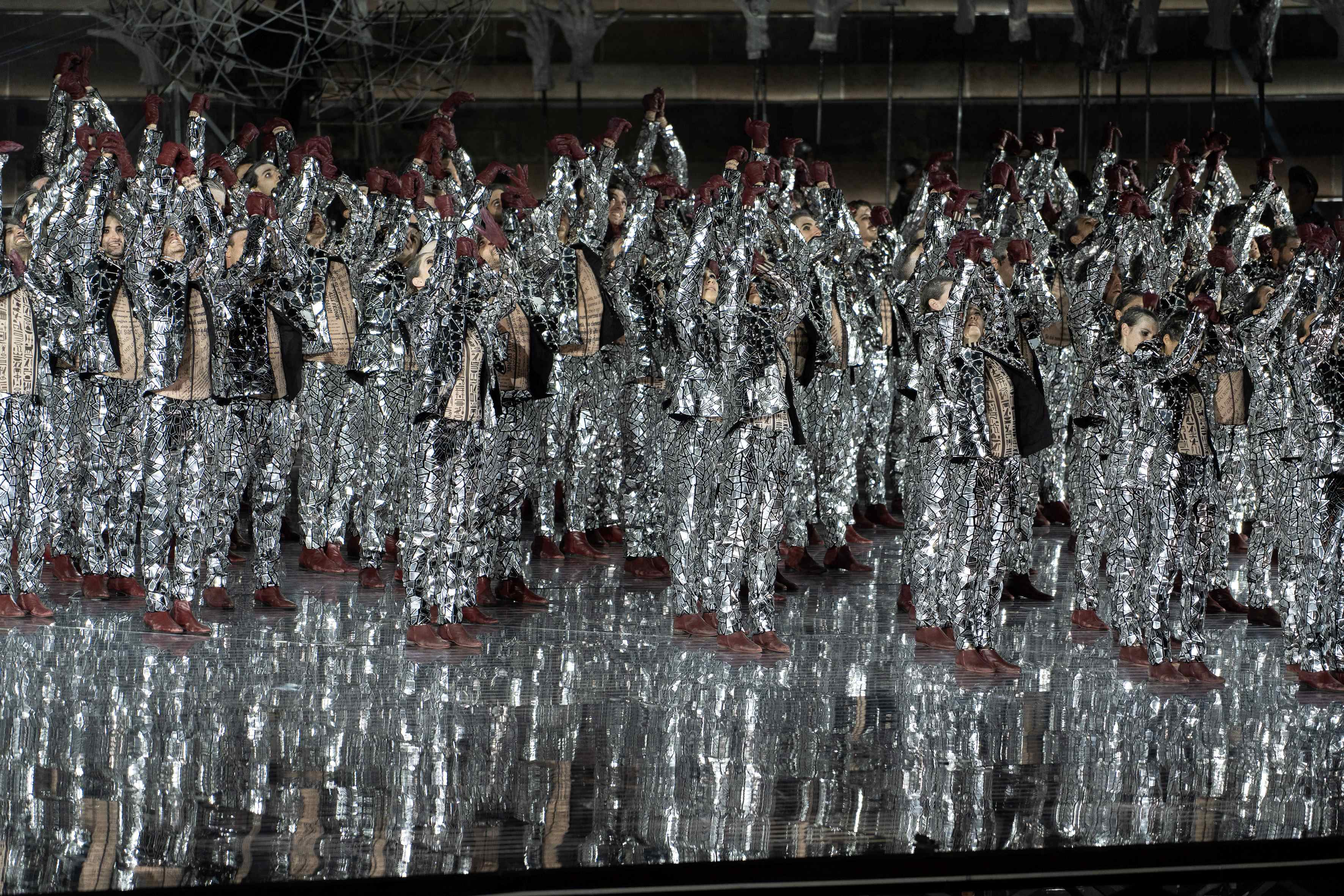
I imagine that with the sheer size of the show, one can’t expect much more than traffic management from Marco Armiliato’s conducting. I did find his tempi a bit sluggish, but that of course cold be due to needing to keep the vast forces together – which he most certainly did. Both the orchestral playing and choral singing were superb, the huge chorus pouring waves of massive sound into the Arena.
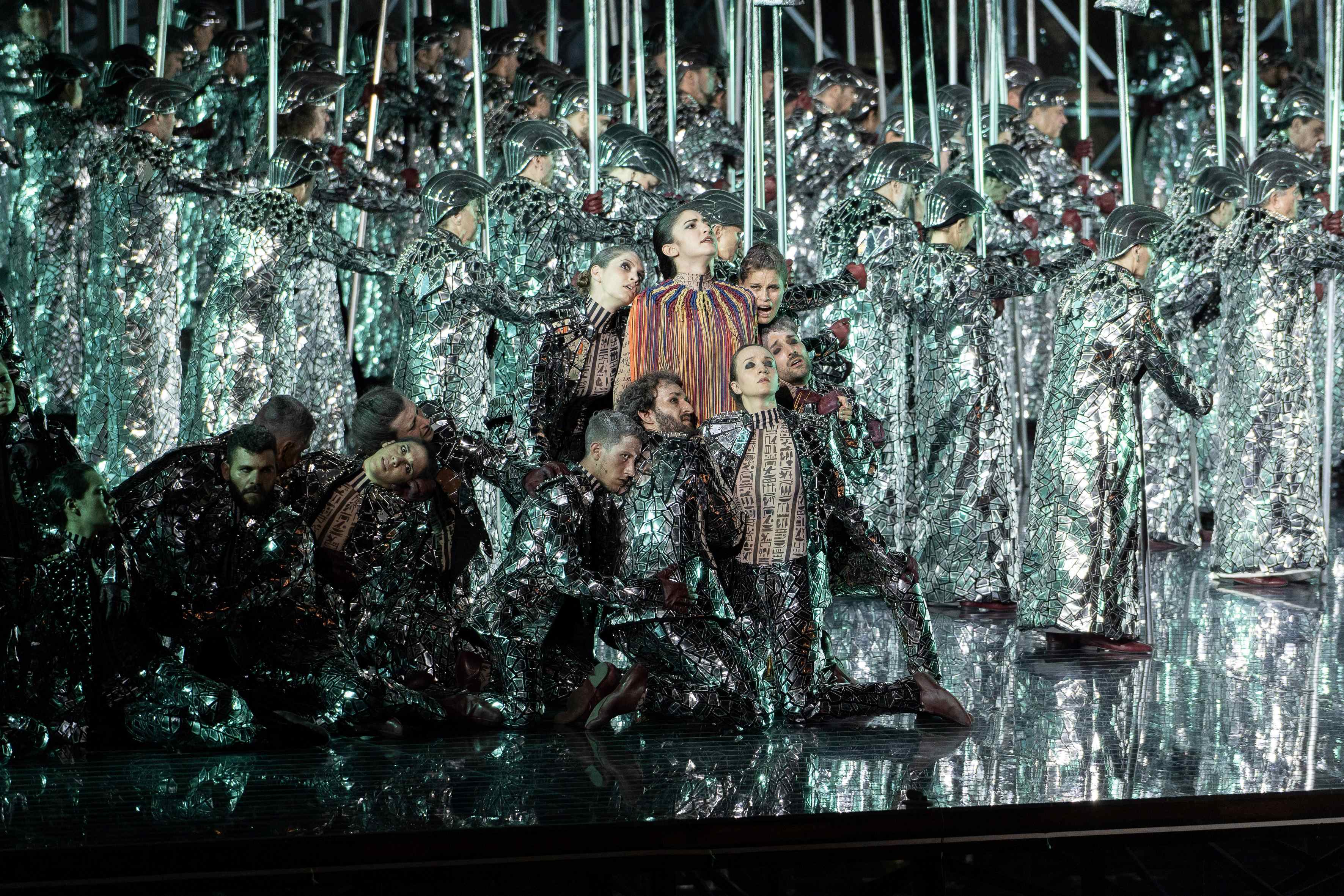
This was, then, a somewhat bittersweet experience. Unfortunately, I still haven’t been able to see a complete Aida performance at the Arena. Given how I was completely soaked and the night had gotten rather chilly, it would have been unwise to stay. What I saw was a musical performance of a very high quality, featuring an exciting young soprano of immense promise. The staging was staggering in its vision and technical realization. For the first two acts, the audience responded with frequent and generous applause.
 operatraveller.com
[…] like this. Compared to that highly idiomatic assumption by Mónica Conesa I heard in Verona last week, Stikhina was extremely disappointing. Stikhina was given an exceptionally generous ovation […]
[…] haven’t managed to see a full performance of the work on the third attempt, although the young Aida there, Mónica Conesa, is a very promising talent. In Berlin, Calixto Bieito gave us a very […]
[…] in the road separating Broadway and classical opera. He’ll never be in the running for conducting Aida, but Bye Bye Birdie revivals probably aren’t in his future either. All in all a good […]
[…] Poda is of course known for his visually spectacular productions at the Arena. I saw part of his Aida a few years ago, and it worked really well in that spectacular space. However, an opera with a […]
[…] of the narrative – all made for a frustrating and deflating experience. While Poda’s Aida in the Arena worked well, this, it pains me to write, was not at all what one might have […]