Mozart – Le nozze di Figaro.
Il Conte – Ildebrando D’Arcangelo
La Contessa – Olga Bezsmertna
Figaro – Luca Micheletti
Susanna – Benedetta Torre
Cherubino – Svetlina Stoyanova
Marcellina – Rachel Frenkel
Don Basilio – Matteo Falcier
Don Curzio – Paolo Nevi
Don Bartolo – Andrea Concetti
Antonio – Lodovico Filippo Ravizza
Barbarina –Taniguchi Mariya
Coro del Teatro alla Scala, Orchestra del Teatro alla Scala / Andrés Orozco-Estrada.
Stage director – Giorgio Strehler.
Teatro alla Scala, Milan, Italy. Saturday, September 30th, 2023.
This production of Le nozze di Figaro, by the late Giorgio Strehler, has done some significant service for the Scala over the past forty years. First performed in 1981, the original cast saw Julia Varady as the Contessa, Samuel Ramey as Figaro, and Frederica Von Stade as Cherubino. There was a buzz in the house tonight – clearly tourist season is in full swing in Milan. I heard more American English, a number of varieties of German, and a similar number of varieties of Spanish, than I did Italian. This meant that there was some disruption of people holding up cell phones to take photos during the show. I do wonder whether there’s a case for theatres to put a QR code in the program book, or projected on the curtain at the start of the evening, to invite visitors to download photos from the official website. That might reduce the disruption from people holding up phones and blocking sightlines.

Tonight, Strehler’s production was revived by Marina Bianchi. After forty years, Ezio Frigerio’s sets and Franca Squarciapino’s costumes still look good. There’s a simplicity to the visuals that I found refreshing. The stage furniture never consists of more than a few pieces: whether a bed, chair and desk in the Contessa’s boudoir, or a single piano on the stage in Act 3. Indeed, Act 3 is set in a long room that doubles the stage area from the previous acts, leading to gasps of astonishment from the audience as the curtain rose. This is very much a traditional staging, set in period. I do wonder, however, how much has been lost in the intervening years in terms of personenregie. There were moments where characters seemed to genuinely engage with each other – the duet between Susanna and Marcellina in Act 1 saw both characters striking sparks off each other, physically and vocally. And yet, I left without a sense of what might lie below the surface, whether in terms of the emotional journey of the characters, or the sense of a regime undergoing a transformation – although the near riot that was the wedding celebrations at the end of Act 3, suggested that the days of the Conte’s regime may be counted. Still, it’s a prosaic, easily-revivable staging that remains visually attractive. I do wonder, however, if Strehler were still around today, whether the relationships between characters might be even more sharply drawn.
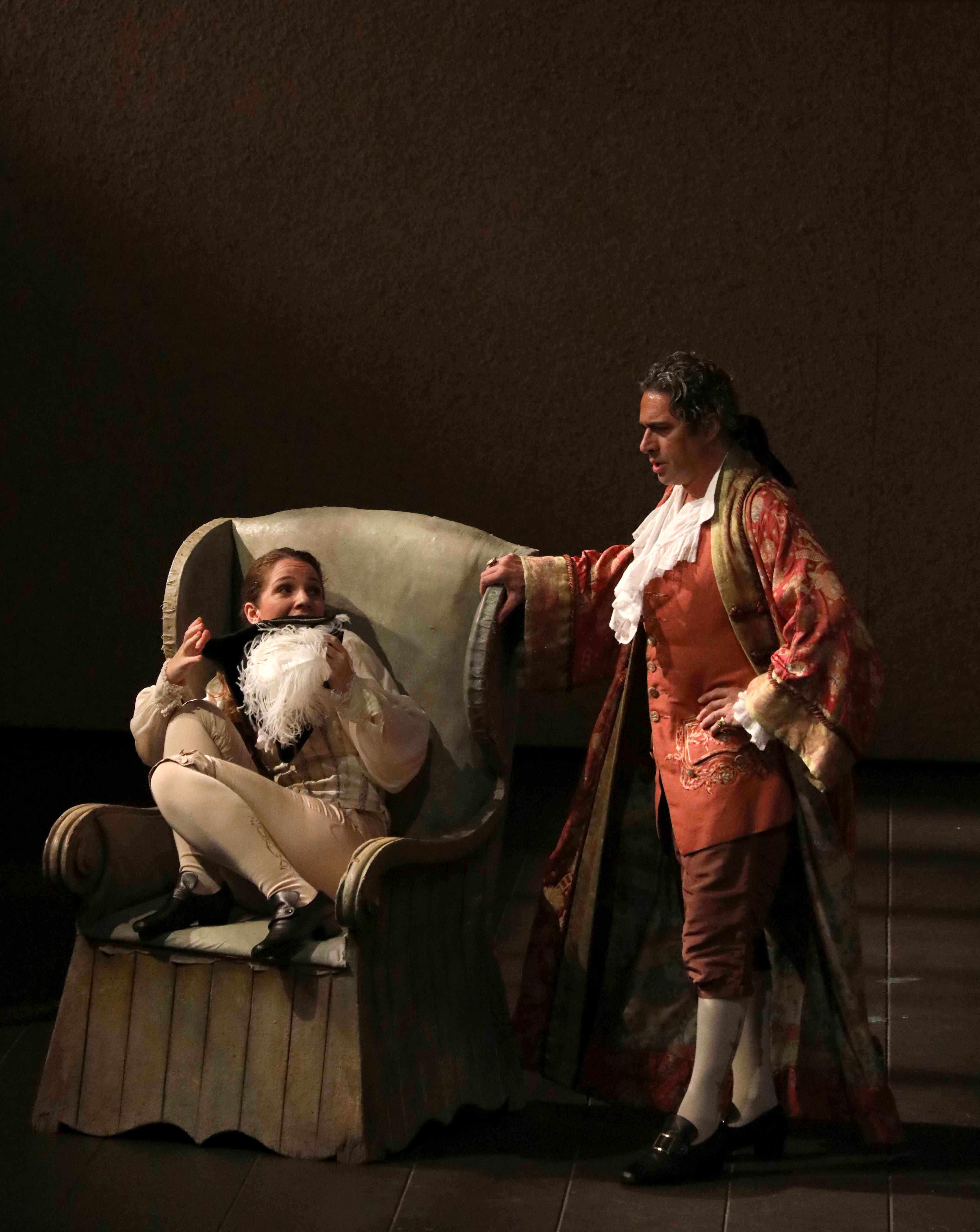
I was slightly alarmed when I saw the running time listed as three hours and forty-five minutes. I needn’t have worried. Andrés Orozco-Estrada led a generally fleet reading. Indeed, the combination of his athletically-paced overture, combined with the sunniness of the Scala strings, seemed to bring out visions of a sports car taking a drive along an Italian coastal road. He employed what sounded like a relatively modest string section, with the advantage that the winds were able to emerge through the textures with quite scintillating glee. Orozco-Estrada also asked the strings to play with minimal vibrato, and throughout the evening their intonation was accurate. There was a sense of an internal logic to his reading, the way that the instrumental voices engaged with each other, and with the voices on stage, that I found captivating. In some respects, it felt like an almost symphonic reading in the way the orchestral lines intertwined; in others, it was utterly cantabile in the way that the instruments seemed to ‘sing’ as much as the principals on stage. While the arias and ensembles were well paced, I did find the recitatives had a serious tendency to drag. Rather than conversational, they felt ponderous. Although there was an extremely witty fortepiano who also added some charming commentary during each number. We had a very complete version tonight, with the opportunity to enjoy both Marcellina and Don Basilio’s arias in Act 4.
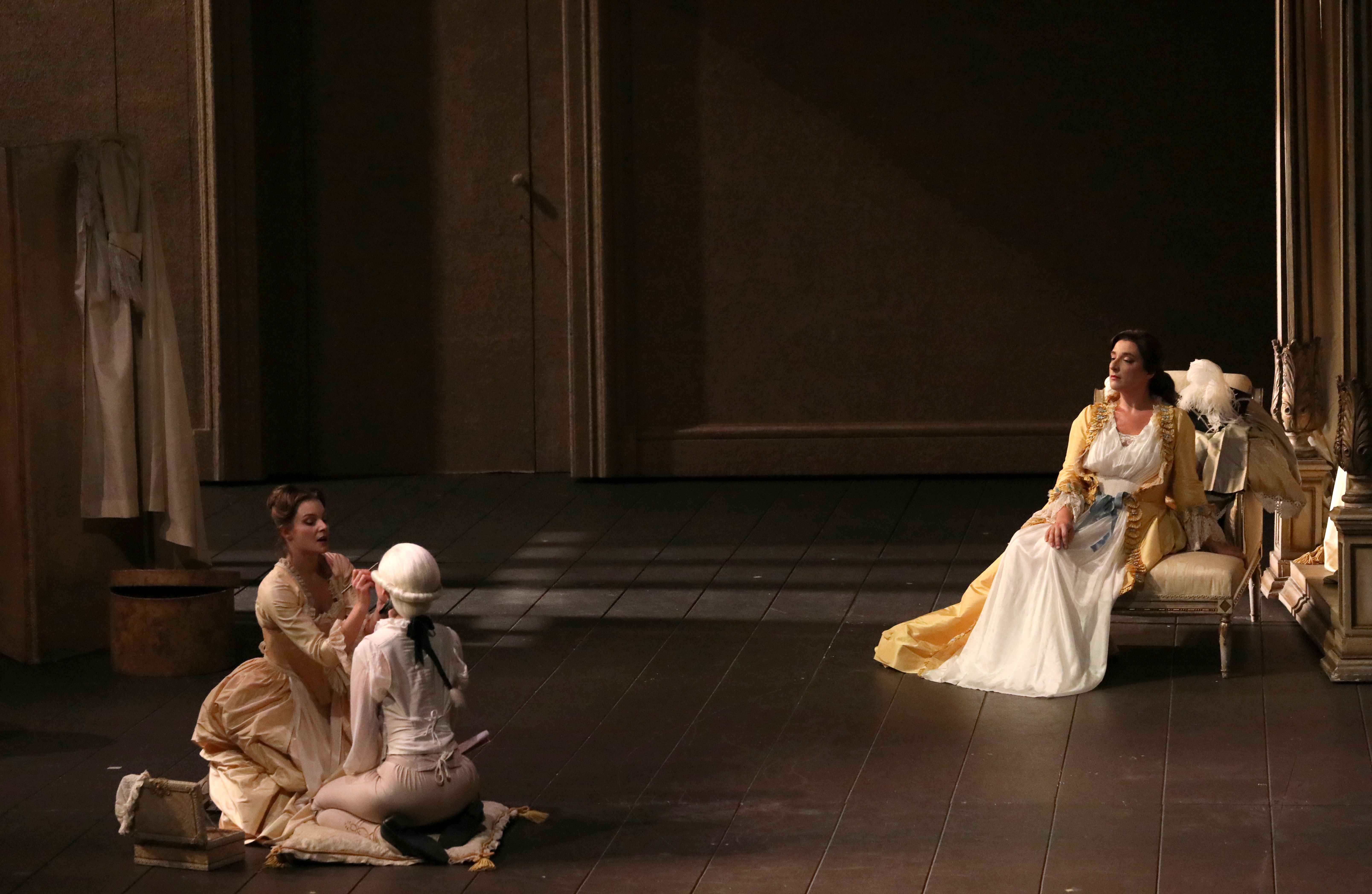
In the title role, Luca Micheletti gave us a terrific account of Figaro’s music. His baritone is masculine and healthy, with a true understanding of Mozartian style. He very much understands the importance of ornamentation and the emotional impact of an appoggiatura –his ‘non più andrai’ was enhanced by subtle enhancements to the line. His native diction also meant that every word lived, combined with a comic timing that was natural and never contrived. As Susanna, Benedetta Torre made so much of the words, always placing them front and centre in her portrayal of the character. Her soprano is slightly chalky higher up, but she sang her ‘deh vieni’ with charm and an attractive legato.
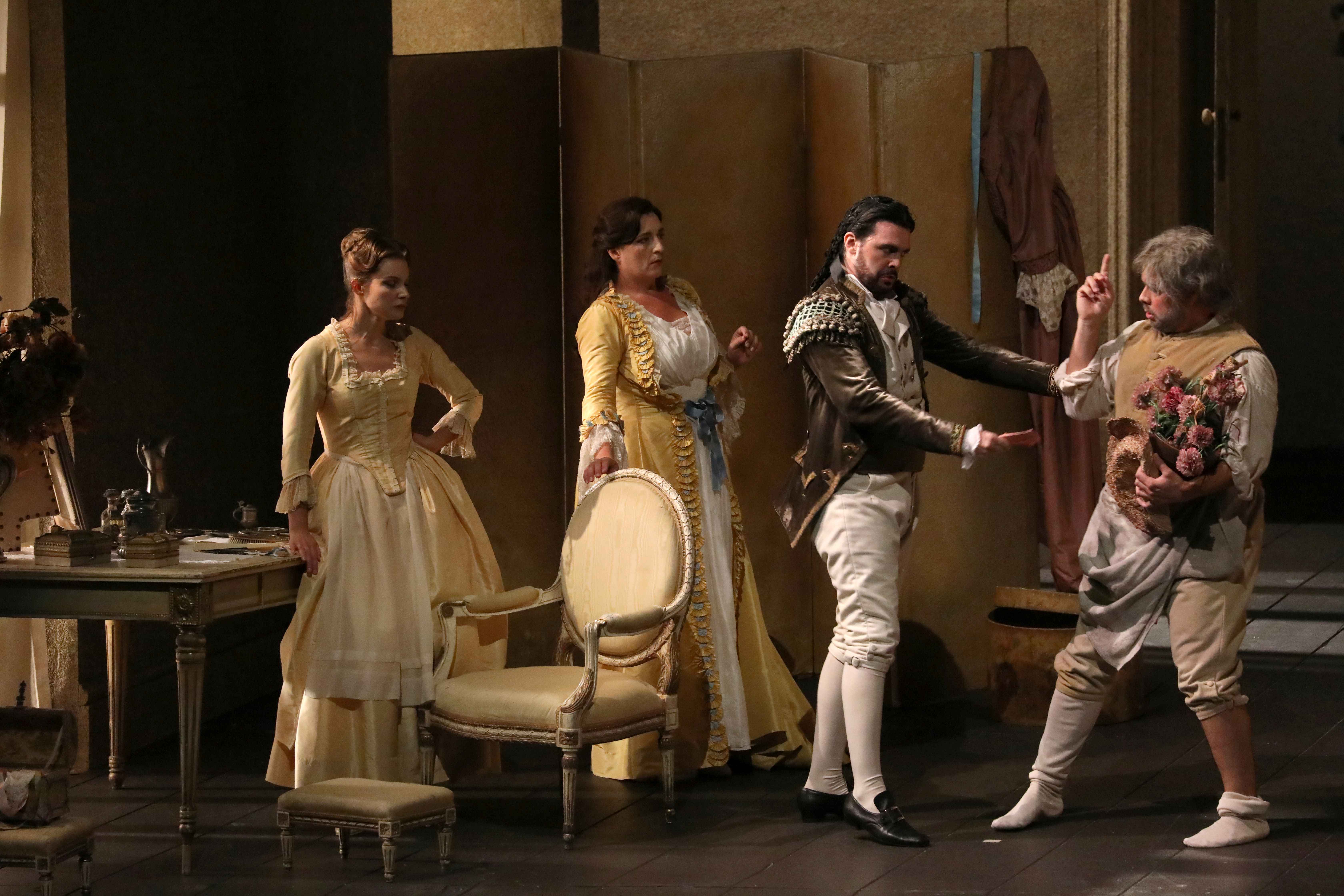
Svetlina Stoyanova, who I’ve been told is no relation to the great Bulgarian soprano, seemed to take a little while to warm up as Cherubino, her initial ‘non so più’ betraying a lack of spin higher up – although her mezzo has an attractive orange tone. Her ‘voi che sapete’ was truly magical, however. She sang with seemingly endless lines, as if singing the entire aria on a single breath, deploying wonderfully musical – and daring – ornamentation, the voice intertwining miraculously with the orchestral textures. It was very special.
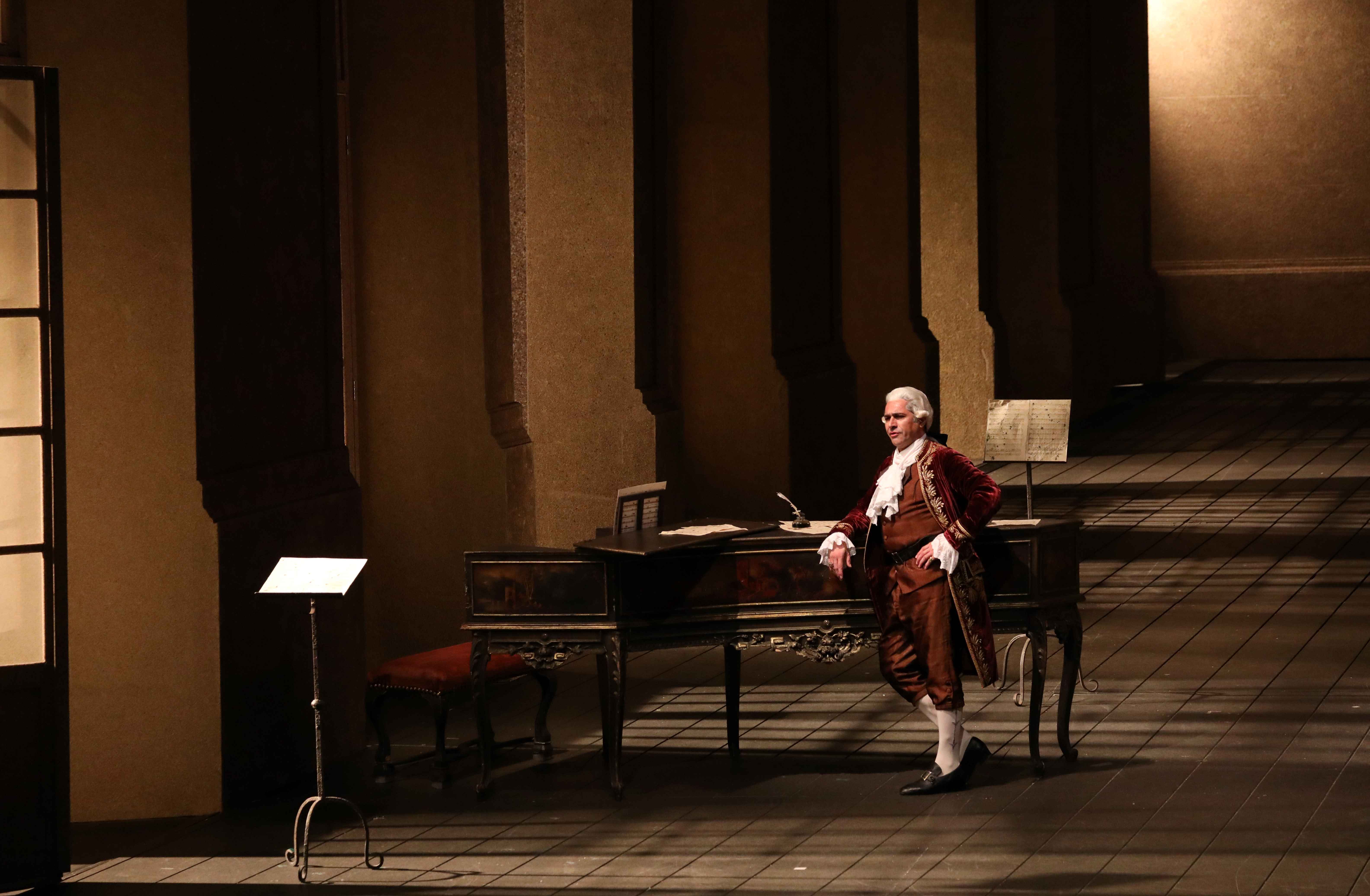
Ildebrando D’Arcangelo is an experienced Mozartian. His bass still has its characteristic warmth, but does sound as if it has become rather grainy with the passage of time. It was interesting to hear a bass sing the Conte, after having heard so many baritones over the years. There were a few passing moments when D’Arcangelo lost the core of the tone, with a tendency to bark somewhat, but he turned the corners in his aria with ease and the high F-sharp was most certainly there. Olga Bezsmertna sang the Contessa’s music in a bright, penetrating soprano. It sounds to my ears that Bezsmertna’s is a primarily lighter soprano, artificially made bigger. Her ‘porgi amor’ lacked a smoothness in the legato, while her ‘dove sono’ saw her not quite able to sustain the long phrases, with a tendency to taper off. She did, however, offer a few attractive embellishments to the line in the latter. She also took some lower options that I had not previously encountered in the Act 2 trio with Susanna and the Conte. Perhaps it was first night nerves. Bezsmertna was unfortunately booed by some in the audience at the final curtain calls.
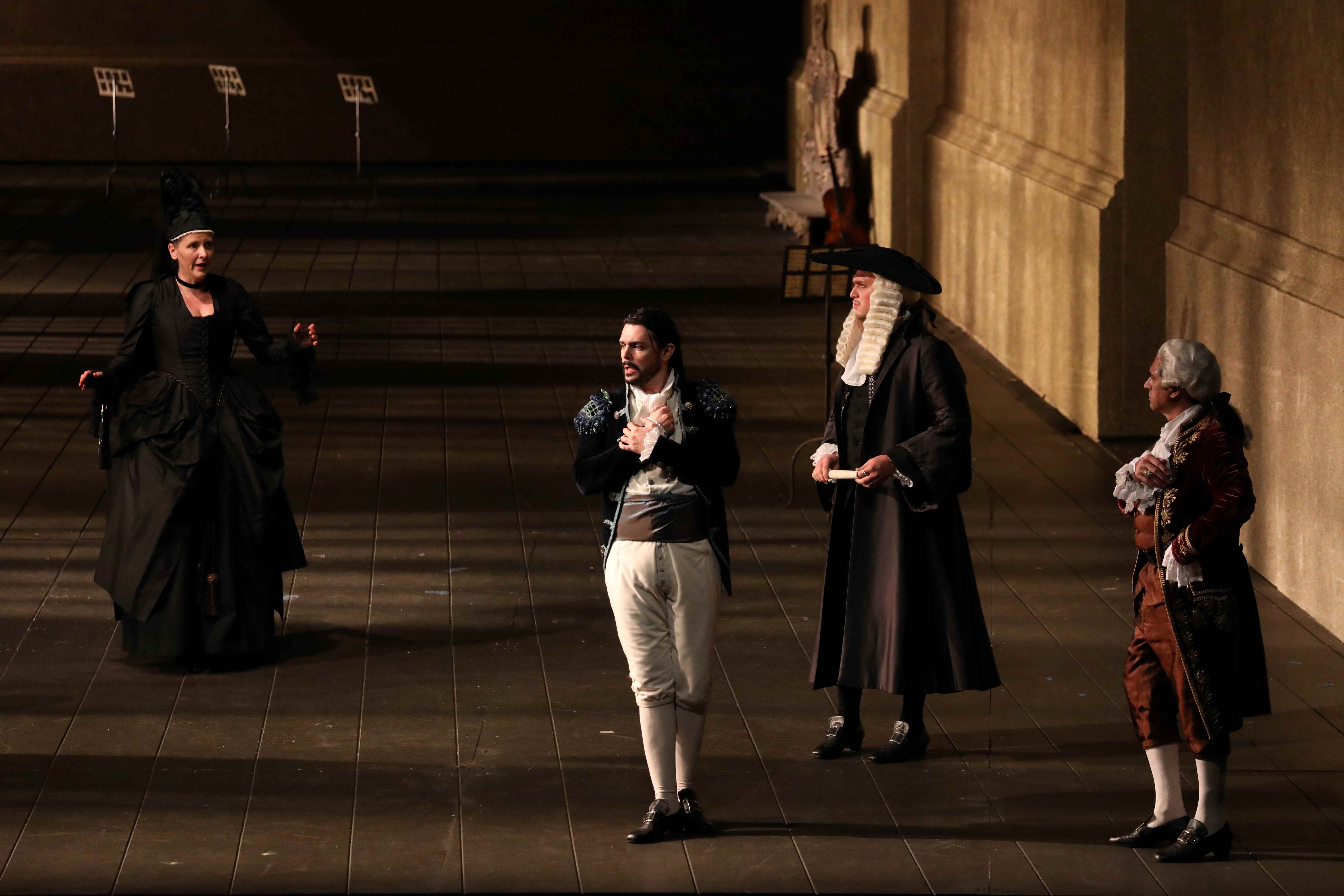
The remainder of the cast reflected the standards one has come to expect at this illustrious address. Rachel Frankel’s Marcellina was a deliciously spicy presence. Her mezzo is slightly acidic in tone, but she turned the corners in her aria with ease and managed the tessitura expertly. Andrea Concetti dispatched Bartolo’s aria with confidence, although the voice lacked amplitude in the rapid-fire text. Both Paolo Nevi and Matteo Falcier sang their respective roles with bright, well-placed tenors, while Lodovico Filippo Ravizza was an appropriately gruff Antonio. Taniguchi Mariya gave us a nicely crystalline Barbarina, but it did feel that she could have made more of the words. The chorus sang their brief interjections with warm tone.
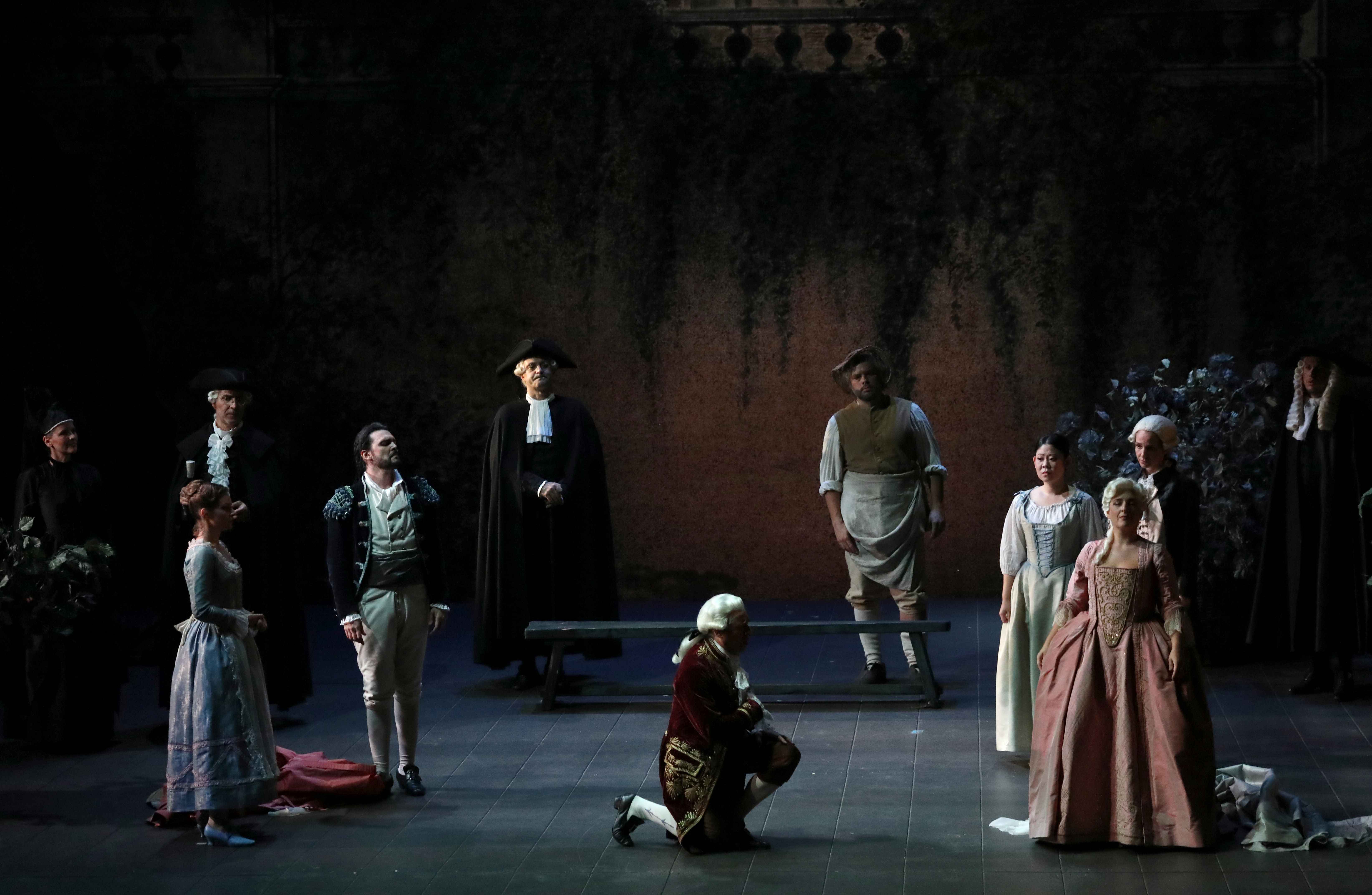
There was so much to enjoy in tonight’s Figaro. Micheletti’s Figaro, Torre’s Susanna, Stoyanova’s Cherubino, and Frenkel’s Marcellina all gave significant pleasure. There was also a simplicity to the visuals that felt uncluttered and attractive; even if one might wish for more in terms of psychological insight. Orozco-Estrada gave us a wonderfully athletic reading, superbly played by the Scala orchestra, that really brought the intricacies of the score to life and made it sound fresh and alive. Yes, the recitatives did have a tendency to sag, but I also very much appreciated the completeness of the edition used. Apart from a small number of boos mentioned above, the cast was received with a generous ovation from the audience.
 operatraveller.com
[…] seen Luca Micheletti just a few weeks ago as a congenial and extremely stylish Figaro at the Scala, I wasn’t quite prepared for the sheer depth of the impact his characterization […]
[…] this repertoire, gave much satisfaction. The singing was fabulous across the board. The Scala revived Giorgio Strehler’s historical staging, under Andrés Orozco-Estrada. He gave us a […]