Verdi – Aida
Aida – Yu Guanqun
Il Re – Grigory Shkarupa
Amneris – Clémentine Margaine
Radamès – Ivan Magrì
Amonasro – Alfredo Daza
Ramfis – Erwin Schrott
Un Messaggero – Gonzalo Quinchahual
Sacerdotessa – Victoria Randem
Staatsopernchor Berlin, Staatskapelle Berlin / Nicola Luisotti.
Stage director – Calixto Bieito.
Staatsoper unter den Linden, Berlin, Germany. Sunday, October 29th, 2023.
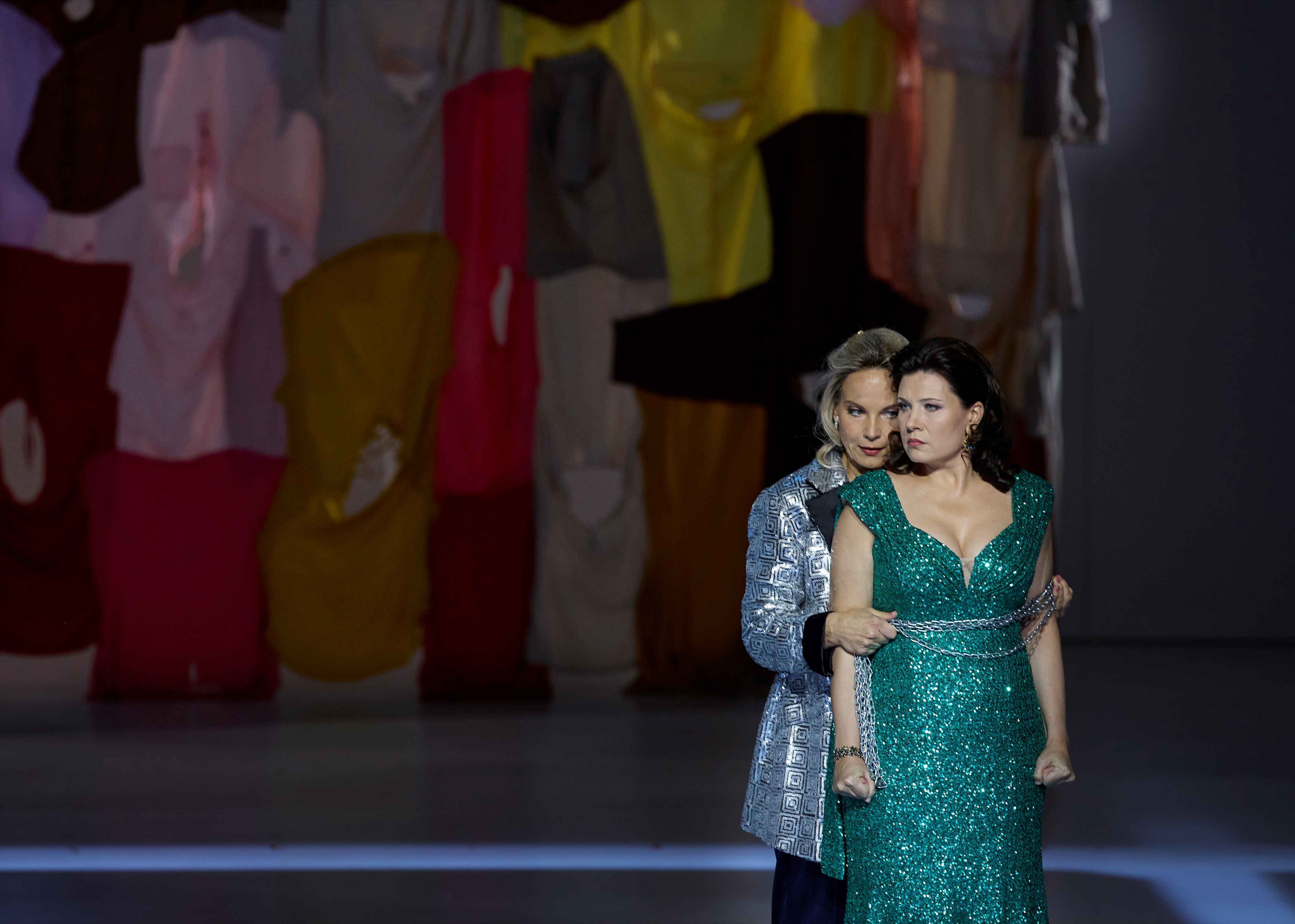
This new production of Aida by Calixto Bieito at the Staatsoper Berlin, is actually the Catalan director’s second of the work. His previous staging was in Basel, back in 2010, and by all accounts it was visually rather striking. The Berlin run was double cast, with the earlier cast featuring Marina Rebeka and Elīna Garanča (pictured) as the rivals, with the entire run placed under the musical direction of Nicola Luisotti. For this final performance of the run, there was an additional change, as the originally-cast María José Siri was unwell and was replaced at the last moment by Yu Guanqun in the title role.
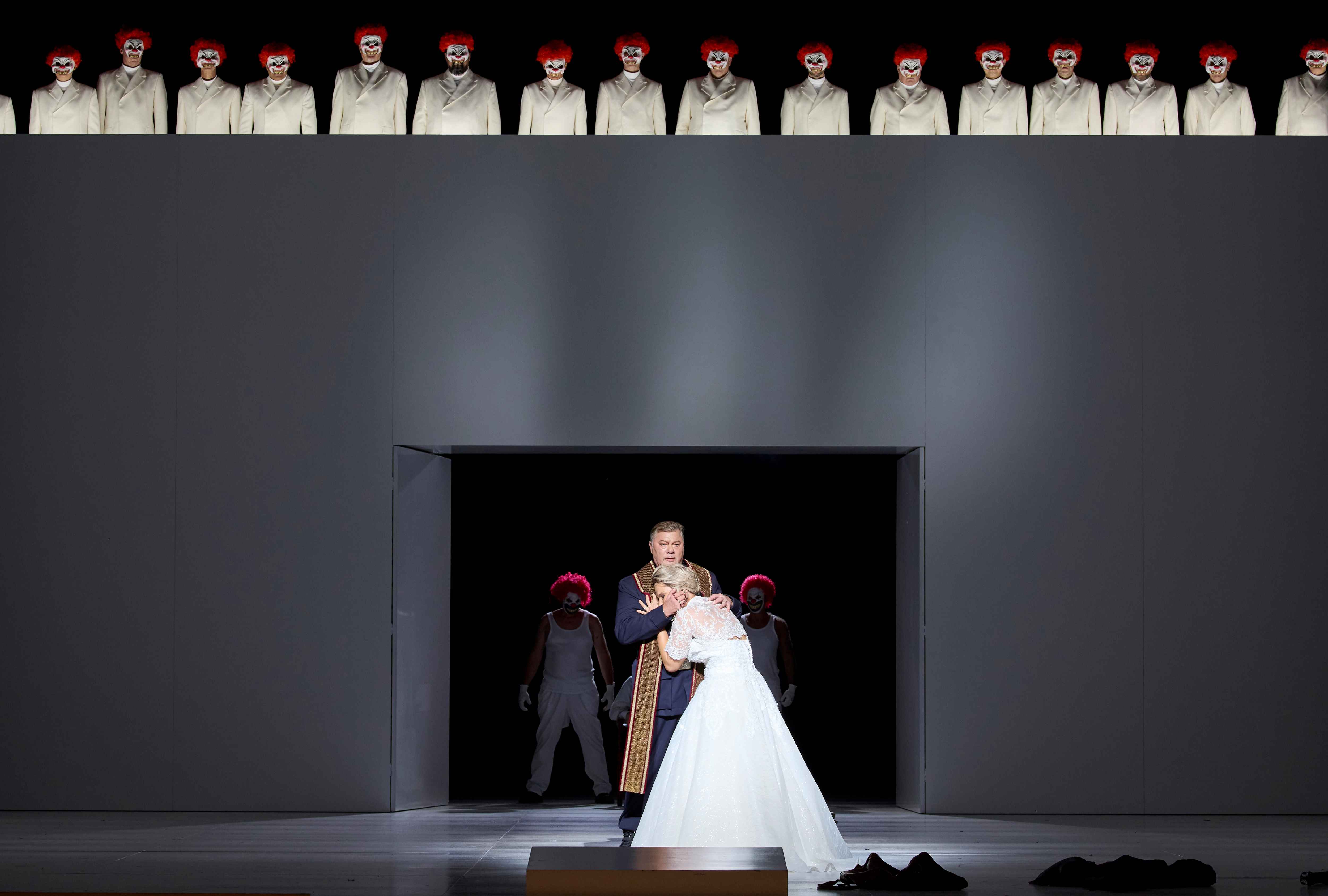
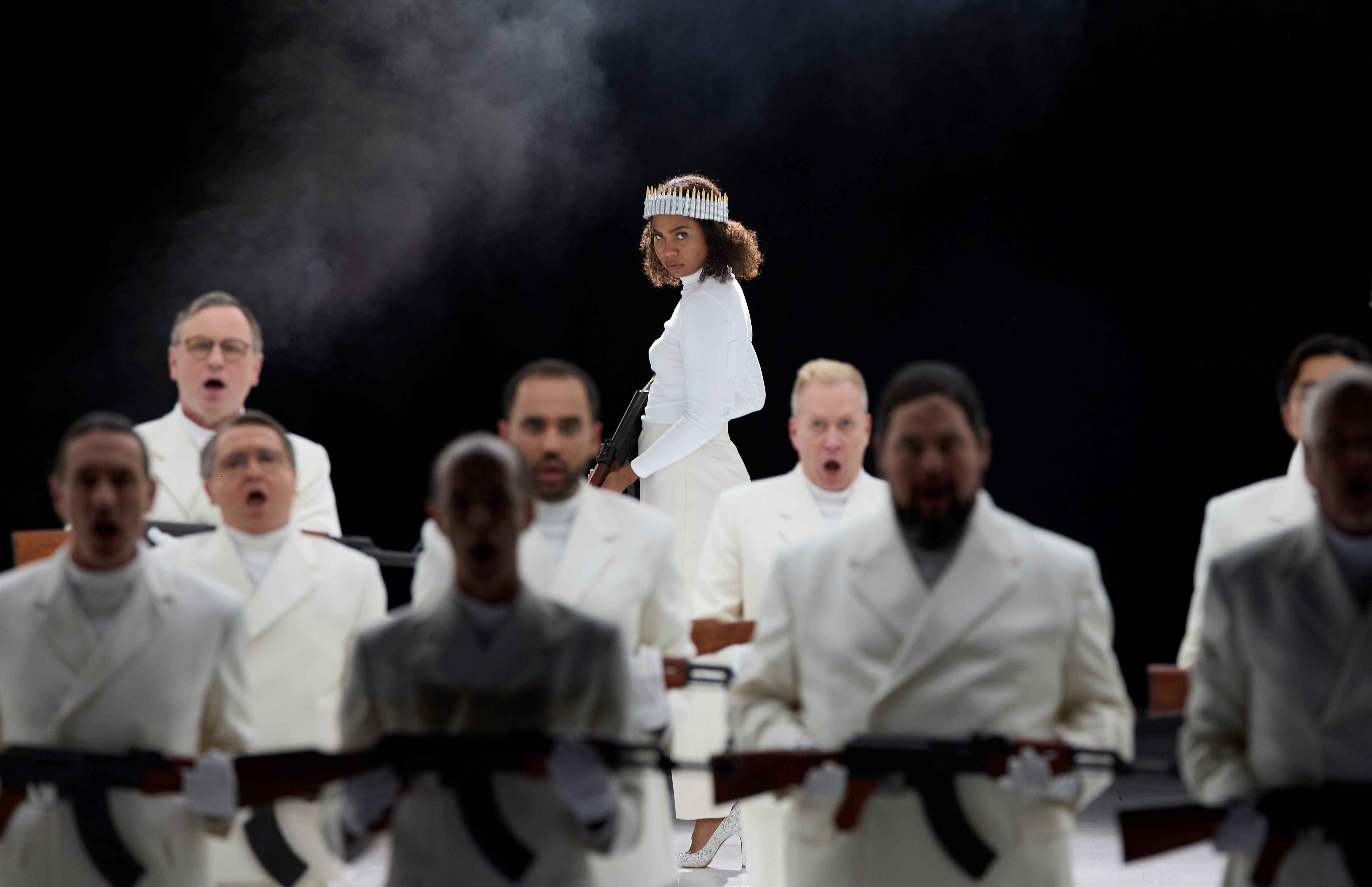
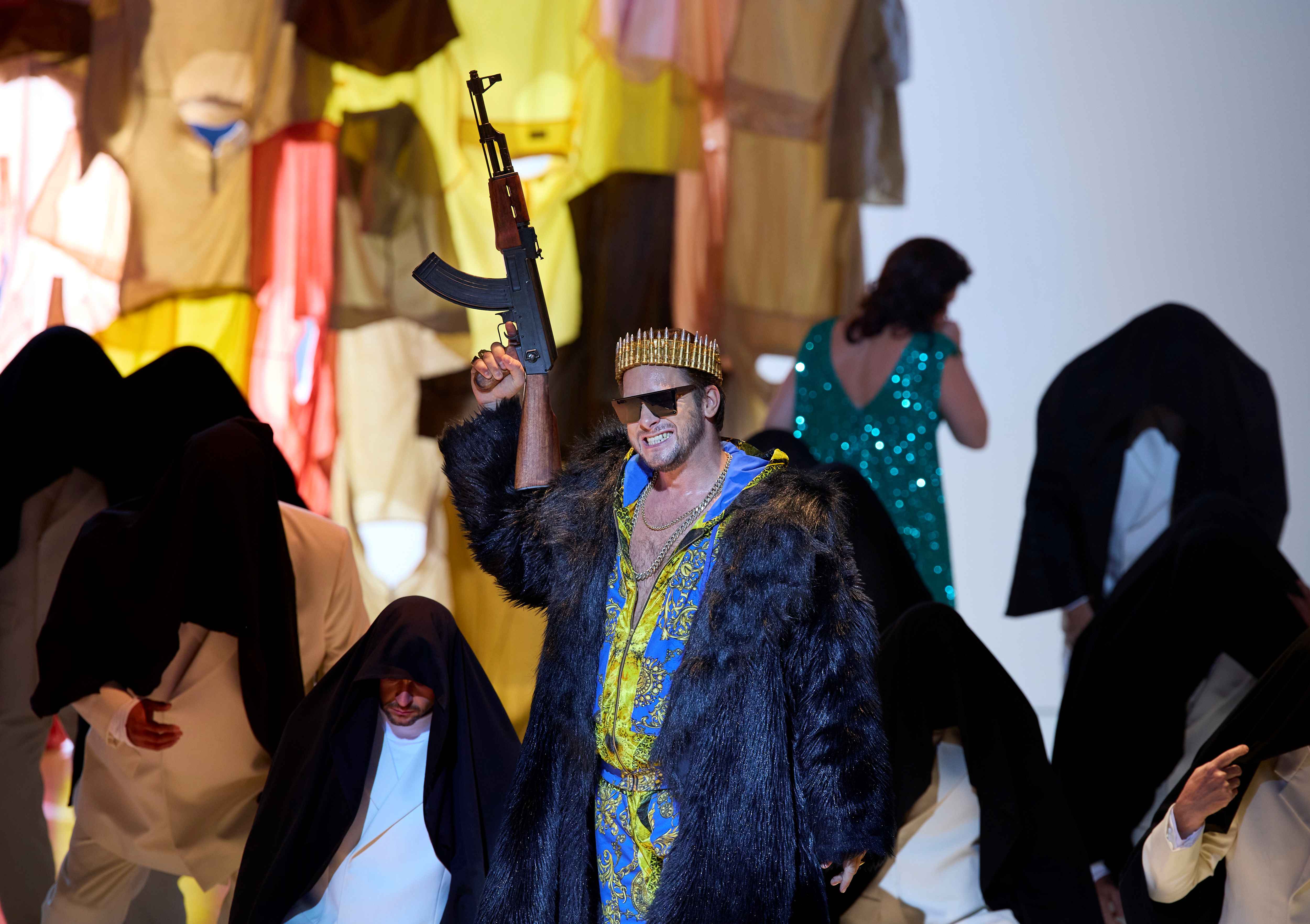
It’s to Yu’s credit, that she was able to jump in so convincingly, it looked like she had been part of the cast from the very beginning. Bieito sets the action in a pristine white set. This adds a clinical coldness that contrasts tellingly with how Ramfis, the chorus, and the perambulating Sacerdotessa worshipped machine guns. Bieito makes us think about how war, colonialism, and conflict are a feature not just of recent history, but have their roots in industrialization, with the chorus dressed in Victorian garb for the triumphal scene, or as 1970s housewives in the scene in Amneris’ boudoir. As a superb director of choruses, Bieito has them represent not only a war-obsessed block, but also has them energetically dancing with abandon in the ballets, giving us not only the mob, but a group of recognizable individuals, and in so doing, gives us a sense of the insanity of war and how the masses can be whipped up to believe in violence.
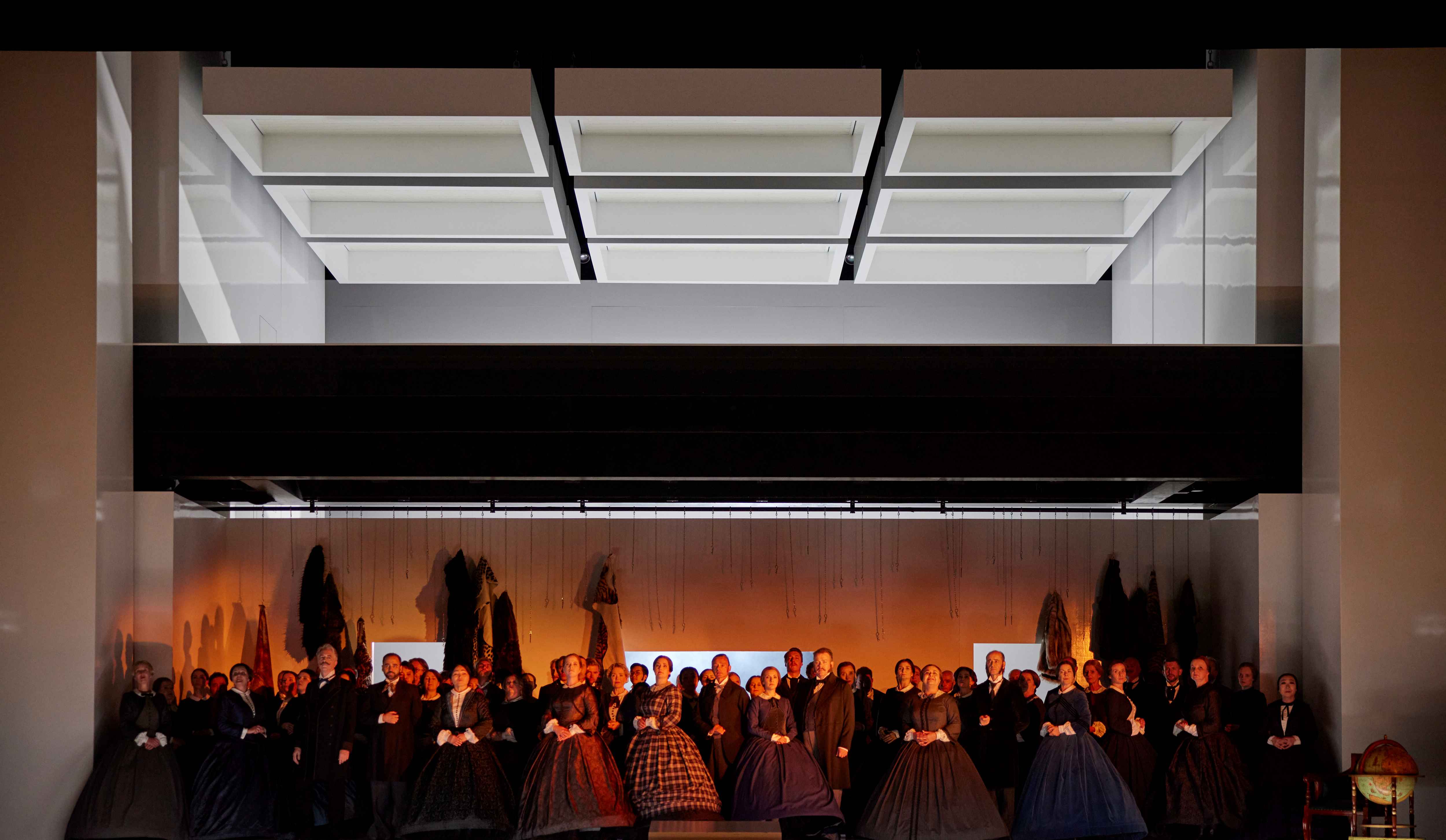
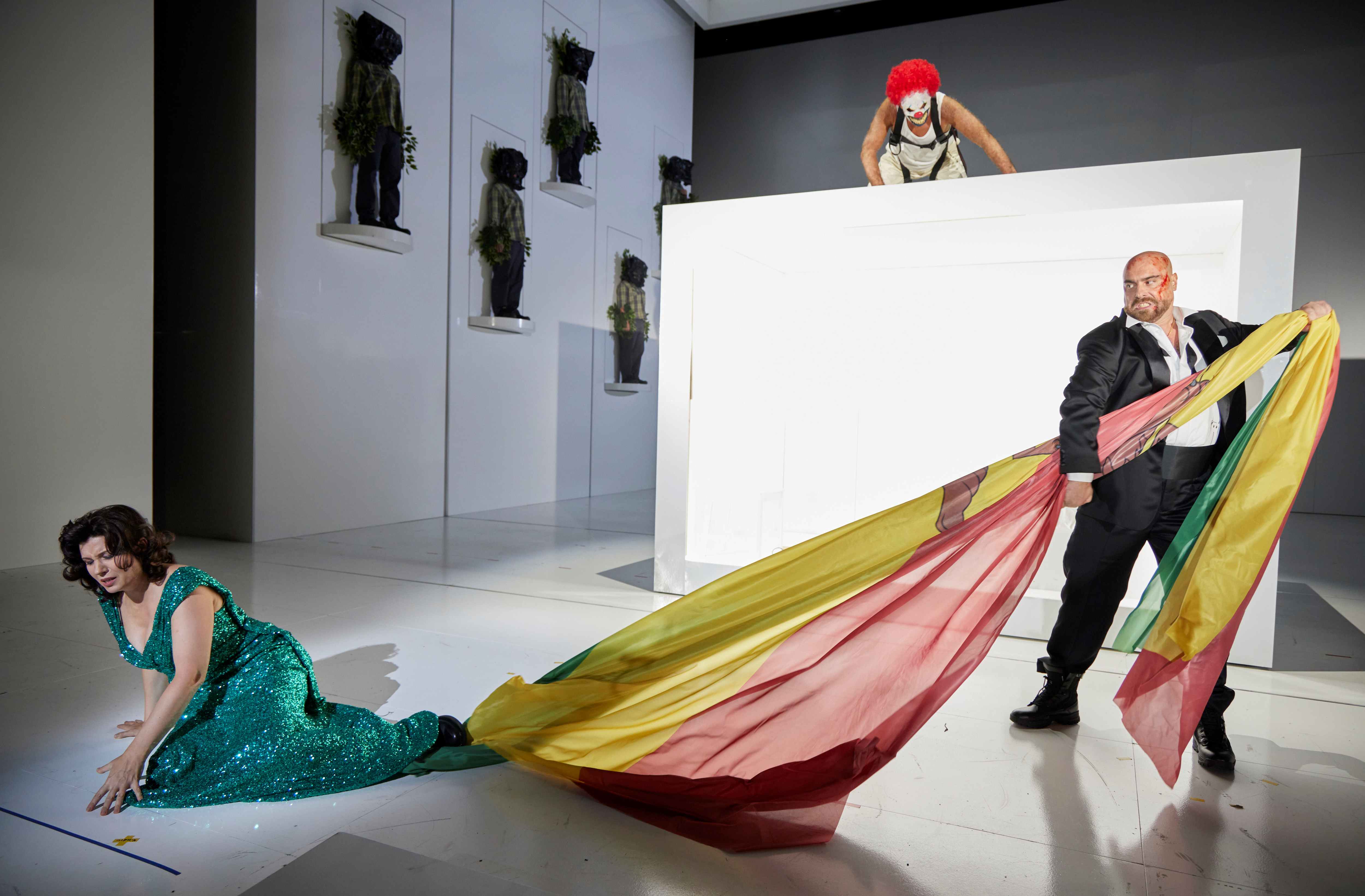
This staging abounds in memorable stage pictures – Aida singing ‘ritorna vincitor’ surrounded by shady figures, who could be as much her brother as her captors, serves to remind us that there is as much that unites us as divides us. Similarly, the parade of passing individuals carrying suitcases as she sings ‘O patria mia’, is a reminder that there are millions of people seeking refuge in the world even as I write these words. Even the fact that Aida is outfitted in a sparking dress is a reminder of her regal origins, and that war and displacement can happen even to those at the pinnacle of society. The big scene with Amonasro and Aida in Act 3, both fighting each other over a flag, forced us to contemplate the necessity of fighting over a piece of cloth. And yet, despite the multiple insights, I did find the opening two acts felt more cerebral than visceral, lacking in the sheer emotional impact of Bieito’s very best stagings. Still, the emotional temperature increased exponentially after the intermission, with a third act of riveting theatrical impact, the emotional toll of conflict, status, and power superbly brought out by a highly committed cast.
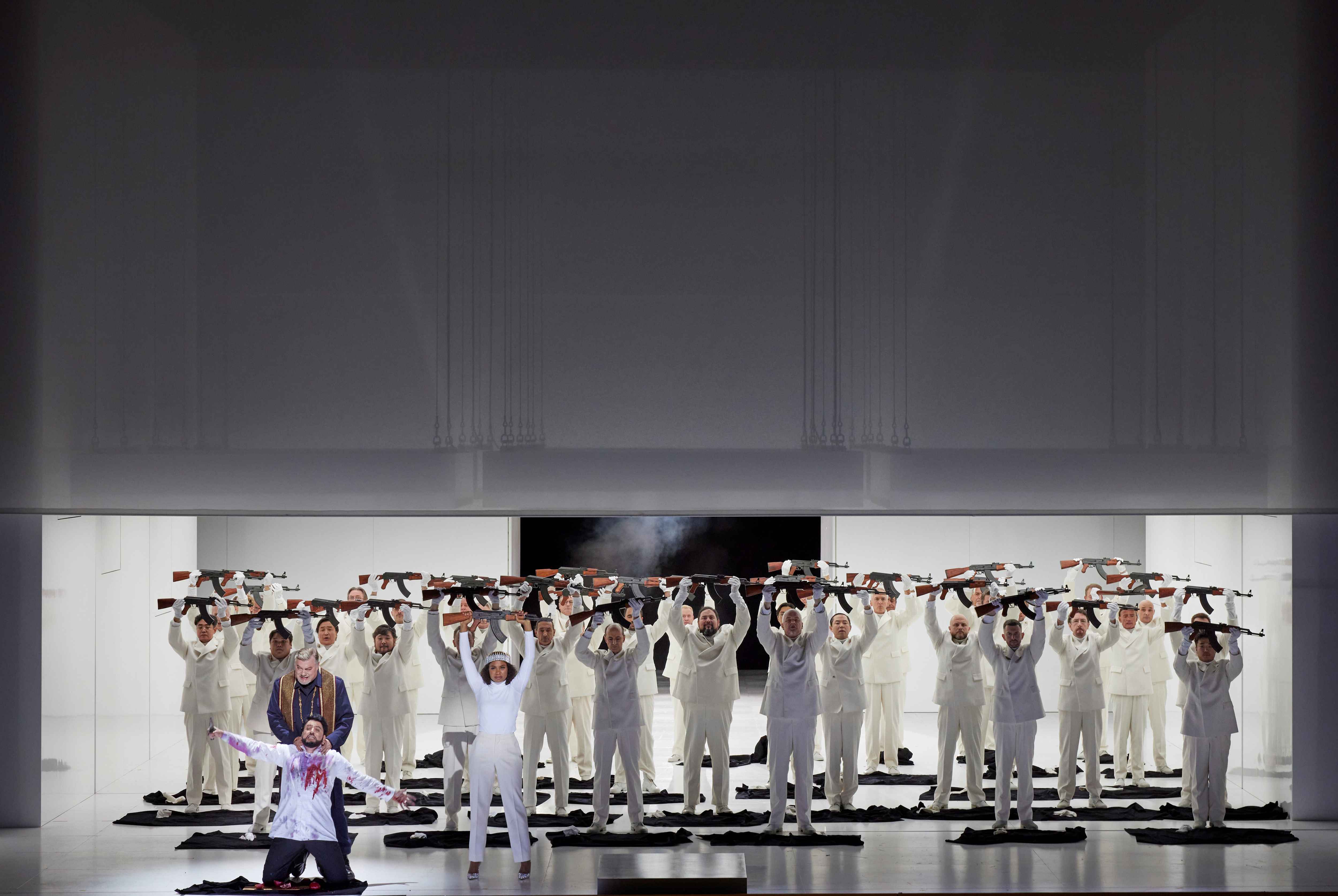
Musically, there was much to enjoy, but also some reservations. It’s been a few years since I’ve had the pleasure of hearing Yu. In the intervening period, she’s clearly worked hard on her artistry and growth as an interpreter. Her text this evening was always clear, using the line to project meaning and shaping it with musicality. Her ‘patria mia’ was sung with feeling, but it was also consistently loud and I longed for her to pull back on the dynamics and shade it with subtlety. Her diamond-toned soprano rose above the ensemble with ease in the triumphal scene, but throughout the evening, her intonation tended to the sharp side, always sitting around the note rather than directly on it, and intervals not always cleanly judged. It felt that this was a lighter instrument being pushed to be artificially bigger. Her commitment to the staging was not in doubt and, as I mentioned above, she felt that she had fully rehearsed the staging alongside her castmates.
Alfredo Daza sang with generous force as Amonasro and his confrontation with Yu was certainly exciting. Daza used the text with intelligence, making the words live. Yet the voice is grey in tone, and intonation did threaten to succumb to gravity in his big ‘Non sei mia figlia! Dei Faraoni tu sei la schiava!’ – although he held onto it for what felt like an eternity, certainly giving us full value. Also giving full value was Ivan Magrì’s Radamès. He did not leave us wishing for more volume. His ‘celeste Aida’ was sung with considerable amplitude, less a romance and more an extrovert outpouring of sound. The voice does have a wonderfully Italianate warmth and his diction is fabulous. The vibrations have loosened however and, to his credit, Magrì did attempt to genuinely shade the tone in the final scene, pulling back and attempting a genuine pianissimo, even if the intonation was droopy. Grigory Shkarupa is an exciting find as Il Re. His bass has some youthful warmth, but is still rather narrow. There is the core of a genuinely beautiful instrument there, and this is the kind of voice that matures with time. A name to watch. Erwin Schrott sang his Ramfis with impressive amplitude. While his bass has dried out in tone, the way he savoured the text was genuinely gratifying. Victoria Randem was a glamorously-voiced Sacerdotessa, while Gonzalo Quinchahual made much of little as the Messaggero.
Then there was Clémentine Margaine’s Amneris. Over the past few months, I’ve had the pleasure of seeing Margaine as Eboli, Azucena, and now as Amneris. She has most certainly arrived as one of the leading Verdi mezzos of today. Margaine truly certainly understands how this music goes, she understands the text and communicates it with the utmost clarity. The voice is wonderfully even from top to bottom, descending to a seemingly infinite and generous chestiness. I will admit to finding the very top slightly frayed, but that could be have been due to an unannounced indisposition. Her judgment scene was utterly gripping, for once I wish it had gone on for longer, each interjection full of desperation to make rectify her wrongs, and capped with a magnificent high A.
Luisotti was an energetic presence on the podium. There was an Italianate extroversion to his reading that had some very exciting moments, with some thrilling climaxes in the triumphal scene, the volume absolutely exhilarating in the modestly-sized Staatsoper. Of course, it helped that he had the Berlin Staatskapelle at his disposal. The strings initiated the prelude with wonderfully gossamer lightness and elegant portamenti. The brass were also solid all night. Luisotti’s tempi were generally sensible, but it did feel – and this may well be as a result of Yu’s last-minute jump in – that there were moments where Luisotti was merely accompanying, rather than driving the action forward. Though again, here in Act 3, the performance took wing as the act proceeded, with more of a sense in those big brassy outbursts, that Luisotti was giving his cast the support to take wing. The choruses, prepared by Dani Juris, sang with seriously impressive accuracy of intonation, with blend in the tenors and basses allowing the exoticism of Verdi’s writing to come to the fore. The sopranos and mezzos did have a tendency to vibrate more generously, but threw themselves into the stage action with impressive aplomb.
This Aida is a thoughtful piece of theatre, one that invites reflection and gives much to consider. And yet, it was only in the second half of the evening that the performance felt that it truly took wing, both on stage and in the pit. It was decently sung in much of the cast, with Yu giving a most assured performance in the circumstances, and Margaine regally holding the stage and sweeping all before her with thrillingly generous vocalism. The orchestral playing and choral singing reflected the standards one would expect at this address. The audience responded frequently with hearty applause for the entire cast.
 operatraveller.com
[…] is a very promising talent. In Berlin, Calixto Bieito gave us a very thoughtful staging of Aida, perhaps lacking in the visceral emotional impact of his earlier work, with Clémentine Margaine […]